
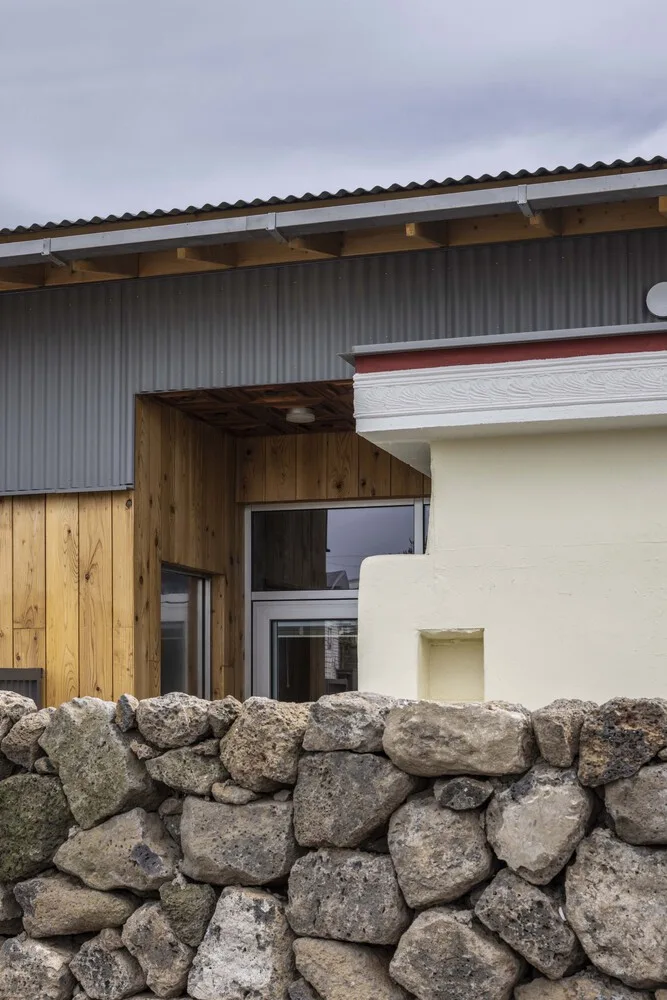
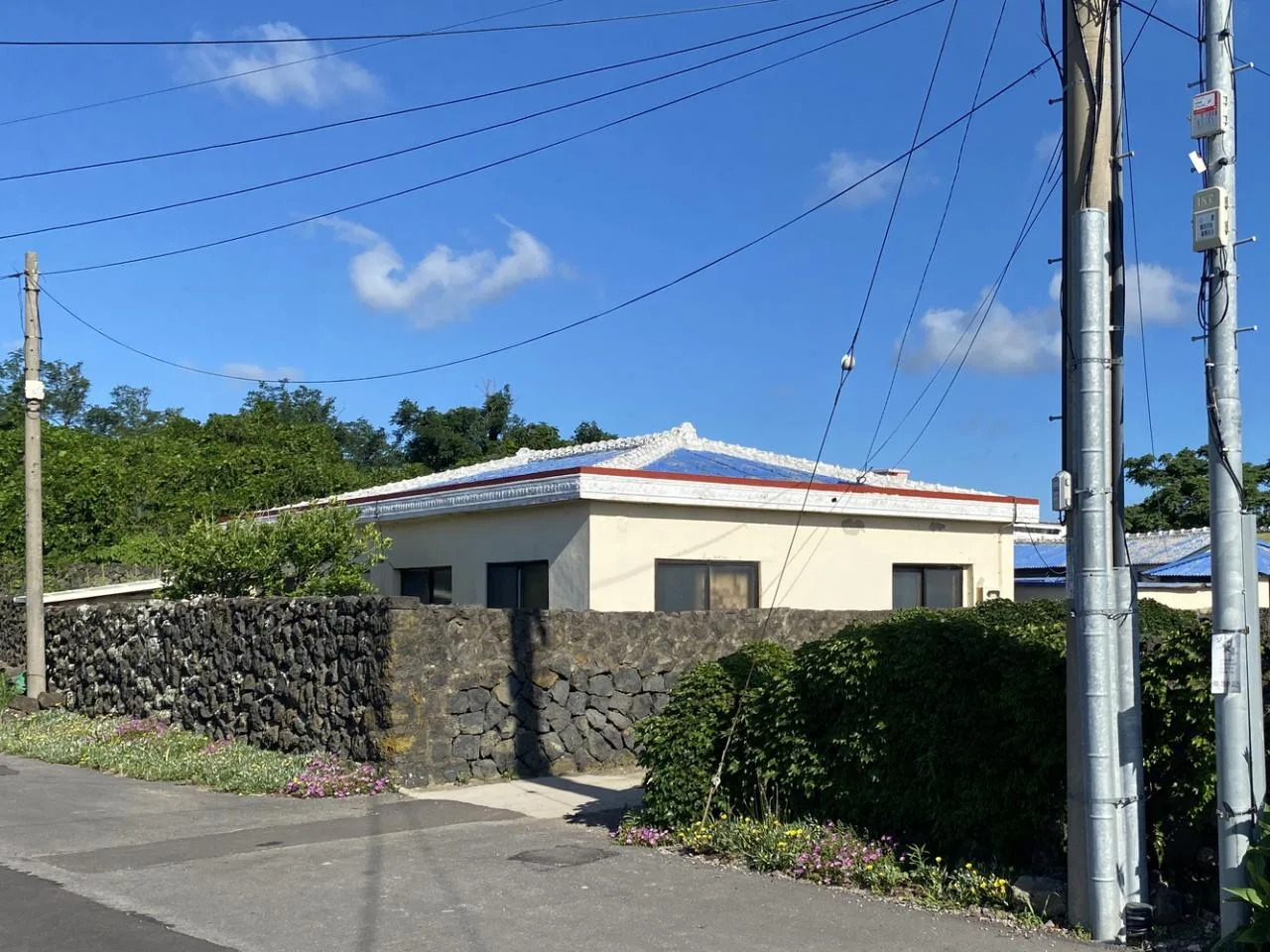
This rural home, built in 1965 on Jeju Island, belongs to an owner who has dedicated himself to crafting with waste materials gathered from the seaside. Instead of demolishing the old house, he proposed preserving and repurposing it. This project embraces the idea of treating old homes as valuable resources for creating new living spaces.
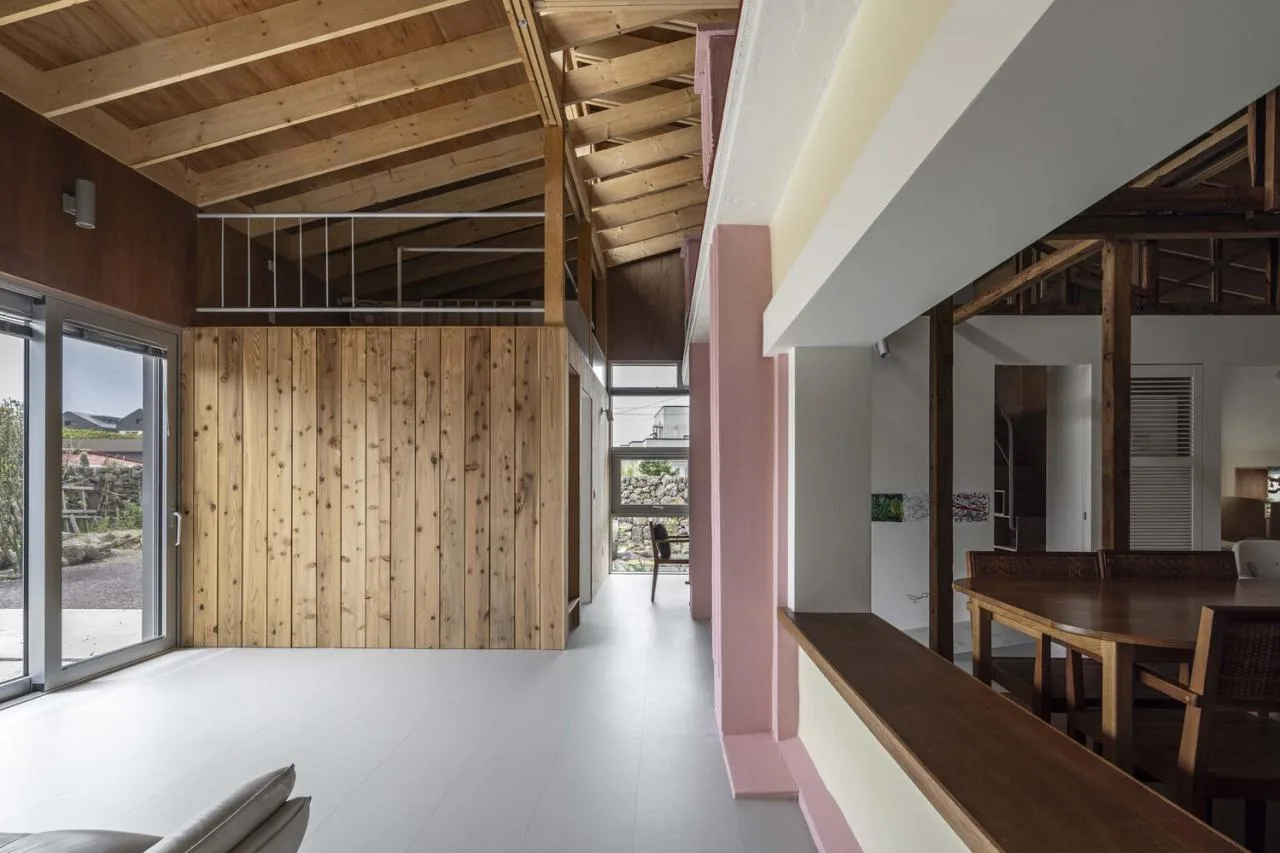
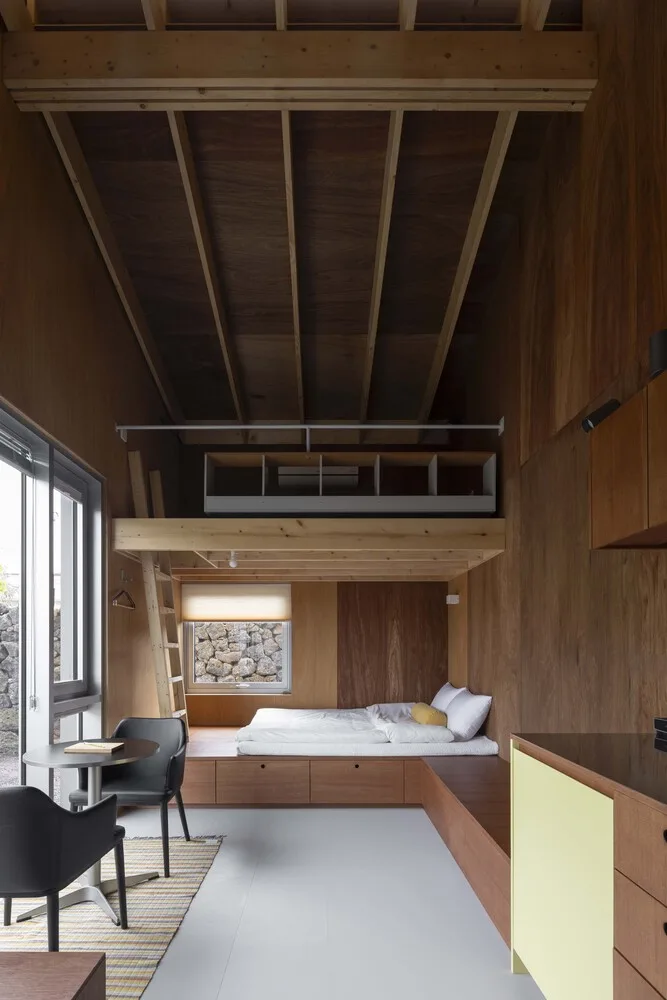
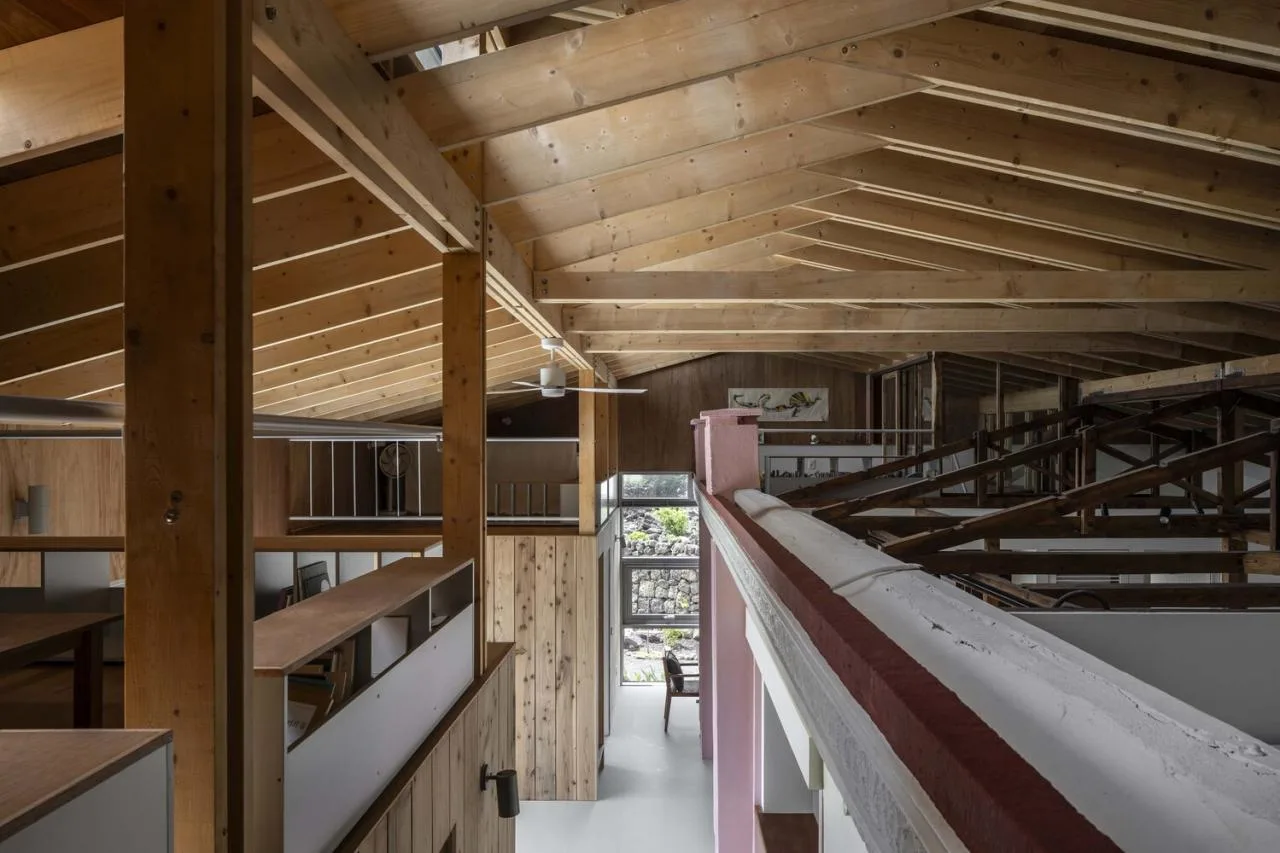
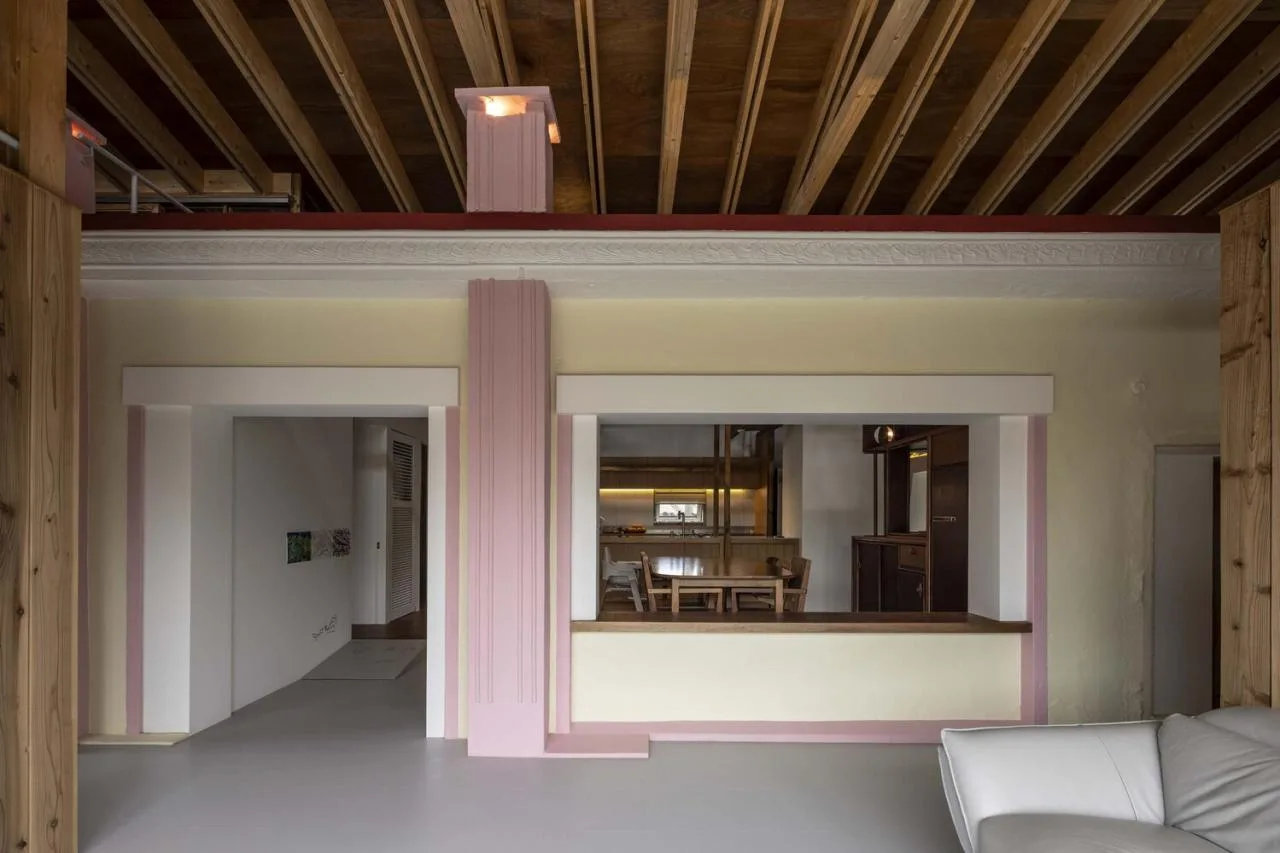
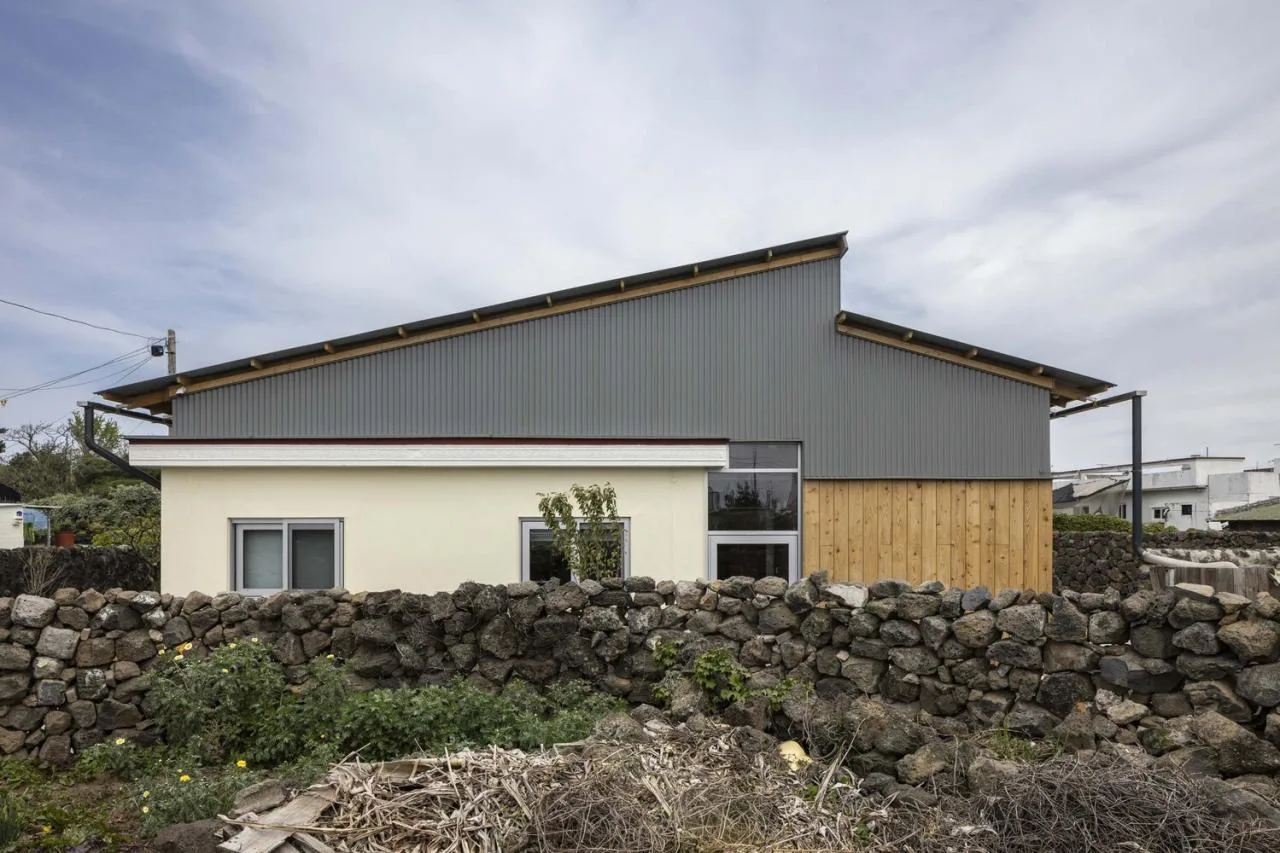
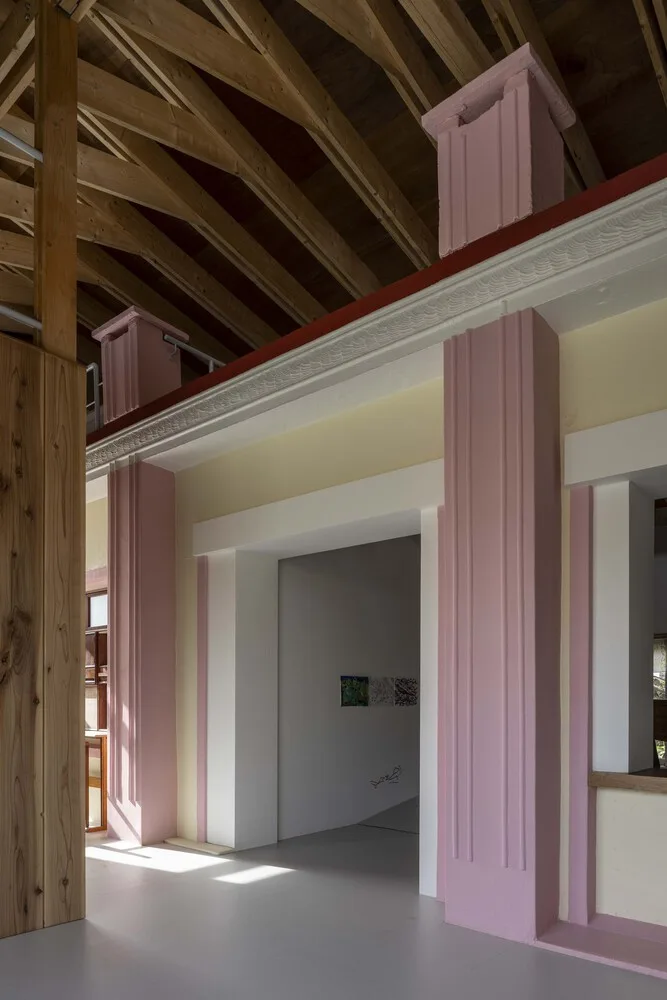
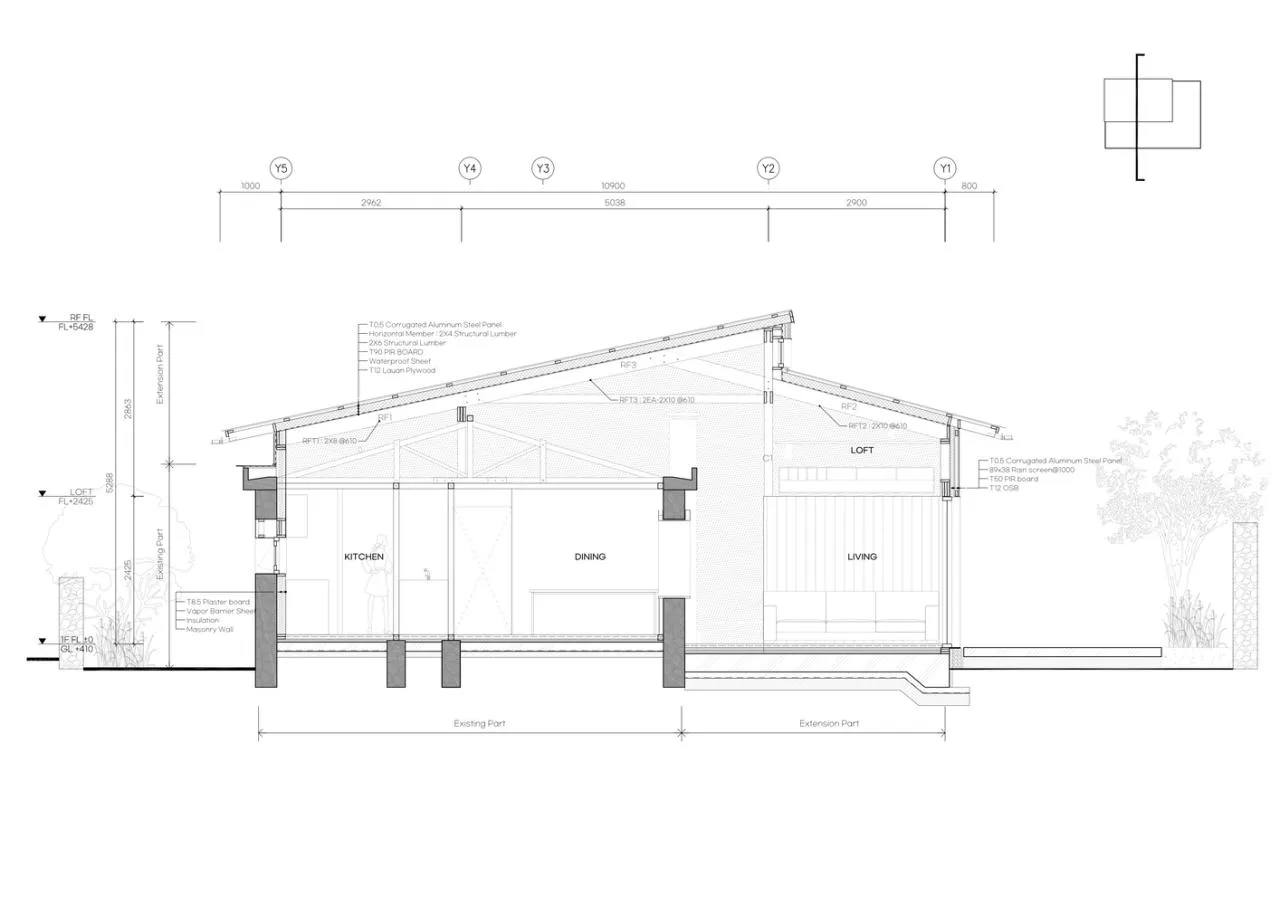
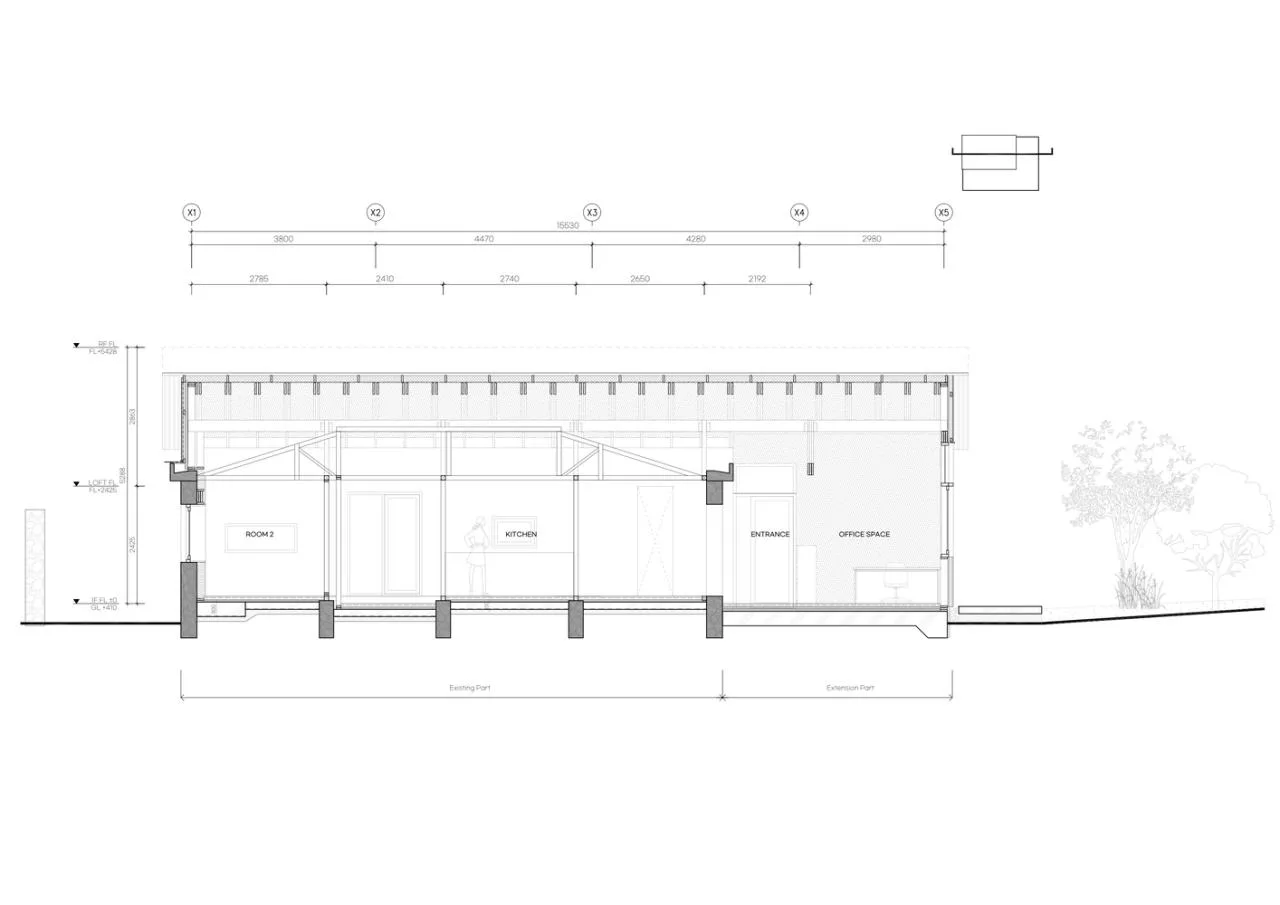
The design approach preserves the existing structure by enveloping it within a new framework, merging old and new spaces under a single roof. This strategy reduces the building’s footprint, enhances structural efficiency, and fosters spatial continuity. Key architectural elements such as the rhythm of columns, the mass of stone walls, and window placements in the original building serve as crucial references for shaping the new design.
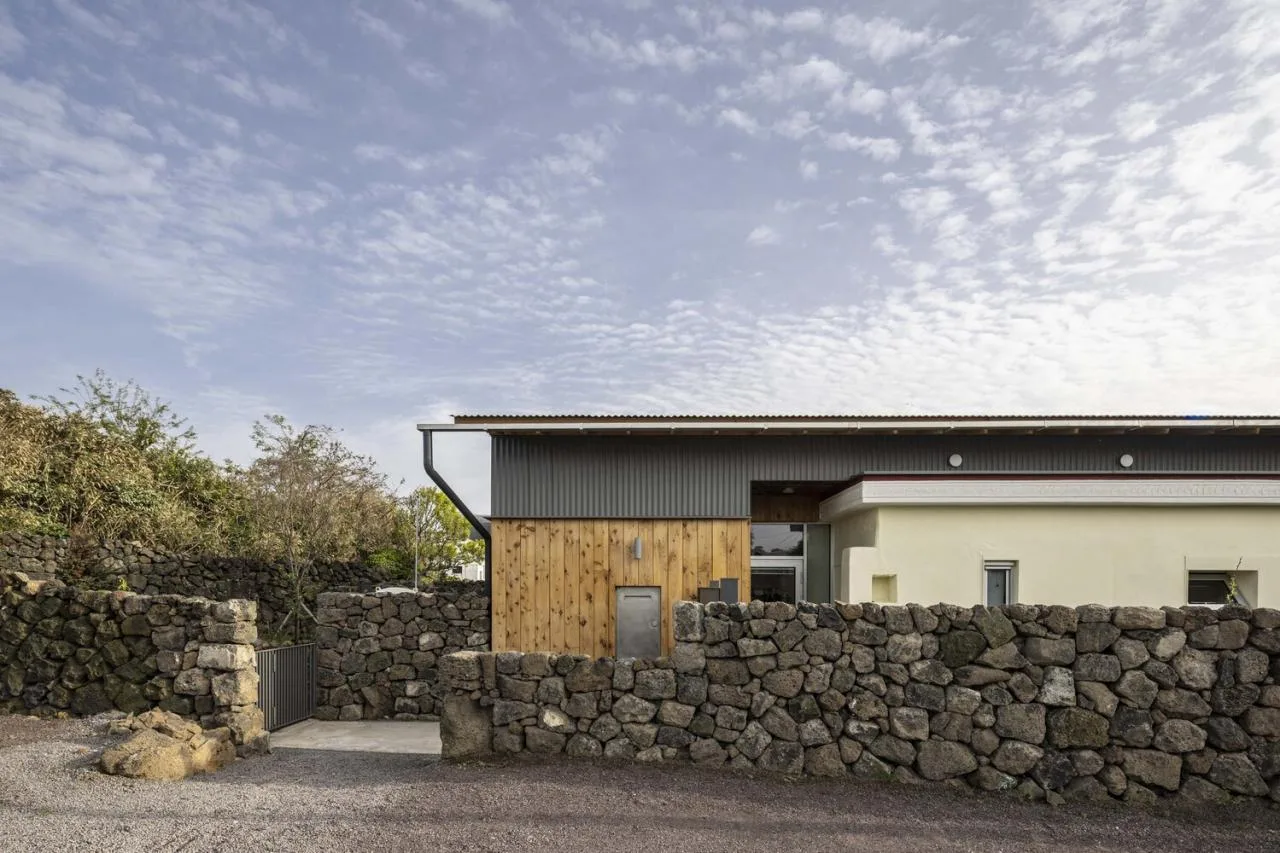
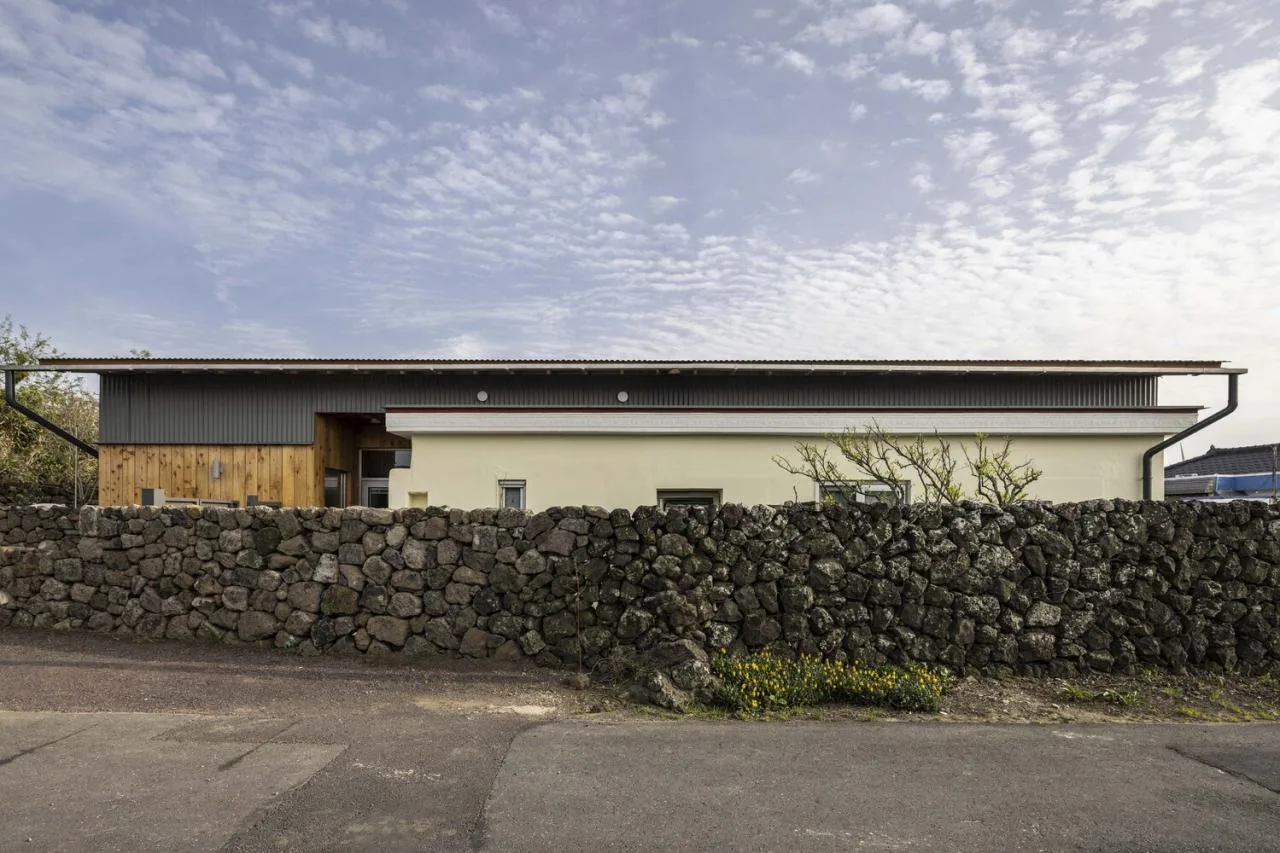
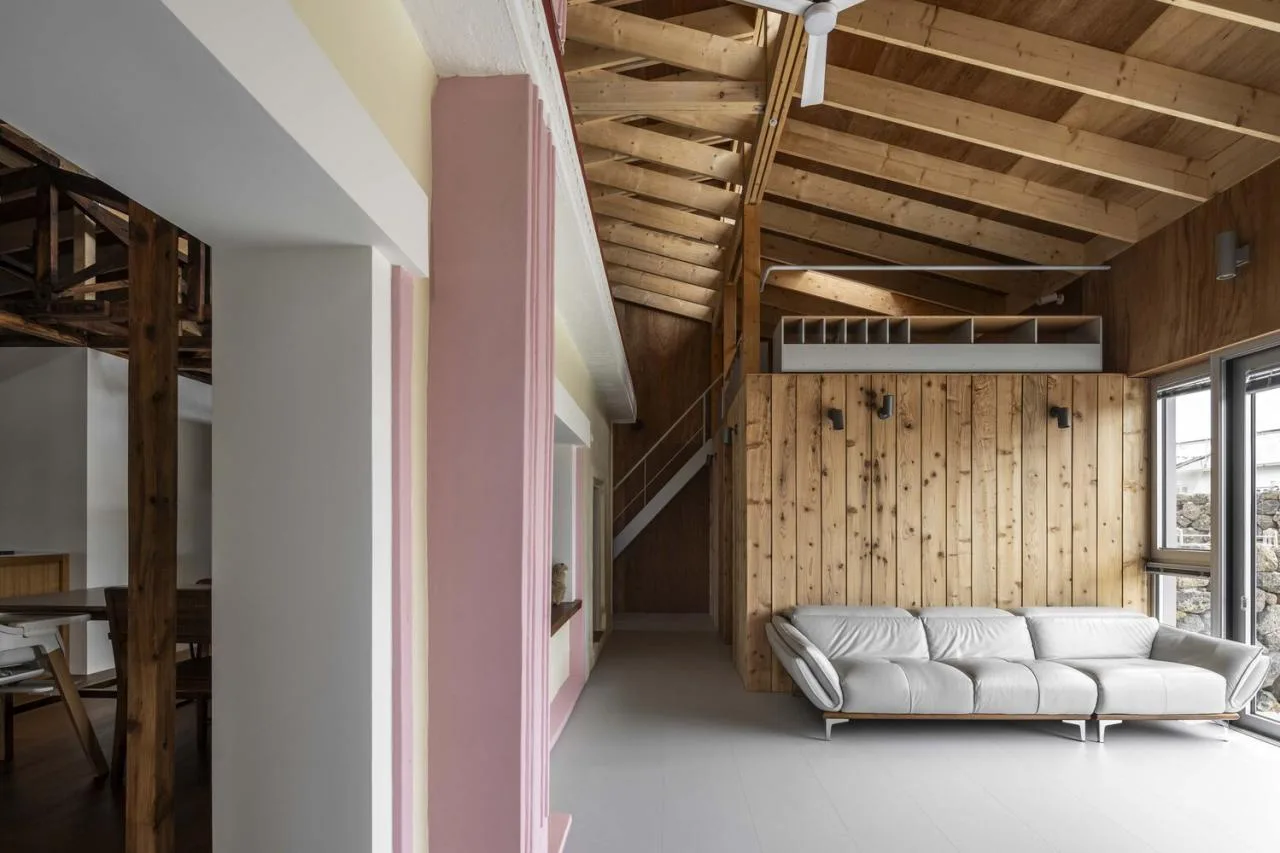
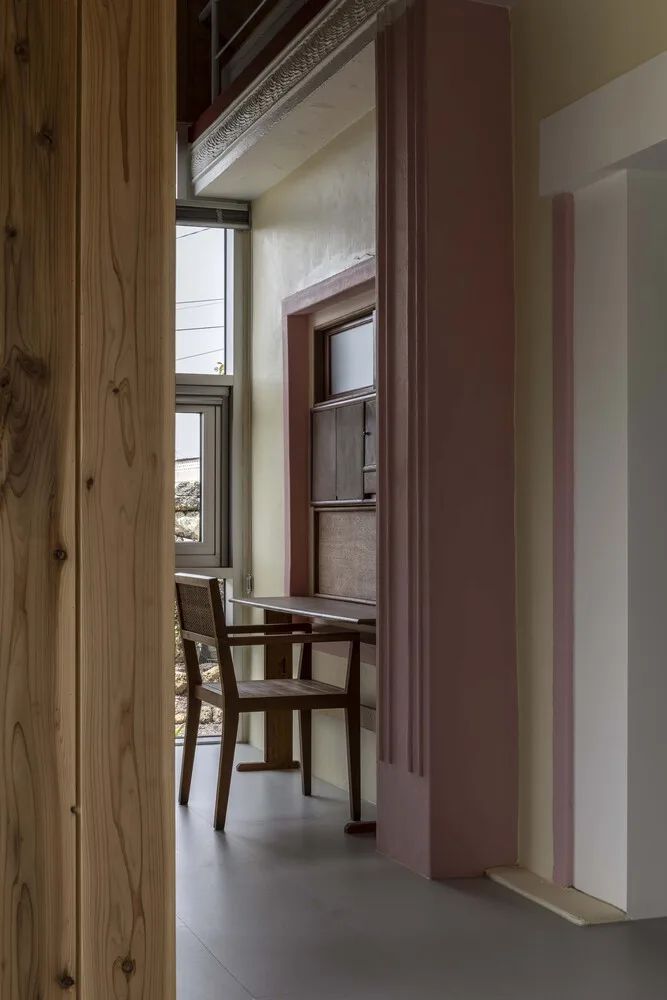
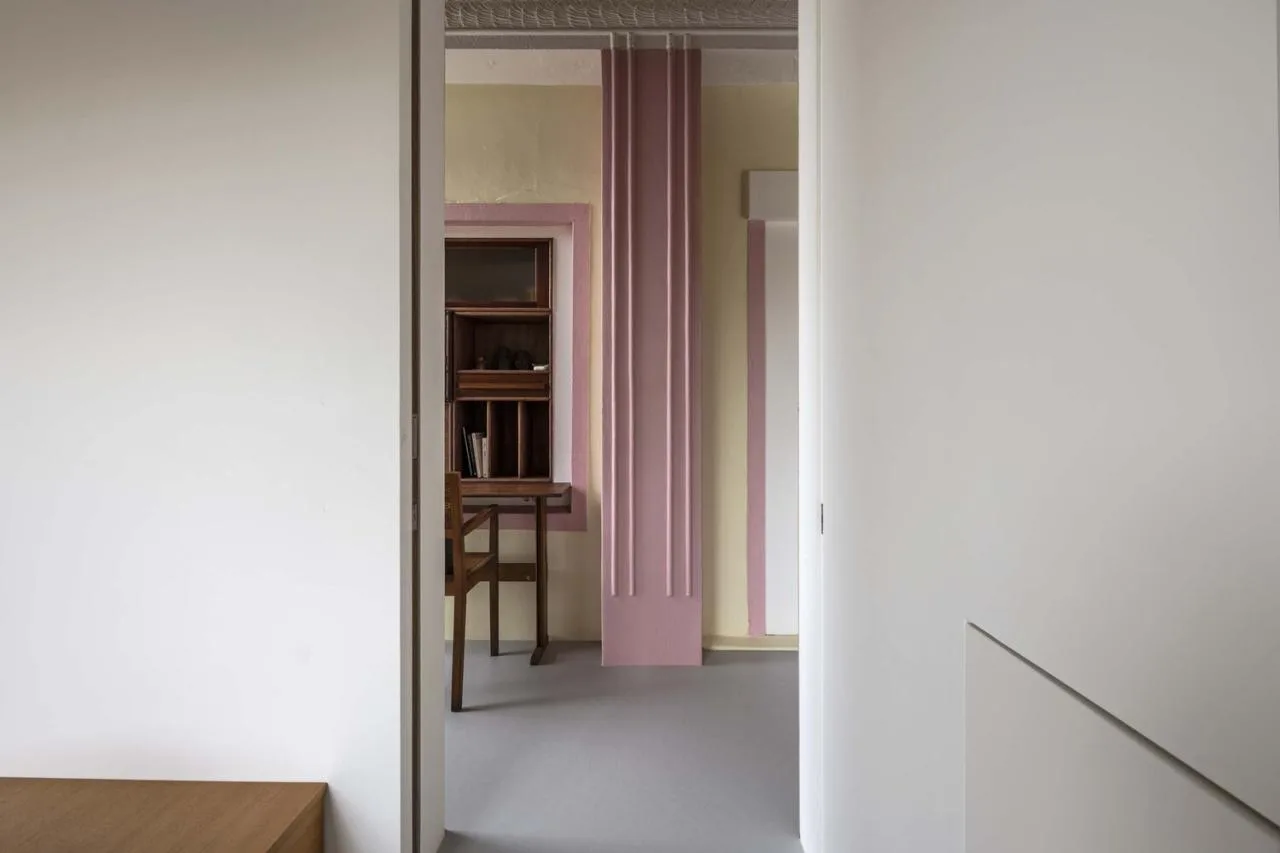
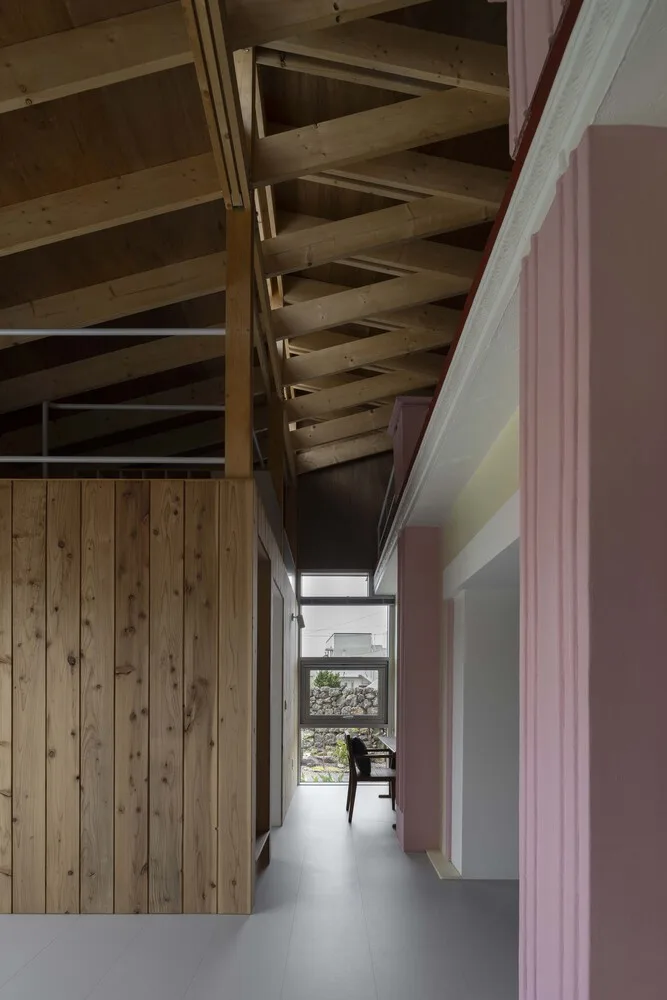
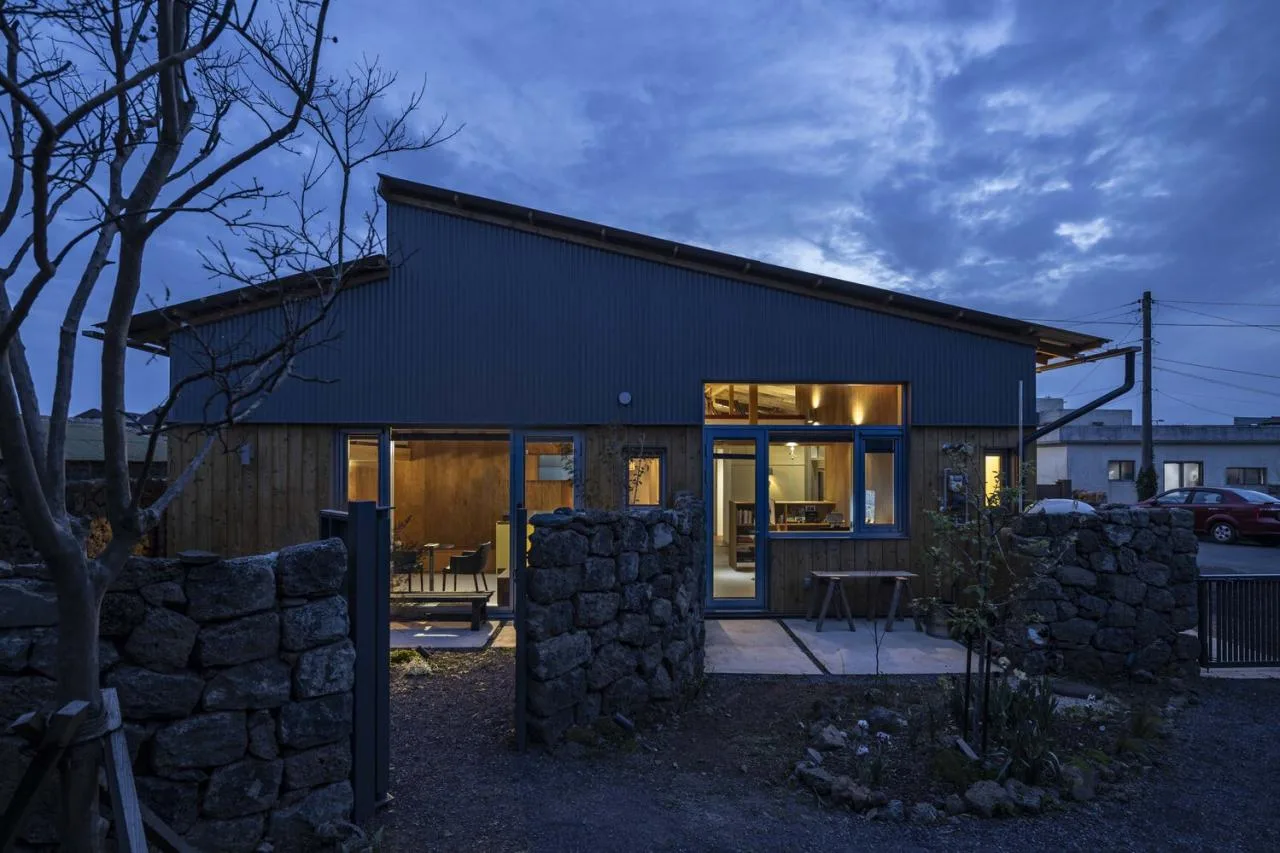
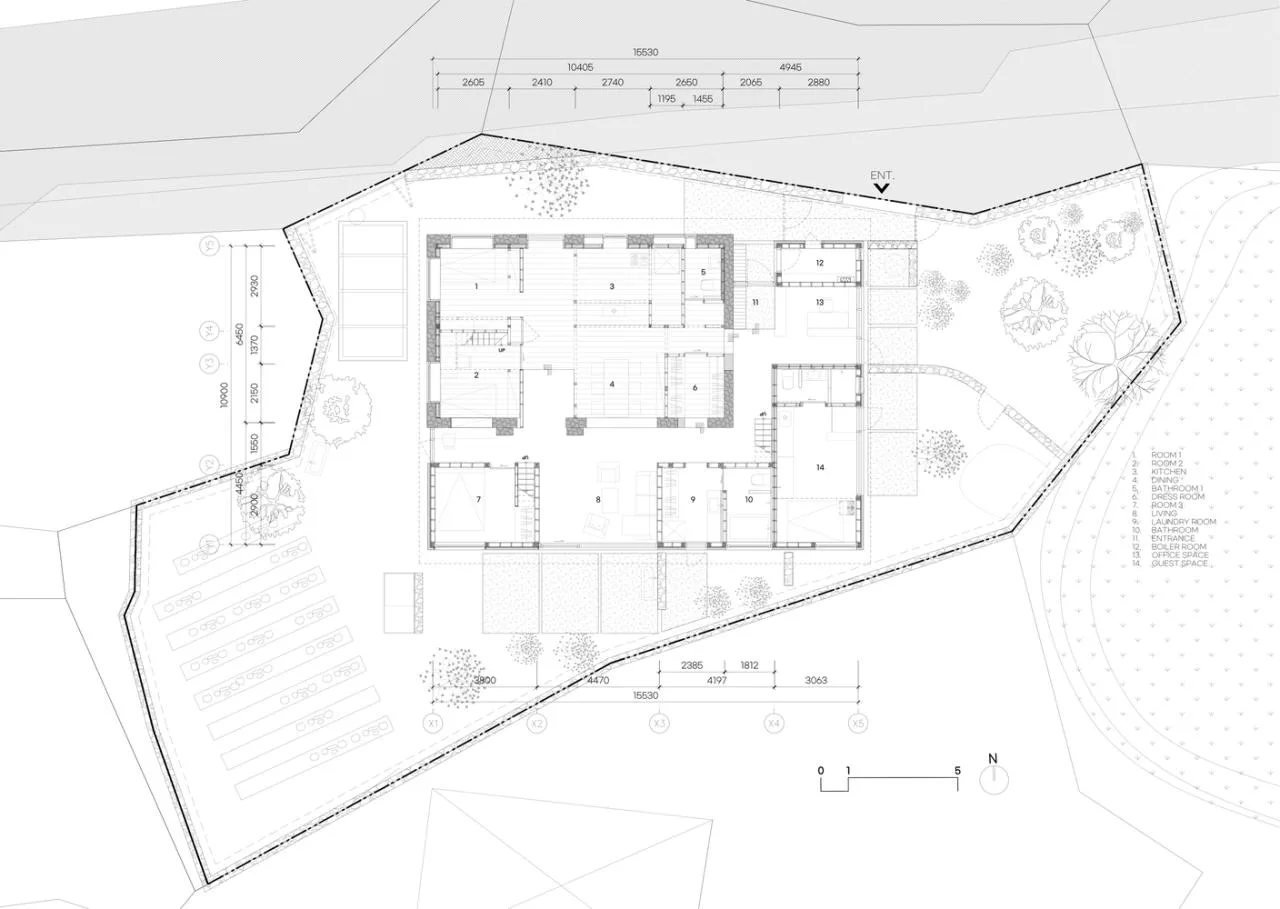
A new room has been added adjacent to the original bedroom courtyard, along with a bathroom, changing room, and laundry area arranged near the original kitchen and shared spaces to optimize daily living flow. This functional space is designed as a single-story box positioned in front of the existing house. The gap between them retains the openness and flexibility of the original courtyard, now serving as a new living room. Meanwhile, the former living room has been transformed into a kitchen and dining area, creating an open-plan LDK (living, dining, kitchen) space that seamlessly connects indoors and outdoors, as well as old and new areas.
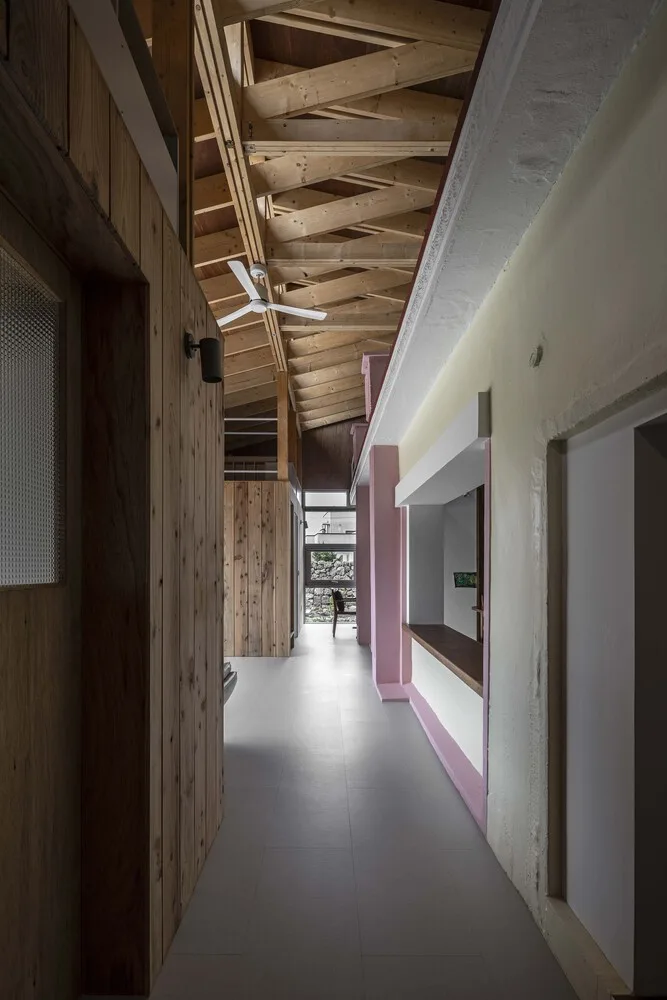
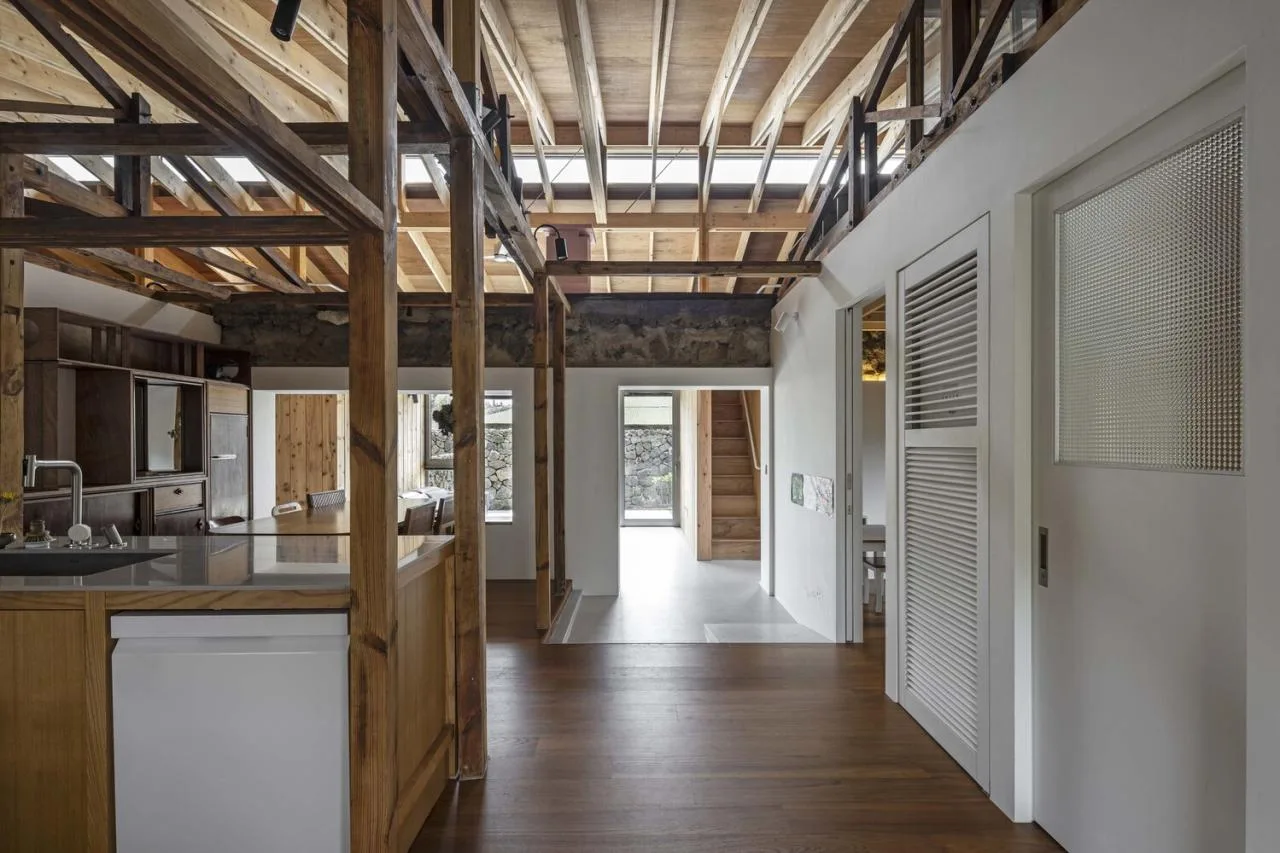
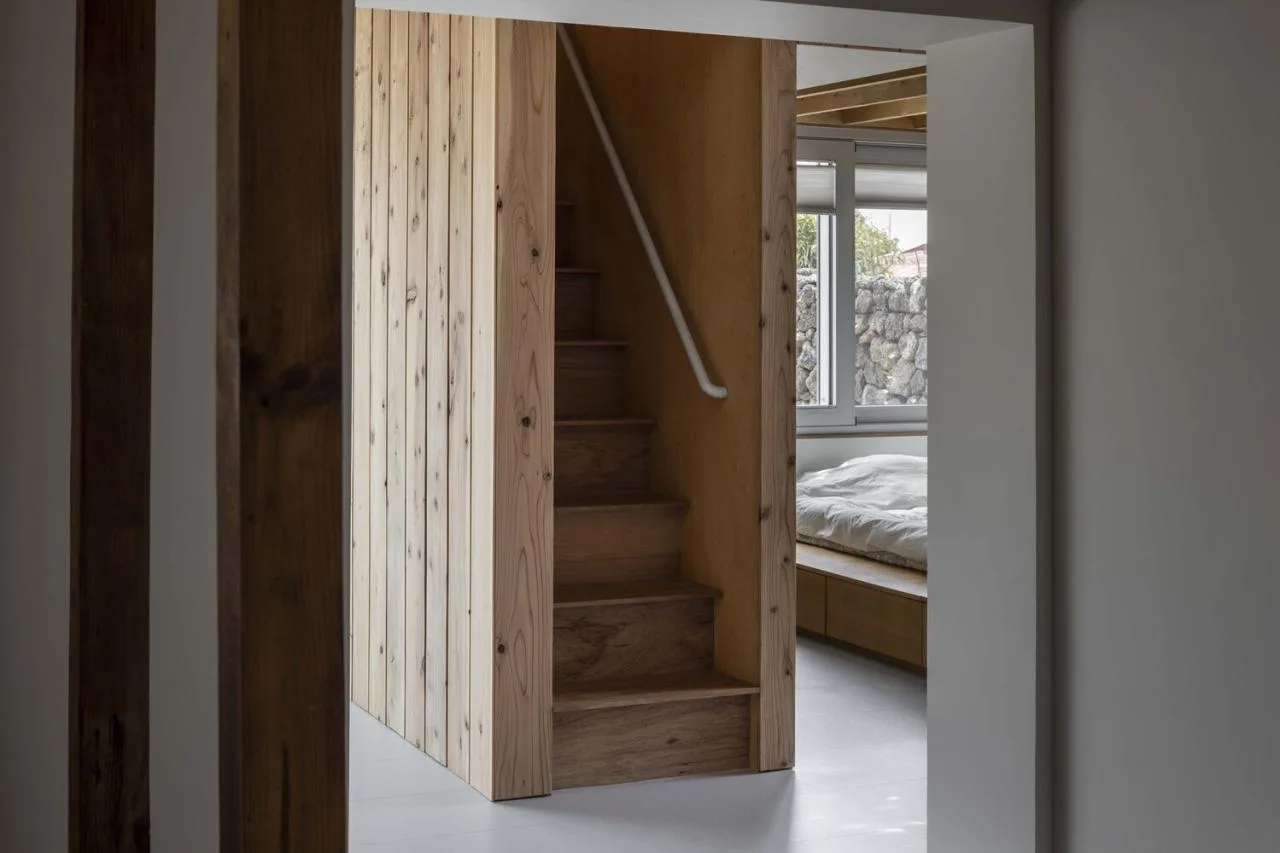
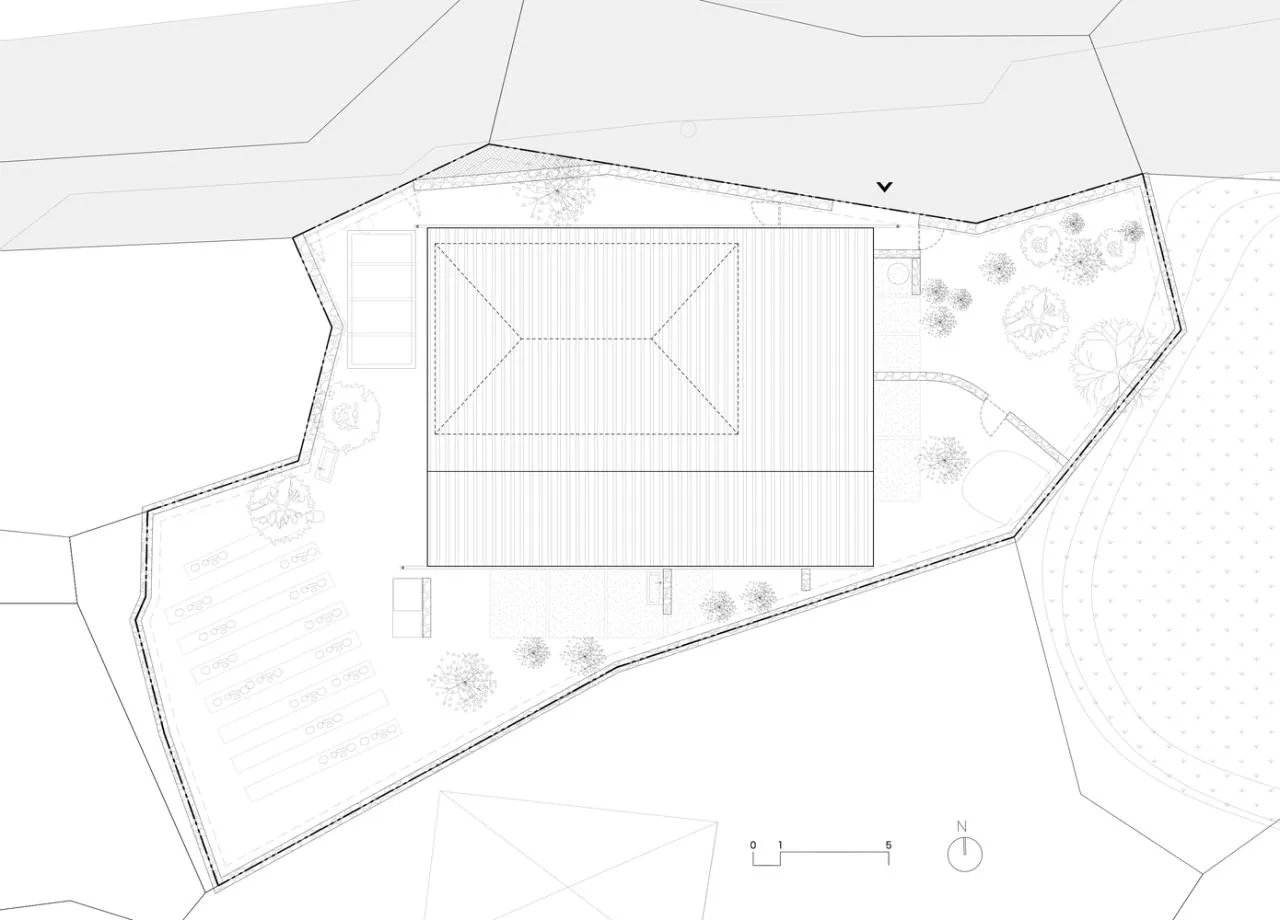
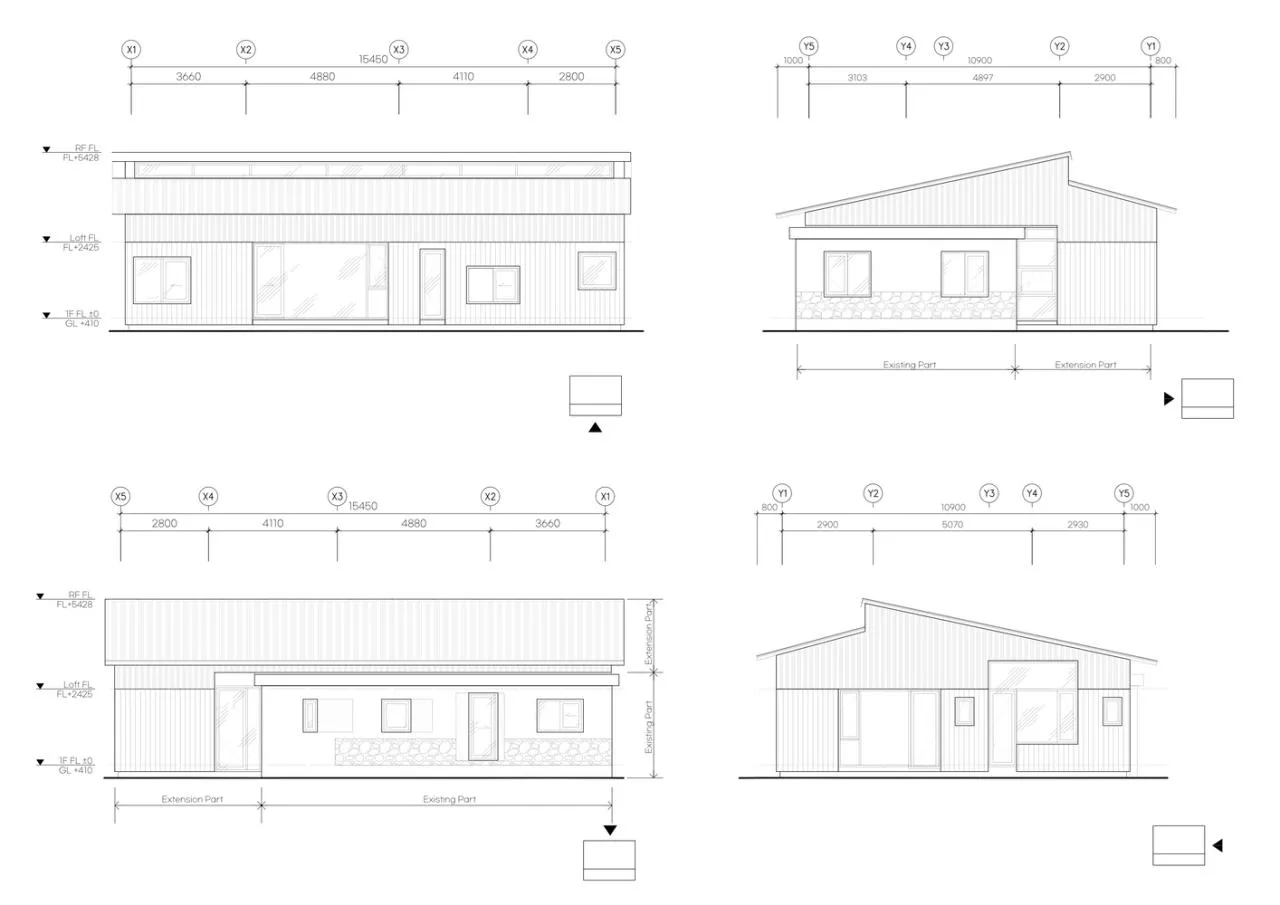
Because the original building sits on the northern edge of the site, the addition naturally extends southward. To address lighting issues caused by the increased depth, the gable roof is cleverly staggered, allowing natural light to filter through the gap into the interior. To cover the existing 11-meter span and a 4.5-meter extension with a lightweight wooden roof, two main beams and roof joists were installed. The original wooden frame was reinforced to support the northern main beam, while a partial steel frame was introduced in the extension to support the southern main beam, which also forms the upper side window. For cost efficiency and flexibility, both load-bearing walls and steel frames were assembled on-site using standard wood and plywood materials.
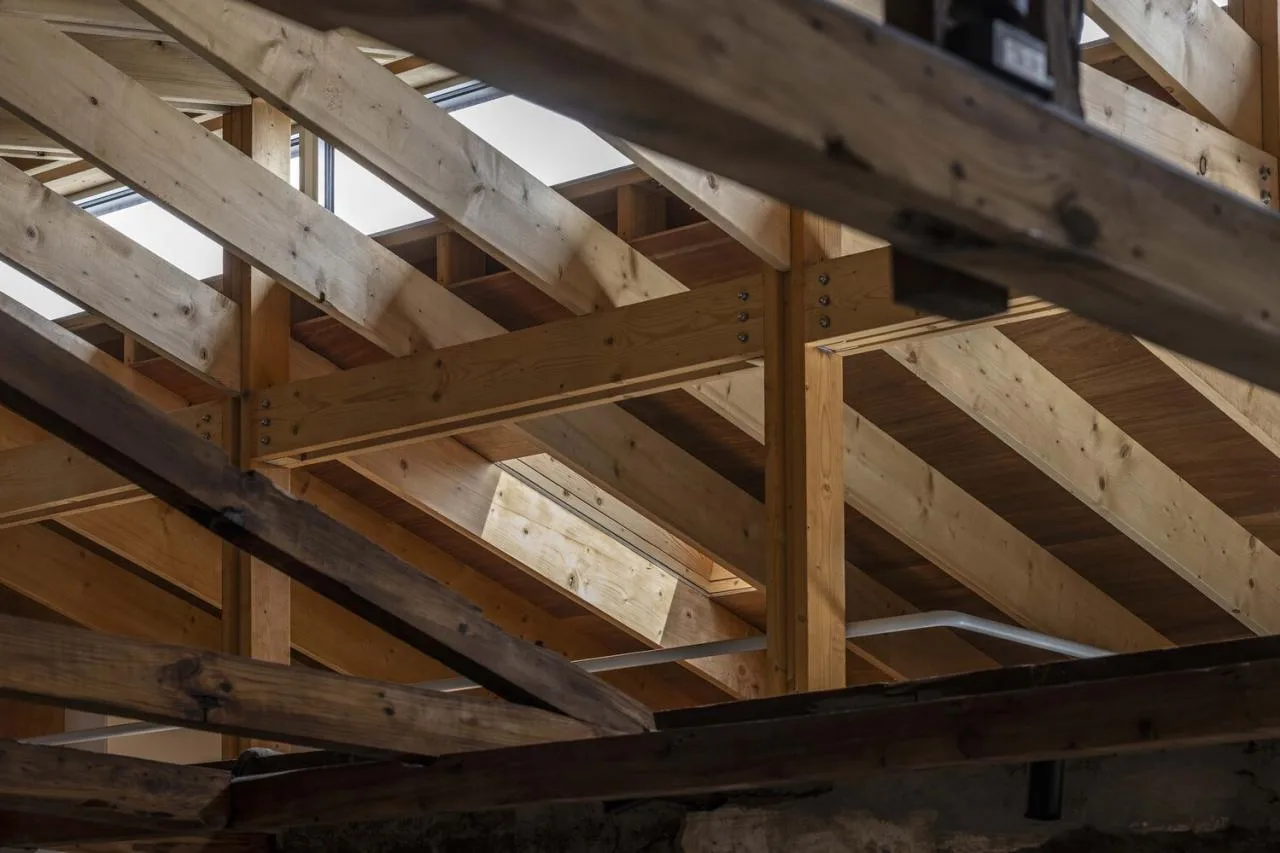
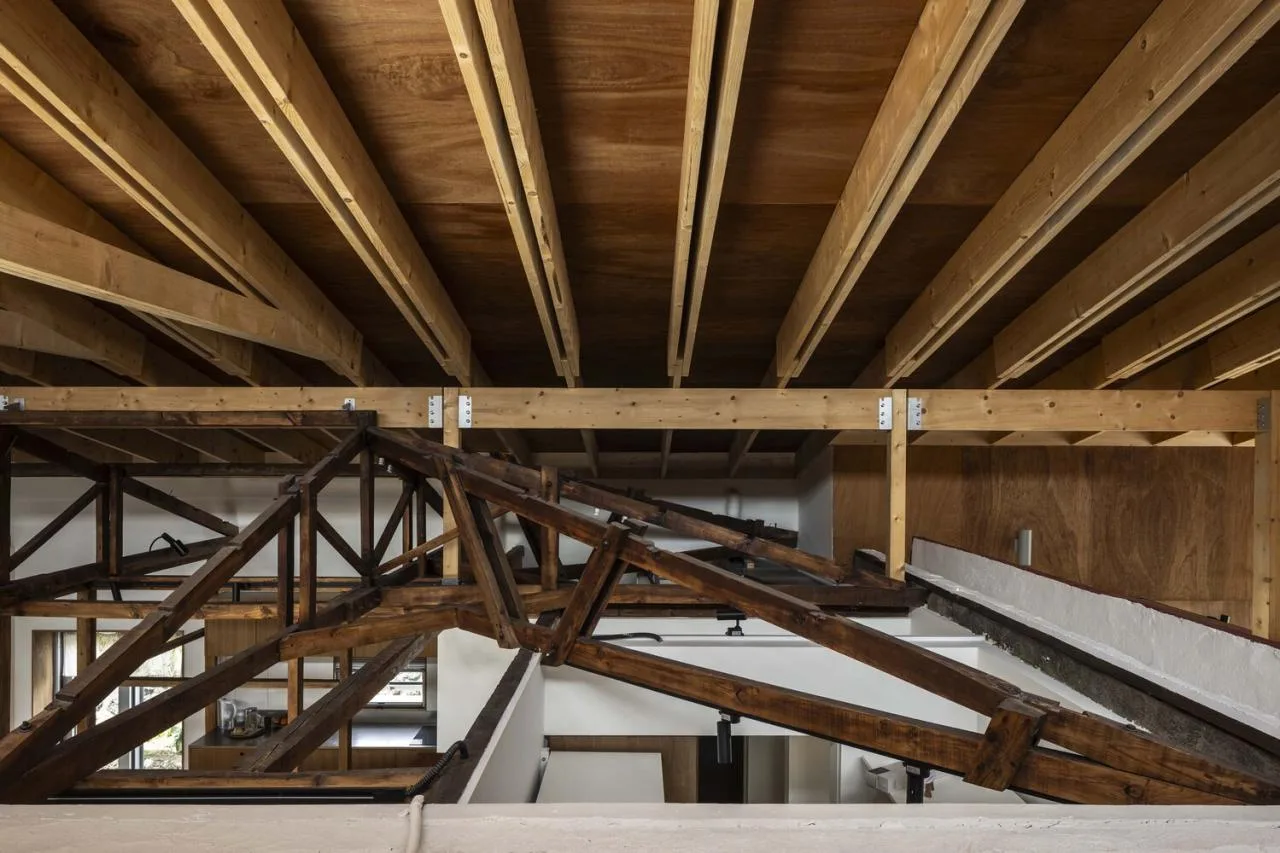
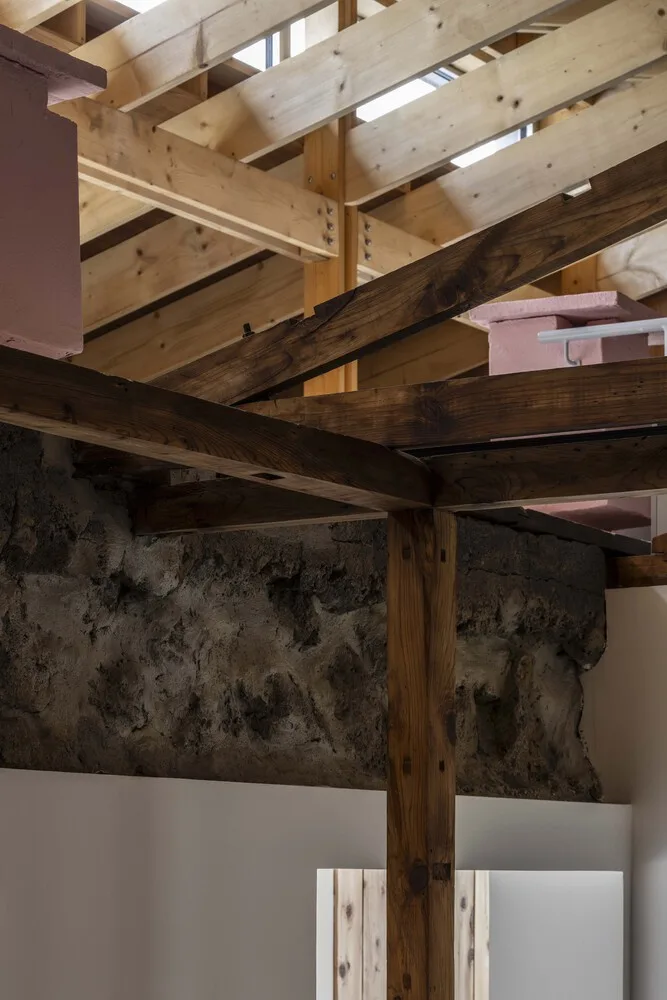
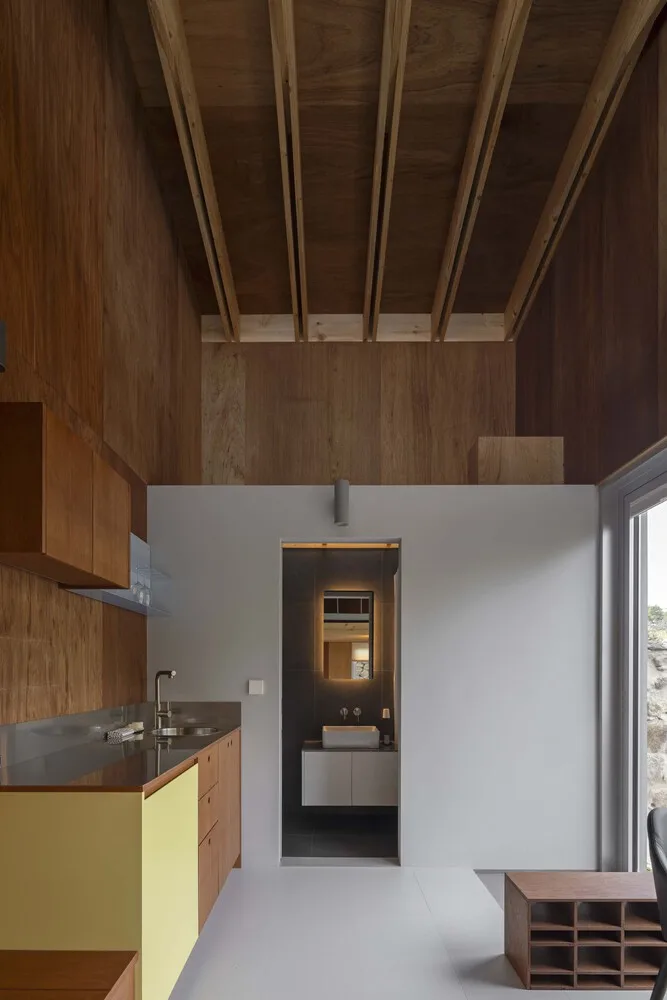
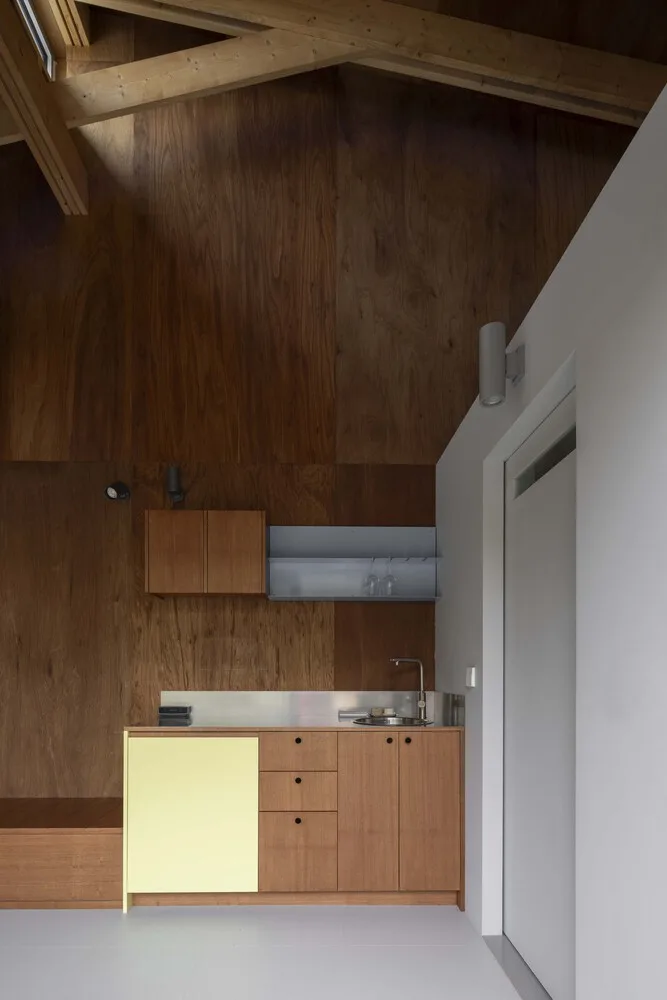
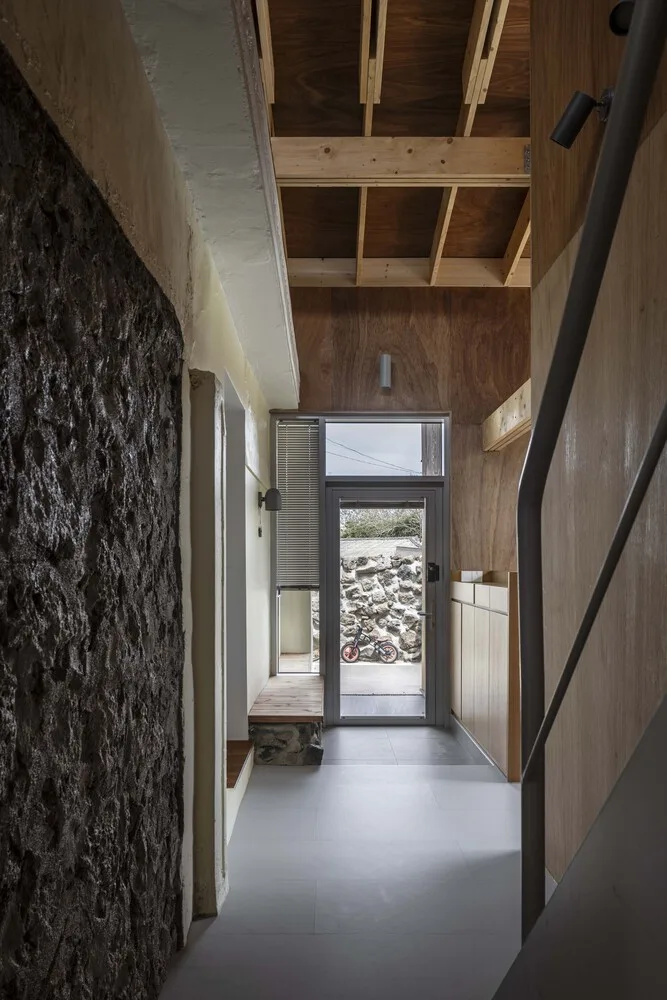
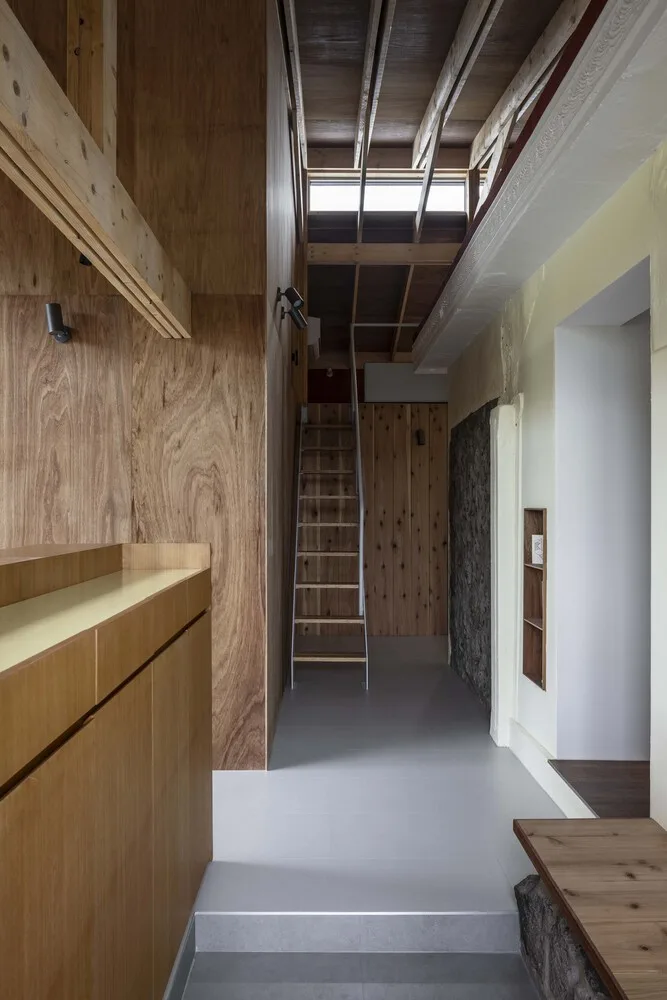
On the east side, an office and guest room have been added, with an entrance positioned between them to separate the different functional zones. This entryway extends inward like a small alley, naturally linking the existing and new areas and creating a circular flow throughout the entire house. Inside, the old stone walls, chimneys, and eaves—once external features—remain intact and undisturbed. These historic fragments not only add material texture to the new structure but also impart a profound sense of time and permanence.
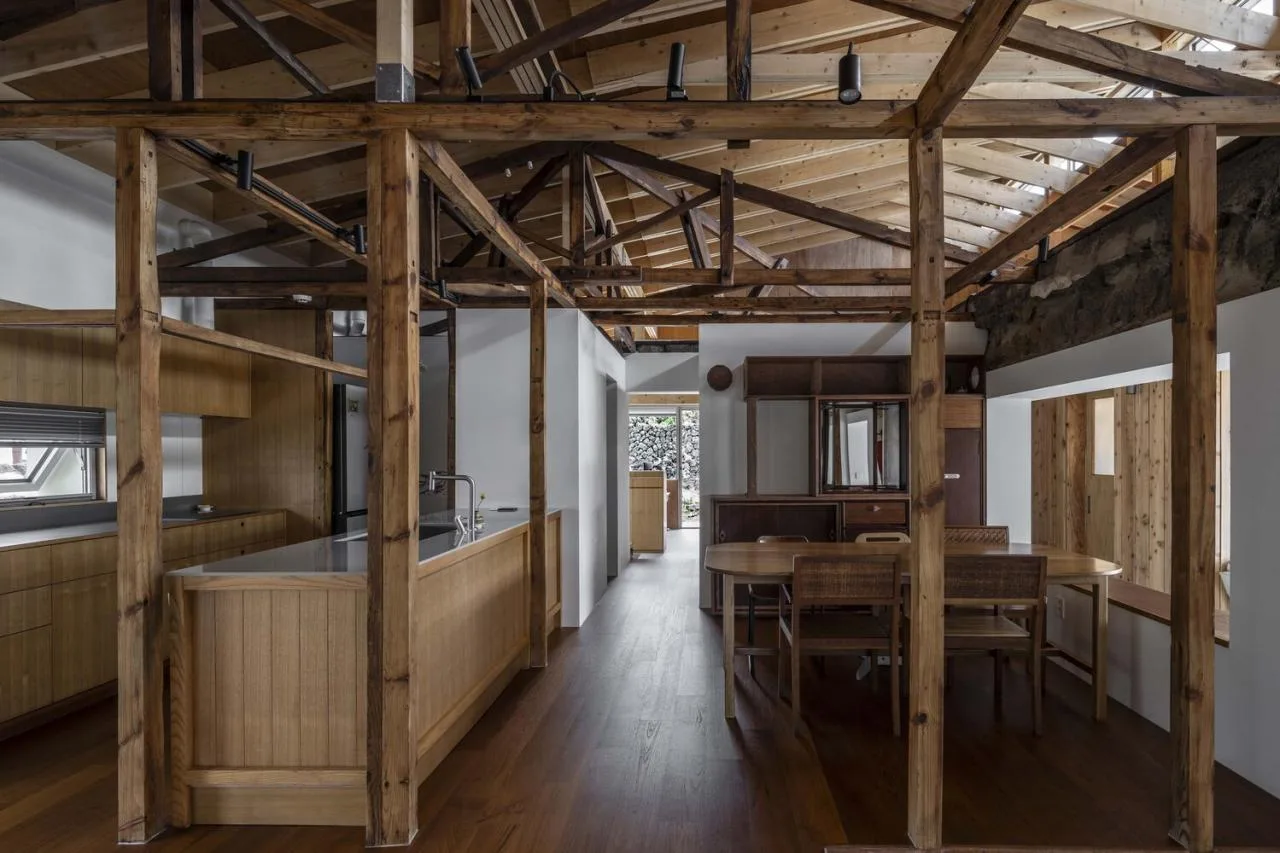
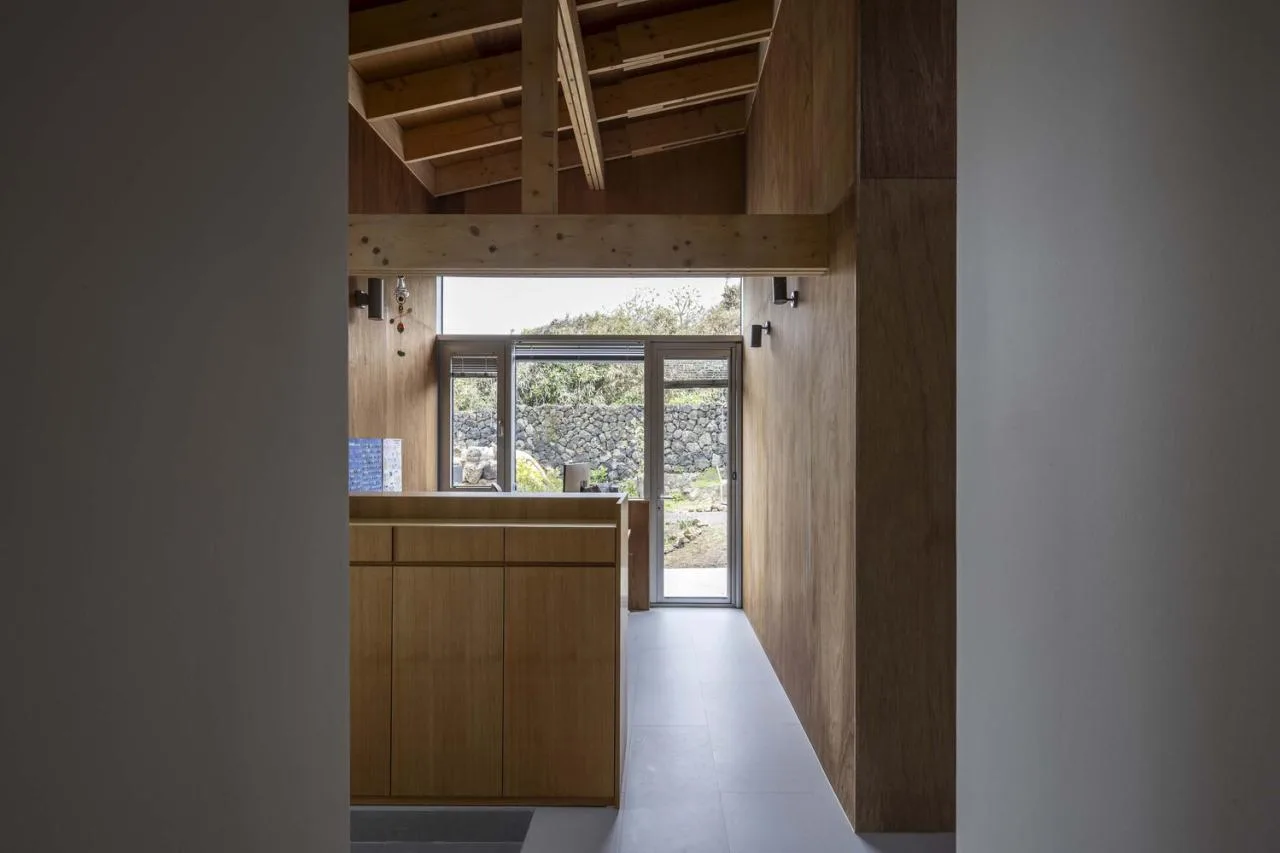
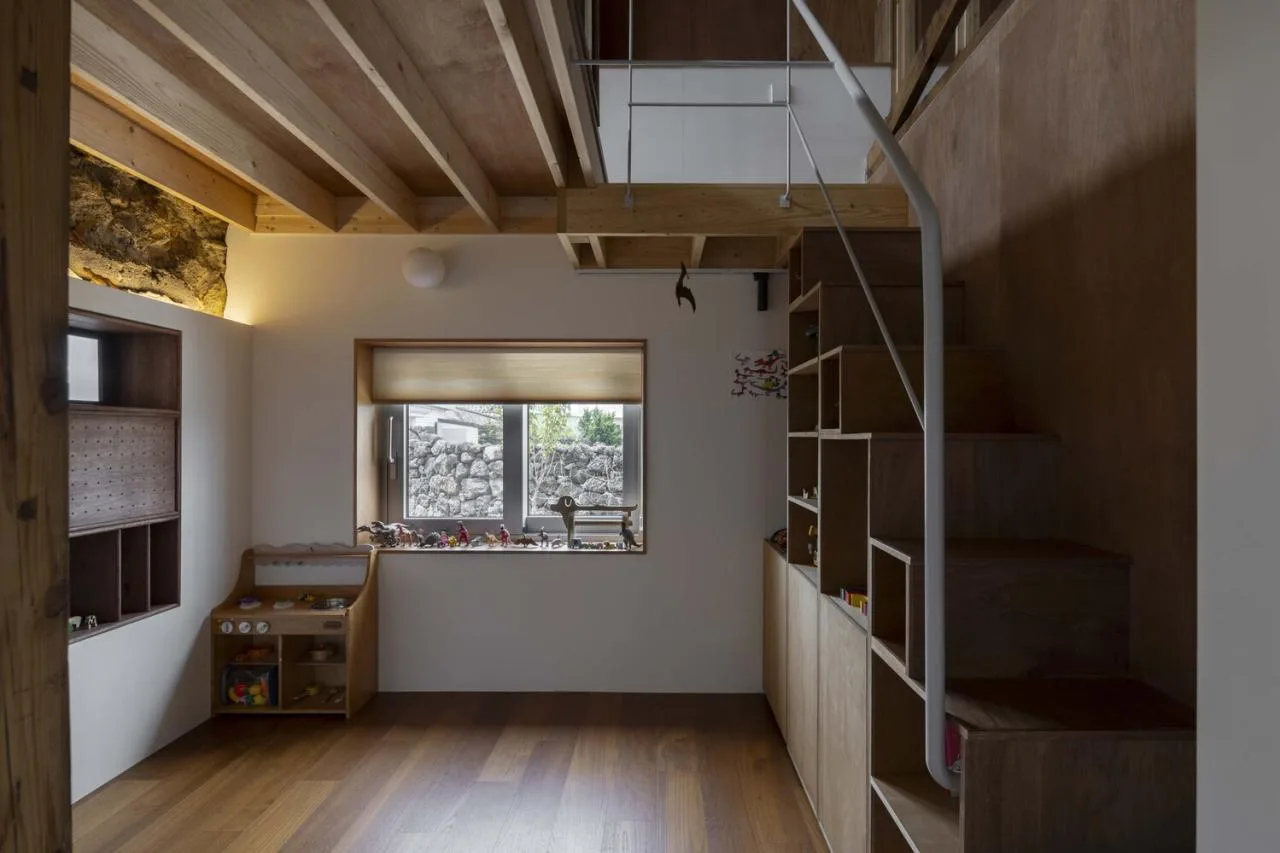
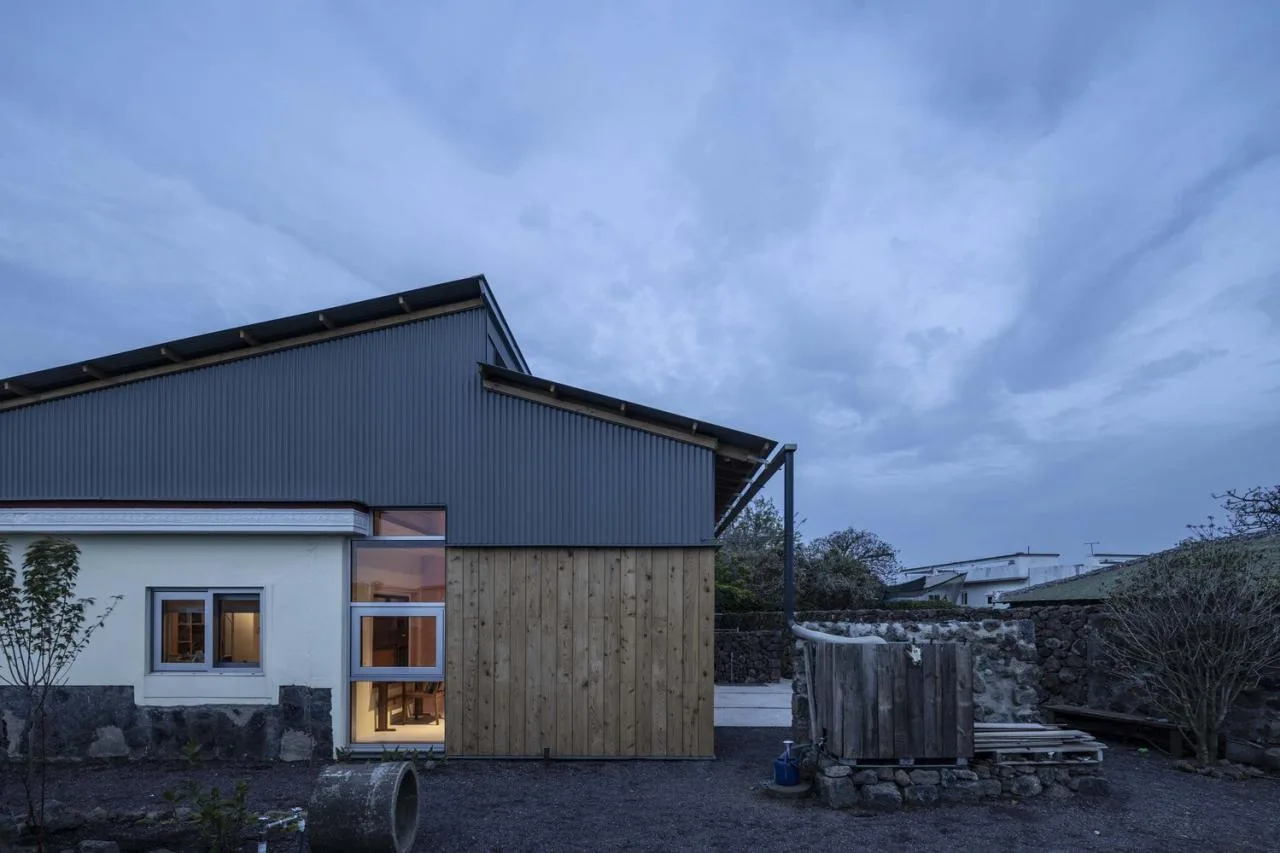
This house stands as an architectural proposal that draws on the memories and atmosphere of traditional Jeju Island homes as a foundation for creating a new living environment. By layering new structures over the old, it weaves together past and present, interior and exterior, old and new—forming a future home built upon these interwoven layers.












Must log in before commenting!
Sign Up