
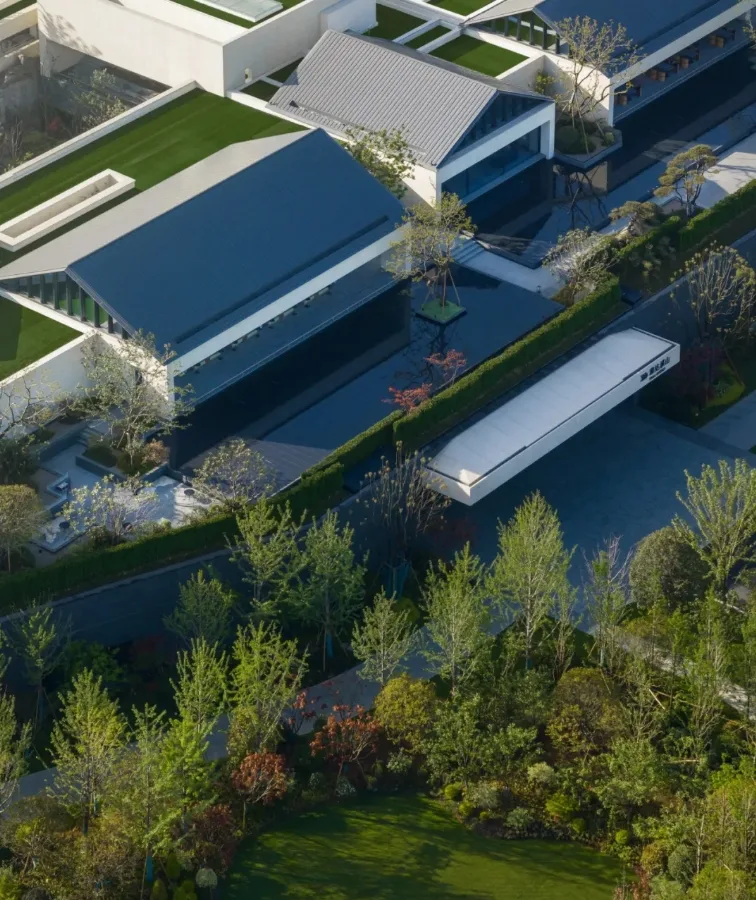
△ Aerial view of the entrance © Architecture Photography
“Through carefully designed sightlines and pathways, even a small patch of landscape can transform into an endless spatial journey, reminiscent of traveling through rivers and mountains.” – Chen Binxin, Chief Architect of Elephant Design
Located in the northeast of Yangxian Xishan Town, Yixing Yada Xishan Hotel is part of a series of projects by Goa Elephant Design, following their completion of the town’s regional planning and detailed design. The site, a narrow slope bordered by a residential area and a stream, inspired the architect to evoke the secluded mountain valleys of Yixing. Drawing on the Song Dynasty painter Fan Kuan’s masterpiece, Journey to the Mountains and Streams, the design captures the spirit of exploration and natural beauty.
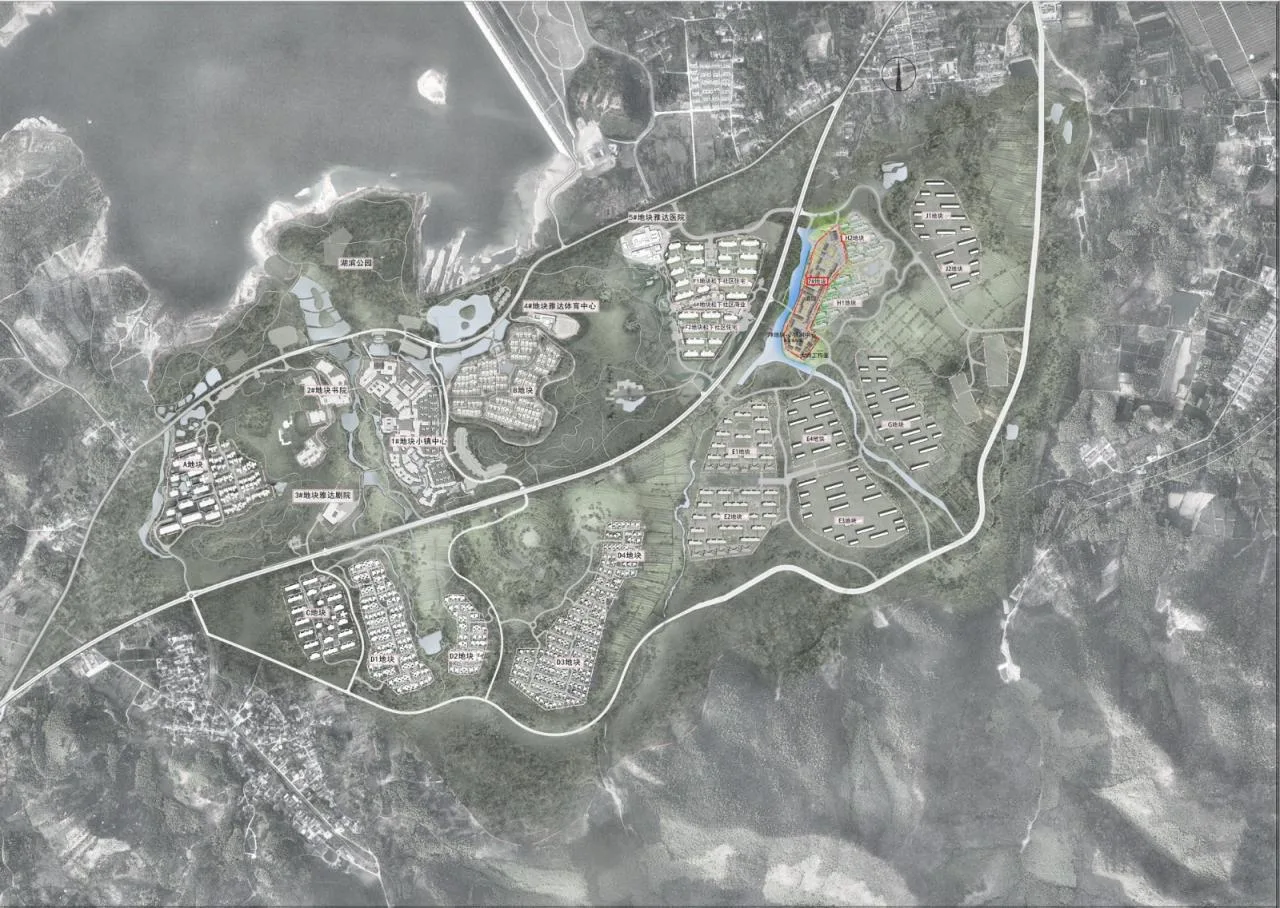
Location of the venue © Goa Elephant Design
For visitors, the charm of Xishan lies in its unpredictability. Trees and rocks along winding paths obscure views, inviting travelers to anticipate and delight in the unfolding scenery. While recreating the exact scenes from the painting within a confined space is challenging, the design uses metaphor and symbolism to convey the essence of mountains and rivers, translating it into architectural and landscape elements that evoke a distinctive travel experience.
Mountain and Water Integration
The hotel is set on a slope with an 8-meter elevation difference between its ends. The design organizes the hillside into two terraces following the natural terrain. Careful grading minimizes the height difference between public areas and guest rooms, creating a continuous, comfortable walking experience.
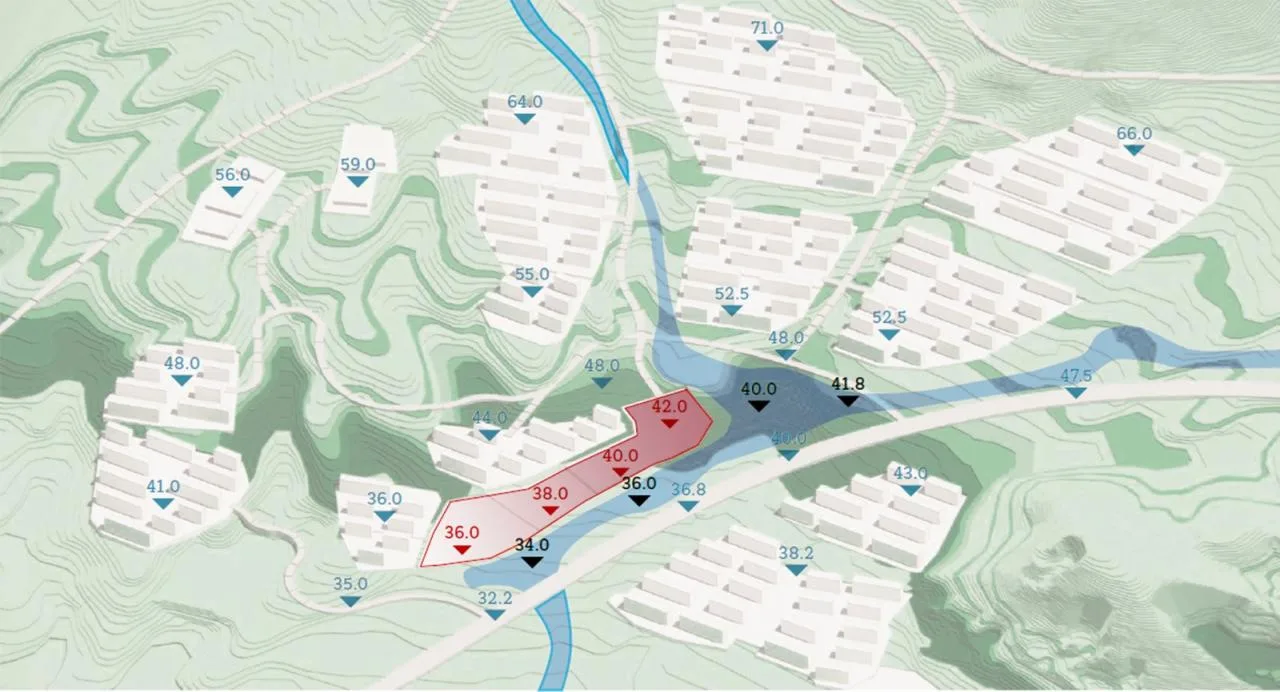
△ Grading reduces earthwork excavation needed for logistics and parking © Goa Elephant Design
The more open northern end hosts the public areas, while guest rooms extend southward along the slope. The sloping roof draws inspiration from local dwellings, rendered with a simple geometric form using freehand brushwork techniques.
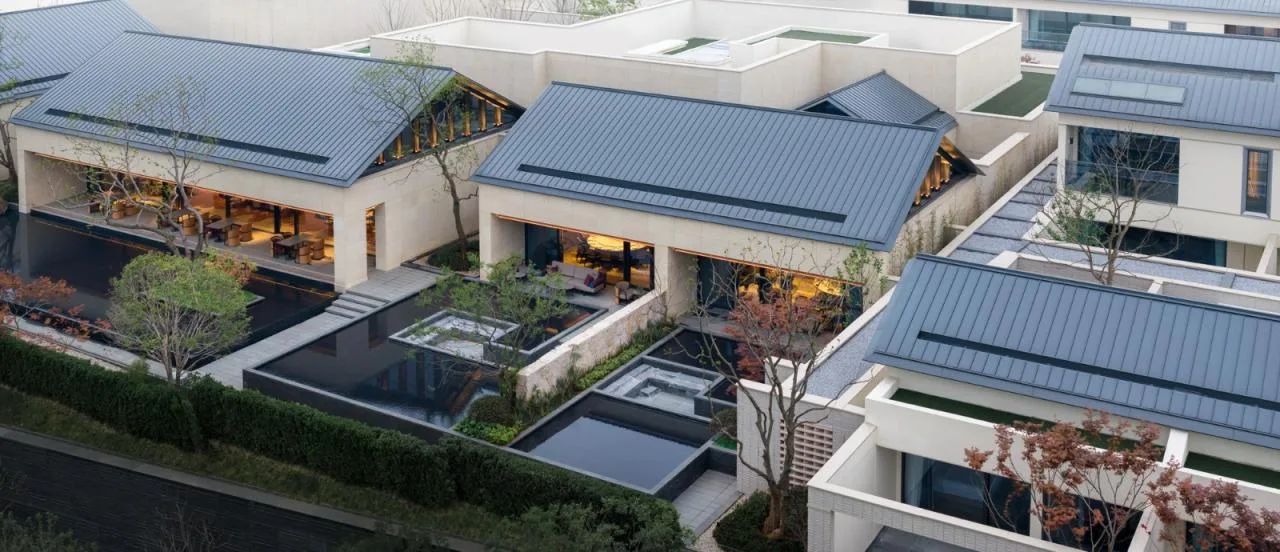
△ Distinctive building volume © Architecture Photography
The choice of materials emphasizes the building’s boundaries: solid black stone forms the hotel’s base, reflecting the texture of the mountain. Warm gray stone clads the public area façade, while decorative flower bricks are used for corridors and the first-floor walls of guest rooms.
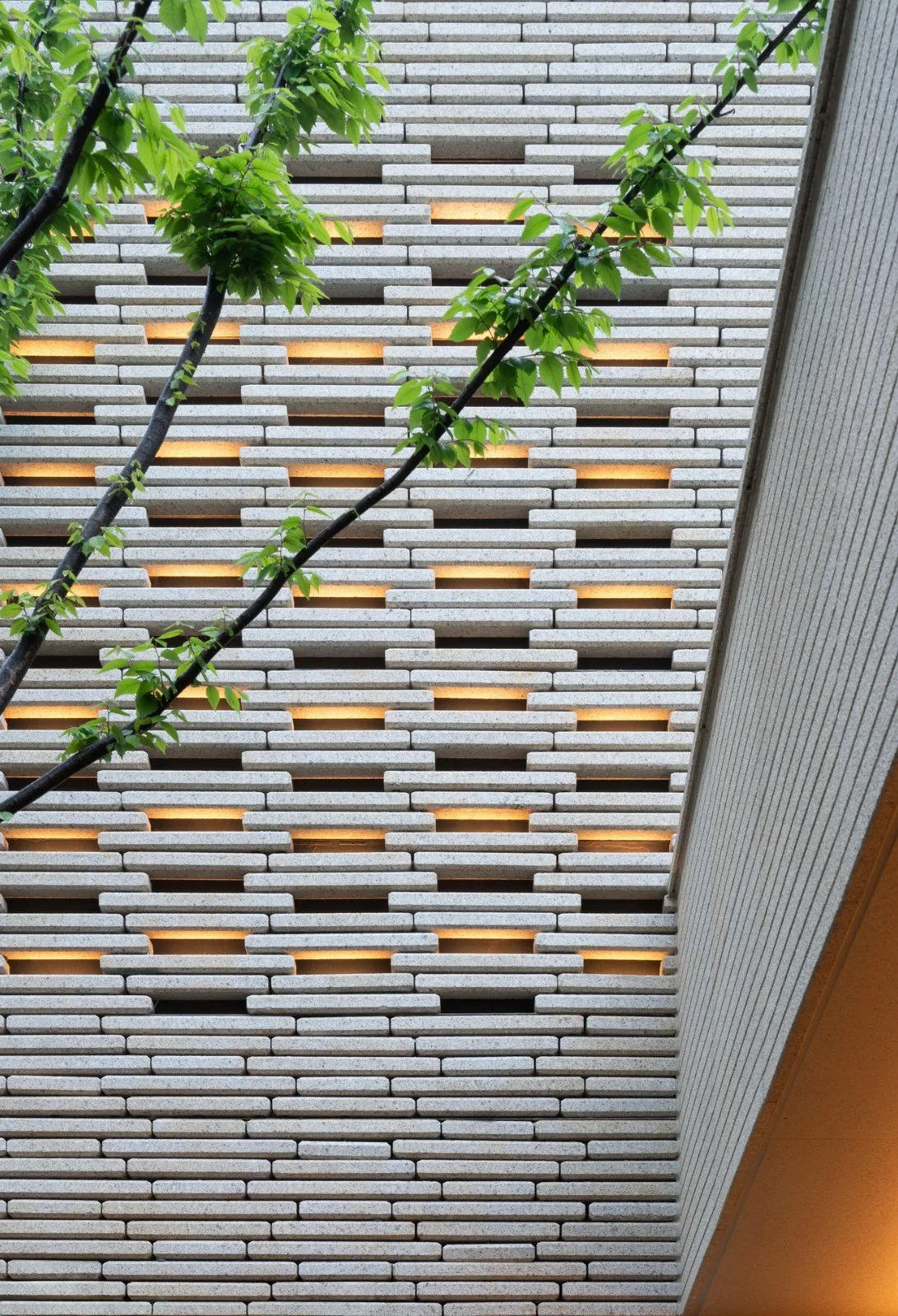
The flower brick tiling introduces subtle variations along the continuous façade © Architecture Photography
For a resort hotel, the landscape interface facing northwest towards distant mountains is especially valuable. The lobby, bar, and restaurant are arranged linearly to embrace the view. The flowing water features symbolically represent streams and ravines, creating a multi-level landscape sequence framed by dense forests and distant peaks.
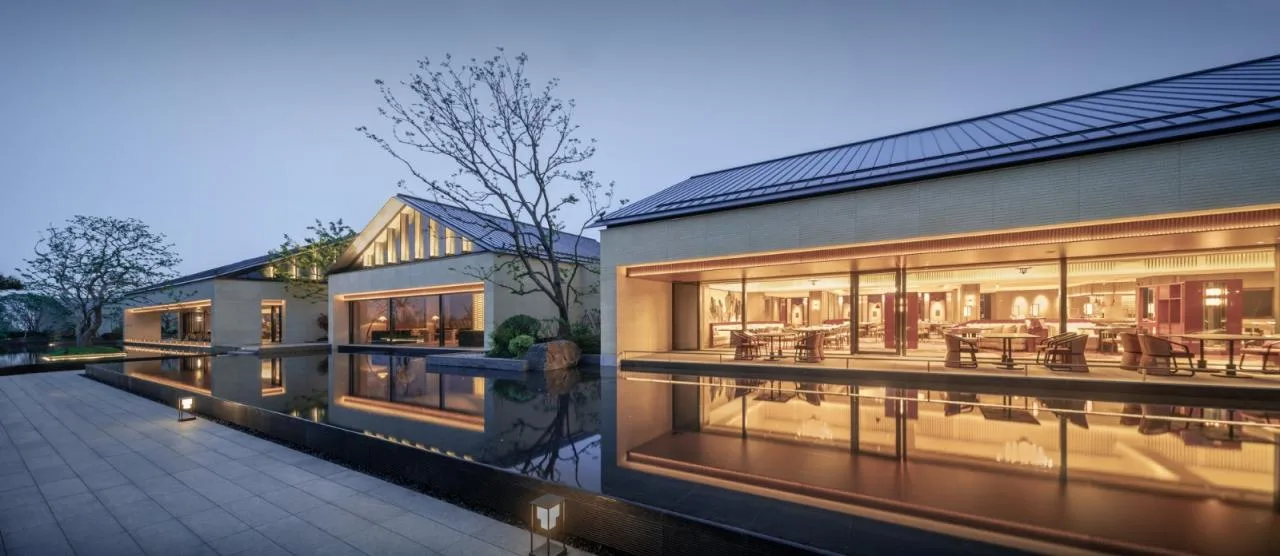
The grey space opens toward the water, blurring the boundary between inside and outside © Architecture Photography
Experiencing the Sequence of Senses
For guests arriving at the hotel, the winding road from the highway serves as a prelude to a serene mountain retreat. Turning left, visitors catch a glimpse of a stream called Cangwu Jian in the fading light before arriving at a courtyard nestled at the mountain’s base. Before entering the hotel interior, the sound of a waterfall welcomes them, inviting imagination of the scenery beyond the door.
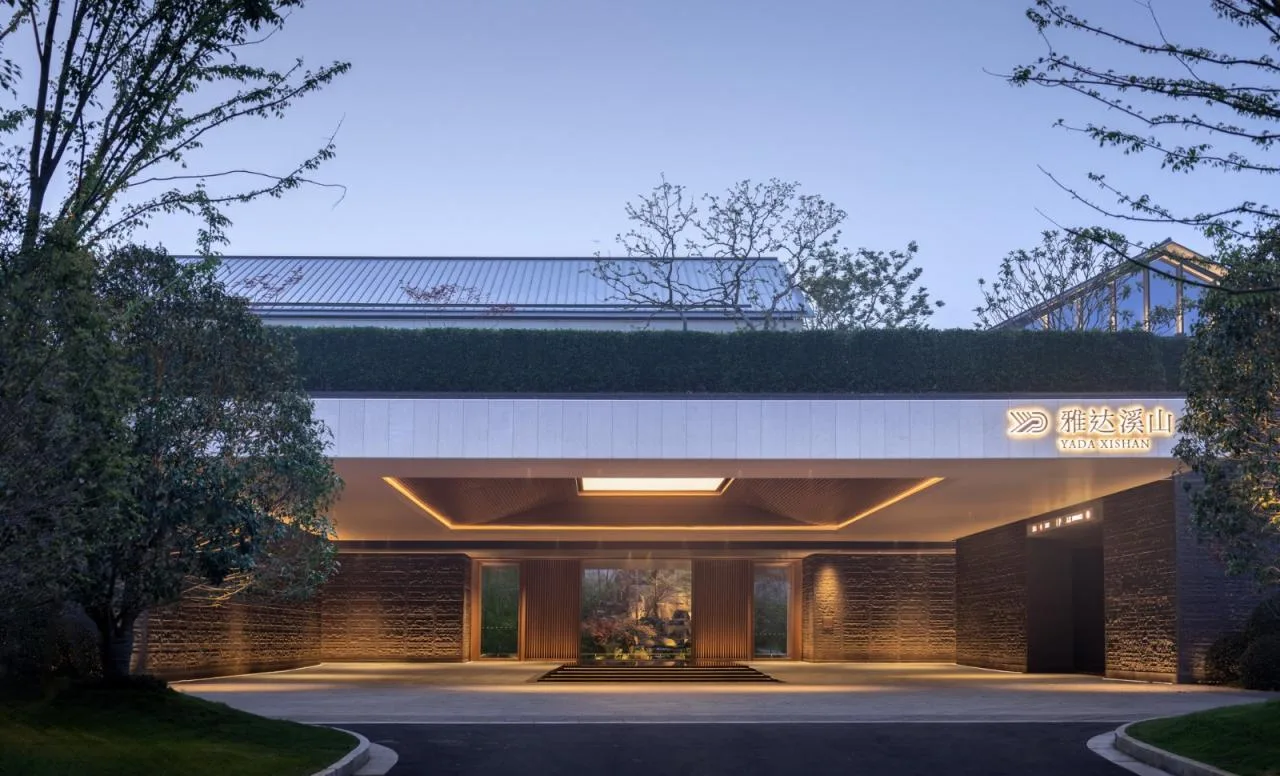
The courtyard-facing gate opens slowly like a curtain © Architecture Photography
The drop-off area’s spatial scale crafts a progressive visual journey: the expansive external view narrows into the drop-off courtyard framed by large eaves, compresses further upon entering the front hall, and then expands again toward the courtyard. Light follows the line of sight, gradually dimming from bright to dark before brightening once more in the courtyard. Skylight filtering through the tree canopy creates a vivid, enchanting visual effect.
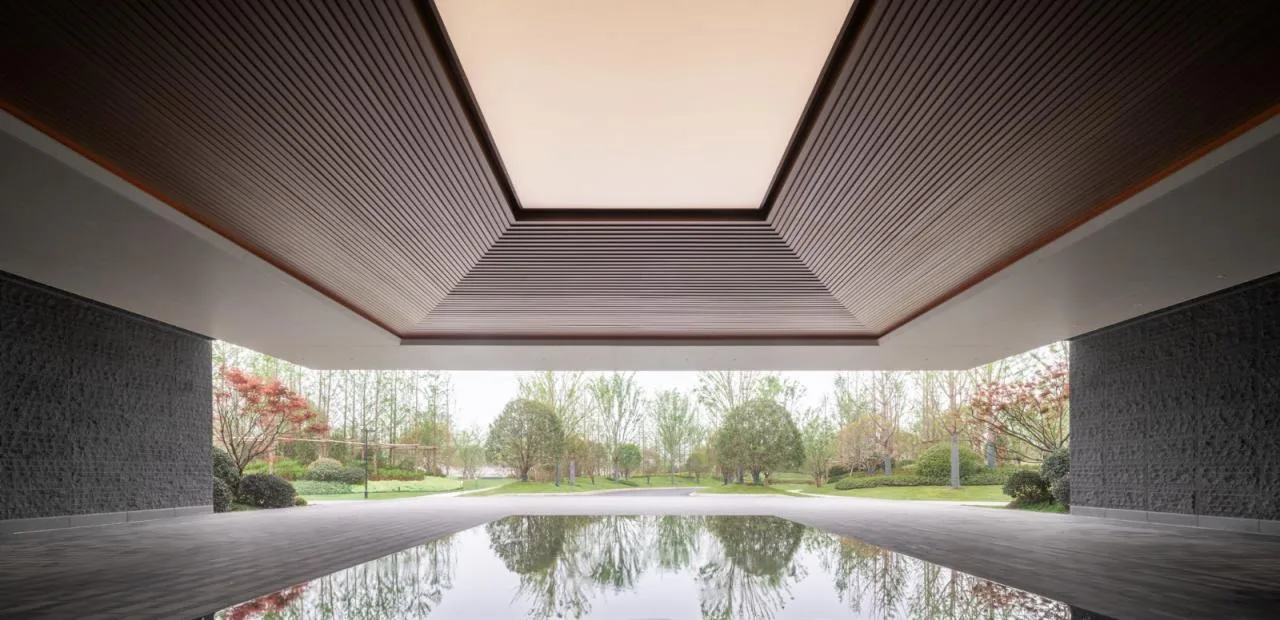
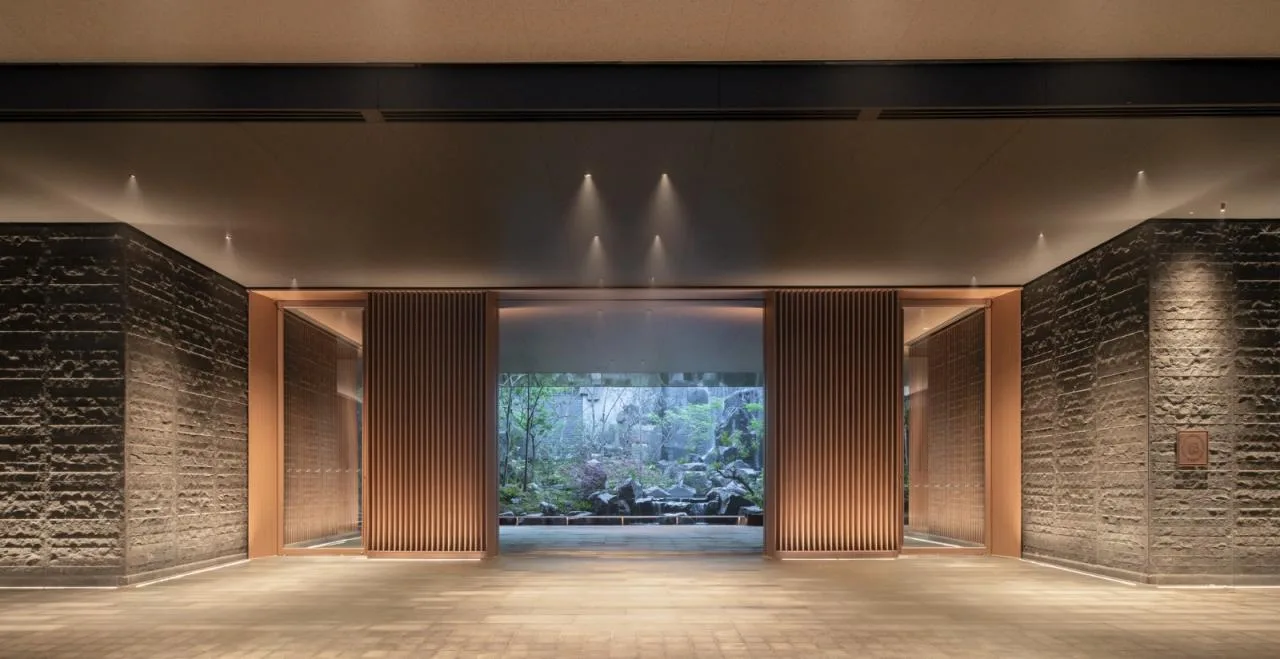
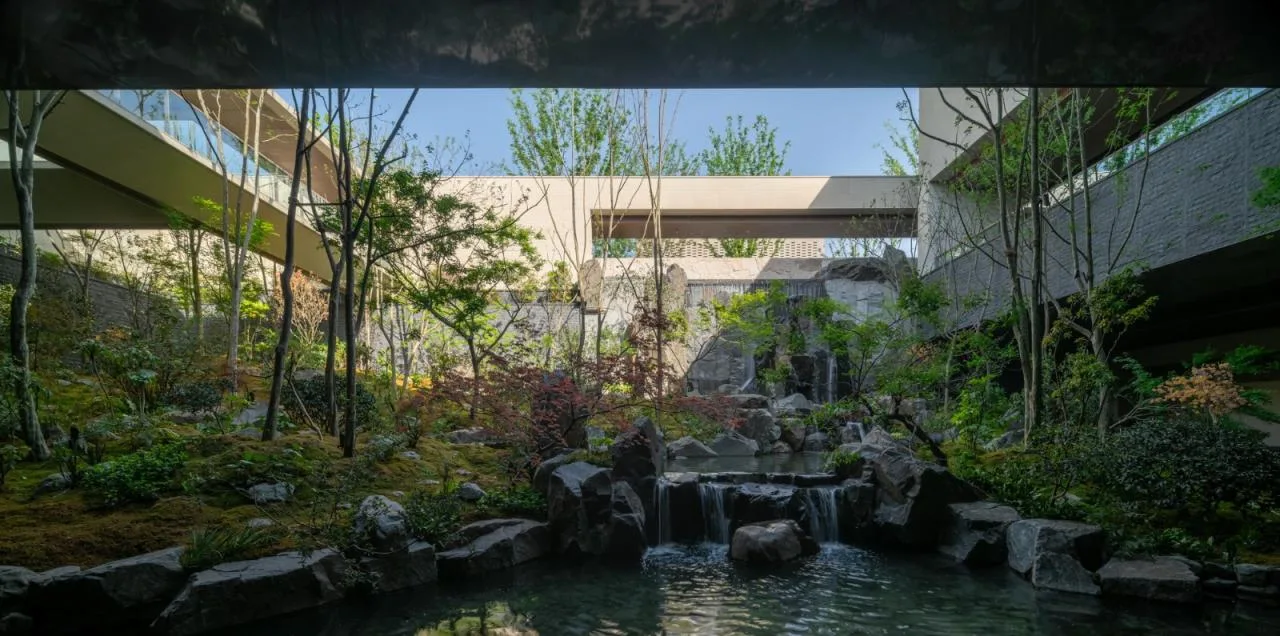
Triple-layered visual experience: exterior, porch, and courtyard © Architecture Photography
In the architect’s vision, the main courtyard will become a vibrant forest of mixed woods, where waterfalls, rocks, jungle foliage, moss, water surfaces, and mist combine to create a miniature natural landscape. The courtyard’s natural undulations continue the mountain terrain, immersing visitors in the environment.
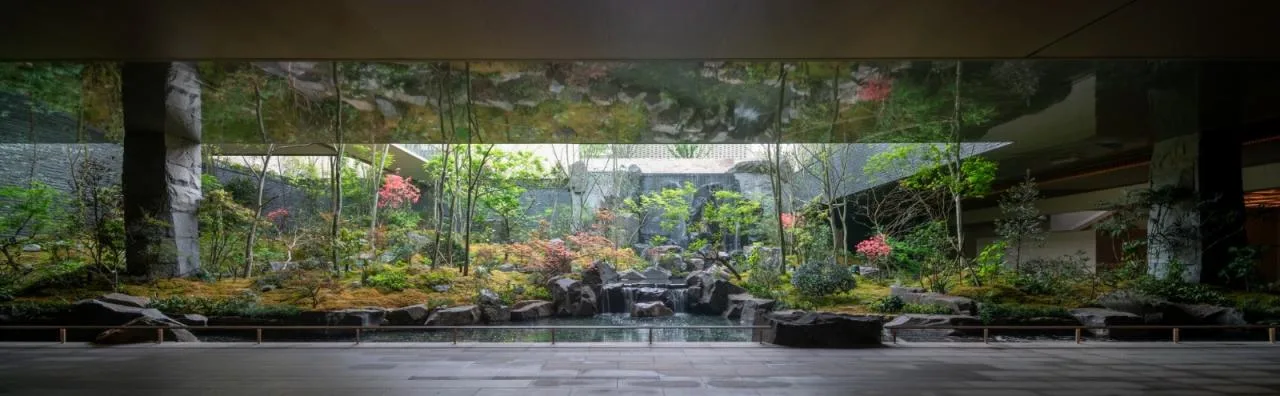
Reflective metal plates mirror the courtyard, evoking water’s transposition © Architecture Photography
The courtyard is filled with wild natural elements that create a fresh, humid atmosphere. Through layered auditory, visual, and olfactory experiences, visitors gradually detach from the noisy outside world, ultimately finding themselves enveloped by intentionally crafted mountains and rivers.
A Symbol of Xishan
The hotel’s public spaces are designed around a leisurely, mountain-water inspired wandering path, starting with a staircase leading to the upper lobby. The staircase’s varying heights, combined with the directional flow of the space, immerse visitors in the architect’s intended spatial journey.
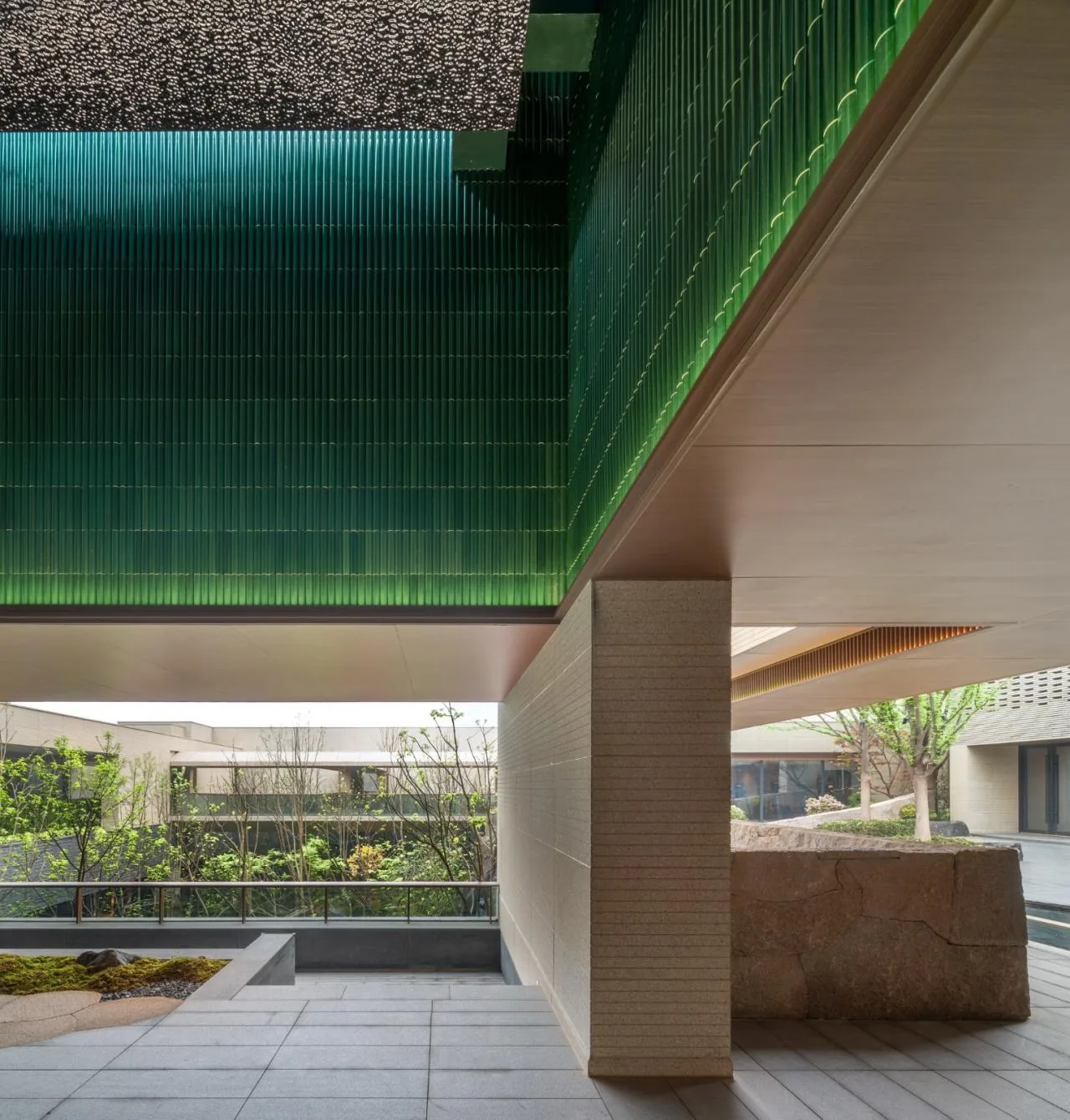
The staircase’s spatial ambiguity is enhanced by the front hall’s corrugated panels and green glazed tiles © Architecture Photography
On the upper platform, alternating solid walls and long windows connect corridors and spaces, employing traditional garden design techniques. Visitors’ sightlines are sometimes blocked by walls, other times framed through windows towards the opposite courtyard. This interplay transforms static landscapes into an infinite, continuously evolving perspective as one moves.
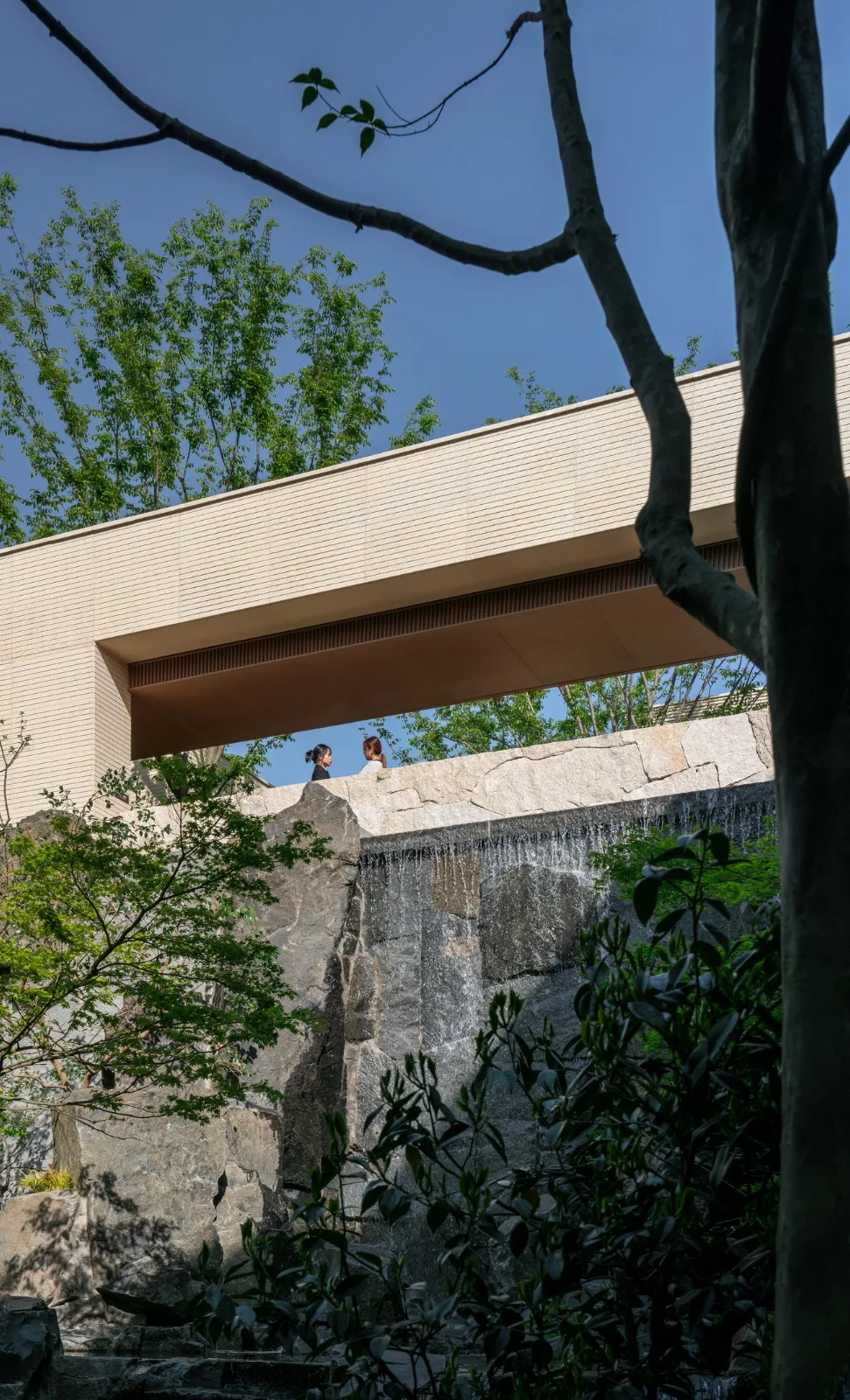
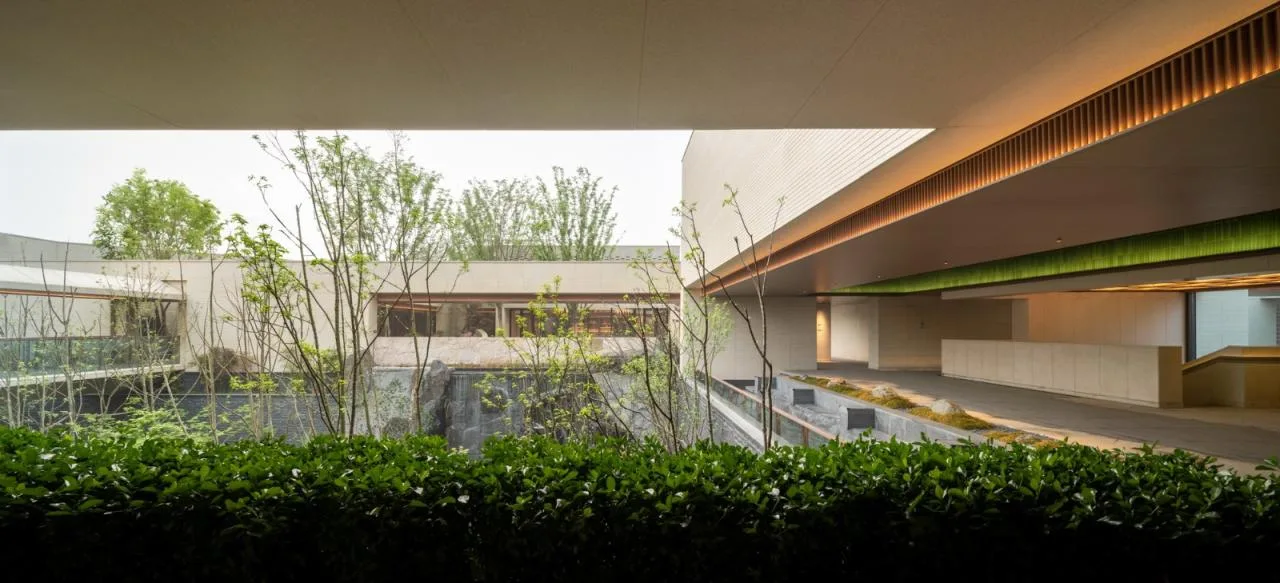
From the moment visitors enter the courtyard, the experience of watching and wondering becomes continuous © Architecture Photography
The mountains and rivers that humans travel through represent a fluid, undefined field. The hotel’s landscape extends beyond the rectangular boundaries of the central courtyard, permeating the surrounding grey spaces and reaching outwards.
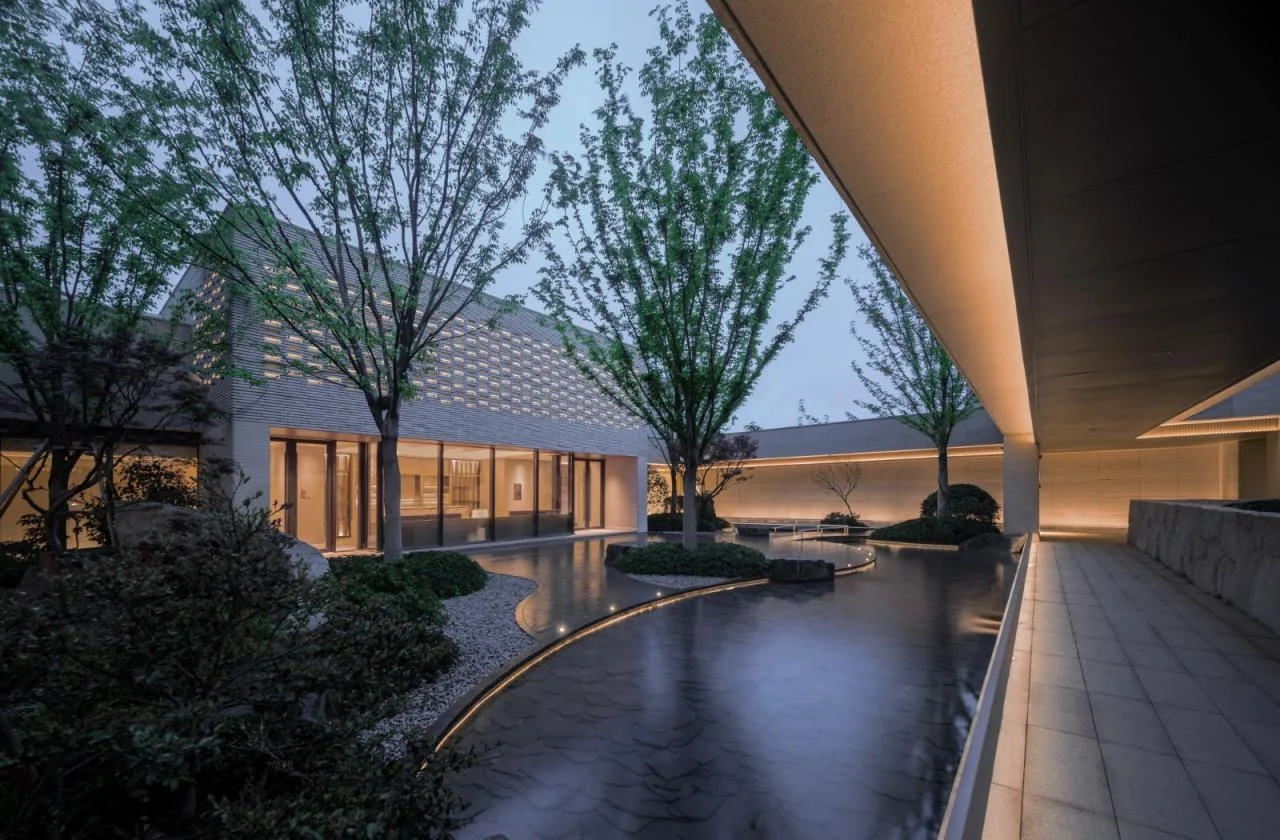
△ Landscape designed for the fitness area © Architecture Photography
The circular corridor is offset inward at one end to form a suspended bridge over the courtyard. Visitors can always see the stairwell at the opposite side until they find themselves crossing boundaries and hovering above the circular space.
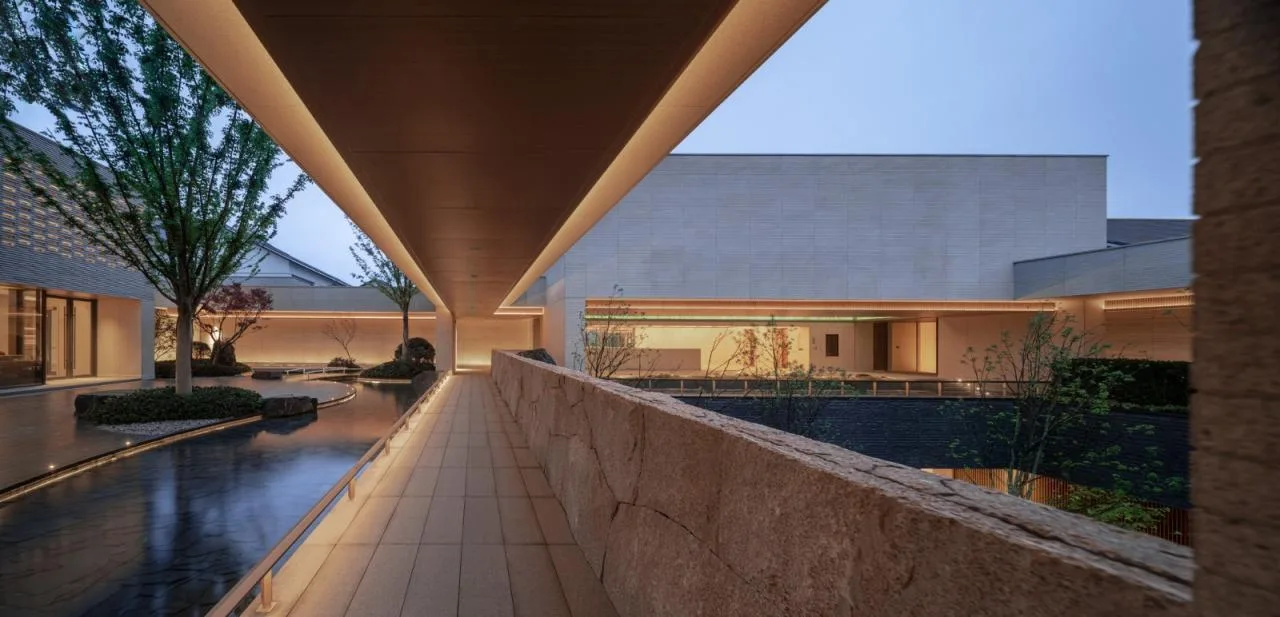
The bridge aligns with the tree canopy, making visitors feel as if they are walking through a forest © Architecture Photography
The circular atrium serves as a ceremonial space, with steps leading to the banquet hall cleverly concealed within the walls.
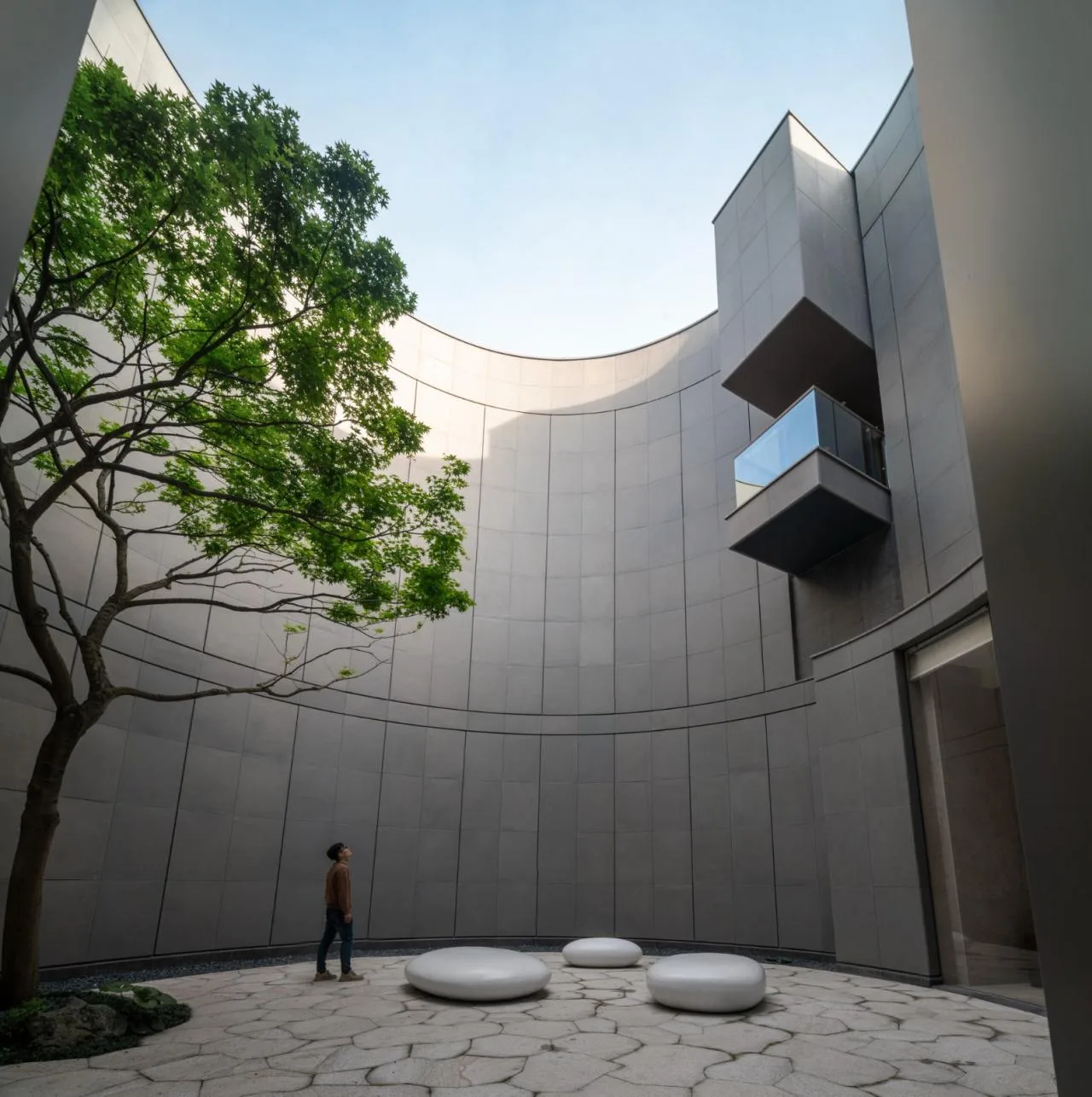
The bridge aligns with the tree canopy, making visitors feel as if they are walking through a forest © Architecture Photography
The circular atrium serves as a ceremonial space, with steps leading to the banquet hall cleverly concealed within the walls.
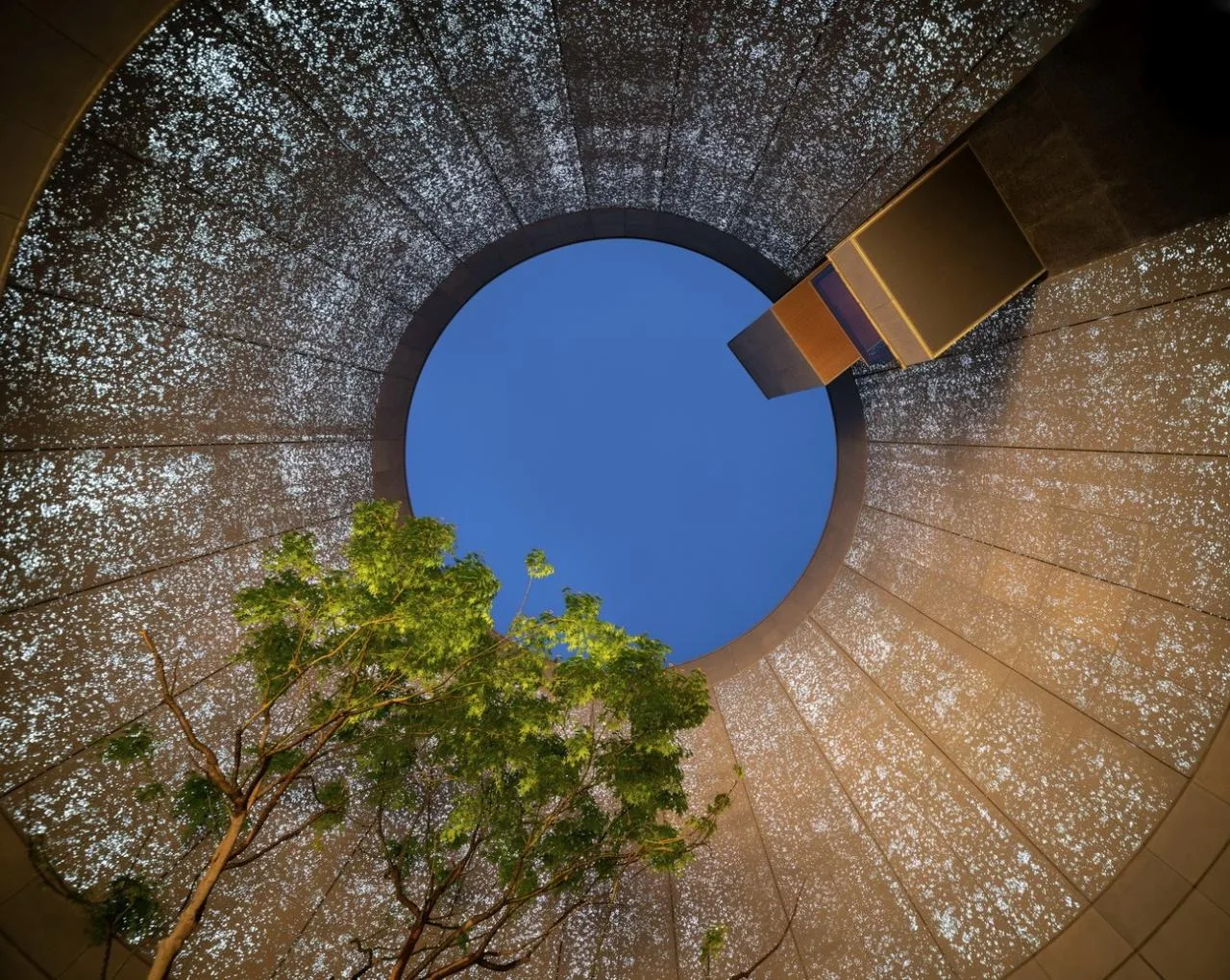
△ Transparent concrete aggregates resemble stars at night © Architecture Photography
The Metaphor of Travel
The guest room area is laid out along a single axis in a narrow site, recreating the joy of mountain travelers discovering unknown landscapes. Several open courtyards are interspersed along the connected buildings. The façades gently shift on either side of the axis, causing corridors to vary in width and direction. A series of intricately scaled small landscapes blend organically with the buildings, creating seamless transitions between corridors and guest rooms.
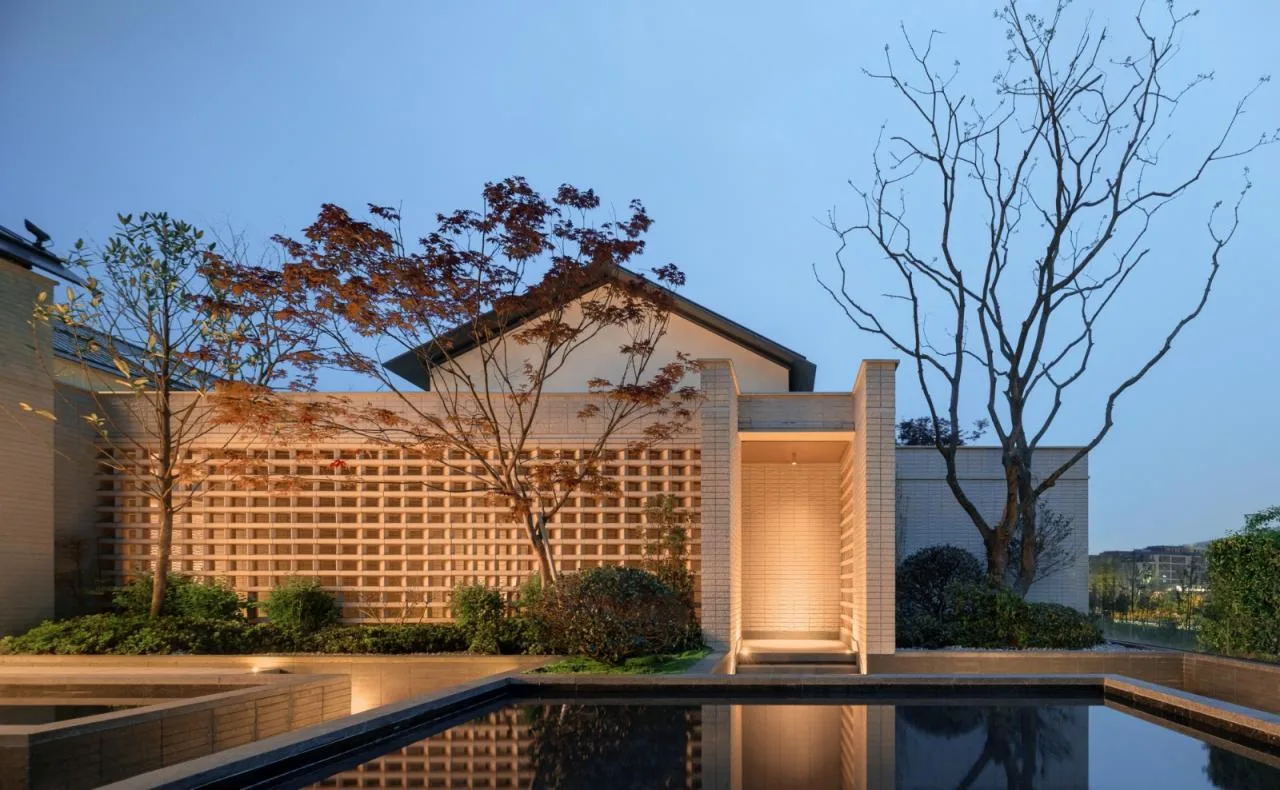
△ The surrounding scenery is always close to the guest rooms © Architecture Photography
By limiting walking routes, the angled brick façades filter views through semi-transparent textures between solid walls and window frames. The scenery behind these walls is constantly shifting—partially hidden, partially revealed—engaging guests to explore and discover, sometimes finding themselves in narrow, shadowed corridors or suddenly opening courtyards.
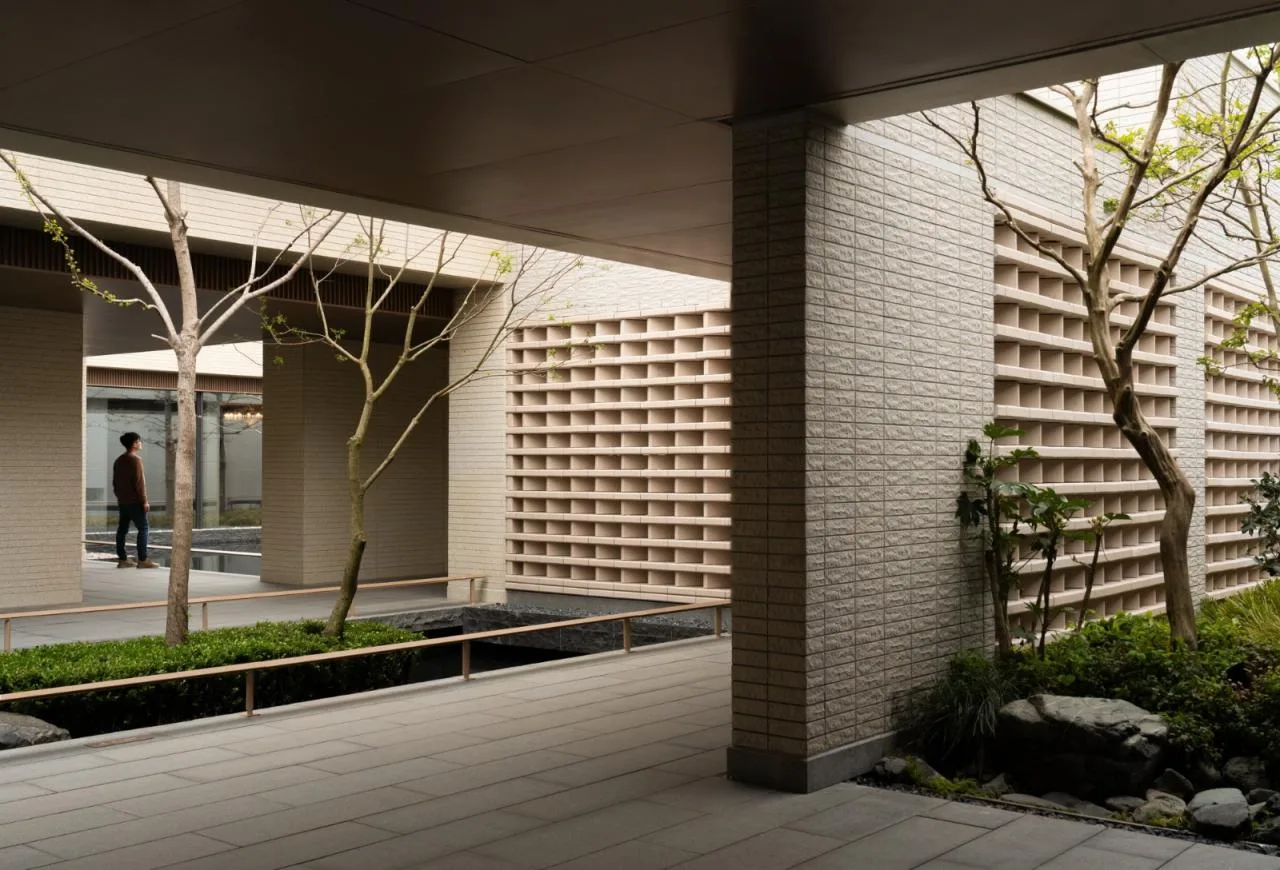
The landscape is both obscured by and visible through semi-transparent surfaces © Architecture Photography
In Journey to the Mountains and Streams, the painter metaphorically depicts an ideal mountain life for the literati through landscape. For Yada Xishan Hotel, the design detaches these symbols from physical mountains and rivers, transforming them into an abstract language that describes the present, ultimately recreating these experiences in a sensory journey.
Visitors become lively explorers, like fishermen in The Peach Blossom Spring, experiencing continual shifts in spatial width, density, and light. Eventually, upon opening their doors, they realize that the essence of the Chufa Mountains has entered their homes.
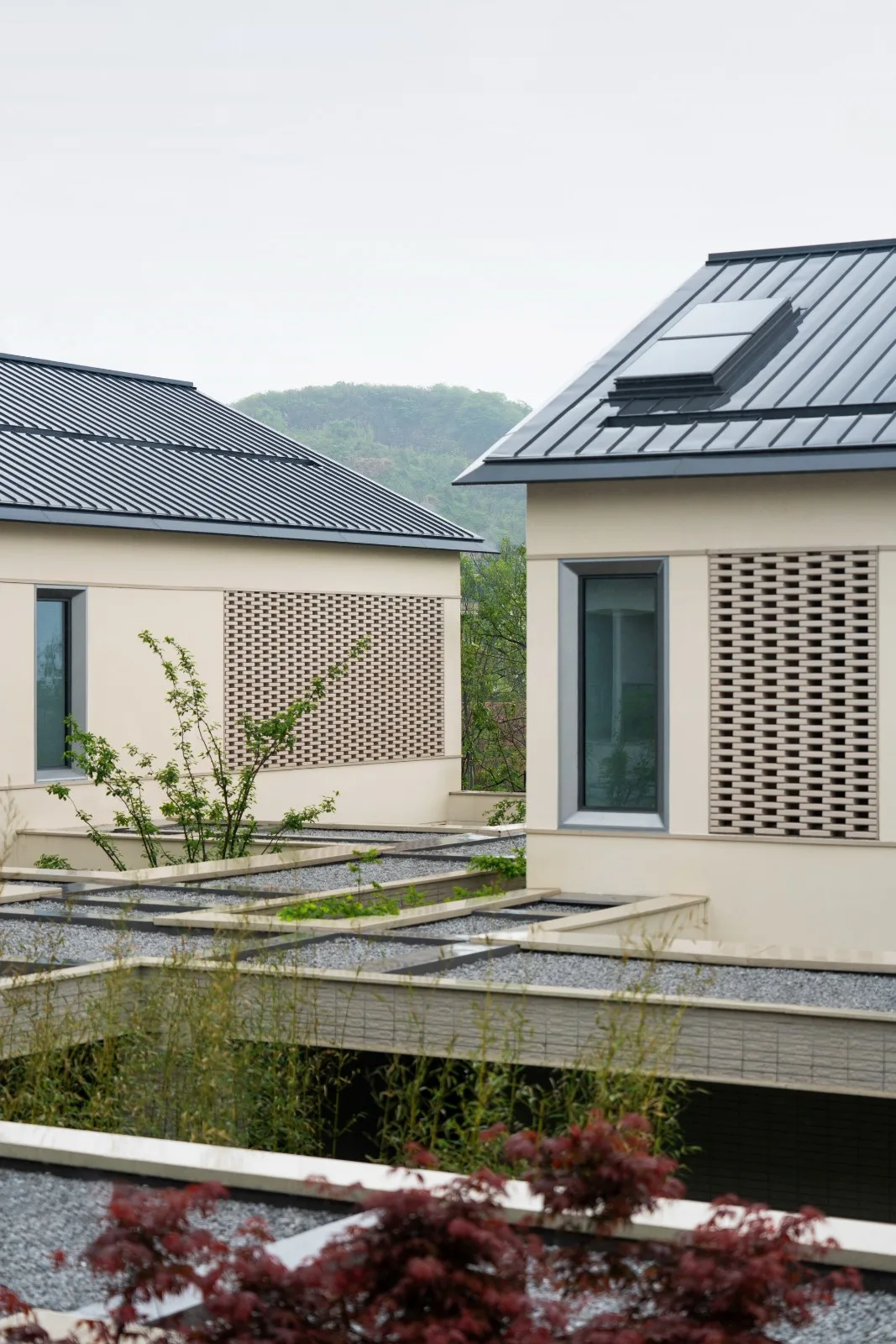
△ Interwoven layers of natural and artificial landscapes © Architecture Photography
Project Drawings
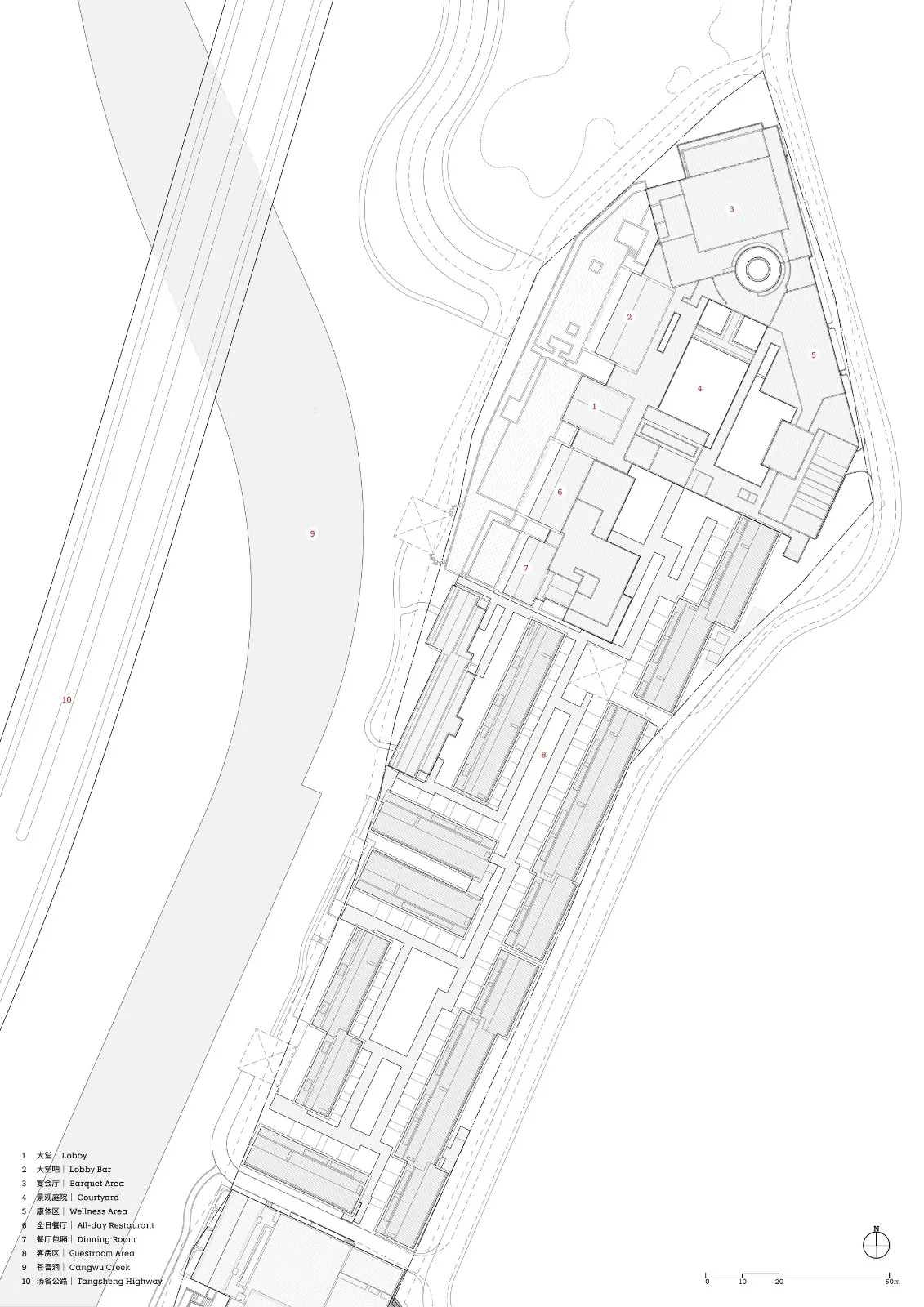
△ General layout plan © Goa Elephant Design
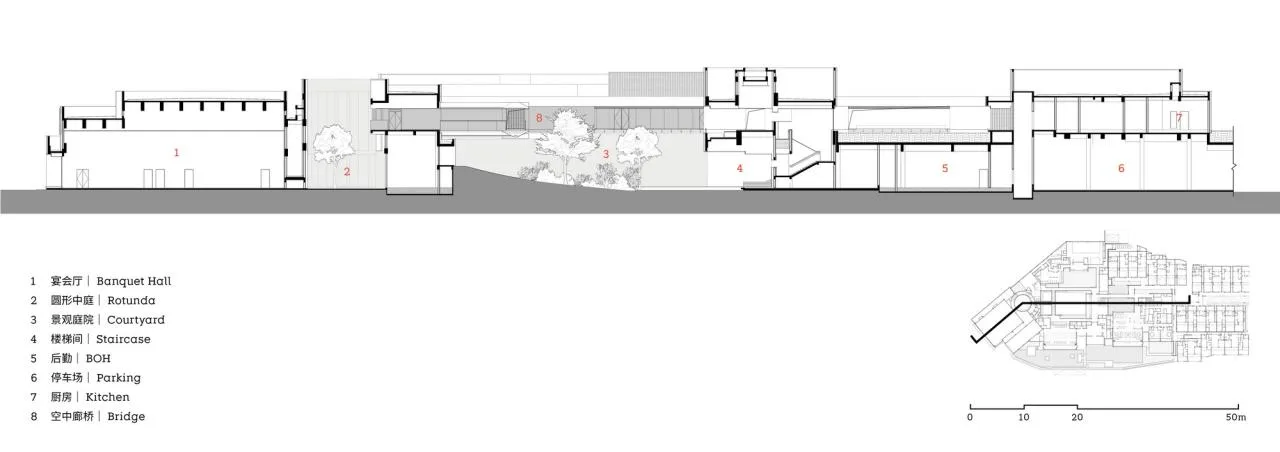
△ Section diagram of the central courtyard © Goa Elephant Design
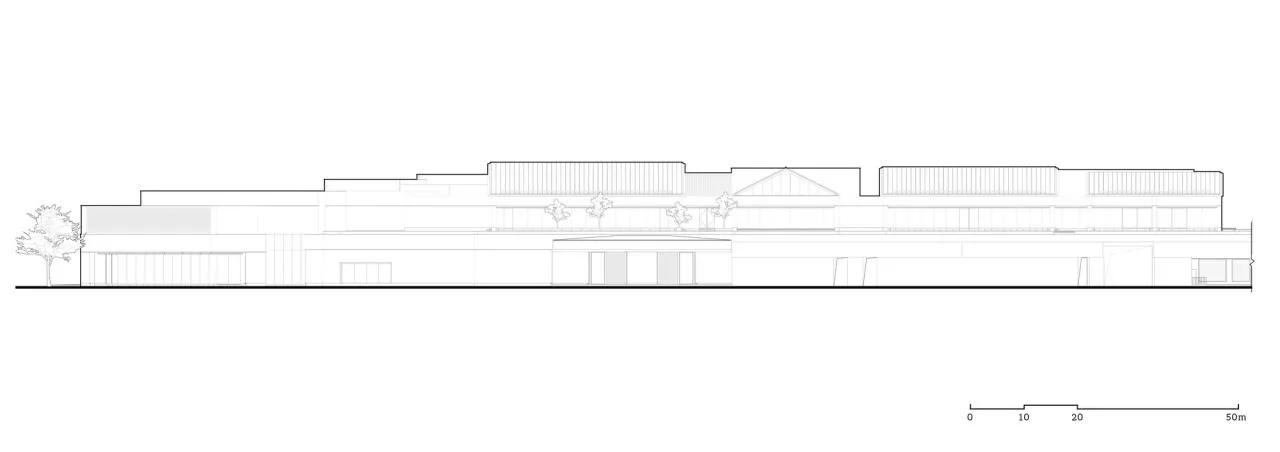
Northwest elevation view © Goa Elephant Design
Project Information
Project Name: Yixing Yada Xishan Hotel
Location: Wuxi City, Jiangsu Province
Owner: Yada International
Architectural and Construction Drawing Design: Goa Elephant Design
Landscape Design: GTS Blue Song Design
Interior Design: Min En Design
Design & Completion: 2021 / 2024
Building Area: 26,700 square meters
Photography: Ziran Architecture Photography














Must log in before commenting!
Sign Up