
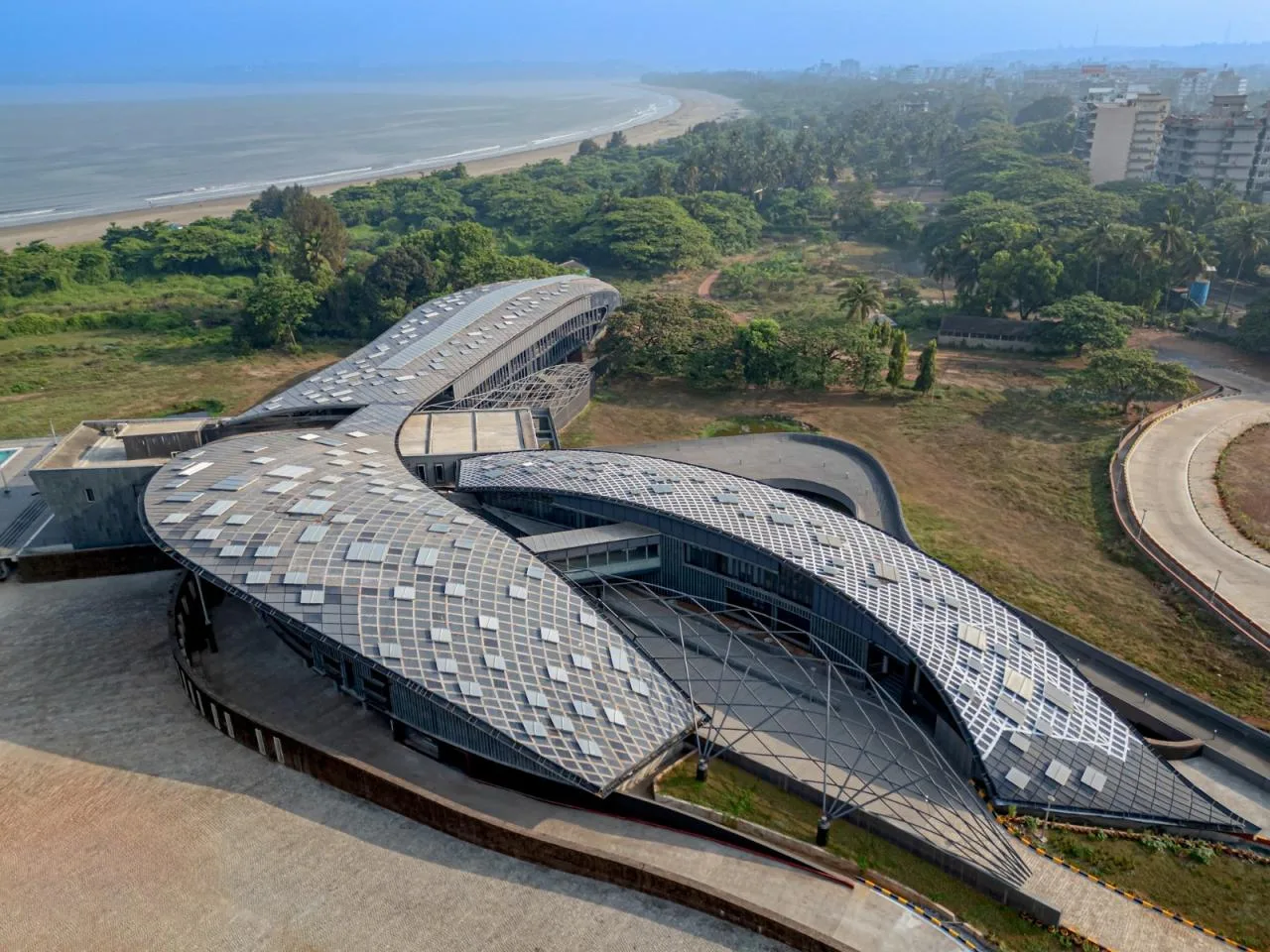
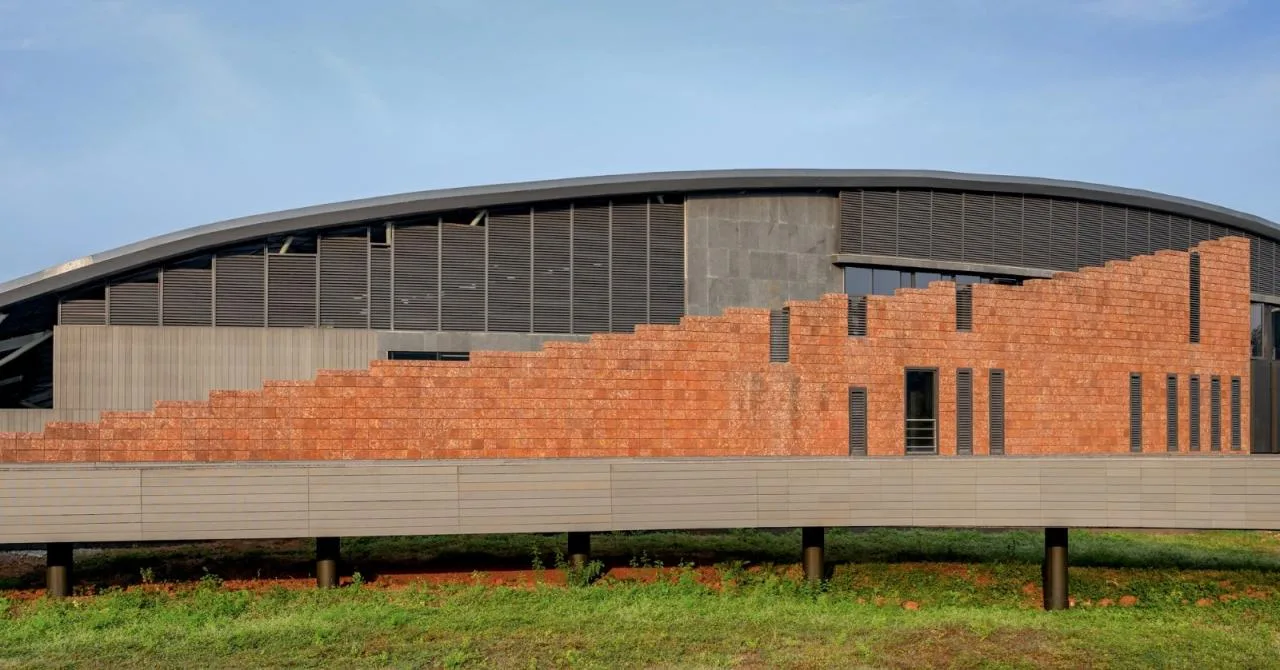
In India, government agencies generally take a pragmatic and understated approach when it comes to architectural expression. However, when the Goa government launched an international competition for the design of the Goa National Institute of Water Sports, it sought something different. The goal was twofold: firstly, to create bold, iconic architecture that transcends mere functional pragmatism; secondly, to develop an innovative design that embodies a distinctive Goan style—one that is globally relevant yet deeply rooted in local context through the use of native materials.
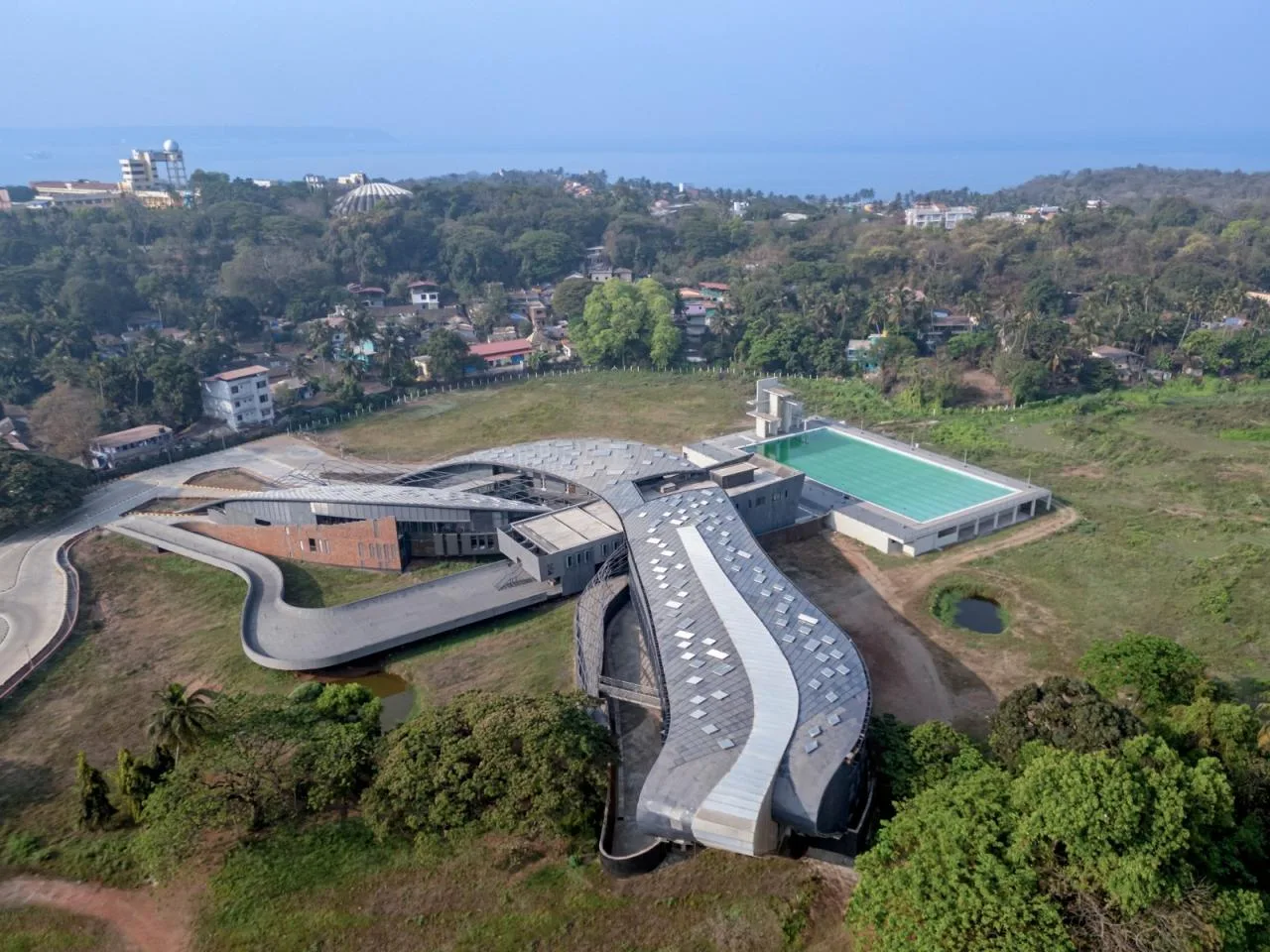
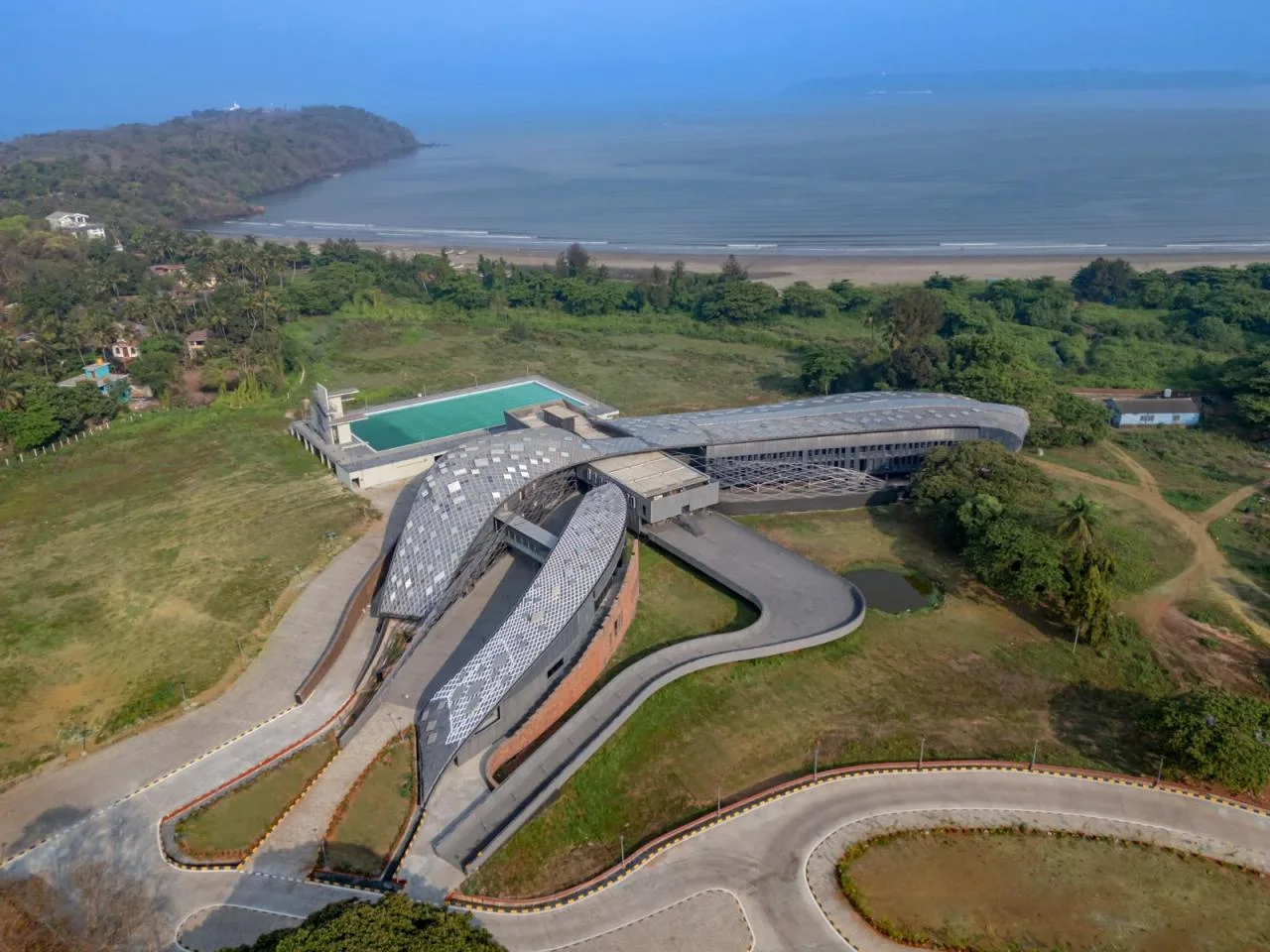
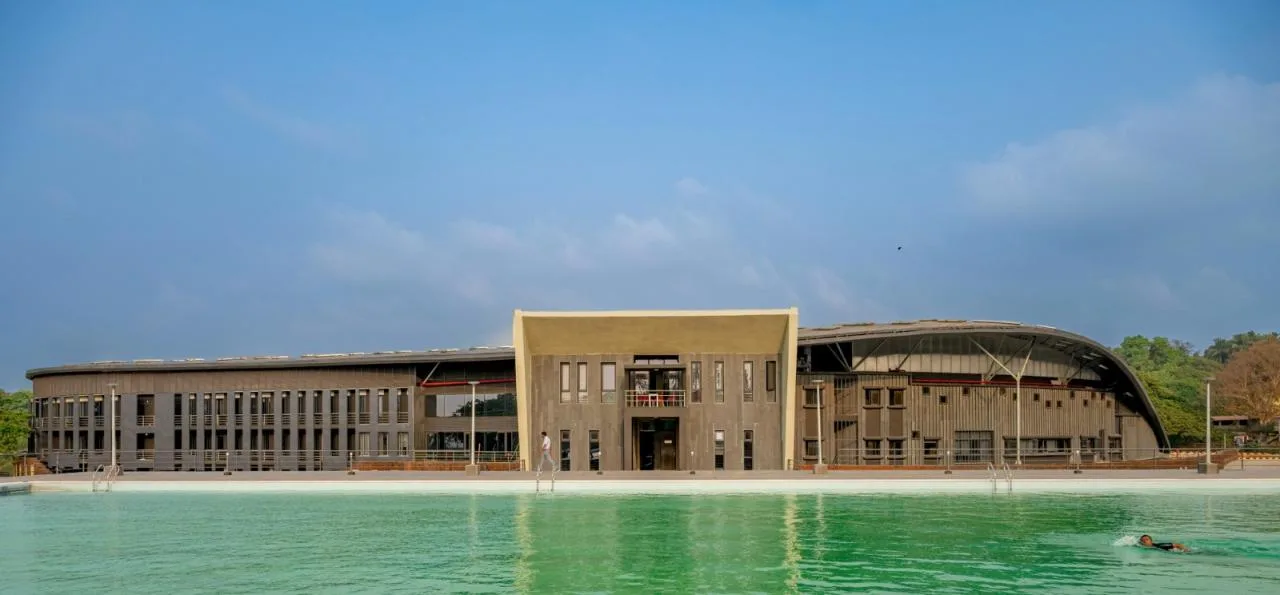
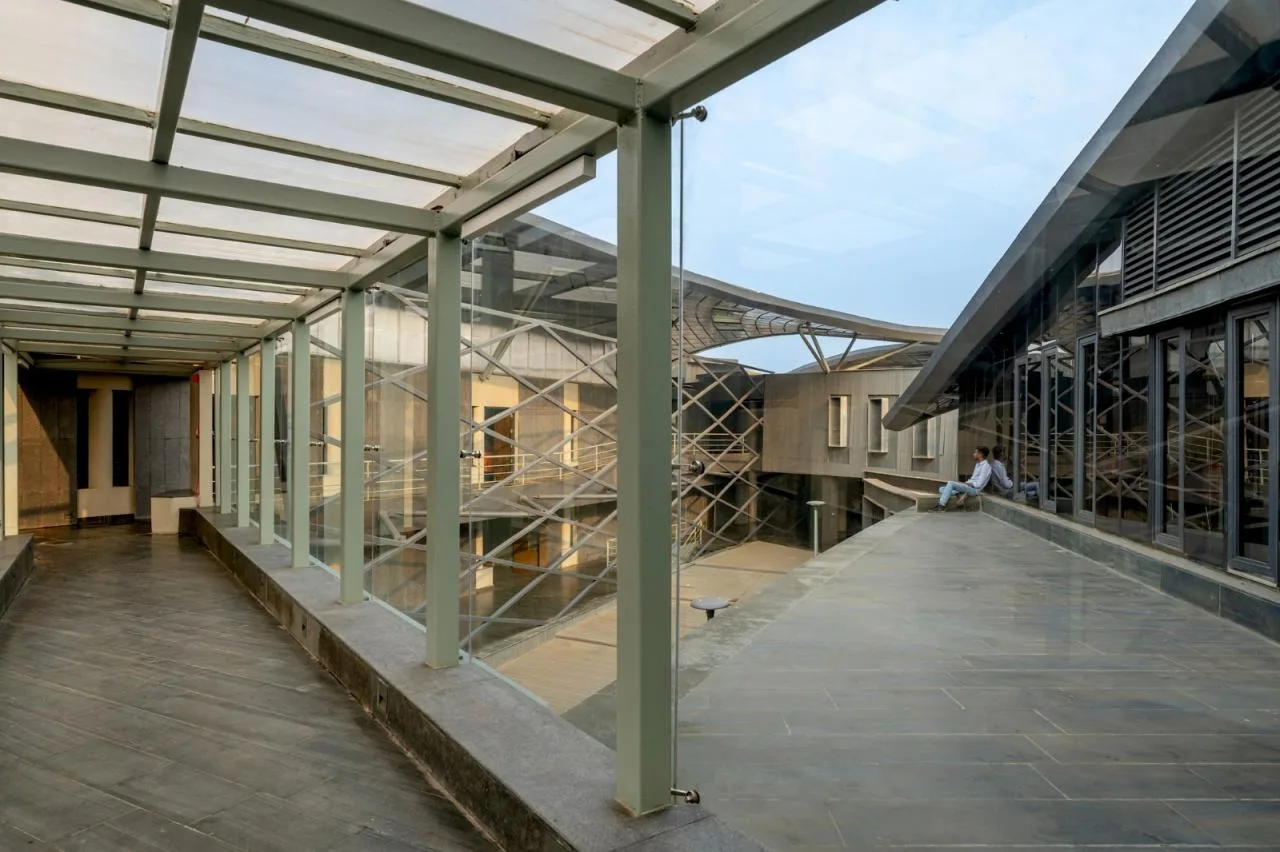
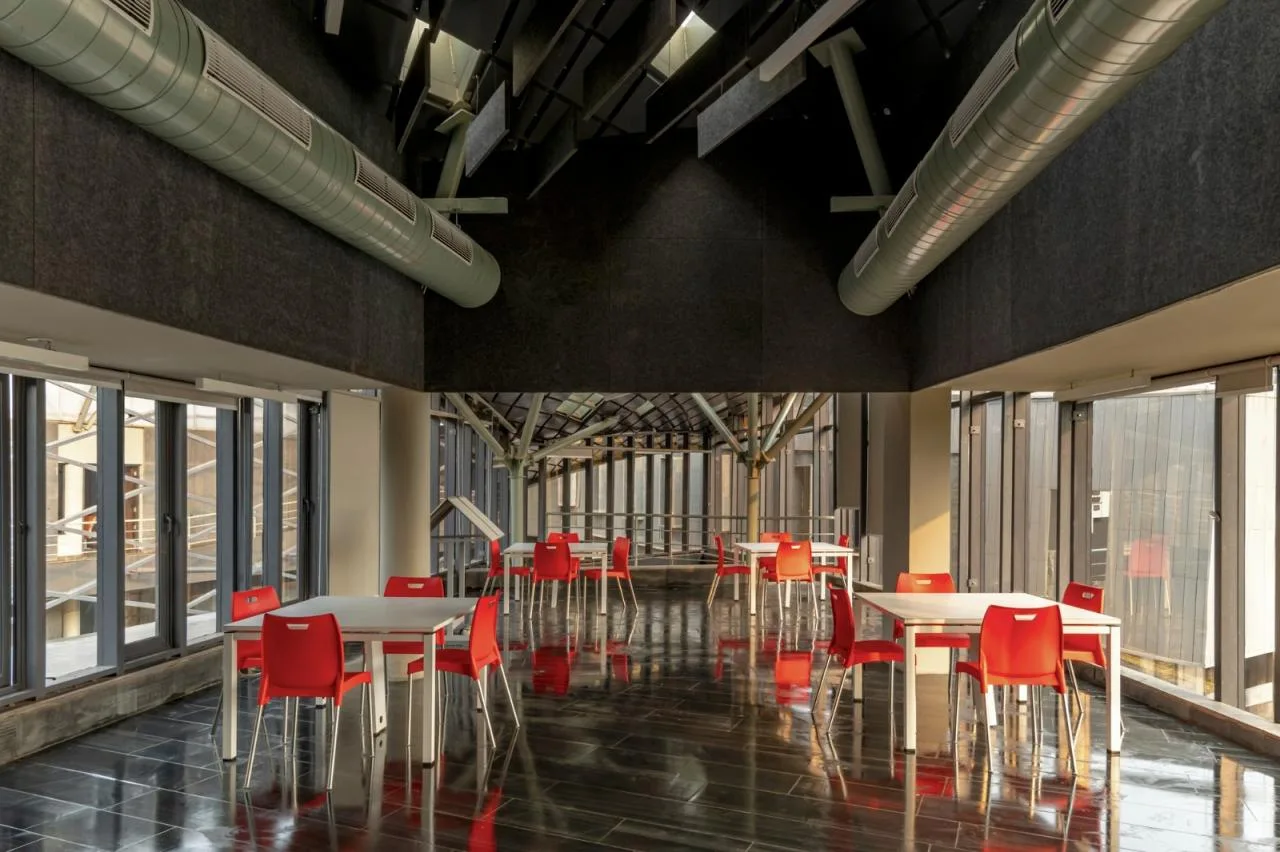
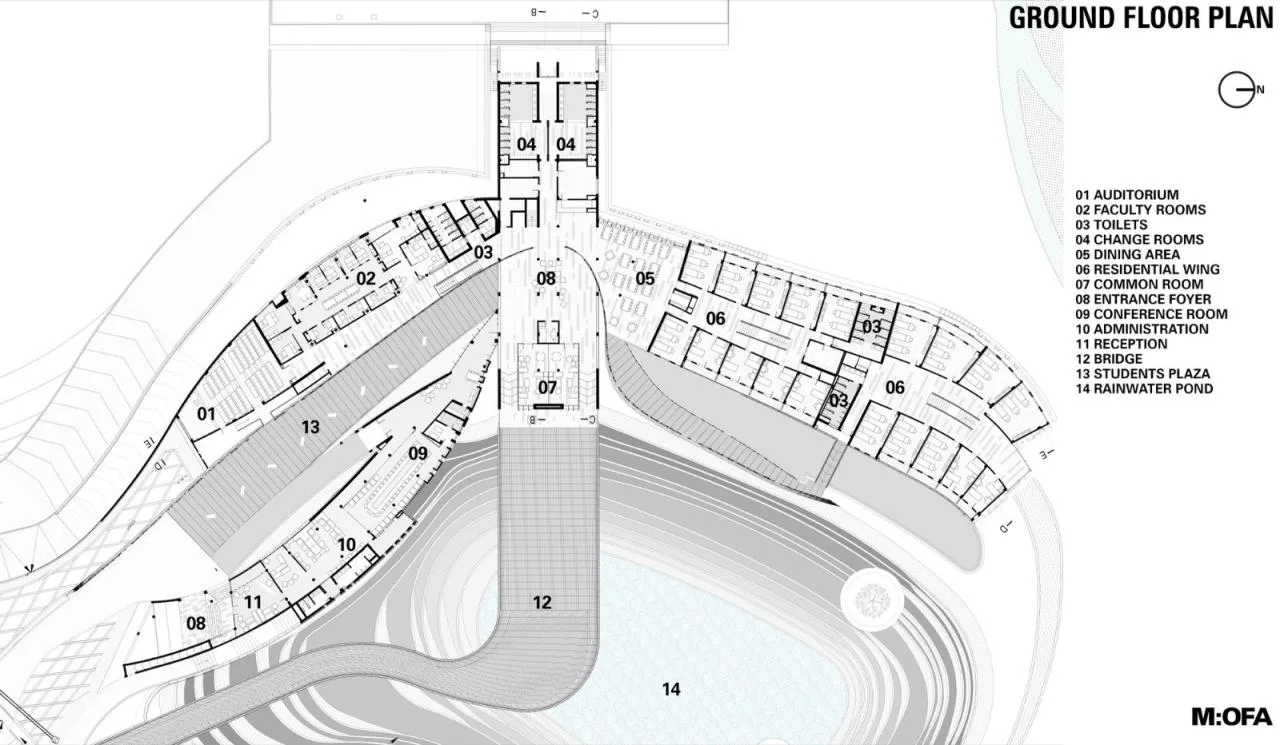
The design process began by dividing the building’s functional requirements into broad zones. While institutional, administrative, residential, and recreational areas each maintain their distinct spaces, the transitions between them are intentionally fluid and continuous. This creates intermediary zones that encourage informal interactions among campus users, fostering a dynamic social environment defined by their diverse roles.
To develop the overall architectural language, the design team sought to connect the building with its larger marine context and the nearby Goan towns, creating a harmonious relationship between nature, culture, and built form.
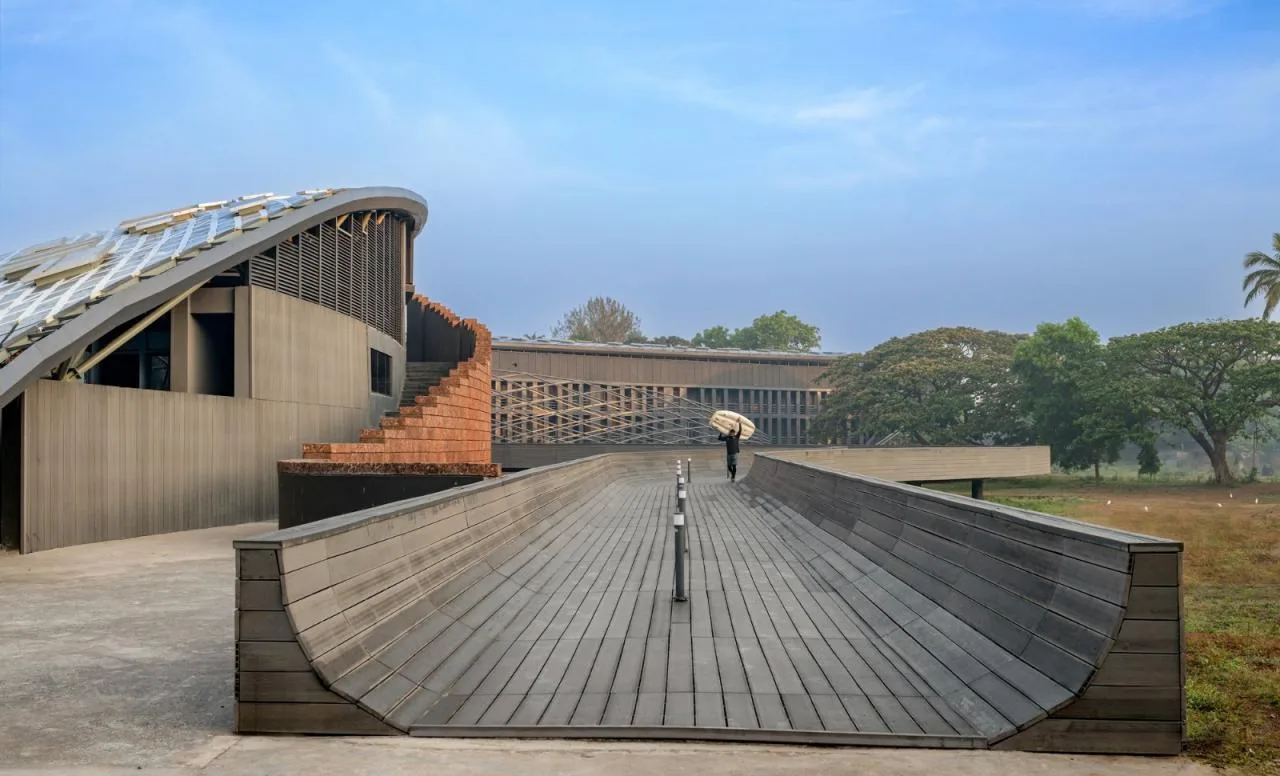
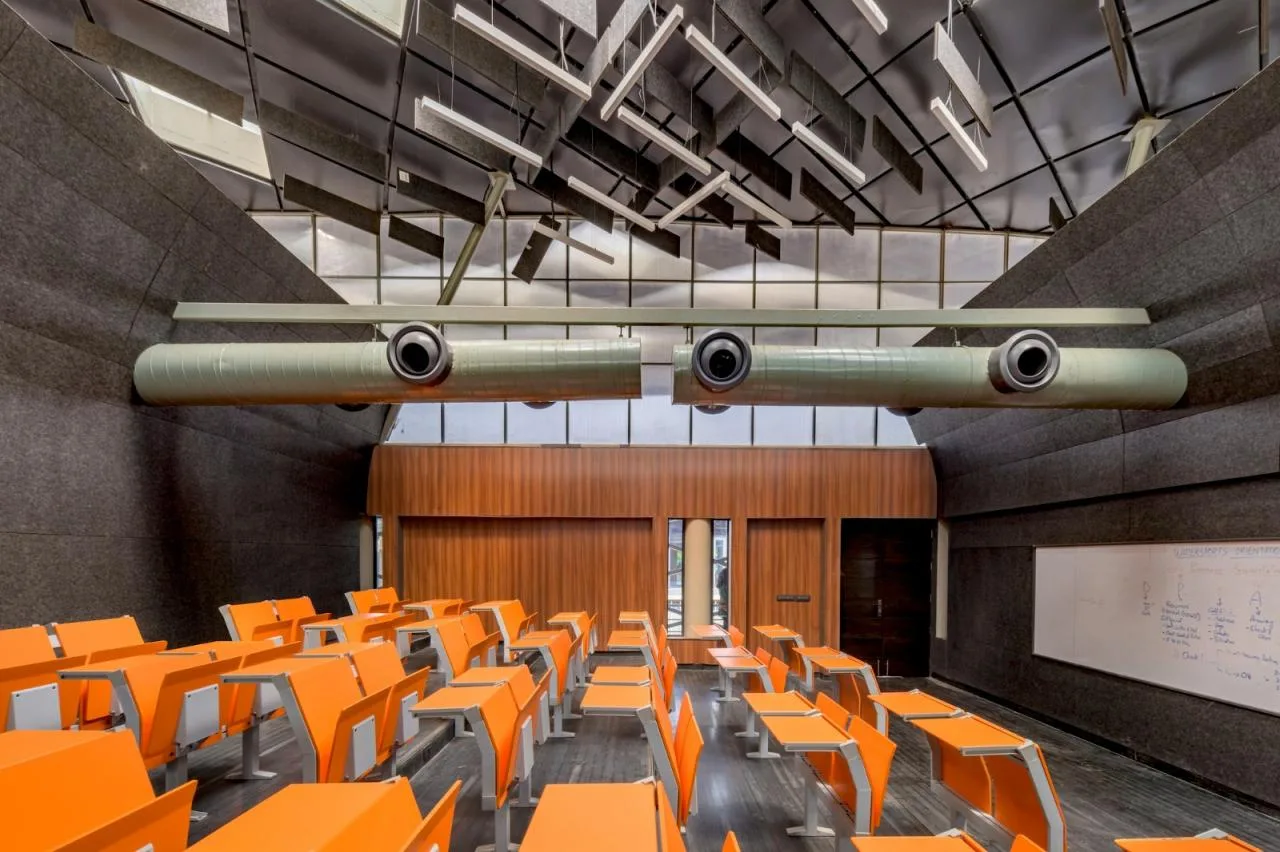
Adventure water sports are primarily leisure activities. Conversely, institutions often clearly separate formal and informal spaces. Here, surfers seek the thrill of the ocean but must also focus in the classroom. The design attempts to capture and express this tension—the adrenaline and power of the waves balanced against the discipline of study. Achieving this subtle equilibrium between daily function and continuous dynamic energy was a key design challenge.
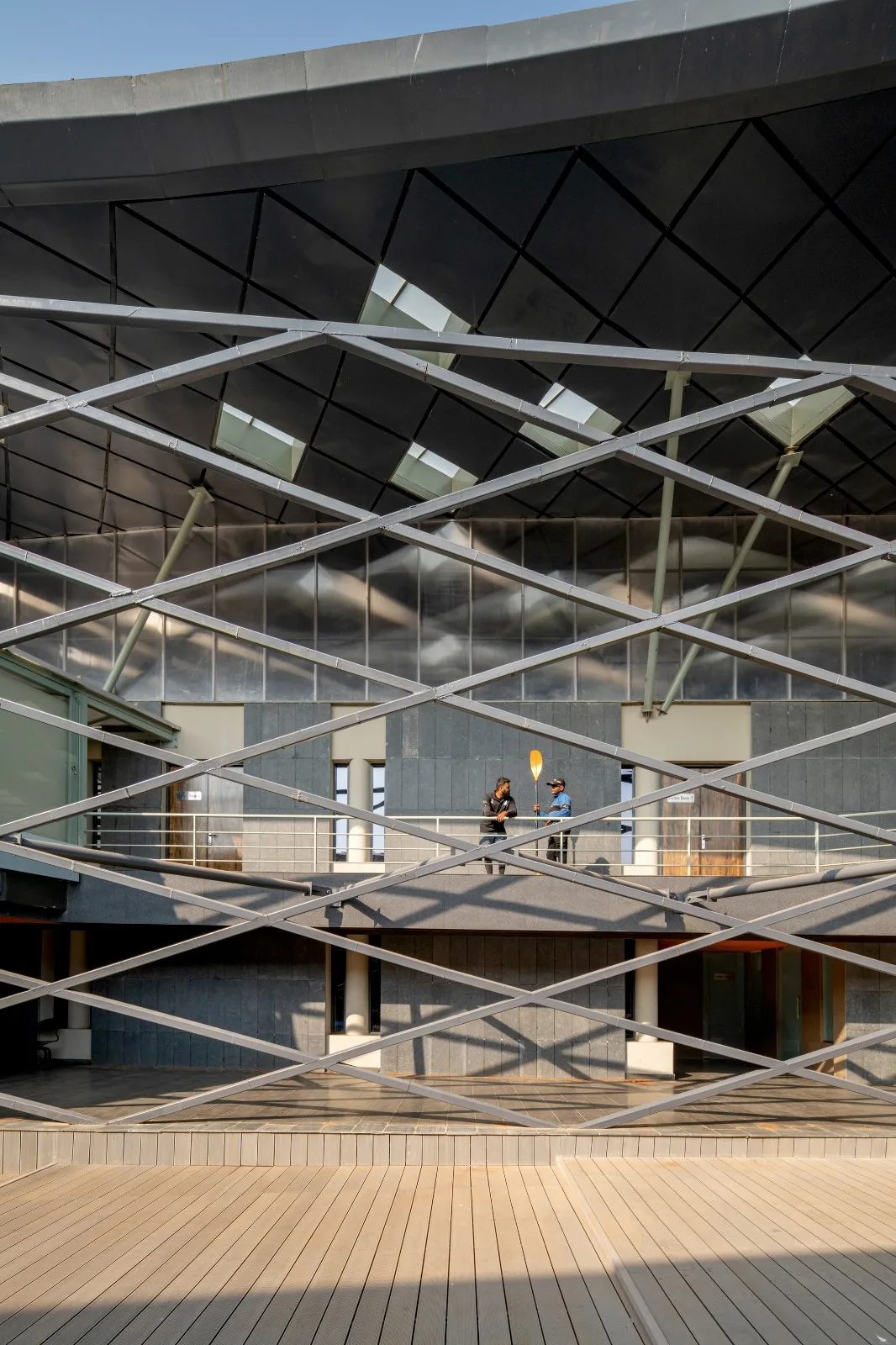
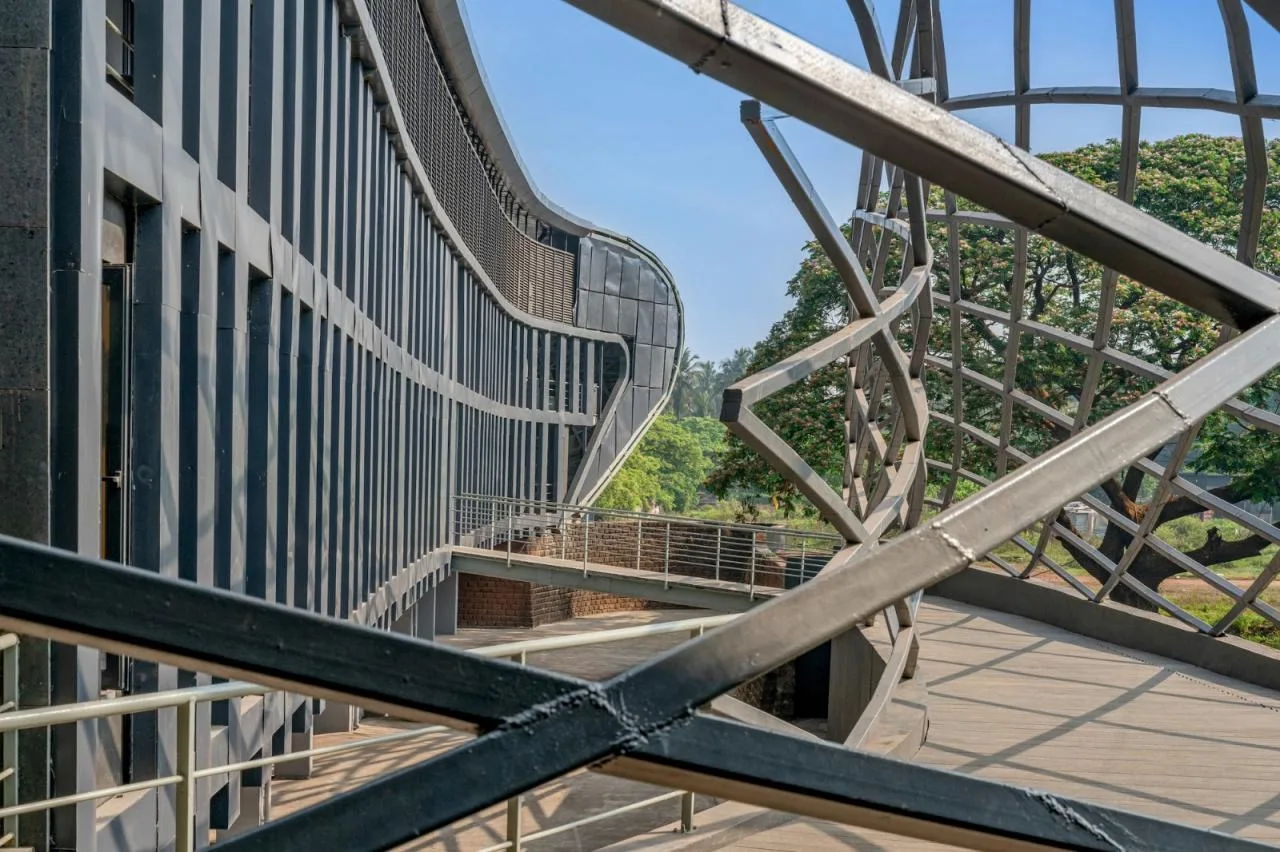
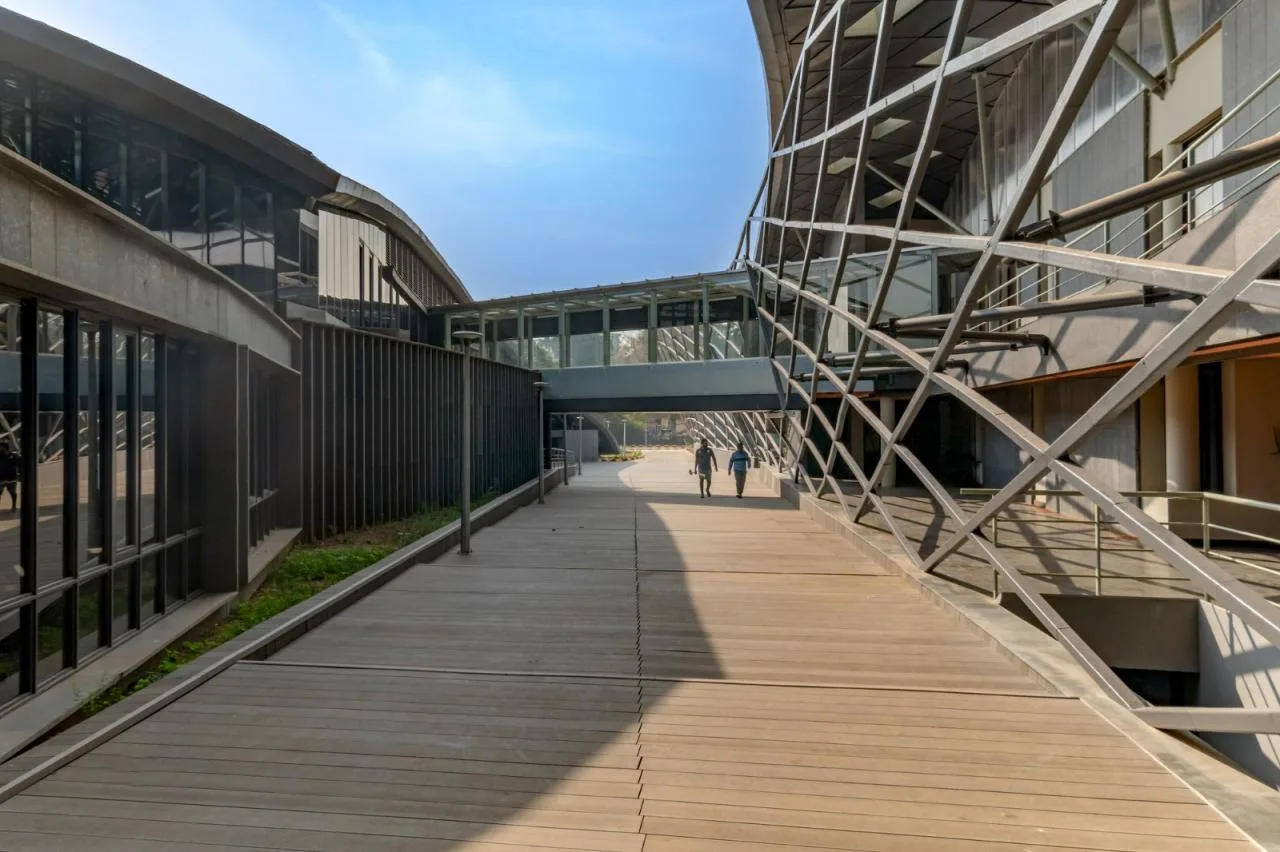
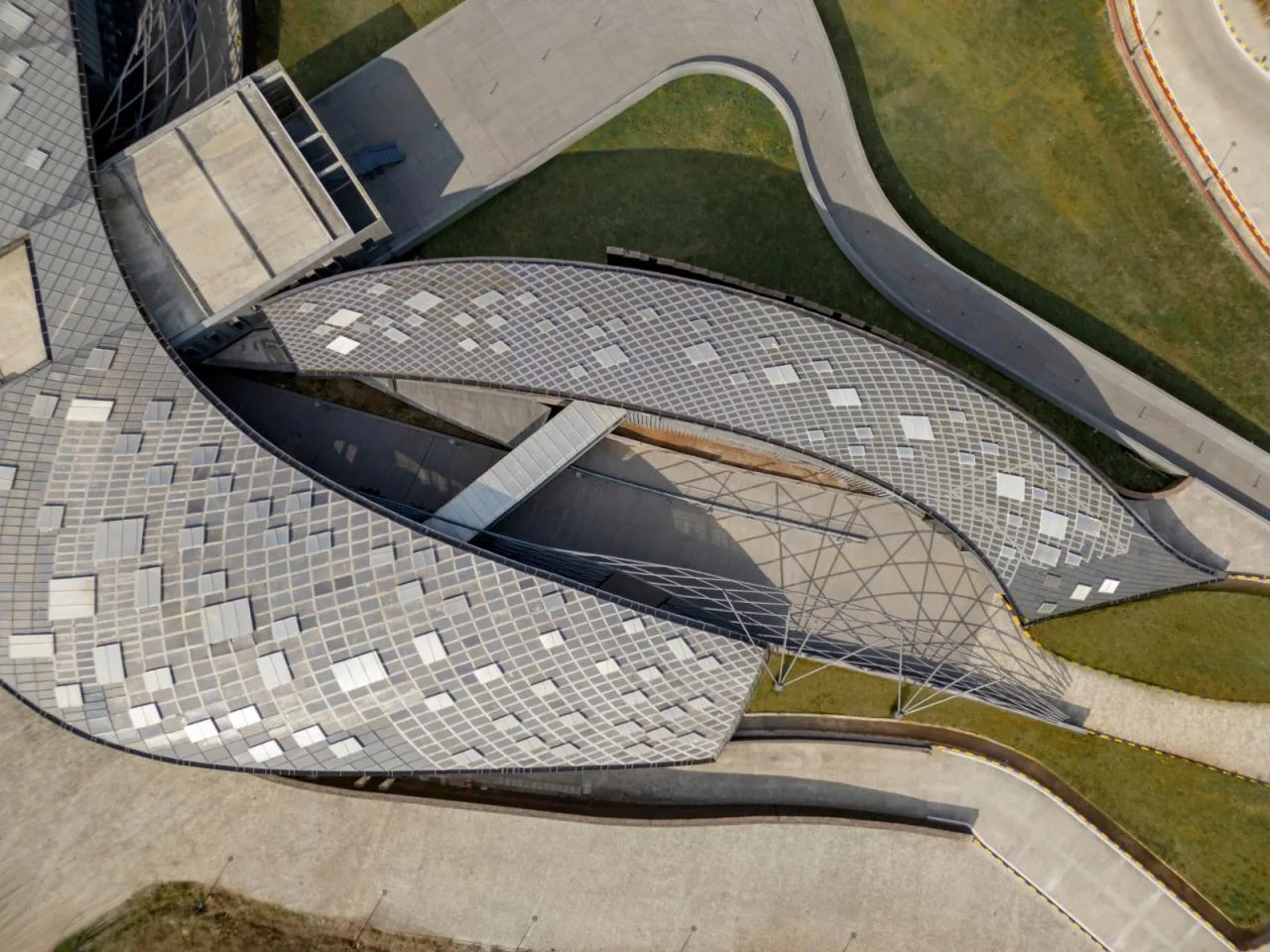
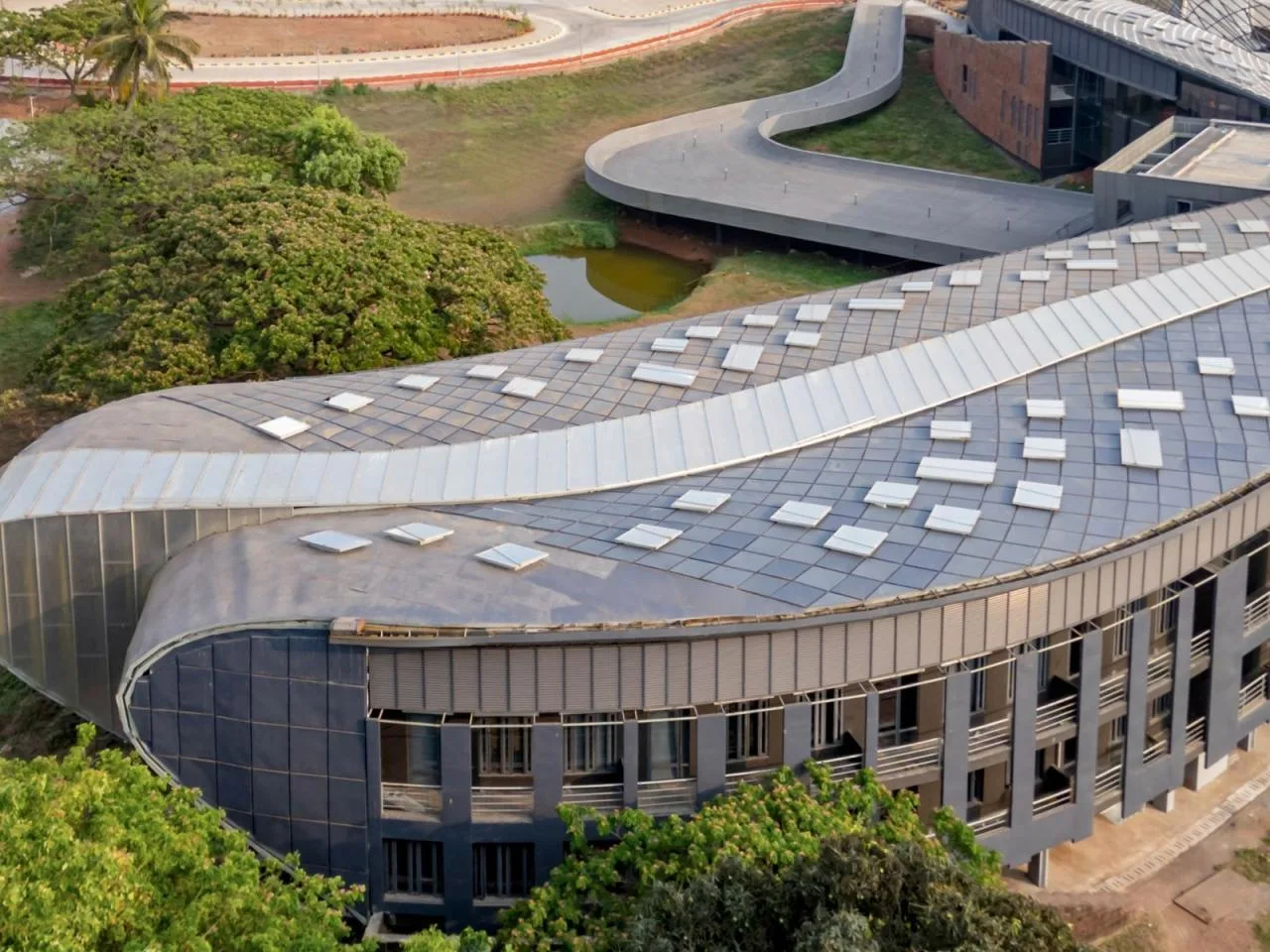
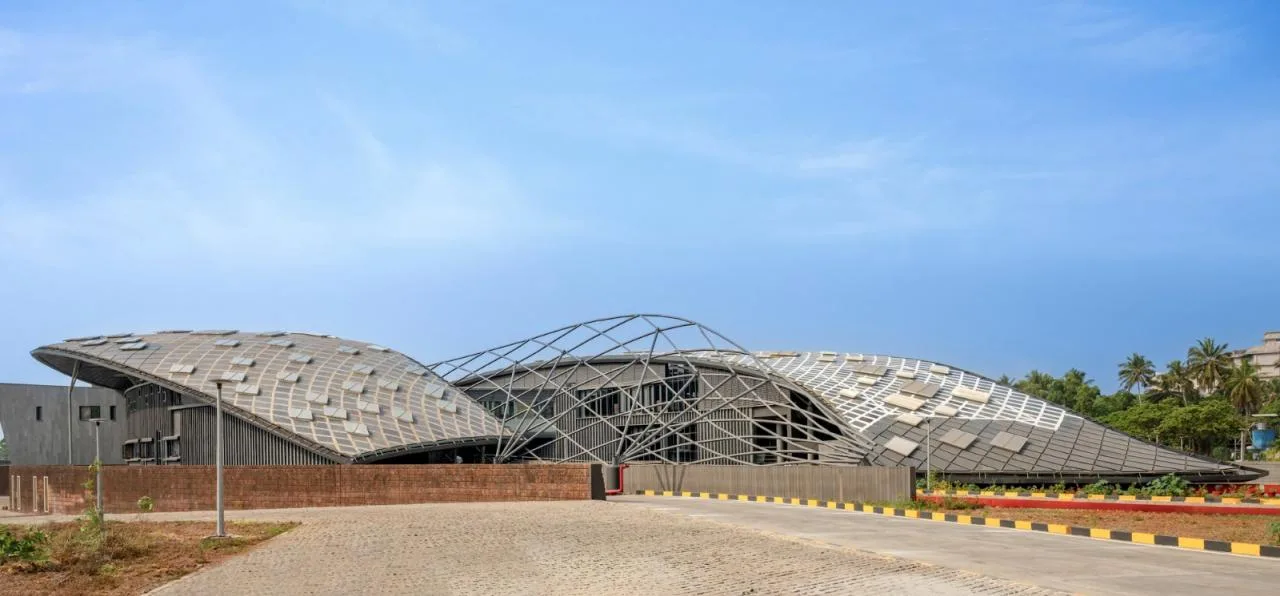
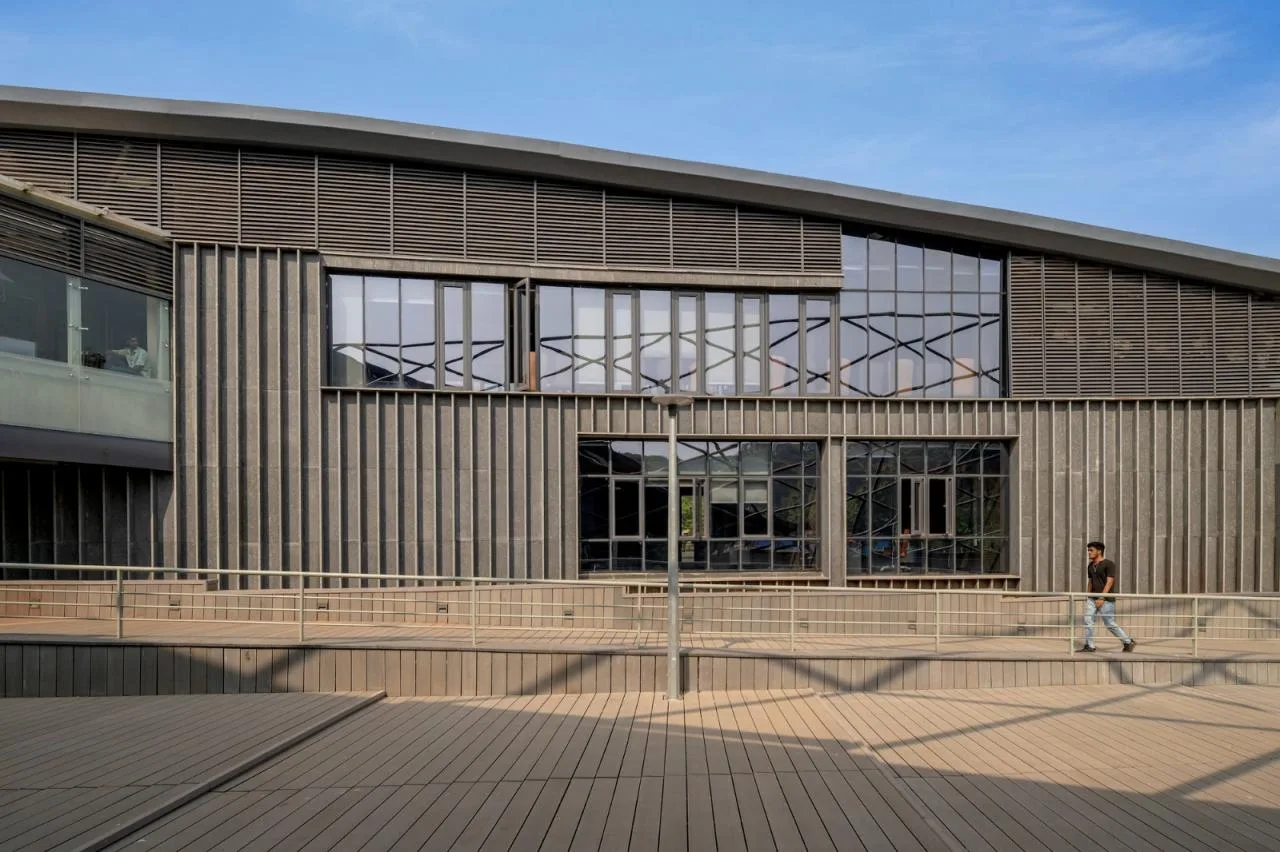
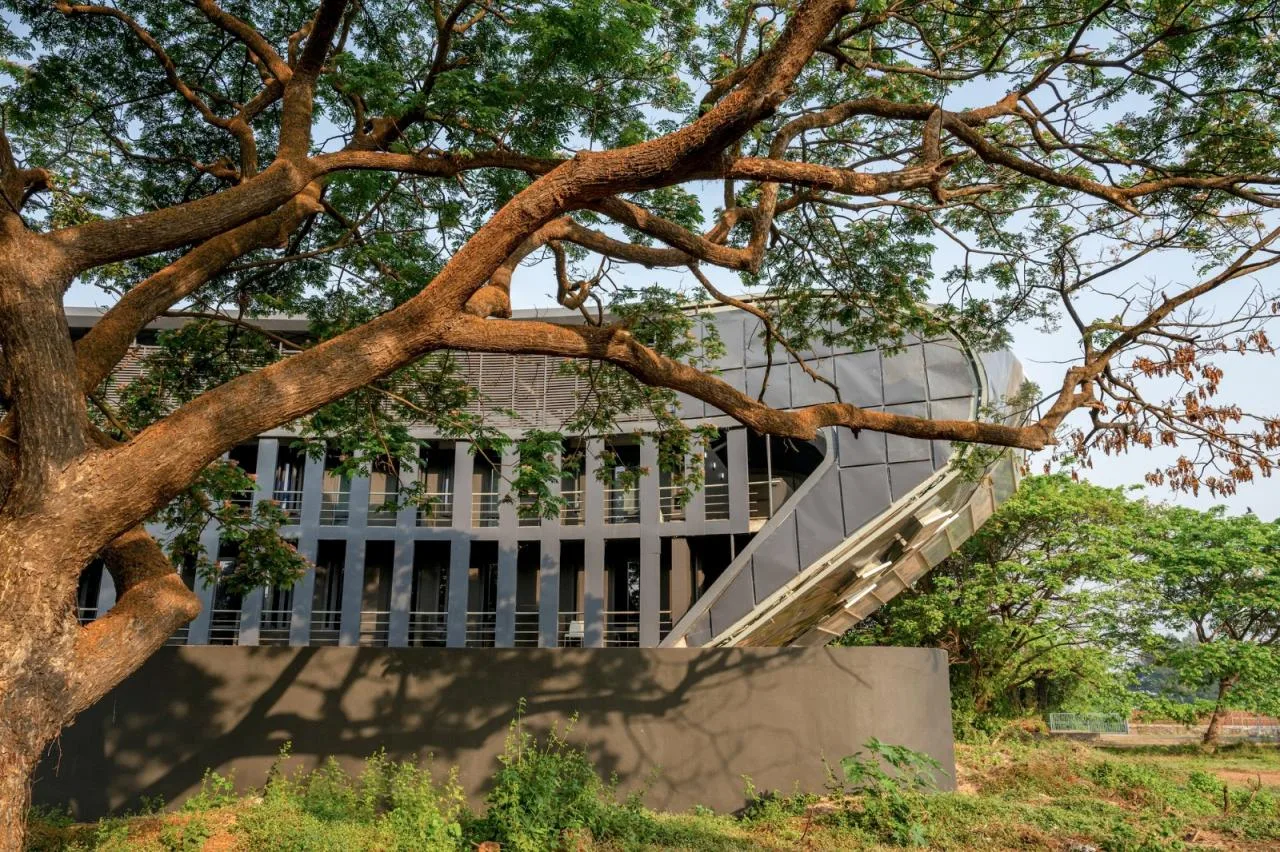
The architecture of the NIWS draws inspiration from the ocean’s dynamic nature—its eruptions, rising waves, and continuous folds that resemble a series of crashing Trojan waves ready to engulf everything. From above, the building appears like a mythical creature emerging from the Arabian Sea, mimicking its fluidity and power.
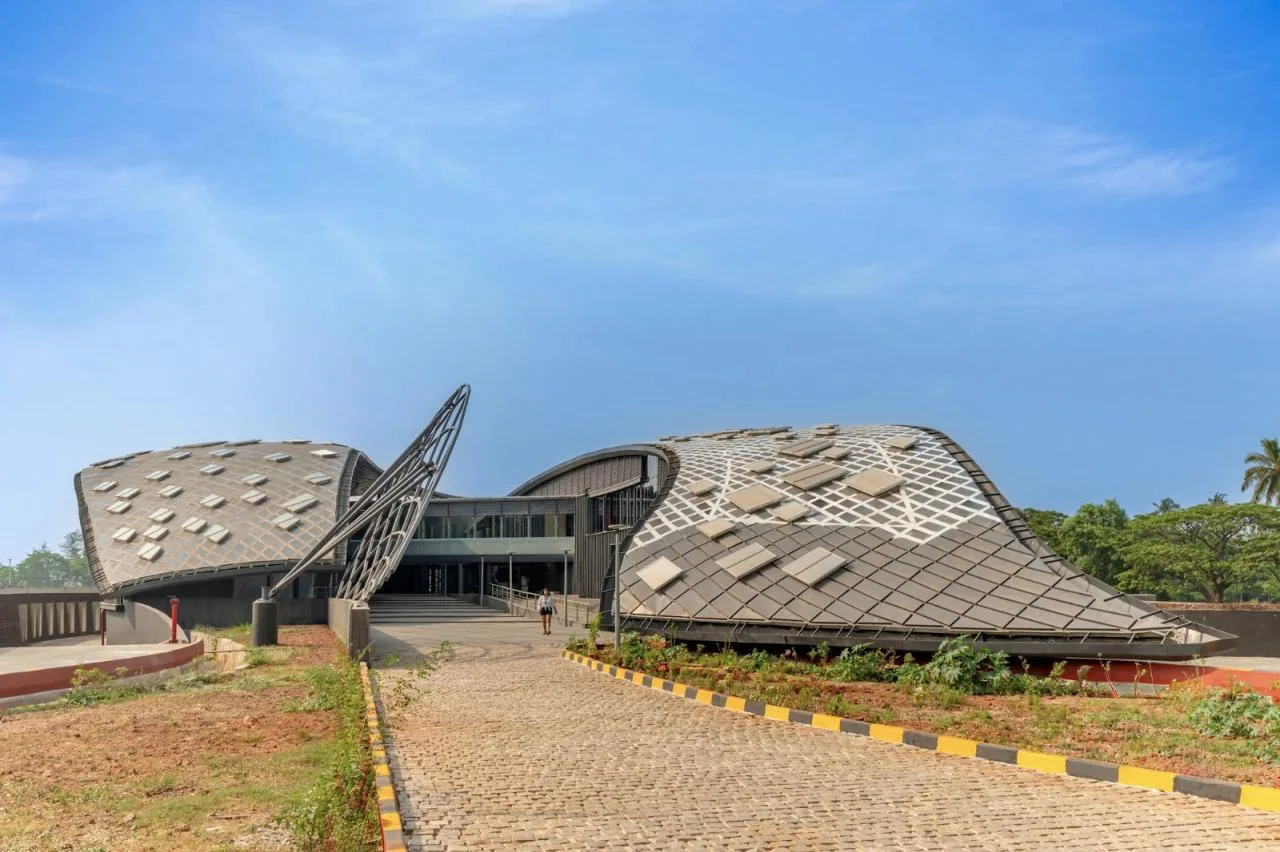
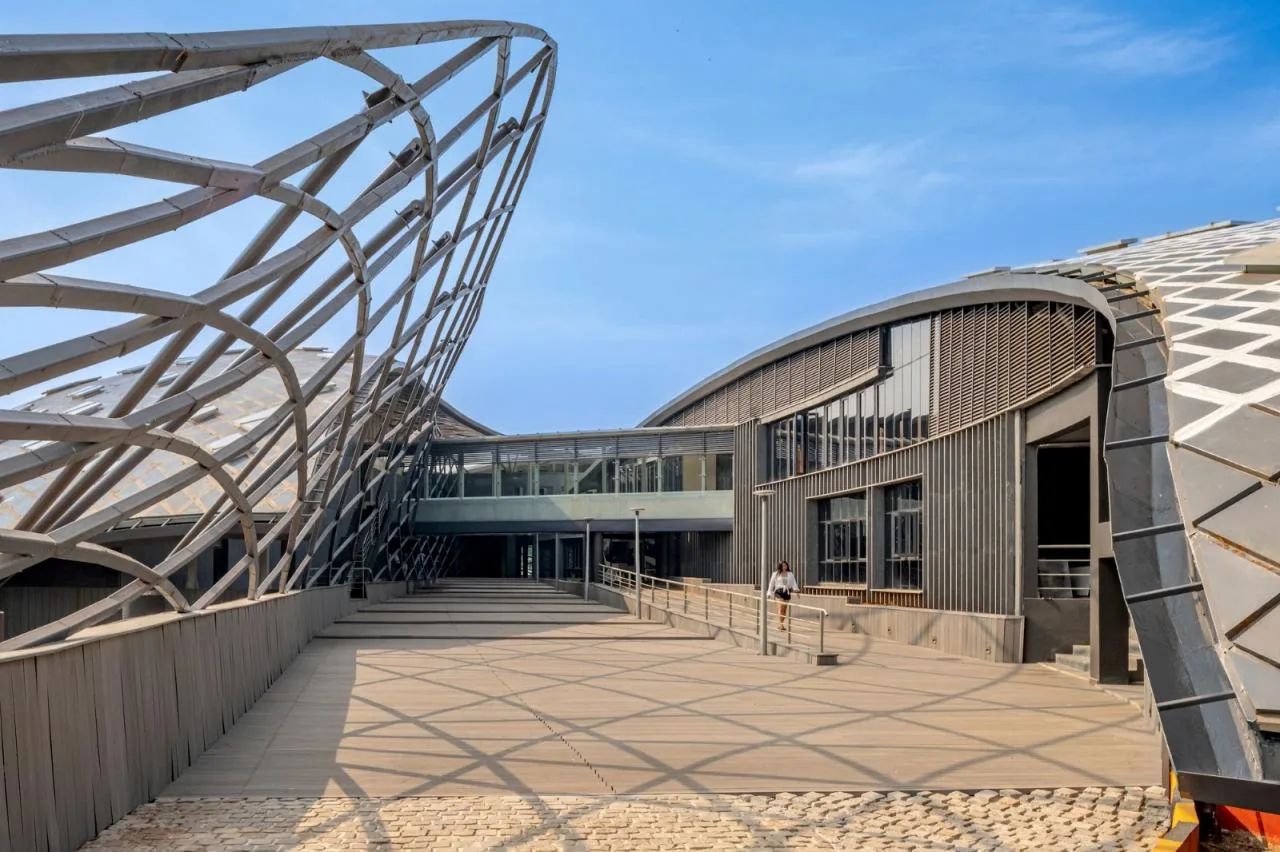
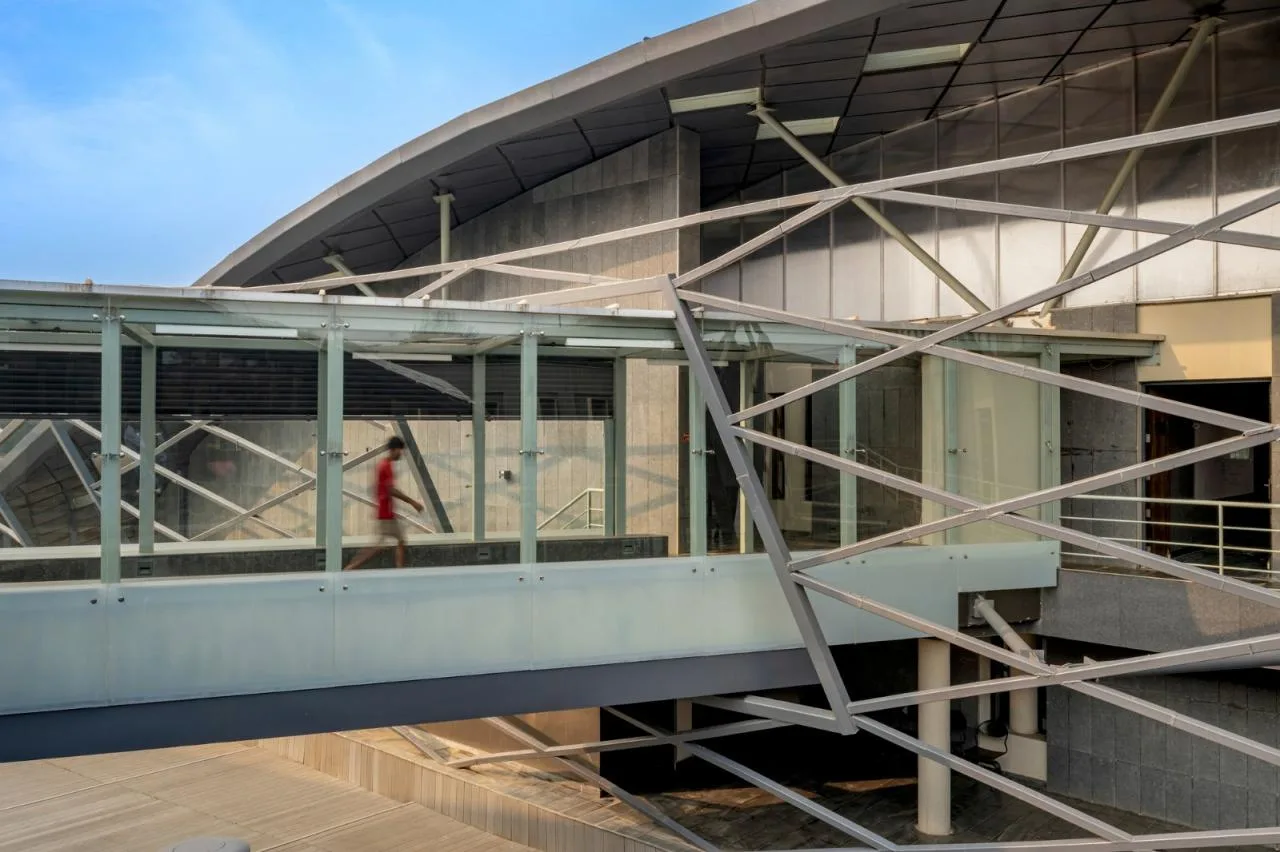
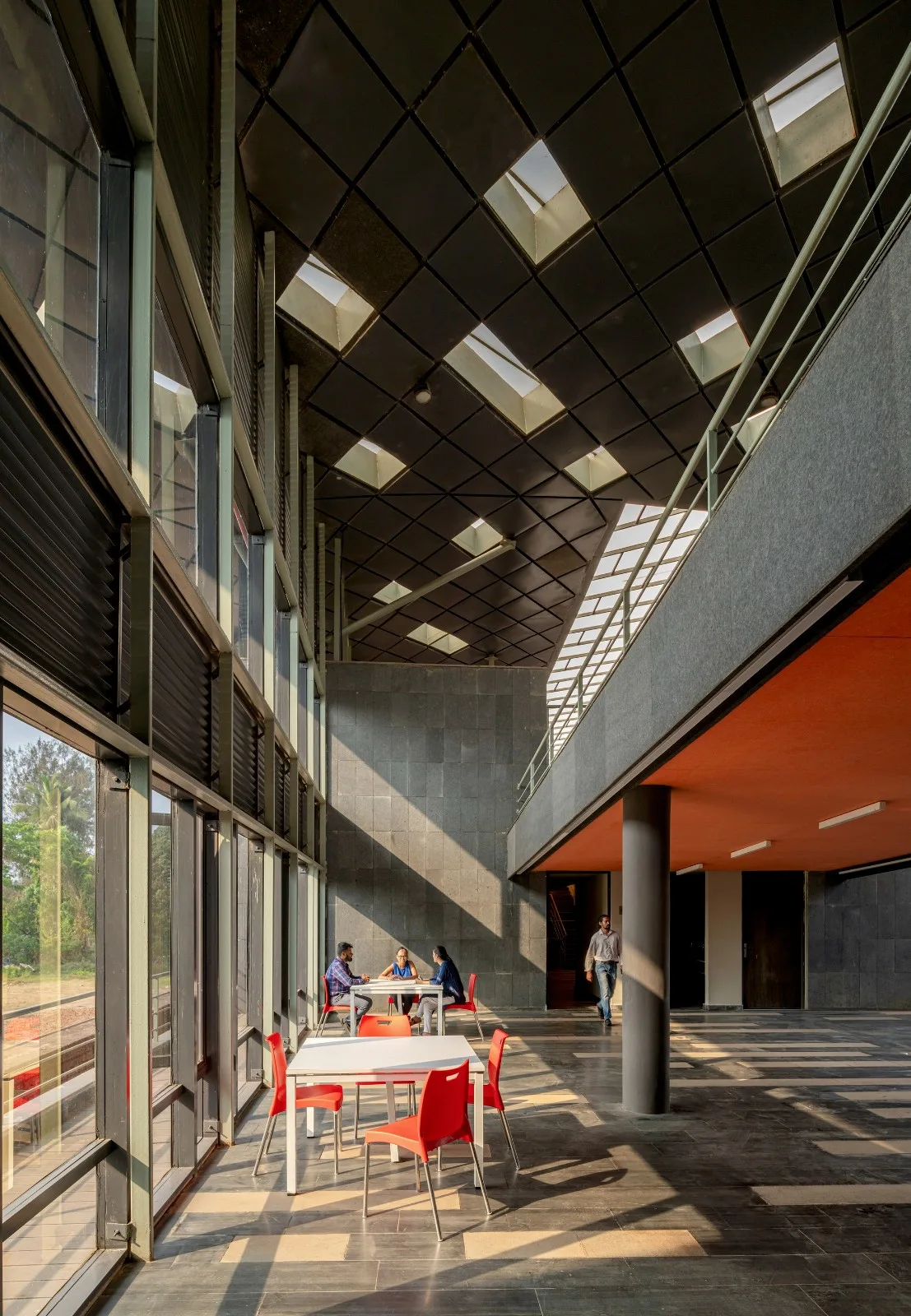
At ground level, the space feels perpetually in motion, with perspectives that constantly shift. The viewer’s eye never rests on a single point. Through multiple viewpoints and a flowing structural “spine,” the design blurs traditional boundaries between walls, floors, and roofs, creating a fluid dialogue among all elements.
Light and shadow play across these surfaces, producing a vibrant and unconventional narrative for users. The building becomes a living theater where pauses invite exploration. Thus, the architecture transcends static form, serving instead as a source of energy and inspiration for water sport adventurers.
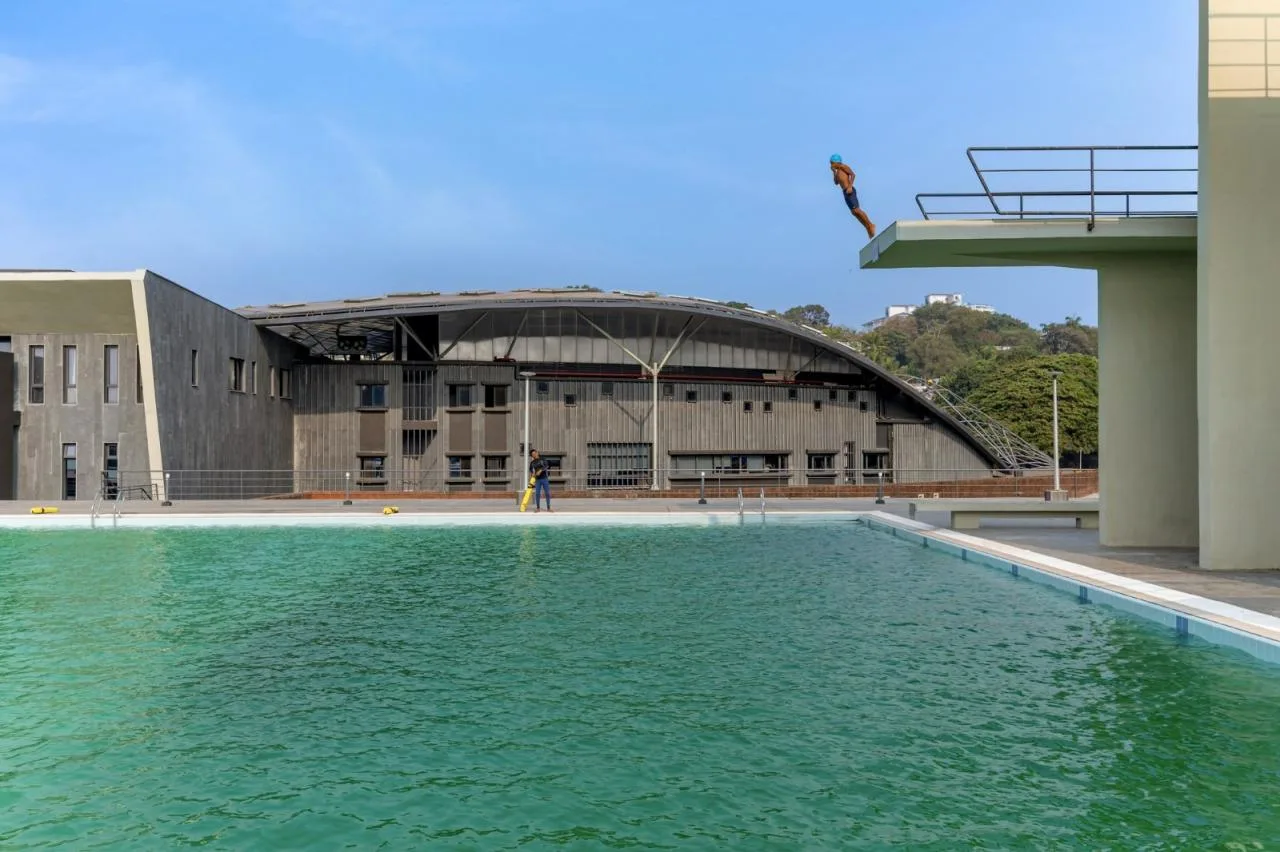
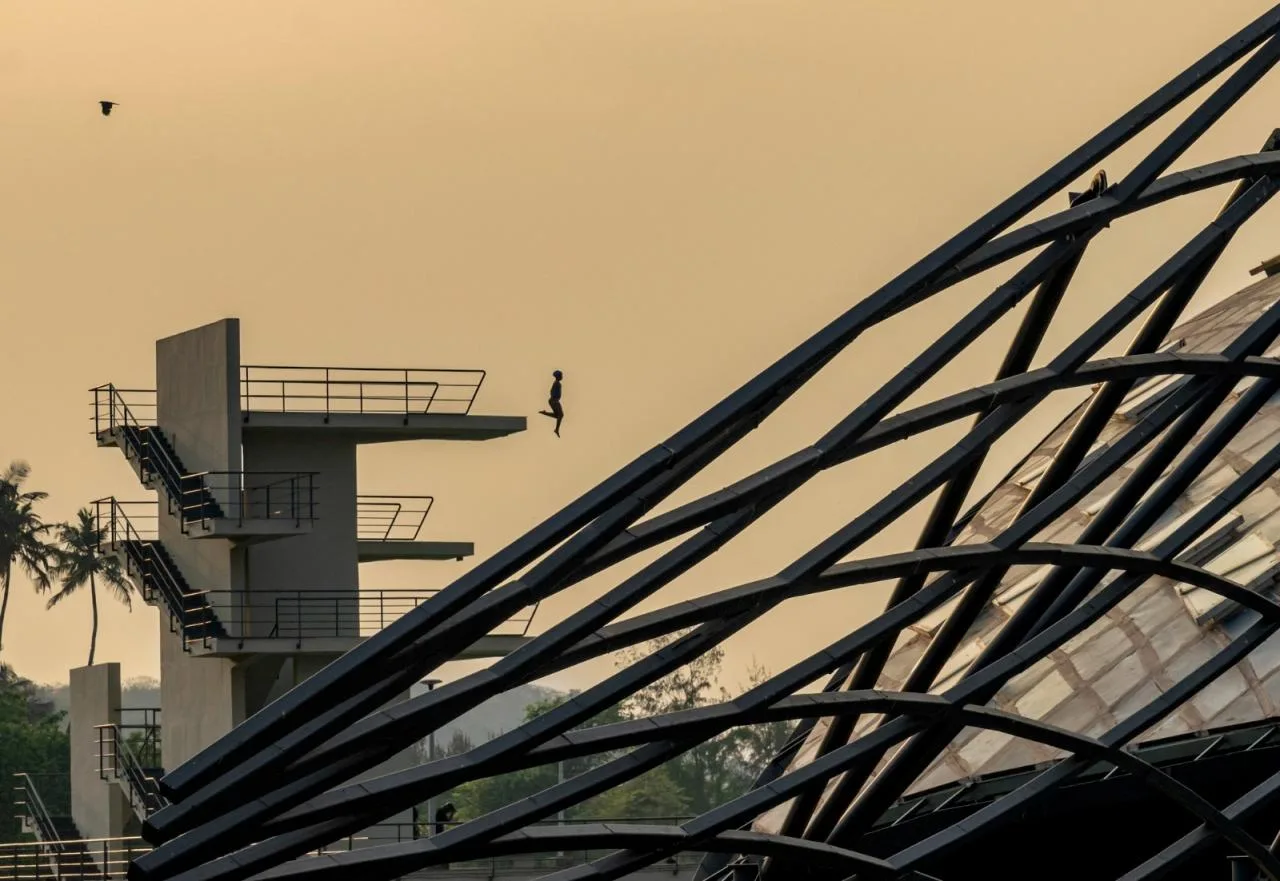
The building’s sense of continuous movement is achieved through a digitally fabricated, expansive roof structure. This roof is clad with color-coated panels to manage costs, a practical solution for government-funded projects.
Designed as a trapezoidal panel grid shell, the 4,000 square meter roof resembles a freely flowing wave enveloping the entire complex. Its lightweight frame incorporates a pressure balancing system composed of over 15,000 pipes of varying lengths.
The roof is assembled from smaller modular components, each large enough to be lifted manually into place. Over 5,000 custom-shaped roof panels, each uniquely sized and CNC-cut, are folded and pieced together like a puzzle to form the sweeping wave. This design creates continuous drainage channels, ensuring efficient water runoff and making it one of India’s most complex digitally manufactured roofs.
Project Drawings
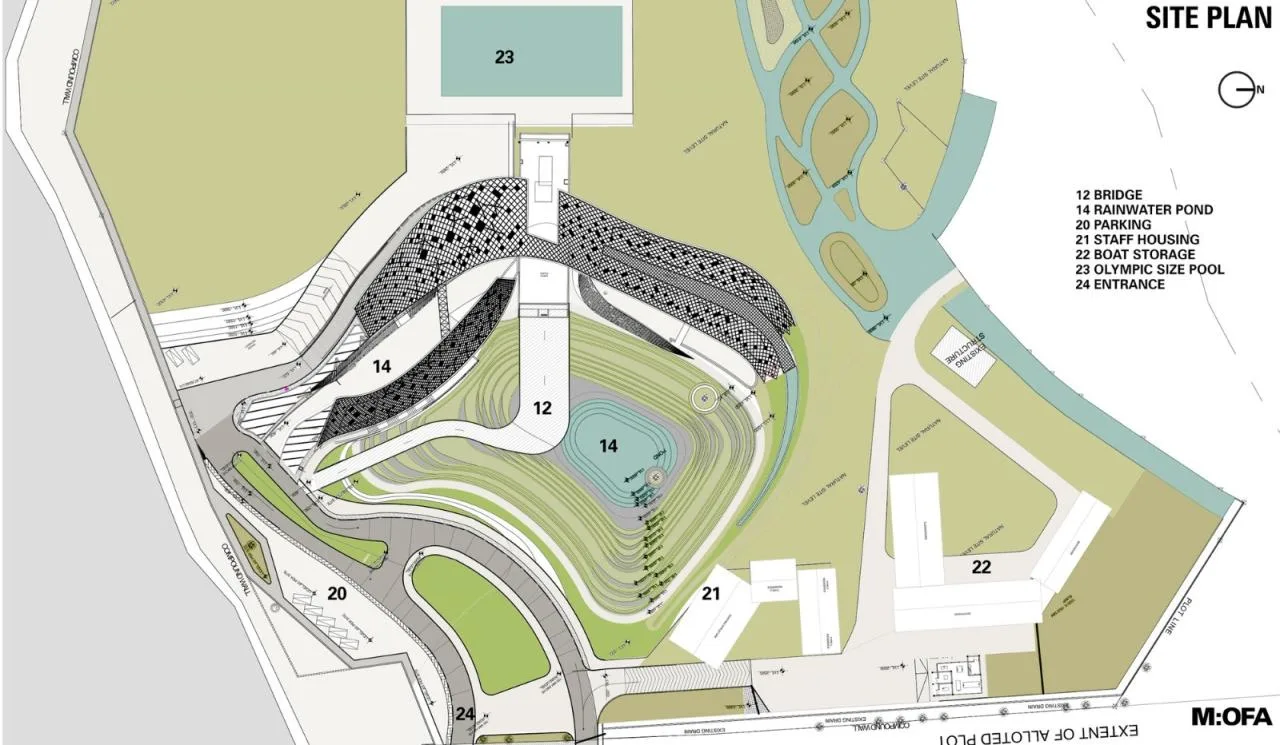
△ General Layout Plan
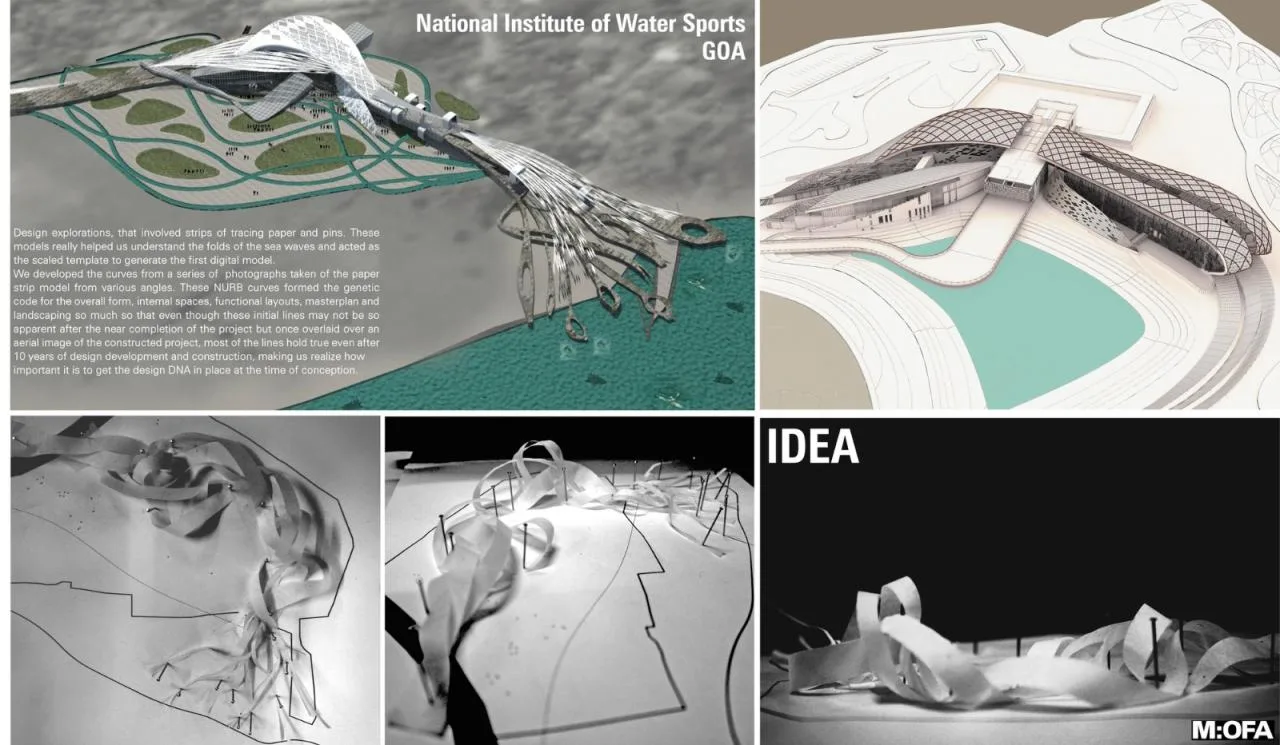
△ Project Concept Map
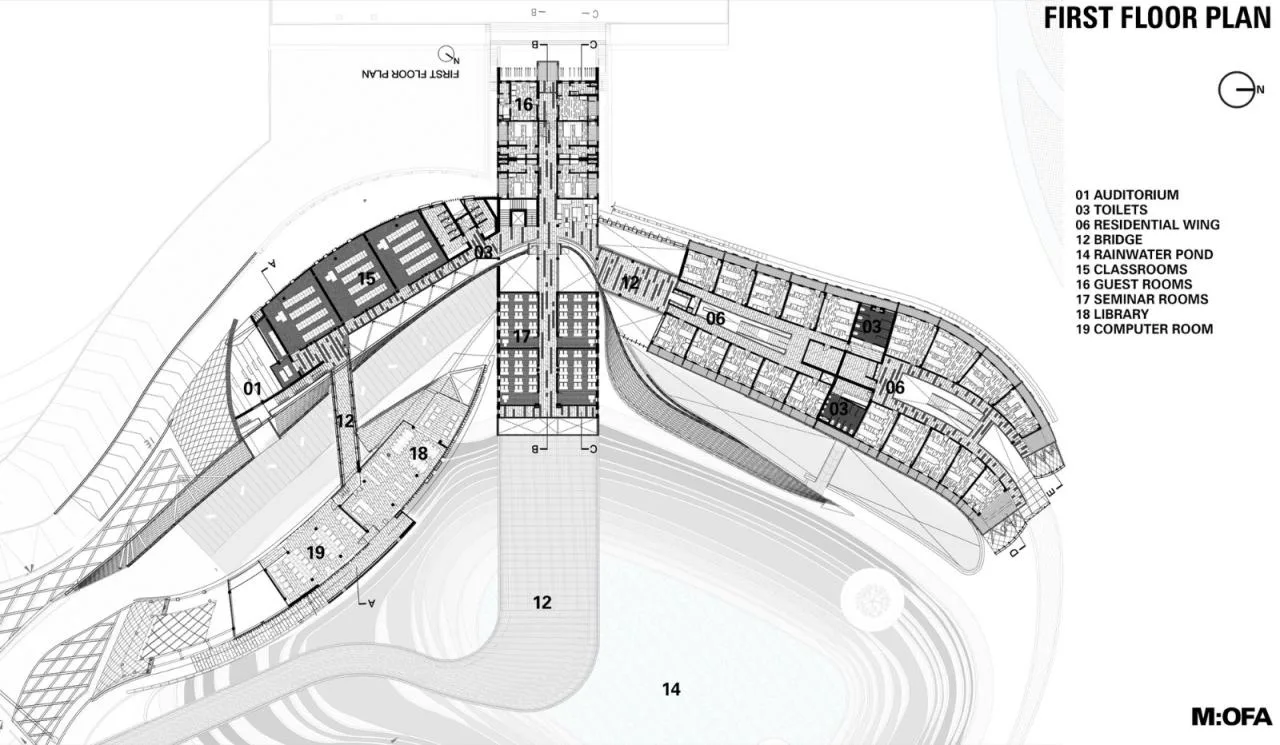
△ First Floor Plan
△ Second Floor Plan
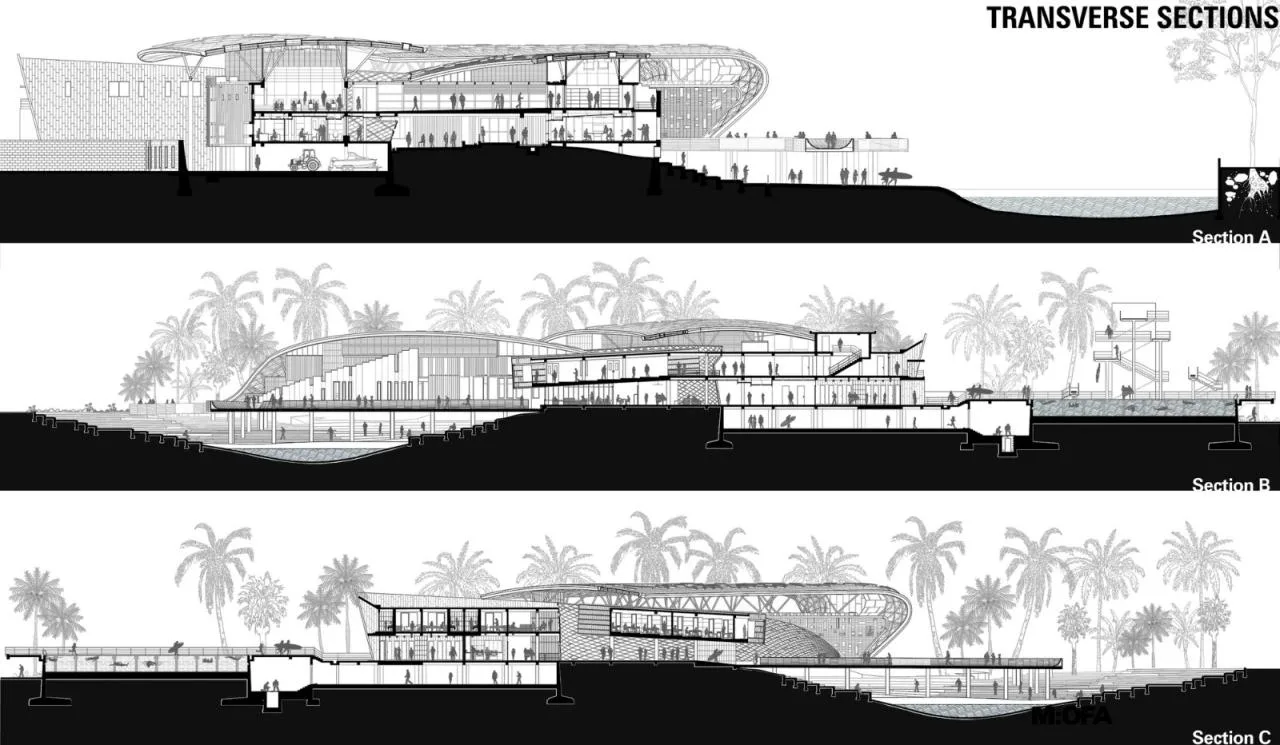
△ Section Diagram
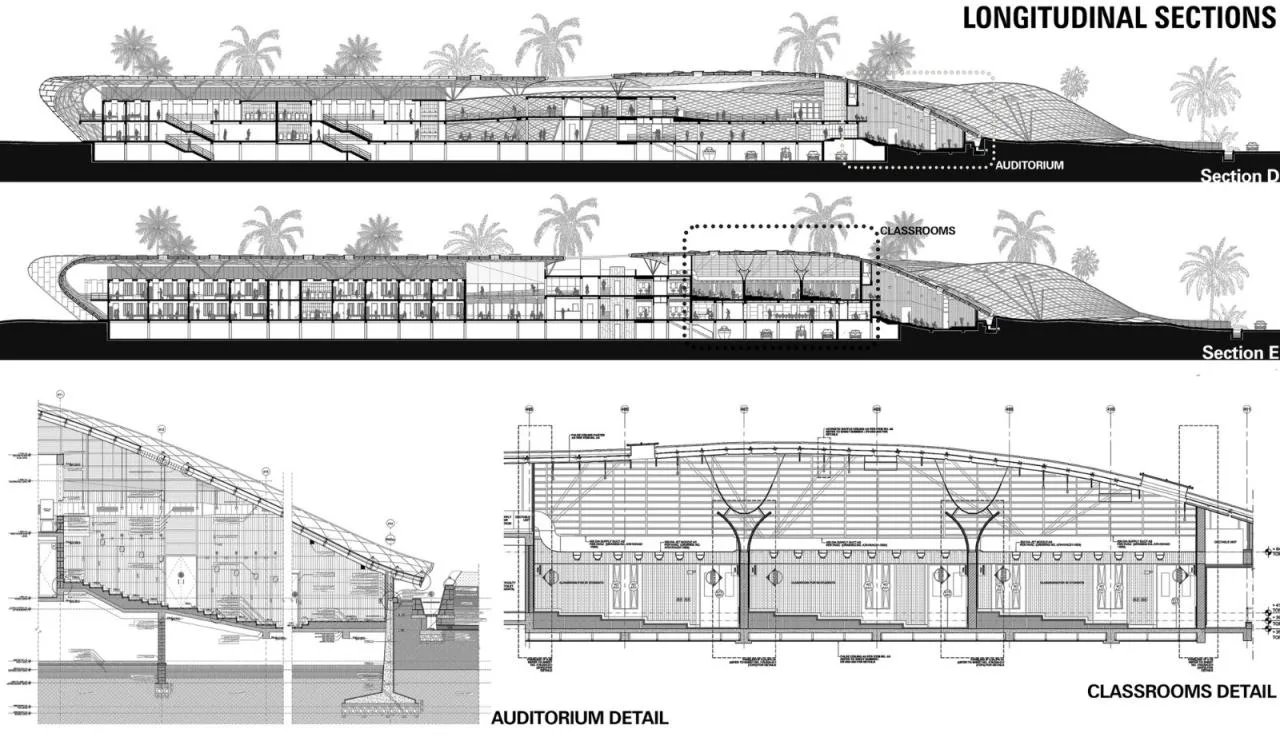
△ Section Diagram
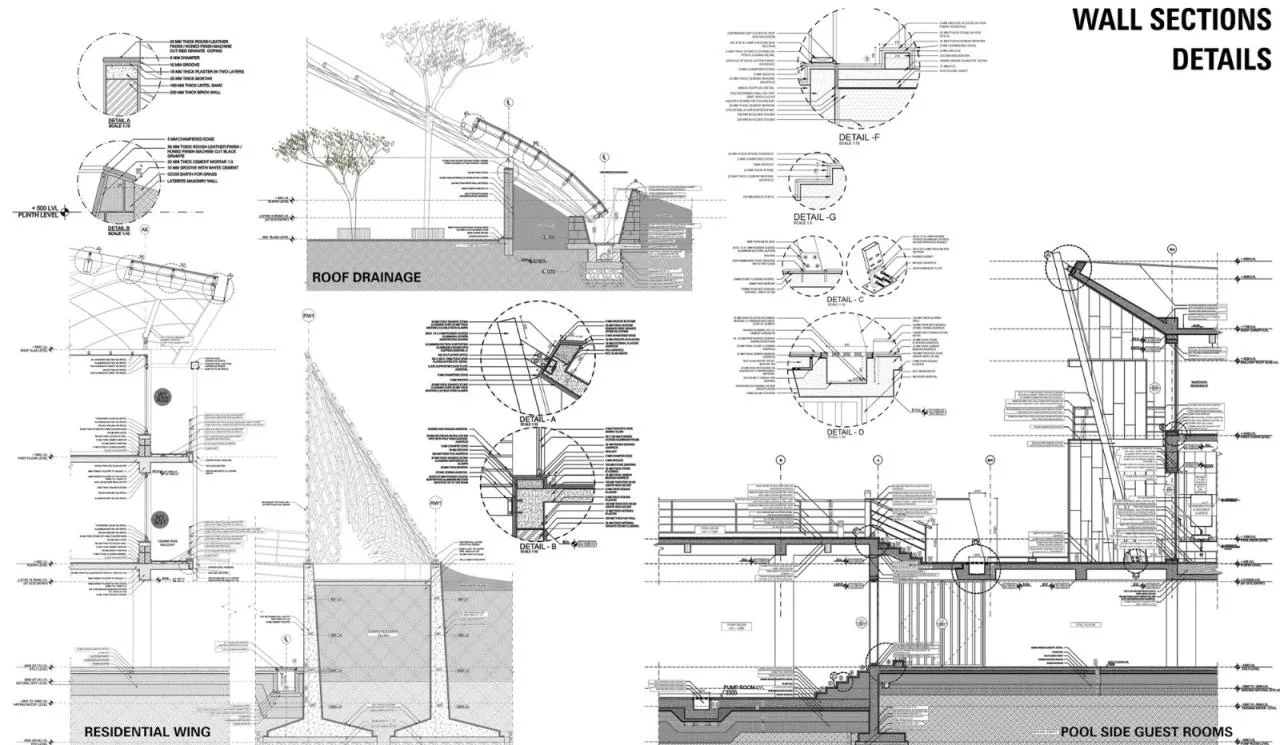
△ Detailed Structural Drawing
Project Information
Architect: M: OFA Studios
Area: 12,075 m²
Project Year: 2023
Photographer: Vinay Panjwani
Manufacturers: Armwood, Insuboard, Jaquar, Johnson Endura, Philips, Saint-Gobain, TATA Bluescope Lysaght
Lead Architect: Manish Gulati
Project Managers: Abhishek Sorampuri, Anuj Mittal
Junior Partners: Saurabh Singla, Aakanksha Hajela
Chief Planner: Tanushree Verma
Interior Designer: Sonakshi Madan
Building Function: Sports Facilities
Structural Engineer: DELF Consulting Engineers
Project Management: Jade Consultants
Pipeline Consultant: Behera & Associates
Electrical Consultant: Engineering Consultant & Management Service
Civil Contractor: Ramjidas Construction Pvt Ltd
Indoor Contractor: Virender Kumar & Associates
Location: Panaji, India












Must log in before commenting!
Sign Up