
BIM pipeline integration relies on collision detection to identify clash points, facilitating discussions among various disciplines to refine the layout plan. This process takes into account design standards and the ease of future construction, aiming to eliminate conflicts, achieve the required drawing detail, and optimize cost efficiency. The integration process should adhere to the following key principles:
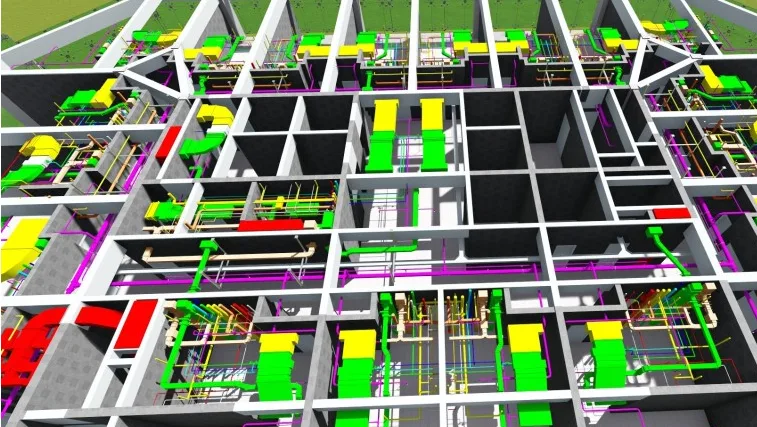
1. Comply with Construction Standards: The overall pipeline design must respect the original intent of each professional system to ensure full functionality. The layout follows specific guidelines: pressure pipelines should avoid crossing non-pressure ones; pipelines with fewer attachments should be separated from those with more; cold water lines should not interfere with hot water lines; and smaller pipelines should avoid overlapping with larger ones.
2. Maintain Clearance Requirements: Pipeline arrangements should make efficient use of the building’s functions, running straight and parallel wherever possible to meet clearance standards. They should be centrally positioned when feasible, balancing functional use, logical routing, and ease of construction.
3. Provide Adequate Maintenance Space: Consideration must be given to operational space for installation, maintenance, and replacement. The placement and spacing of equipment, pipelines, valves, and related components should be planned for easy access and serviceability.
4. Meet Decoration Requirements: The electromechanical system installation should respect clearance needs across all areas. By integrating decorative facades with air duct routes, it is important to adjust the positioning and style of air vents to minimize the visual impact of ducts. The pipeline layout should be orderly, logical, and visually appealing.
5. Ensure Structural Safety: When pipelines pass through beams or walls, they must comply with structural regulations to guarantee the building’s safety without compromise.
These principles summarize the essential guidelines for effective BIM pipeline integration. We hope this information proves useful to all readers!
















Must log in before commenting!
Sign Up