
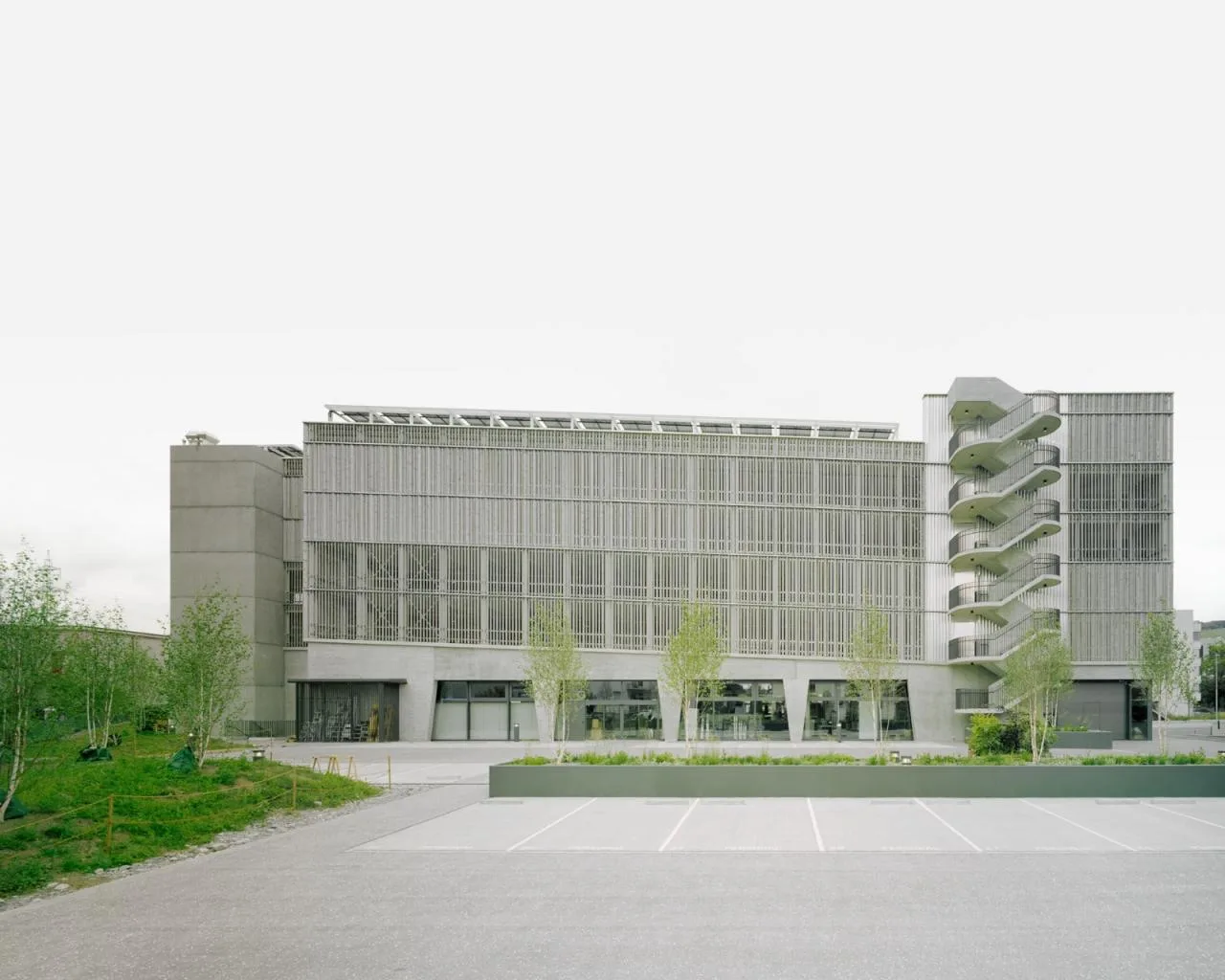
The Mobile Hub (MHZN) at Zugspitze North Station in Switzerland is a multifunctional space combining transportation, parking, retail, and public leisure amenities. Situated at the entrance of the Zug Technology Park and the northern city district, MHZN offers parking for both park employees and the general public. It also provides transfer options for bicycles, scooters, buses, and future automated shuttle services.
Equipped with a photovoltaic canopy, connection to the regional energy grid, charging stations, and adaptable automatic parking technology, the building embodies forward-looking technological planning. Adding vibrancy to the area are a craftsman’s specialty store and a cozy pub.
The MHZN site is part of the larger Zug Technology Park development project, which aims to transform the V-Zug factory into a future-oriented urban industrial production zone through multiple phases. This redevelopment will verticalize industrial processes, freeing up space for offices, other uses, and even residential apartments.
Since winning an international competition in 2013, the project has been overseen by Hosoya Schaefer Architects, with completion anticipated by 2048.
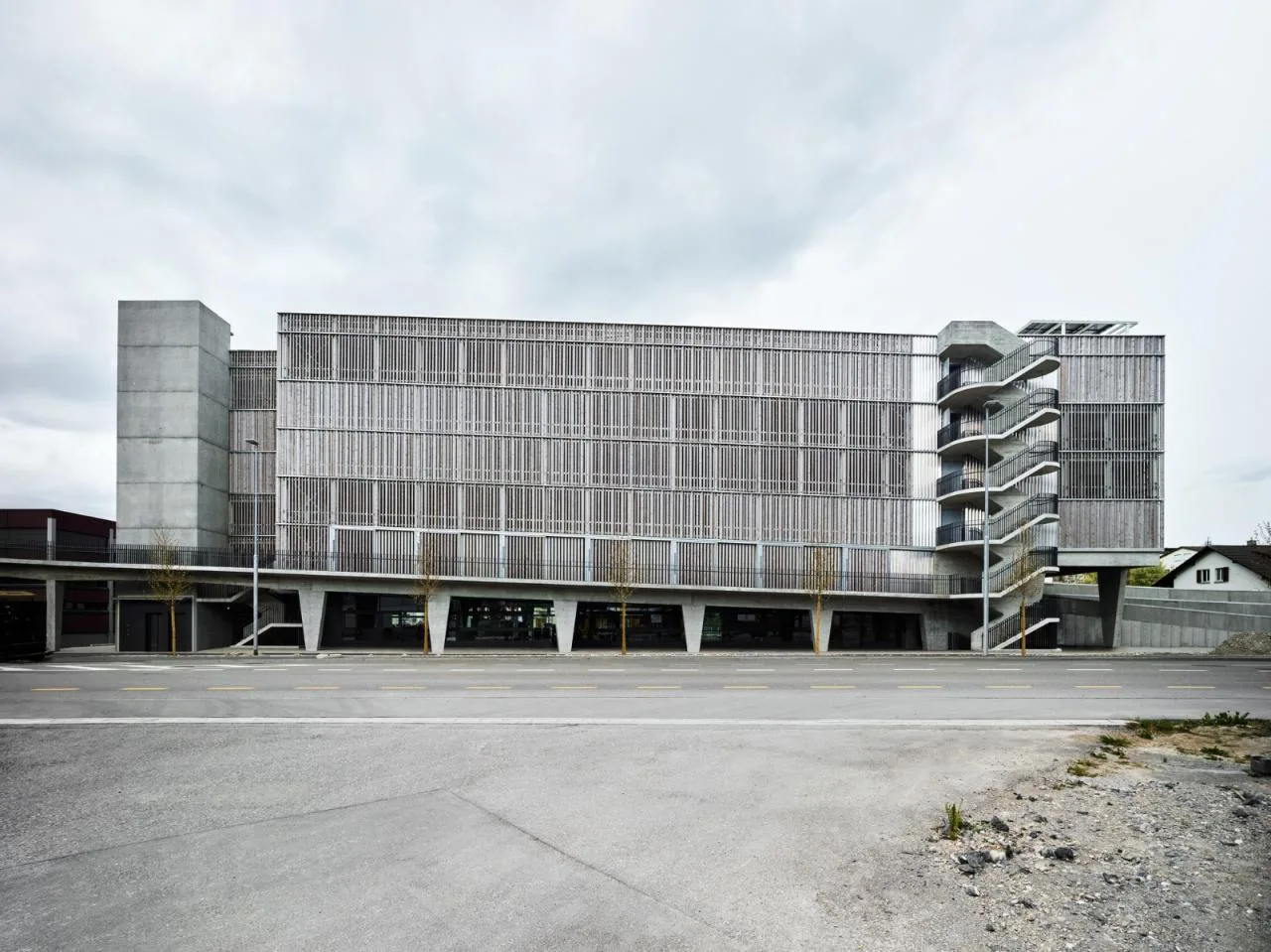
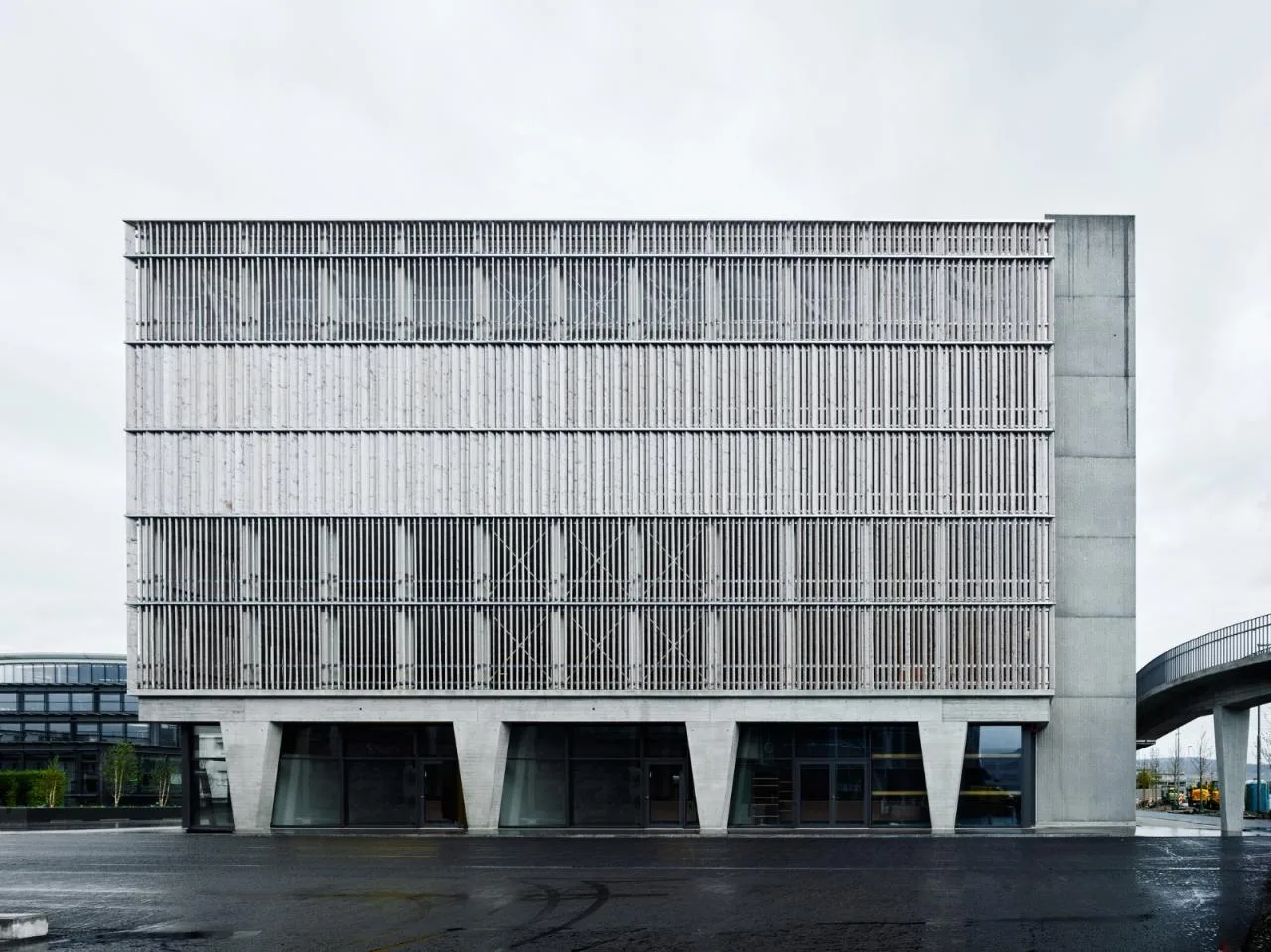
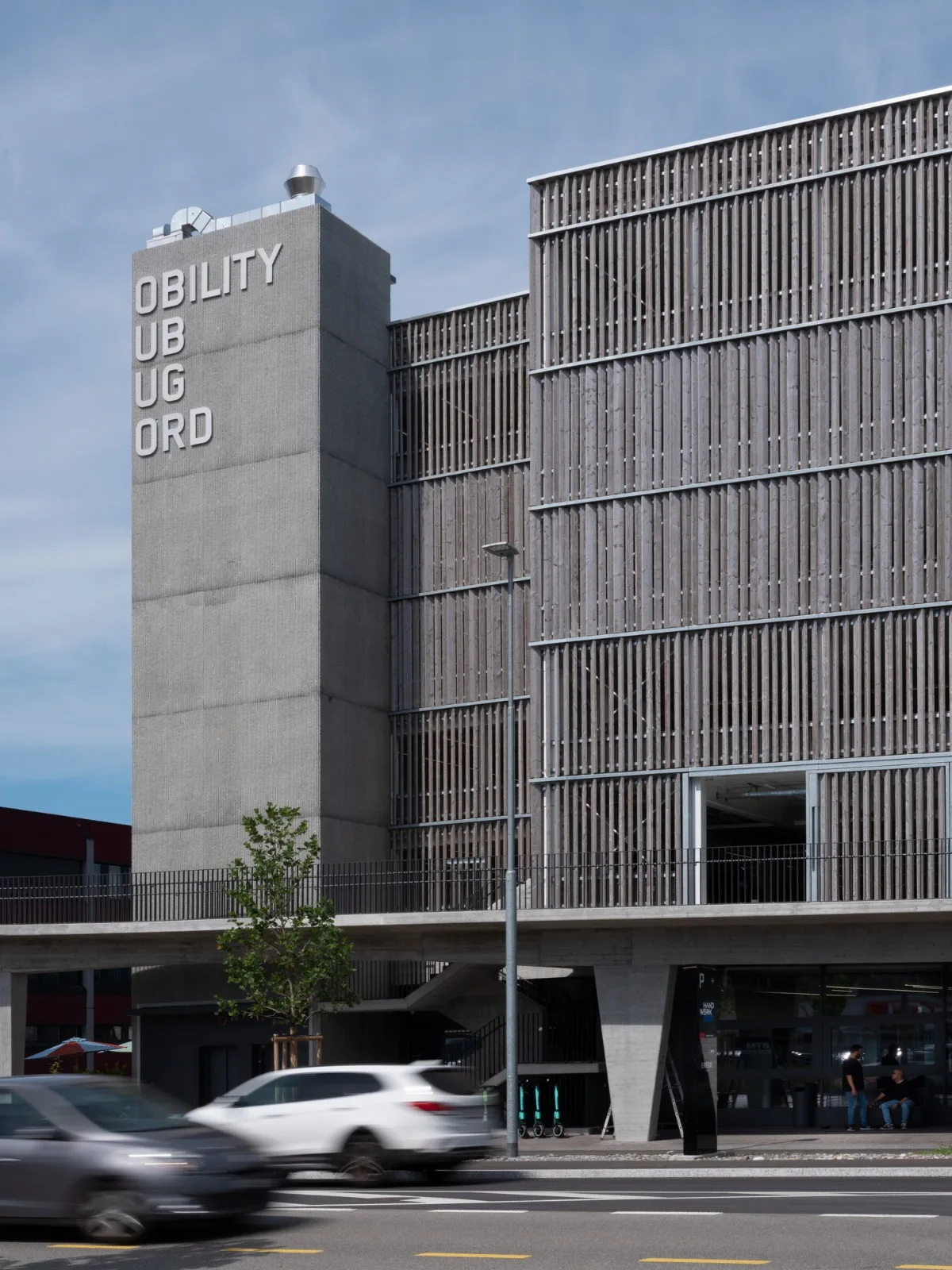
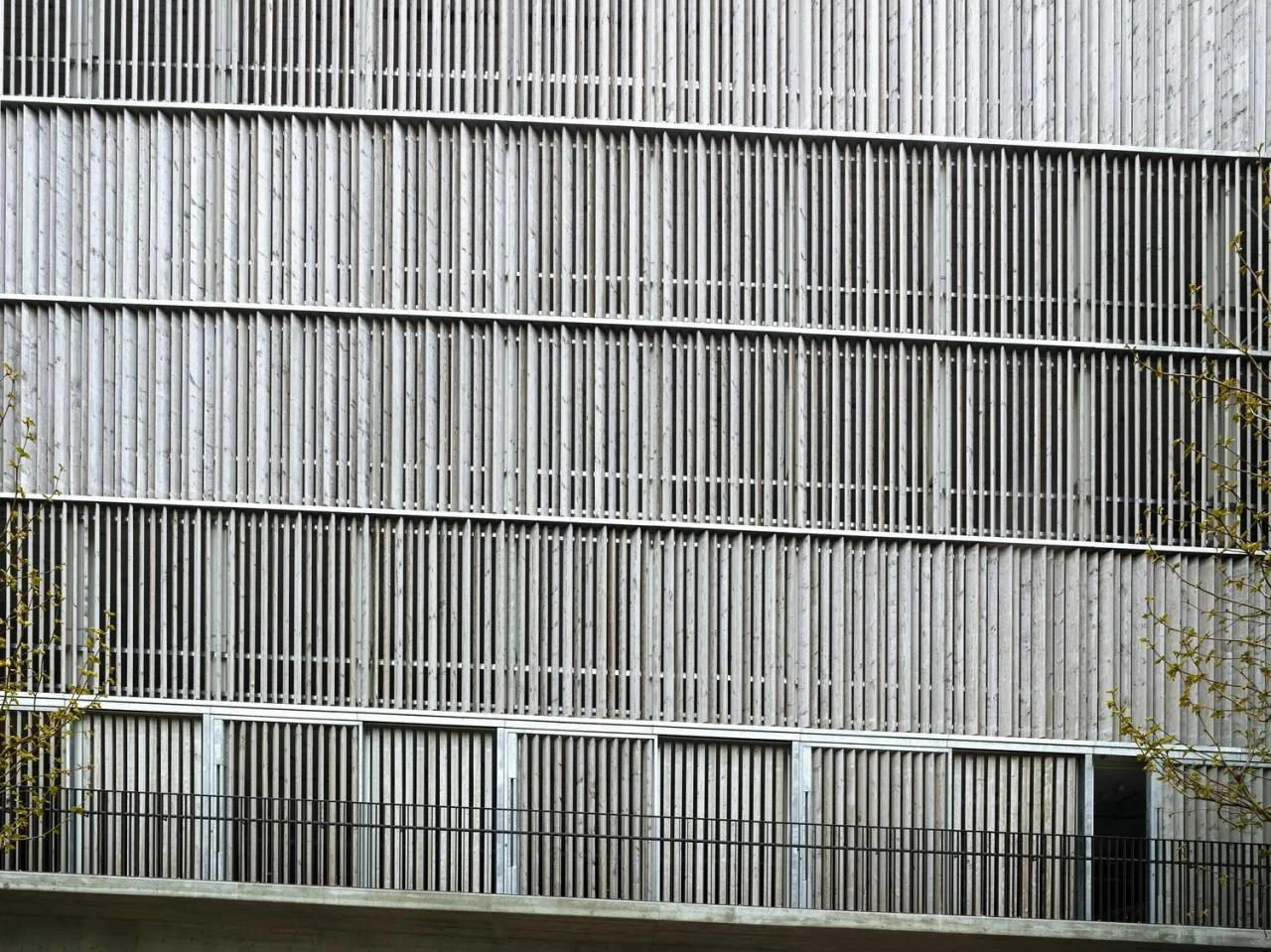
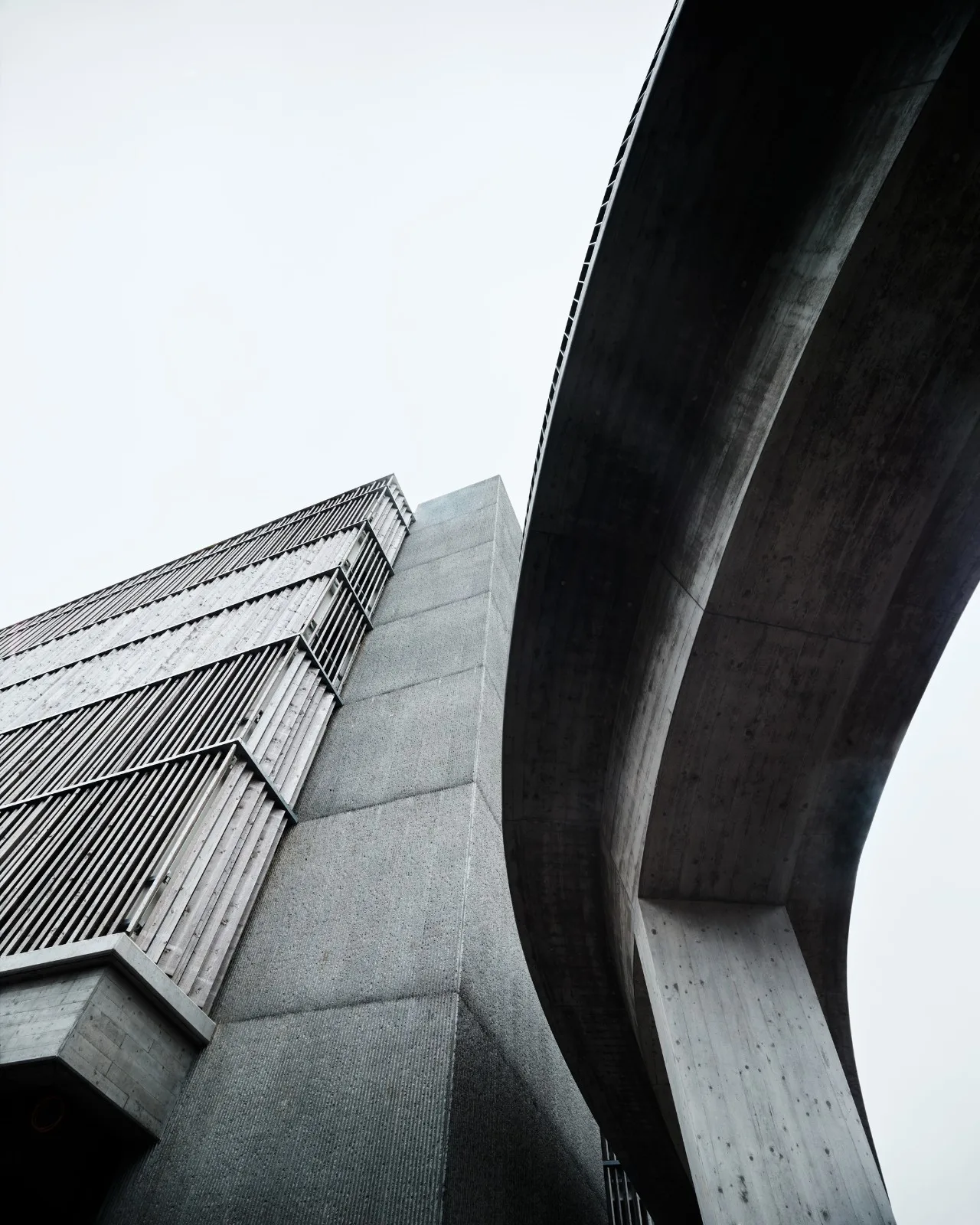
The building’s exterior is clad with thin wooden sheets that provide privacy and reduce glare, while also enhancing sustainability. Visually, each floor features a mix of narrow slats and wide flat panels. The alternating widths and thicknesses between floors create a dynamic interplay of transparent and opaque surfaces.
This design makes the building appear both delicate when still and dynamic as people move around it. The 2,254 square meter wooden facade uses approximately 100 cubic meters of fir and spruce sourced from Swiss forests. The facade’s guardrails integrate anti-glare protection with safety cables for added security.
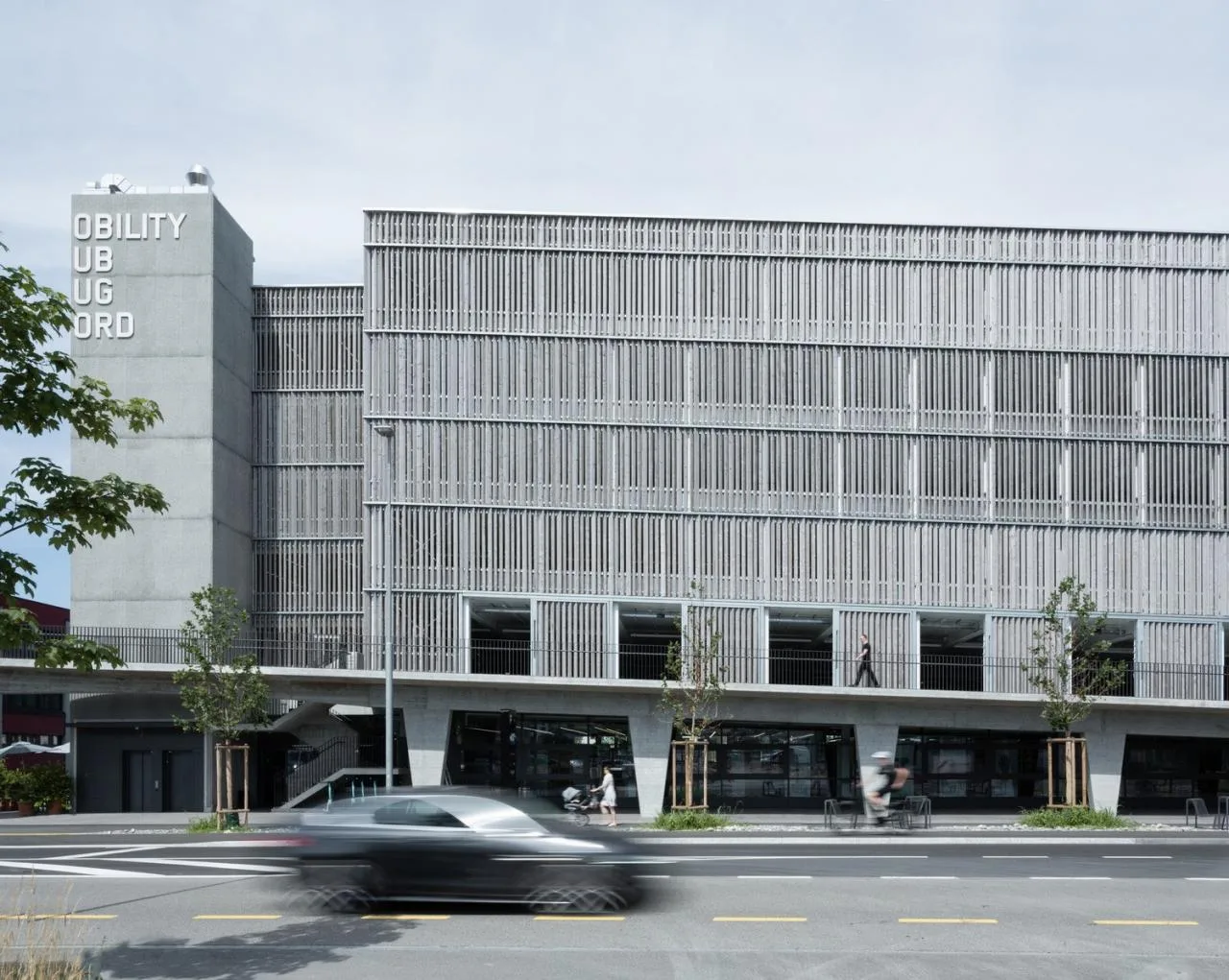
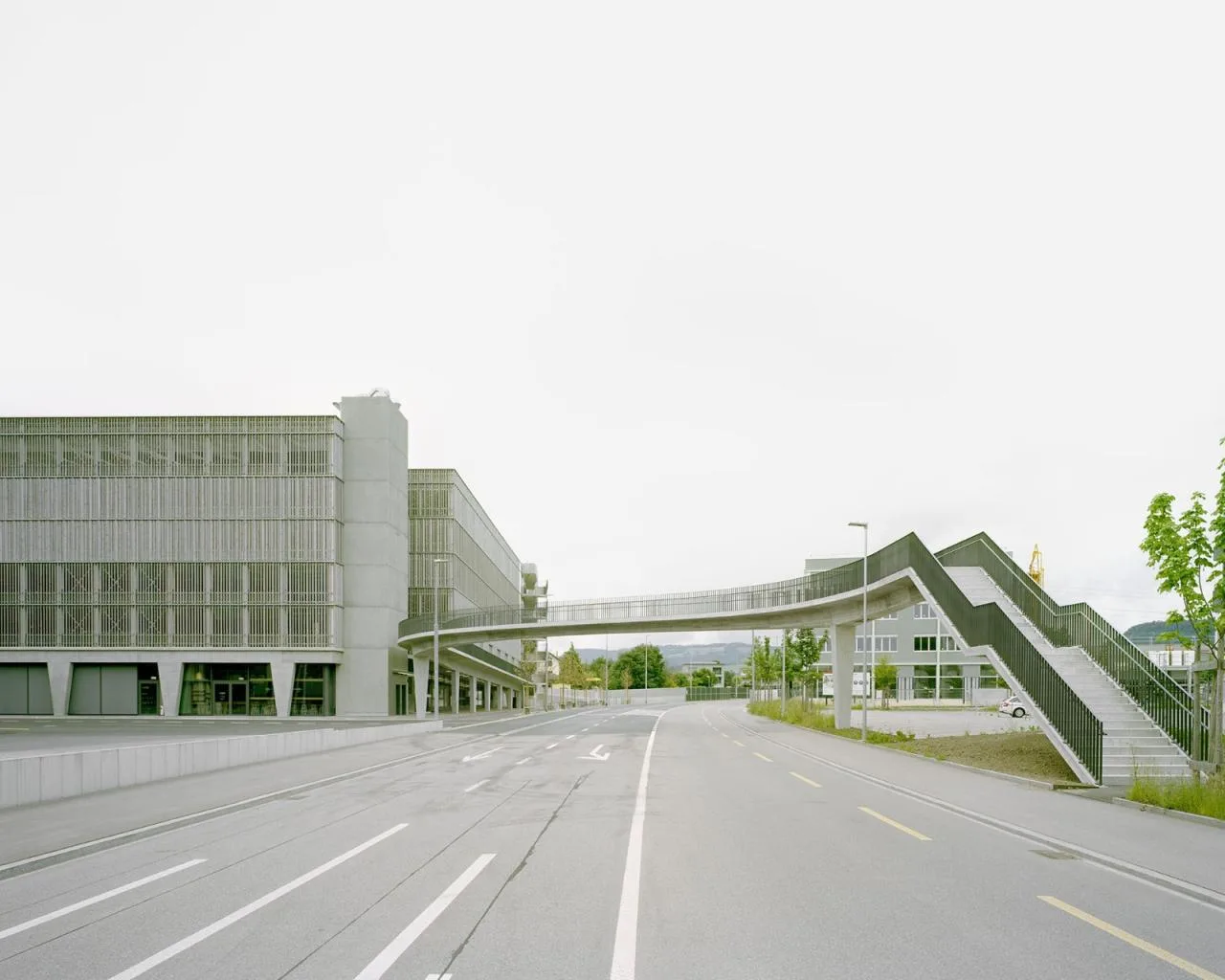
The pedestrian bridge extends gracefully from the building as a continuation of the outer corridor, spanning the street in an elegant S-curve. It connects the technology park to the first-floor drive-in area.
This bridge is a three-span frame with lengths of 20, 31, and 13 meters respectively. Its slender form demanded highly precise formwork. The prestressed beams have T-shaped cross-sections with varying heights and widths, and they connect to columns, stair foundations, and the main building to form a unified structure.
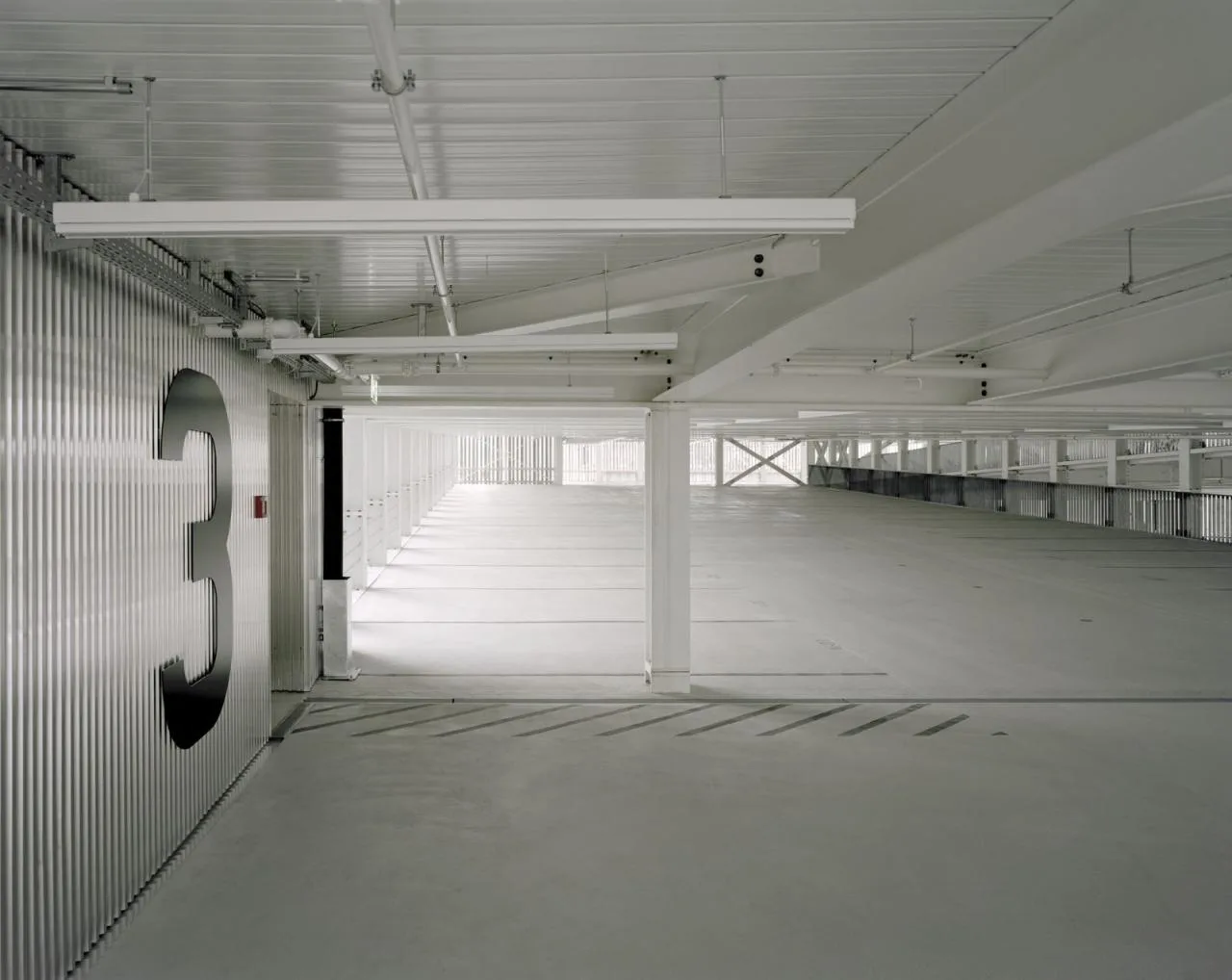
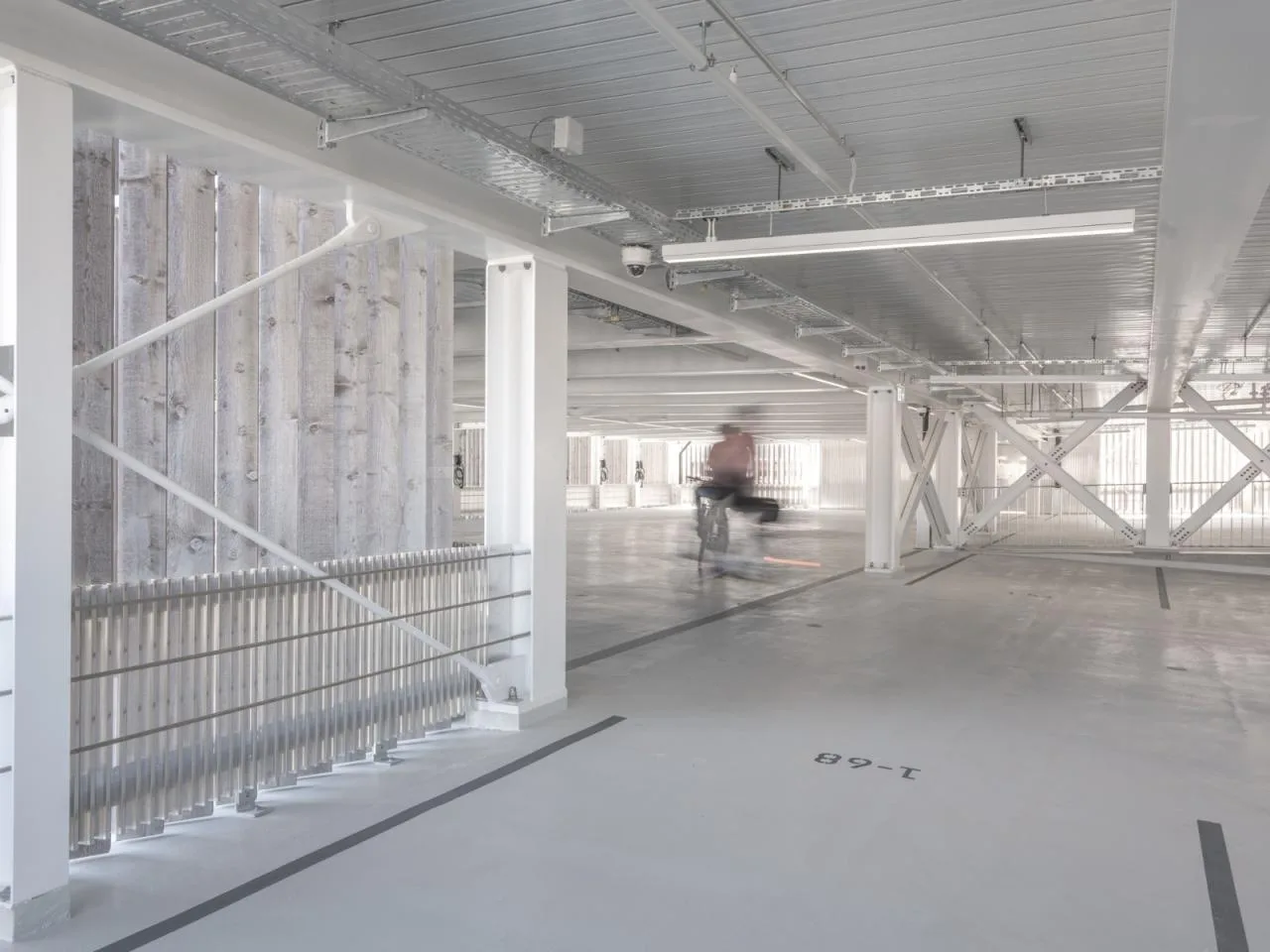
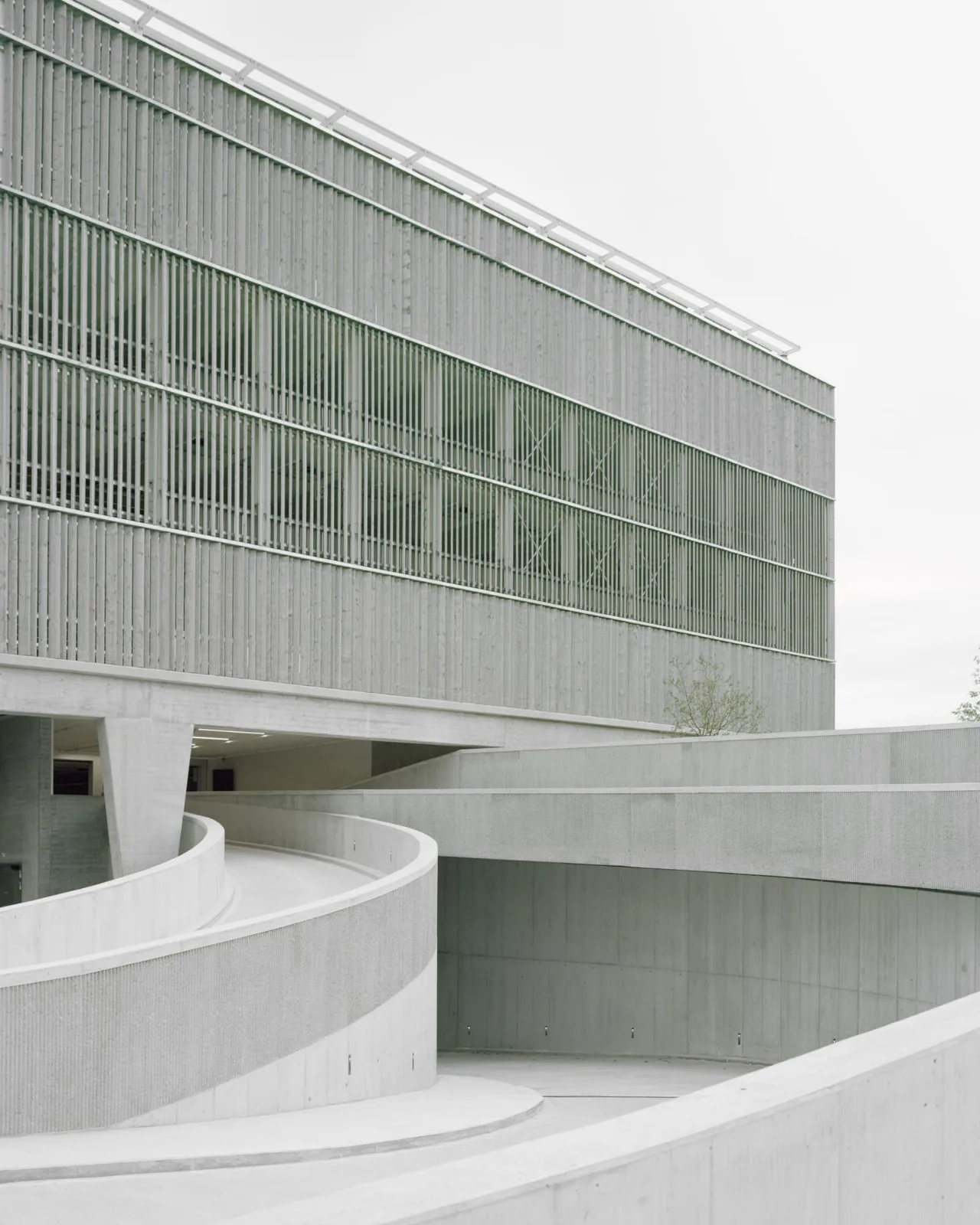
The ceiling from the concrete structural base up to the sales floor is constructed of cast-in-place concrete with internal insulation. Above this rests a steel framework supporting spiral, inclined, and horizontal parking levels without columns interrupting the space.
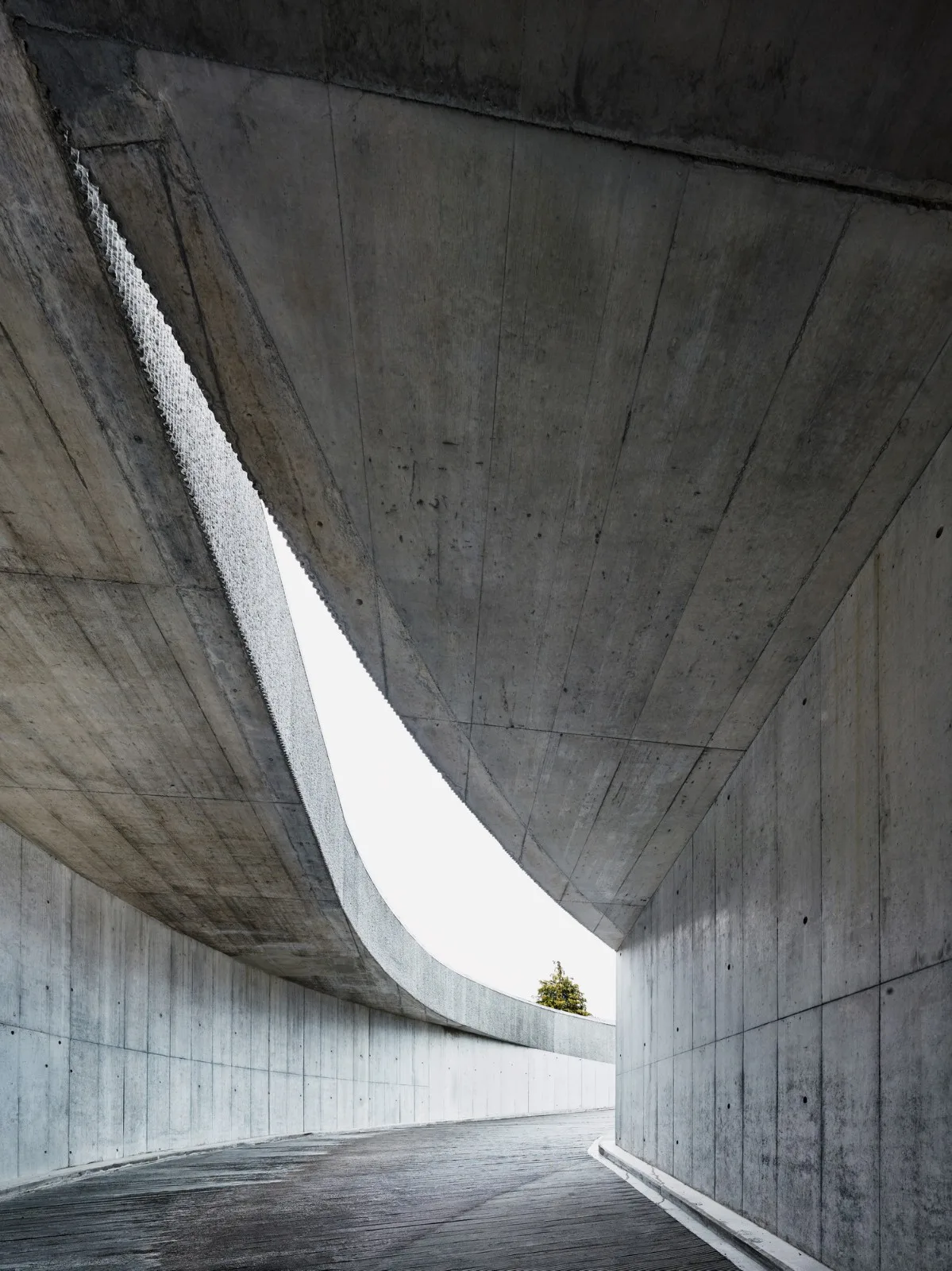
The loads are transferred through a distinctive V-shaped bracket via surrounding beams, which subtly recess inward along the facade plane, lending the building a sense of lightness. The ramps on the upper and lower levels mirror the flow of the pedestrian overpass on the opposite side.
Similar to elevator towers and shafts, these ramps are hinged between levels using matrix-based algorithms to allow for structural flexibility.
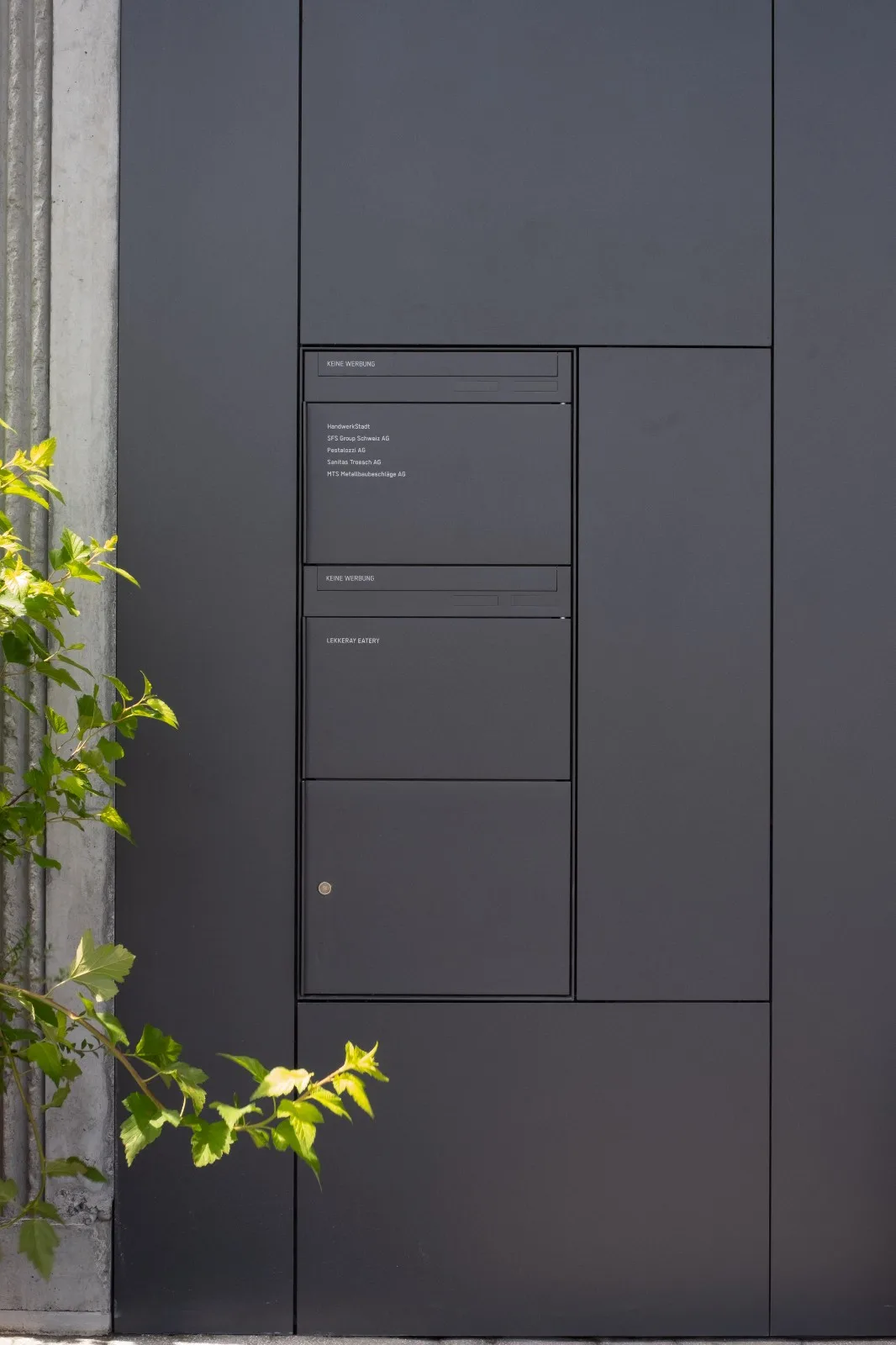
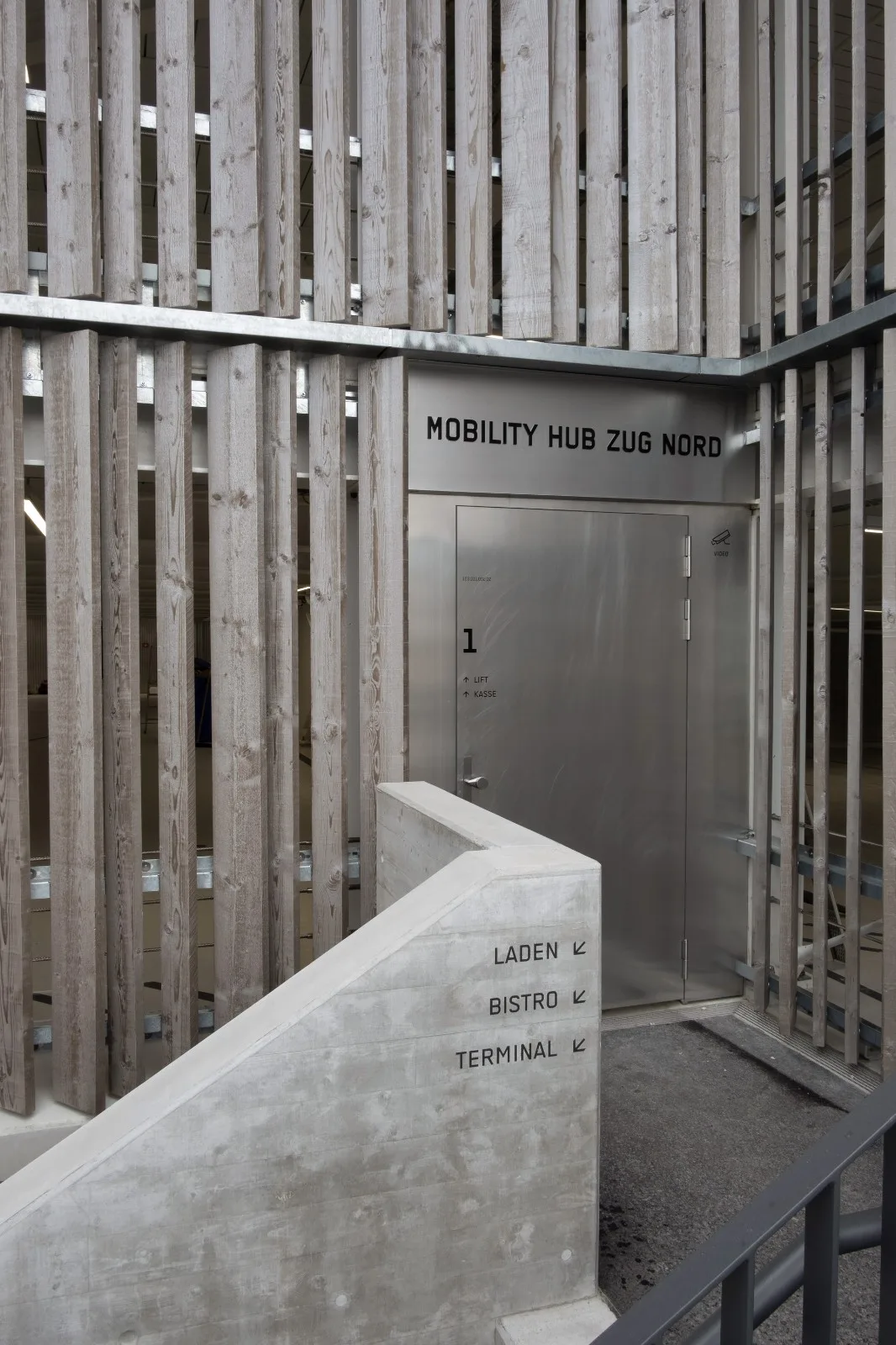
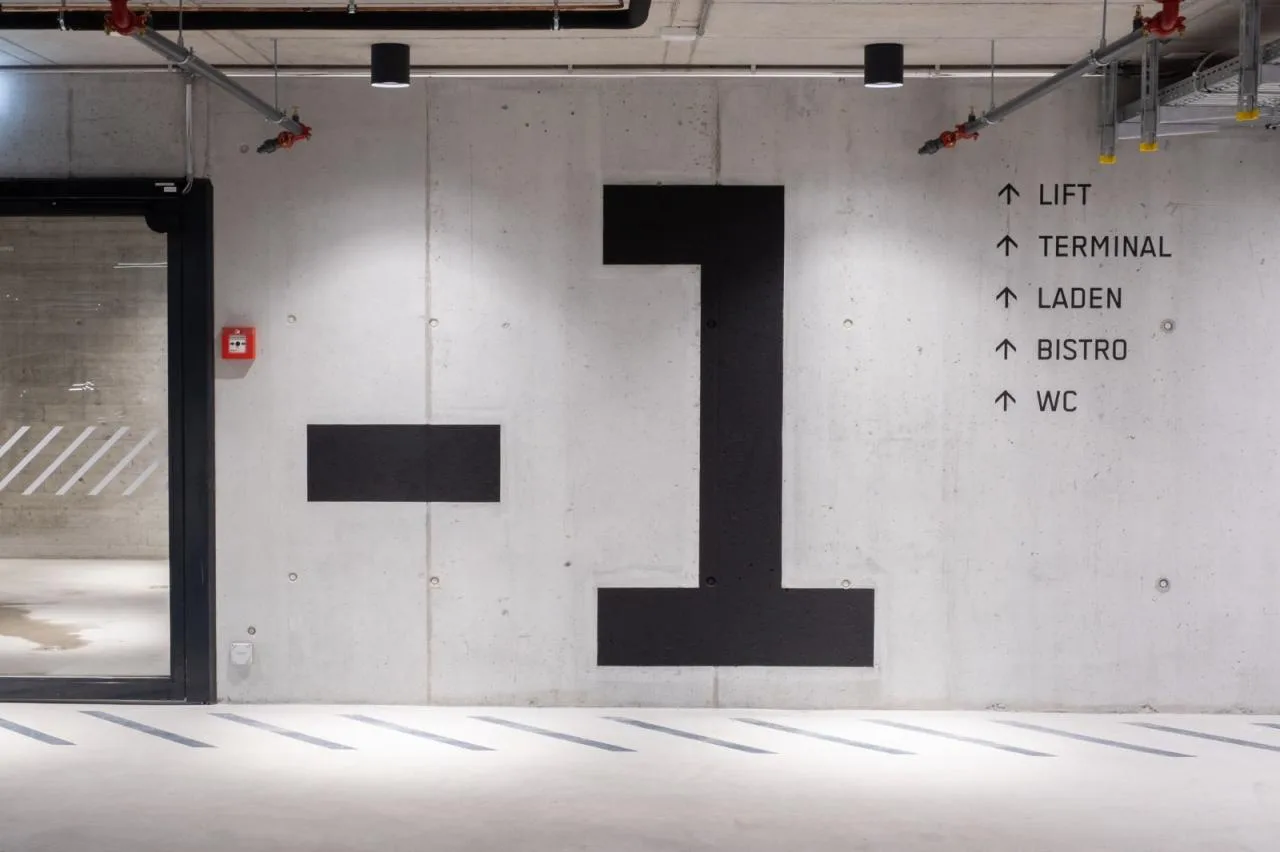
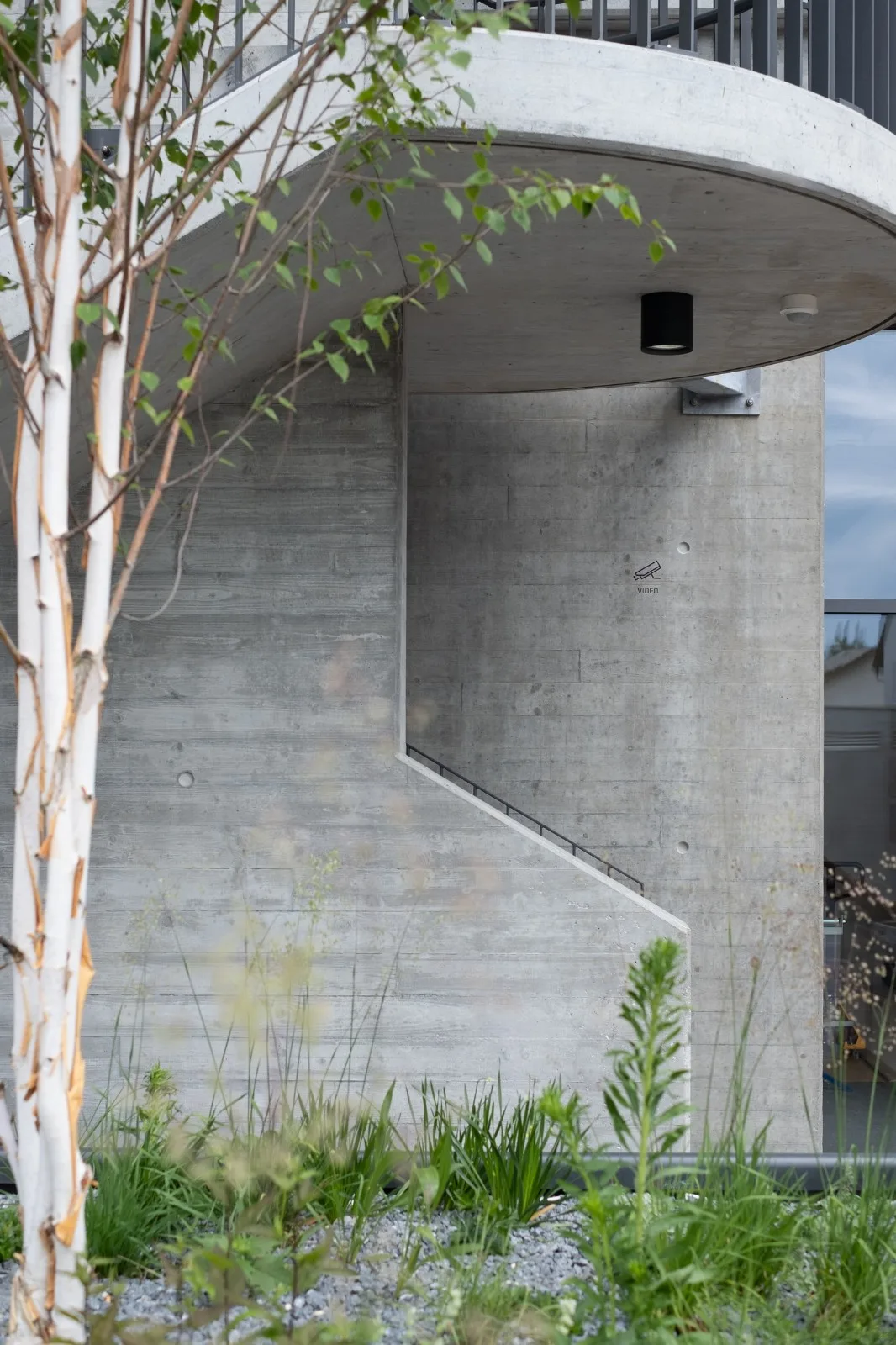
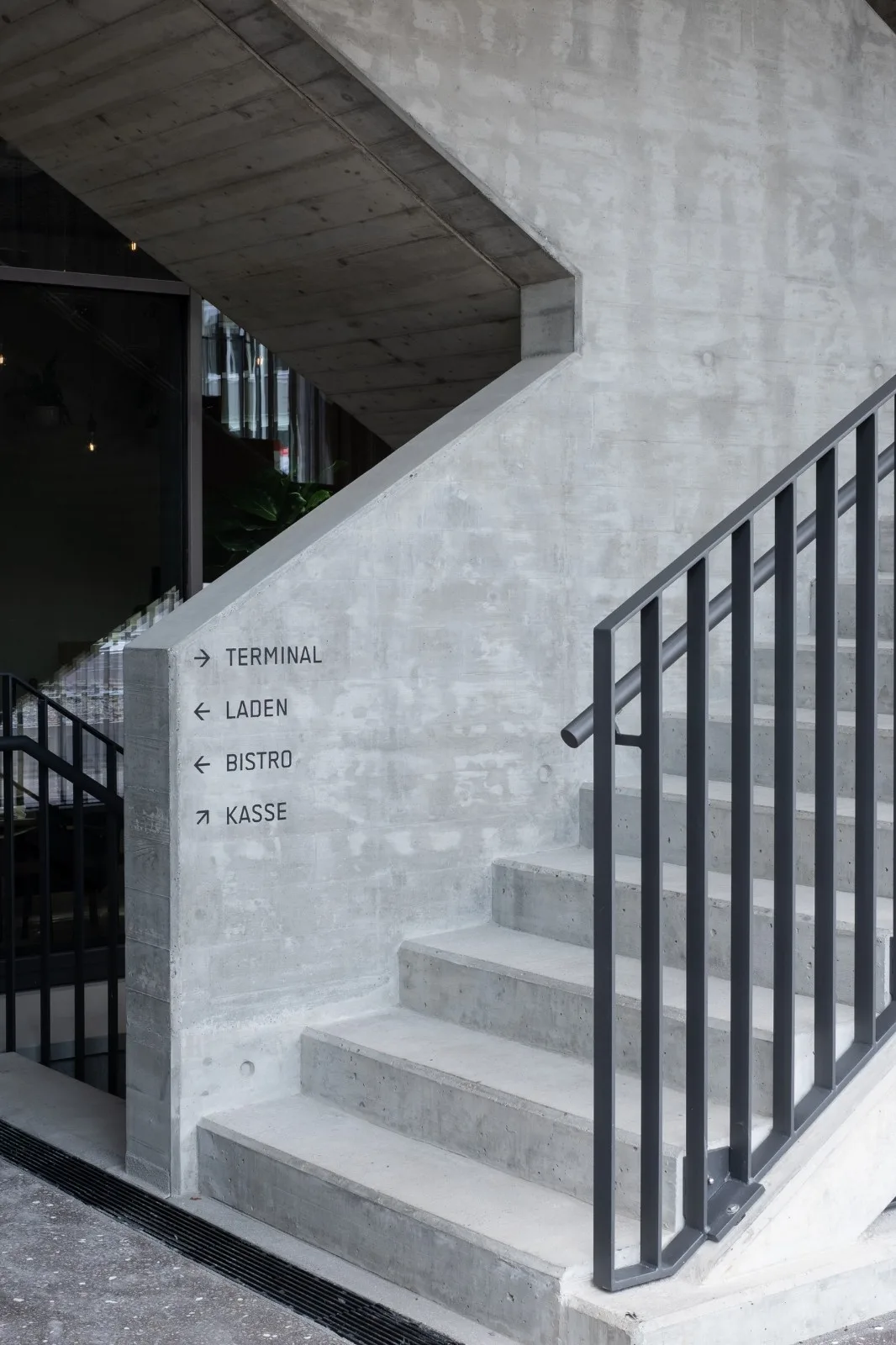
The understated yet bold logo reflects the building’s minimalist material palette and color scheme. Pictographic symbols in black and gray shadows are applied directly onto vertical and horizontal surfaces, minimizing visual clutter.
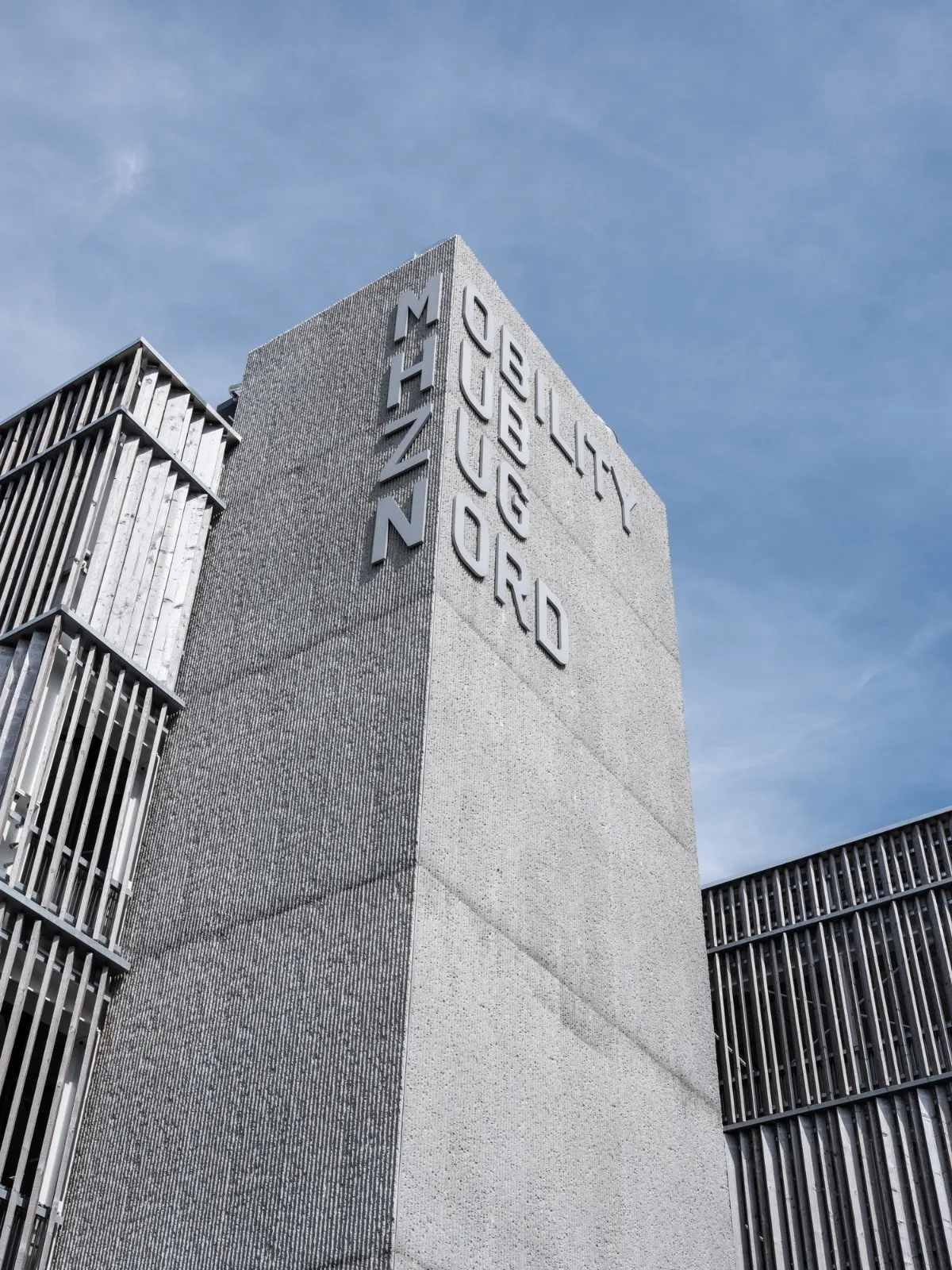
A large MHZN aluminum sign is mounted on the textured concrete wall of the elevator tower, making it prominent and easily visible from the surrounding area. Overall, the signage and parking guidance system strike a balance between movement and stillness.
Project Drawings
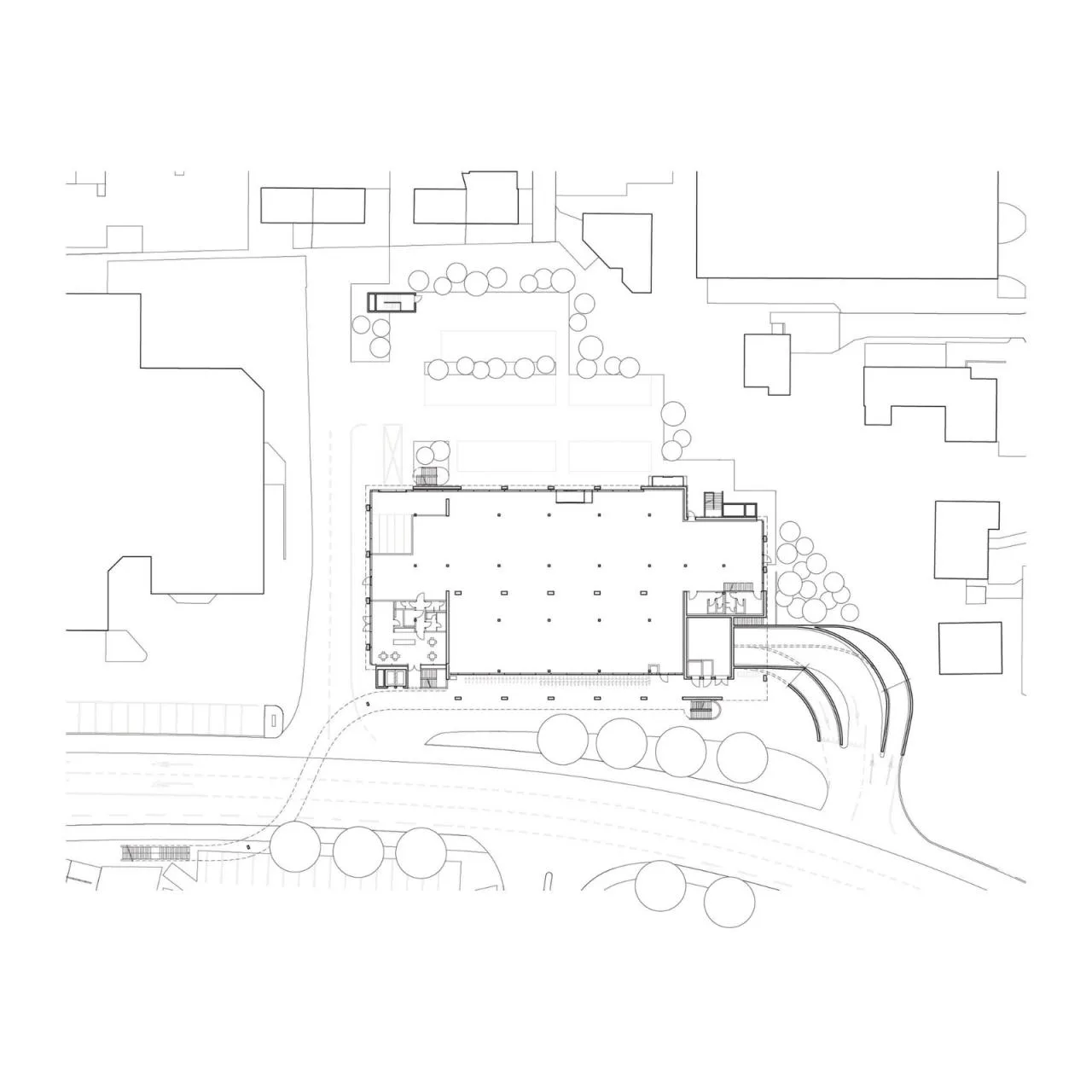
△ General Layout Plan
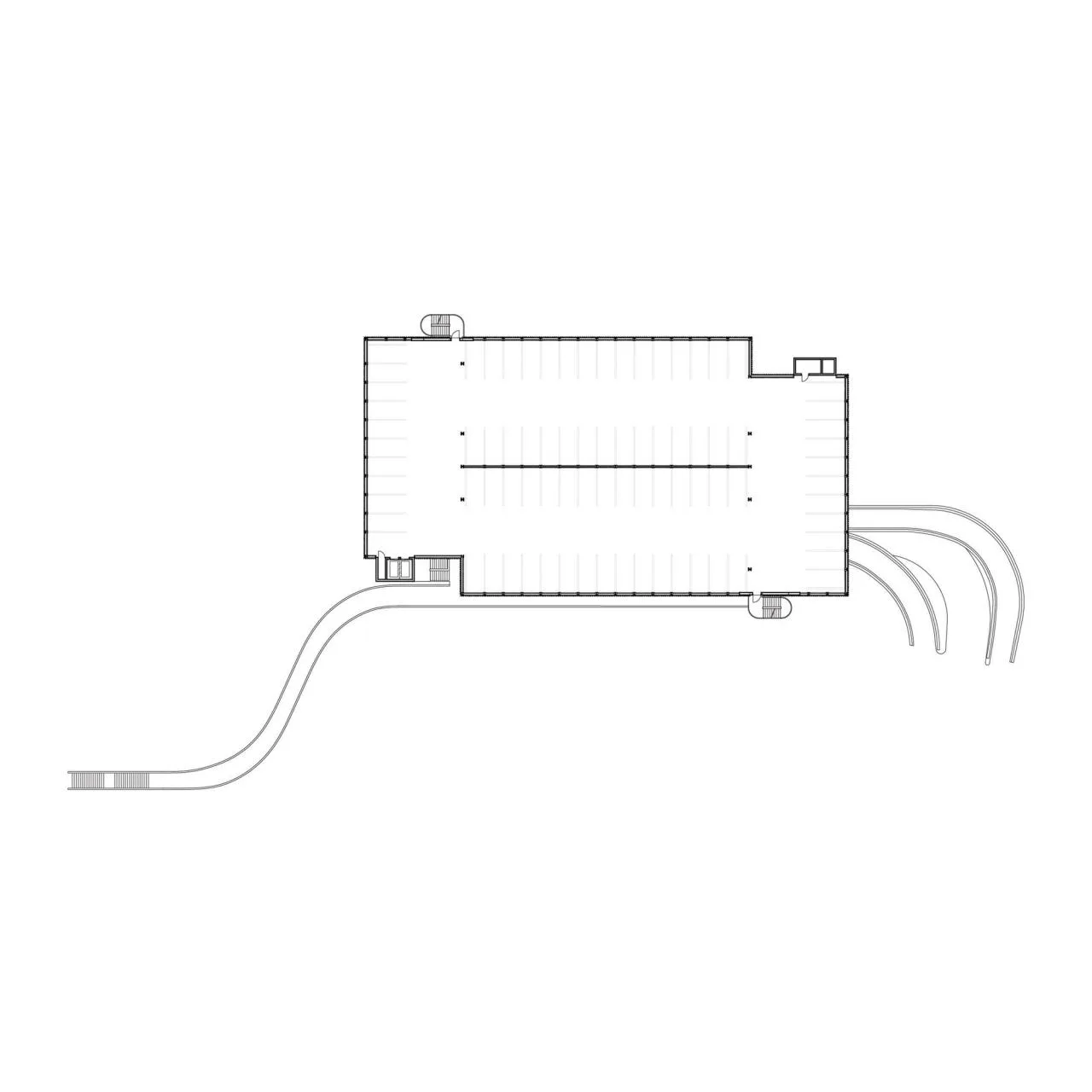
△ Plan View
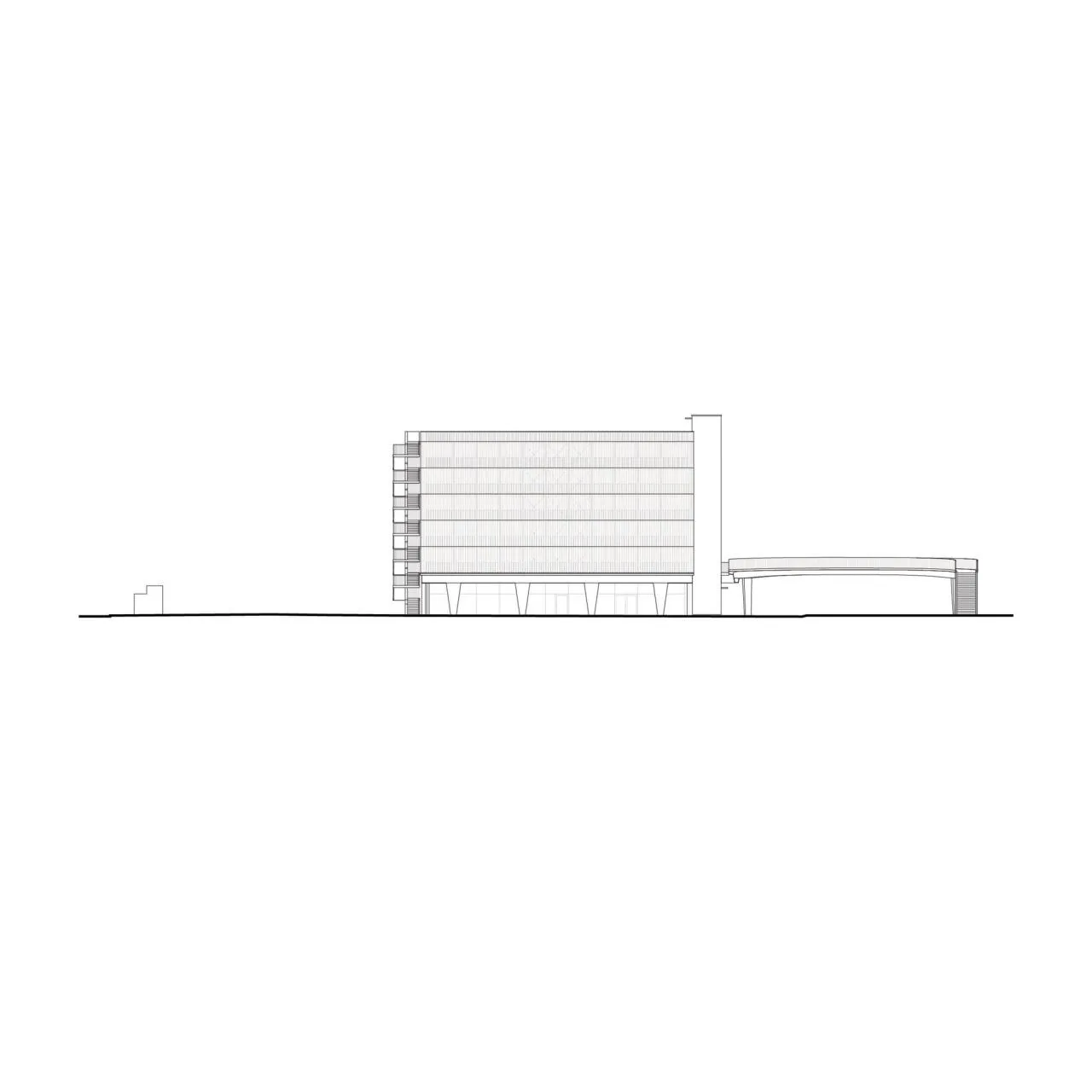
△ Elevation Drawing
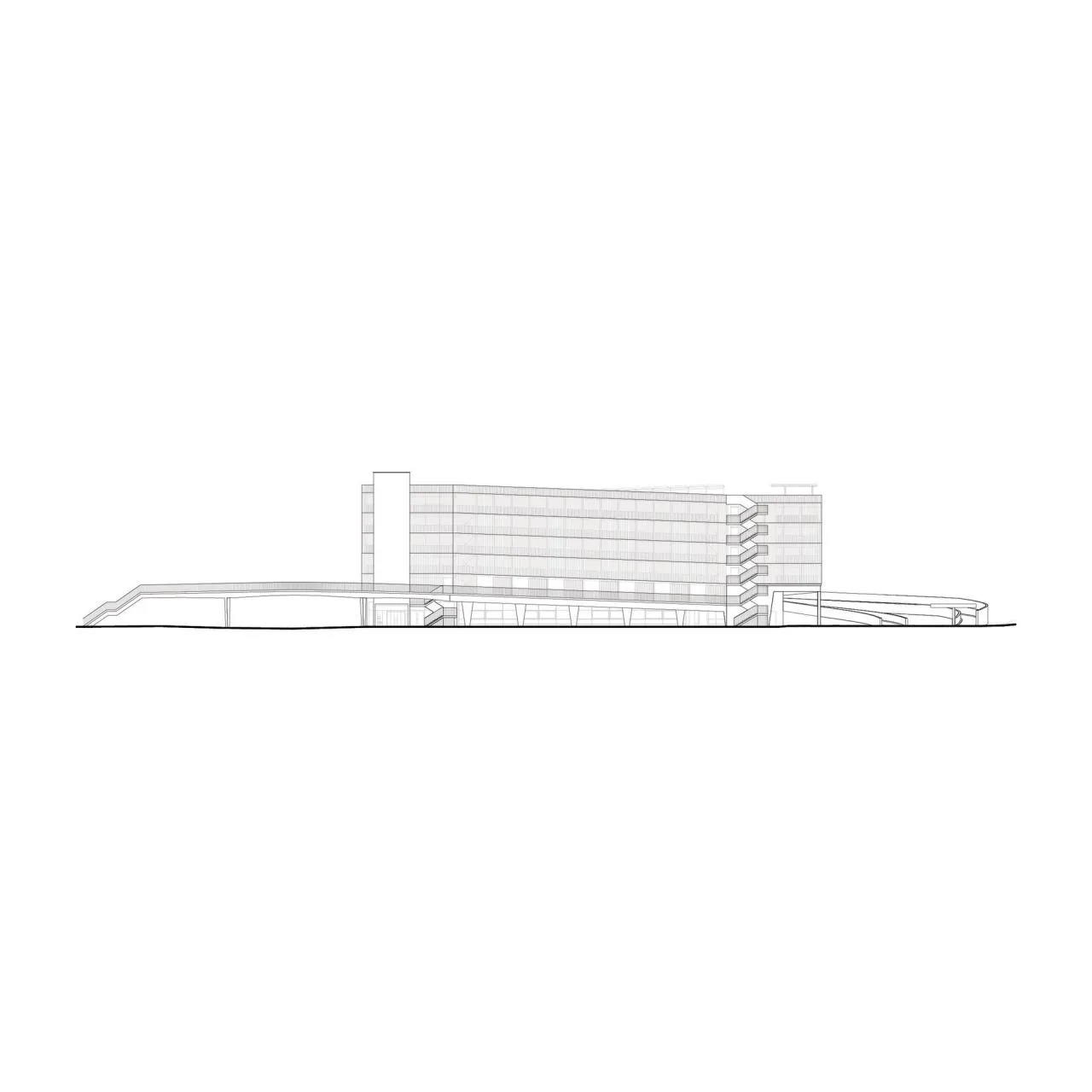
△ Elevation Drawing
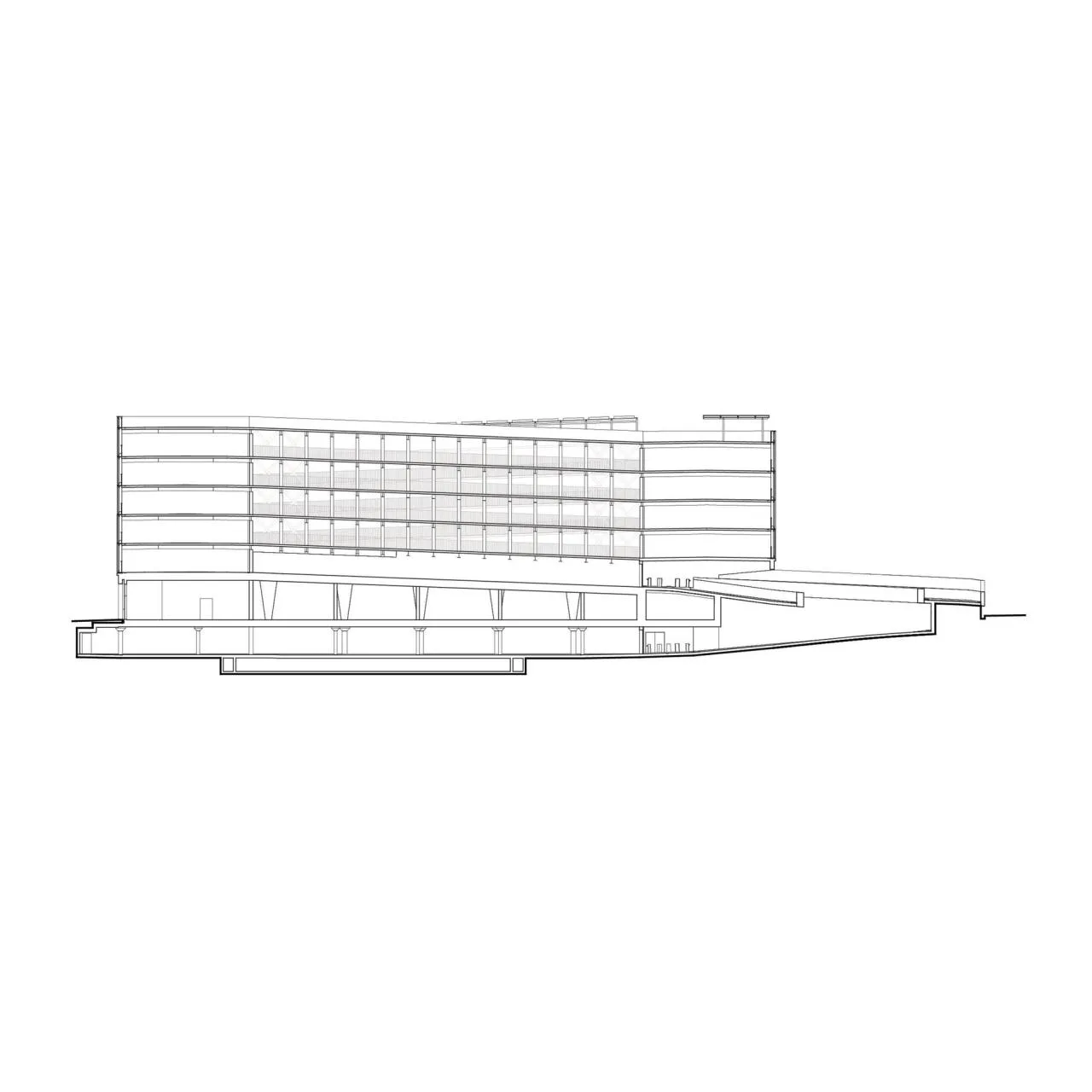
△ Section Diagram
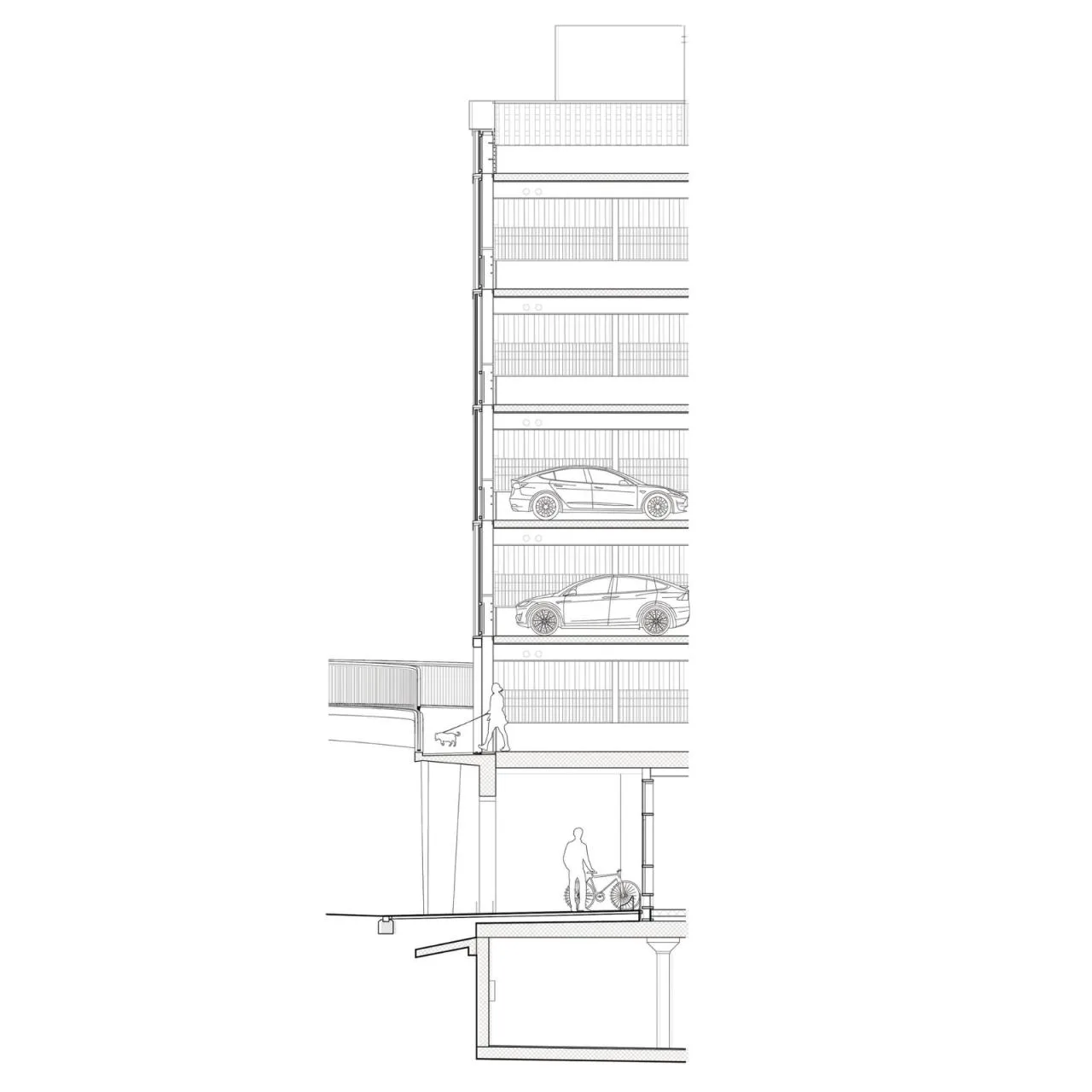
△ Section Diagram
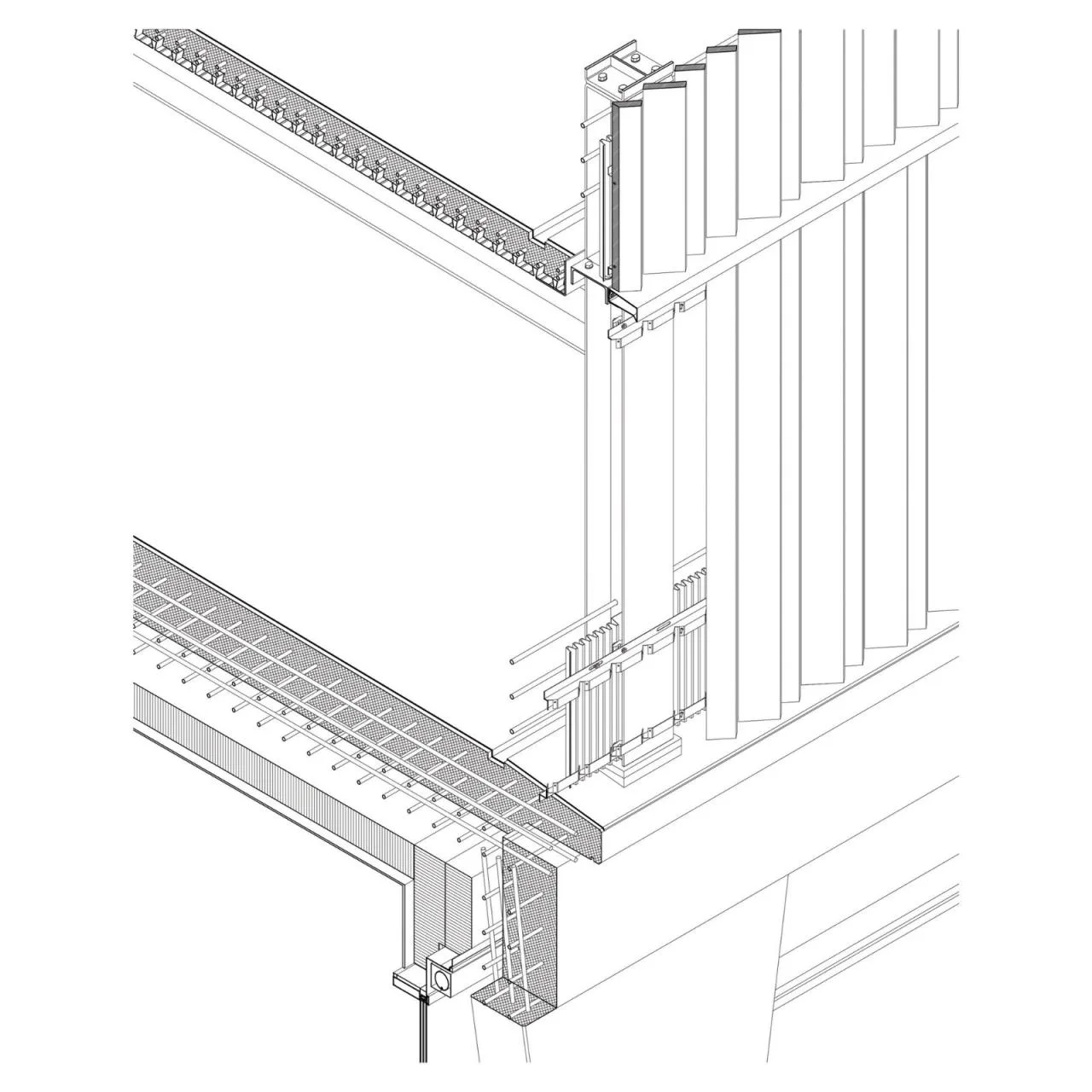
△ Partial Detailed Drawing
Project Information
Architect: Hosoya Schaefer Architects
Area: 17,000 m²
Project Year: 2022
Photographers: Rasmus Norlander, Valentine Jeck
Lead Architects: Markus Schaefer, Hiromi Hosoya
Location: Zug, Switzerland












Must log in before commenting!
Sign Up