
The BIM model for the deep foundation pit will be utilized throughout all project phases and business processes. Various data generated during the modeling process will be repeatedly referenced, with each stage closely interconnected. Therefore, the following standards must be adhered to during model development:
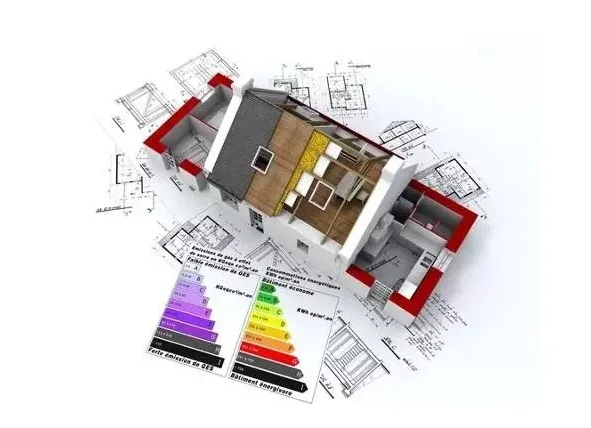
1. Standardized Naming for Deep Foundation Pit Support
Deep excavation engineering involves various support types, and different projects may use different support forms and components. To improve retrieval and management efficiency in digital systems, it is essential to unify component coding. The coding system should ensure uniqueness, standardization, conciseness, and practicality.
Currently, most construction projects adopt a six-level coding system:
- Level 1: Project code
- Level 2: Building type
- Level 3: Discipline or professional type
- Level 4: Sub-project
- Level 5: Sub-project detail
- Level 6: Key information description
For example, the component file named 001-01-03-01-CFG-K01.rvt corresponds to:
- Project code 001
- Building Construction Engineering
- Pile Foundation Engineering
- CFG Pile
- Pile Number K01
This standardized approach facilitates clear identification and efficient management of model components.
2. Depth Standards for Component Information
Component information should strike a balance: it must be detailed enough to support later applications but not so intricate that it wastes labor and reduces efficiency. Moderation is key.
According to the BIM Level of Development (BIMLOD) standard, model detail is divided into five levels, ranging from design to completion, as shown in Table 1. For deep foundation pit engineering during the construction phase, the BIM model should achieve at least Level 4 detail to effectively guide construction activities.
In Revit software, families form the foundation of deep excavation modeling and represent the various components within the model. Every model element is created using families, which offer powerful functionality. While Revit’s family library includes many default families such as walls, doors, windows, and panels, it has limited options tailored for deep excavation projects. Moreover, single-type families often fail to meet the diverse project requirements.
Therefore, it is necessary to create custom families based on project needs. Since single-system family types struggle to fulfill deep excavation demands and built-in families cannot be reused efficiently, loadable families are generally preferred for modeling in these projects.
In summary, these are the key standards to follow when establishing a BIM model for deep foundation pits. I hope this article proves helpful to everyone involved!
















Must log in before commenting!
Sign Up