
BIM technology spans the entire project lifecycle, enabling all stakeholders to participate in and utilize the model. This allows for seamless information exchange at every stage and is often regarded as the “second revolution” in engineering design. Drawing from both domestic and international literature and project experience, this article outlines the key characteristics of BIM:
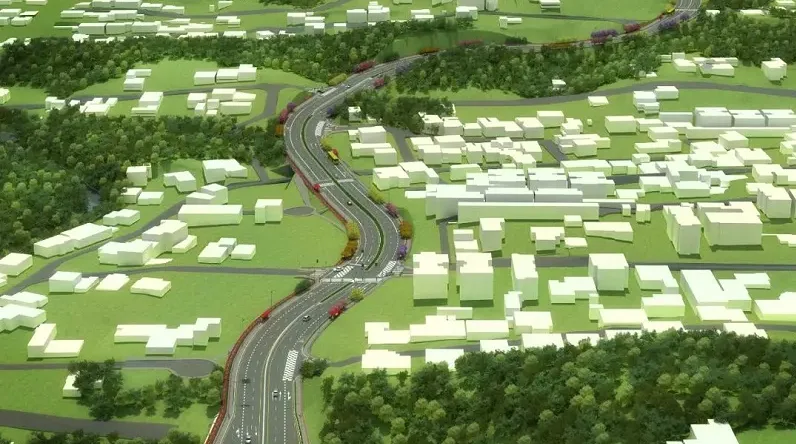
1. Model Visualization
Visual 3D design follows a “what you see is what you get” approach, differing significantly from traditional renderings. Traditional 2D drawings represent structures with lines, requiring engineers to mentally visualize the internal structural forms. As building designs have become more complex and diverse, this mental visualization often leads to errors and omissions, which are typically only identified during construction, causing resource waste. BIM provides a visualization platform that transforms flat drawings into three-dimensional physical models. This visual approach facilitates coordination, discussion, and decision-making among all project participants throughout each stage.
2. Collaborative Design
Traditional CAD technology relies on simple graphical references for information exchange between disciplines, with limited data integration. BIM, as a digital design technology, enables engineers from different locations and disciplines to collaborate on the same project via cloud networks and specialized software modules. This includes features such as mechanical and electrical collision detection and pipeline clearance checks. By identifying design conflicts early, BIM reduces coordination time and enables timely resolution of issues throughout the project.
3. Performance Analysis
With traditional CAD, engineers must manually input extensive parameters and import complex project files into various performance analysis tools. BIM goes beyond creating 3D models by simulating real-world effects that are otherwise difficult to test. It allows for comprehensive analysis of structural performance indicators such as noise levels, emergency evacuation scenarios, construction sequencing, and traffic safety. Using a unified data format, BIM streamlines performance analysis across multiple software platforms, saving time and enhancing overall engineering quality.
4. Parametric Design
Parametric design involves virtual modeling of all real attributes of building components through parameter inputs. These parameters store detailed information about each element. By adjusting parameters, related component shapes automatically update, and different performance scenarios can be analyzed and simulated. This approach enables optimization to achieve the best design outcomes.
5. Design Optimization
Engineering projects continuously evolve through optimization during construction, and BIM enhances this process. First, BIM optimization is not limited by time; it can integrate project design with investment return analysis, calculating real-time impacts of design changes on financial outcomes. Second, BIM optimization is not constrained by information availability; updated models provide precise geometric and physical data. Third, BIM removes constraints related to complexity; when construction complexity exceeds human capacity, BIM’s analytical and optimization tools make managing complex projects feasible.
In summary, these are the defining features of BIM technology. Different perspectives exist, but I hope this overview proves helpful to everyone!
















Must log in before commenting!
Sign Up