
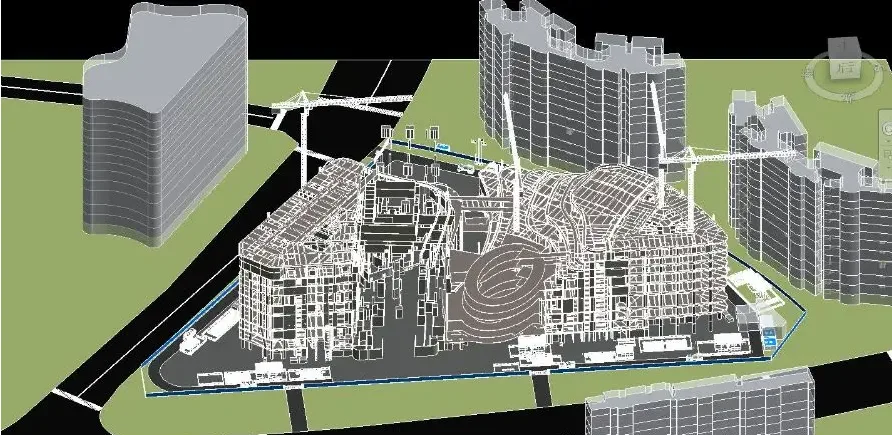
BIM technology has been widely adopted in China’s construction industry, playing a crucial role in design, storage, construction, supervision, and project acceptance. It has revolutionized traditional methods characterized by high energy consumption, pollution, and extensive management, significantly boosting construction efficiency and on-site safety. As a result, BIM has earned broad recognition and support across various sectors. Specifically, in high-rise building projects, BIM effectively reduces on-site safety risks and enhances safety management standards.
1. Preventing Potential Safety Hazards During Construction
High-rise construction sites often face hazards stemming from personnel operations or environmental factors. BIM technology helps identify these safety risks early and facilitates timely elimination, providing essential technical support for safe construction. For example, BIM can simulate construction processes and perform clash detection across different trades to ensure smooth workflow. It also detects hazards in real time, issues warnings and corrective suggestions to prevent accidents like falls or electric shocks, thereby enhancing overall construction safety.
2. Conducting Comprehensive Safety Inspections During Design
BIM enables virtual rehearsals of the construction process, making design parameters concrete and visually accessible. This allows for intuitive identification of areas requiring improvement and prompt corrective action. Moreover, integrating BIM with coding technologies such as IFC allows systematic management of building parameters. It facilitates annotation of defects and problematic processes during construction, improving the ease and accuracy of implementing modifications.
3. Enhancing Safety Education and Training Effectiveness
With rising construction complexity and management demands, combined with current gaps in workers’ technical skills and safety awareness, BIM-based systems significantly improve personnel training. By merging BIM with VR technology, immersive virtual reality training environments can be created. These simulate real-life hazards like falls, fires, mechanical injuries, and collapses, engaging trainees’ multiple senses. This immersive experience raises safety responsibility, standardizes safe behaviors, and boosts self-protection awareness, greatly enhancing construction management quality.
4. Strengthening Safety Supervision Systems
Safety supervision spans the entire construction lifecycle. BIM supports this by managing drawing reviews, optimizing specialized construction plans, and facilitating 3D technical disclosures. It acts as a safety firewall to ensure smooth on-site progress. Safety inspectors typically rely on reports from on-site safety officers, but complexity and procedural volume can hinder communication. BIM overcomes this by enabling real-time data sharing among authorized parties, improving communication efficiency. When combined with video surveillance, data analysis, and communication tools, BIM supports remote safety inspections. It allows collected images to be compared with violation databases, enabling efficient detection of safety issues. Violations are promptly reported to responsible personnel, with rectification feedback tracked within prescribed timeframes, establishing a robust and scientific safety supervision system.
5. Clarifying the On-Site Construction Environment
BIM’s modeling capabilities create detailed 3D construction models, including high-risk construction stages or processes. As construction progresses, BIM issues timely alerts to help on-site workers identify hazards and take appropriate safety measures. Furthermore, the 3D visualizations help personnel better understand construction plans, schedules, and their working environment. This clarity improves awareness of ongoing tasks and surroundings, effectively increasing safety during on-site operations.
In summary, BIM technology plays a vital role in managing construction safety. We hope this article provides valuable insights for everyone involved in the construction industry!
















Must log in before commenting!
Sign Up