
Currently, the application of BIM technology during the design phase in design institutes is subject to various real-world challenges. In practice, most design institutes still follow traditional workflows, with only a few companies fully implementing BIM. As widely known, BIM technology covers several stages: design, cost estimation, construction, and operation.
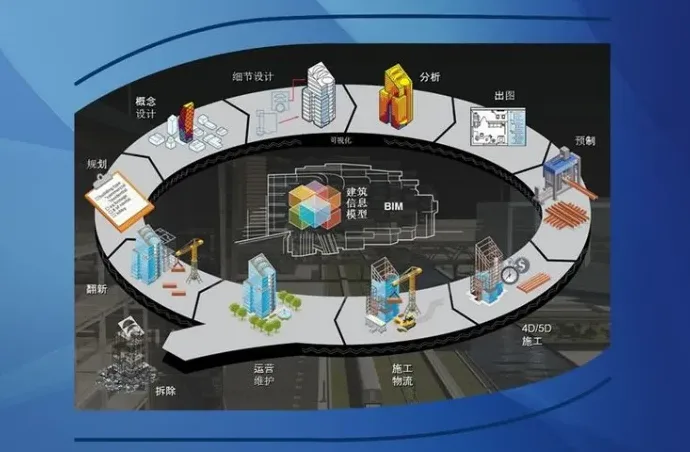
In China, design institutes face difficulties in effectively promoting BIM in the design process. While BIM does not completely replace traditional architectural design concepts, it builds upon the foundation of 2D drawings by advancing into 3D design methods. Notably, design deliverables provided to investors remain predominantly in two-dimensional form, and all design work must comply with national standards.
This situation highlights two key issues when 3D BIM models are applied without adhering to design specifications:
1. Rigid design enforcement. Some highly qualified design institutes may impose strict exemptions during design. If BIM design methods fail to meet expected results, they are often abandoned. This has led to numerous challenges in architectural drawings, and for disciplines like electrical engineering, the adoption of BIM is still only about 50% effective.
2. The “BIM after design” approach. Design companies with less experience tend to prioritize 2D design, resulting in common issues such as overlapping elements—columns intersecting with walls or slabs, beams overlapping with one another, and so forth. Designers must work quickly and accurately to meet specifications, which raises the complexity of their tasks. Furthermore, creating models for structural components like frame beams, columns, stairs, and walls often results in imperfect overlaps and errors, increasing the designers’ workload.
That sums up the current research status of BIM technology in design optimization. I hope this article provides useful insights for everyone!
















Must log in before commenting!
Sign Up