
The 3D virtual design environment enabled by BIM technology rapidly shares design and simulation data with project partners, enhancing communication efficiency and minimizing financial losses caused by rework due to design errors. The design, manufacturing, and installation processes of curtain walls involve deep interdisciplinary integration, creating significant opportunities for advancements in curtain wall technology. The introduction of BIM has further accelerated the development of this field.
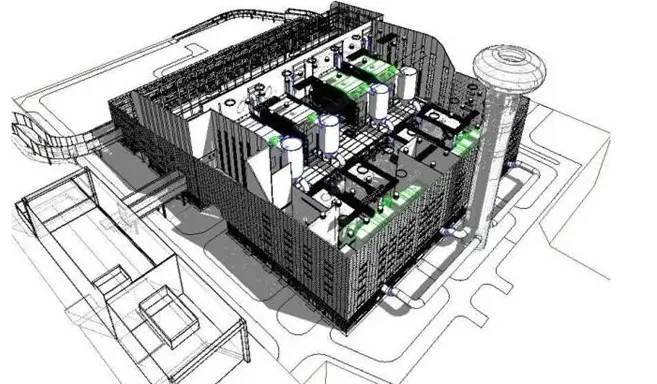
1. BIM Modeling and Parameter Export for Processing Drawings
Delivering design based on BIM modeling avoids the information loss that often occurs when converting 2D designs into 3D machining models. This ensures curtain wall design data is accurately transmitted to CNC machine tools, enabling direct use in component processing. The seamless transfer of design data and digital automation not only improves building quality but also reduces considerable waste across the stages from design to production. This approach is likely to become the future industrial development trend in the curtain wall sector.
Model delivery and model-based design are key strategies for industrializing the curtain wall industry. Curtain walls typically involve extensive factory-customized production, tightly integrating design and manufacturing. Compared to other construction disciplines, curtain walls exhibit a higher degree of mechanization and customization. Designs vary significantly between projects, and even within a single project, panel types may differ, requiring flexible and rapid on-demand production. Therefore, large-scale production through standardization of units may not be the primary industrialization path for curtain walls.
2. Creating Curtain Wall Node Templates to Support Bidding and Tendering
The use of modular curtain walls has been increasing recently. Since modular curtain wall panels are processed and assembled in workshops, on-site construction teams must understand the various facades, heights, and panel types to coordinate with the installation areas. After completing detailed curtain wall design via BIM, components such as unit panels, keel frames, and custom profiles can be uniquely coded based on data planning. This allows assembling the overall curtain wall model and extracting data to generate a bill of materials. Each item in the bill carries a unique identifier, which aids in material management and facilitates rapid unit assembly following standardized template diagrams.
3. BIM Modeling for Exporting Parameterized Part Drawings
Design is inevitably shifting from two-dimensional to three-dimensional, and BIM technology will play a pivotal role in this transition. Given the inherent characteristics of curtain walls, BIM will find broader applications in the curtain wall industry, driving transformative changes in design, production, and construction processes.
These are some of the key benefits of applying BIM technology to curtain wall engineering. Opinions may vary, but I hope this article offers useful insights to all readers!
















Must log in before commenting!
Sign Up