
The United States is one of the pioneers in promoting and implementing information technology in the construction industry. It began its journey toward construction informatization earlier than many other countries and has since developed a mature ecosystem. The theory and application of Building Information Modeling (BIM) in the U.S. are internationally recognized as leading standards. The General Services Administration (GSA), responsible for managing federal real estate assets, has been at the forefront of advocating BIM adoption in public projects. Since 2003, the GSA has developed BIM guidelines focusing on spatial validation and facility management within federal building plans, continuously updating these standards through practical application.
The primary goal of BIM development in the United States is to enhance construction and operational efficiency while advancing green building initiatives. Key organizations such as the United States Army Corps of Engineers (USACE), the Department of Veterans Affairs, as well as numerous proactive state governments and universities, have incorporated BIM into their construction procurement strategies. On the ground, construction oversight bodies typically begin by training personnel on BIM standards from a practical standpoint.
BIM development in the U.S. is largely driven by the semi-official National Academy of Building Sciences. The National Building Information Modeling Standards consist of three main components:
1) Core Standards;
2) Technical Publications;
3) Implementation and Deployment Resources.
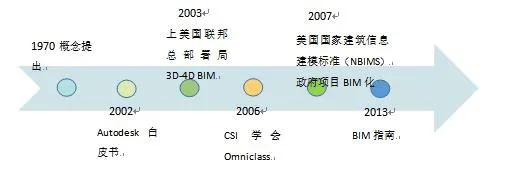
Figure 1: Development History of BIM in the United States
In the United Kingdom, representatives from major construction industry organizations established the Construction Project Information Committee (CPIC) in 1987. CPIC provides comprehensive guidance on the content, structure, and compilation of construction implementation information, which has found wide application across the construction sector. At the end of the 20th century, the UK released its first building information standard, Uniclass, which has undergone continuous updates and reached its 2015 version.
In 2007, the UK issued practical BIM guidance. Later, in 2011, the UK government launched a BIM development plan through an administrative directive, mandating that all state-funded projects achieve full BIM integration by the end of 2016. The BIM development timeline in the UK is illustrated in the following figure:
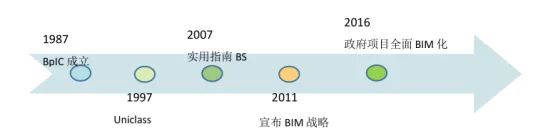
Figure 2: Development History of BIM in the UK
China introduced BIM technology in 2004, progressing through three key phases: the initial stage of BIM application (2000–2005), the growth stage (2006–2010), and the stage of strengthened development (2011 to present). In 2011, BIM development strategies were included in China’s 12th Five-Year Plan. The following year, the BIM Development Alliance was established to promote BIM advancement, technical research, and software standardization within China.
In 2014, relevant government bodies jointly released standards for BIM design information model delivery and a unified standard for building engineering information model application (draft for comments). Prior to 2016, state-funded projects over 20,000 square meters or green building projects were required to use BIM technology. By the end of 2020, BIM was fully integrated across the construction industry, with improved technology and initial standards firmly established.
BIM now plays a critical role in over 90% of project operations in China, as reflected in the following figure:
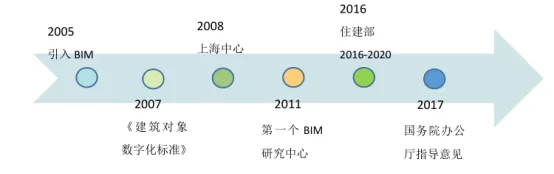
Figure 3: Development History of BIM in China
















Must log in before commenting!
Sign Up