
Currently, the international construction industry has an average informatization rate of approximately 0.3%, which is only 0.027% of the domestic construction industry’s rate of about 11%.
Due to the fragmented nature of the construction industry, the complexity of individual engineering projects, and the lack of effective information technology tools, the efficiency of information utilization across various stages—such as project decision-making, design, construction, and operation—in China’s construction sector remains low. Addressing the urgent need for information-based collaborative management is critical. As a key innovation in the construction industry, Building Information Modeling (BIM) technology enhances project management efficiency and profitability by effectively coordinating construction project information.
Rooted in the BIM design concept, this technology helps to resolve design-phase conflicts, reduce design changes during construction, and control work through statistical cost management.
During the operation phase, BIM models enriched with detailed project information are handed over to owners upon project completion. BIM technology will play a significant role in future projects with long operating cycles. Typically, the investment and operating costs of a project are three times higher than those of the engineering phase alone, so BIM primarily generates substantial value during the owner’s model construction phase.
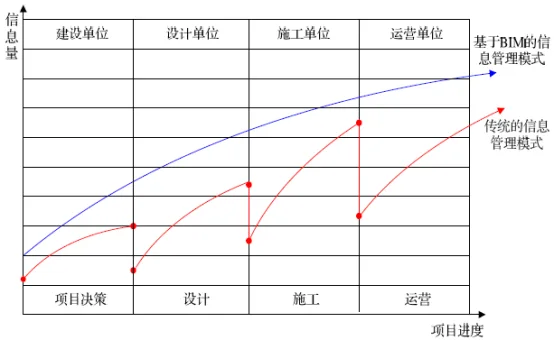
Compared to traditional information management systems, the BIM-based collaborative management model integrates data from all project stages—decision-making, design, construction, and operation—creating a continuous information chain rather than isolated fragments. Additionally, this approach handles a larger volume of information than traditional models, enhancing overall project coordination.
















Must log in before commenting!
Sign Up