
The General Services Administration (GSA) has developed this series of BIM guidelines for facility and equipment management to support the design and construction of new buildings, major renovations, small projects, and ongoing operation and maintenance. These guidelines reference PBS (Public Building Services) contracts and primarily target designers, contractors, PBS project managers, and contract managers. The goal is to assist design and construction teams in leveraging BIM technology at various stages to meet facility management contract requirements.
Other project stakeholders—including PBS building managers, employees, client organizations, and contractors such as construction managers, design-build contractors, and consultants—may also find this series valuable. Additionally, software providers in the construction industry, especially those offering BIM creation and downstream applications, will benefit from these guidelines.

BIM-based Facility and Equipment Management (FM)
This section explains the origins and motivations behind using BIM in facility equipment management, along with various application scenarios.
Why Use BIM for Facility and Equipment Management?
As the largest real estate owner in the United States, GSA manages 9,624 buildings across 50 states, 6 territories, and the District of Columbia, covering 362 million square feet of leasable space. GSA is responsible for designing, constructing, operating, and managing diverse facilities, including federal office buildings, courts, and land ports of entry.
GSA’s Public Building Services (PBS) monitors asset performance through surveys of operating costs, energy efficiency, and the physical condition of major building systems and structural components. Facility management ensures a safe, healthy, and efficient working environment by accurately tracking facility equipment components, identifying operational inefficiencies, and responding promptly to customer requests.
Each piece of equipment or asset incurs costs related to installation, replacement, and routine maintenance. Having an accurate inventory is crucial for budgeting repair and maintenance expenses. Facility management depends heavily on the accuracy and accessibility of data generated during design, construction, and throughout the operation and maintenance phases. Without this information, projects risk cost overruns, inefficient operations, and delayed responses to tenant needs.
A National Institute of Standards and Technology (NIST) study (NIST GCR 04-867) highlights that stakeholders—including designers, contractors, product suppliers, and owners—waste significant resources searching for, verifying, and recreating facility equipment information that should be readily available. In 2002, this inefficiency cost the U.S. capital facility industry an estimated $15.8 billion, with two-thirds of the costs during the operation and maintenance phase. Applied to GSA’s $18 billion construction portfolio in 2010, this translated to an estimated annual waste and rework cost of $774 million (before inflation adjustment).
BIM technology enhances facility management by providing visualization, precise location data, relationships among building systems, and accurate condition attributes. Compared to traditional 2D graphics, BIM offers rich data, intelligent objects, and parametrization to represent facilities and equipment efficiently.
BIM objects can:
- Identify what they are (e.g., walls, doors, lights, plumbing fixtures).
- Specify their location.
- Provide unique identifiers that link components in model files with other facility management systems.
- Define regions served by common components (e.g., Rooms 1-3 powered by air conditioning unit 21).
- Capture relationships between building systems (e.g., distribution panels linked to transformers supplying power).
The purpose of defining BIM for facility equipment management is to specify required information from design through operation and maintenance. BIM can automate equipment inventory creation, populate facility management systems like computerized maintenance management systems (CMMS), and reduce redundant data maintenance. This not only cuts operating costs but also improves response quality and speed to tenant requests.

Business Requirements for BIM in Facility and Equipment Management
NIST research underlines that accurate maintenance of facility equipment data is key to improving building services. Efficient data management enables streamlined workflows across multiple PBS levels and business lines.
For GSA Maintenance Personnel:
- Access to accurate on-site conditions and maintenance data before leaving the office reduces unnecessary return trips for unplanned work, shortening response times.
- Improved completeness of preventive maintenance work orders through precise equipment inventories.
- Faster emergency response (e.g., immediate action for a major leak) lowers maintenance costs.
- Mobile access to BIM and linked data enables onsite review without returning to the office.
For GSA Building Operators:
- Reducing O&M contract costs by maintaining accurate equipment inventories and facility area tracking, potentially lowering costs by 6%.
- Accelerating equipment list creation from plans and specifications, supporting a 3% energy savings by identifying components affecting energy use and maintenance needs.
- Mitigating risks and uncertainties by clearly identifying complex building components.
- Maintaining device history for performance evaluation, helping to avoid costly unexpected repairs.
- Optimizing building performance by comparing actual vs. predicted energy data using BIM design and commissioning information.
- Integrating BIM, Building Automation Systems (BAS), Energy Management Systems (EMS), and CMMS data to analyze performance trends and improve tenant satisfaction.
For the GSA Design and Construction Team:
- Reducing re-documentation and site investigation costs during renovations by verifying as-built conditions, minimizing change orders, destructive testing, and maintenance cost disputes.
- Achieving federal energy targets through better model simulations and energy performance assessments.
- Designing higher-quality building systems based on operational feedback and improved equipment selection/specifications.
- Understanding HVAC component impact on entire systems for optimized debugging and performance tuning (e.g., adjusting VAV boxes).
For GSA Spatial Data Managers:
- Improving accuracy of existing condition data used for lease billing, reducing review and rerouting costs.
- Automating spatial data drawing processes to save time using guidelines from BIM Guide Series 02.
For GSA Building Tenants:
- Faster resolution of unplanned work orders enhances satisfaction.
- Improved communication on planned maintenance reduces unplanned disruptions.
Data Requirements to Support GSA Business Needs
Recognizing each project’s unique opportunities and constraints, GSA has defined three progressive layers of data requirements to support its business needs. Each level builds upon the previous, enabling project teams to select the appropriate scope based on project conditions:
- Level 1: BIM for spatial programs with accurate as-built geometry of equipment.
- Level 2: Equipment information including ID, brand, model, serial number, warranty, and maintenance instructions.
- Level 3: Existing design BIM model including energy consumption analysis.
Accurate As-Built Geometry and Spatial Program BIM (Level 1)
The value of precise 3D geometric models for downstream users is significant. The GSA BIM FM team highlights two key benefits:
- Accurate area calculations based on ground cover types essential for contract compliance.
- The ability to identify locations of building systems and equipment concealed behind walls or ceilings without invasive inspection.
Providing accurate as-built data ahead of renovations reduces time and resources spent on site verification. The final BIM model should include an updated spatial program reflecting actual facility conditions, detailed further in BIM Guide Series 02 and incorporated into Series 08. GSA plans to simplify modeling requirements for project teams based on existing BIM standards.
BIM Equipment Objects
Each BIM equipment object must contain geometric data plus at least one set of key attributes:
- Unique BIM Object Identifier (UID): A globally unique ID that maintains the link between facility management systems (BAS, EMS, CMMS, etc.) and BIM authoring tools, detailed in Section 3 of the guidelines.
- Object Location Key: An identifier enabling rapid location identification of equipment.
- Asset Identification Number: A human-readable naming convention to easily identify equipment within 3D models and facility management systems.
Operations and Maintenance Equipment Inventory (Level 2)
Equipment inventories are foundational for many facility management activities, including status assessments, energy management, emergency response, warranty tracking, and workforce planning. Figure 1 illustrates the relationship between equipment inventory and facility financial costs.
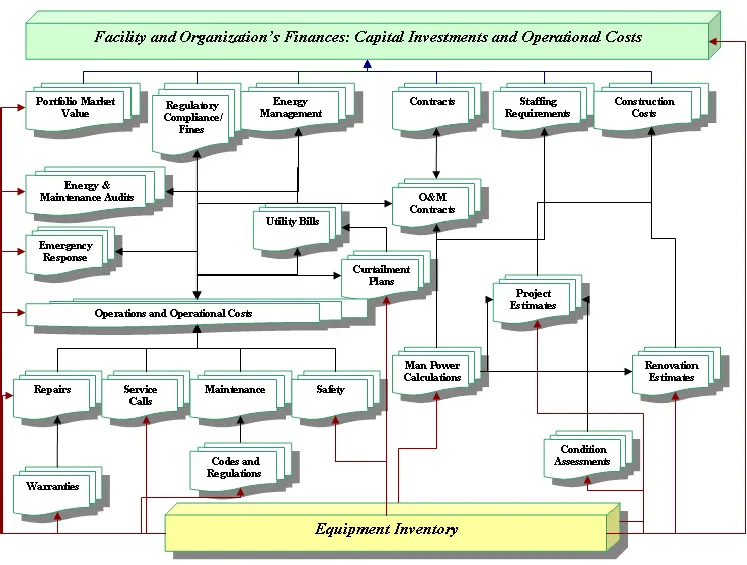
Figure 1: Equipment Inventory and Facility Financial Cost Chart
BIM authoring applications can populate standard and custom object properties. Additionally, COBie (Construction and Operations Building Information Exchange) supports managing data outside BIM authoring tools, as discussed further in Section 3. At project completion, equipment attribute data can be extracted from BIM and COBie files and imported into centralized databases accessible by various facility management systems.
Operations and Maintenance Contracts
An accurate equipment list defines the scope of work for O&M contracts more precisely, facilitating coordination between independent government estimates (IGEs) and contractor bids. This accuracy reduces turnaround time and improves bid completeness.
Filling BIM Data into CMMS at Project Handover
CMMS manages facility assets, work orders, preventive and predictive maintenance, and status-based monitoring during the operation phase. It relies on facility data produced during design, construction, and commissioning phases, typically transferred at handover.
Data for CMMS originates from BIM or external formats like COBie (covered in Section 3). At handover, this data is loaded into regional CMMS or databases. BIM for facility management should integrate with CMMS and other systems to enable visual coordination between assets and O&M data.
The equipment list and data in CMMS should include these attributes from Section 1.3.1.3 of the completed BIM model:
- BIM Object Identifier (Global Unique Identifier)
- Object location identifier
- Asset identification number
This alignment enables cross-referencing and automatic data updates between systems.
Sustainable Facility and Equipment Management
GSA’s sustainability report defines sustainable facility management as “…a building practice helping facility managers upgrade and operate buildings to achieve long-term human and ecological balance.”
Facility managers make informed operational decisions by accessing accurate current facility data. BIM supports reliability-centered maintenance plans through:
- Equipment lists
- Preventive maintenance via accurate equipment data and maintenance instructions
- Work instructions
- Predictive maintenance
- Status-based monitoring
- System access for monitoring and control
Existing Design BIM Model with Energy Consumption Analysis (Level 3)
When existing BIM models include energy consumption analysis, this data can integrate with building automation systems (BAS) to enable model-based analysis and optimization. Ideally, BIM energy analysis helps operators compare actual versus predicted performance, creating a feedback loop for troubleshooting and optimization.
This operational feedback is critical for refining energy predictions during design. These practices align with requirements outlined in BIM Guide Series 05 – Energy Performance.
Use of Open Standards for Data Exchange
Beyond data necessary for FM handover, GSA mandates delivery in open standards to maximize flexibility. Project teams may select any BIM creation software compatible with project workflows, provided it can export open formats such as IFC.
Since GSA currently operates multiple CMMS systems, open standards are essential to ensure interoperability.
The Vision for BIM and Facility Equipment Management
BIM embodies technological and process advancements in GSA’s building engineering, construction, and facility management practices. Nationwide processes exist for new buildings, major renovations, and small projects, though a standardized operation and maintenance (O&M) process is still under discussion.
Evaluating business processes holistically across planning, design, construction, and post-construction lifecycle stages is vital. Integrating BIM throughout the project lifecycle ensures high-quality, comprehensive BIM-FM information at project completion. Continuous improvement, based on lessons learned and successful experiences, remains a priority as BIM adoption grows.
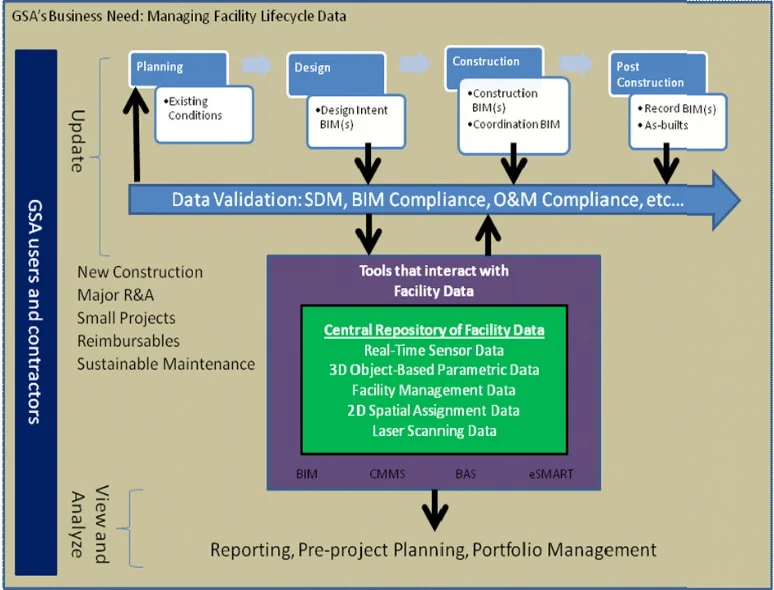
Figure 2: Vision for Integrating BIM and Facility Management
GSA’s vision is to streamline BIM use to support BIM-FM integration throughout the entire facility lifecycle—from planning to operation. As the federal government’s steward of real estate and related assets such as drawings and equipment data, GSA aims to establish a centralized facility repository.
This repository will integrate and accommodate 3D parametric object data, MEP system layouts, asset management and facility management data, building materials and specifications, 2D data, laser scanning data, as well as real-time sensor data and controls. Through this central hub, BIM technology will support project management and post-construction maintenance across all project types, including new construction, major renovations, small-scale projects, and O&M phases.
Facility operations personnel will be able to view BIM models via software tools layered on the central repository, offering security, search and viewing functions, version control, update notifications, and analysis and reporting capabilities.
This article serves as the first chapter of the BIM guidelines series, with subsequent chapters on facility and equipment management to be released progressively.
















Must log in before commenting!
Sign Up