
The BIM model serves as a shared engineering information resource accessible to all stakeholders throughout the engineering lifecycle. It also plays a crucial role as a foundation for decision-making at various project stages. Therefore, before delivering the model, a vital step—BIM model inspection—must be implemented to effectively ensure the quality of the delivered BIM model.
To guarantee the accuracy and completeness of the model’s information, the inspection process prior to release and use needs to be standardized and institutionalized. However, in China, there is currently no established system or standards governing BIM model inspection, nor are there effective software tools and methods available for this purpose. This lack of standardized inspection methods and feasible criteria makes it difficult for both design teams and owners to evaluate whether a BIM model meets the necessary quality requirements.
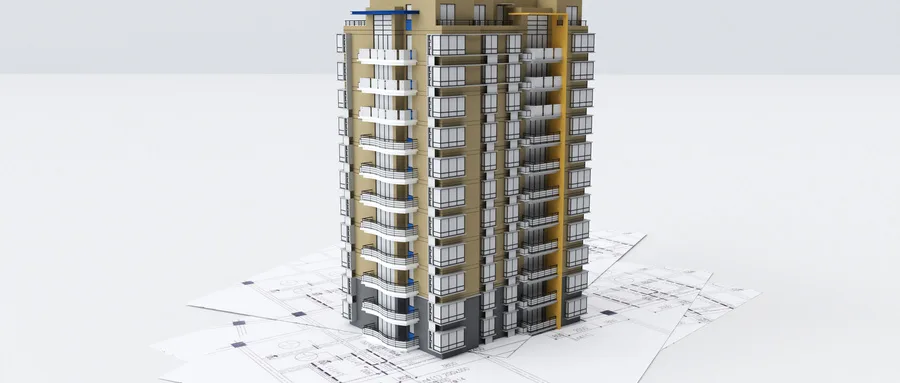
Currently, model checking primarily depends on manual reviews to verify both the geometric and non-geometric information within the model. Due to the absence of clear norms and standards, errors, omissions, and inefficiencies are common during inspections. In regions where BIM adoption is more advanced, preliminary standards for model checking have been established, and specialized model checking software is continuously being developed and improved. These developments offer valuable references and inspiration for BIM model inspection practices in China.
Traditionally, 2D drawing reviews focused on completeness, accuracy, and compliance of drawings. With the adoption of BIM technology, models now carry richer information with stronger logical connections and correlations.
BIM models should be inspected against delivery requirements in the following key areas:
(1) Model Integrity Check: Confirm that all models, components, and required contents are included and that the level of detail meets the delivery requirements.
(2) Modeling Standardization Check: Verify that the BIM model adheres to modeling standards. This includes assessing whether the modeling methods are appropriate, the relationships between components and parameters are accurate, spatial relationships are correct, semantic attribute information is complete, and the delivery format and version are accurate.
(3) Design Indicators and Standards Compliance: Ensure that the design content and parameters within the BIM model align with project requirements and comply with relevant national and industry regulations. This includes checking geometric dimensions, spatial positioning, type specifications, and adherence to contractual and regulatory standards.
(4) Model Coordination Check: Assess whether the models and components are well coordinated, identifying any direct conflicts within or between disciplines, and verifying that safety and operational spaces are reasonable.
Source: Infringement and deletion of the Implementation Guidelines for Chongqing Municipal Engineering Information Modeling (BIM)
















Must log in before commenting!
Sign Up