
Collaborative design using BIM technology involves specialized 3D simulation software to create professional models. Designers from different disciplines work together and communicate effectively to ensure seamless exchange of design information, ultimately achieving cross-disciplinary collaboration.
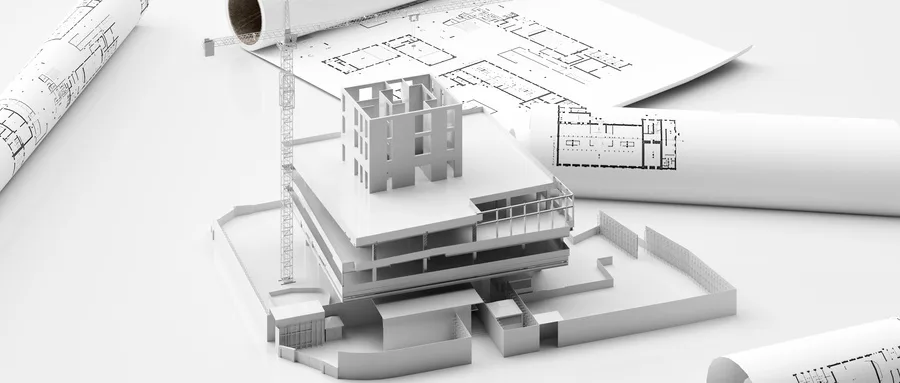
Popular BIM 3D simulation software includes the Revit series, Bentley series, ArchiCAD series, Tianbao’s Tekla series, Dassault’s CATIA series, Guanglian’s MagiCAD series, Rhino series, and others. Traditionally, the construction industry has relied on two-dimensional drawings as the final design output and construction reference. However, as society advances, architectural design must not only fulfill basic functional requirements but also emphasize the aesthetic appeal of buildings.
BIM technology addresses the limitations of 2D design, which struggles to accurately and vividly represent complex geometric forms like building surfaces or anisotropic features. Traditional 2D graphic design demands strong spatial imagination and high skill from designers. In contrast, BIM-based building models offer a clear, three-dimensional visualization of complex structures, providing a realistic representation of the building.
Moreover, the backend database of BIM software allows for direct access to the types and quantities of materials for each building component, facilitating easy modifications and adjustments by designers.
Studies show that in about 60% of construction projects, the building’s functional value is better realized. However, construction teams often make adjustments to functionality, spatial layout, and construction techniques during the building phase, which can increase costs and delay progress. Construction teams usually want to assess the appearance and functionality of the finished project before investing funds, to ensure the building is both beautiful and beneficial.
Unfortunately, during the design phase, the involvement of construction teams is often insufficient, leading to buildings that do not fully meet their needs. The introduction of BIM technology changes this by enabling all stakeholders—including construction teams, designers, and contractors—to collaborate and participate actively in the design process.
BIM provides a technical platform that supports collaborative project design. Any changes in specialized designs or project component parameters are updated in real-time within the BIM database. This allows all technical personnel involved in construction to access updated information promptly and adjust on-site plans accordingly, achieving effective visual design communication.
















Must log in before commenting!
Sign Up