
In traditional workflows, the quantity of engineering materials is typically estimated using preliminary indicators, historical data, and experience before construction drawings are finalized. However, these calculations often differ significantly from actual usage. Although numerous calculation software tools are available in China, they are generally limited by traditional 2D CAD technology and conventional workflows. Due to human error and repetitive tasks, mistakes are common, and processes tend to be lengthy. Budget personnel provide feedback to architects, structural designers, and other stakeholders, leading to multiple rounds of plan adjustments that prolong the timeline.
The advantages of BIM-based engineering quantity calculation lie mainly in two key areas:
1. More Accurate Quantity Information
For example, in the Wanda Shangluo project, BIM forward design was implemented. By inputting data into REVIT and enabling data interaction, quantities can be calculated automatically with an accuracy rate of up to 100%. BIM technology allows the model to generate measurement, quantity, and cost data automatically. As shown below, the system can produce a room area calculation report immediately after the REVIT model is completed. This application of BIM technology accurately calculates engineering quantities for various components, solving traditional measurement challenges.
Based on the BIM model, cost personnel establish deduction rules in the software according to component categories, materials, spatial topology, and calculation principles. The software then independently performs deduction calculations to ensure accurate and comprehensive quantity data. For instance, in prefabricated concrete structural nodes, domestic metrological standards prioritize deduction in the following order: columns over beams, and beams over slabs. Therefore, when calculating quantities at these nodes, the order of deduction is columns first, then beams, and finally slabs. This method prevents artificial inflation or deflation of quantities at component junctions, ensuring precise measurements.
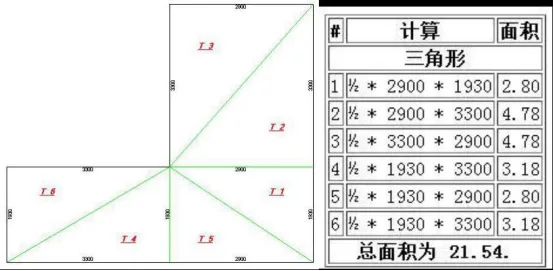
Figure 1. Triangular measurement area report of a specific room
2. Simplified Cost Calculation
Using the bill of quantities pricing method, cost personnel leverage BIM software to calculate costs based on local construction and installation budget lists along with relevant cost quotas. The software can automatically generate cost data tables within REVIT by utilizing required parameters and predefined formulas. For example, columns created in REVIT include quantitative parameters such as length, area, volume, and cost. By setting unit price parameters and establishing formulas linking volume, unit price, and cost, the software displays column costs in detailed tables.
Additionally, secondary development within REVIT enables exporting quantities of materials like mortar and plaster in layered wall and floor information. It is important to note:
- If local budget lists and quota standards are unavailable, refer to documents issued by higher-level government authorities.
- Some enterprises create customized libraries for lists, quotas, and pricing rules tailored to their management needs. These libraries are formatted for compatibility with BIM software, allowing for intelligent cost calculation and quantity statistics.
3. Review and Evaluation
Different models, such as those for concrete, steel bars, and pipelines, can be color-coded and imported into software like Guanglian Da for detailed adjustment. This process generates various bills of quantities and supports material cutting reviews. The BIM approach also empowers teams to effectively evaluate projects, select among multiple economic structural options, and streamline budget revisions.
















Must log in before commenting!
Sign Up