
BIM represents the next generation following the initial revolution of CAD (Computer-Aided Design) and is leading the “second revolution” in the design industry. From an advanced standpoint, BIM still falls under the broader category of CAD, serving as a computer-based design assistance tool. Specifically, BIM technology focuses on construction engineering, covering all phases of a building’s entire lifecycle. It relies on 3D information technology to integrate all project-related data, which forms the core of project management and is accessible to all stakeholders.
Using a 3D model, all parties can collaborate simultaneously and coordinate their work efficiently according to established workflows. Additionally, the information model can be simulated and analyzed on specialized BIM platforms to continuously refine and improve design solutions. Once a 3D model is created, there’s no need to redraw construction drawings; required views can be extracted directly from the 3D model through sectioning techniques.
Compared to traditional 2D design, 3D design offers several significant advantages:
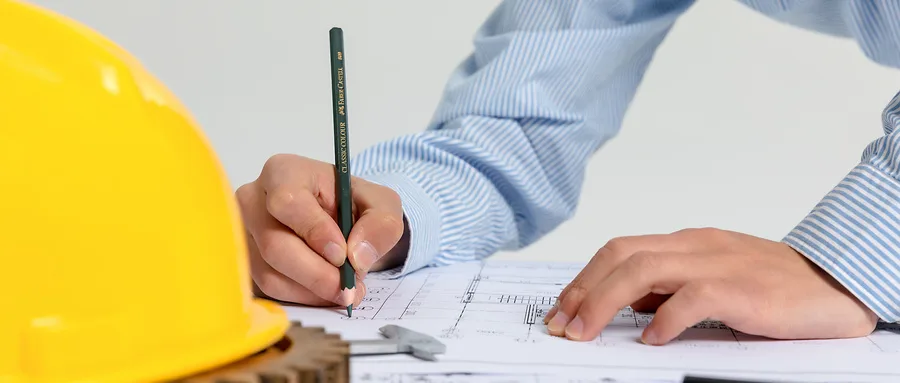
1. Object-Oriented Design and Visualization: Unlike 2D design which represents objects abstractly with lines, surfaces, and blocks, 3D design uses components—known as “families”—to represent design elements directly. For example, while 2D pipelines are shown as colored lines, 3D design represents them as realistic column pipelines with detailed renderings. This results in a visual and intuitive 3D solid model that quickly communicates the design concept. Such models are invaluable throughout project design, construction, and maintenance stages, enhancing communication and decision-making among all participants.
2. Collaborative Design: Since 3D design is object-oriented, designers’ work is guided by unified standards, limiting individual discretion. Designers from different disciplines can work concurrently within the same 3D space, improving coordination and communication. This approach allows early detection of conflicts such as clashes between pipelines and structural elements, which are harder to identify in 2D. It also reveals issues like incorrect pipeline elevations in specialized areas such as electrical equipment rooms.
3. Exploring Multiple Options for Better Solutions: The fast and efficient nature of 3D design enables the creation and comparison of multiple design alternatives. This multi-scheme approach helps reduce costs while increasing revenue and business opportunities by selecting the best final solution.
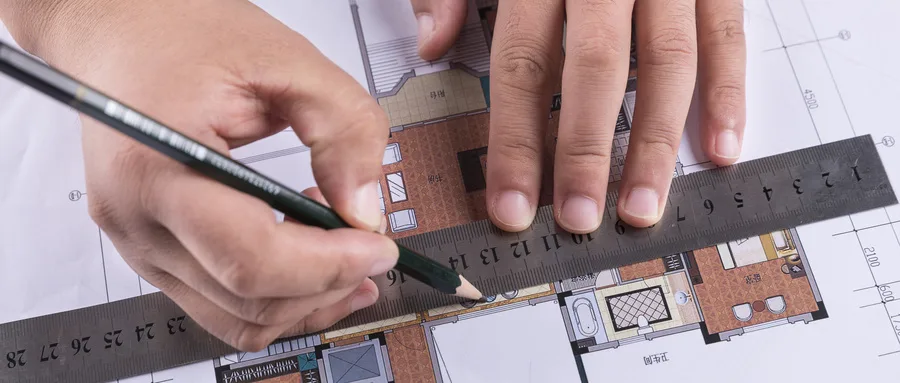
4. Complex Engineering Calculations: BIM’s foundation is 3D digital technology enriched with extensive information such as model entity details (category, purpose), spatial data (height, position), and geometric properties (length, width, height). This comprehensive dataset allows BIM software to perform complex engineering tasks like collision detection, cost estimation, and 4D construction progress simulation. Furthermore, BIM can generate reports such as material quantity takeoffs, providing vital data for construction and facility management.
5. Improved Design Quality and Efficiency with Reduced Errors: Collaborative design significantly shortens project timelines by allowing simultaneous work across disciplines. The use of standardized models, like pipeline connection templates, boosts productivity and enables designers to tackle more complex challenges. By coordinating multiple disciplines through 3D models, potential design issues can be identified and resolved early, minimizing errors in drawings. Additionally, accurate 3D models can generate plan, elevation, and section views from any angle, providing precise and comprehensive engineering data for construction and ongoing maintenance.
















Must log in before commenting!
Sign Up