
In design agencies, the BIM 2.0 application mode represents the highest level of integration, where all designers are fully involved, eliminating any distinction between BIM and design. Currently, BIM achievements include 3D information models and 2D construction drawings. As BIM design participation grows, project costs can be effectively controlled through statistical analysis of quantities during the design phase.
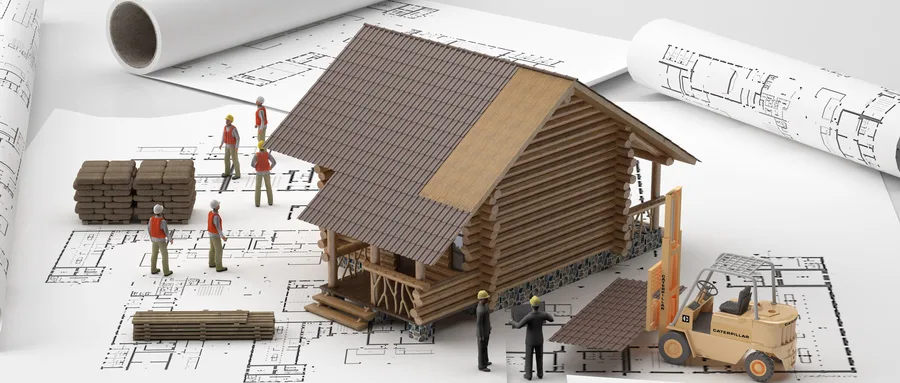
During construction project meetings, representatives from the construction team, clients, and designers gather in a room equipped with monitoring feeds from various site areas, 3D building models, detailed construction drawings of critical nodes, and construction simulation diagrams. Any relevant data available during construction is displayed on the screen. All participants compare the construction drawings and models against actual on-site progress, continuously monitoring work status, cost expenditure, and technical controls.
In the era of 2D design, national standards and specifications governed design drawings, and each design organization followed its own set of drawing standards. However, in the 3D design era, comprehensive drafting standards are still lacking, and there is no uniformity across practices. Therefore, companies must enhance their BIM standards, making the development of their own project templates especially important.
When integrating architectural schemes with construction drawings, it is essential to unify the project template and modeling rules before creating the model. This approach ensures that the model can be effectively used in the construction drawing phase, preventing redundant work caused by inconsistent methods. Furthermore, maintaining communication and providing timely feedback during the modeling process are crucial for faster and higher-quality model completion, boosting overall efficiency. Architectural plans and construction drawings are inseparable; coordinating and allocating personnel across these areas is key. Looking ahead, BIM will increasingly blur the boundaries between these disciplines, ultimately achieving full integration.
















Must log in before commenting!
Sign Up