
BIM software refers to applications that support the use of Building Information Modeling technology. In general, BIM software should incorporate key BIM features such as object-oriented programming, visualization, object parameterization, and diverse methods for information output. Currently, there are popular classification systems used to categorize BIM software, including the following:
1. He’s Classification System
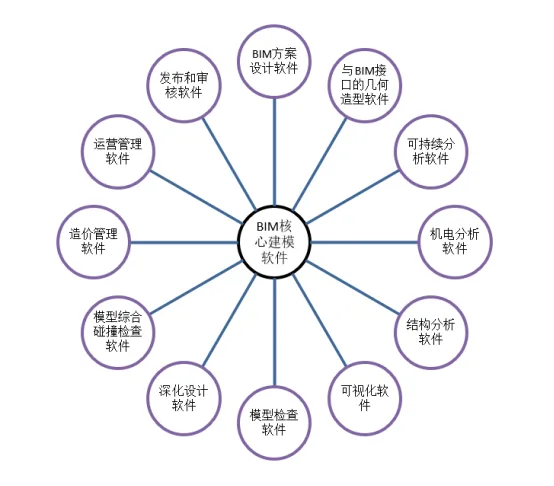
Developed by renowned domestic expert He Guanpei in September 2010, this system organizes BIM software based on global market presence and domestic usage rates. It illustrates the overall relationships among different types of BIM software, as shown in Figure 1.
2. AGC Classification Method
The American General Contractors Association (AGC) classifies BIM-related software into eight categories:
1) Core BIM modeling software
2) Conceptual design and feasibility study software
3) Processing drawings and prefabrication software
4) BIM analysis software
5) Calculation and budgeting software
6) Construction management software
7) Plan sharing and collaboration software
8) Planning software
These two classification methods are among the most commonly used for BIM software. As BIM technology continues to advance and more application software emerges, such classifications will help users save time and effort when selecting the appropriate BIM tools.
















Must log in before commenting!
Sign Up