
Why did Building Information Modeling (BIM) technology emerge? Tracing the history of BIM reveals that its concept dates back to the 1970s.
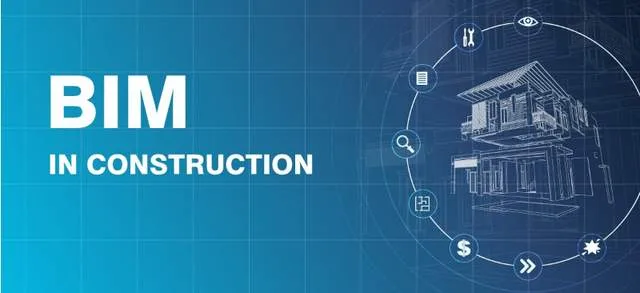
The rise of BIM was driven primarily by market demand. Today’s engineering projects have become increasingly complex, involving a growing number of construction systems. Traditional two-dimensional (2D) and basic three-dimensional (3D) methods no longer meet the evolving requirements. At the same time, there is a stronger emphasis on product quality and sustainable, green building standards, yet knowledge and technical support in these areas are often insufficient. Additionally, project timelines and budgets are under tighter control, but frequent errors, omissions, clashes, and design changes continue to occur. Globalization has intensified competition within the construction industry, while technology adoption and management practices have lagged behind.
Moreover, the construction industry faces its own unique challenges. Over the past fifty years, industries like aerospace, automotive, and electronics have significantly improved production efficiency through innovative technologies and streamlined processes. Although construction has made progress, its efficiency has declined relative to these other sectors. Several factors contribute to this. First, the industry involves many stakeholders with no unified standards across professions. The design and construction phases are often disconnected, leading to unclear responsibilities. Second, communication between project participants relies heavily on paper-based drawings. Changes proposed by one party are not quickly reflected in updated drawings, causing information loss and incompleteness. Using paper as the communication medium results in discontinuous information flow. Third, traditional drawings use 2D images that fail to fully and intuitively convey all building information, leading to unclear design intent and misunderstandings.
Furthermore, the construction process itself is inherently risky due to the large number of participants, project scale, technical complexity, and lengthy timelines. These factors highlight the need for new technologies to enhance management and coordination.
In summary, both market demands and the construction industry’s internal challenges have driven the development and adoption of BIM technology as an advanced solution for improving project outcomes.
















Must log in before commenting!
Sign Up