
Dana K. Smith, President of the buildingSMART Alliance in the United States, once stated that the era of relying on a single software to solve all challenges is over. In practice, applying BIM technology involves integrating various specialized software and implementing comprehensive processes based on building models to achieve optimal results in engineering projects.
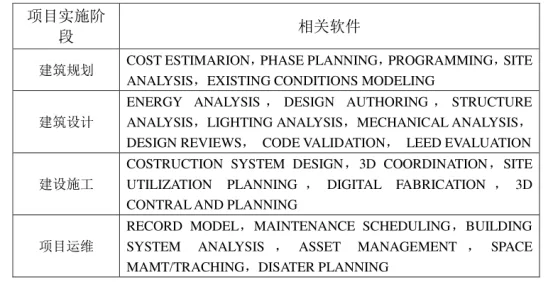
Currently, commonly used BIM software in engineering can be categorized as follows:
① BIM Modeling Software: The core of BIM applications is model information and its usage. Popular BIM modeling software includes Autodesk Revit, Bentley software, ArchiCAD, Tekla Structures, and others.
② BIM Analysis Software: This category includes ANSYS, PKPM, and various cost management tools.
(a) BIM Environmental Software calculates BIM models and analyzes parameters such as wind environment, sunlight and heat, and building energy consumption. Common tools include GreenBuilding Studio, IES, and Ecotect.
(b) BIM Structural Analysis Software—such as Bentley series, PKPM, and Revit’s structural analysis modules—performs finite element calculations to assess stress conditions and reinforcement needs for building structures.
(c) BIM Cost Software manages materials, machinery, and resources based on building models, enabling schedule control and cost management through information comparison. Examples include Innovaya, Solibri, and Guanglian Da software series.
According to current market research and references from the buildingSMART Alliance in the United States, there are dozens of mature BIM application software solutions worldwide, as illustrated in Table 1.
















Must log in before commenting!
Sign Up