
In the first decade of the 21st century, the practical application and research of Building Information Modeling (BIM) in the global engineering and construction industry established it as a core technology for advancing both technology and management in construction and real estate. BIM technology brings significant economic, social, and environmental benefits. Its primary function is to enable seamless sharing and lossless transmission of project information throughout all phases—including planning, design, construction, and operation & maintenance. By allowing all stakeholders to work directly with information embedded within the model across the entire project lifecycle, BIM facilitates true collaboration and fundamentally transforms traditional project management, which relied heavily on blueprints and textual documentation.
BIM operates on the principle of construction lifecycle management, supporting every stage of a project—from concept and construction to operation, renovation, and eventual demolition—while playing distinct roles at each phase.
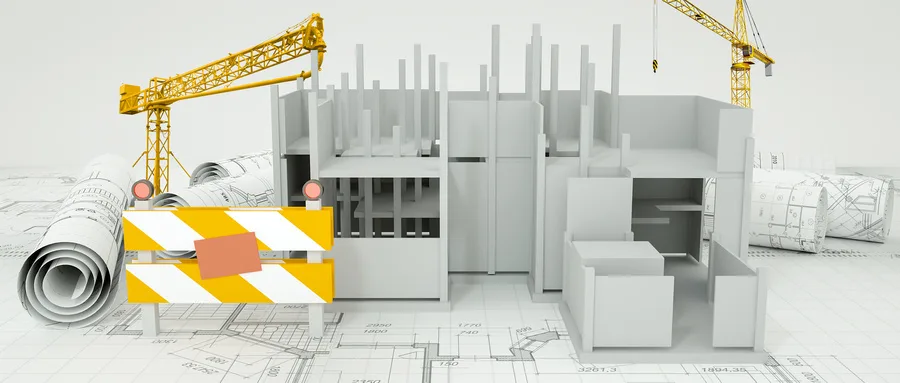
The planning phase encompasses project research, initial planning, and other preparatory stages. It helps owners develop plans that maximize economic, social, and environmental benefits prior to execution. BIM’s applications during this phase include rapid scheme generation, planning analysis, and dynamic simulation. By leveraging existing BIM models and building a comprehensive resource library based on project requirements and land use indicators, conceptual design schemes can be completed quickly.
Integrating BIM models with Geographic Information Systems (GIS) allows for analysis and optimization of transportation coverage, population density, commercial areas, hospital access, and educational services within the planning scheme. This integration also helps maximize building orientation, landscape considerations, and high-value building areas. Additionally, BIM can simulate the entire development process—from land acquisition and marketing to planning, design, bidding, procurement, construction, and operation & maintenance.
Using BIM model data, project managers can generate critical control and decision-making information, such as development cost estimates, investment return analyses, and schedule planning based on progress.
During the design phase, BIM enables stakeholders to visualize the expected outcomes in a digital environment before actual construction begins. Design information and intent become explicit, allowing all parties involved throughout the project lifecycle to immediately understand and evaluate the design concepts.
This clarity promotes innovation and ensures architectural creativity, building specifications, design requirements, timelines, and budget constraints are clearly communicated and quickly adjusted within the BIM environment. Key BIM applications in architectural design include parametric modeling, collaborative workflows, model inspections, and performance analyses.
Currently, construction technology and informatization levels remain relatively low, particularly in areas like engineering quantity assessment and cost accounting, leading to inefficiencies and significant waste. Implementing BIM improves construction quality and efficiency while reducing manpower and material waste, offering substantial economic and social benefits.
When using BIM during design, material selections automatically record cost parameters, allowing cost lists to be generated instantly, which supports BIM-based engineering cost management. Designers can also assign time attributes to building components, simulate construction processes, and make project timelines clear and visible.
Moreover, extracting geometric, physical, and model data from BIM models facilitates direct factory production of building components, laying the foundation for prefabricated construction.
Compared to the construction phase, buildings face new and complex demands during operation and maintenance. Facility managers seek safe and efficient operation, while owners aim for effective resource management to increase building value.
BIM technology helps by correlating functional parameters of building equipment with construction-phase data such as spatial location and installation time, ensuring accurate and complete equipment information. Integrating sensor networks with BIM enables real-time management of physical conditions, safety, and energy consumption, allowing for operational status monitoring and optimization.
Furthermore, BIM software supports spatial and asset management optimization, enhancing utilization efficiency, maximizing asset returns, and ultimately increasing the building’s value.
















Must log in before commenting!
Sign Up