
BIM, or Building Information Modeling, was initially defined and has been continuously refined by three American scholars: Charles Eastman (Chuck), Jerry Laiserin, and Phil G. Bernstein. The concept of BIM can be summarized as follows:
(1) BIM is a digital model that represents the characteristics of a specific engineering project.
(2) BIM serves as a platform that integrates diverse information throughout the entire lifecycle of an engineering project, providing essential data to support decision-making.
(3) At every stage of the project, all participating organizations can access relevant data through this model. Its primary advantage lies in facilitating management tasks. Autodesk officially introduced the BIM concept in 2002, and since then, this innovative technology has gained widespread attention worldwide.
BIM Visualization Features
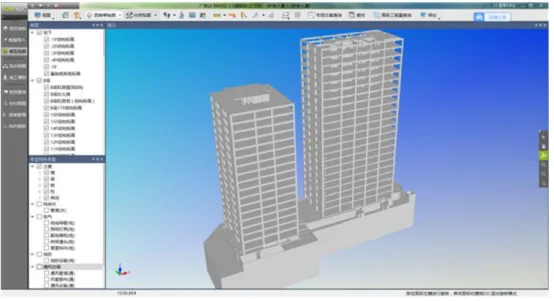
Visualization in BIM follows the principle of “what you see is what you get.” This capability has driven a significant transformation in the construction industry. BIM allows for the visualization of the construction process, clearly displaying the overall building layout and the relationships between individual components in a three-dimensional architectural representation.
This approach addresses the limitations of traditional project construction, which often relies solely on two-dimensional drawings and the spatial imagination of construction managers. By providing a vivid 3D model, BIM effectively prevents errors resulting from misinterpretations of construction drawings.
Typically, construction companies rely on two-dimensional drawings provided by the design team to conceptualize various components. The accuracy of the project heavily depends on the technical staff’s ability to interpret these drawings.
With BIM’s visualization capabilities, project renderings and related reports can be generated directly from the model when needed. Furthermore, BIM offers a visual platform that spans the design, construction, and operation phases of a project. This platform enhances communication, collaboration, and decision-making among all stakeholders, significantly reducing communication costs and misunderstandings.
The BIM building model is illustrated in Figure 1 above.
















Must log in before commenting!
Sign Up