
The main challenges during the current design phase include:
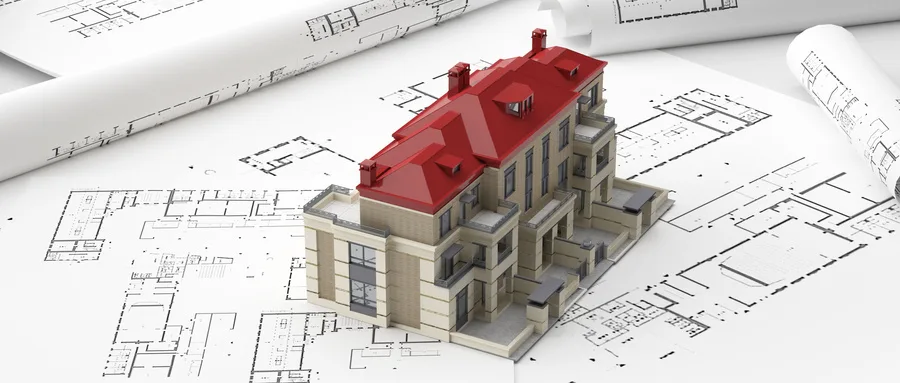
1. Communication and Coordination Difficulties: The design process involves multiple participants, including government regulatory bodies, construction teams, design firms, and management consultants. Efficiently completing the design according to construction requirements, obtaining approvals from relevant authorities, and coordinating among various design and consulting teams remains a significant challenge.
2. Discrepancies Between Design Schemes and Construction Drawings: Many projects suffer from inconsistencies between initial design renderings and final construction drawings. This often arises because different teams and decision-makers are involved at various stages—from planning to execution—leading to loss of design intent. The lack of effective tools to convey information and varying interpretations among designers contribute to deviations from the original plan.
3. Inadequate Interdisciplinary Communication: Although roles and processes are clearly defined, communication between different disciplines remains insufficient. Relying on language and 2D drawings alone often results in conflicts and errors between disciplines, causing unforeseen issues during construction. This fragmented communication also complicates unified information sharing during later operational phases, increasing management difficulties.
4. Complex Form Design and Insufficient Detail in Complex Components: As construction projects grow larger and building designs become more complex, conventional design tools struggle to keep up. This places higher demands on construction personnel to interpret and understand design intentions, which can be challenging on-site. Since drawings are the primary communication medium, any misunderstanding can lead to quality, safety, and scheduling problems. Therefore, more intuitive design representation methods are urgently needed.
5. Challenges in Refined and Parametric Design for Green and Prefabricated Buildings: The construction industry’s evolving requirements—such as green building standards and prefabricated housing—demand higher precision in design. Designs must meet sustainability criteria and ensure that construction drawings accurately reflect buildable conditions to truly enable “construction according to drawings.”
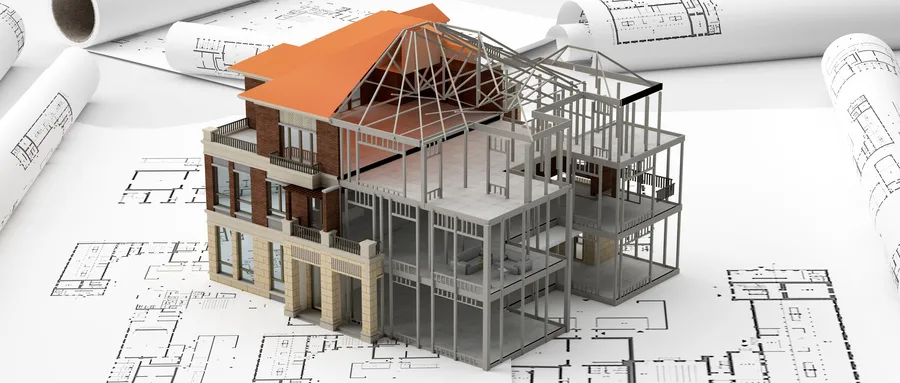
Leveraging BIM technology in the design phase offers significant advantages—such as dynamic multidimensional modeling, parametric design, simulation optimization, and graphical representation—that effectively address these challenges:
1. Enhanced Communication Through Dynamic, Multidimensional Outputs: BIM produces dynamic, multidimensional design results that facilitate comprehensive communication among all stakeholders, including architecture, structural engineering, MEP systems, and economic analyses.
2. Seamless Transition From Concept to Construction Drawings: Models developed during the conceptual phase can be directly used as inputs for detailed construction drawings. These model-based drawings provide intuitive guidance for on-site construction activities.
3. Collaborative Multidisciplinary Design Process: BIM promotes collaboration among architects, structural engineers, and equipment designers within a unified model. Real-time clash detection and condition checks reduce errors, omissions, and conflicts, improving both design quality and efficiency.
4. Advanced Techniques for Complex Form and Detailed Design: BIM supports design methods starting from volumetric and plan-based approaches, enabling the effective handling of complex shapes, detailed component optimization, and ease of drawing production.
5. Comprehensive Data Integration Supporting Green and Prefabricated Building Requirements: BIM models contain rich, unified information that can be analyzed and simulated across various software tools, ensuring consistent results. Additionally, BIM’s mapping capabilities facilitate the export of prefabrication processing, installation, and positioning documentation, providing essential technical support for industrialized housing.
















Must log in before commenting!
Sign Up