
BIM applications can be categorized based on their leadership into investor-led and non-investor-led modes. The non-investor-led mode further divides into design-led and contractor-led approaches.
(1) Investor-led Model
The investor-led model is directed by the investor, who integrates BIM technology into the project. This approach can be applied during a specific phase or throughout the entire lifecycle of an engineering project. It supports decision-making and bidding processes in the early stages, facilitates collaboration and multidisciplinary communication during the project’s middle stages, and enhances operations and maintenance management in the later stages.
(2) Design-led Mode
Driven by the design team, the design-led mode utilizes BIM technology primarily during the design phase. It employs tools such as visualization, clash detection, and net height analysis to optimize and accurately present design drawings and proposals, thereby boosting the competitiveness of the design firm.
(3) Contractor-led Mode
The contractor-led mode is a relatively new BIM application that has emerged in recent years. Contractors use BIM to simulate construction processes, anticipate and resolve potential challenges, and visualize construction plans. By integrating 3D models with scheduling and cost data, this creates a 5D construction management approach that enhances contractors’ competitive advantages and effectively reduces construction costs.
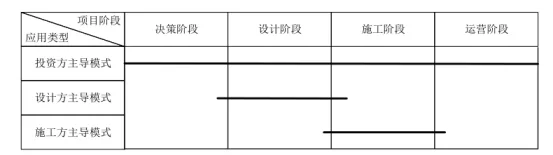
Figure 1 illustrates a comparison of the three BIM application modes across the lifecycle stages of engineering projects.
As shown in Figure 1, the investor-led BIM application mode covers the broadest scope and the largest range of applications. Currently, BIM use is most active during the design phase in China. However, the ultimate goal of BIM is to serve the entire project lifecycle to maximize its benefits. Therefore, the investor-led model tends to maximize BIM’s effectiveness.
The Smart Building Alliance, part of the American Academy of Building Sciences, highlights that as engineering projects progress, the ability to make changes decreases, while the costs associated with changes increase. From this perspective, investors who implement BIM throughout the full lifecycle have the greatest motivation to optimize construction management using BIM technology, resulting in the highest possible benefits.
















Must log in before commenting!
Sign Up