
Cloud computing is an Internet-based service platform that harnesses vast online resources to aggregate, organize, and process information. Users can perform various operations on the platform according to their access permissions. Leveraging the powerful processing capabilities of cloud platforms, information is handled promptly and efficiently. These capabilities far surpass those of traditional terminal devices, significantly enhancing their information processing performance when connected to the cloud.
Cloud computing takes several forms: users may remotely access one or multiple high-performance computers to execute intensive computational tasks; they can share software resources remotely instead of hardware; or they can access dynamic model files and other types of archived data stored on remote servers. The following diagram illustrates the principle of cloud computing.
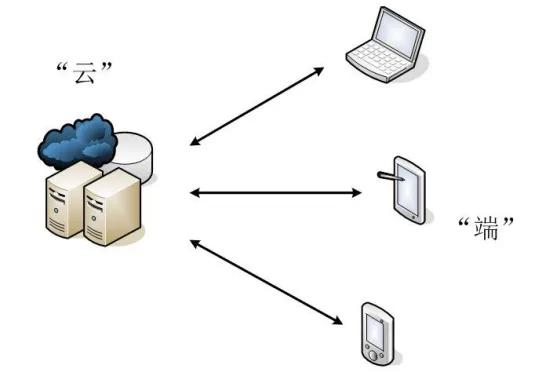
As an emerging technology in the construction industry, BIM’s greatest value lies not only in providing buildings with data-rich representations but also in functioning as an information management platform for integrated data control—realizing its true management potential. By combining BIM technology with cloud computing, and deploying BIM on a unified information management platform, the full value of BIM can be better leveraged.
The BIM cloud platform centers on BIM models, scheduling, and economic factors. It links BIM models with related information such as schedules, contracts, costs, quality, and materials. Through a cloud-plus-end architecture, it delivers models and data to various project roles. This platform supports multiple users in the engineering sector by providing a business data environment for BIM data collection, storage, processing, and sharing across client/server (PC), browser/server (web), and mobile platforms.
















Must log in before commenting!
Sign Up