
In June 2021, MAT participated in the Haiyang Road Middle School open competition held in Tianfu New Area, Sichuan. After successfully qualifying, they were awarded the second prize. The competition was organized by the Park City Construction Bureau of Tianfu New Area and planned and executed by Global Knowledge Lei Feng. Nearly one hundred young architects and architectural firms from across China took part in this event.
Campus Design Concept
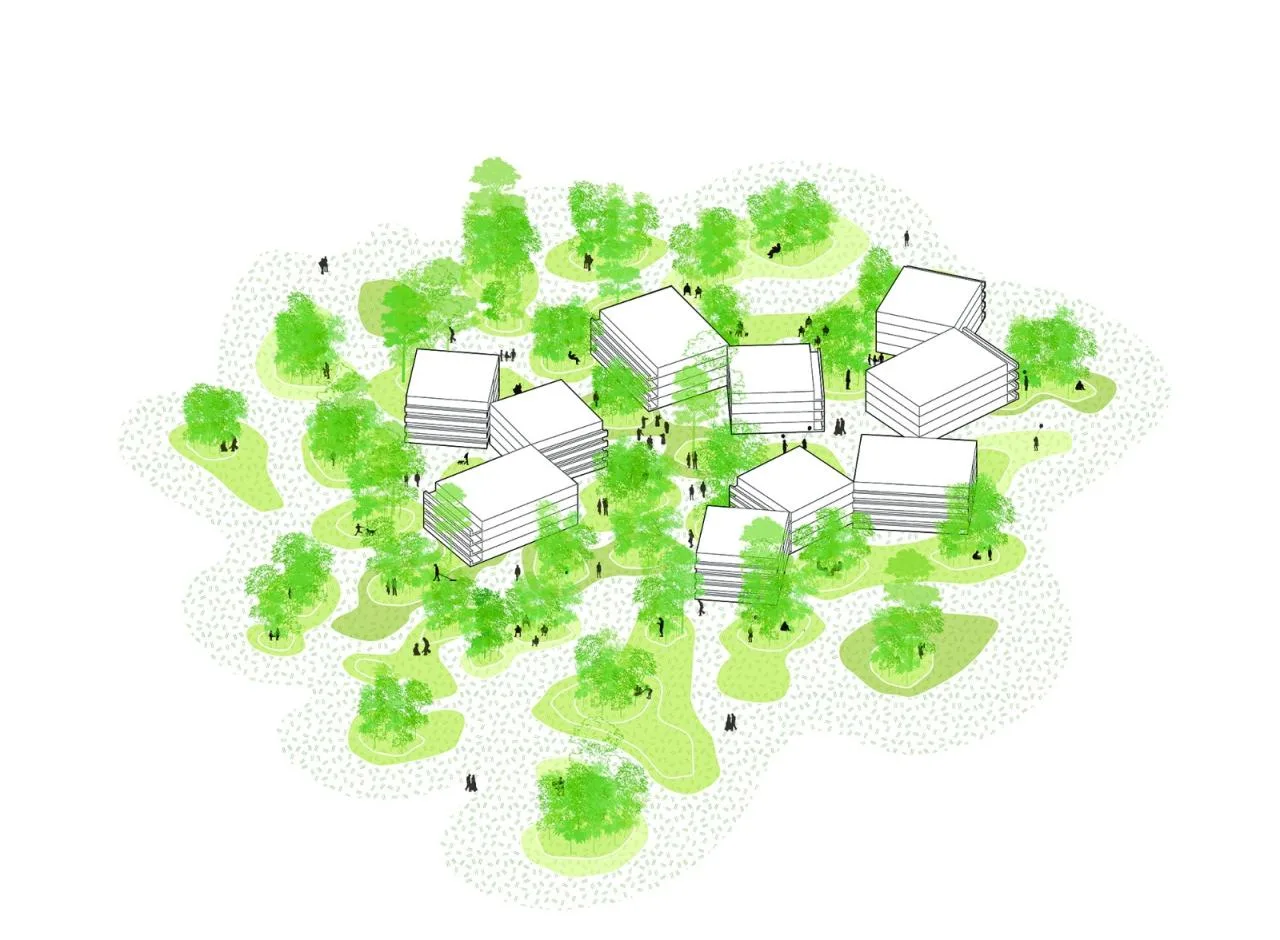
△ Site settlement and forest plot concept map
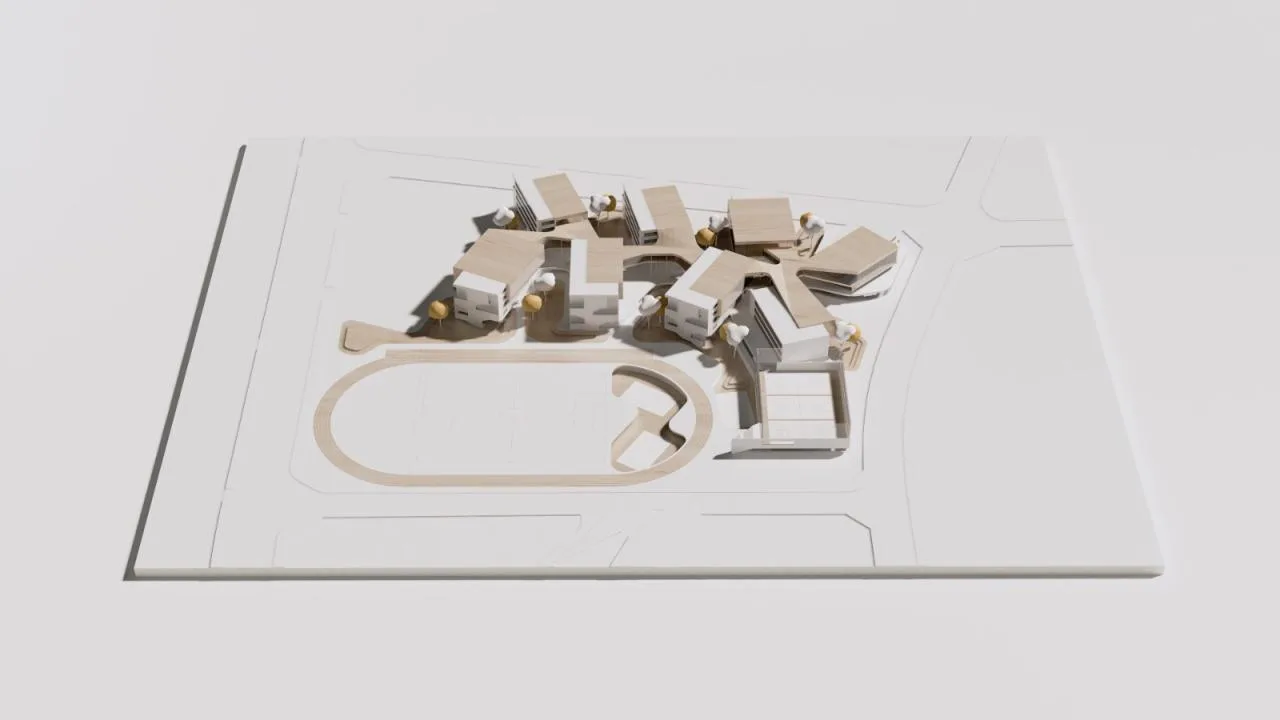
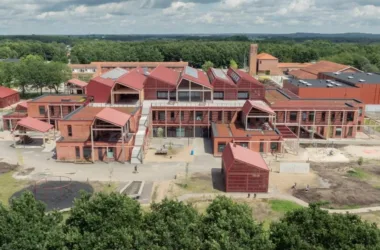
This design proposal aims to integrate the natural geographical features of the “West Sichuan Forest Park” into the campus, creating a “three-dimensional park school within the forest park landscape.” Drawing inspiration from the natural geography of the Chengdu Plain, the design arranges Ocean Road Middle School as a low-density campus settlement composed of small-scale teaching buildings and organic forest park elements. This approach fosters an ecological park environment where buildings and nature coexist, connect, and complement each other.
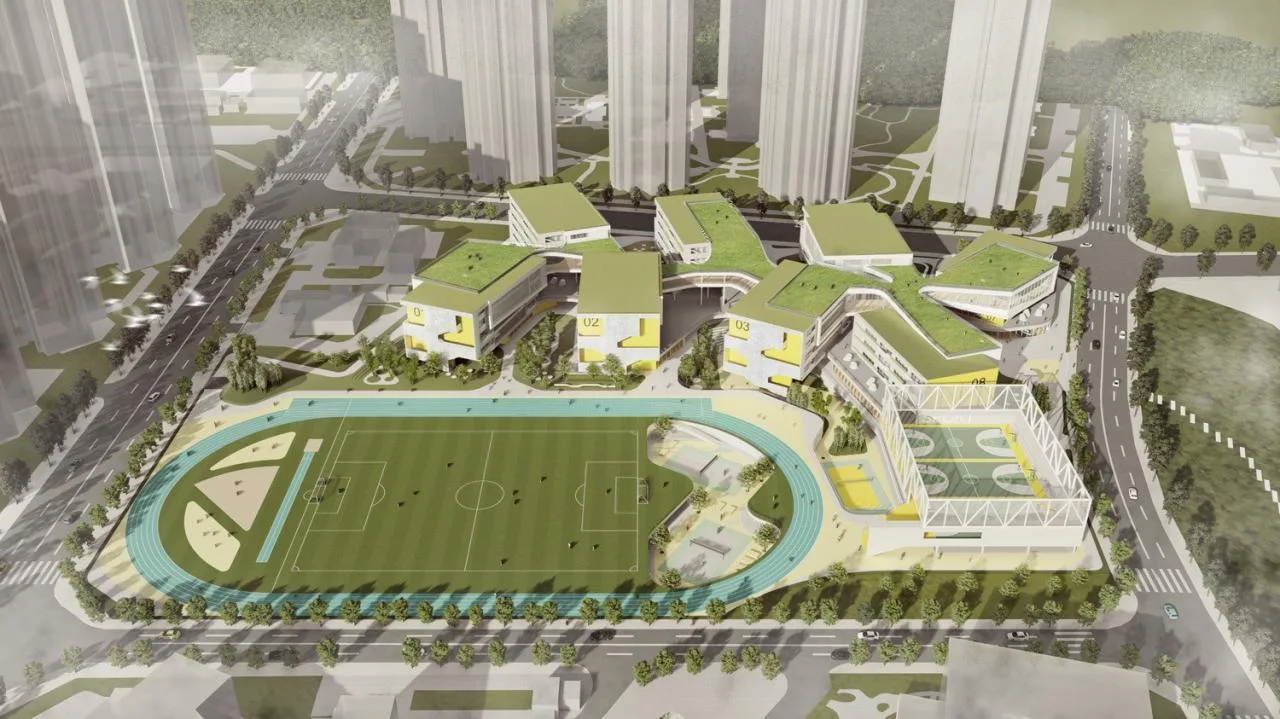
△ Aerial view of the campus
Campus Planning and Layout
The Chengdu Haiyang Road Middle School project is situated on Haiyang Road Street in Tianfu New Area, east of the southern section of Tianfu Avenue. Covering 66 acres, it plans to accommodate 54 middle school classes. The site is bordered by urban green space to the north, high-rise residential communities to the west and south, the Fifth Primary School of Tianfu New Area to the east, and an operational kindergarten to the south.
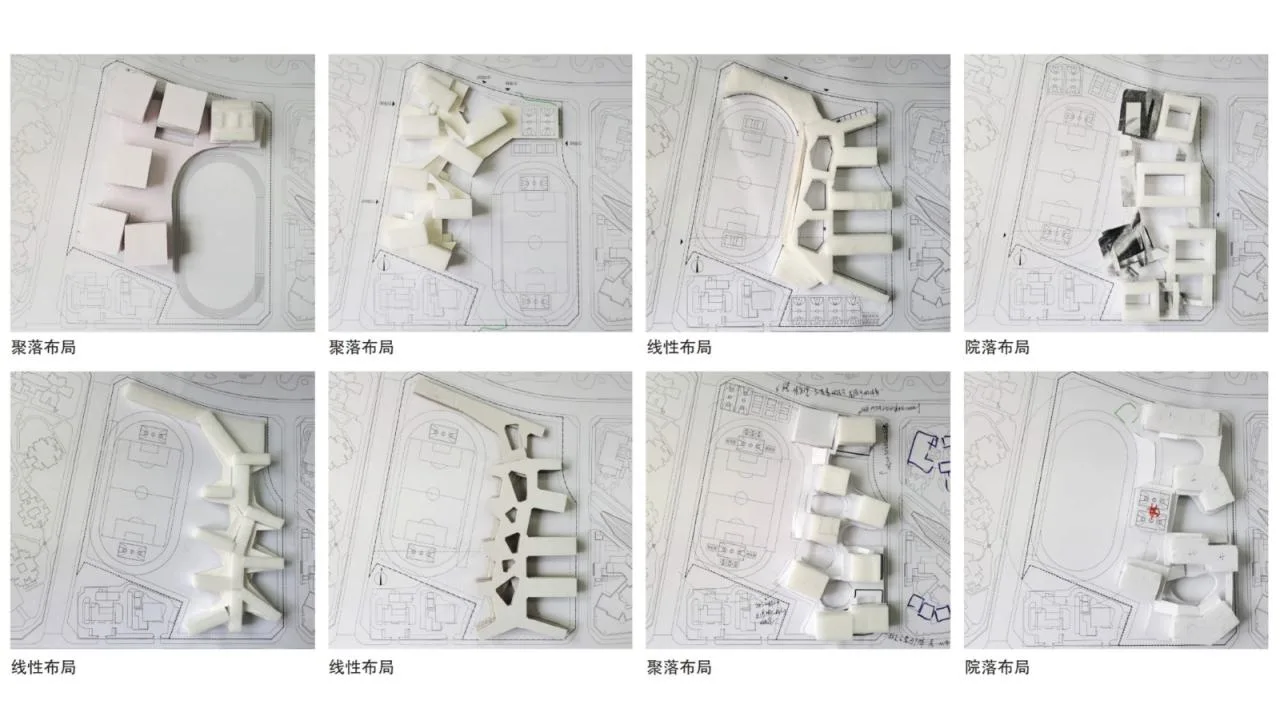
△ Planning layout concept
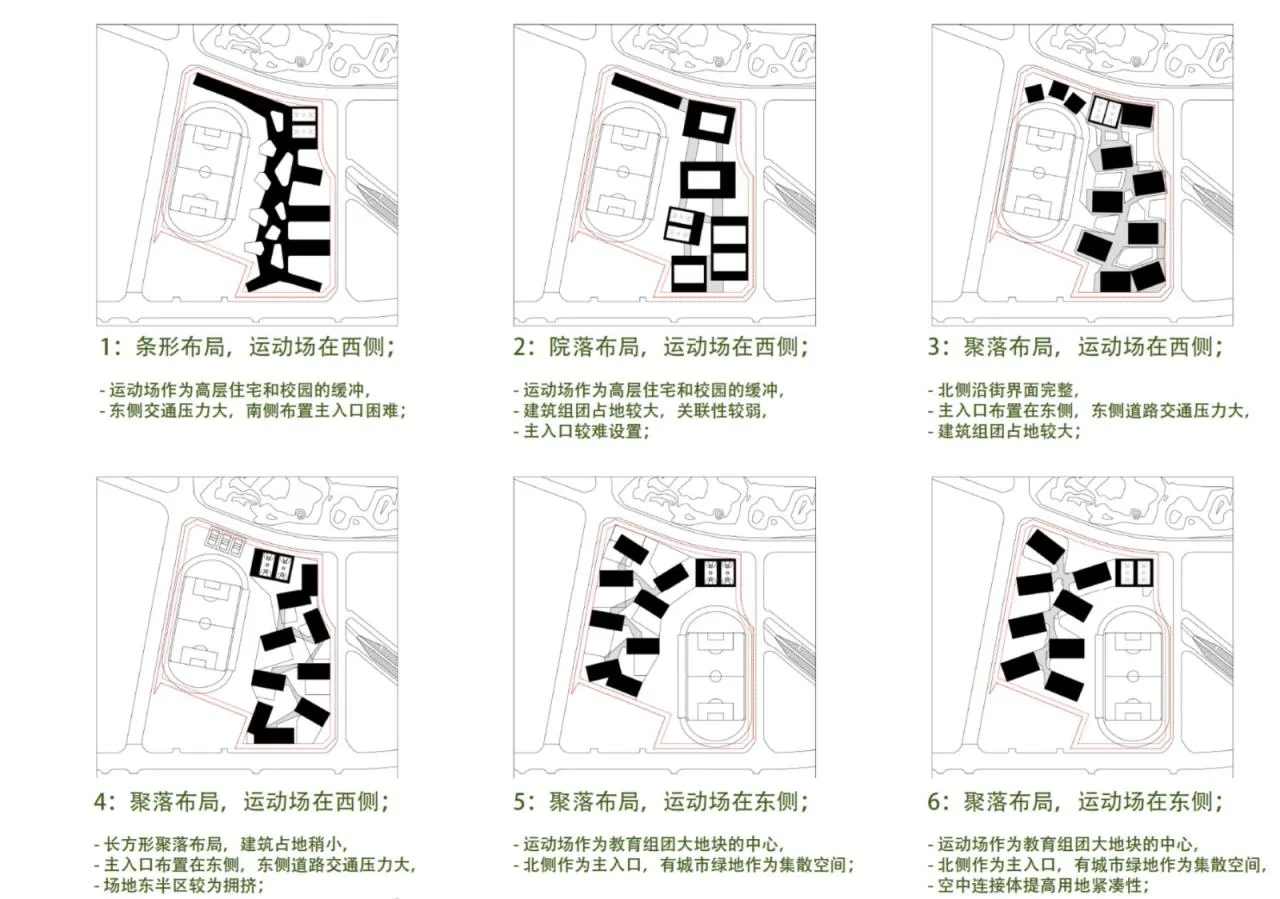
△ Comparative analysis of planning layouts
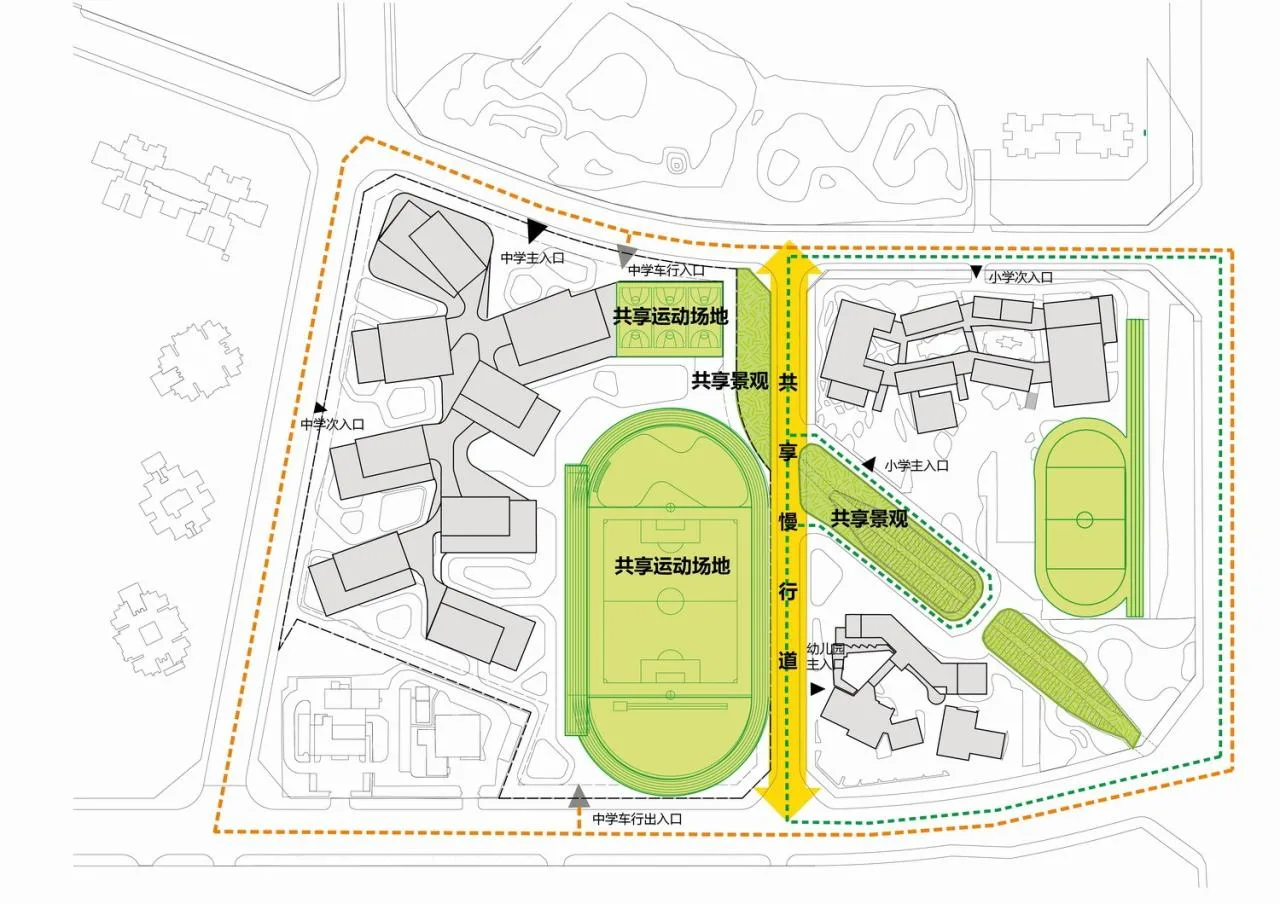
△ Group relationship of Ocean Road School
The key to the planning is the integration of a standard 400m sports field, positioning the main school entrance, ensuring smooth traffic flow during peak hours, and minimizing interference from surrounding buildings. Preliminary analysis identified three educational sites within the Ocean Road plot. When designing the largest of these—the Ocean Road Middle School—we carefully studied usage patterns and traffic within neighboring residential and school areas.
We decided to locate the sports field on the east side, allowing it to be shared with the adjacent primary school, and turning the east road into a slow traffic lane for the school. To alleviate peak-hour traffic, the main entrance sits on the north side, facing urban green space, with open views and pedestrian gathering areas. The teaching buildings are arranged compactly on the west side to maximize efficient land use.
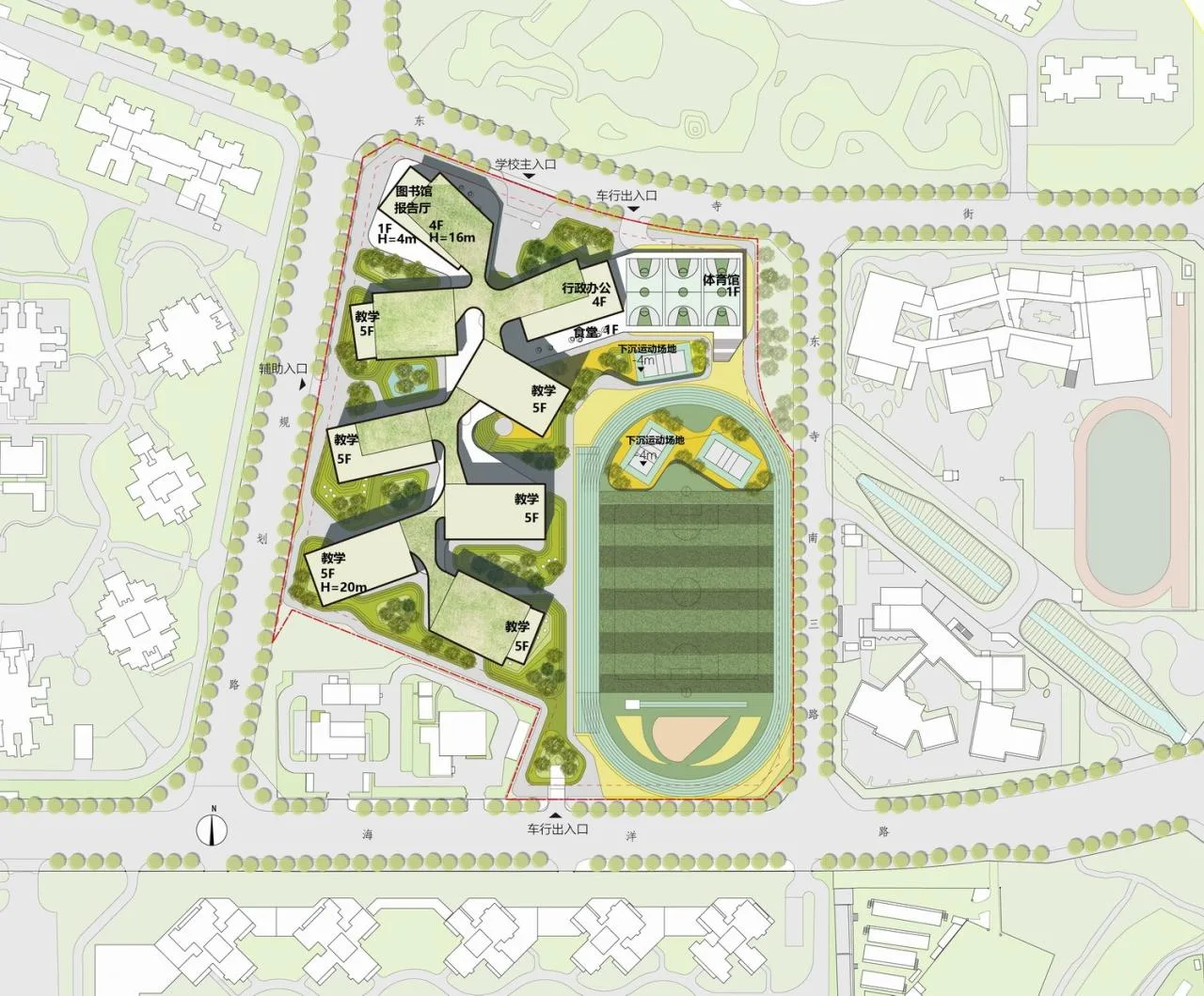
△ General layout plan
To prevent visual disturbance from the high-rise residences to the west and avoid direct sightlines between teaching buildings, the building volumes are staggered. This creates a forest landscape at the base of the architectural complex, where the structures blend harmoniously with the natural surroundings.
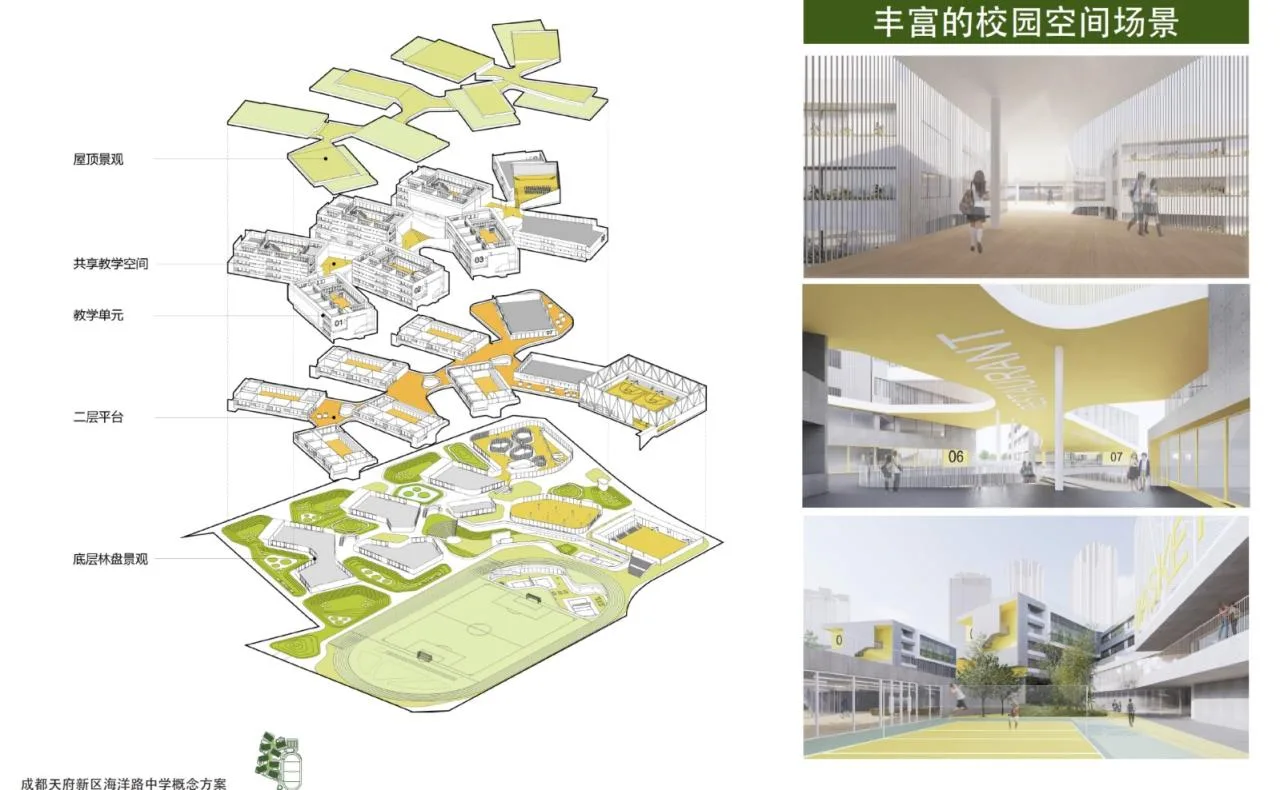
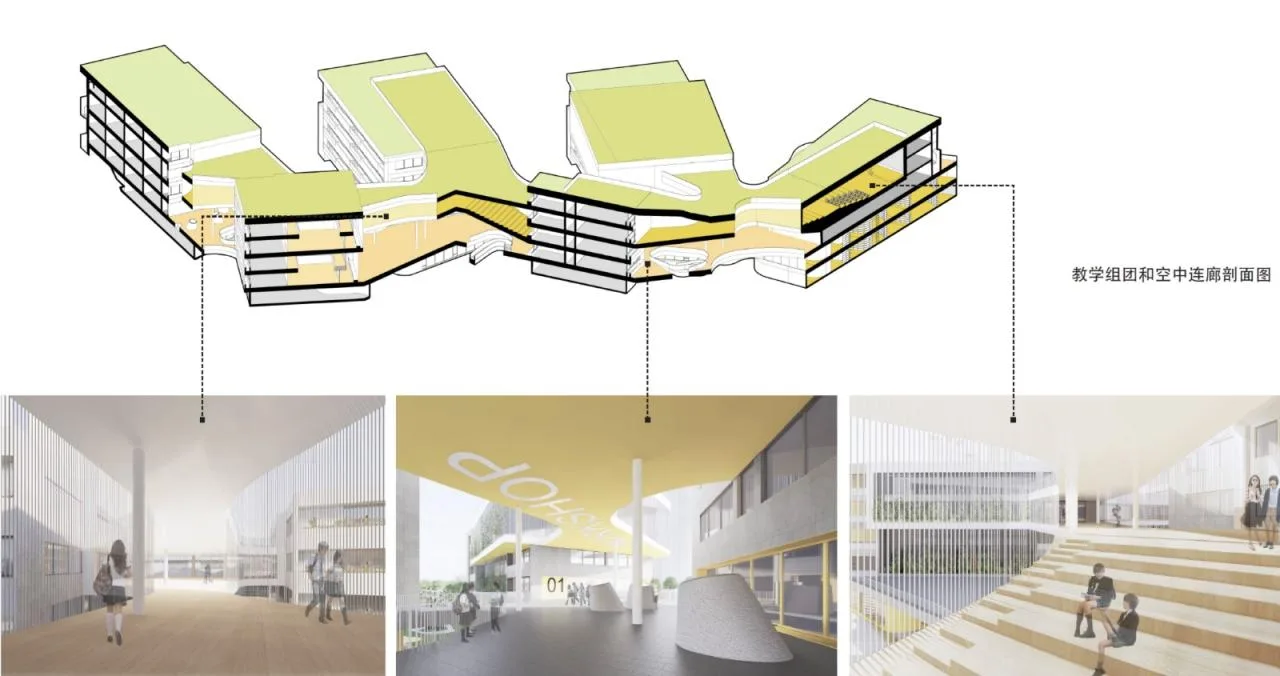
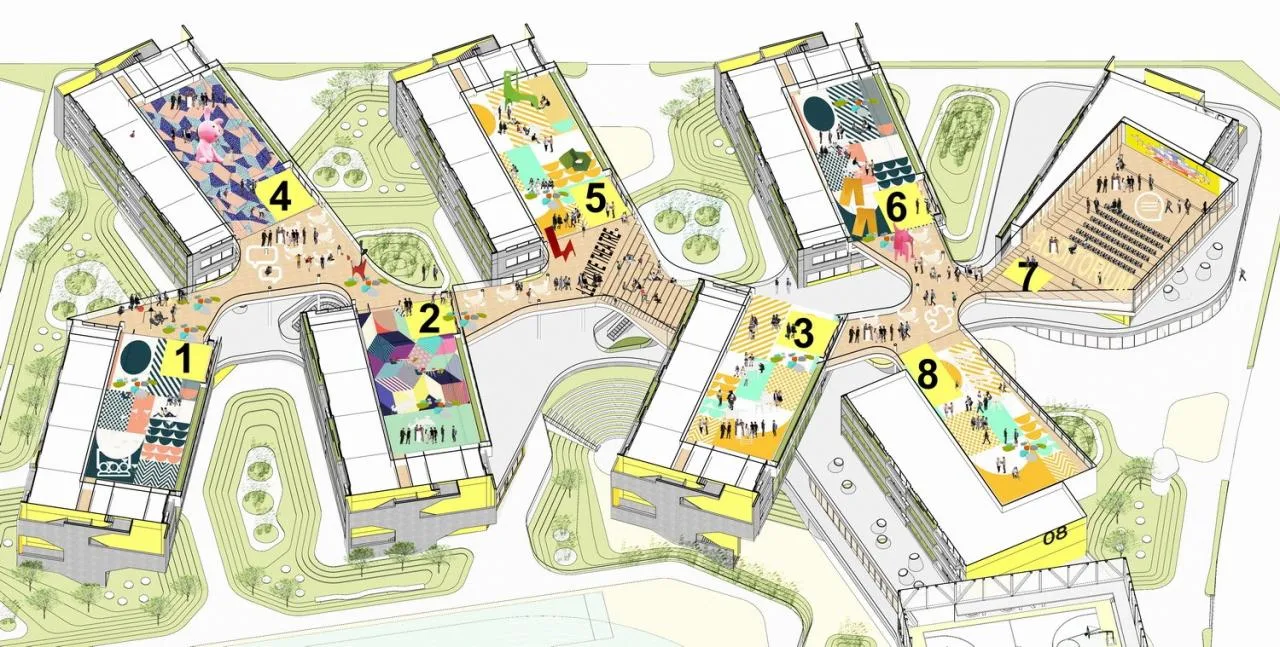
The second and fourth floors of the teaching buildings are connected via platforms and aerial corridors. The second-floor platforms link all teaching buildings, while the fourth-floor aerial corridors connect nearby buildings, providing spaces for extracurricular activities.
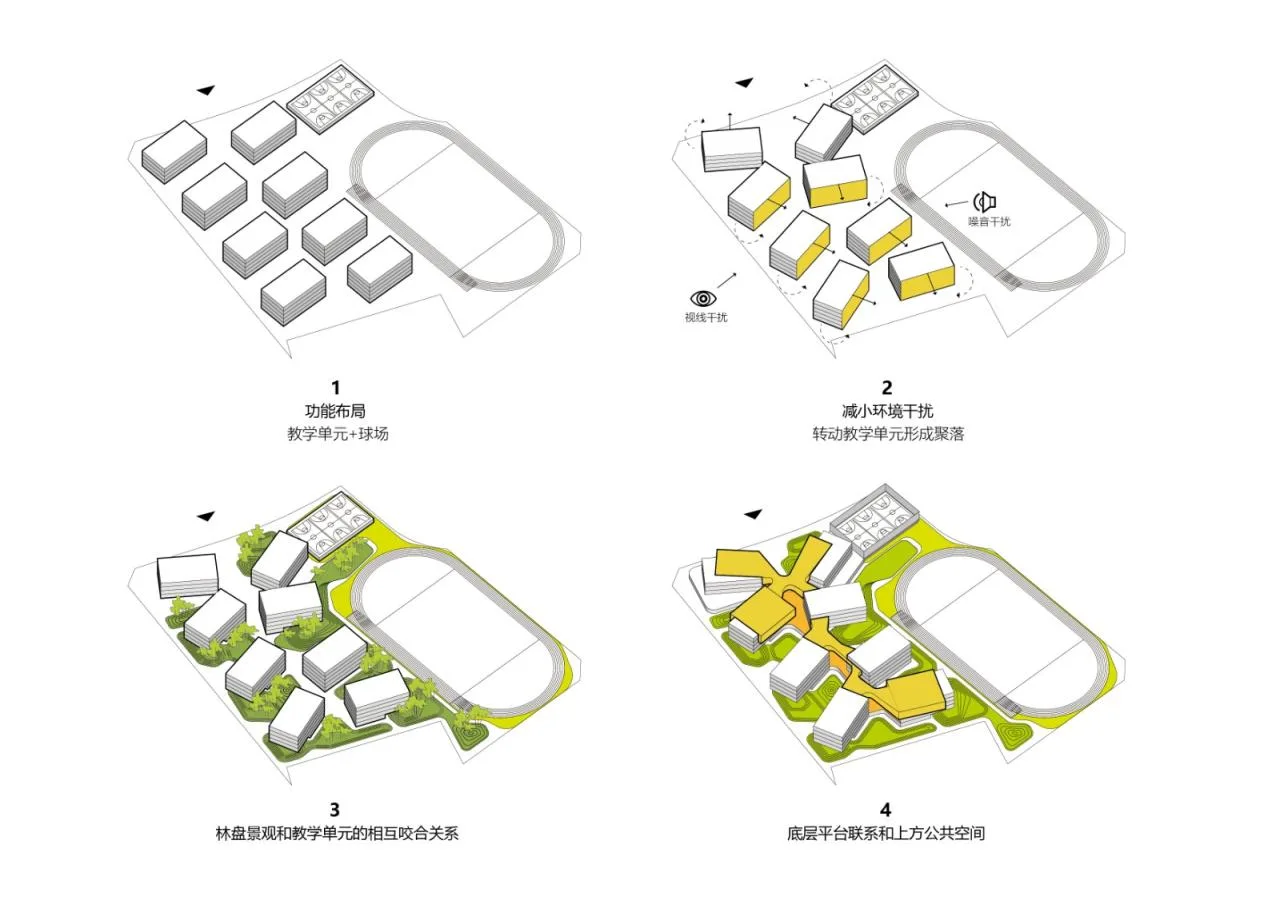
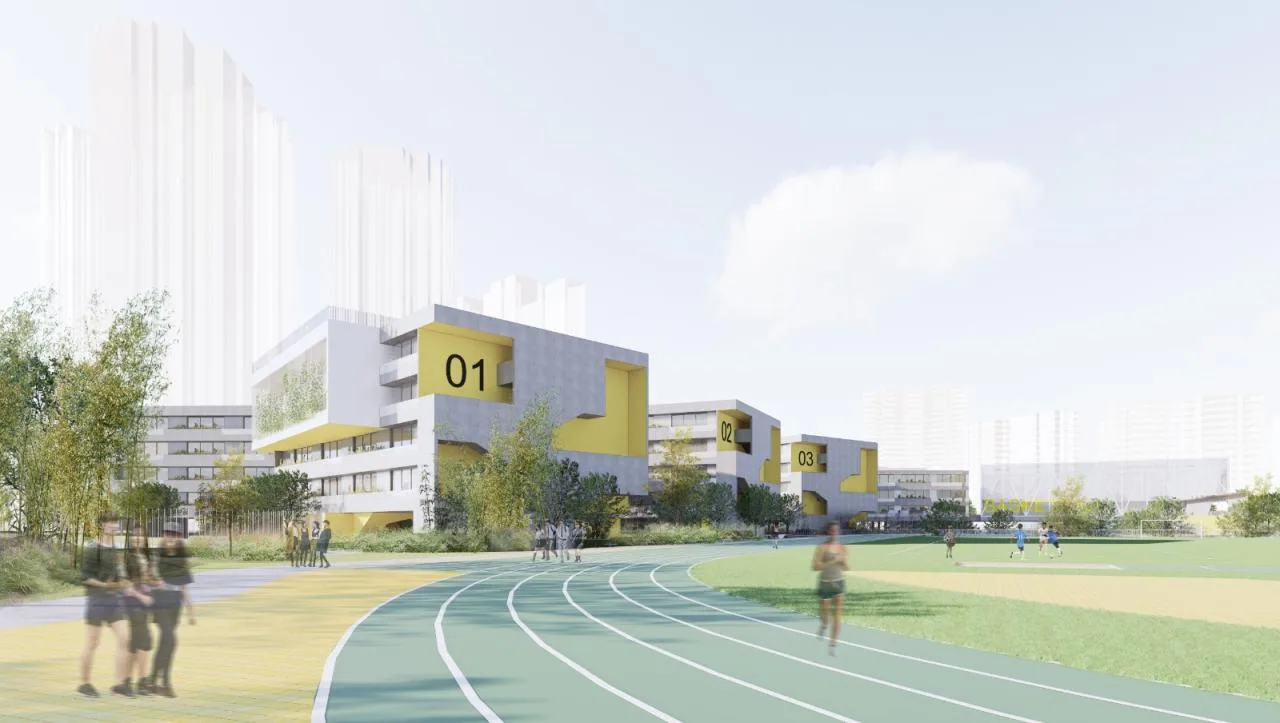
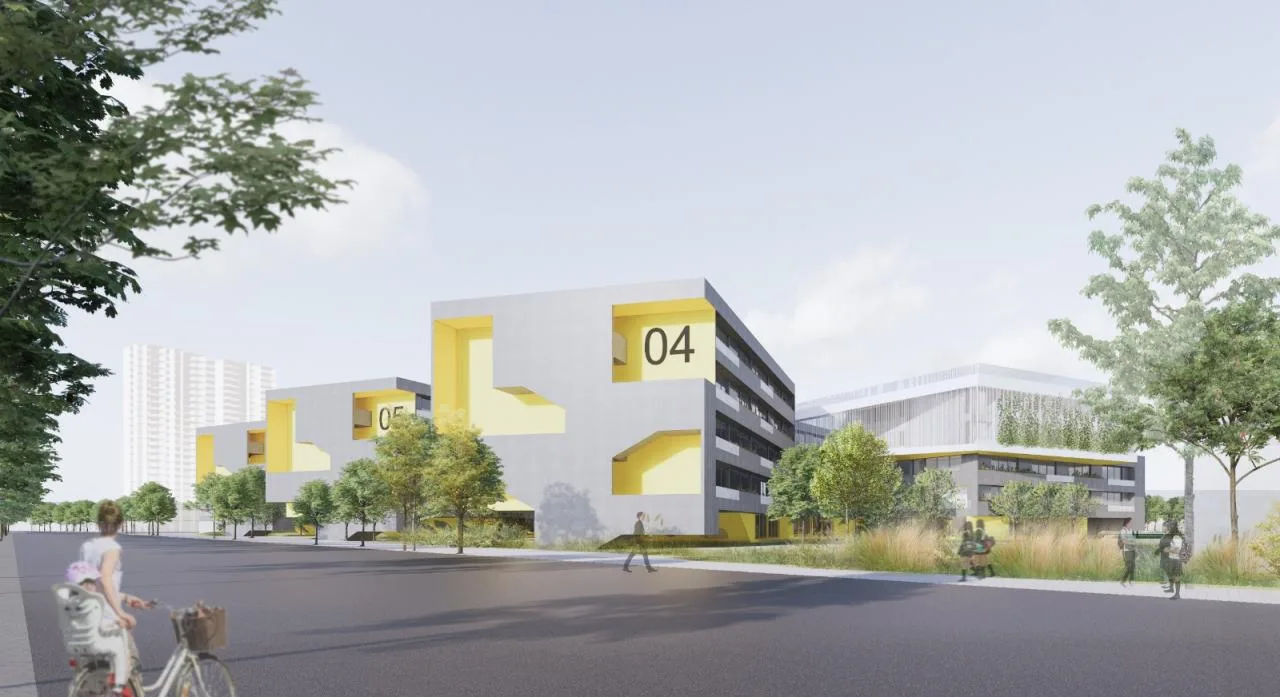
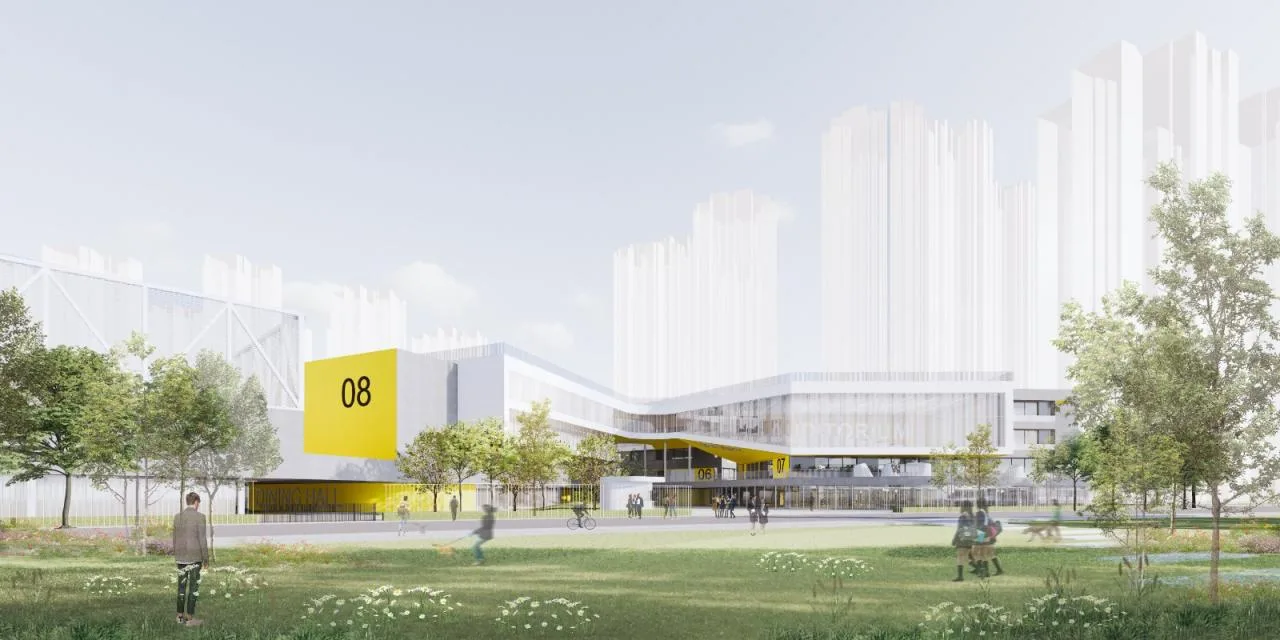
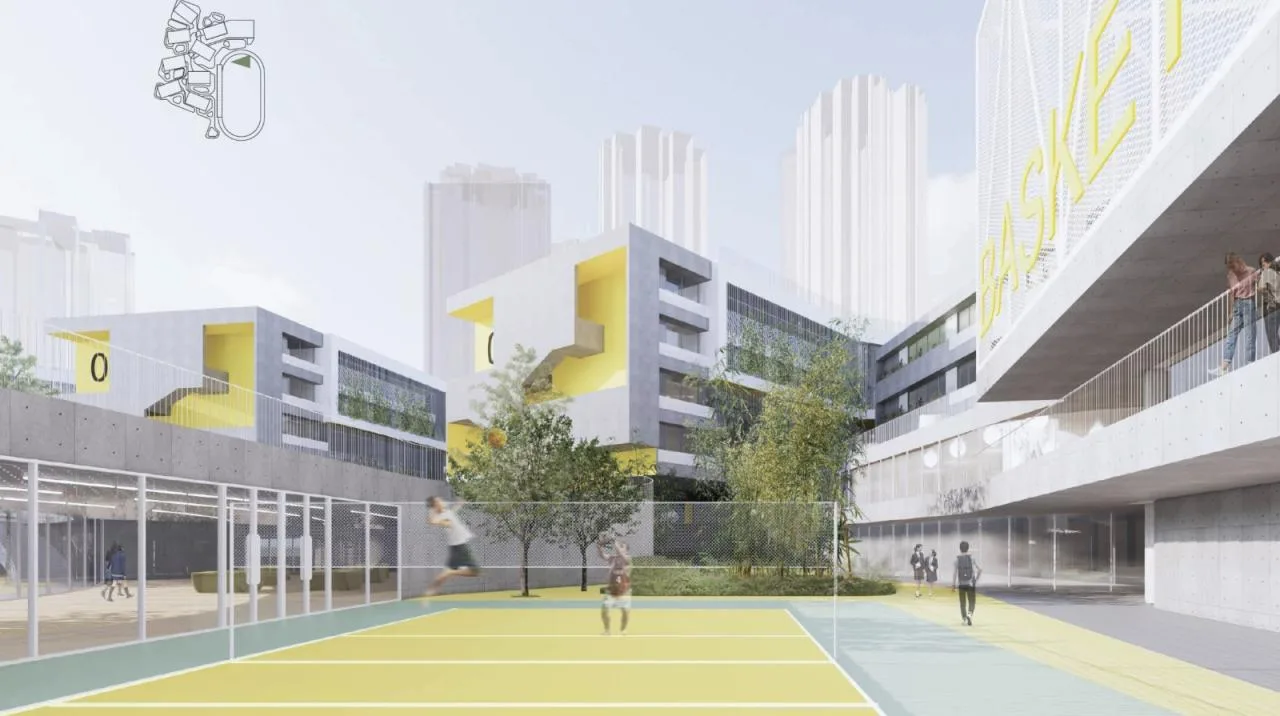
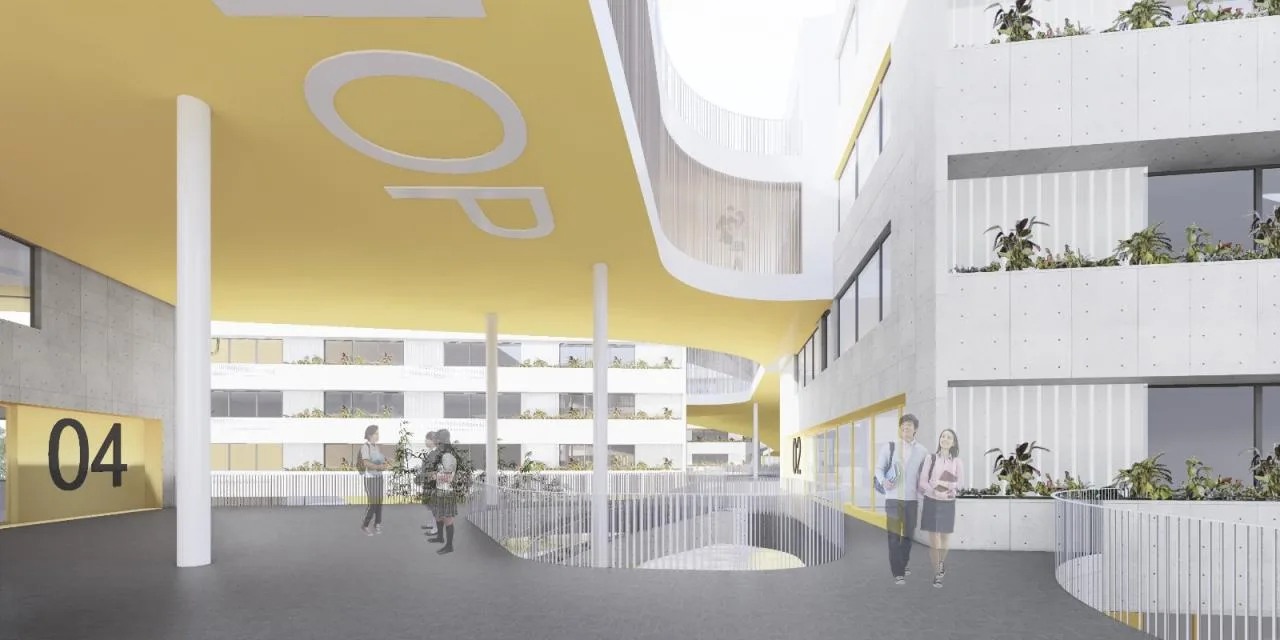
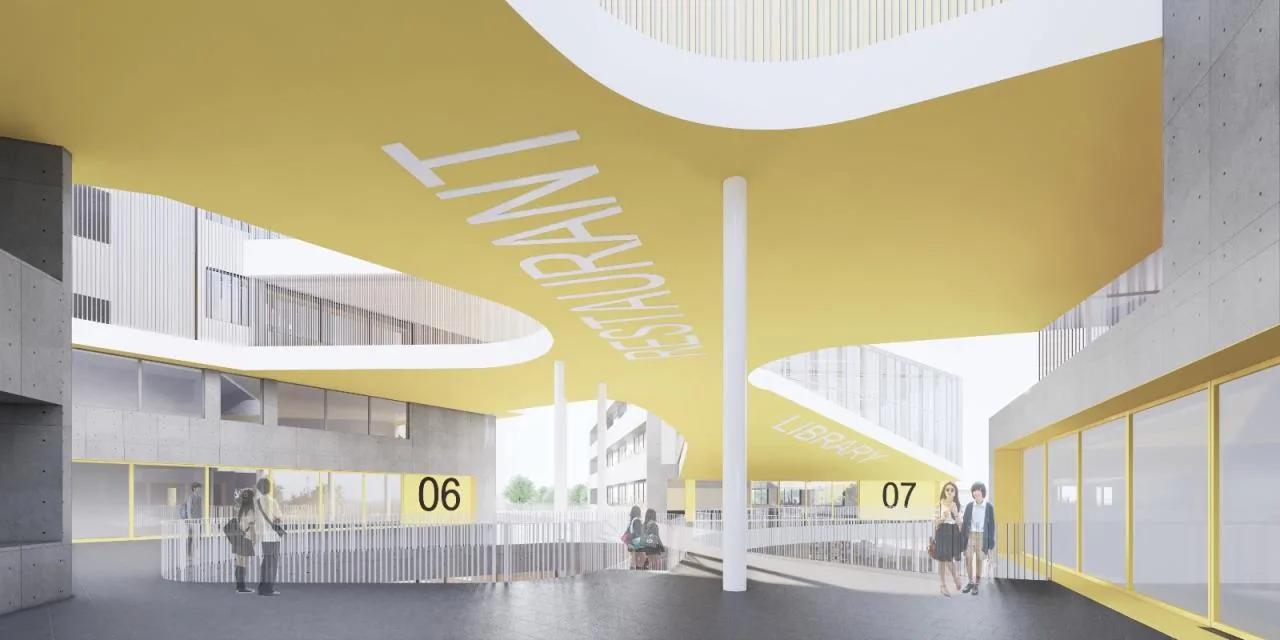
Besides focusing on urban function connections, the project aligns the planning, design, and architectural language with existing primary schools and kindergartens. This approach fosters a harmonious and inclusive spatial atmosphere throughout the Ocean Road education site.
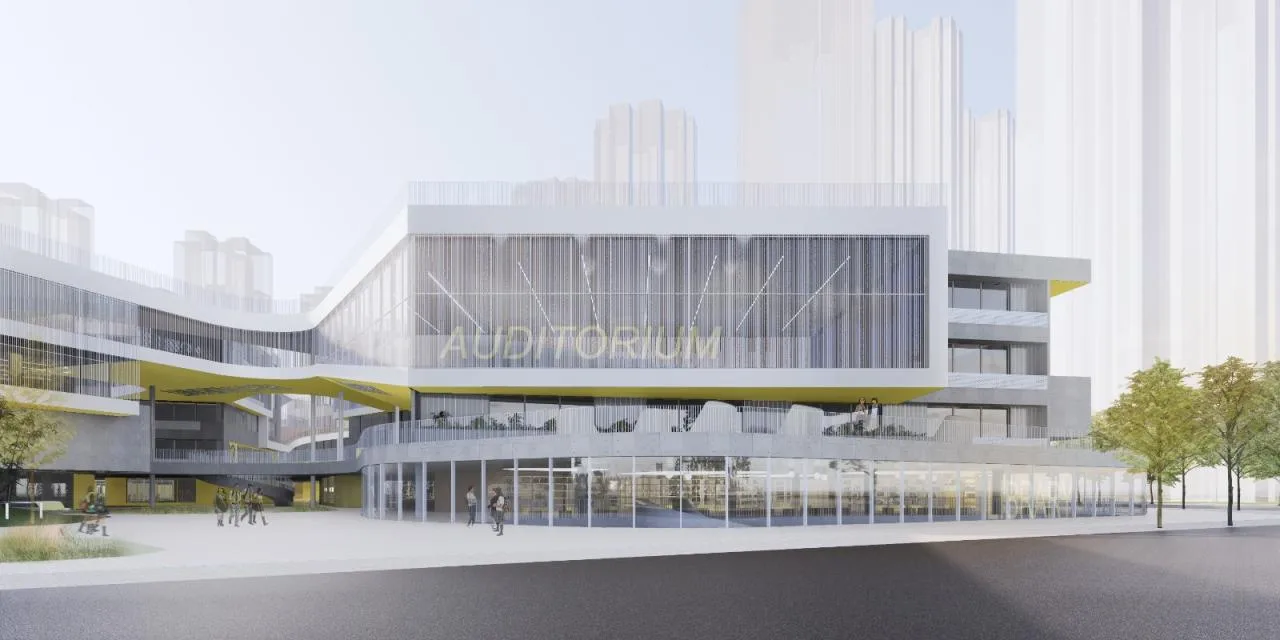
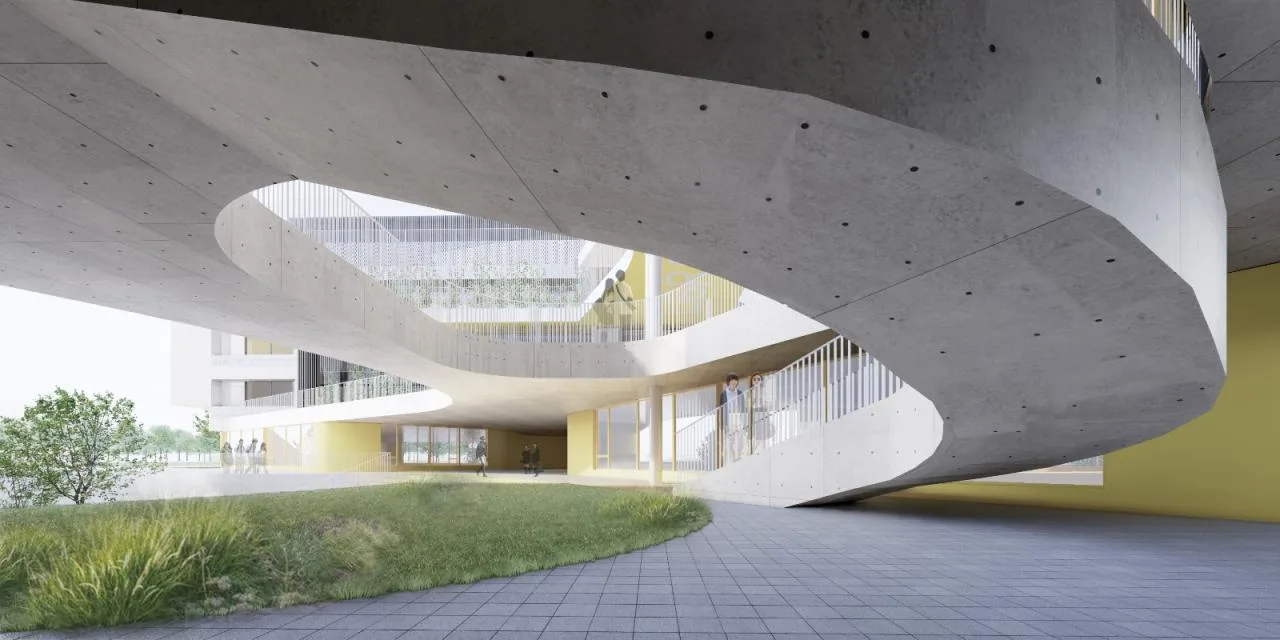
The school’s architectural image is crafted with simple volumes enhanced by rich spatial effects. The use of plain concrete textures, bright colors, and varied materials conveys a campus spirit aligned with innovative educational concepts. This design integrates architecture, interior design, and landscaping to create a natural, appropriately scaled, economically beautiful, and vibrant campus environment within a reasonable plot ratio.
Innovative Teaching Model
Traditional middle school design typically features teaching corridors connecting classrooms within a building, supplemented by public corridors linking multiple buildings. This horizontal layout offers clear functional zoning and efficient use of space. However, with the rise of innovative quality education, campuses now require numerous specialized classrooms—such as labs, music, sports, art, and computer rooms—that exceed the number of regular classrooms.
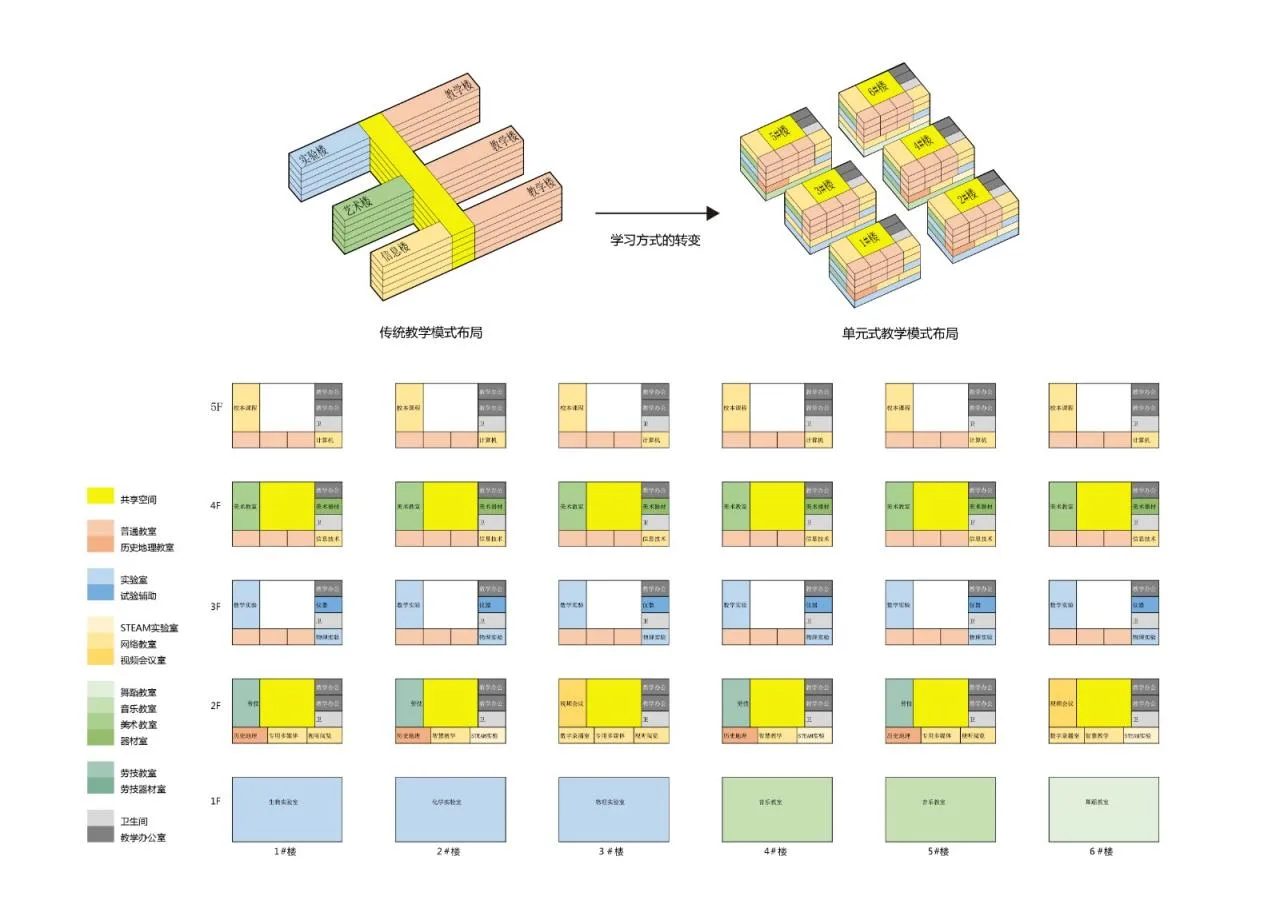
△ Teaching space allocation
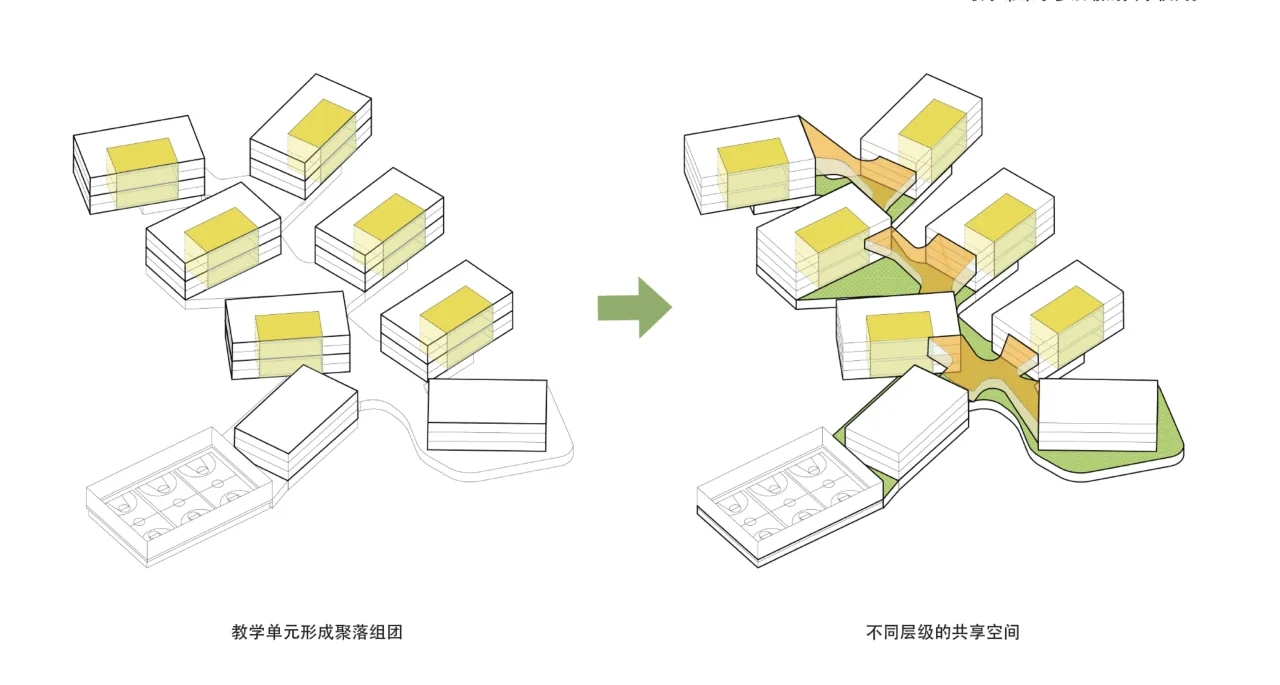
In response, after studying successful domestic and international school models, we introduced the concept of “teaching buildings without long corridors.” Based on average grade distributions, ordinary classrooms are mixed and integrated with specialized labs, art, and computer rooms to form fully functional independent teaching buildings.
This allows students to complete their regular courses within a single building, freeing other campus areas for engaging public and landscape spaces.
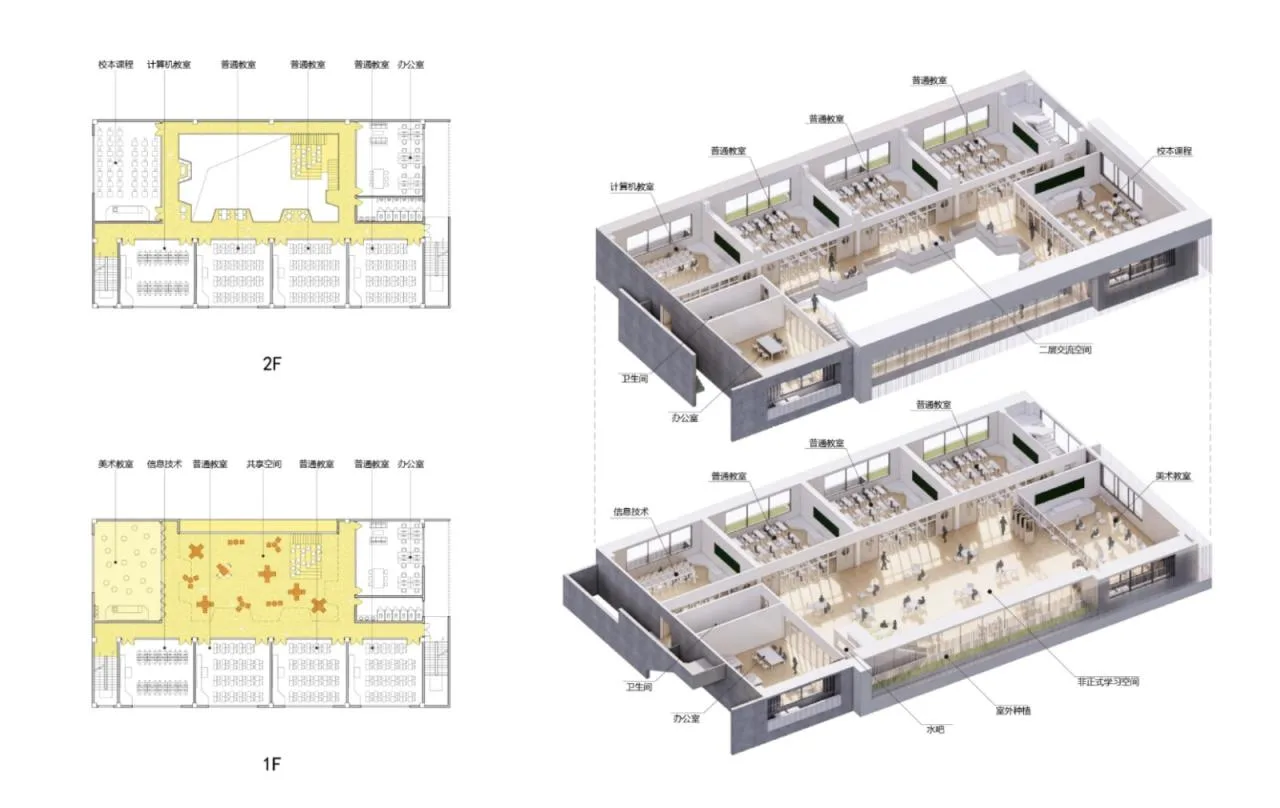
△ Two floors form a basic teaching unit
Each standard teaching unit consists of two floors, housing 6 regular classrooms, 4 specialized classrooms/labs, and 2 teacher offices. Two basic units combine to create a teaching building, centered around a two-story open space.
The large classroom on the ground floor features movable walls that can fully open to connect with shared areas, which serve as spaces for breaks, extracurricular activities, and special teaching sessions.
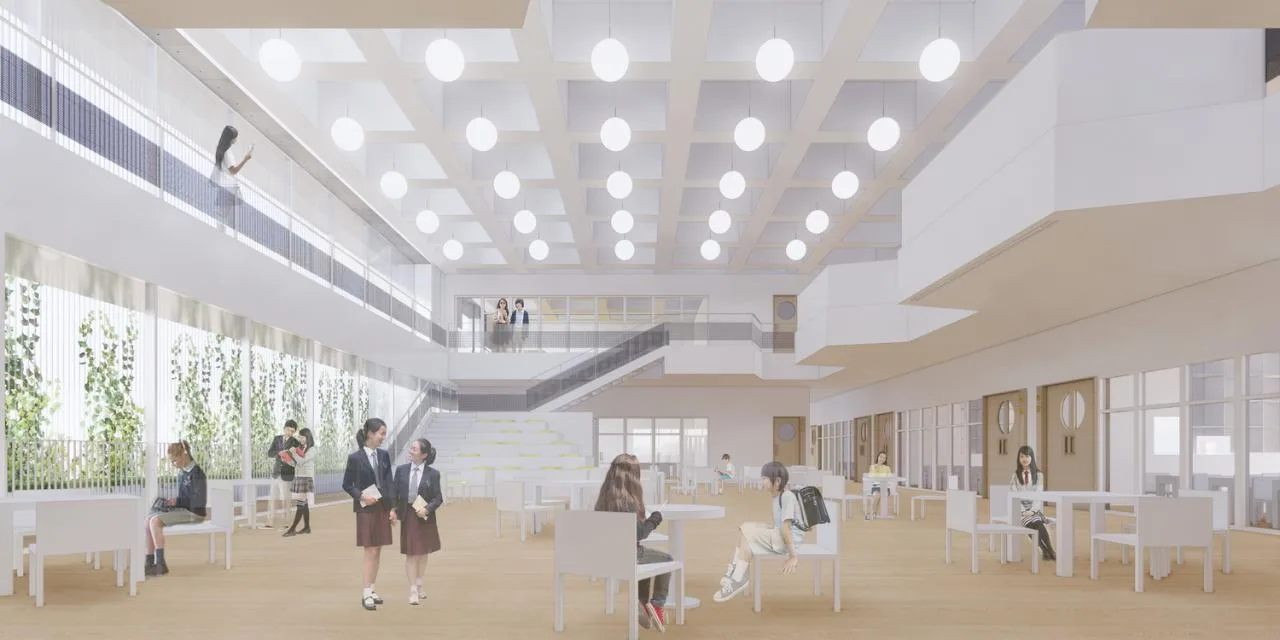
The shared space within each teaching unit is versatile, accommodating various teaching and extracurricular scenarios. When the movable wall facing the shared area is opened, it naturally forms an expansive “large classroom” teaching environment.
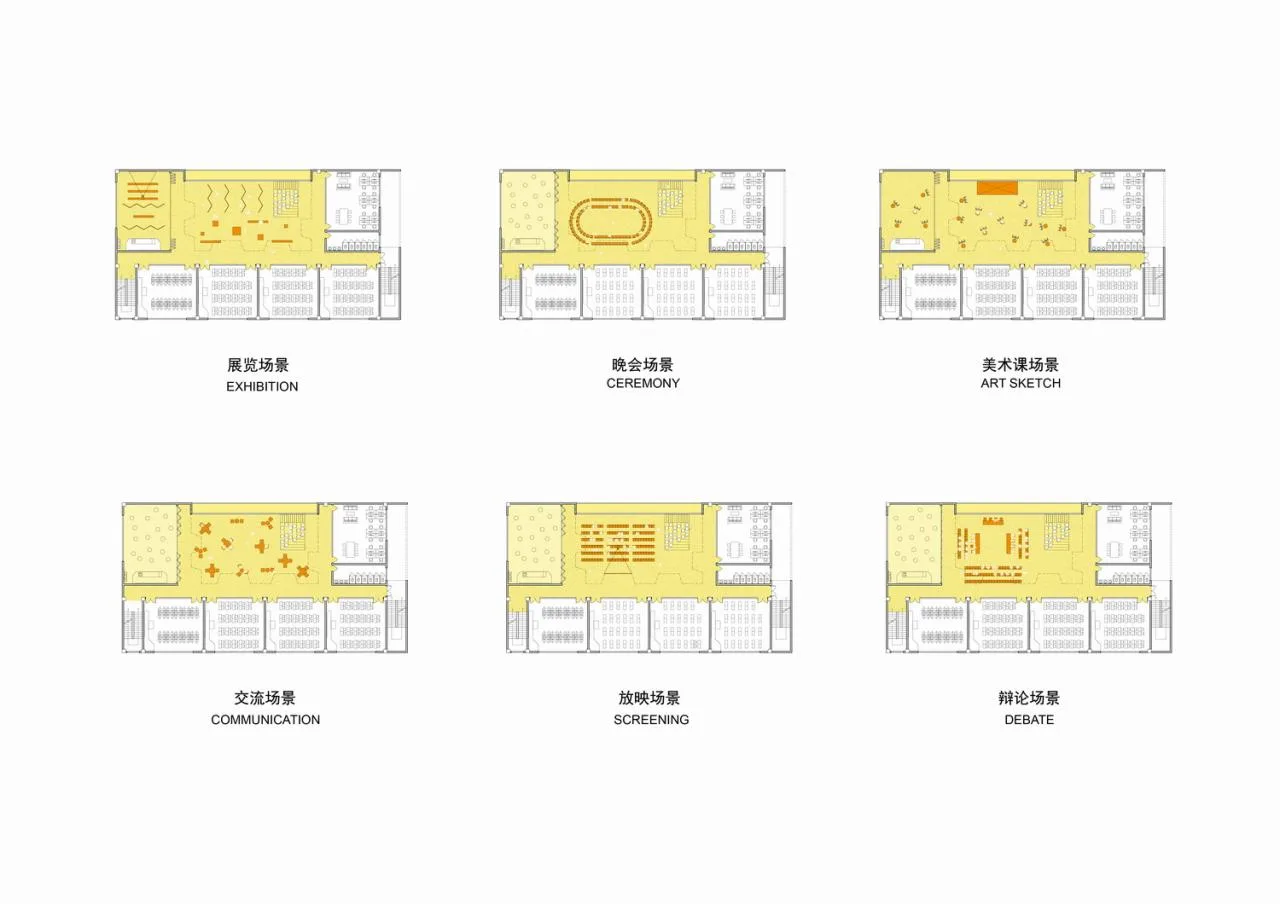
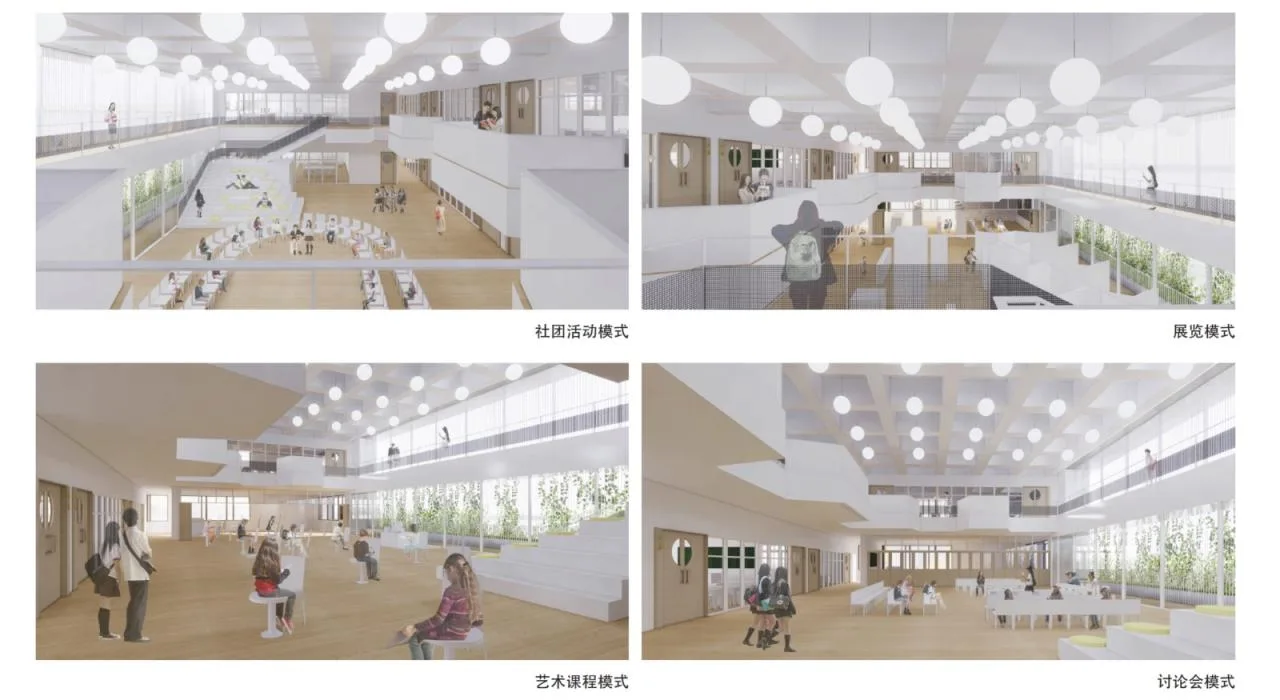
Stacked vertically, these basic units compose the teaching buildings. The eight buildings form an integrated campus settlement, connected by multi-level platforms and aerial corridors, creating a three-dimensional campus sharing system.
Engaging Campus Spaces
Sky Corridor
The elevated aerial corridor links the shared spaces of the top two teaching units. It functions as a vibrant area for student extracurricular activities, featuring interest corners, tiered classrooms, public display areas, and more.
Library
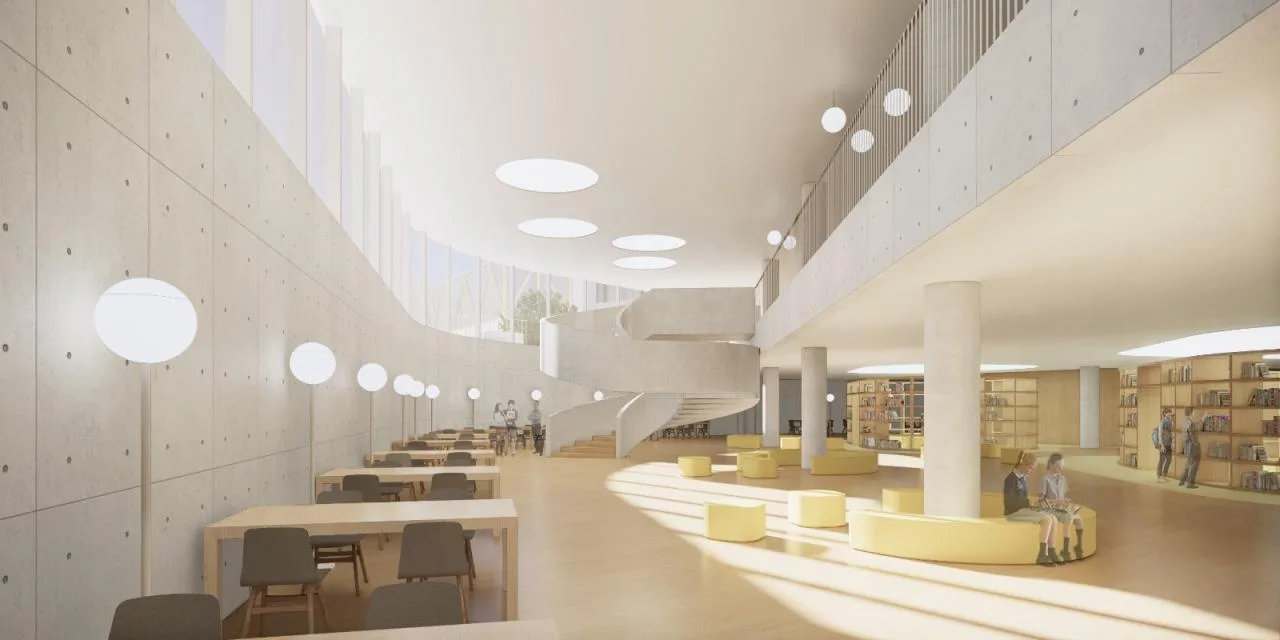
Located at the main entrance, the library serves as a landmark building. It fulfills traditional functions such as housing books and archives, while also offering a spacious, open area for parents to pick up, wait, and socialize during school hours.
Gymnasium
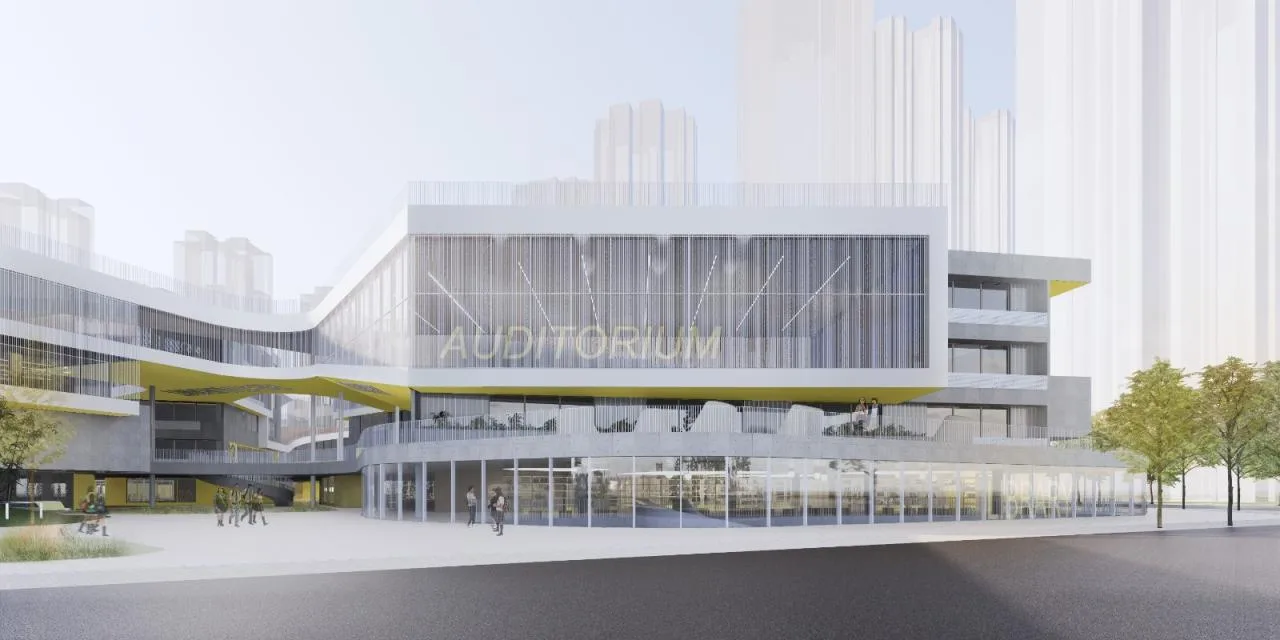
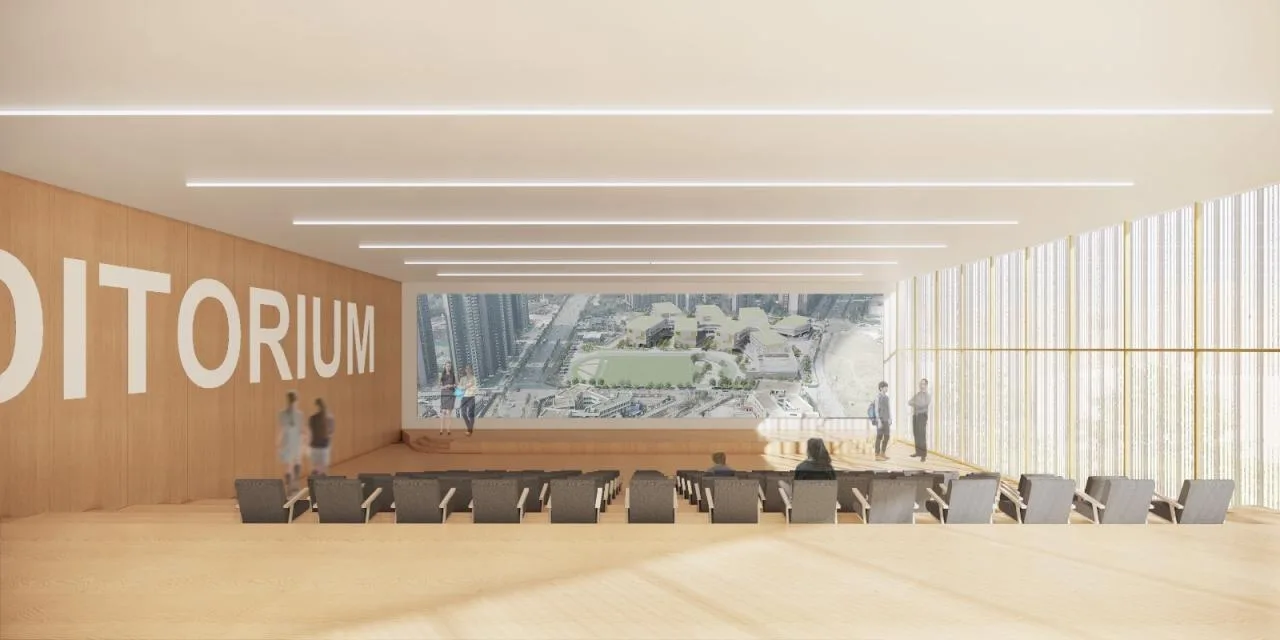
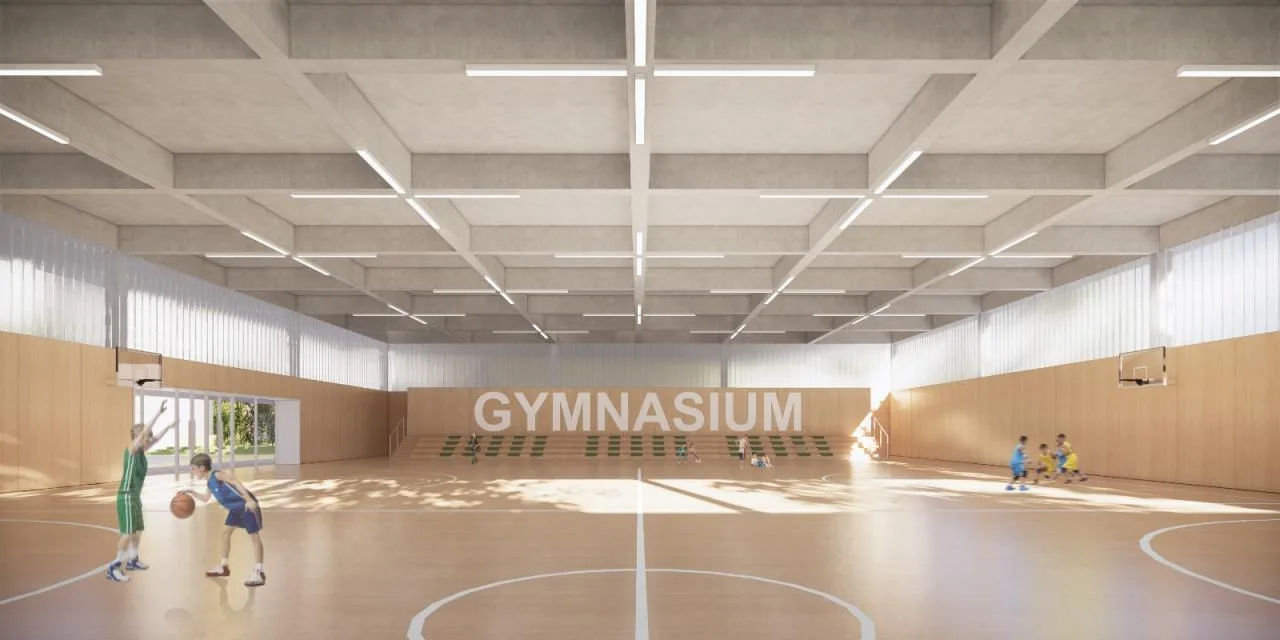
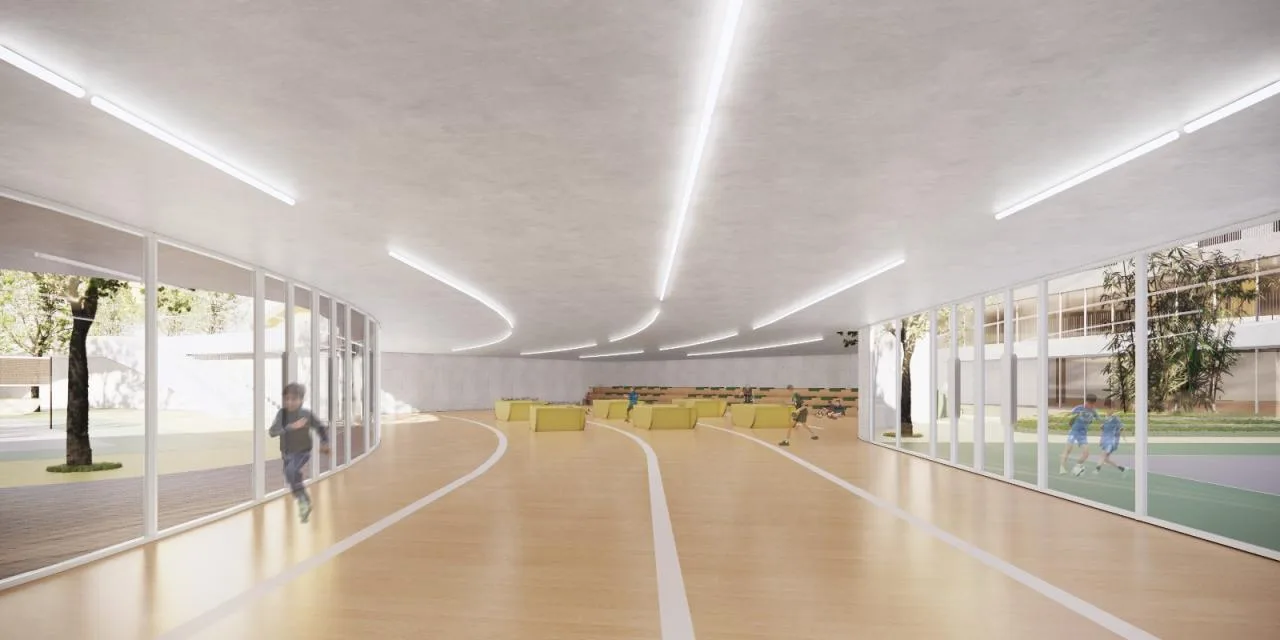
The gymnasium and sports field make up the school’s dynamic zone, located in the northeast section of the campus. The sports hall is a two-story space connecting a sunken courtyard and rooftop stadium. Below 4 meters, sports facilities and tiered seating are enclosed, while above 4 meters, semi-transparent U-shaped glass walls allow abundant natural light inside.
Campus Landscape
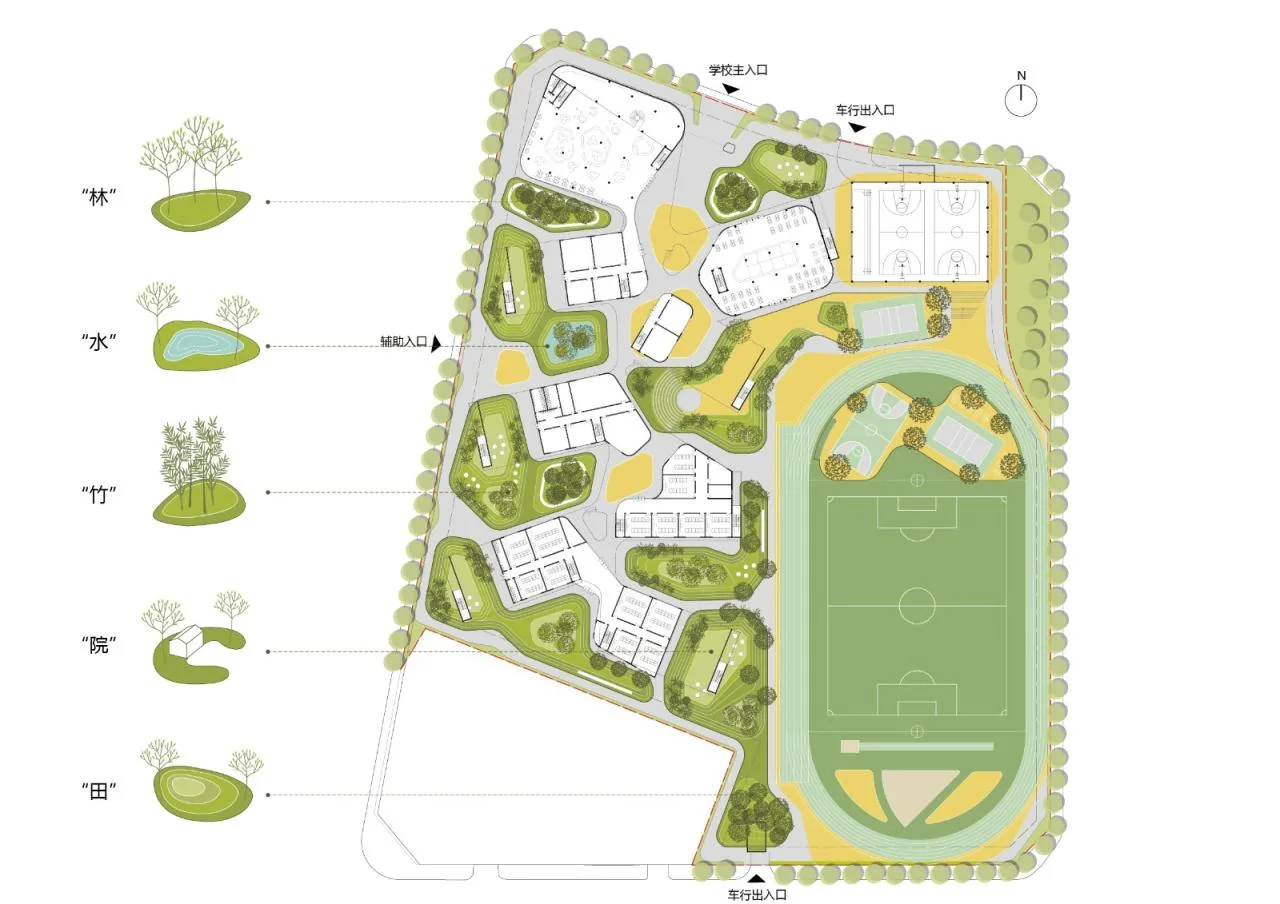
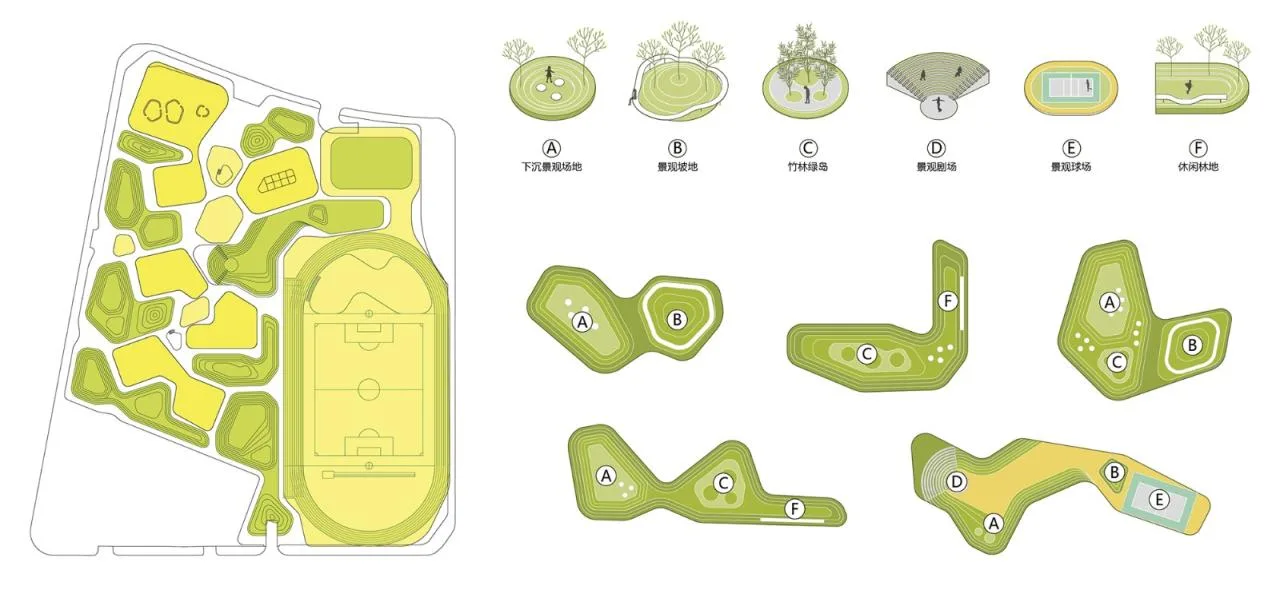
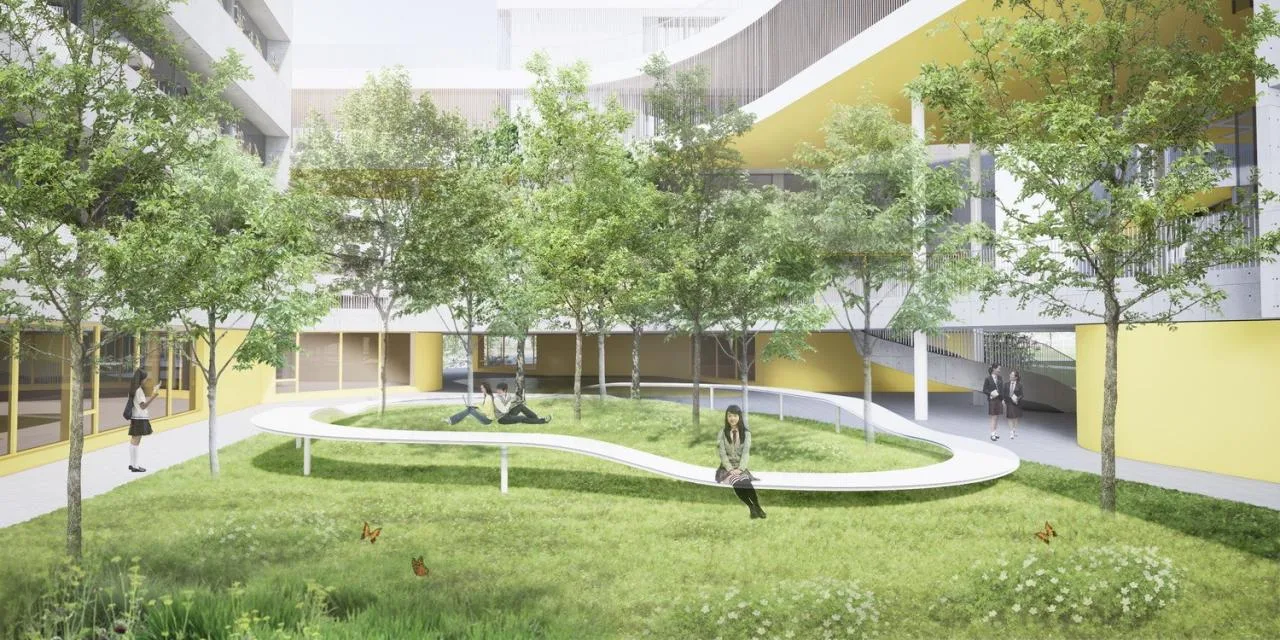
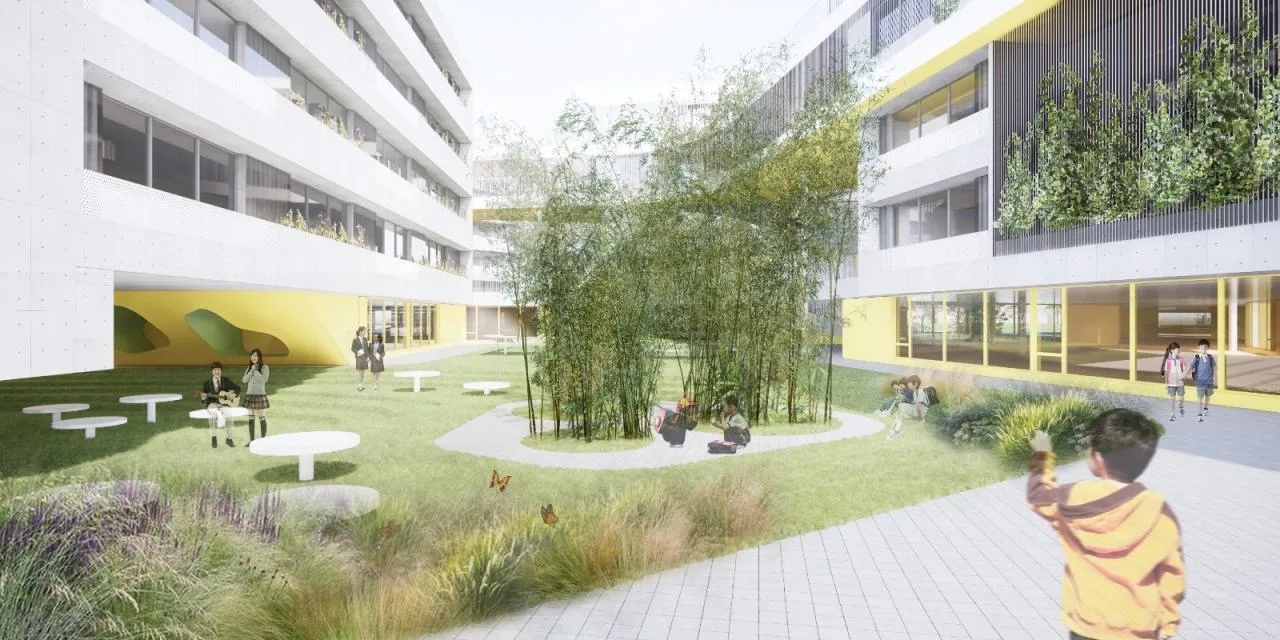
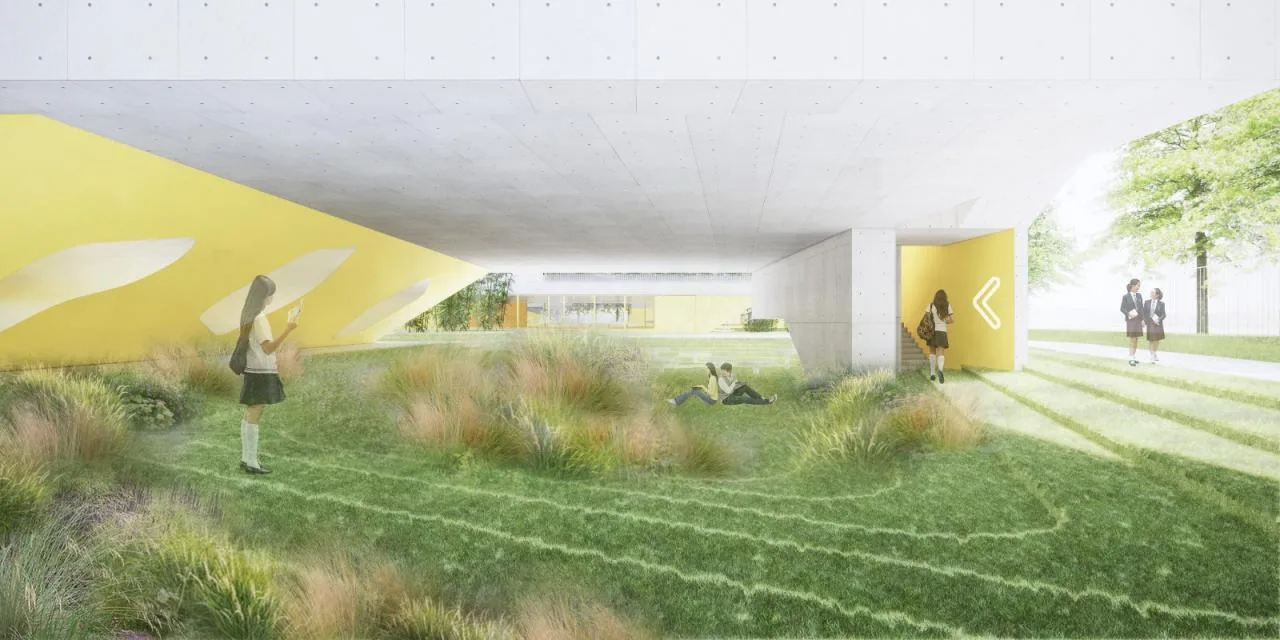
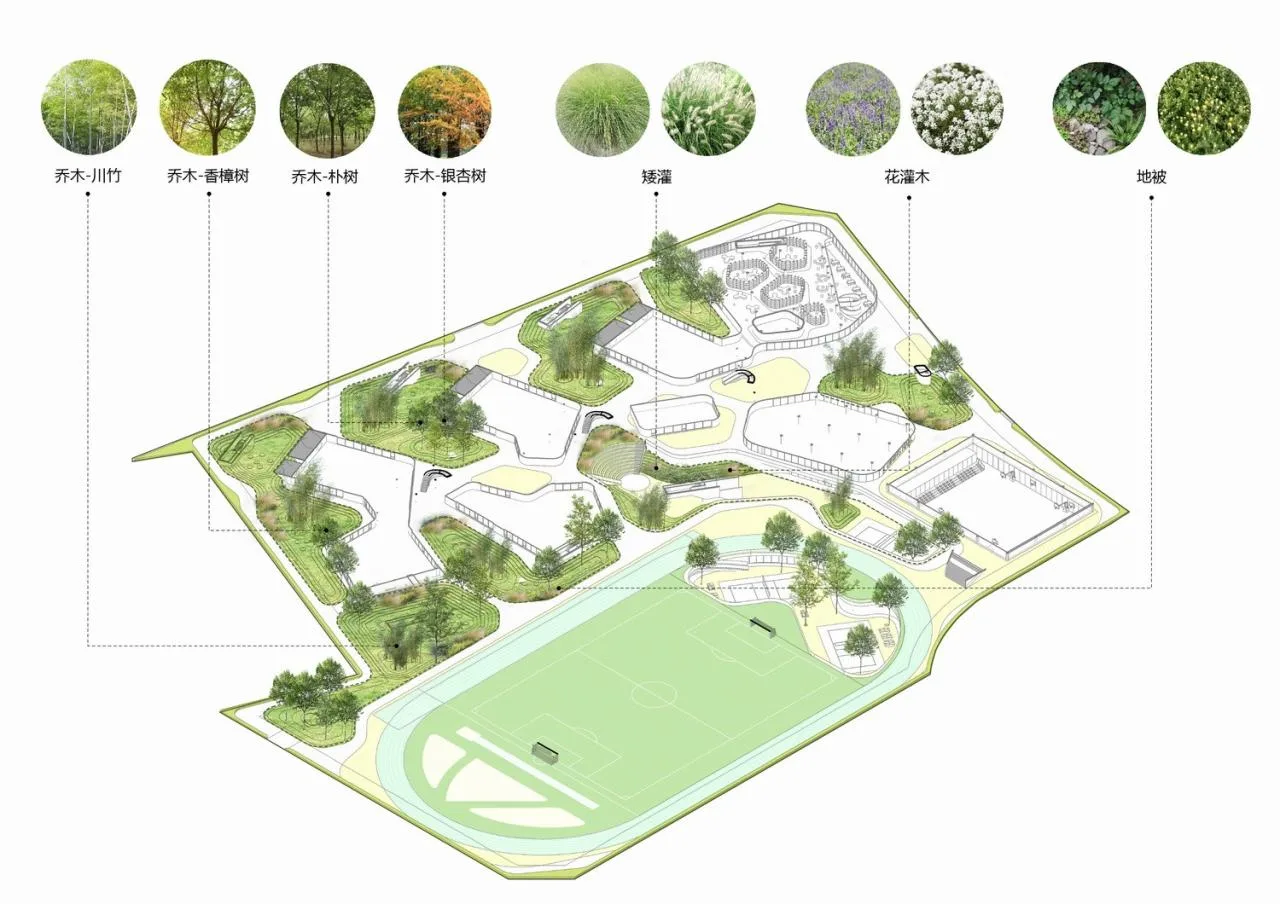
The landscape design revolves around the concept of a “forest disk,” typifying features like slopes, forests, islands, and terraces. These elements are integrated with elevated ground floors of teaching buildings, sunken areas between structures, and sports field surroundings. The varied landscape provides students with spaces for morning reading, breaks, and extracurricular activities.
Project Drawings
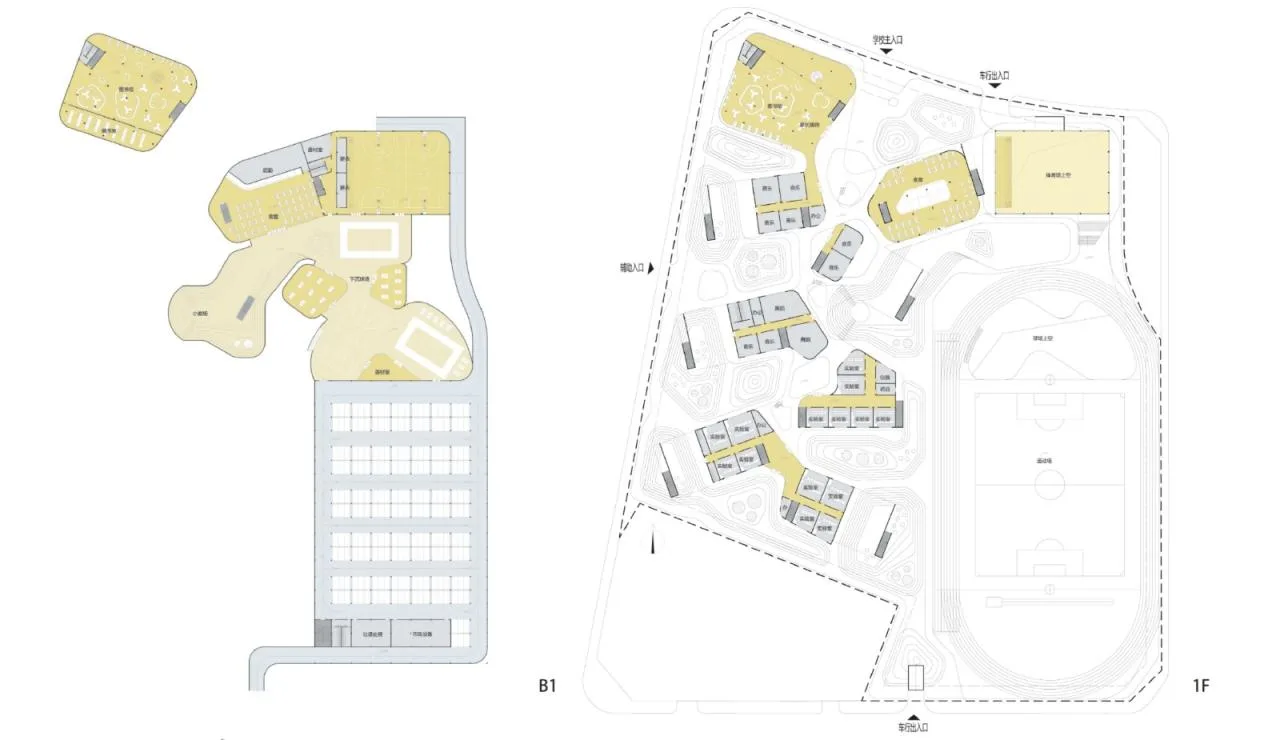
△ Plan view
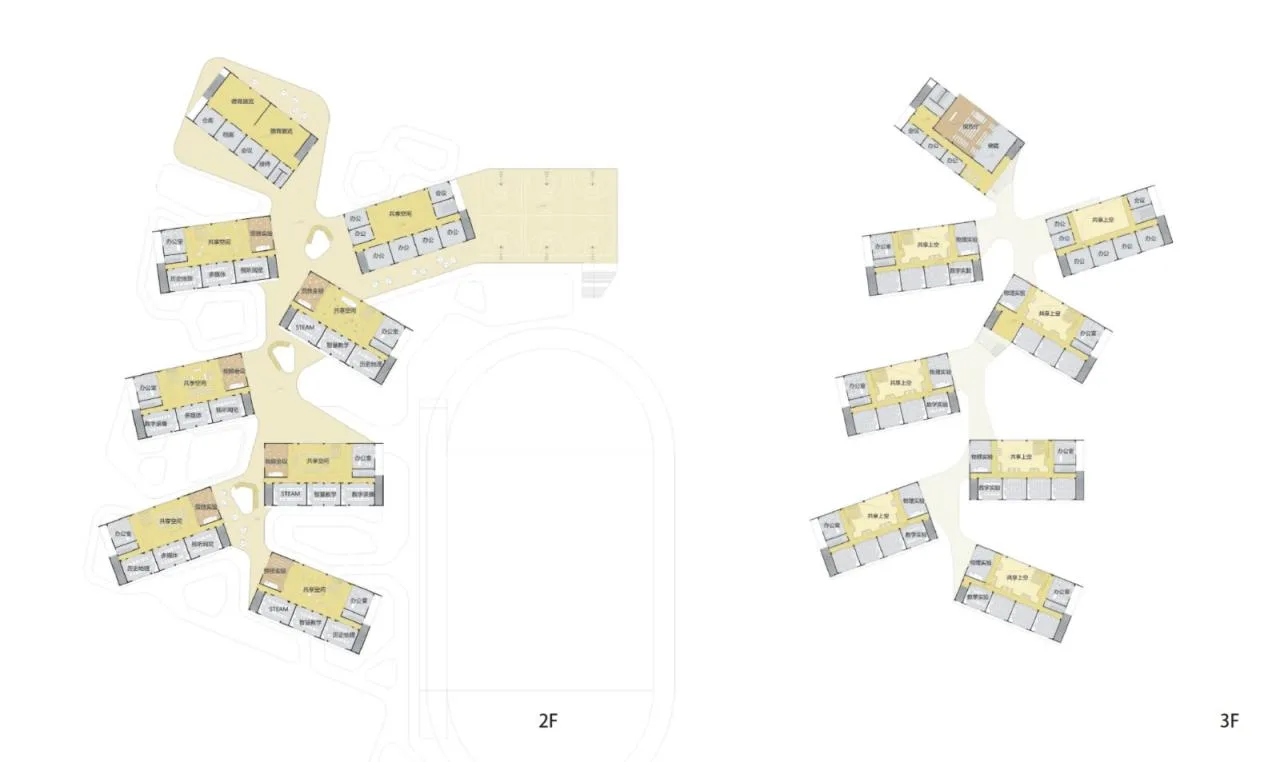
△ Plan view
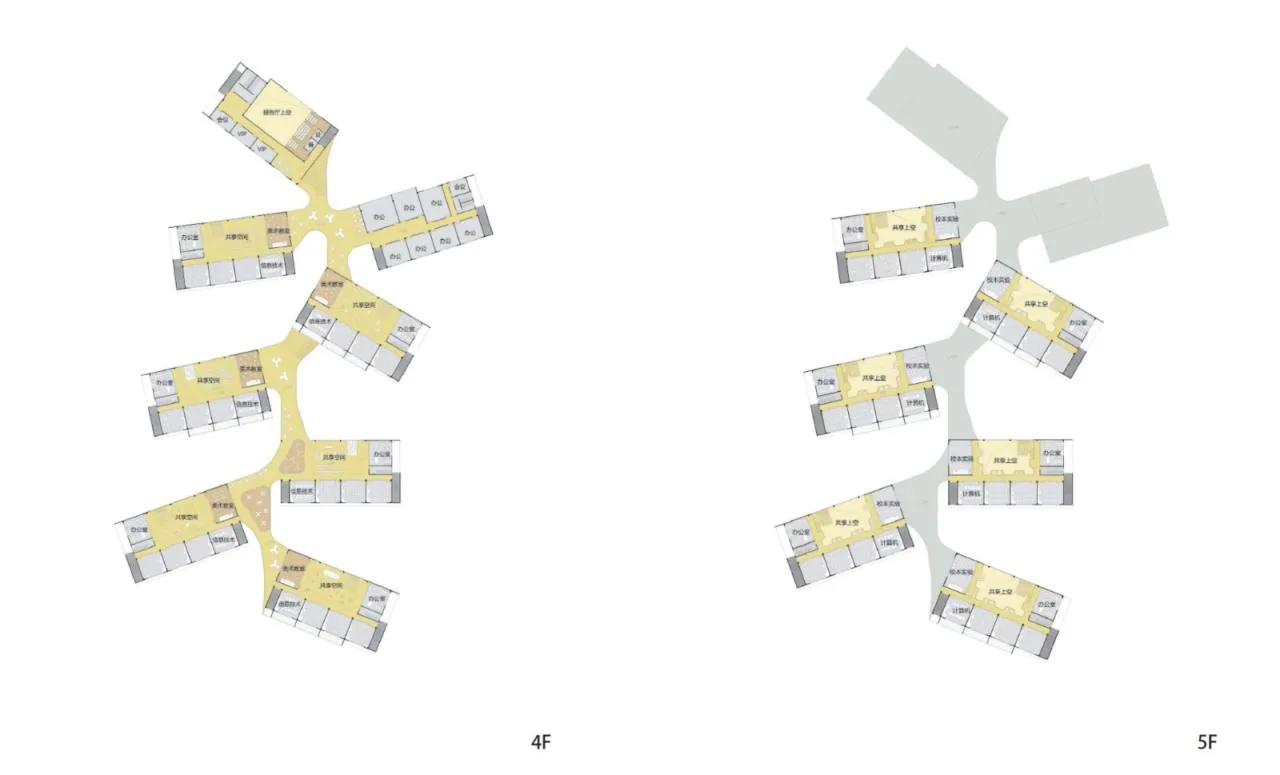
△ Plan view
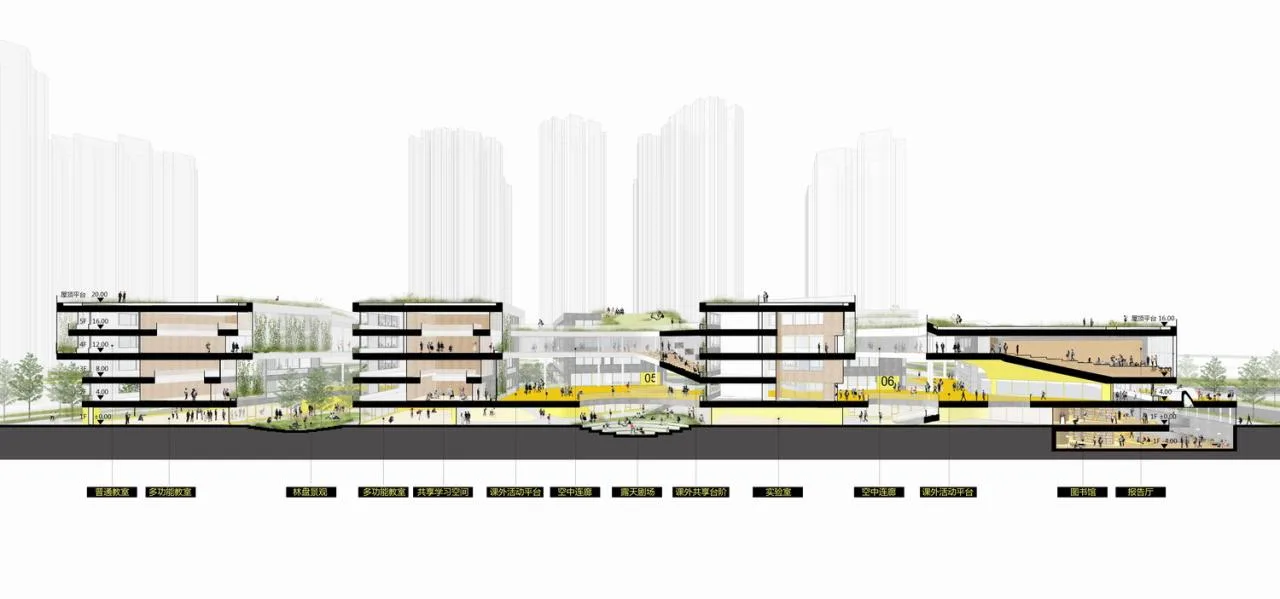
△ Section diagram
Project Information
Project Name: Design of Haiyang Road Middle School in Tianfu New Area, Sichuan Province
Architectural Design: MAT Super Architecture Firm
Lead Architects: Tang Kangshuo, Zhang Miao
Design Team: Wang Feiyu, Li Xitong, Liu Youpeng, Tan Xiaodan, Wang Yiran (intern), Zhang Wenjing Yu (intern)
Design Period: May 2021 – June 2021















Must log in before commenting!
Sign Up