
Traditional engineering cost management relies on a system where national or local standardized engineering quotas are established to determine and control costs. This management approach is suited to planned economies but does not align with the evolving market economy. Since China’s reform and opening-up, the engineering cost management model has evolved through four distinct stages:
Stage 1 (1977-1992): The traditional quota-based cost management model was used. This process started with drawings and quotas to calculate work quantities. Then, quotas and price adjustment tables or coefficients issued by the national cost management department were applied to determine direct costs, followed by calculating direct and indirect costs using set rates. Finally, profits and taxes mandated by the state were added to summarize the total cost.
Stage 2 (1992-2003): With the shift from a planned to a market economy, the quota management model was reformed. This led to an independent enterprise management system that separated quota quantity and price while unifying quantity, guidance price, and competition fees. This stage enhanced data collection, processing, and use of cost information, combining state-level macro supervision with micro-management by cost associations.
Stage 3 (2003-2008): The introduction of bill of quantities pricing marked the beginning of a market-oriented pricing mechanism. This stage was characterized by government guidance, legal regulation, market oversight, industry self-regulation, and support from professional associations.
Stage 4 (from December 1, 2008): This phase focused on improving the preparation of bill of quantities pricing and the bidding control prices within the bill of quantities pricing framework.
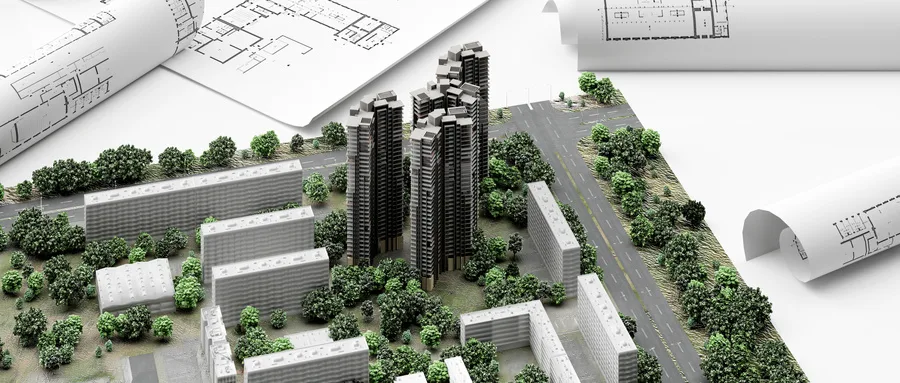
BIM-based engineering cost management addresses many shortcomings of traditional methods currently used in China. Regarding workflow, traditional methods involve complex relationships among stakeholders and lack timely communication. BIM technology provides a collaborative platform that enables real-time communication and problem-solving among all parties.
In terms of tools, traditional methods depend heavily on manual calculations and data handling, which are time-consuming, tedious, and prone to errors. In contrast, BIM leverages automated processes for faster, more accurate calculations.
When it comes to work modes, traditional approaches primarily use Word and Excel files. BIM allows extraction and analysis of data and information directly from the established model at any time.
Process control in traditional methods consists of isolated steps with poor continuity. BIM ensures a seamless, continuous process throughout the entire project lifecycle.
Efficiency is another key difference: traditional methods suffer from low efficiency and poor timeliness, whereas BIM offers high efficiency and strong real-time responsiveness.
Currently, while traditional engineering cost management techniques are mature, they have notable limitations in practical application. There is a clear need for a new cost management model to replace the traditional system. BIM technology holds great promise and is gaining widespread adoption, though it is not yet fully mature.
Traditional methods mainly estimate and settle costs after project completion, often discovering significant budget overruns at that stage. BIM enables dynamic, real-time monitoring, allowing timely problem identification and intervention, which helps prevent costs from exceeding budgets during project execution.
















Must log in before commenting!
Sign Up