
The application of BIM technology has significantly addressed the limitations of traditional cost management. The design phase utilizing BIM has evolved compared to conventional methods and is now divided into three key stages: scheme design, preliminary design, and construction drawing design, as illustrated below. These stages progress sequentially to enhance project efficiency.
During the scheme design stage, site analysis is conducted to identify the optimal design solution. Building on this, the preliminary design phase focuses on space optimization and interdisciplinary collaboration to minimize changes during the construction drawing phase. Finally, the construction drawing design stage emphasizes 3D coordination, quantity calculation, and the generation of detailed drawings.
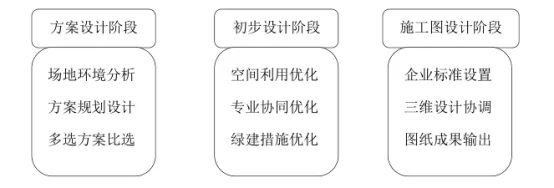
Figure 1: Application modes of BIM in various stages of architectural design
The integration of BIM technology has introduced several key changes to cost management during the design phase:
1. Transformation of Architectural Design
BIM introduces a concept known as limit design, fundamentally shifting the design approach. While some design firms continue to issue drawings during the design phase, construction teams now provide unified BIM model standards after receiving these drawings. BIM specialists then create detailed 3D models for each discipline based on these standards. These models are fully visible and allow designers to review the building’s appearance and make adjustments according to the desired outcome.
One powerful feature of BIM is collision detection. Multiple professional models are imported into software like Navisworks to identify clashes, generating collision detection reports. Design and construction teams collaborate to resolve these conflicts, finalizing modification plans. Each discipline’s technical staff then update their models accordingly, substantially reducing errors, omissions, collisions, and deficiencies in design drawings.
This process minimizes rework during construction, shortens the project timeline, and ultimately leads to cost savings.
















Must log in before commenting!
Sign Up