
To establish enterprise-level BIM standards, it is essential to first create a structured framework for these standards. This system framework serves as a guiding document for enterprises to develop comprehensive BIM standards. As previously mentioned, current BIM standards are often too narrow and incomplete, failing to meet the requirements of BIM-based data integration.
Therefore, developing effective BIM standards requires a comprehensive set that complements and supports each other. The BIM standards framework clearly defines the hierarchical relationships among various standards and outlines the content included within the system. By understanding this framework, enterprises can grasp the overall direction of their BIM strategy.
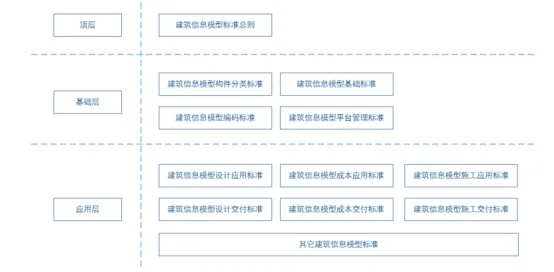
Generally, an enterprise’s BIM standard system is divided into three levels: top level, foundation level, and application level.
The top level and foundation level consist of universal standards applicable across the enterprise, while the application level contains specialized standards tailored to specific business needs.
The top-level standards typically define the general principles, expressing the overarching concepts and essential content of the standard system.
The foundation-level standards should include at least:
- Model component classification and coding standards
- Basic model standards
- Model platform system management standards (which depend on whether the enterprise has developed relevant systems)
Application-level standards cover specialized areas such as design, construction, and delivery, including but not limited to:
- Design application standards
- Design delivery standards
- Construction application standards
- Completion delivery standards
Below is a summary of the enterprise BIM standard system framework:
Top level: General Principles of Building Information Modeling Standards.
Foundation level: Building Information Model component classification standards, basic standards, coding standards, and platform management standards.
Application level: Design application standards, cost application standards, construction application standards, design delivery standards, cost delivery standards, construction delivery standards, and other related BIM standards.
















Must log in before commenting!
Sign Up