
Before BIM technology became widely adopted in the construction industry, collecting basic data such as material properties and project quantities during construction was done manually. Cost estimators had to calculate project quantities by hand using two-dimensional design drawings. They then compiled various reports reflecting project costs based on relevant cost standards, quotas, and market prices.
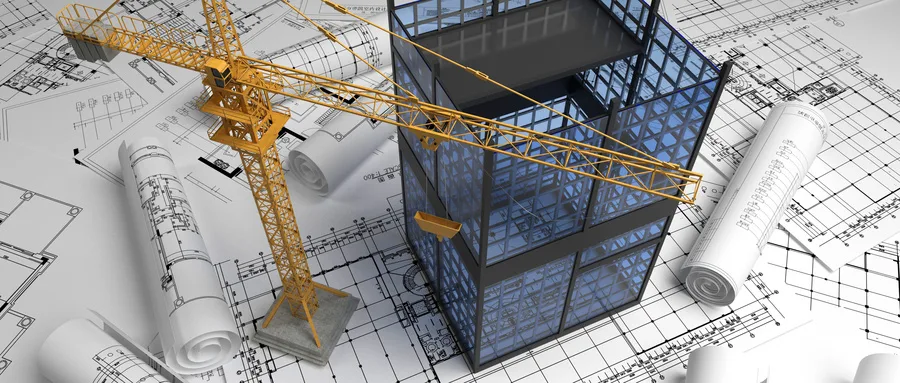
Calculating engineering quantities manually is a tedious and time-consuming process. Traditional methods often suffer from inefficiency and are prone to human error, even when performed by experienced cost personnel. This makes achieving accurate quantity statistics challenging, especially for large projects.
With the advancement of BIM technology, the construction industry began to embrace digital solutions. Software like Guanglian Da and Sver were developed to assist with price matching. However, much of the quantity estimation process still relied heavily on manual input, keeping the workload and complexity high for cost professionals.
As construction projects grew larger and more complex, manual calculations became increasingly impractical. To address this, 3D calculation software based on BIM technology was introduced. This software creates a three-dimensional model of the project from two-dimensional drawings and distinguishes different construction elements by assigning specific properties.
The software uses built-in geometric formulas and calculation rules, which can also be customized, to automatically compute engineering quantities. Once the quantities are calculated, they can be imported into pricing software, linked with cost databases, and used to generate detailed price reports. This automation reduces the time and effort required from cost personnel, simplifies their tasks, enhances the accuracy of quantity estimates, and significantly improves the efficiency of cost management in construction projects.
















Must log in before commenting!
Sign Up