
Currently, BIM technology is primarily utilized during the construction phase. Its 4D and 5D capabilities allow companies to better manage construction progress and costs. However, in the operation and maintenance phase, BIM facilitates effective supervision of fire equipment information. As a highly informative and visual tool, BIM models offer improved management methods for maintenance teams and all building personnel, including owners. They play a vital role in enhancing maintenance efficiency, reducing costs, and more. With BIM’s growing use in the later operation and maintenance stages, it transforms traditional paper-based, two-dimensional fire equipment supervision into a dynamic system. Leveraging its ability to link and integrate data, combined with 3D visualization, fire equipment management evolves from dull, hard-to-understand 2D charts to comprehensive lifecycle-based visual, data-driven, and streamlined management.
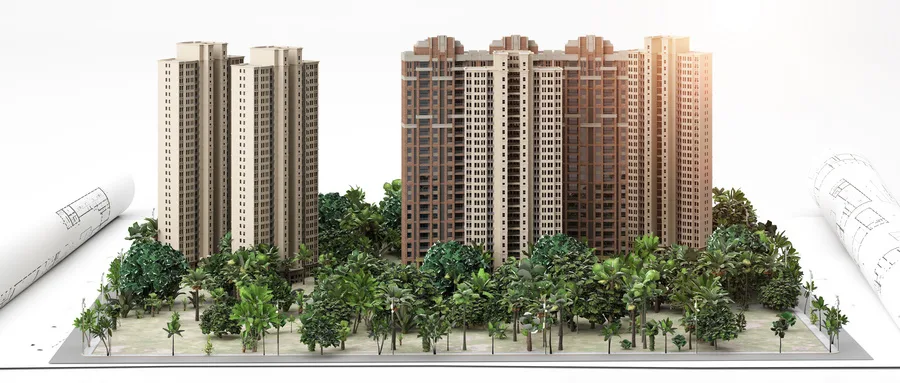
Comprehensive Information Supervision Throughout the Building Lifecycle
Just like humans experience stages from infancy to old age, buildings also undergo a full lifecycle: planning, design, construction, operation and maintenance, and demolition. In China, the planning and design phases are often combined. The operation and maintenance phase corresponds to the “adult” stage of a building and is by far the most critical period in its lifecycle. Constructing a building accounts for roughly 15% of total lifecycle costs, while operation and maintenance consume about 80%. For comparison, a person’s adult stage lasts around 40 years, while a Class IV building typically serves for 100 years. Excluding the planning, design, and construction phases, the operation and maintenance stage comprises over 90% of the building’s lifecycle. From both a time and cost perspective, fire equipment information supervision is most crucial during this phase, which essentially involves managing the operation and maintenance of fire equipment. BIM technology ensures seamless and complete transmission of fire equipment information throughout the building’s entire lifecycle.
Enhancing Information Management
In today’s digital age, management must embrace informatization. Fire equipment operation and maintenance should no longer rely on outdated two-dimensional paper records. Managers can access all operation and maintenance data directly from their computers, eliminating the need to sift through vast paper archives. BIM models integrate original fire equipment data with dynamic maintenance information. By organizing and analyzing this data, BIM helps identify causes of equipment failures. Fact-based insights prevent overreliance on intuition and reduce bias caused by emotions, assumptions, or experience. Applying BIM in fire equipment supervision enables data-driven management, resulting in more effective operation and maintenance.
Improving Visualization
Thanks to BIM’s precise 3D modeling capabilities, fire equipment maintenance requirements can be visually represented in three dimensions. For instance, equipment needing maintenance can be highlighted in yellow, hazardous equipment in red, and normal-functioning equipment in blue. This color-coded system gives managers a clear, real-time overview of all fire equipment. When further maintenance is required, equipment can be examined from multiple angles. Additionally, maintenance routes can be planned more efficiently by accurately displaying physical distances between fire equipment and safety exits.

Refined Information Supervision
While traditional 2D paper-based fire equipment maintenance can be precise down to individual devices, it fails to harness the full range of operational data generated by the equipment. Its visualization capabilities are also limited. By contrast, BIM technology offers a unified approach combining informatization and visualization, enabling both data-rich and visual management. This allows for more refined supervision of fire equipment operation and maintenance.
BIM models include detailed information such as the name, serial number, type, manufacturer, performance parameters, installation location, service life, and maintenance records of each fire-fighting device — all presented through 3D visualization. Managers can view equipment status from any angle and access comprehensive data simultaneously. They can also update maintenance records directly within the system, eliminating the need to consult physical paper documents and significantly improving efficiency. Each piece of equipment receives more timely and accurate maintenance planning.
Streamlined Flat Information Supervision
Traditionally, fire equipment supervision is a responsibility of fire safety departments, whose personnel regularly inspect buildings in their jurisdiction. When a fire alarm sounds, firefighters respond to the scene. However, firefighters are often only familiar with the buildings within their assigned areas. In large buildings or widespread incidents requiring support from external teams, unfamiliarity with the environment poses challenges. The key advantage of a flattened management system is its speed, simplifying the hierarchical structure of conventional models.
By adopting a BIM-based fire equipment supervision system, alarm signals are simultaneously sent to transport staff and firefighters when a fire occurs. Firefighters can use a visual platform to assess the fire situation in real time and issue commands accordingly. Support teams from other areas can quickly familiarize themselves with the local environment and engage effectively in firefighting efforts using the 3D visualization system.
















Must log in before commenting!
Sign Up