
Many industry professionals view Building Information Modeling (BIM) as a form of virtual construction. It links building information models with project scheduling, integrating the spatial and temporal data of construction projects into a 4D visual model. This approach offers a more intuitive and accurate representation of the entire construction process. But what specific value does BIM technology bring to construction?
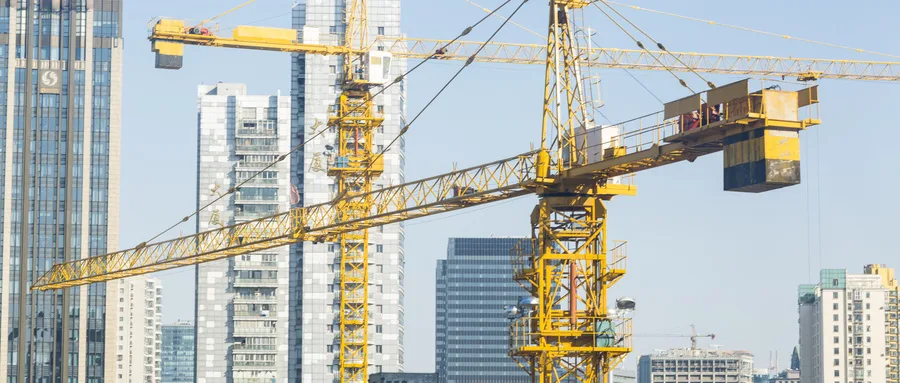
Value One: Construction Visualization
BIM technology digitally represents information related to construction objects. By leveraging this capability, real-world construction components can be digitally displayed through 3D solid models. This visualization is one of BIM’s most significant features. It allows engineers to analyze the internal structure, overall layout, and architectural design of construction projects more intuitively.
Visualizing the volume and spatial relationships of construction elements becomes straightforward, especially for projects with complex structural designs. Visualization technology can dynamically simulate the construction process, enabling optimization of construction plans. Additionally, during the drafting phase, BIM accelerates design changes and helps quickly identify hidden design risks. Addressing these risks early reduces design and construction costs while improving overall project efficiency.
Value Two: Parameterized Construction
BIM technology enables parameterization throughout the construction process. Construction models and design schemes generate complex data that is often difficult to store and manage effectively. BIM overcomes this by storing all design drawings and model data in a unified database where information is parameterized and interlinked.
This parameterized storage allows for easy dissemination, modification, and management of data. It supports reliable and accurate information output, enhancing the level of project parameterization and contributing to the development of a fully digital construction workflow.
Value Three: Coordinated Collaboration Across Disciplines
BIM integrates information from various project phases into a unified model. Construction projects require collaboration among different disciplines—including design, construction, and supervision teams. Coordinated cooperation means these teams share core project files and data seamlessly.
BIM modeling software offers discipline-specific building information models that align with professional workflows and link to core project files. Throughout the project, new or updated information can be incorporated dynamically. From the construction team’s perspective, BIM provides a platform for efficient information exchange and sharing, making communication smoother, assistance more effective, and management clearer. Ultimately, BIM facilitates the integration of design and construction processes.
Value Four: Construction Optimization and Dynamic Management
Construction is inherently dynamic, and as project scale increases, management complexity rises. Traditional methods often rely on histograms and bar charts to represent resource allocation and progress, which cannot clearly capture the full scope of project dynamics or accurately reflect ongoing changes.
Effectively managing construction progress, resources, and quality in a unified system can shorten project timelines, reduce costs, and improve quality. However, achieving dynamic optimization for resource allocation and site layout remains challenging.
BIM technology addresses this by enabling construction simulation within a virtual environment. Engineers can experience the entire construction process and identify safety risks proactively. During project planning, various software tools offer visual simulations; as the schedule advances, BIM supports detailed, dynamic project management. This allows construction plans and resource allocation to be continuously monitored, adjusted, and optimized in real time, achieving true dynamic construction optimization.
















Must log in before commenting!
Sign Up