
The Ninghuai High-Speed Railway connects Nanjing and Huai’an in Jiangsu Province, passing through Tianchang City in Anhui Province. This dedicated high-speed passenger railway spans approximately 210 km, designed for speeds up to 350 km/h. Upon completion, it will enable direct travel between Nanjing and Huai’an within an hour. The Ninghuai High-Speed Railway is a vital part of the Yangtze River Delta intercity railway network and serves as a significant infrastructure project supporting the national Huaihe River Ecological Economic Belt. The line features seven stations and involves complex engineering challenges.
Except for the ballasted track structures in the connecting sections and end connecting lines, all main lines employ CRTS double-block ballastless tracks. This design supports high-speed, smooth operation while minimizing maintenance and repair efforts during operation and management. Track engineering includes components such as No. 18 single turnouts, No. 18 single crossover lines, CRTS double-block ballastless track sections, ballasted track sections, steel rail expansion joints, and track transition sections.
Challenges in Track Engineering BIM Design
Based on the construction technology standards and alignment characteristics of the Ninghuai High-Speed Railway, four primary challenges arise in the BIM design of track engineering:
1. Enhancing Efficiency in Creating Ballastless Track Models on Construction Sites.
Railway track engineering is characterized by elongated, strip-like structures distributed over long distances along a three-dimensional spatial alignment. Curved sections require different superelevation values for the left and right tracks. This continuous, spatially varying strip structure makes conventional track model creation methods inefficient and highly complex.
2. Improving Accuracy and Efficiency in Track Engineering Design.
The track is distributed along curves with varying radii and straight sections, each requiring specific superelevation settings in curves. Traditionally, quantities for track structures were calculated based on rough indicators, leading to low accuracy, significant deviations, and inefficiencies. Any adjustments to the line or offline foundation necessitated time-consuming recalculations. Furthermore, traditional design often only produces standard track structure schemes and design documents for downstream construction, neglecting detailed site-specific designs. Such details are typically resolved during construction coordination, often causing significant changes and rework. These issues highlight the insufficient accuracy and inefficiency of conventional design methods.
3. Increasing Design Efficiency for Track Segments on Bridges.
As approximately 96% of the Ninghuai Railway consists of bridge sections, rapidly designing the layout of ballastless trackbed plates on bridges is crucial for improving overall design efficiency.
4. Managing Numerous Interfaces to Ensure Coordination and Reduce Conflicts.
The track engineering interfaces externally with bridge engineering, roadbed engineering, water supply and drainage systems, station engineering, and line engineering, among others. Internally, various track components also interface with each other. Interface conflicts often lead to redesigns and rework. Due to the complexity and number of disciplines involved, traditional design methods struggle to detect and resolve these conflicts during the design phase.
In summary, the biggest challenge in applying BIM technology to the Ninghuai high-speed railway track design lies in overcoming design efficiency issues. While BIM increases design workload and content, it enriches results, enhances accuracy, and enables more optimized, rational designs. The primary task is developing BIM software tailored for Chinese railway track engineering to mitigate the efficiency challenges introduced by BIM adoption.
Technical Approach
Technical Route
Railway track engineering consists mainly of various standard components such as rails, fasteners, sleepers, ballastless track elements, etc. These components are arranged at regular intervals or continuously along a three-dimensional spatial line to form the overall track structure. Based on this, the BIM design for the Ninghuai High-Speed Railway track project follows this technical route (see Figure 1):

Figure 1: BIM Design Application Technology Route for Ninghuai High-Speed Railway Track
(1) Develop a standard component library for tracks, including all necessary elements such as 60kg/m rails, fastening systems, double-block sleepers, track slab templates, base templates, auxiliary facilities, turnouts, rail expansion adjusters, and transition components;
(2) Use block methods to reference these standard components and create track structure design schemes. Establish relationships between components and rules for placement along the route. The Ninghuai railway utilizes double-block ballastless track on bridges and subgrades, as well as ballasted track structures;
(3) Generate track structure models for construction sites based on different offline foundation conditions, including models for bridges and roadbeds. Then assemble all into a comprehensive track structure construction site model that meets construction drawing accuracy requirements;
(4) Utilize the construction site model for interface inspections, drawing production, quantity calculations, and construction design disclosures, resulting in complete BIM design deliverables.
Key BIM design applications include creating a track standard component library, parameterized automated modeling, model-based quantity calculation, drawing output, interface inspection, and extraction of construction-critical data.
Specialized Software Development
To address the design efficiency challenges introduced by BIM, specialized software tailored for BIM design of CRTS double-block ballastless tracks was developed early in the Ninghuai high-speed railway project.
This software is built on the Bentley OpenRail Designer (BORD) platform and comprises six main modules: project information management, professional interface data management, track scheme design, track construction site design, results output, and resource management. It supports the full BIM design process and functionality for track engineering. The software framework is illustrated in Figure 2.
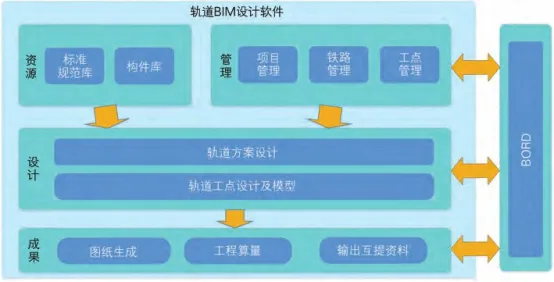
Figure 2: Railway BIM Design Software Framework
Application Results
Using this specialized track BIM software, detailed track structure models and simplified bridge baseline foundation models for the Huai’an section of the Ninghuai Railway were rapidly created, shown in Figures 3 and 4. The models were decomposed according to railway BIM standards, with component coding added to form comprehensive BIM models containing both 3D geometry and non-geometric data. These models enabled interface checks, track quantity statistics, drawing generation, and construction data extraction, validating the BIM design process and software while building practical experience in railway track BIM design.
Interface Inspection
Combining the track construction site model with the simplified offline foundation model allows identification of conflicts or mismatches at the track-foundation interfaces. In the Ninghuai project, conflicts mainly arose between the track slab layout and bridge beam joints (Figure 5), as well as between ballastless track bases and subgrade surfaces in station switch areas. Multiple interface conflicts were detected and subsequently optimized, reducing design changes during construction and improving overall design quality and accuracy.
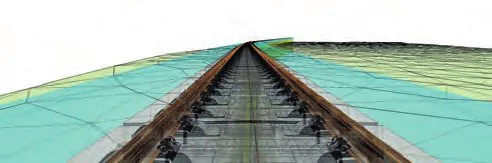
Figure 3: Track Construction Site Model on Bridge
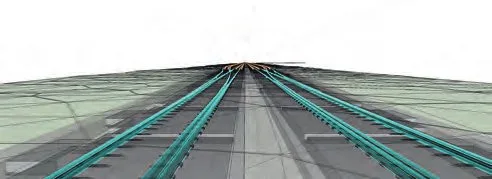
Figure 4: Roadbed Station Track Construction Site Model
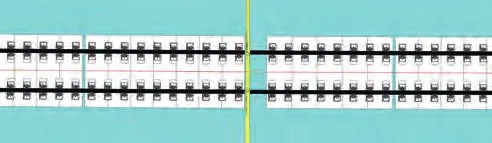
Figure 5: Conflict Between Ballastless Track Layout and Bridge Span Interface
Quantity Statistics
Using the track construction site model, quantities were calculated according to section divisions. These quantities include track laying lengths, numbers of track bed structures, and ancillary facilities. Track laying length was accurately calculated from the 3D linear length in the model, improving precision. Track bed structure counts were based on the actual 3D construction site model, considering curve elevation and spatial laying length, greatly enhancing accuracy (see Figure 6). Ancillary facilities were quantified accurately based on line conditions and track length. Overall, quantity calculations were significantly improved in accuracy and efficiency.
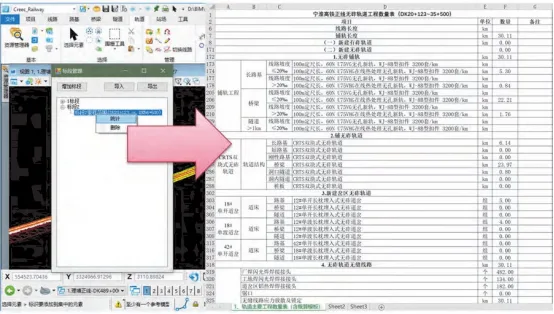
Figure 6: Engineering Quantity Statistics Based on Model
Drawing Output
Despite BIM advancements, producing two-dimensional construction drawings remains essential for current railway engineering. In the Ninghuai track BIM design, parameterized track design schemes and models enable direct generation of standard 2D ballastless track construction drawings by extracting model parameters. Special parameterized components such as turnouts and rail expansion adjusters were also created, along with 3D reinforcement designs for ballastless tracks. From these detailed 3D components, 2D construction drawings were directly generated (see Figure 7). Additionally, a 3D visualization axonometric drawing of special track structures was created to supplement traditional 2D drawings, aiding construction personnel in better understanding and interpreting the plans during execution.
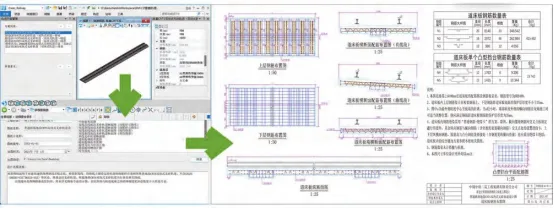
Figure 7: Example of 2D Drawing Output from Track Model
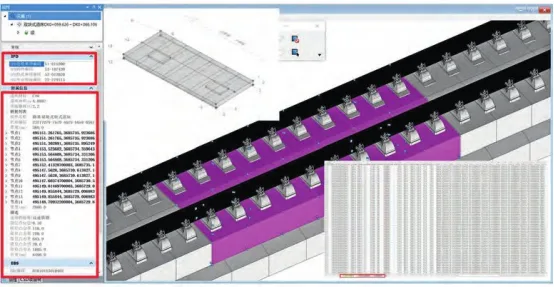
Figure 8: Construction Data Extraction Based on Model
Construction Data Extraction
The comprehensive track model was decomposed, coded, and enriched with information according to China Railway BIM Alliance standards, including EBS and IFD. Positioning information was added based on ballastless track construction requirements and automatically extracted via software. The software automatically retrieves 3D coordinate data for key corner and base points of ballastless track beds, along with mileage and coding details (see Figure 8). This data supports downstream construction processes, helping to avoid track base and bed construction deviations caused by manual calculation errors during construction.
Source: Railway Technology Innovation, Issue 5, 2021
Authors: Liu Dayuan, Bai Yun, Pang Ling, Su Qiankun (China Railway Eryuan Engineering Group Co., Ltd. Civil and Architectural Design and Research Institute)
















Must log in before commenting!
Sign Up