
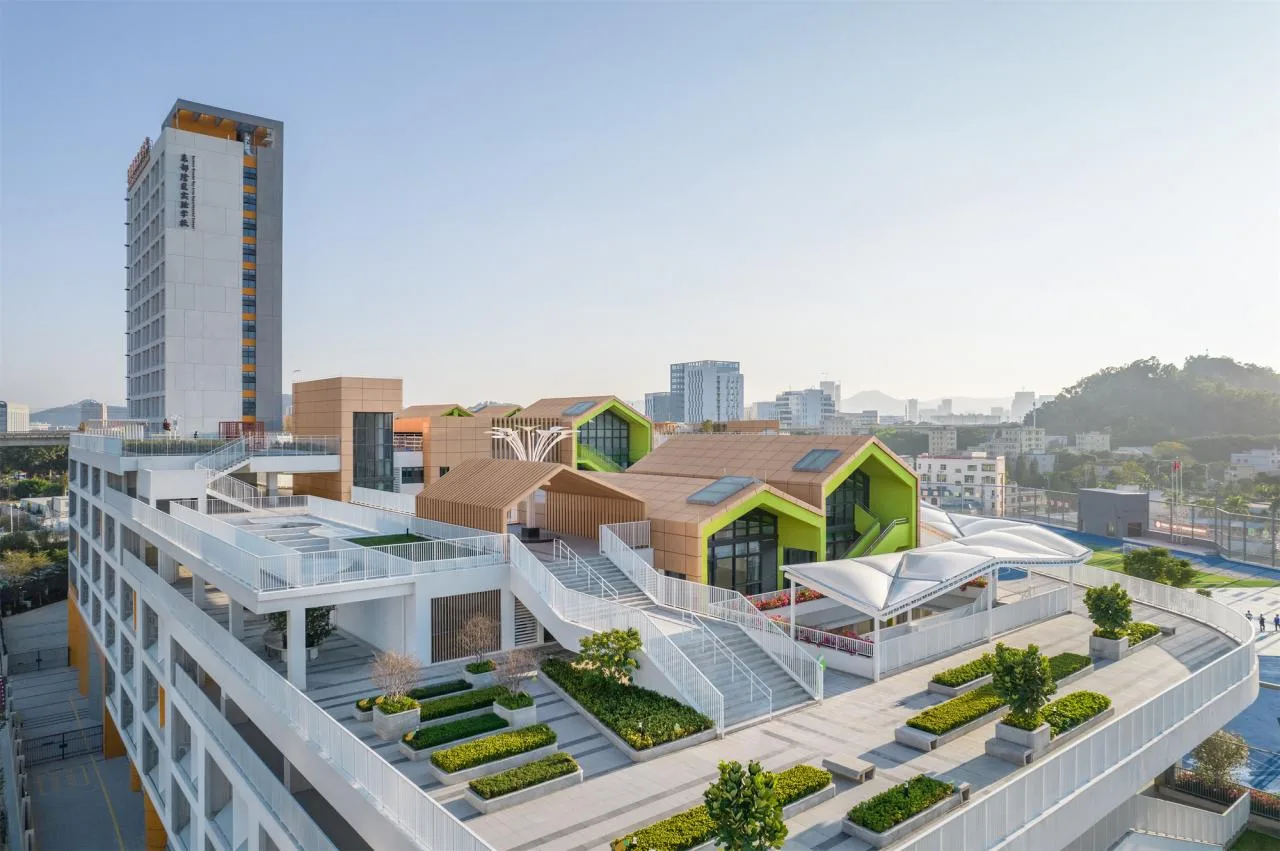
The increasing demand for education in Shenzhen is sharply contrasted by a severe shortage of available land. As a result, primary and secondary school buildings have grown denser and taller, frequently exceeding the traditional 24-meter height limit. Childhood is a crucial period for emotional and natural development, yet vertical campus expansion disrupts children’s continuous spatial experience—from school to community to nature. This shift to dense, vertical school architecture has, in many ways, become a restrictive environment for students’ growth.
Located in Pingshan District, the Extreme Field Underground project is a nine-year integrated school with 45 classes. Situated next to an urban village on its southern side, the project has a plot ratio of 3.0—higher than typical campus building requirements. This raises a key question: can design strategies reconnect children’s growth environments under conditions of extreme land use and high plot ratio? As a nurturing space, the school must compensate for the lack of nature in the urban environment.
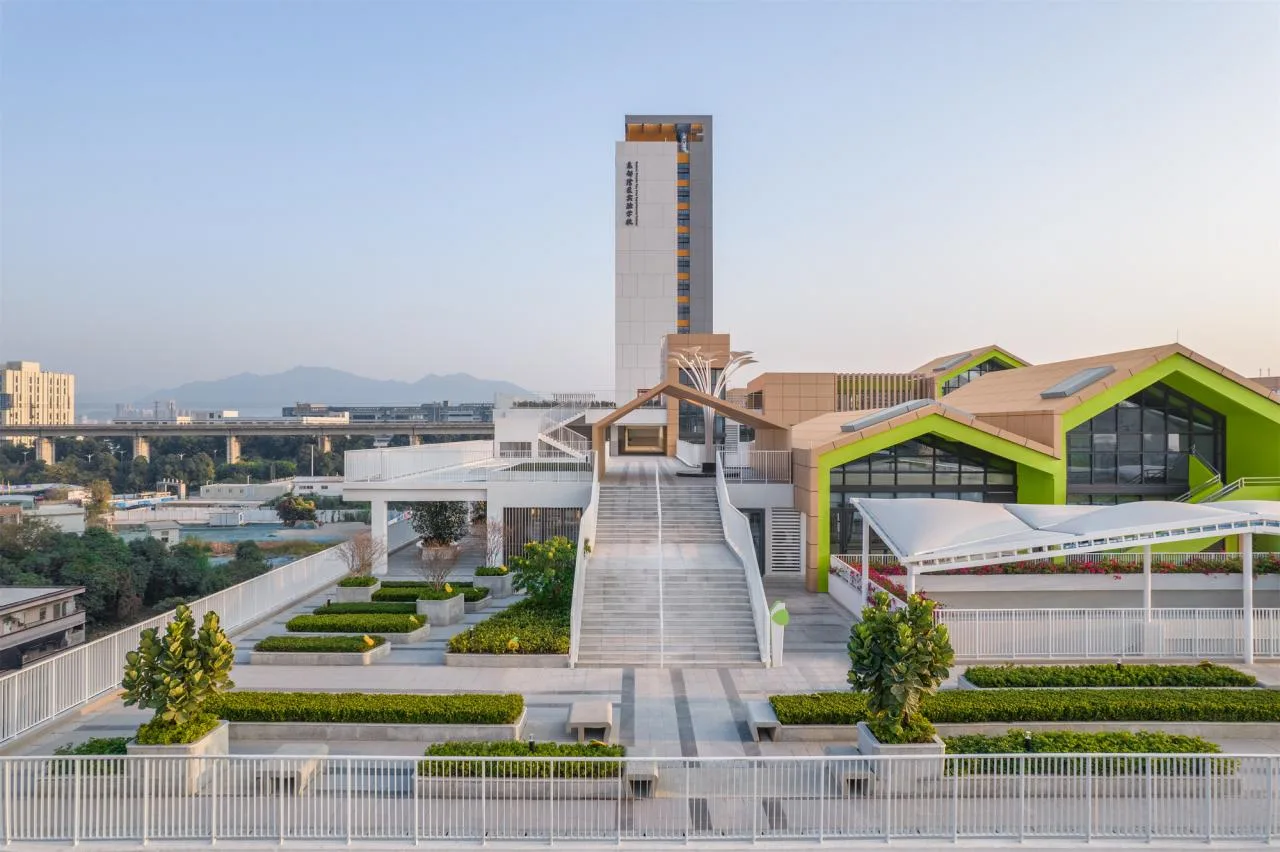
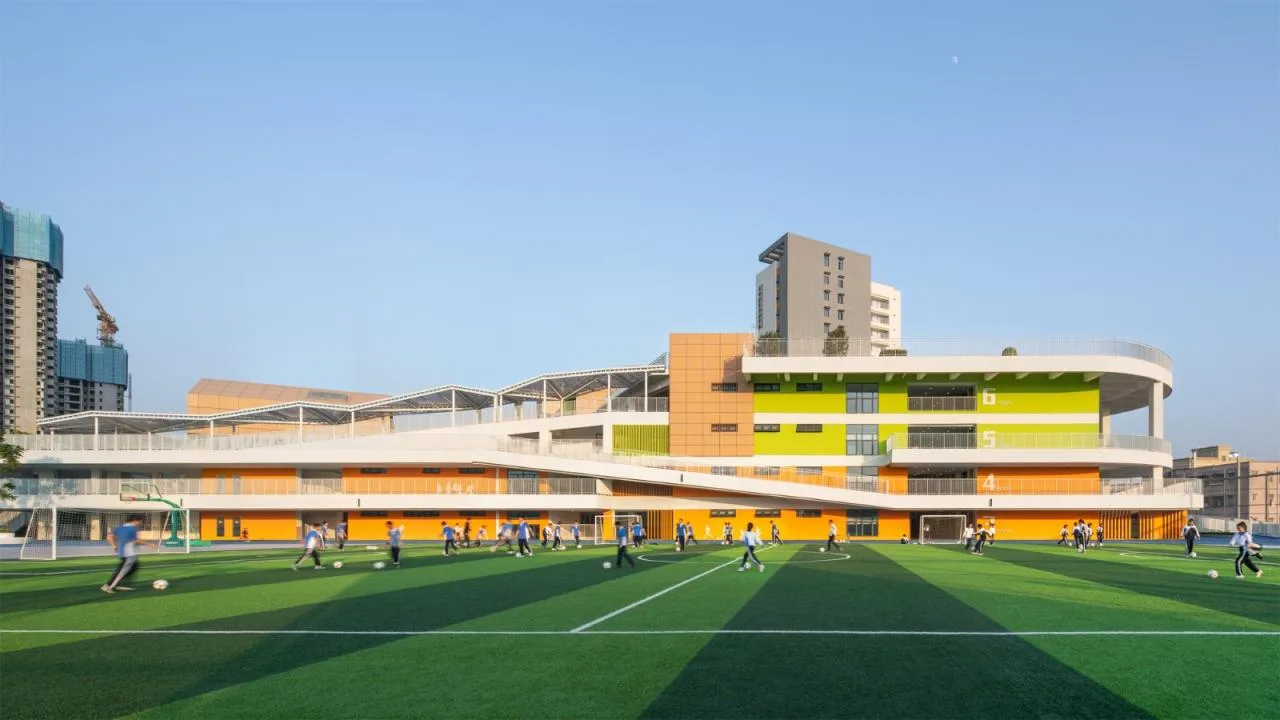
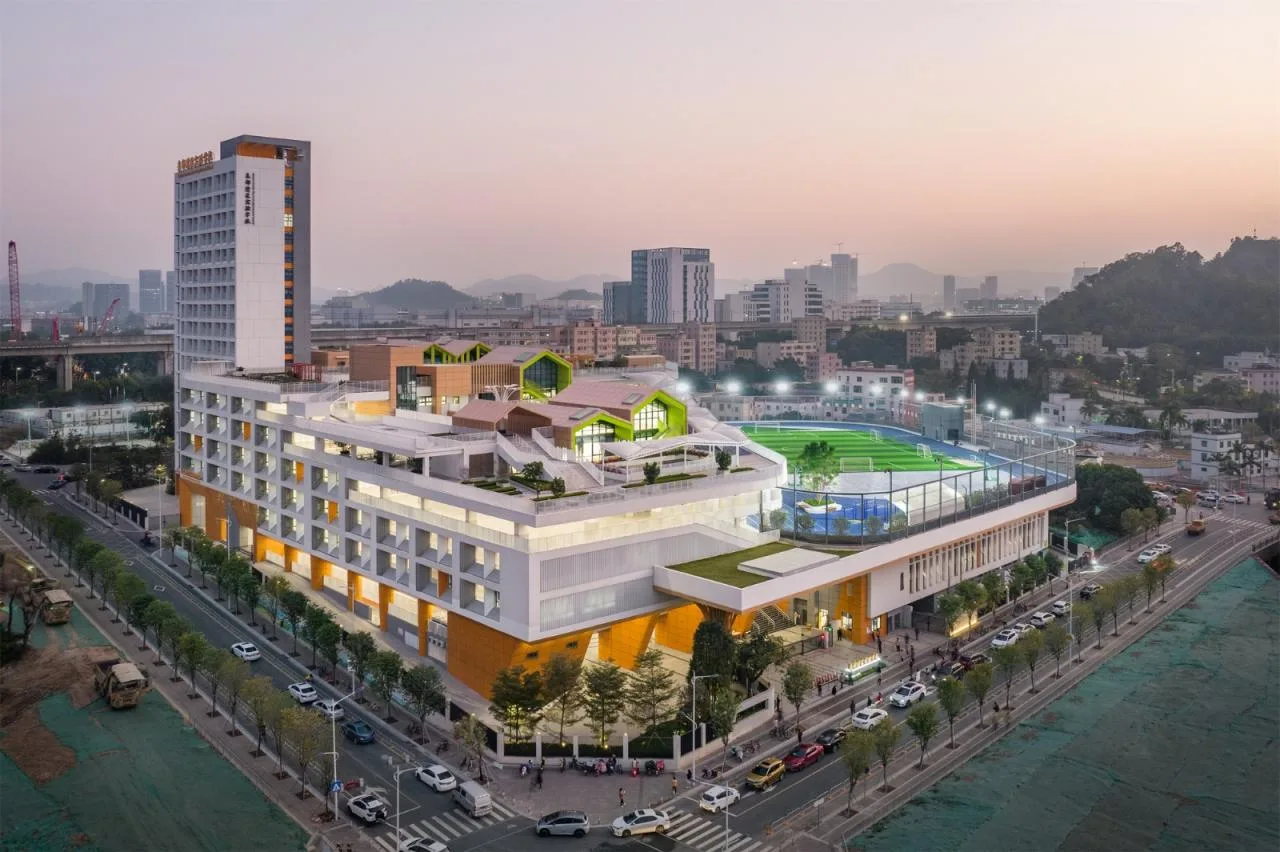
The design embraces the concept of a “more accessible and friendly pastoral system,” interpreting nature through architecture. By retreating the building mass, a flowing roofline meanders across the site, evoking rural landscapes despite the dense urban context. Vertically integrated, the campus offers abundant pastoral spaces through “stacked” gardens, enabling children to learn and grow in an environment that balances freedom and joy.
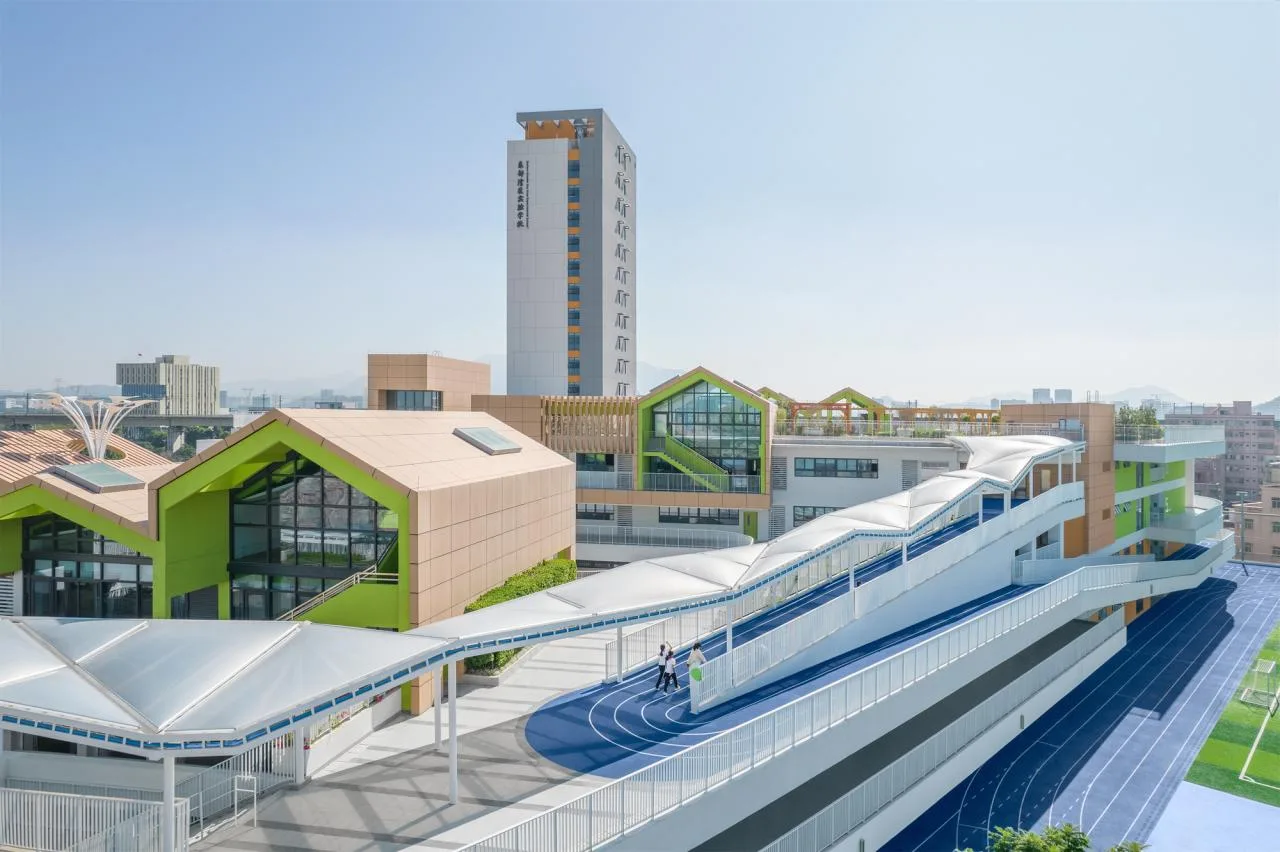
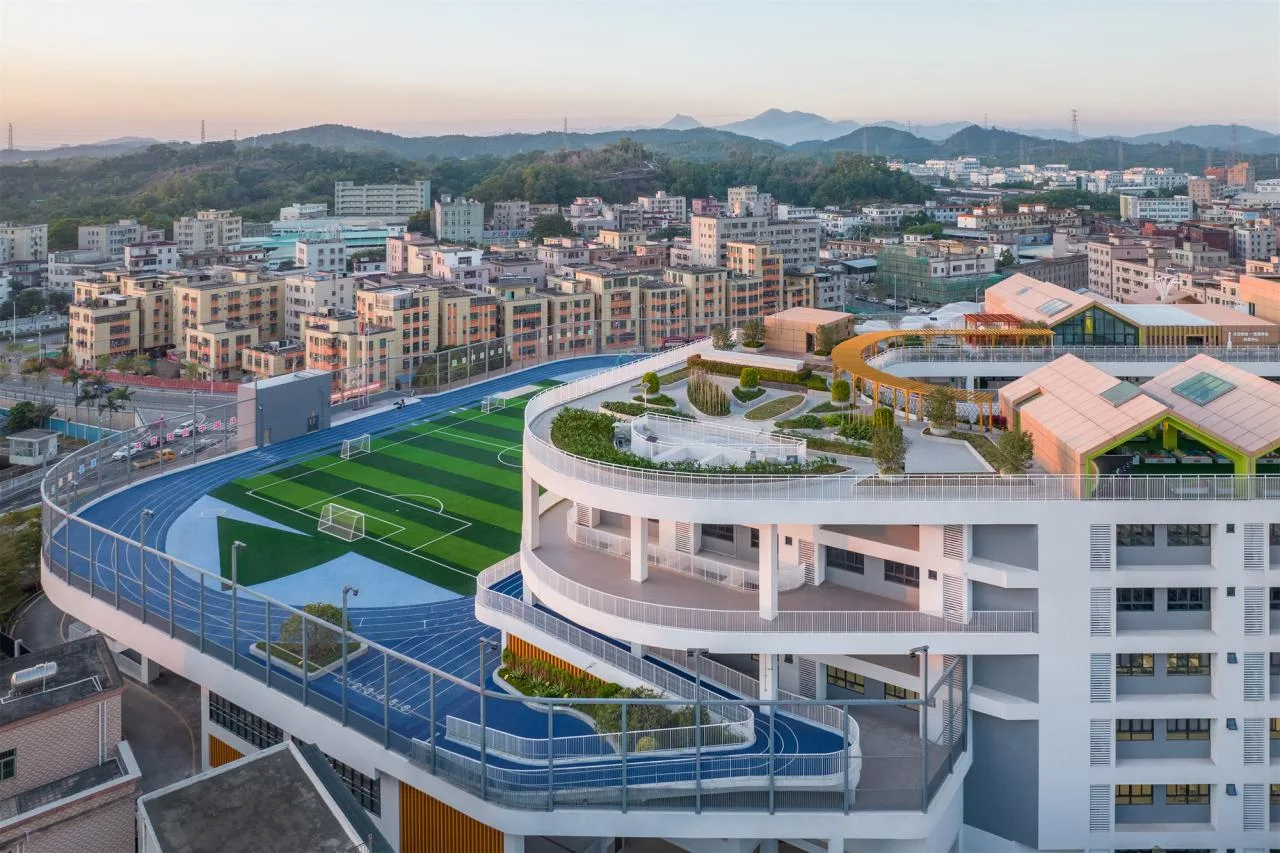
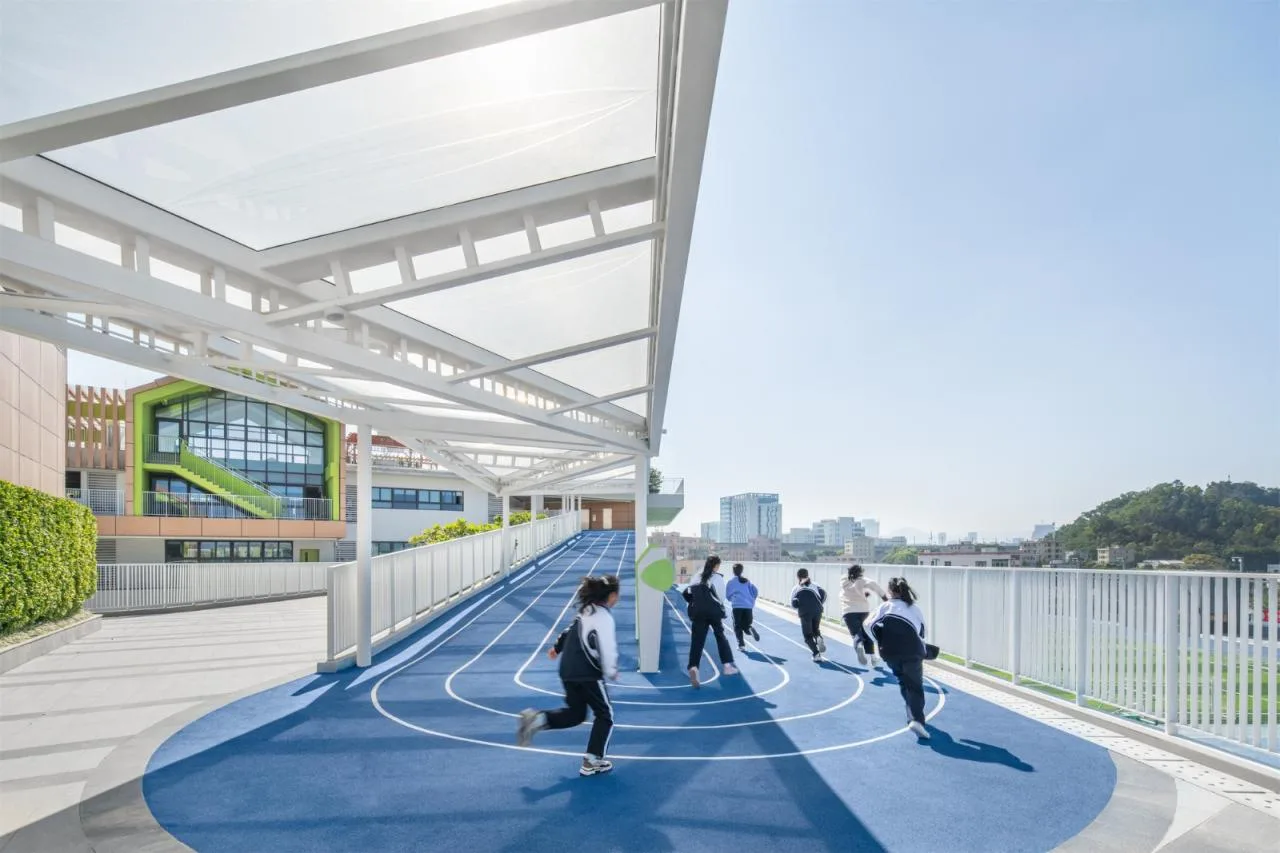
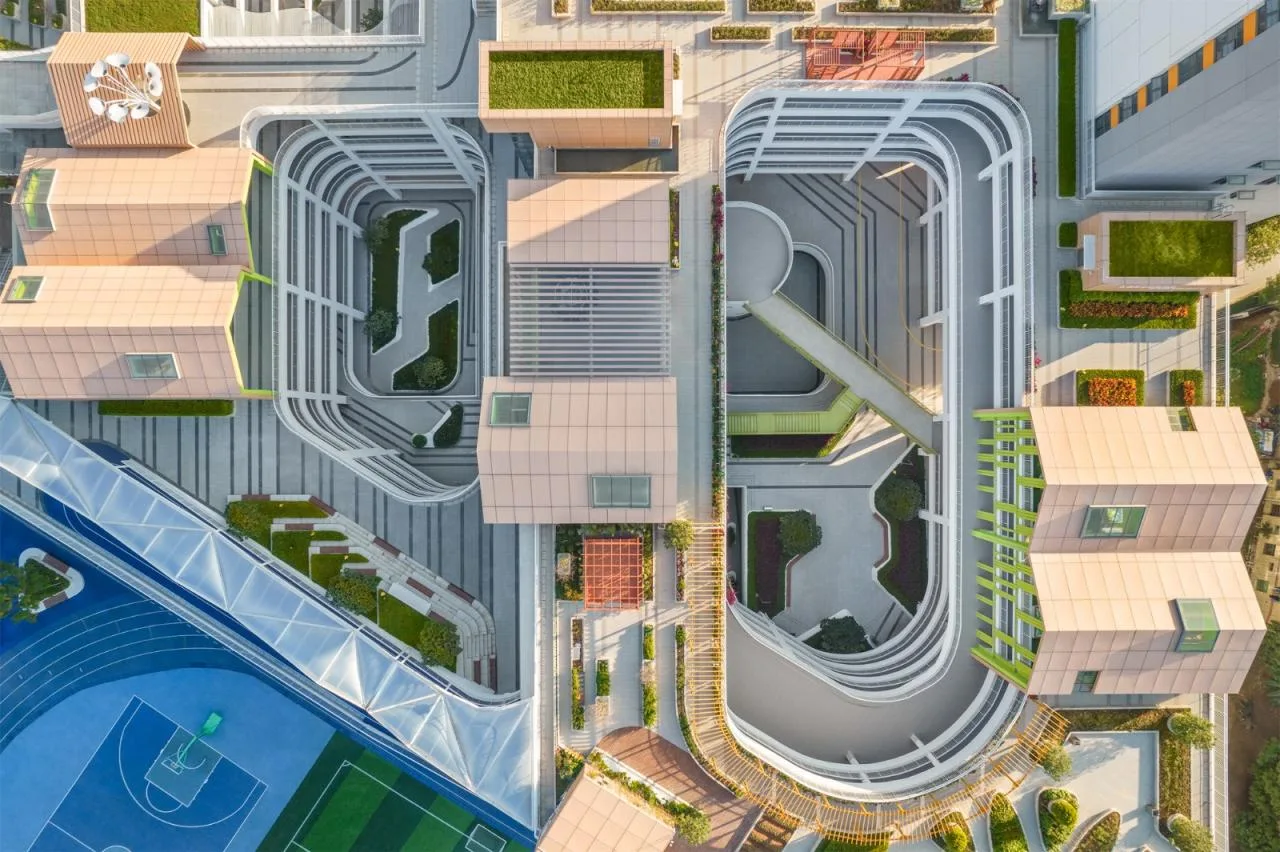
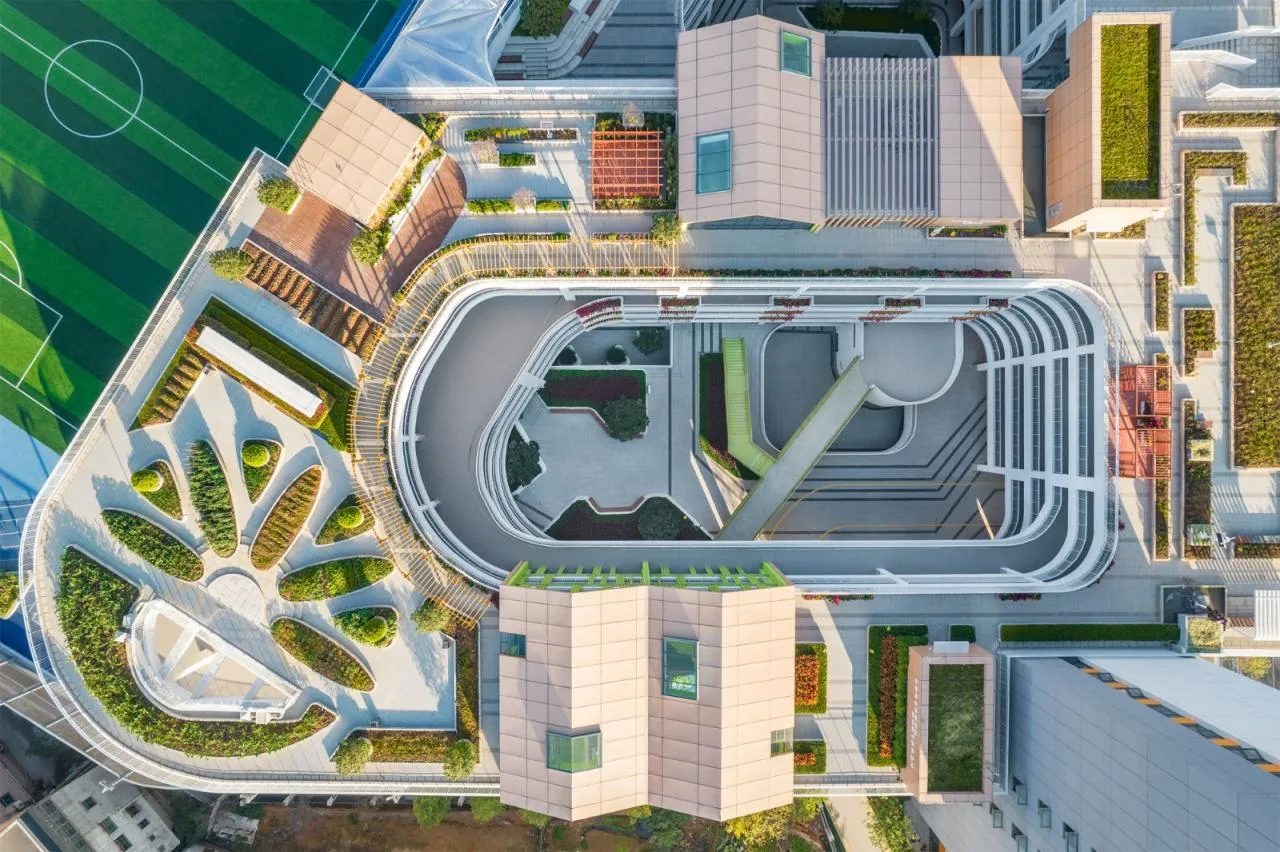
The design of the terraced roof setback school prioritizes maximizing roof space. The campus follows the natural slope of the site, stepping down from south to north and creating terraced roof platforms with strong architectural form. These “stacked” platforms adapt to the terrain while softening site challenges, simultaneously crafting an engaging roofscape. Gardens atop the roofs represent the perfect harmony between nature and built space. Features like the “Book Mountain” and countryside-inspired roof and ramp systems foster a dynamic spatial experience on the campus roof. This approach not only addresses site constraints but also honors the original pastoral landscape.
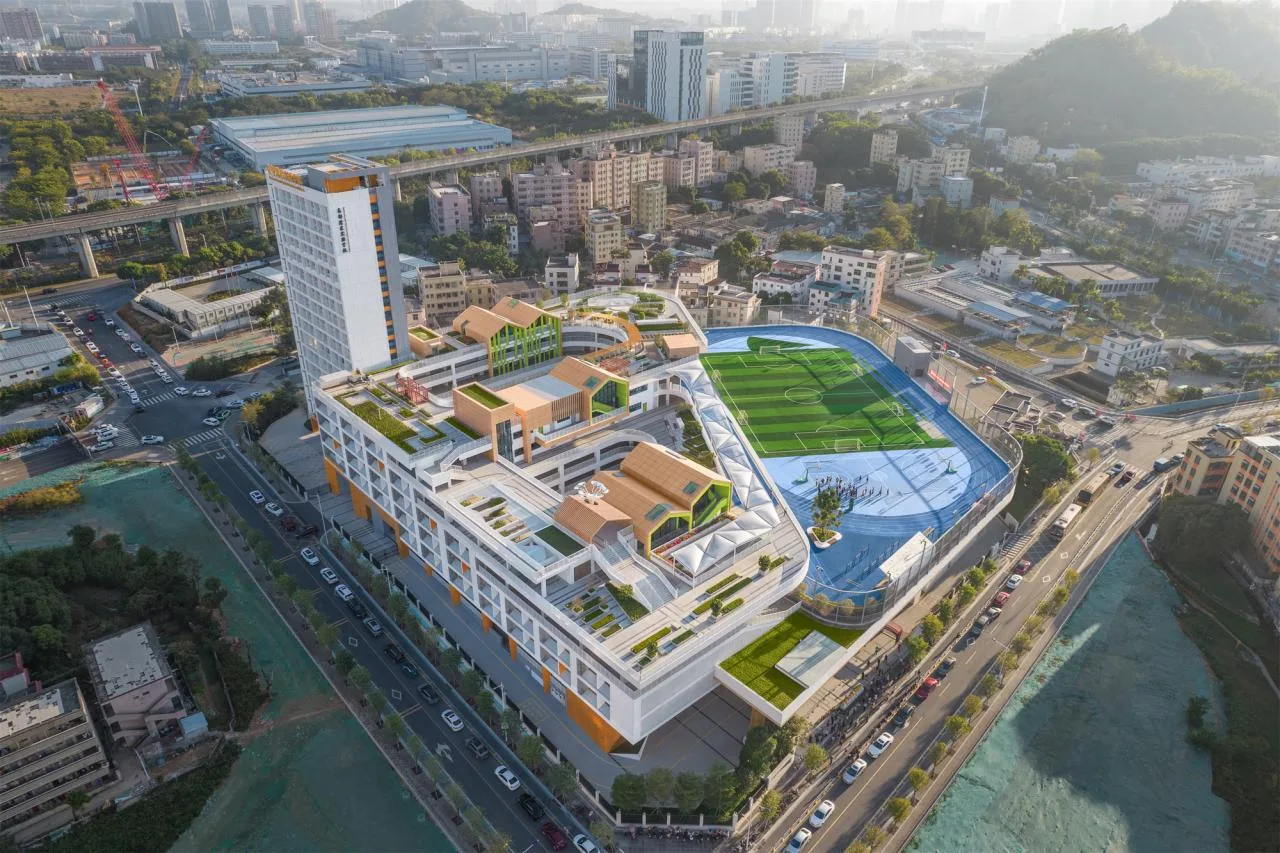
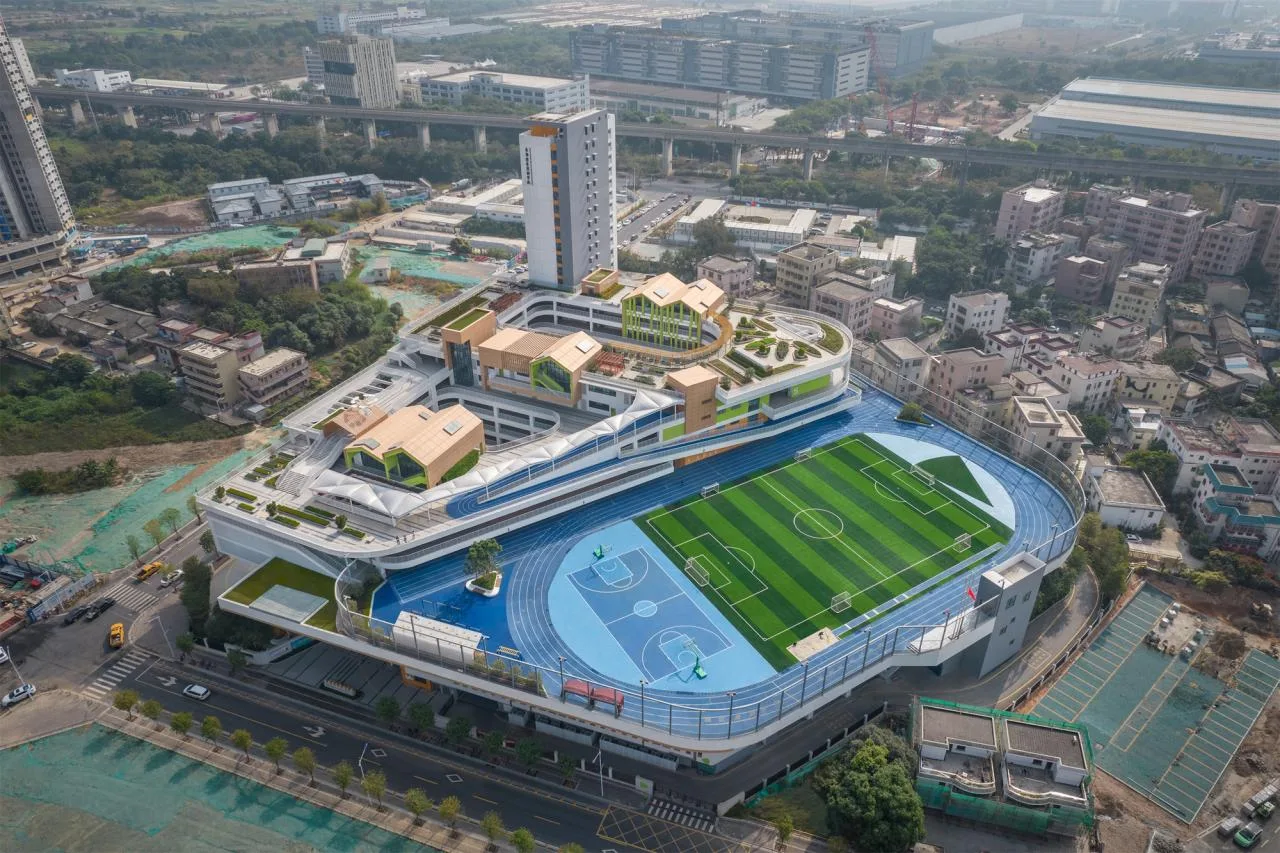
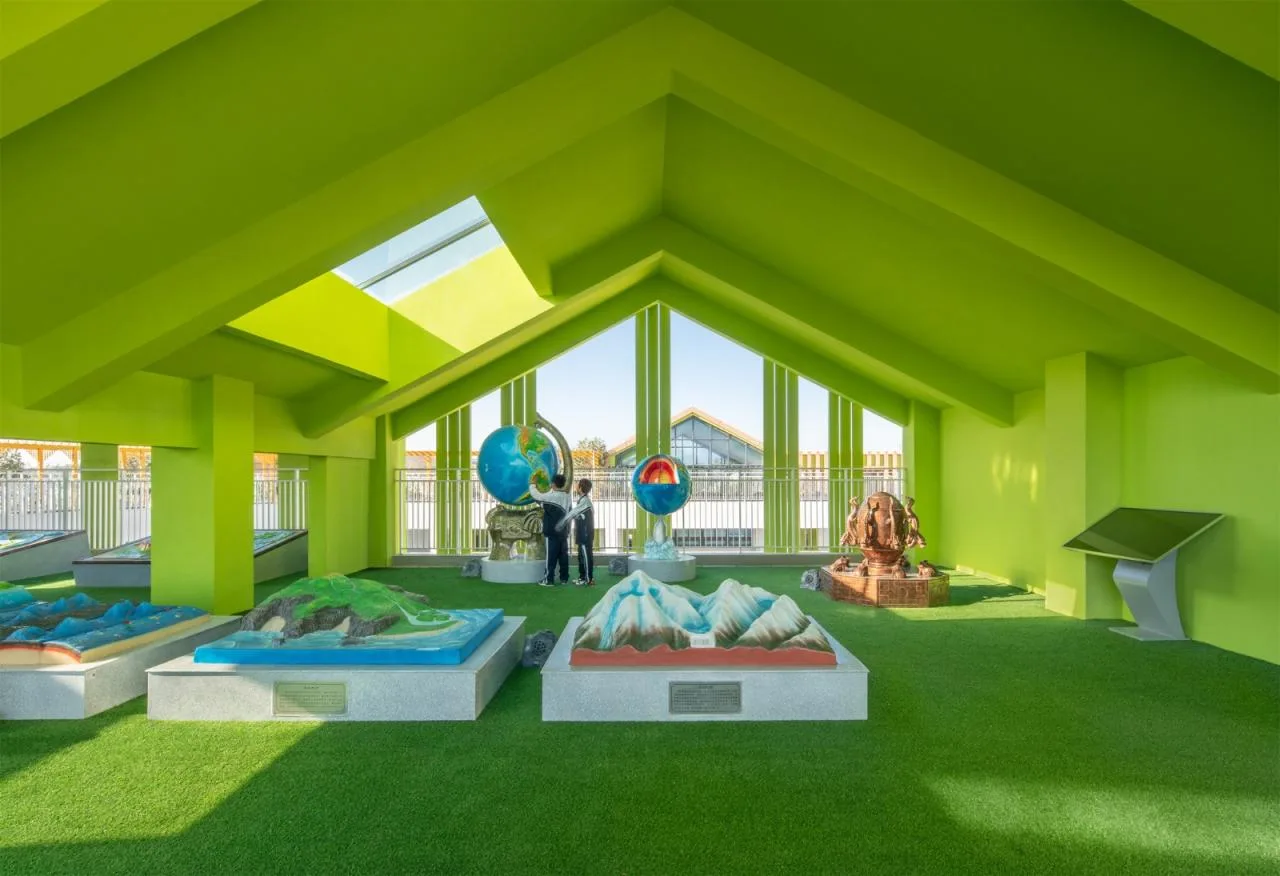
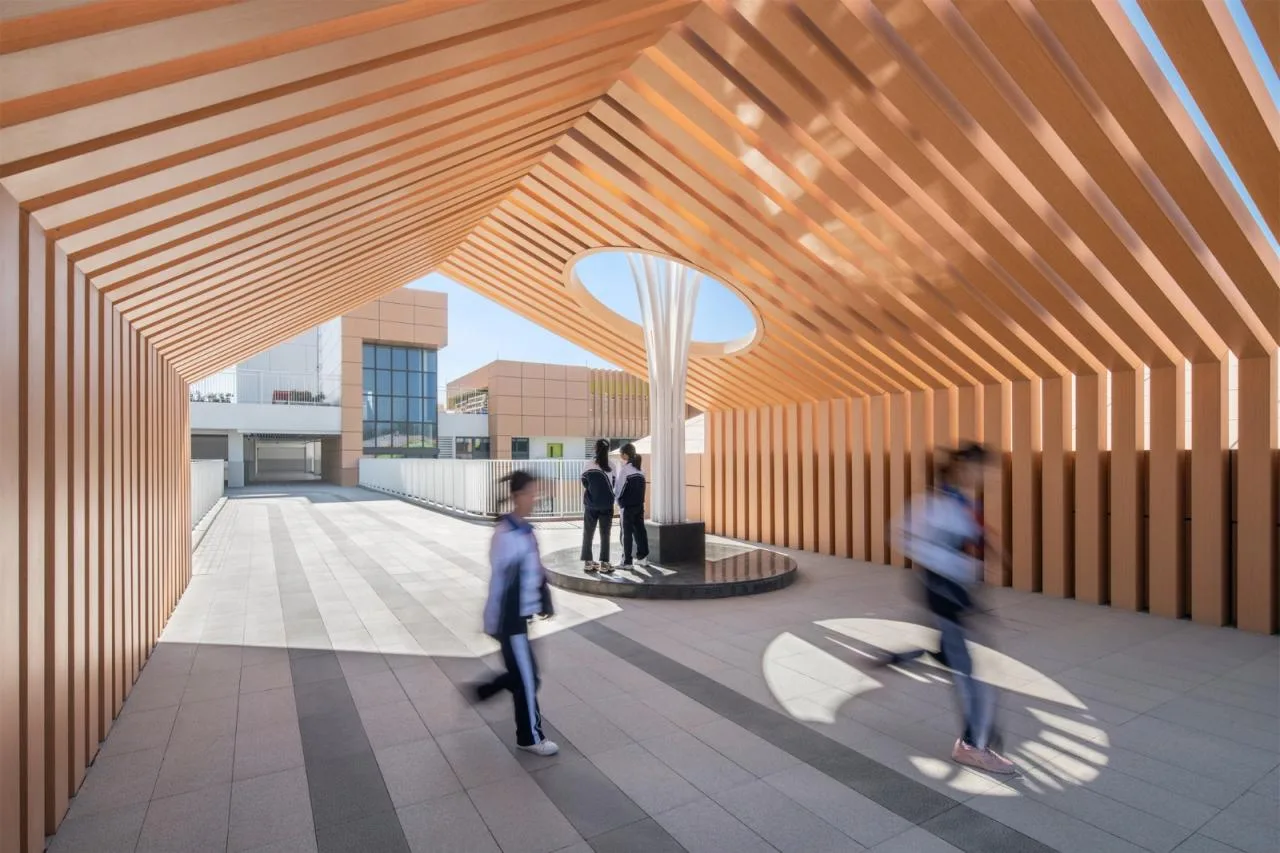
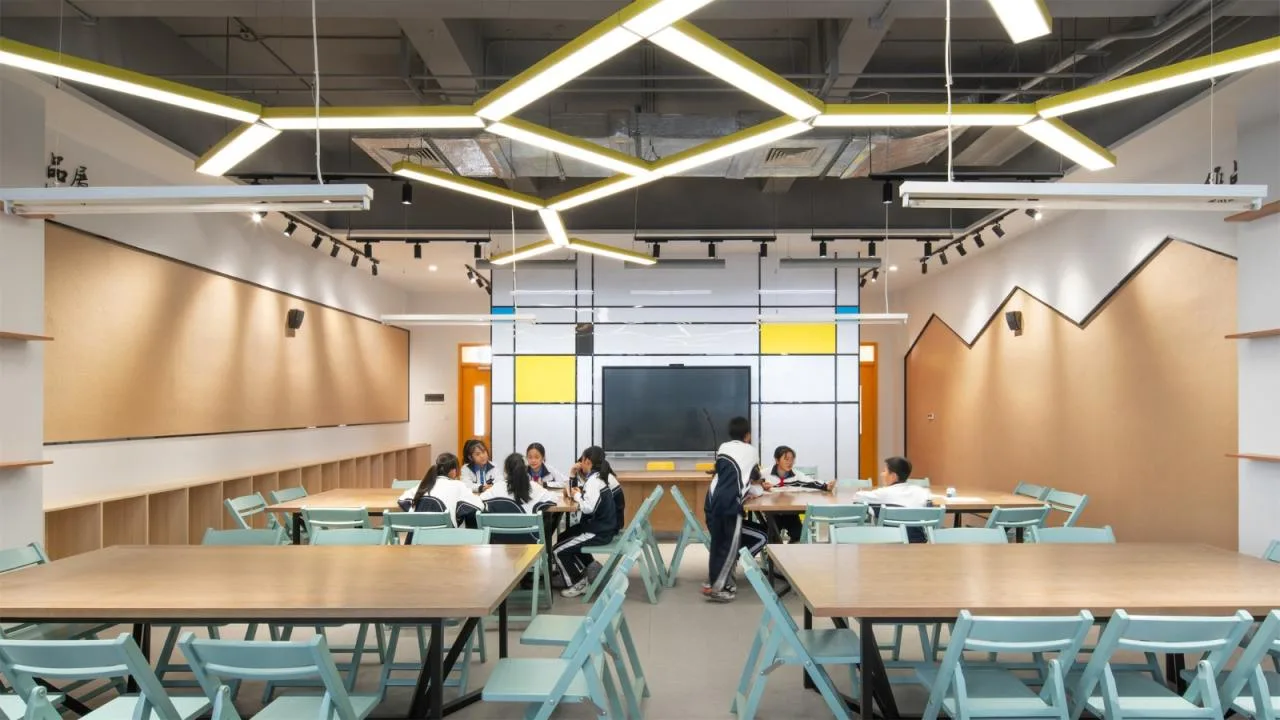
The rooftop “pastoral space” is a lively network of continuous ramps, terraced platforms, lush greenery, and distinctive wooden structures. This “stacked” pastoral environment connects the entire 3-to-6-story roof and facade, offering primary and secondary students a continuous, semi-independent activity area. The rooftop wooden classrooms burst with imaginative colors and versatile open spaces, suitable for shared classrooms, geography science parks, and various clubs. The roof landscape doubles as a practical base for hands-on learning, combining education and play while creating a rich, green environment that maximizes rooftop use.
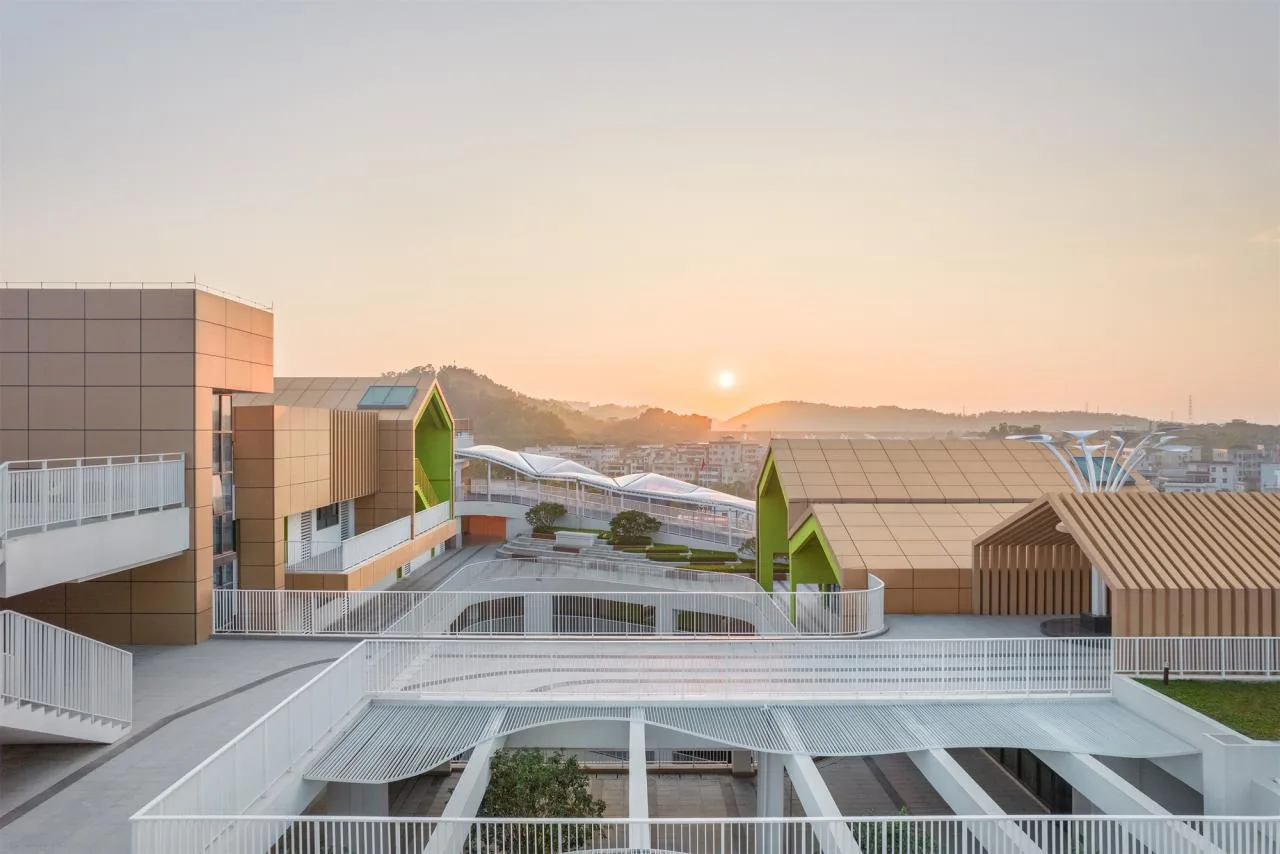
Given the site’s complex topography, the design adopts a vertical and intensive space utilization strategy. Entrances for primary and secondary schools are located on Laokeng Road and Dankeng Road respectively, linked by a double-layered elevated corridor. Within this corridor, vibrant classrooms for music, art, and dance serve as the cultural heartbeat of the campus, while also providing spacious and secure areas for student pick-up, drop-off, and emergency evacuation.
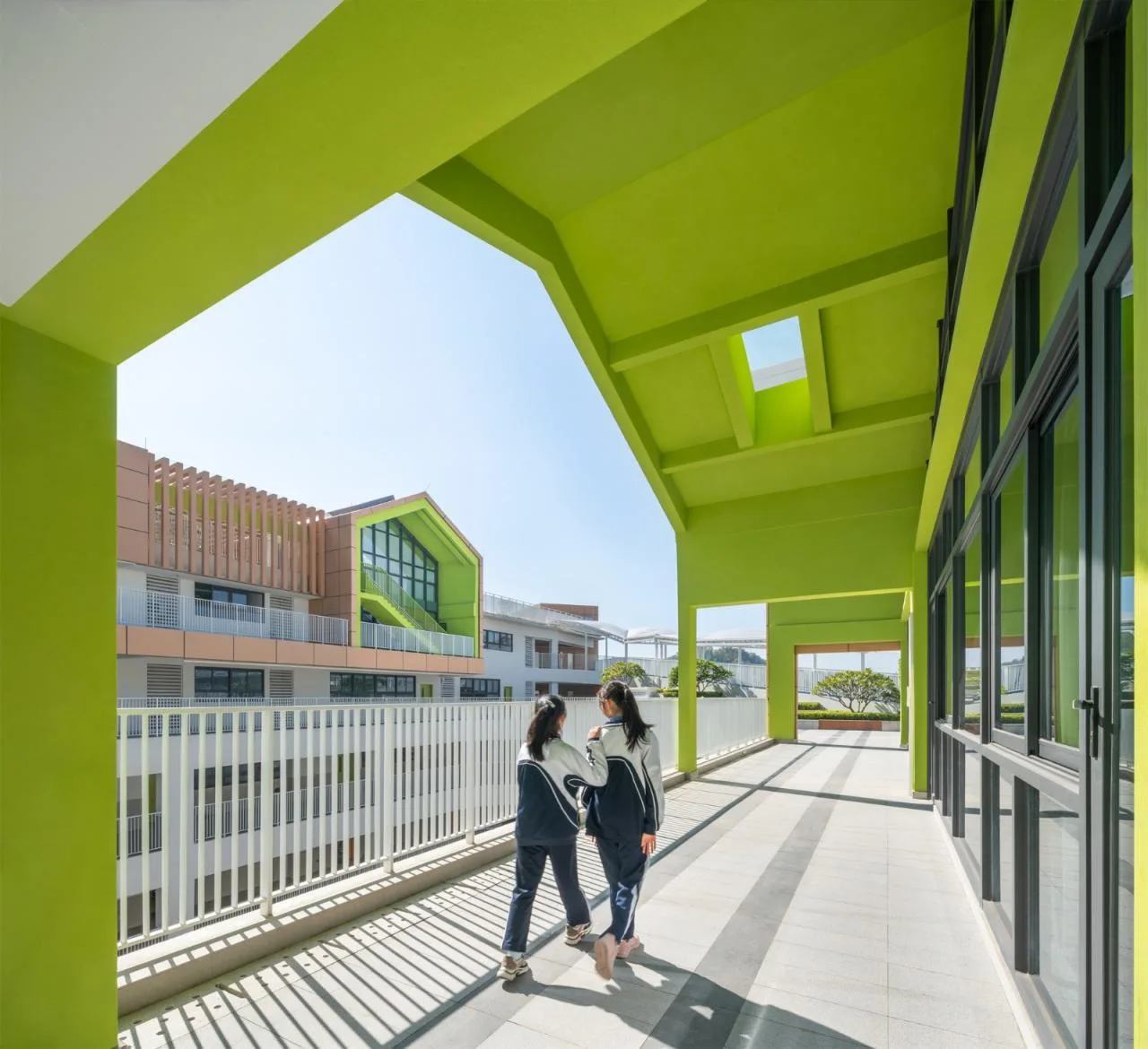
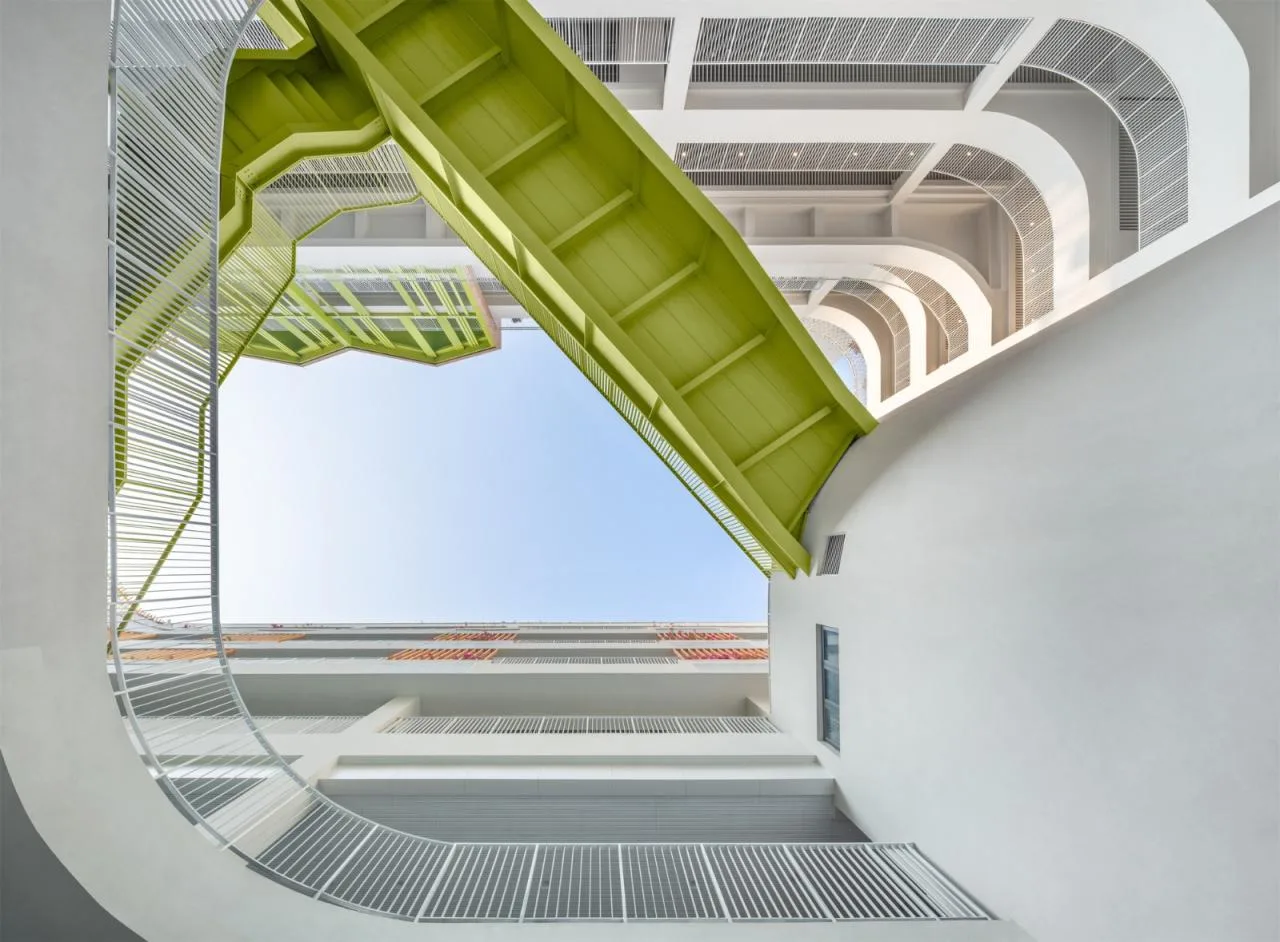
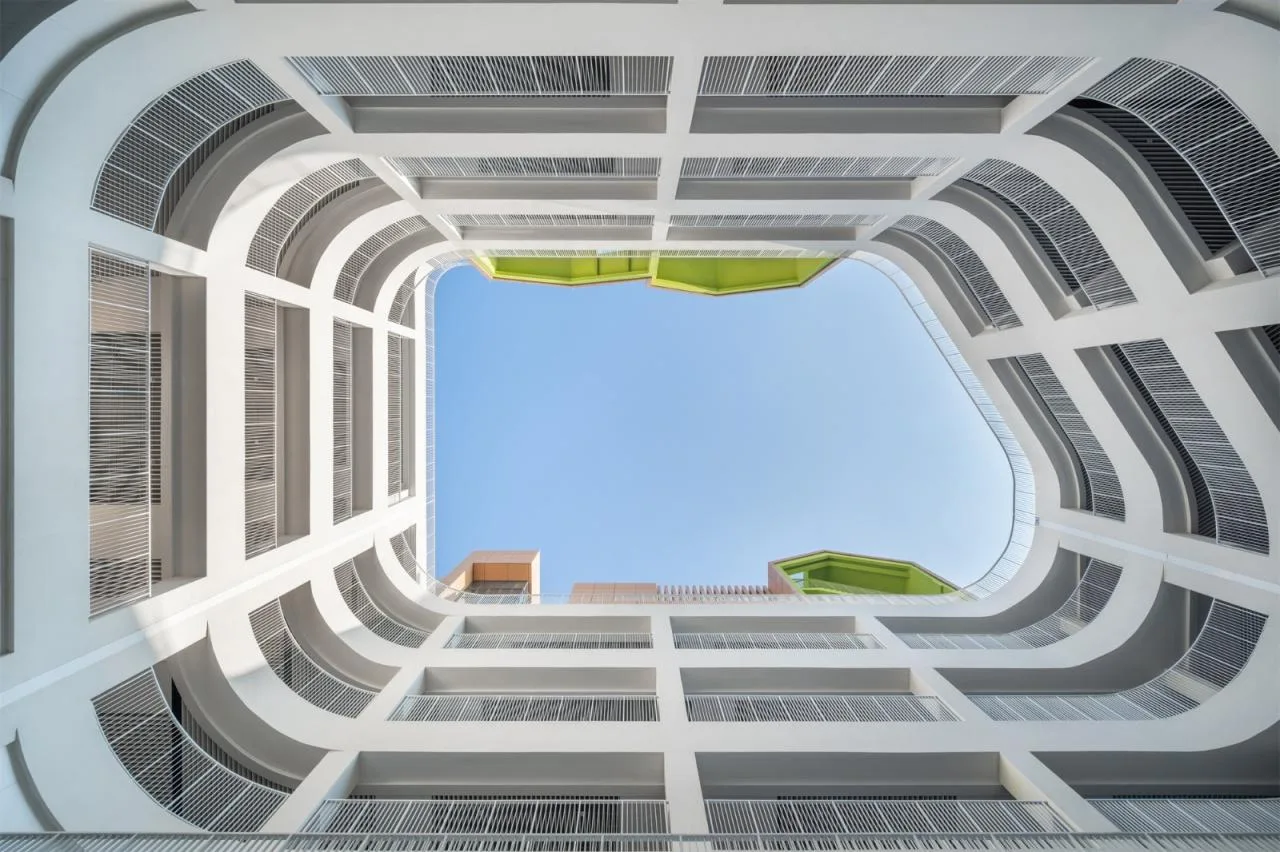
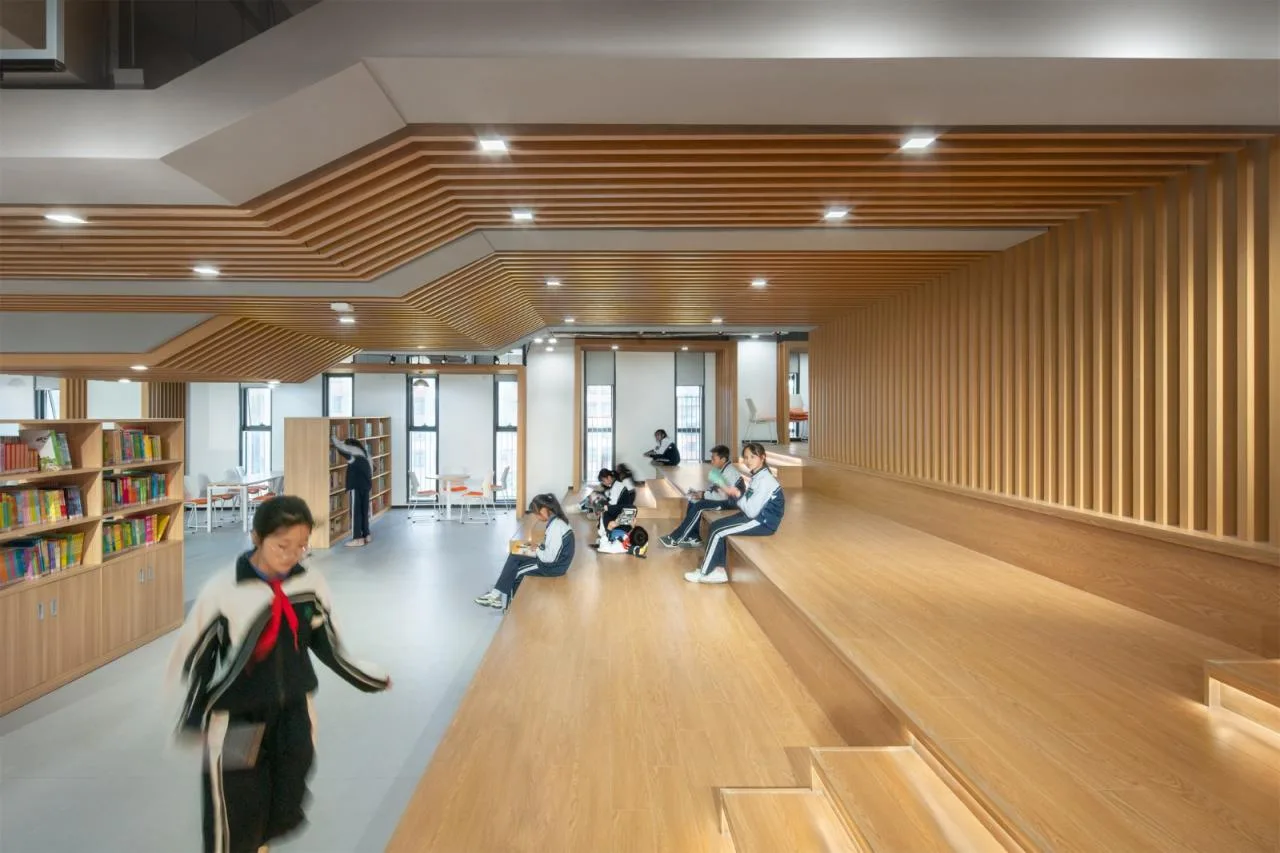
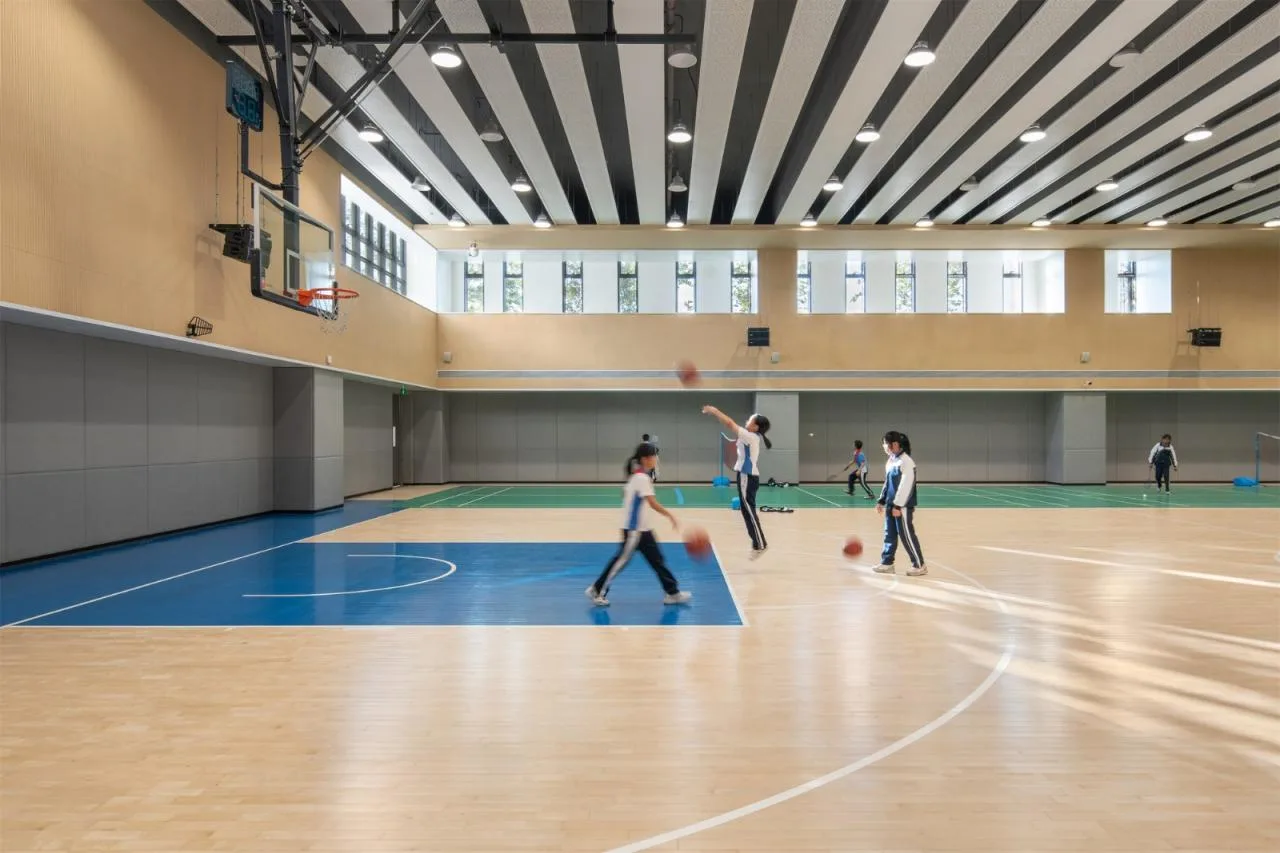
The standard classroom floors feature a double-corridor, deep plan that offers students ample and comfortable spaces during breaks. The campus is thoughtfully zoned to separate active and quiet areas: the sports zone hosts a three-story cultural and sports complex—including a gymnasium, auditorium, all-weather playground, multi-purpose sports hall, and cafeteria—while the quiet zone includes teaching areas and libraries for both primary and secondary students. A two-story elevated corridor facing the city park on the east and north sides brings greenery into the campus, fostering a harmonious visual and spatial connection between the school and the park. The orderly street facade further enhances this comfortable urban interface.
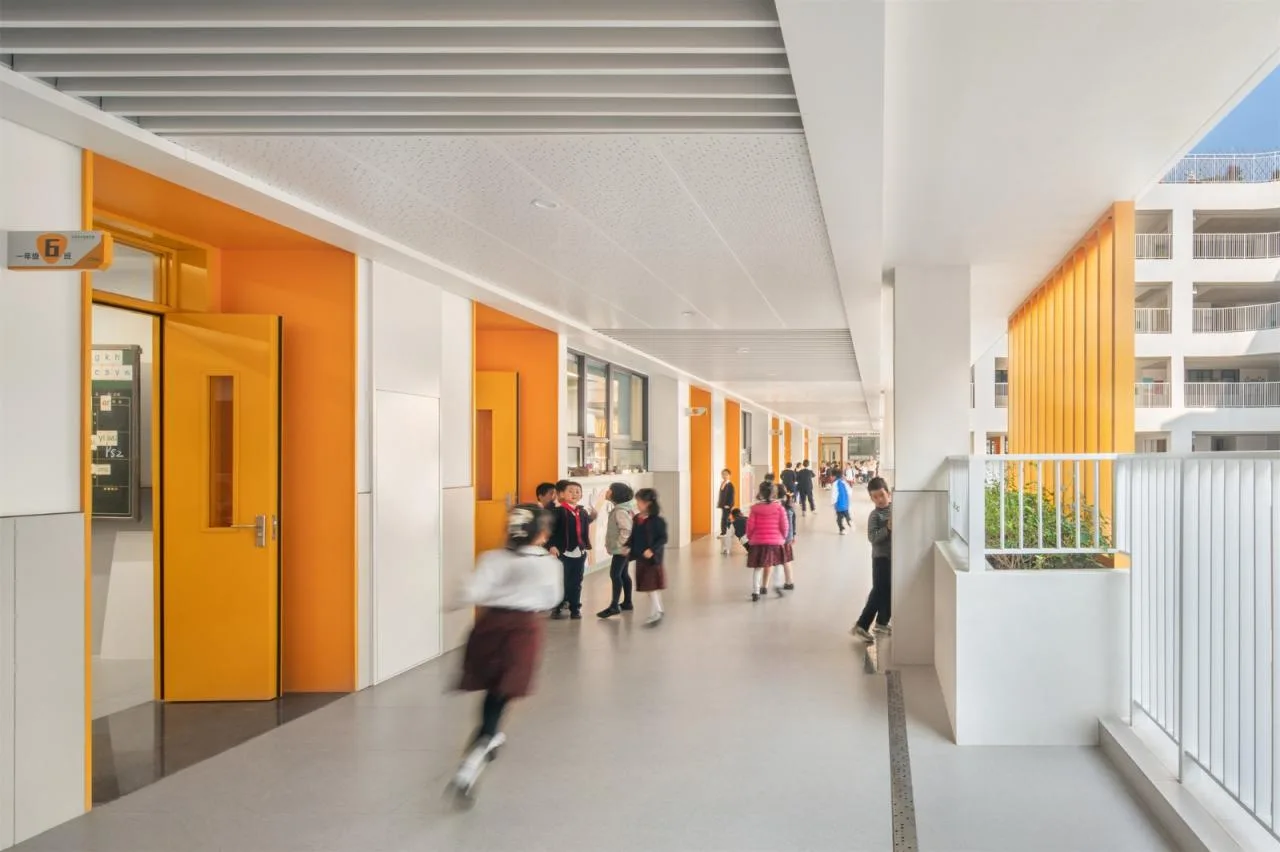
Conclusion: Achieving a perfect balance between site constraints and functional needs is essential to creating a comfortable pastoral campus in extreme urban conditions. A campus is more than just an educational space—it’s a playground where childhood memories are made. Our goal is to foster a longing for nature and maximize natural elements within a high-density environment. The Pingshan East Bay Area Experimental School aims to reconstruct the natural spatial sequence within a dense context, creating a student-friendly environment where children can grow and thrive. Amid the city’s steel jungle, this project offers a pastoral haven for children’s growth.
Project Drawings
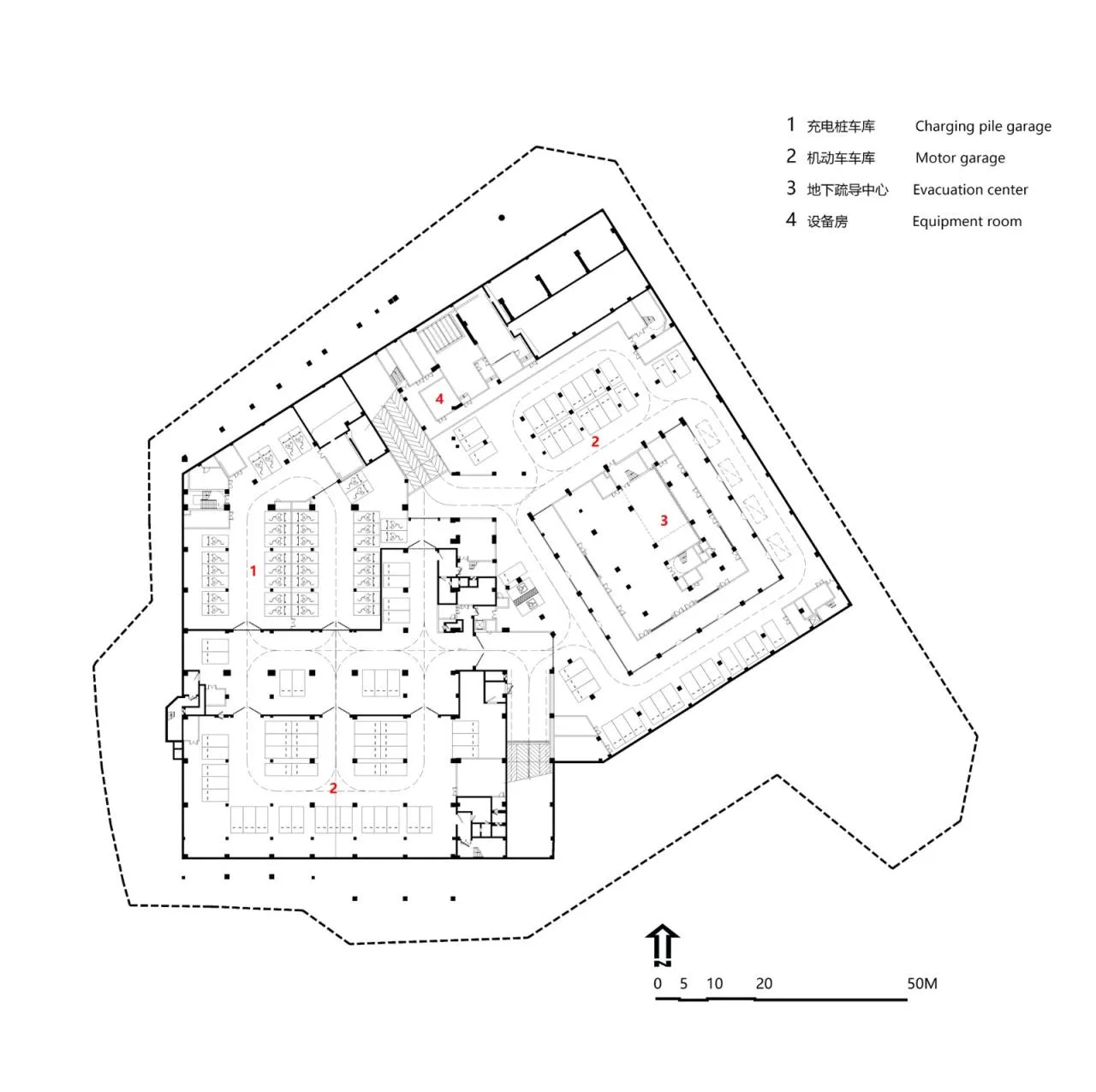
△ Basement Floor Plan
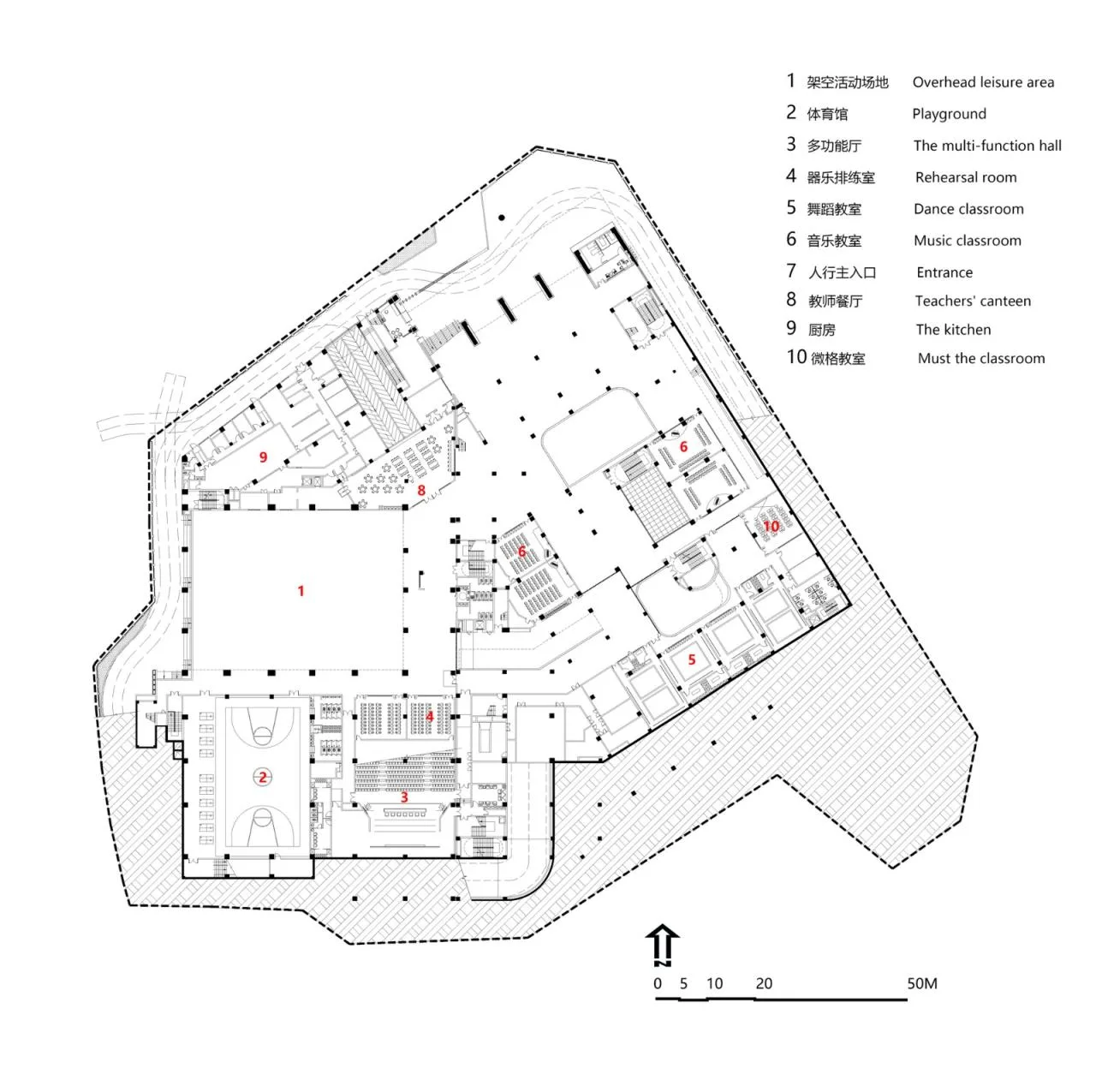
△ Semi-Basement Floor Plan
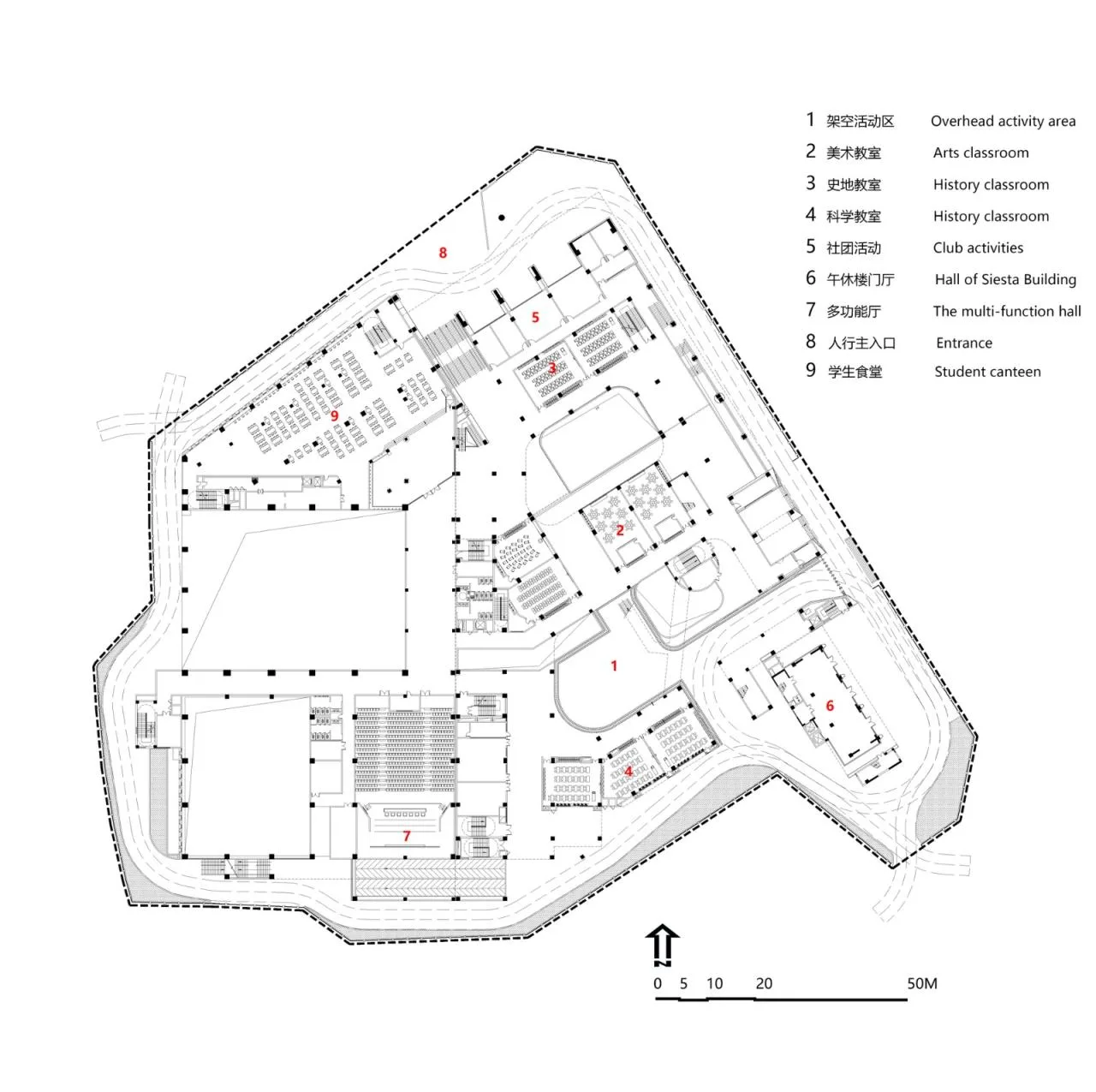
△ First Floor Plan
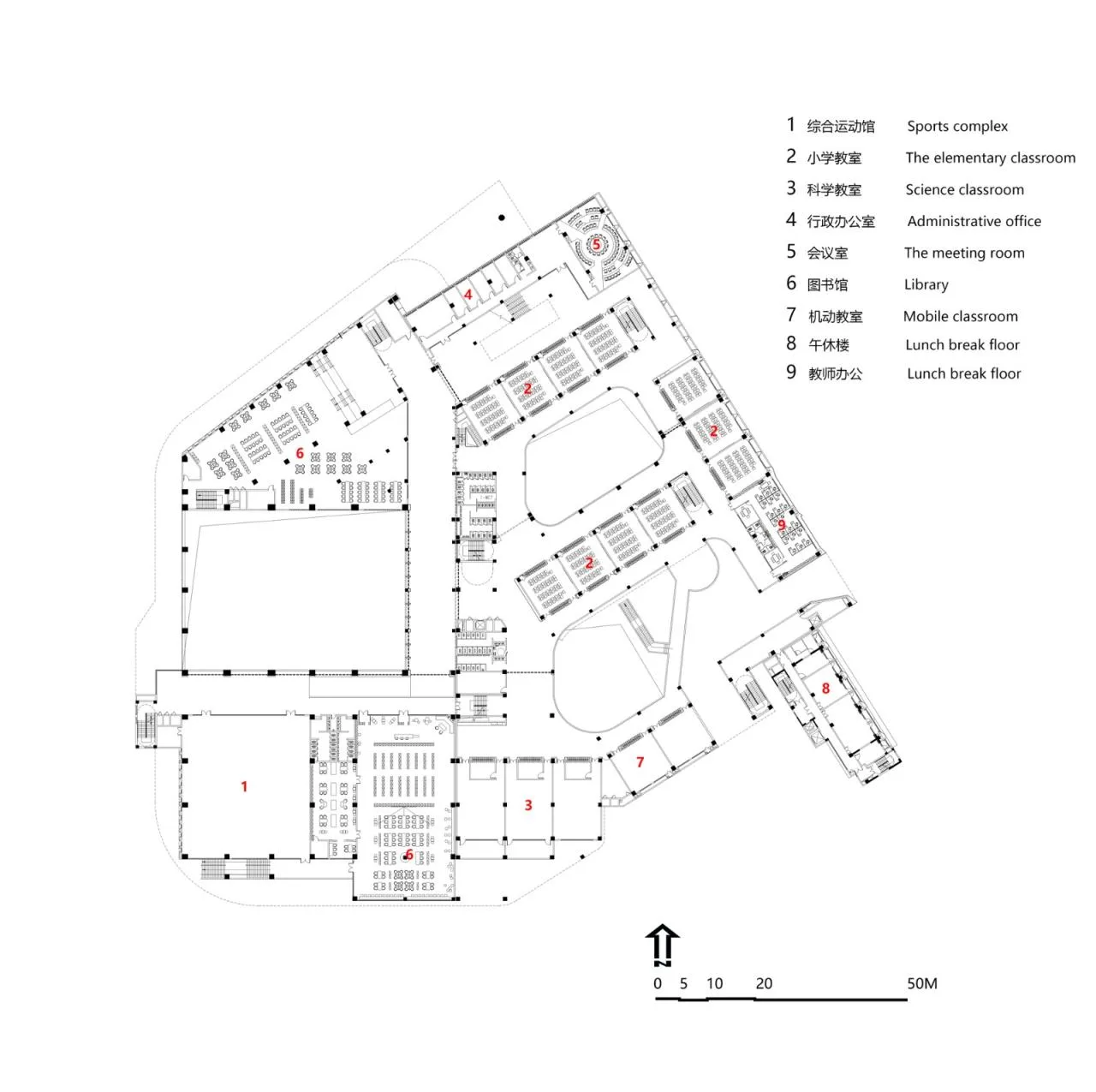
△ Second Floor Plan
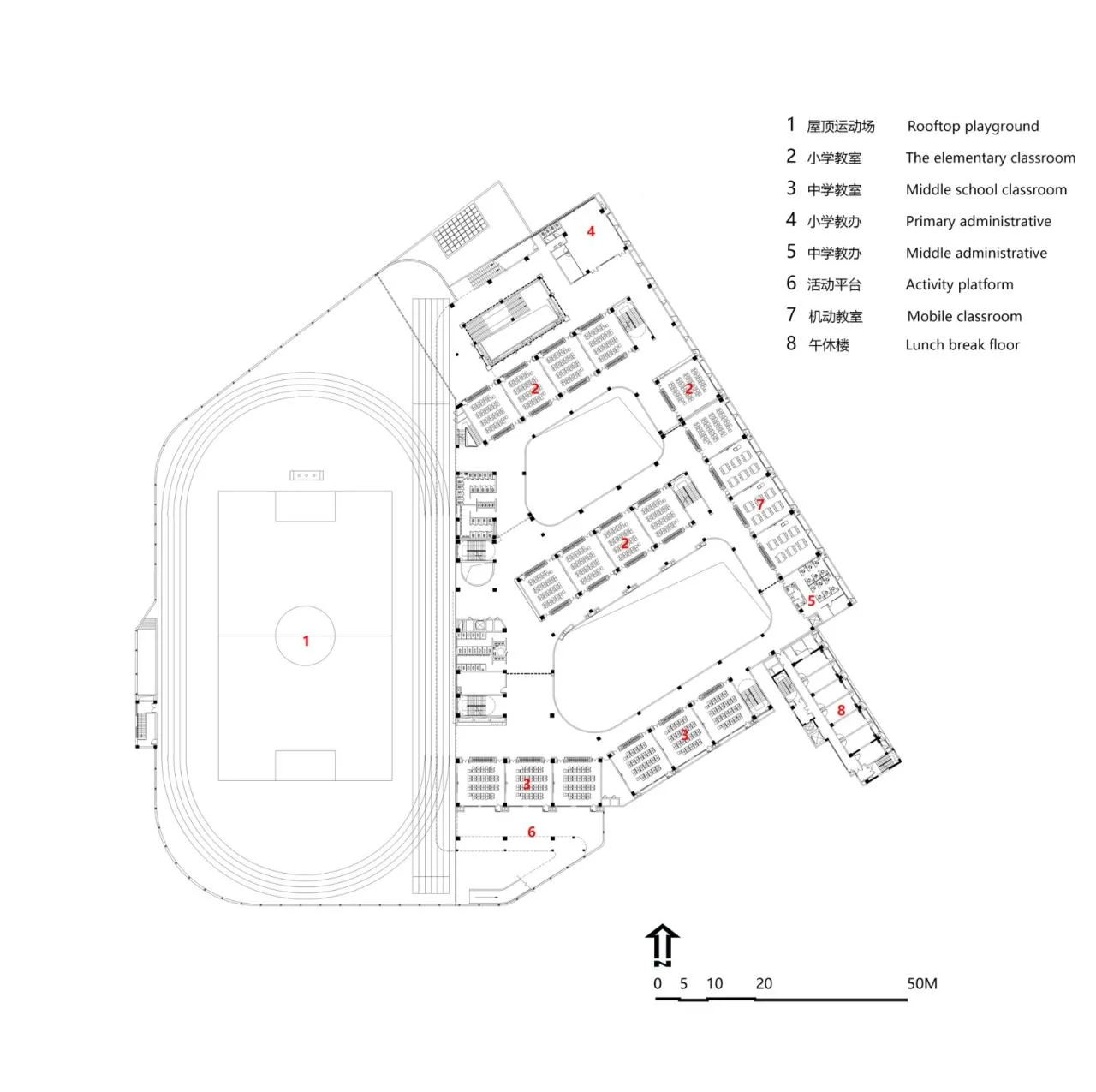
△ Third Floor Plan
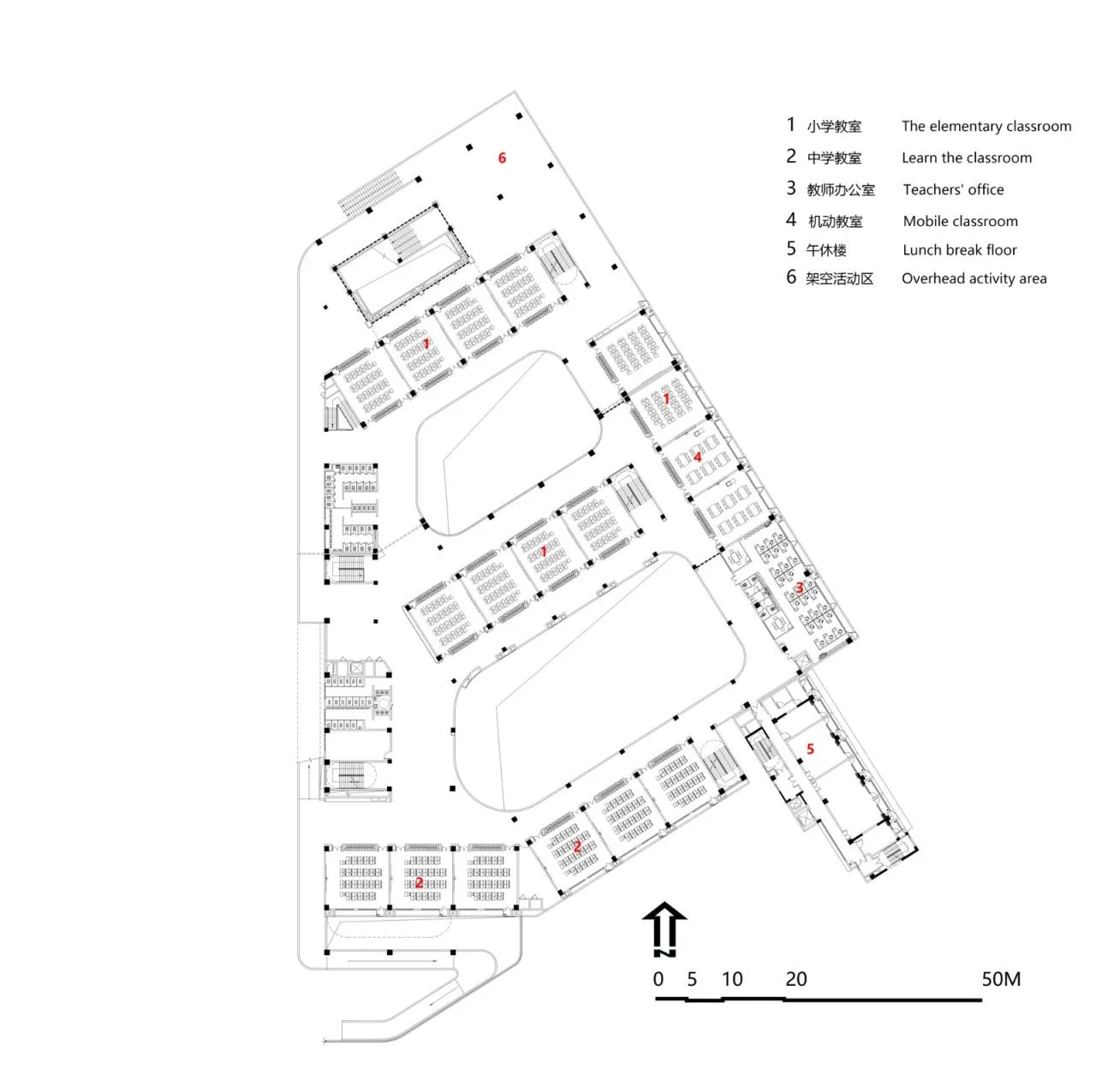
△ Fourth Floor Plan
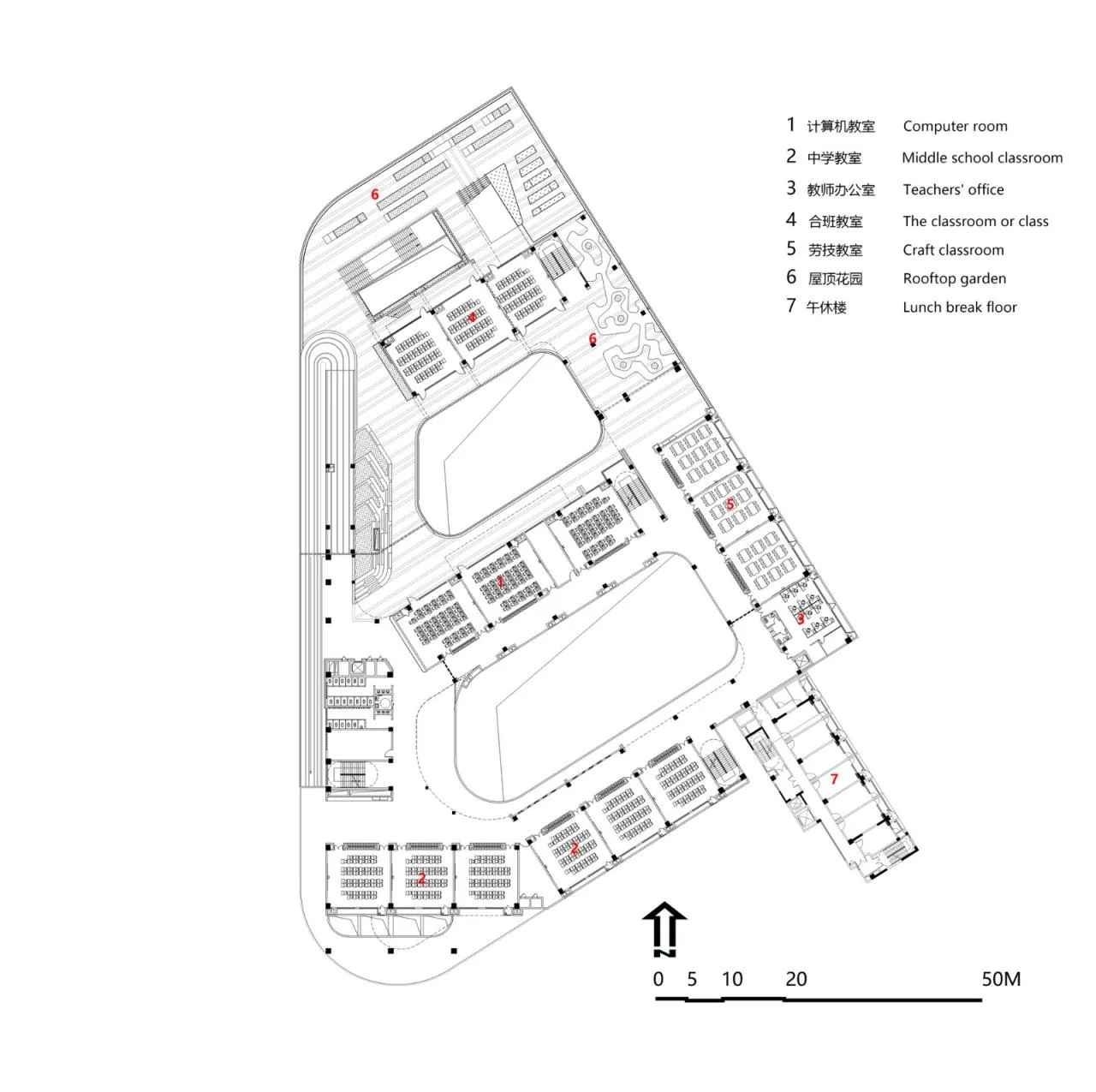
△ Fifth Floor Plan
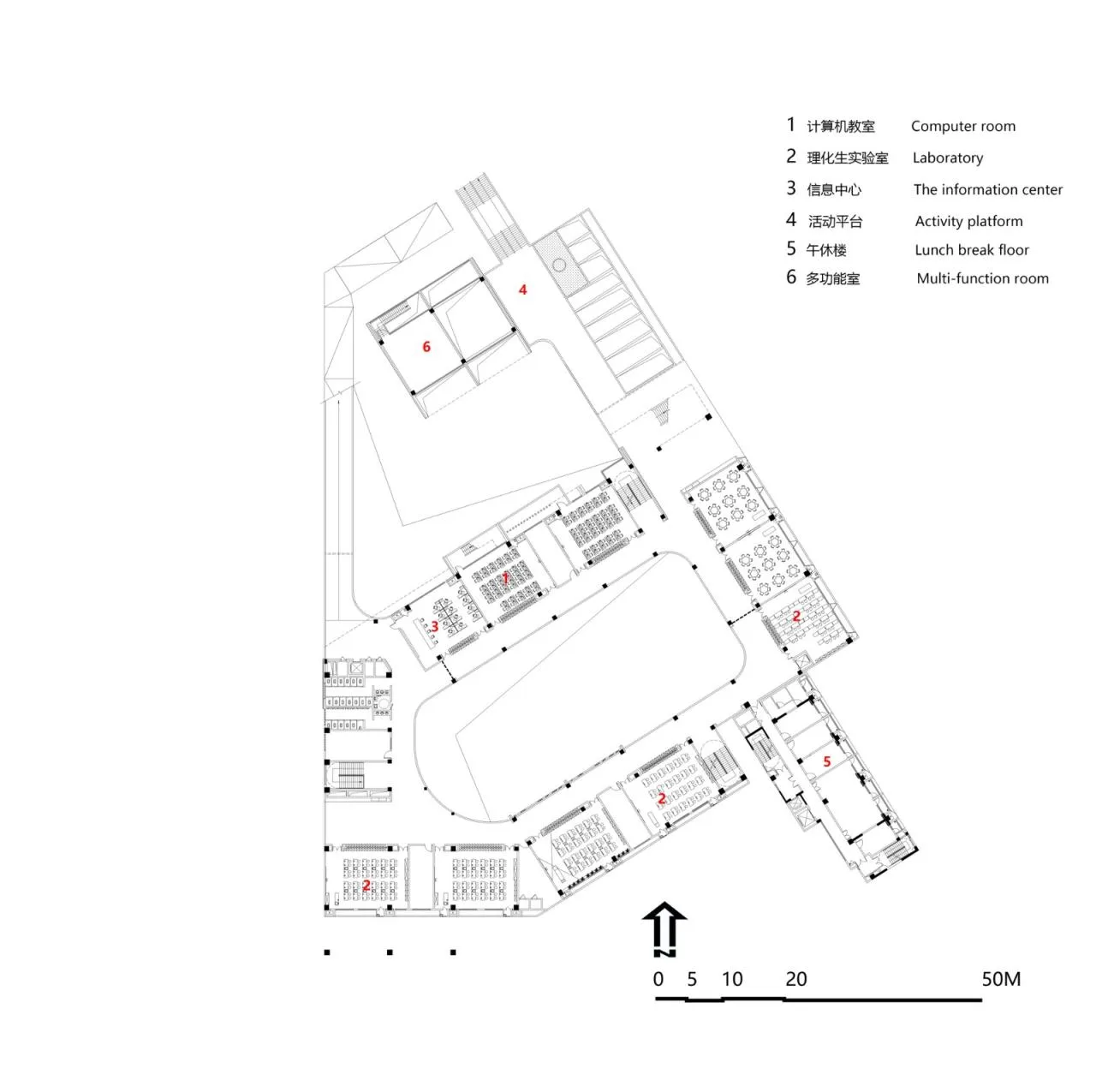
△ Sixth Floor Plan
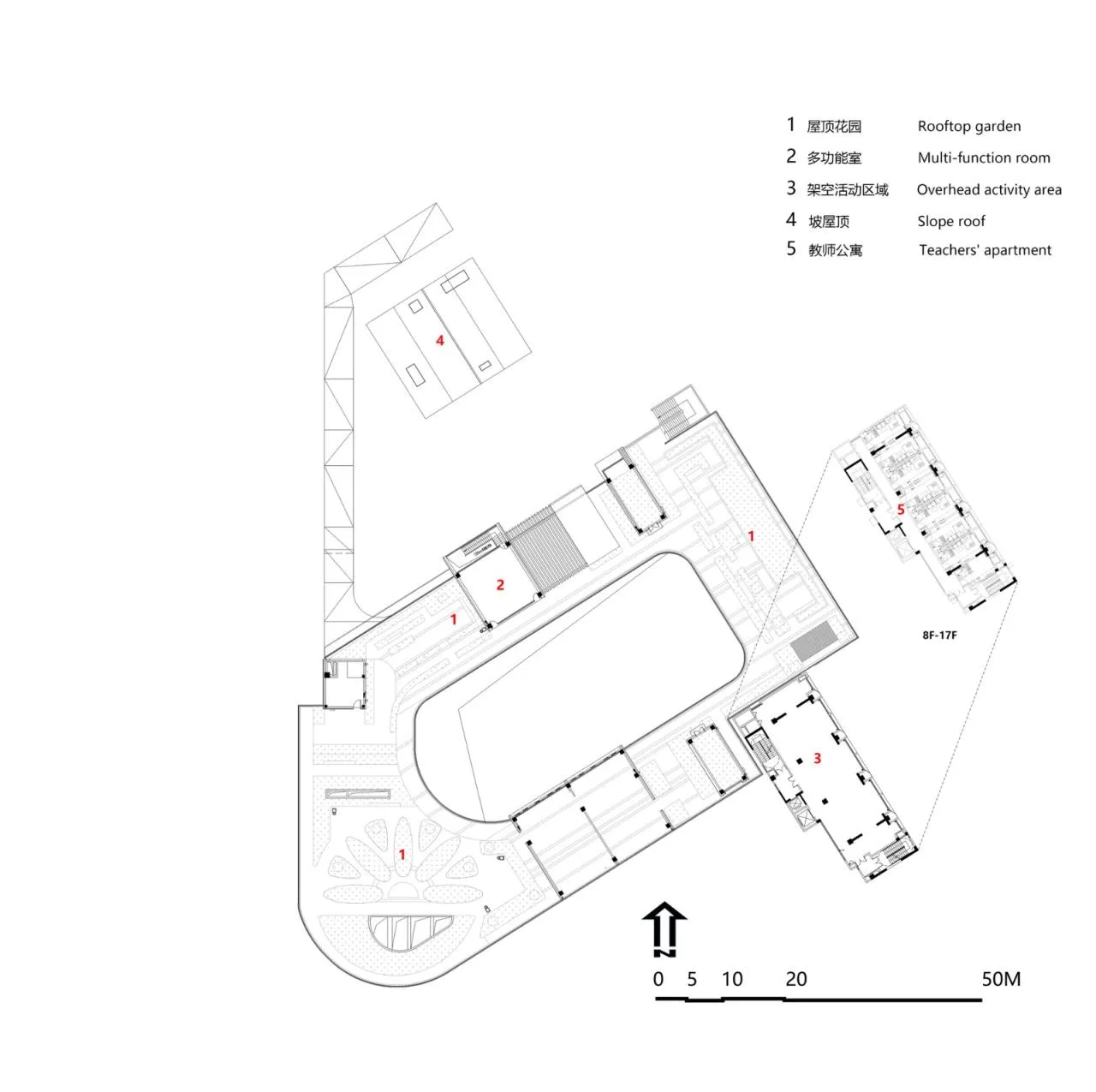
△ Seventh Floor Plan
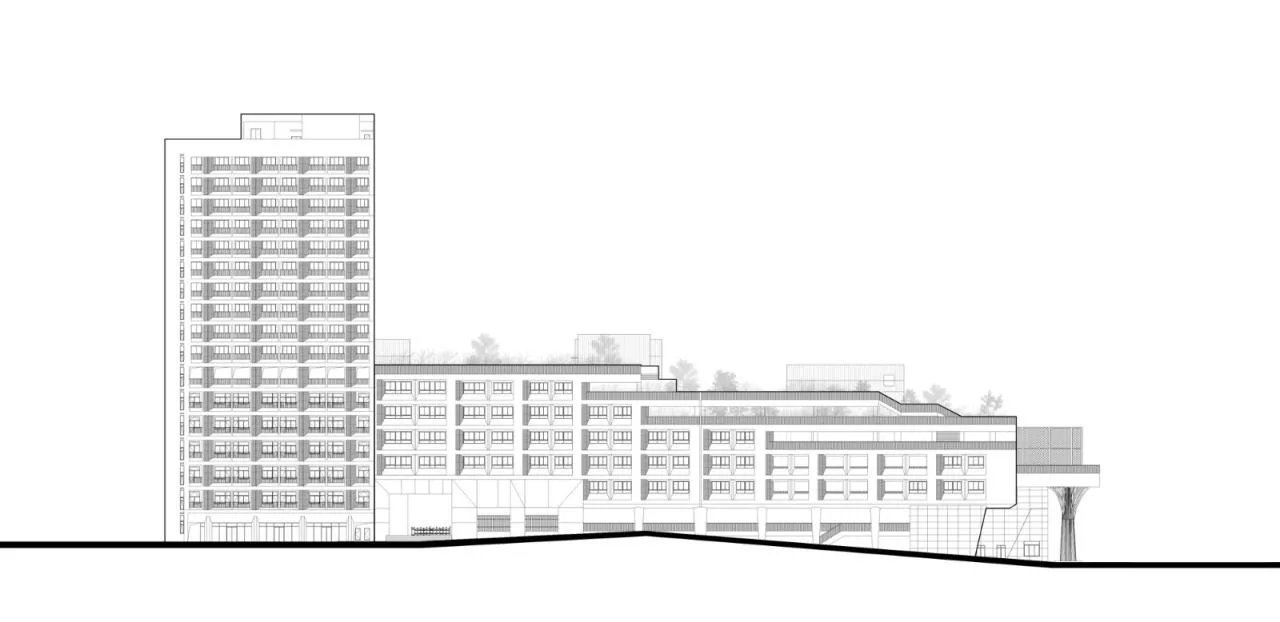
△ Elevation Drawing
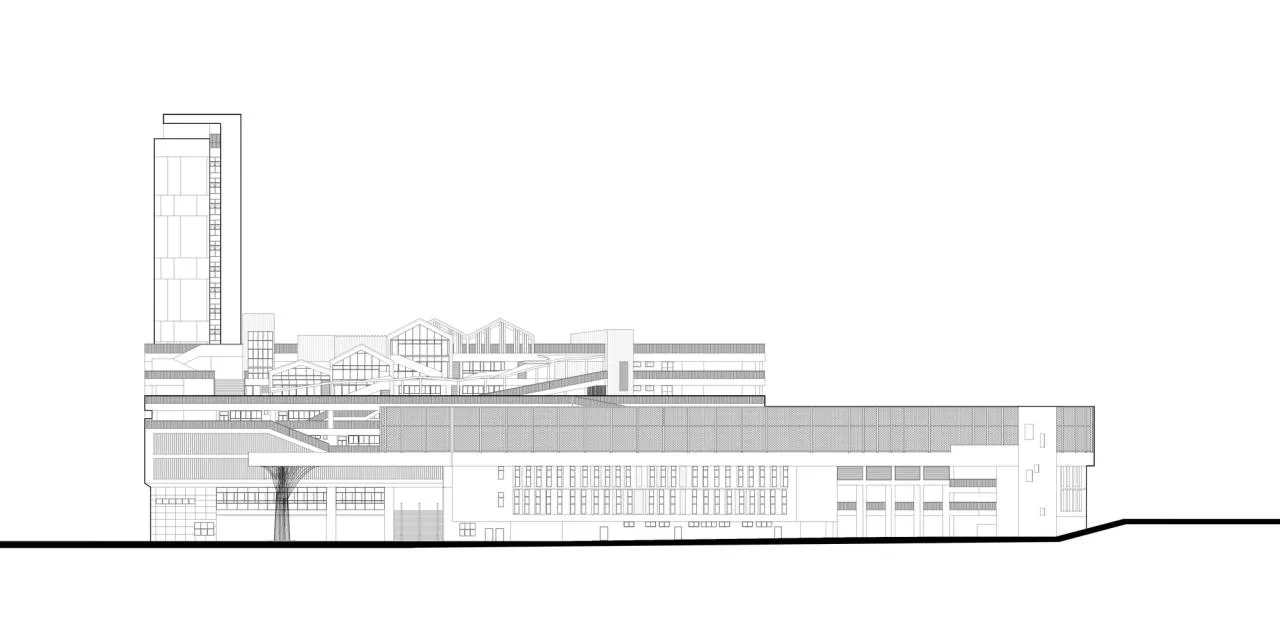
△ Elevation Drawing
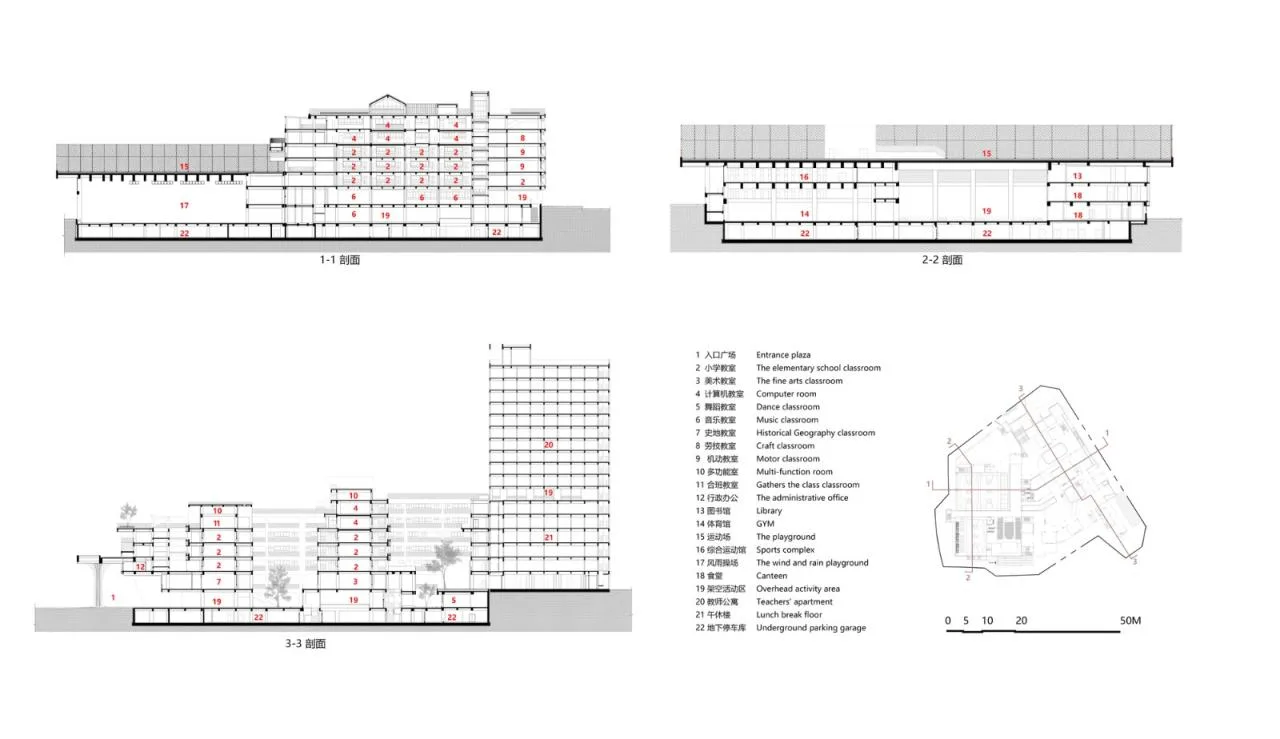
△ Section Diagram
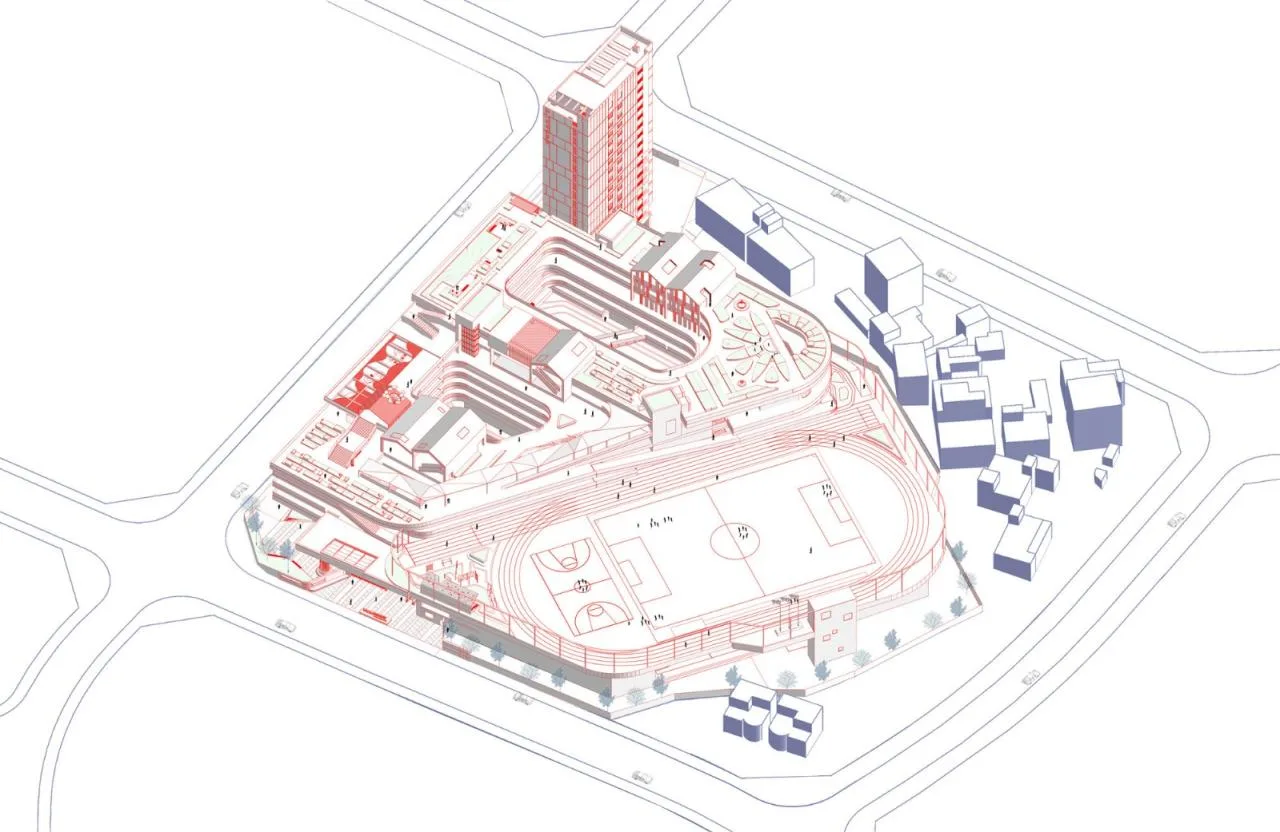
△ Axonometric Diagram
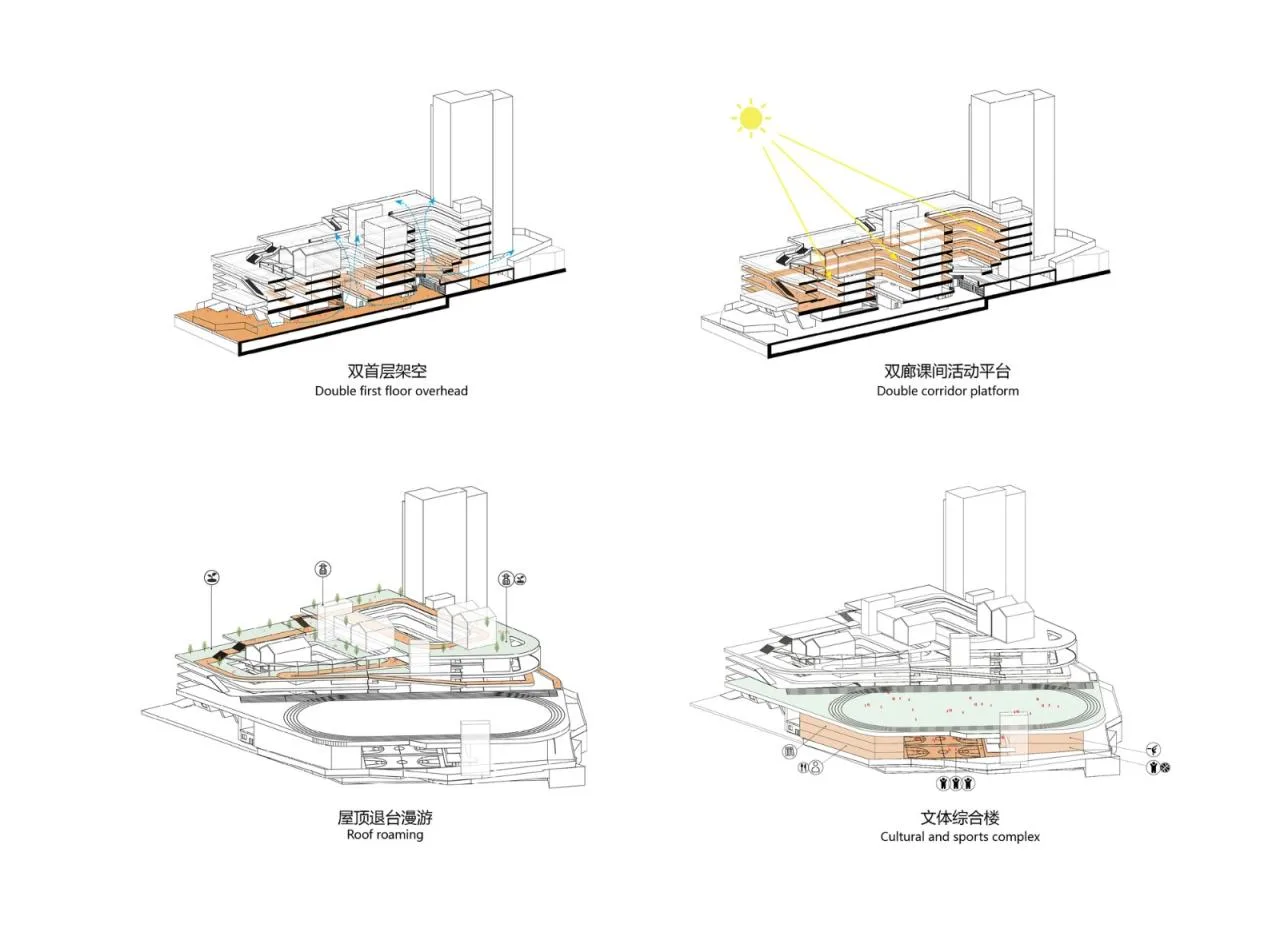
△ Analysis Chart
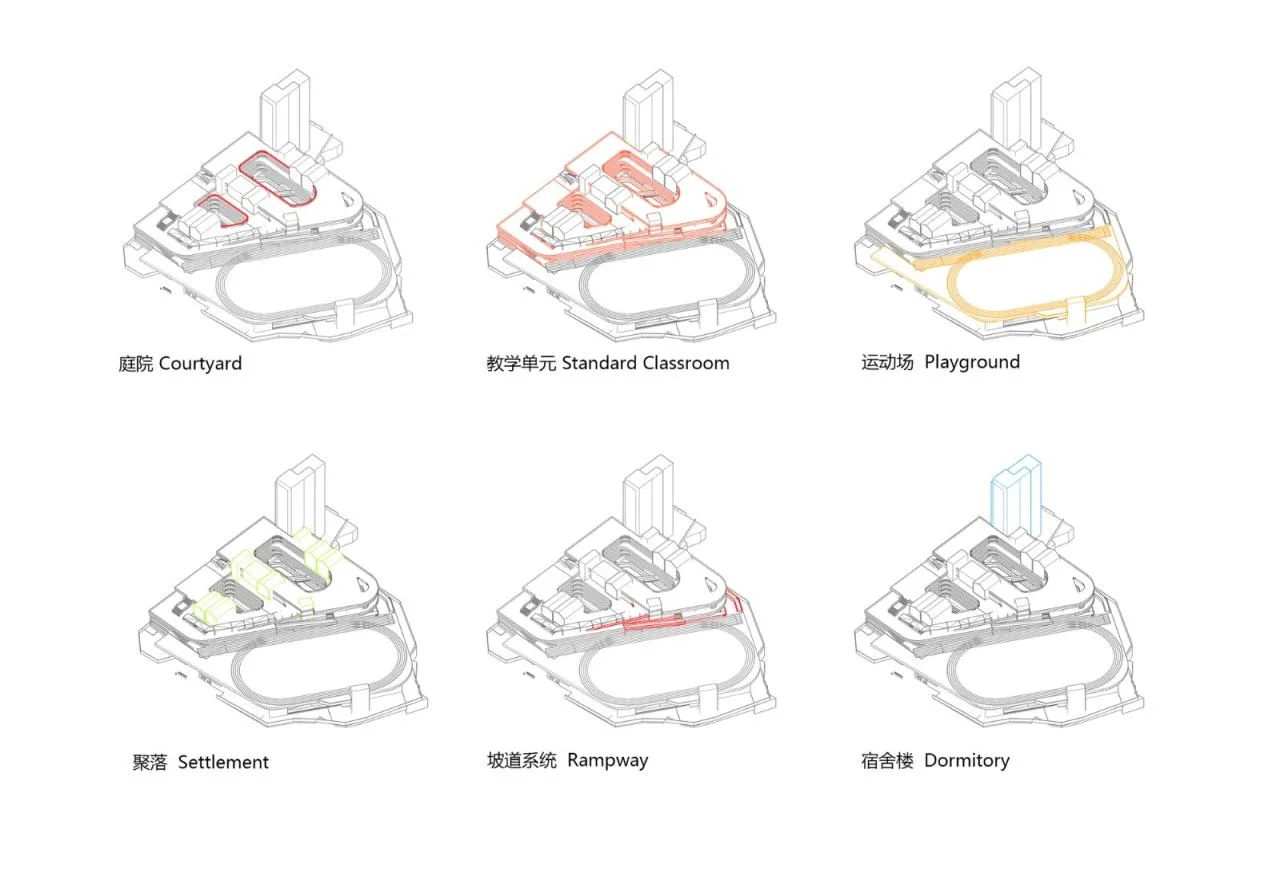
△ Analysis Chart
Project Information
Architectural Design: CMAD Architects
Area: 66,837 m²
Project Year: 2021
Photographer: Bai Yu
Lead Architects: Zou Xiuhong, Chen Zhuo
Technical Manager: Chen Guodong
Design Team: Wang Yu, Li Tao, He Ling, Zhang Yawen, Chen Guojun, Zhang Peng, Zhao Yaqing, Yan Jianchun, Lu Hongyong, Liu Yu, Bu Wangyang, Liu Wentao, Li Hanning, Jiang Changwu, Du Jianwei, Li Qingchao, Shang Shuangshuang
Client: Pingshan District Education Bureau
Construction Unit: Pingshan District Construction and Engineering Bureau
Construction Company: China Construction First Engineering Group Co., Ltd
Landscape Design: Shenzhen Jeffrey Landscape Design Co., Ltd
EPC: Shenzhen Zhendao Construction Technology Co., Ltd
Location: Shenzhen, China














Must log in before commenting!
Sign Up