
This article is from the official account: Shanghai Green Building Association.
The China Energy New Fenghuang Jingyuan High School project is located at the northeast corner of Jinggu Road and Anning Road in Zhuanqiao Town, Minhang District. Designed to accommodate 24 classes with approximately 1,200 students, the school serves the entire Minhang District.
According to the Shanghai Municipal Construction Standards for Ordinary Primary and Secondary Schools (DG/TJ08-12-2004), the average land area per student for a 24-class high school is 22.33 square meters, totaling 26,801 square meters of land. The average building area per student is 11.09 square meters. However, the actual land area of this school is 21,535 square meters, which is significantly below the standard. The designed building area is 14,639 square meters, resulting in an average building area of 12.19 square meters per student, slightly exceeding the standard requirements.
The campus includes a comprehensive teaching building complex—comprising classrooms, laboratories, offices, a student theater, sports hall, canteen, and connecting corridors—along with dormitory buildings, two security guard posts, garbage rooms, substations, outdoor landscaping, road squares, and sports fields.
Adopting a “one planning, one implementation” construction concept, the campus is divided into four functional zones: the teaching area (teaching and laboratory buildings), the office area (offices and student theater), the living area (dormitories, canteen, and gymnasium), and the sports area (outdoor fields and basketball courts). These zones are interconnected through corridors and roads, maintaining both independence and connectivity. To reduce visual and noise disturbances, the teaching area is situated on the south side of the site, far from the indoor gymnasium located in the northwest.
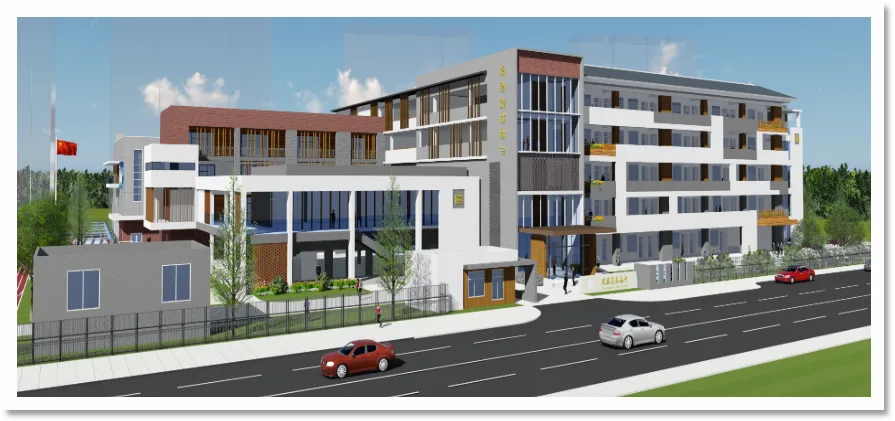
Project Overview
Address: 102 Jinggu Middle Road, Minhang District, Shanghai
Investment Type: Government funded
Project Type: Educational Architecture
BIM Application Stage: Design and Construction
Developer: Shanghai Minhang Urban Construction Investment and Development Co., Ltd
Design Team: China Energy Engineering Group (Shanghai) Co., Ltd., in collaboration with Shanghai Tiantian Construction Engineering Consulting Co., Ltd. and Shanghai Kuicheng Construction Engineering Consulting Co., Ltd
Construction Contractor: Shanghai Construction Seventh Construction Group Co., Ltd
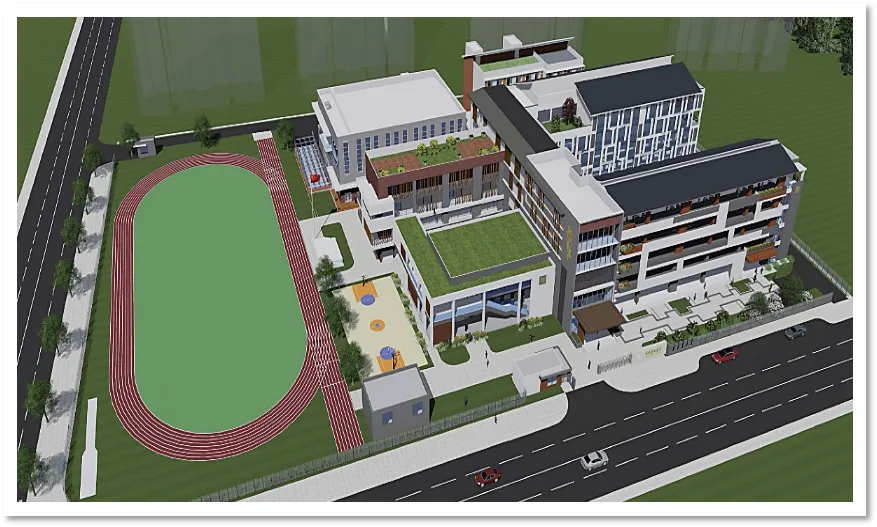
Project rendering ▲
Key Highlights of BIM Technology Application
1. BIM in Steel Structure Design
This project is among Shanghai’s first large-scale steel structure public buildings, employing steel structural assembly combined with BIM technology. One of the main challenges was integrating steel and concrete to meet both functional and aesthetic design requirements. Using Tekla software for steel structure modeling, BIM technology allowed for clear identification of component clashes, improved design quality, expedited construction, and ensured the project timeline was met.
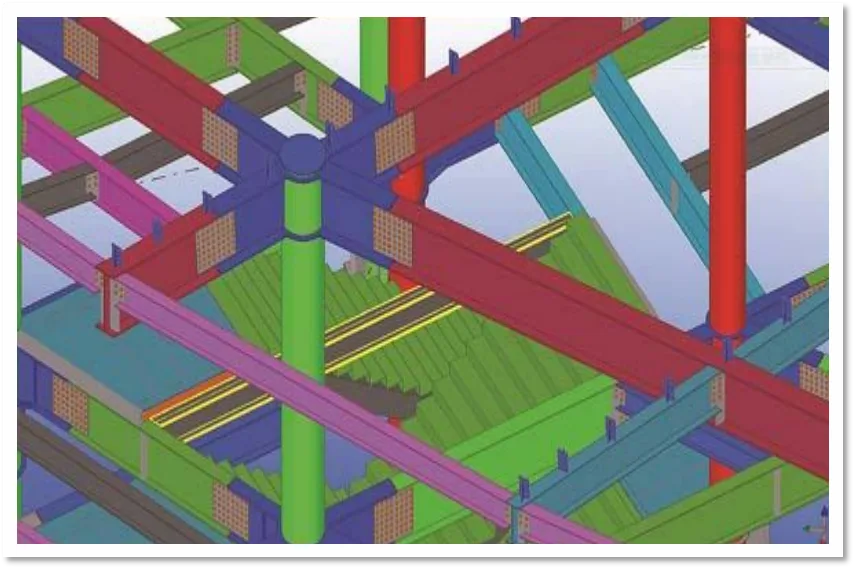
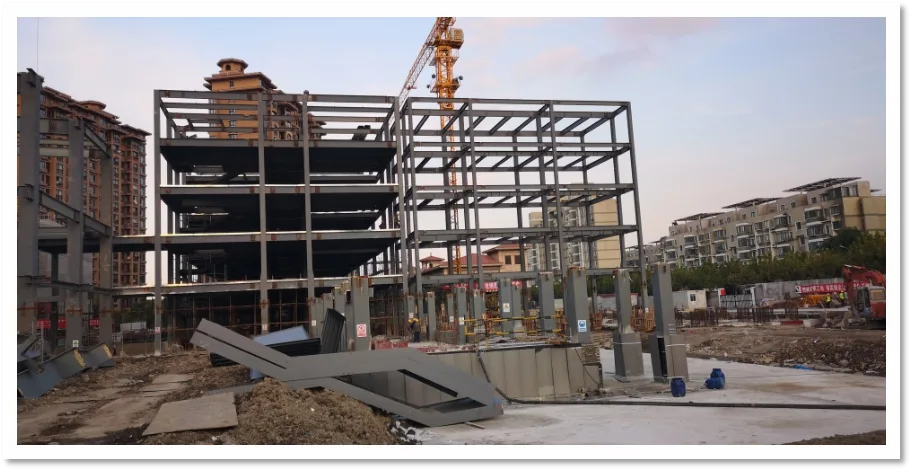
2. Comprehensive BIM Application in Pipeline Design
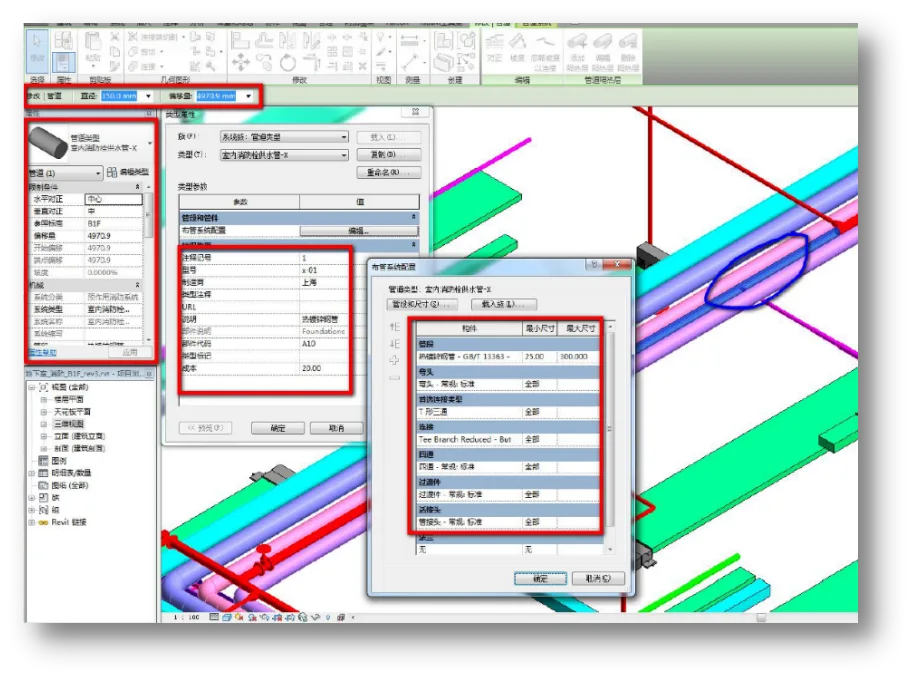
During the mechanical and electrical design phase, BIM technology provided enhanced visibility through realistic 3D models. By integrating all disciplines into a single model, BIM enabled effective collision detection and visual identification of pipeline conflicts. This allowed for direct optimization during the design process, significantly improving design quality.
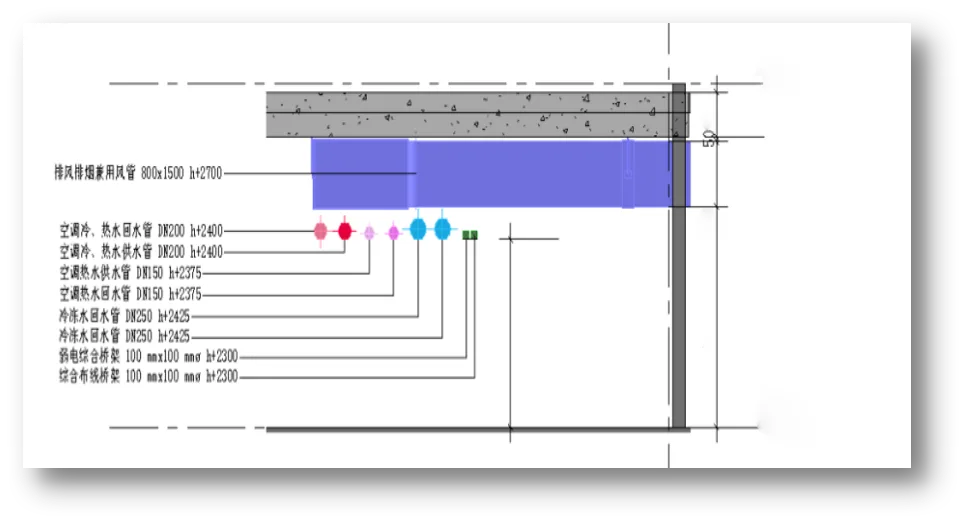
BIM also facilitated precise elevation placement of pipelines and visually represented the distribution of floor net heights. This made it easier to identify bottlenecks affecting ceiling heights, optimize designs accordingly, and maintain accurate control over net and ceiling heights.
















Must log in before commenting!
Sign Up