
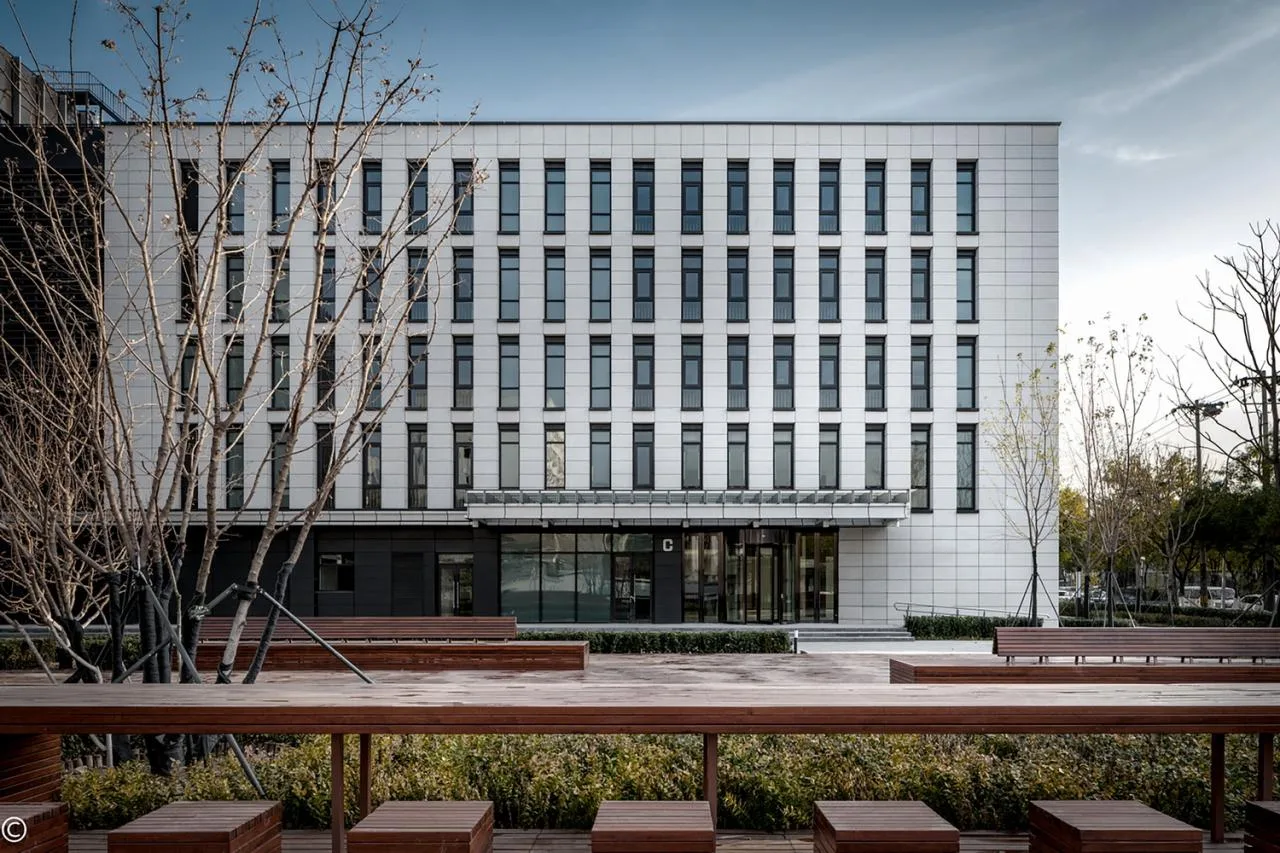
Project Overview
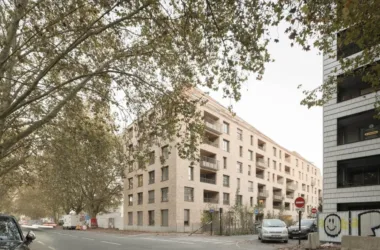
The building is situated in the former Era Group office and production plant, covering an area of approximately 12,000 square meters, with a total construction area of about 26,000 square meters. The L-shaped building rises six floors above ground, bordered by urban roads on two sides and neighboring buildings on the others.
The comprehensive renovation focuses on both interior and exterior transformation, embracing five core principles: universality, flexibility, comfort, iconic design, and economy. Building upon the original indoor and outdoor composition, the design replaces the external façade, reorganizes internal functions, adds engaging spaces, and strengthens the overall structure. This results in a significant enhancement of the building’s appearance, functionality, and structural safety.
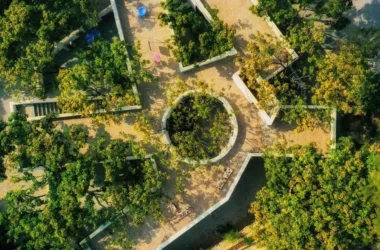
Inspired by the form of a “big tree,” the design mimics its organic system—from roots to crown—to reshape the surrounding environment. The project aims to breathe new life into the old building by integrating a tree-like spatial organism within its framework.
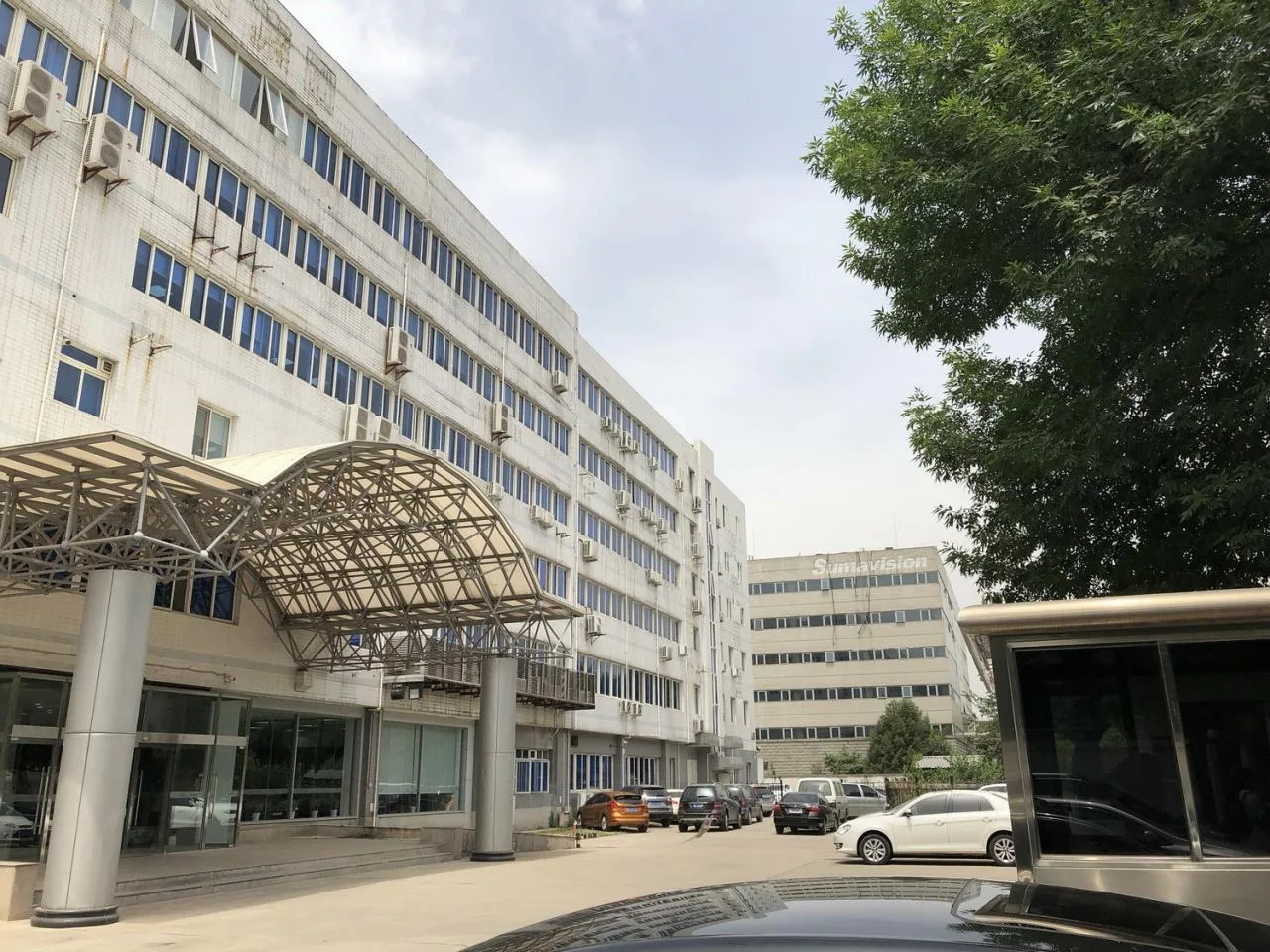
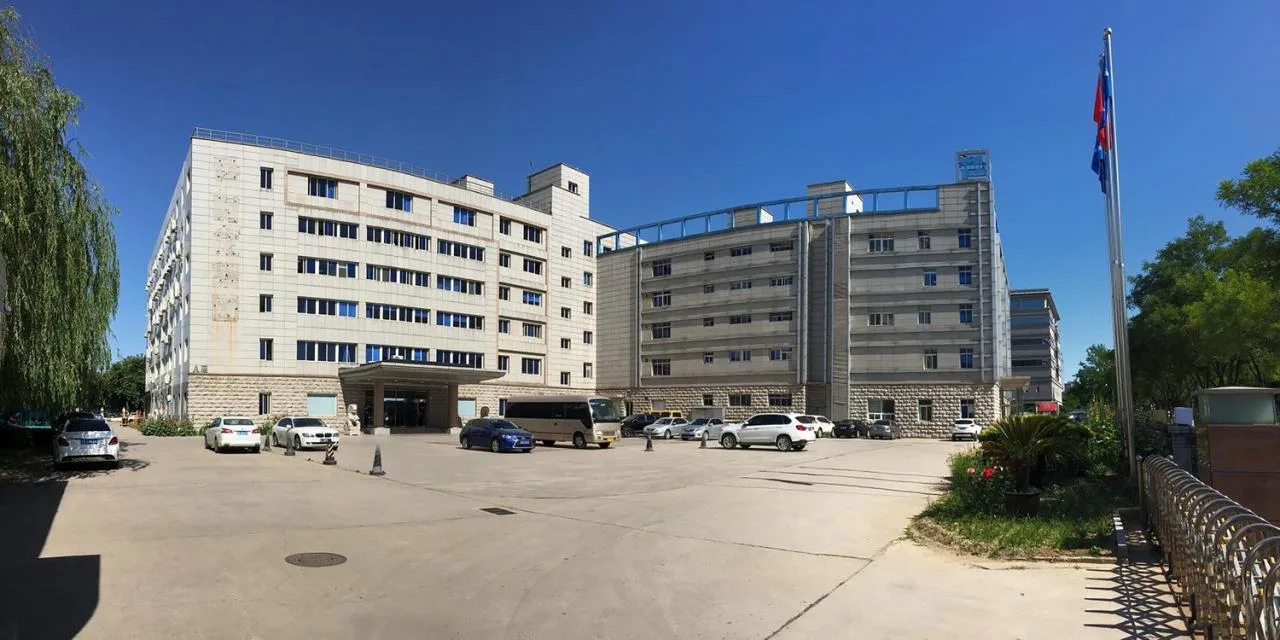
Before the Renovation
Facade and Form Reshaping
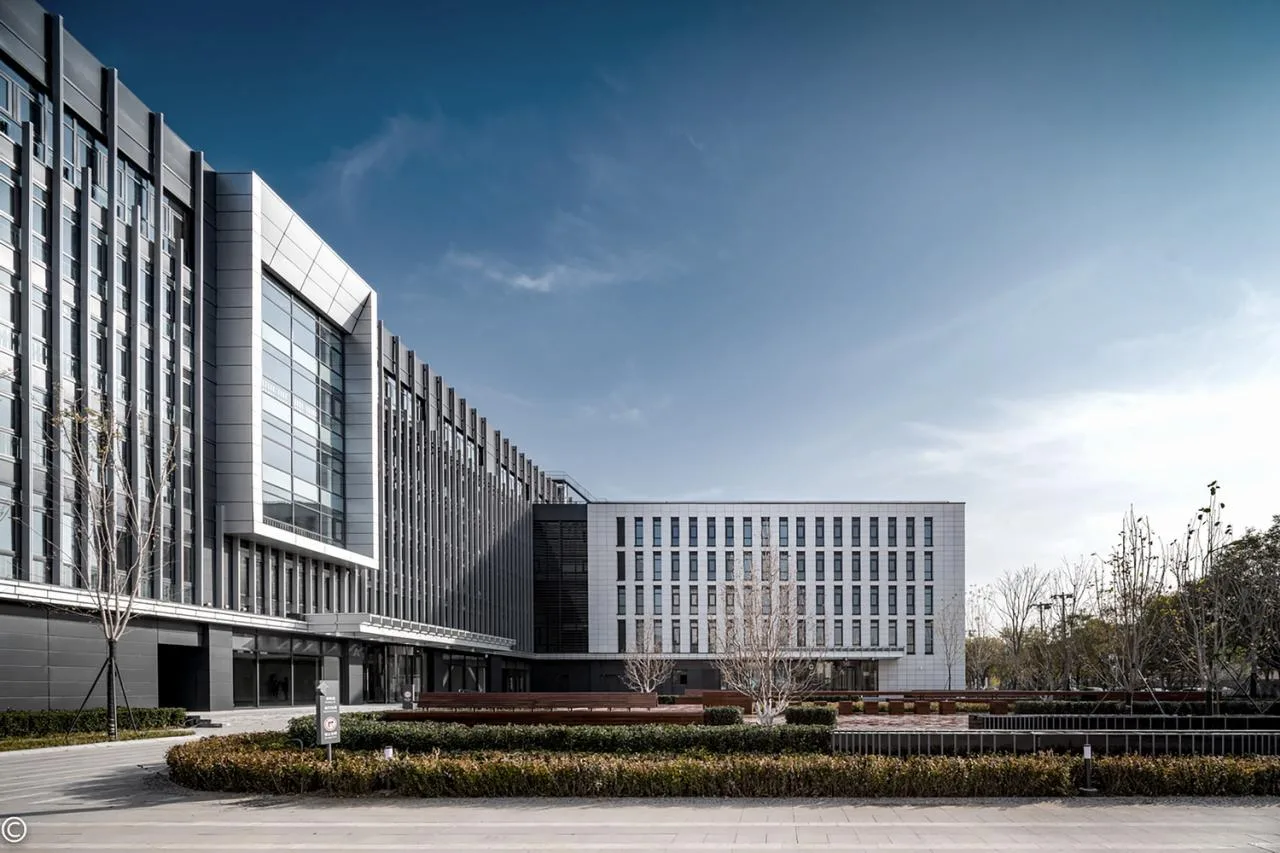
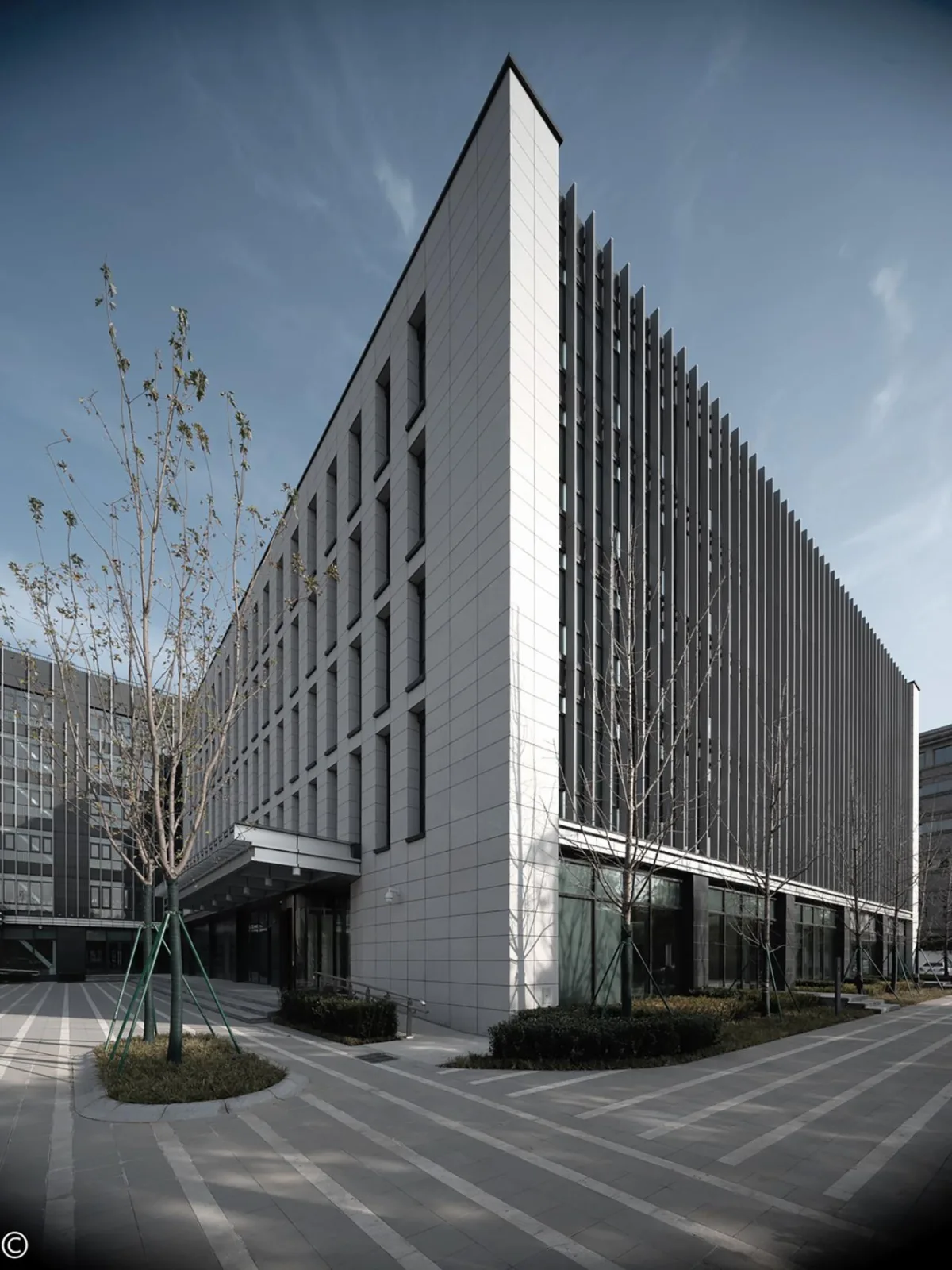
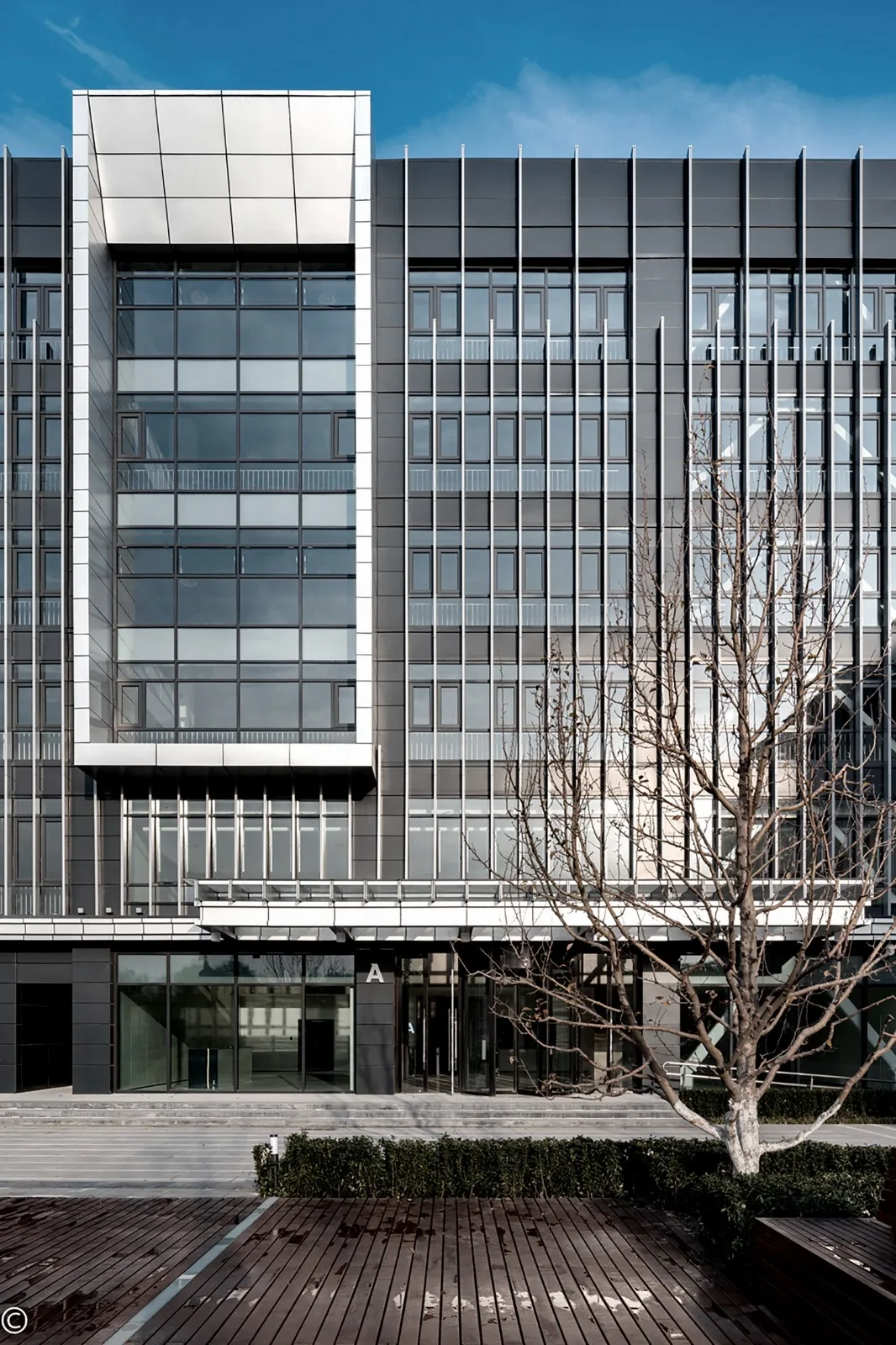
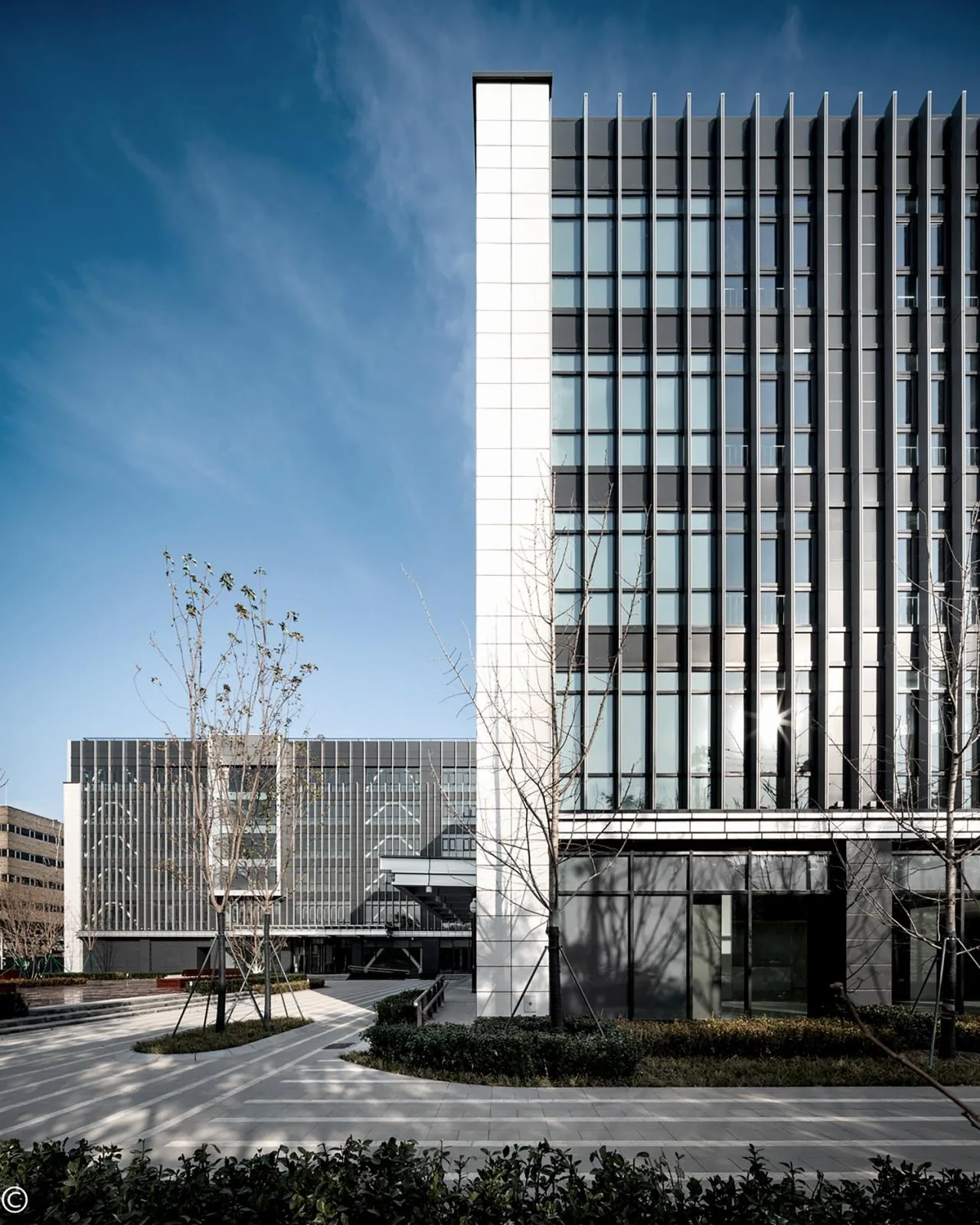
Building on the original architectural composition, the renovation employs glass curtain walls complemented with external decorative sunshade grilles and white stone curtain walls as the primary exterior materials.
Damaged and outdated decorative surfaces, along with cluttered hanging boards and unnecessary elements, have been removed. The form is reorganized based on internal spatial logic, and external insulation is applied to the beams and columns, following green building renovation principles that balance virtual and real elements.
To optimize energy efficiency and natural lighting, the window-to-wall ratio on the south-facing side is increased, enhancing sunlight penetration in line with building orientation and energy-saving regulations.
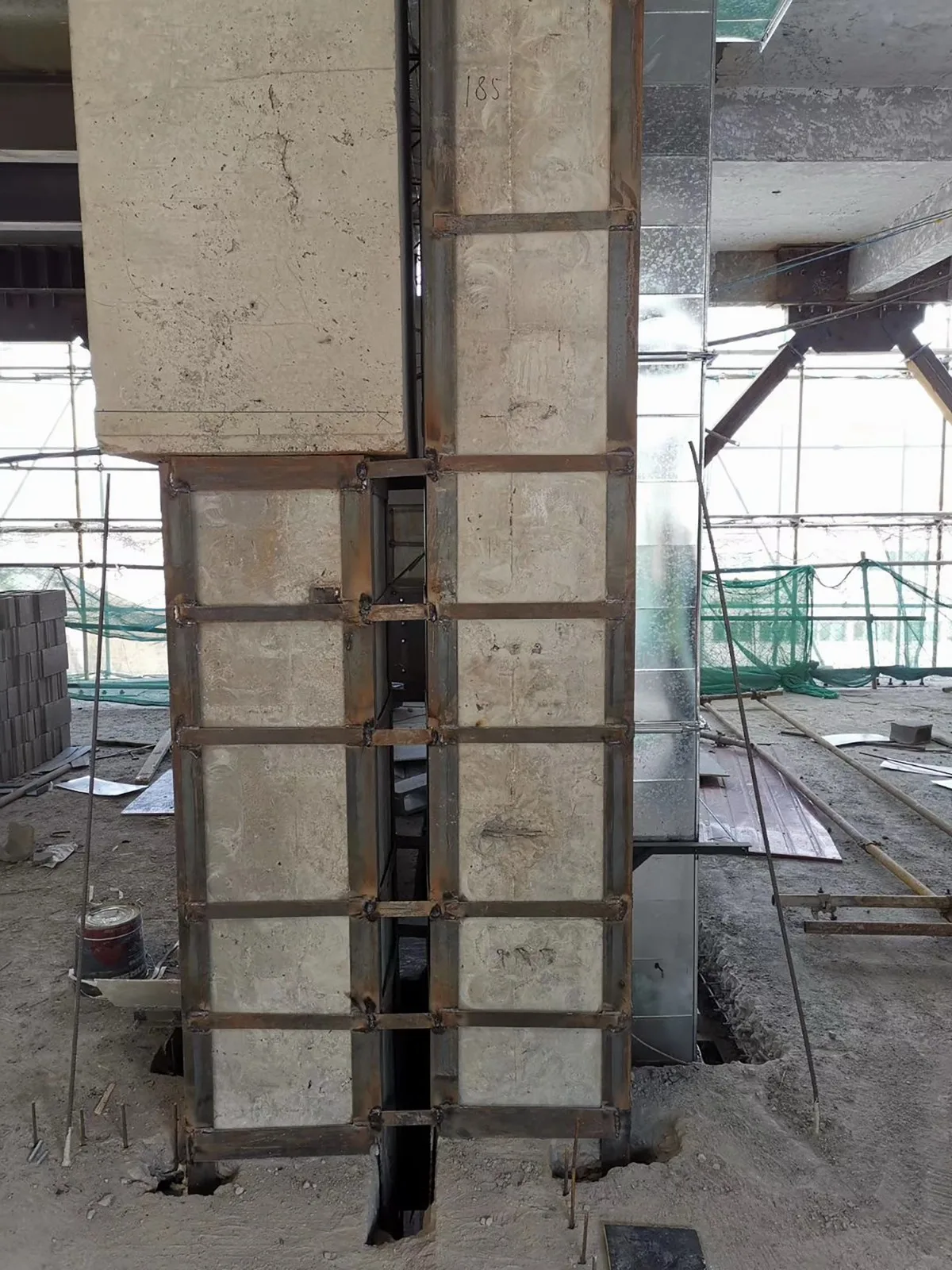
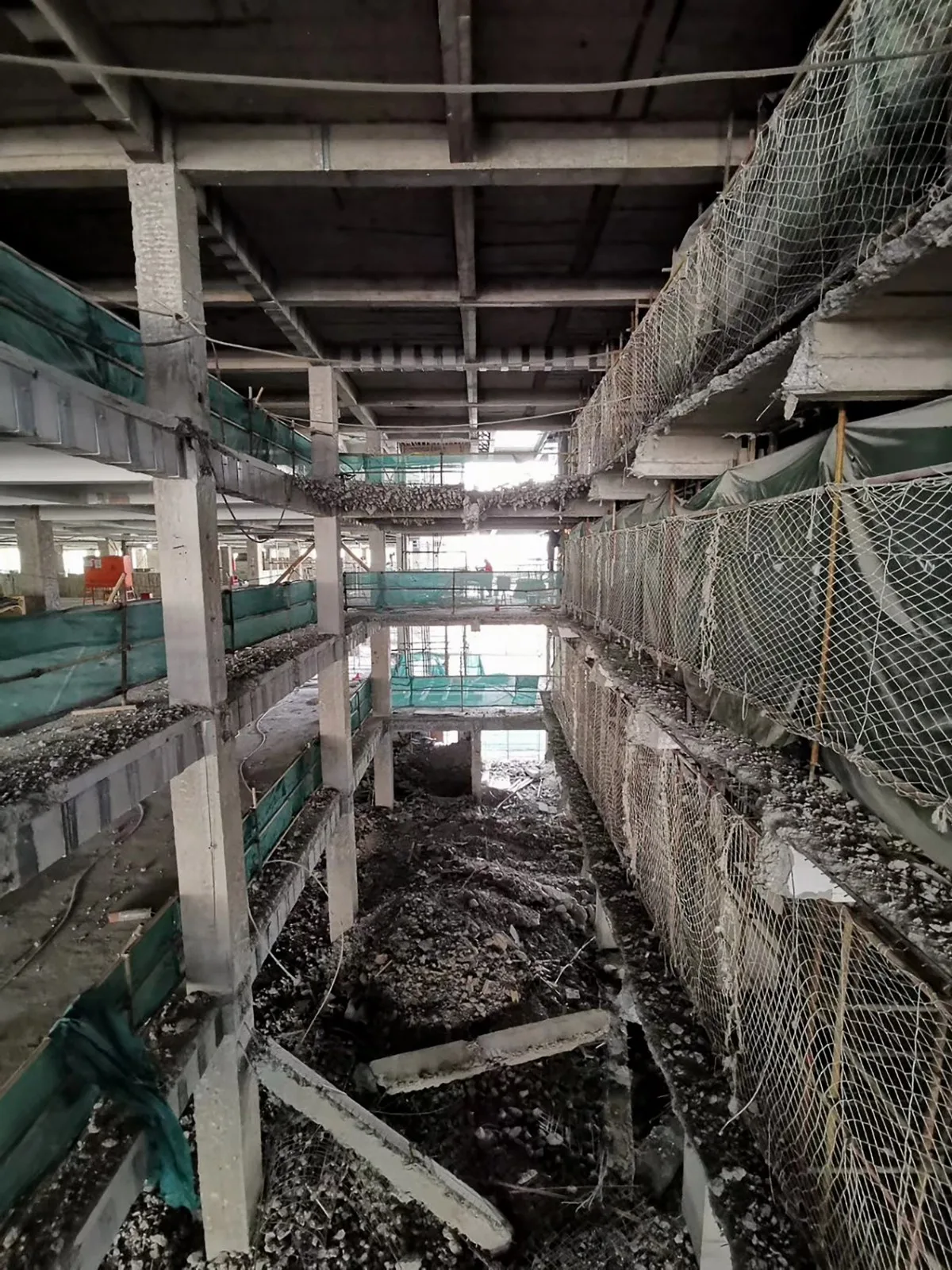
△ Under renovation
The east and west façades, which face the street, serve as the building’s main display surfaces and are meticulously designed. Both sides feature primarily virtual elements, controlling the lighting surface with vertical decorative sunshade grilles to present a modern, minimalist façade.
The north-facing side is mostly solid, clad in white stone curtain walls with strict control over window-to-wall ratios, and minimal shading. The walls beneath windows and deep window openings have been preserved.
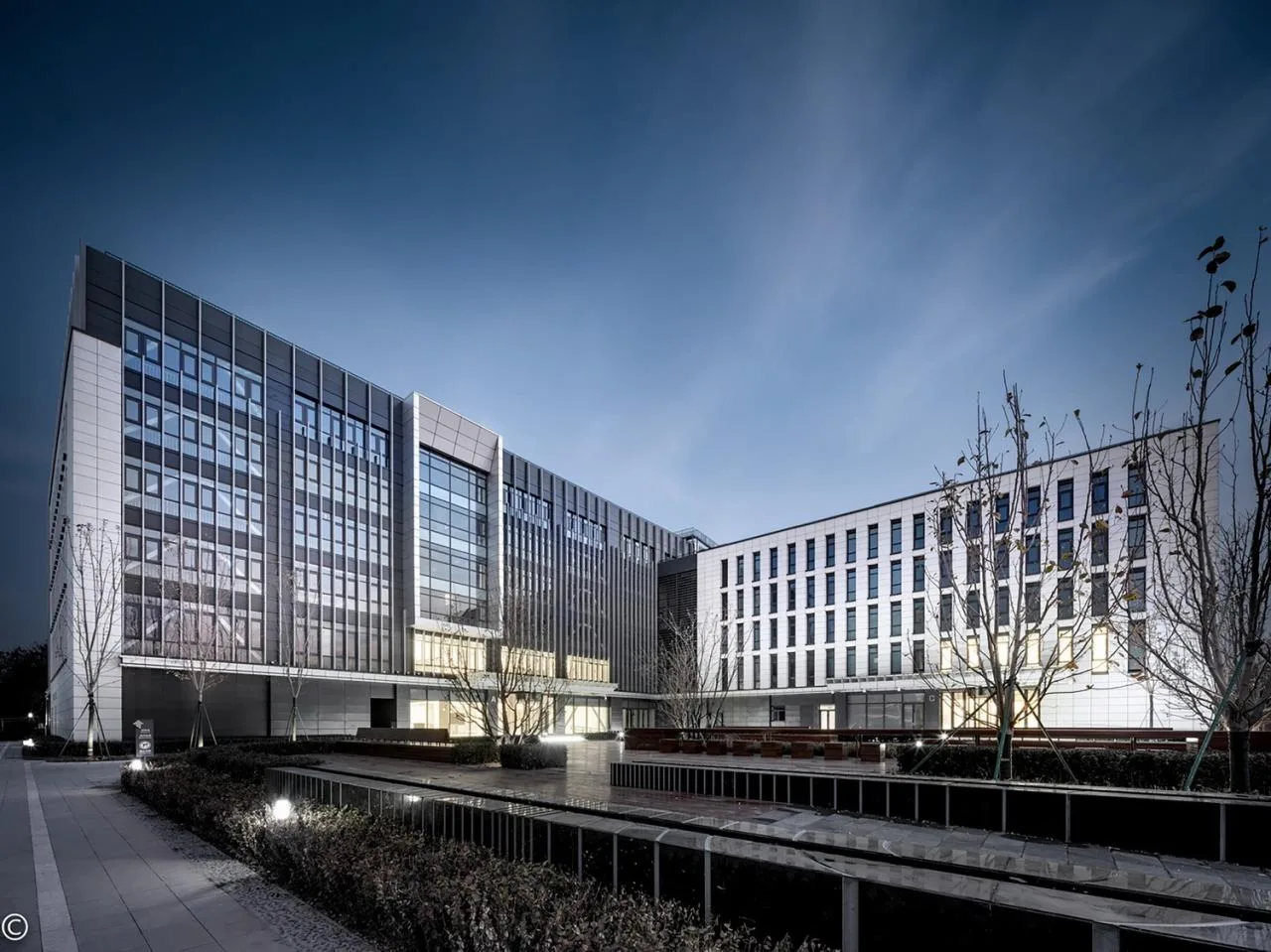
The south façade combines glass curtain walls, decorative grilles, and white stone cladding, creating dynamic light and shadow patterns that respond to sunlight.
Overall, the exterior design reflects the internal spatial changes through the interplay of decorative grilles, glass, and stone curtain walls, ensuring harmony and logical continuity between inside and outside.
Reshaping Spatial Architecture
The interior space has been reorganized into a tree-like structure, with clear hierarchy and a cohesive, organic whole.
A new vertical transportation core has been inserted within the original building volume, acting as the “backbone” of the internal space. Additionally, three two-story-high lobbies have been introduced on the first floor, serving as the “foundation” that connects with the urban environment and attracts people and vitality from the surroundings.
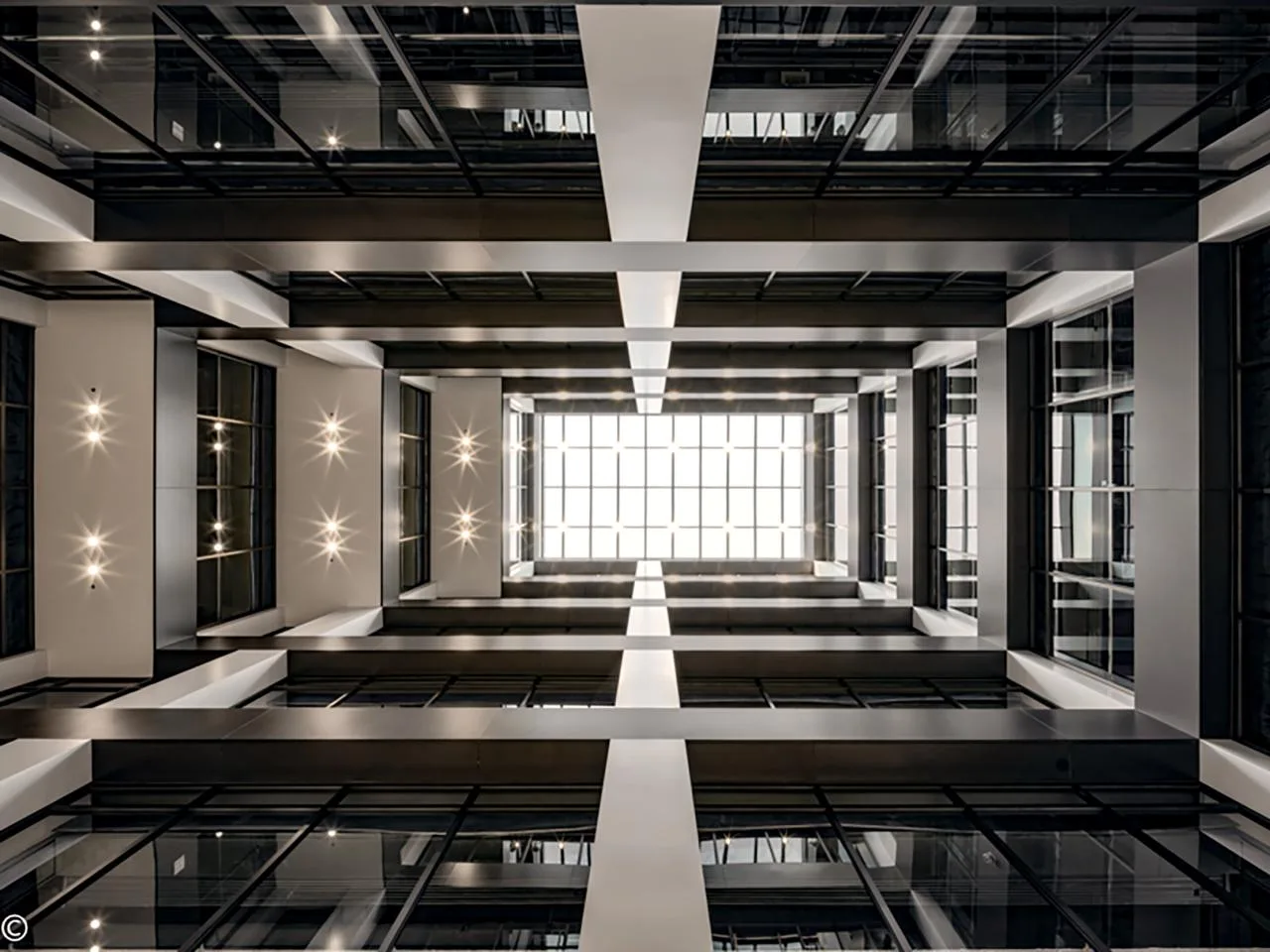
The newly created atrium spans from the first to the sixth floor, featuring a pyramid-shaped space that narrows layer by layer. This design floods natural light into the building’s deepest areas, enhancing vitality. Above the second floor, three multi-level sky courtyards align with the lobbies, bringing urban views into the building from all directions and creating engaging architectural spaces.
These open atriums and sky courtyards represent the “fruit” of the architectural transformation.
Reshaping Venue and Outdoor Spaces
On the east side along the development road, the site opens fully to create an entrance plaza that seamlessly connects with the urban space.
Parking areas have been redesigned, adding multi-level parking on both the north and south sides.
The original parking lot in the northwest corner has been transformed into a centralized green area serving as a corporate garden.
The first floor serves as an auxiliary functional area, including office lobbies, commercial spaces, logistics, and equipment rooms.
Three office lobbies are closely connected to the core vertical circulation, distributed on the east and west sides. This arrangement allows for flexible integration of the building’s interior spaces.
Logistics and equipment rooms are centrally located on the first floor, optimizing pipeline layouts and maximizing the use of the building’s depth.
Functional Layout Reshaping
Floors two through six contain the main functional areas, with office spaces arranged around the central core and surrounded by sky gardens, maximizing environmental quality and spatial efficiency.
Project Drawings
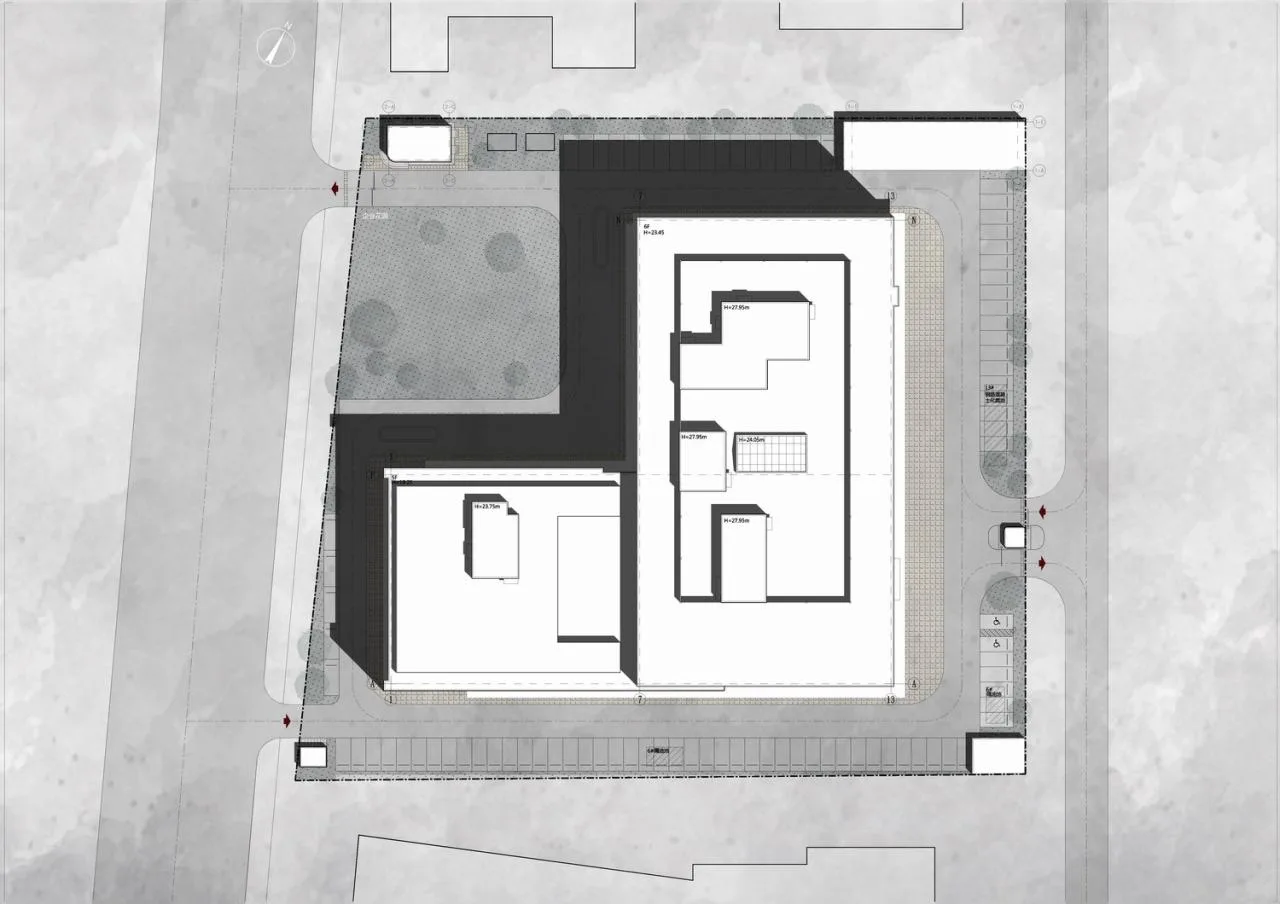
△ General Layout Plan
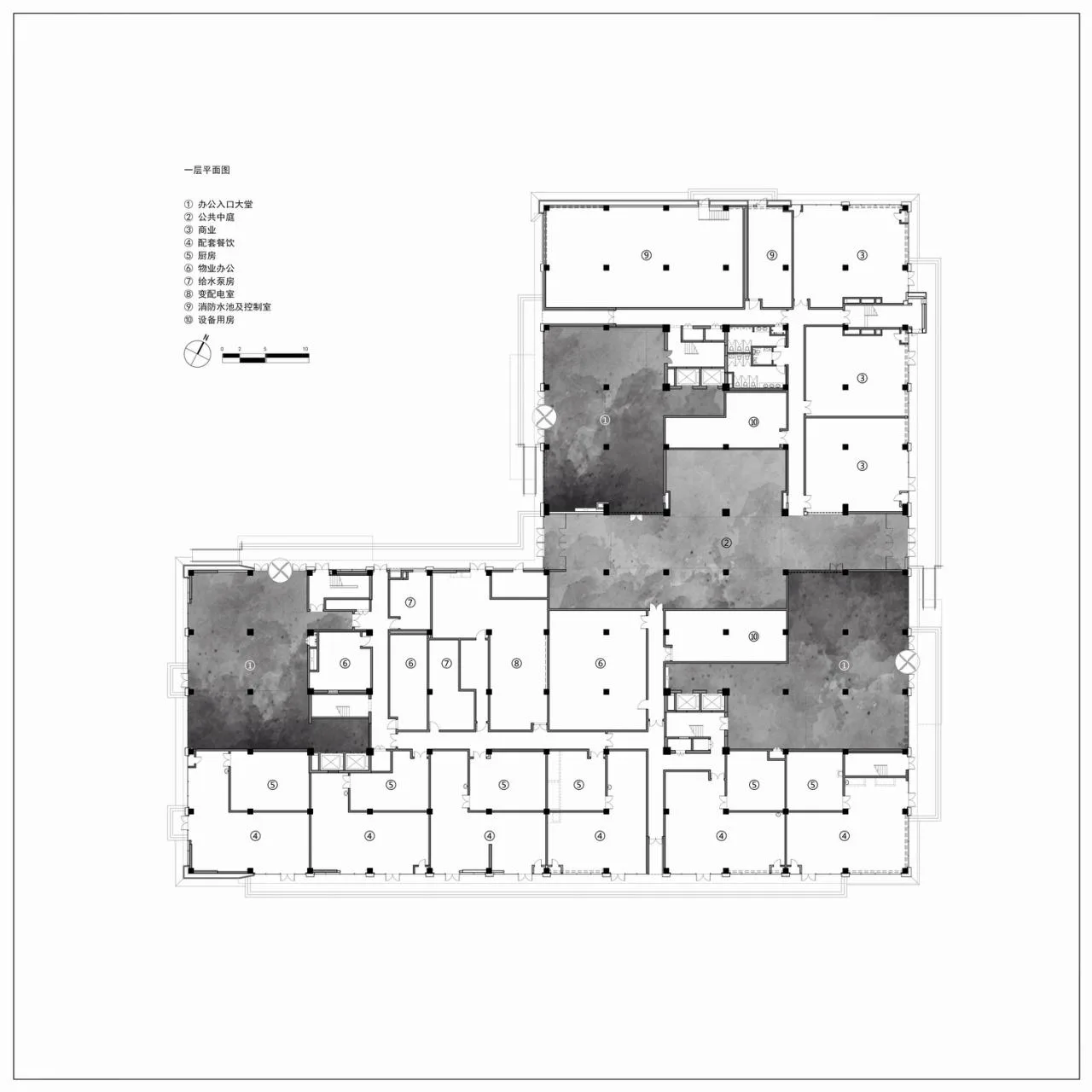
△ First Floor Plan
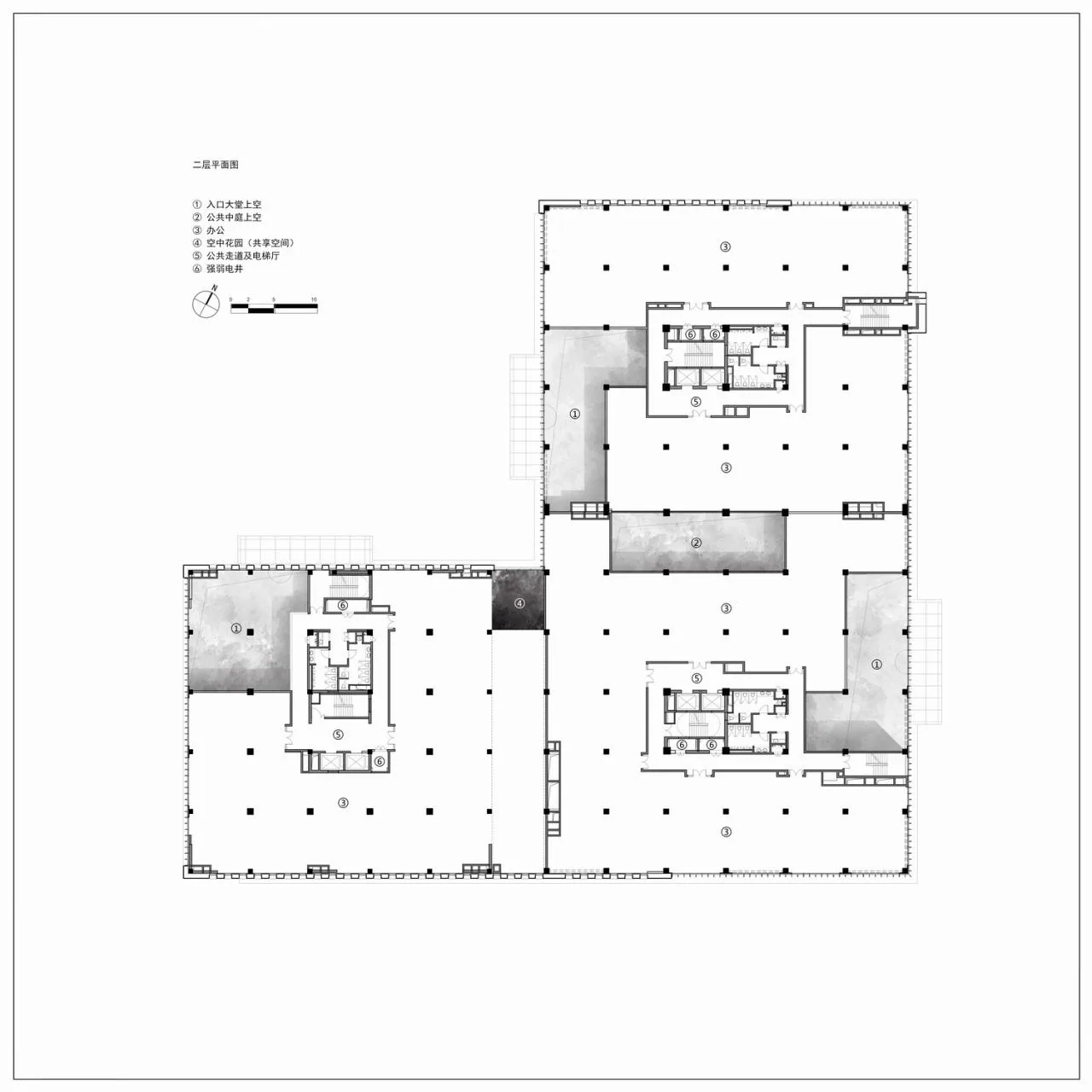
△ Second Floor Plan
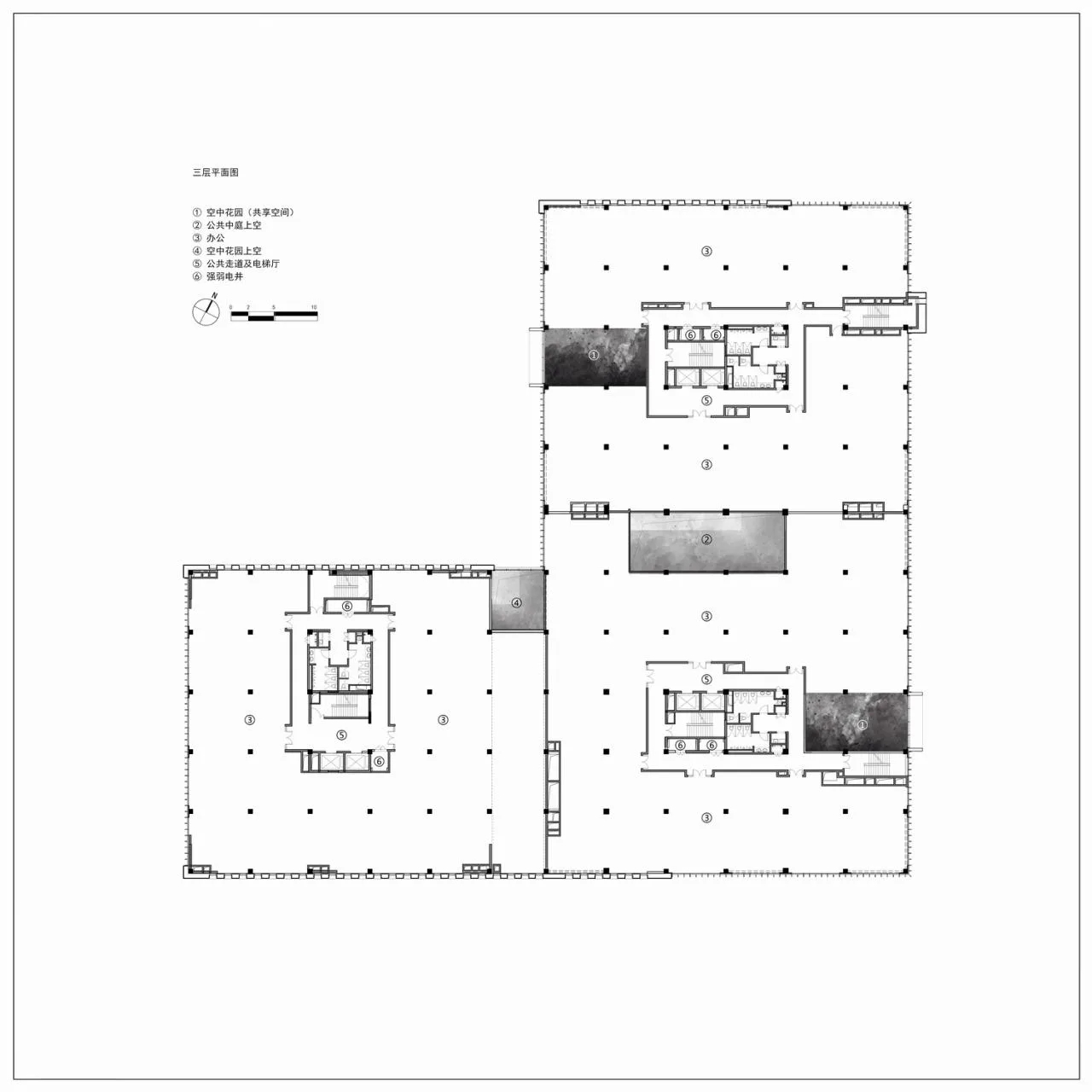
△ Third Floor Plan
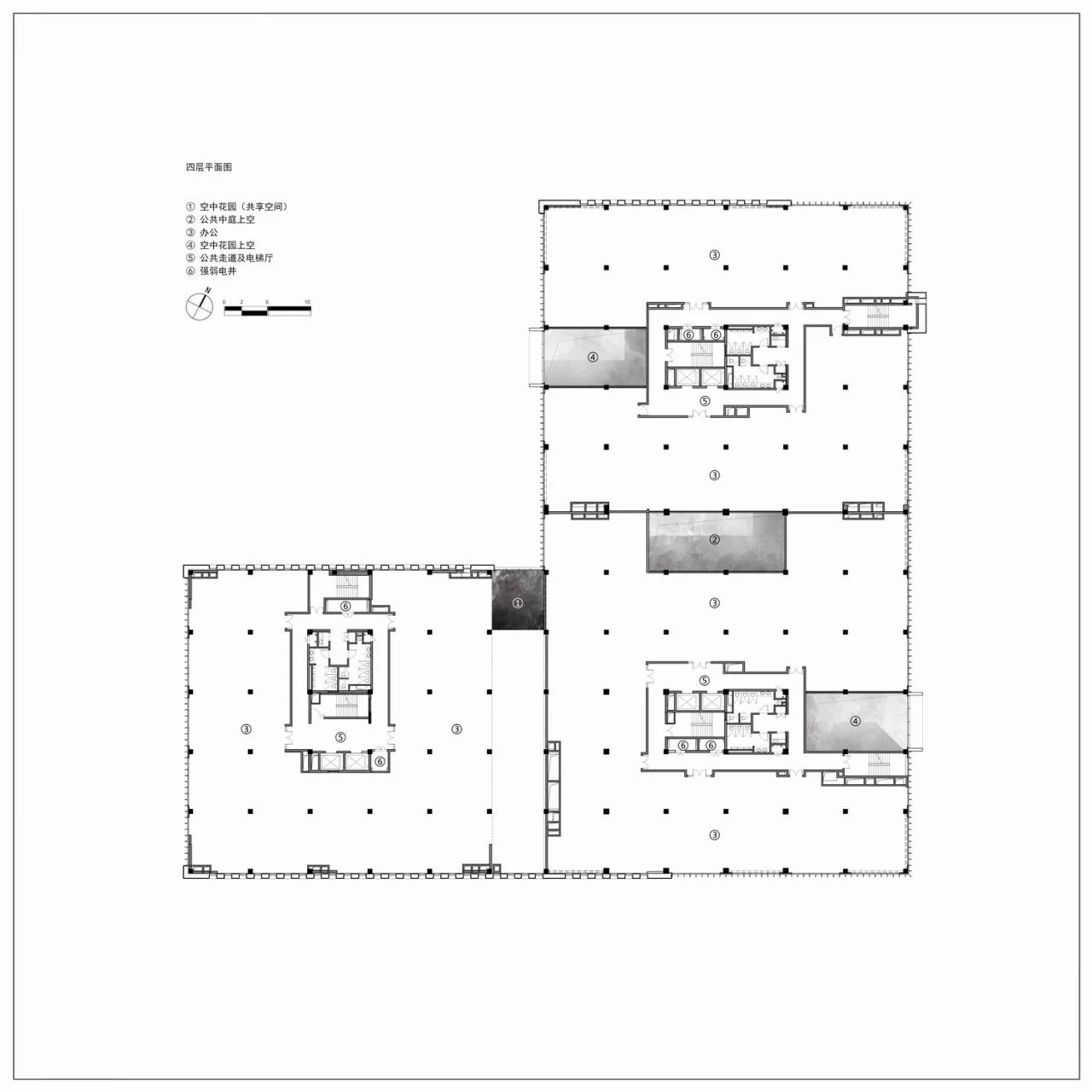
△ Fourth Floor Plan
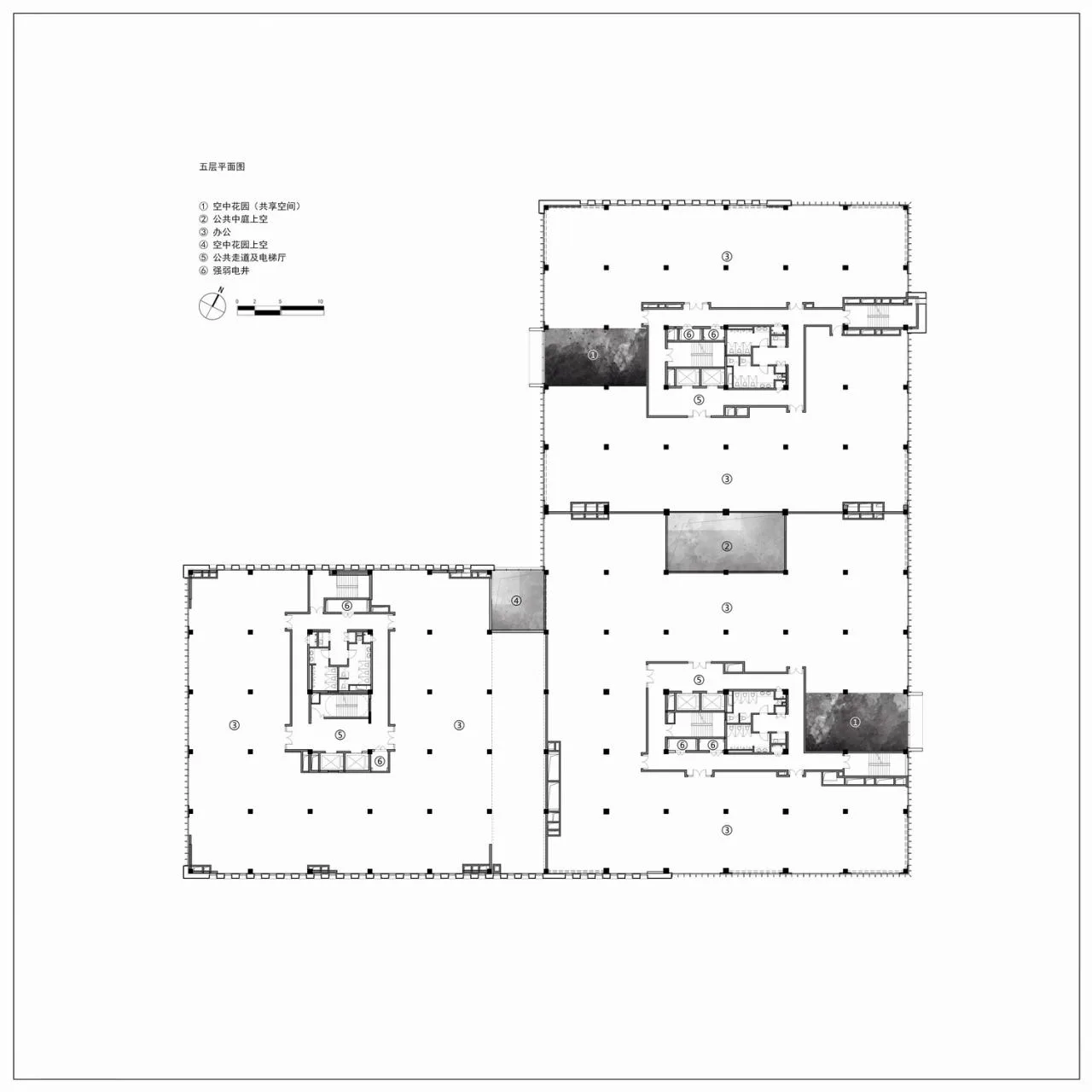
△ Fifth Floor Plan
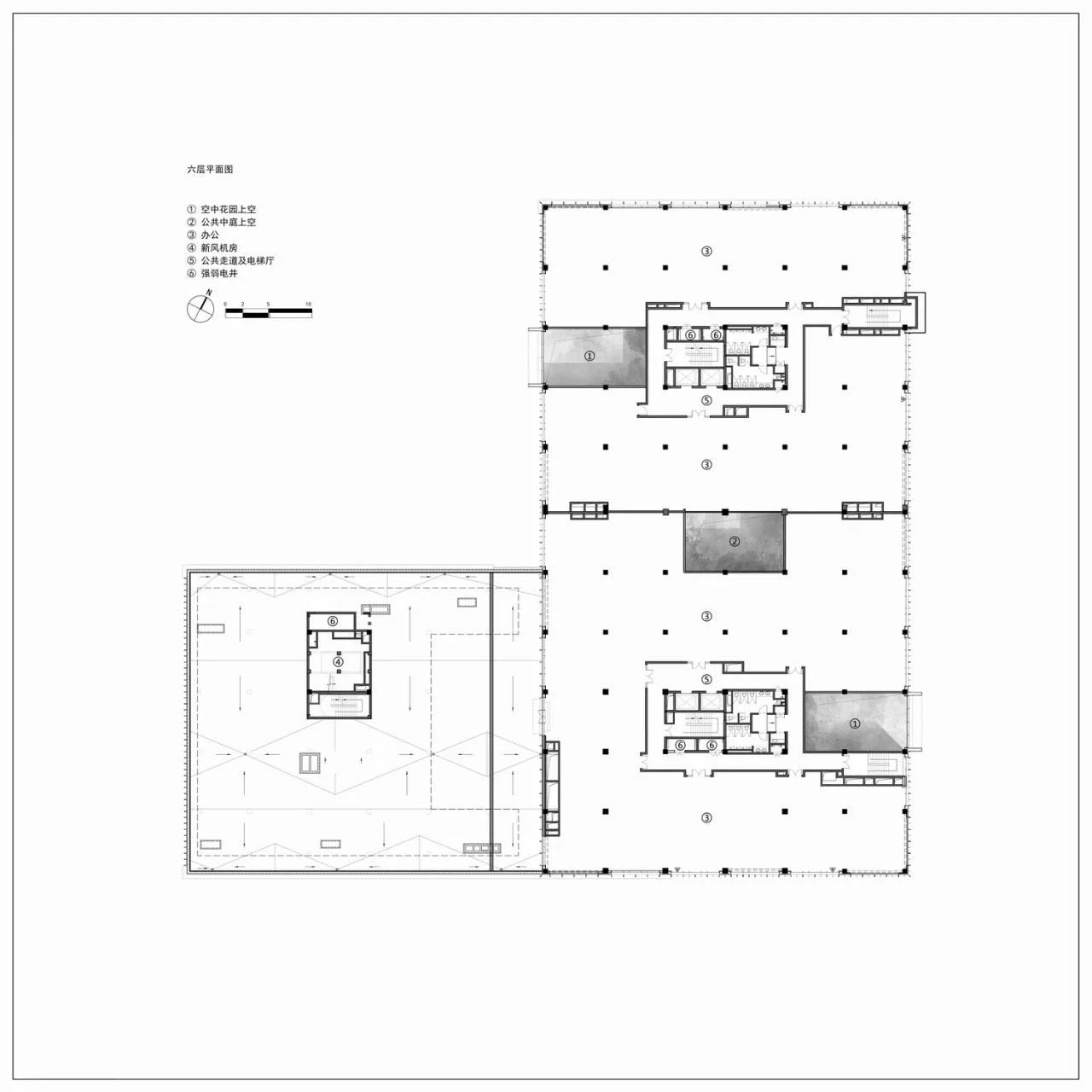
△ Sixth Floor Plan
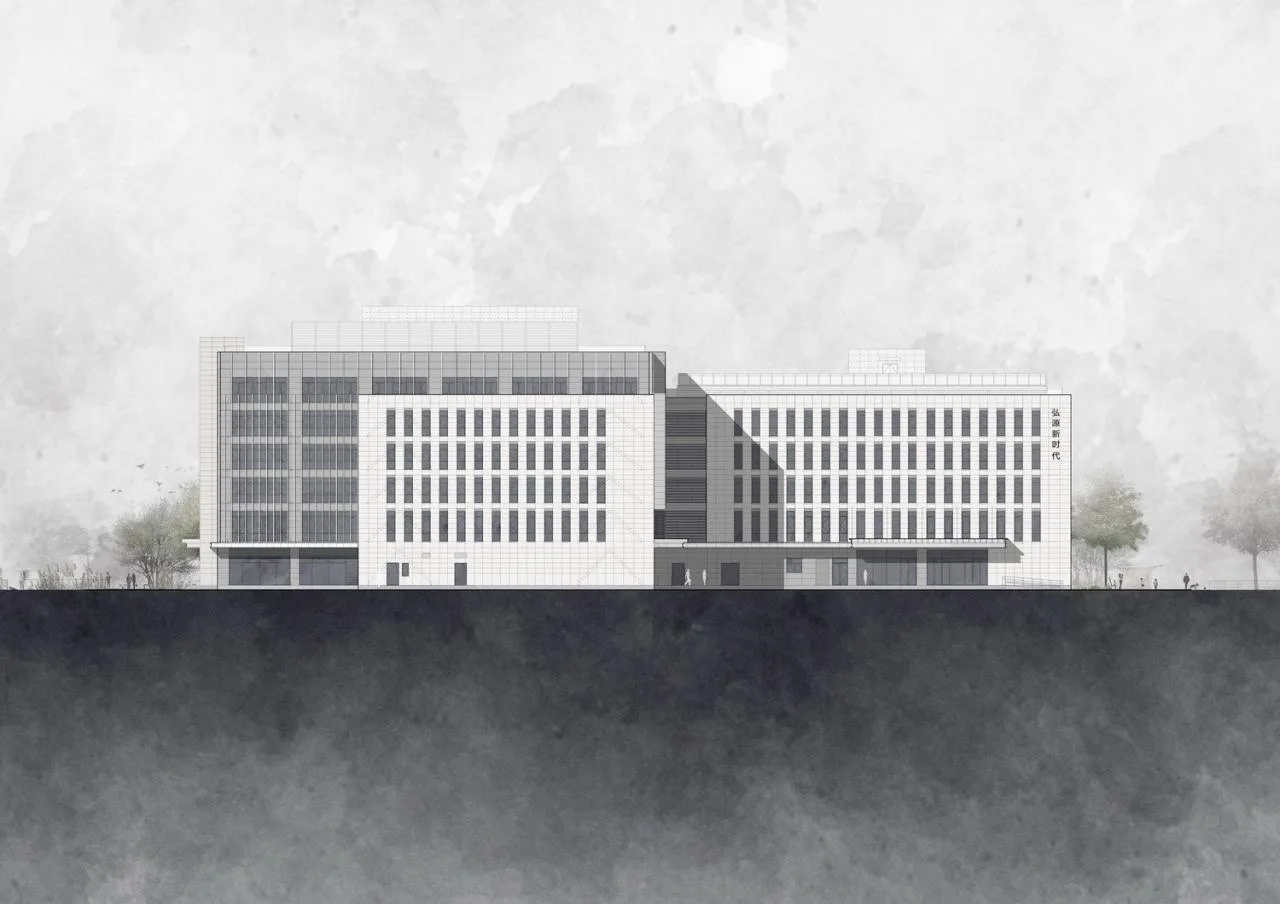
△ Elevation Drawing
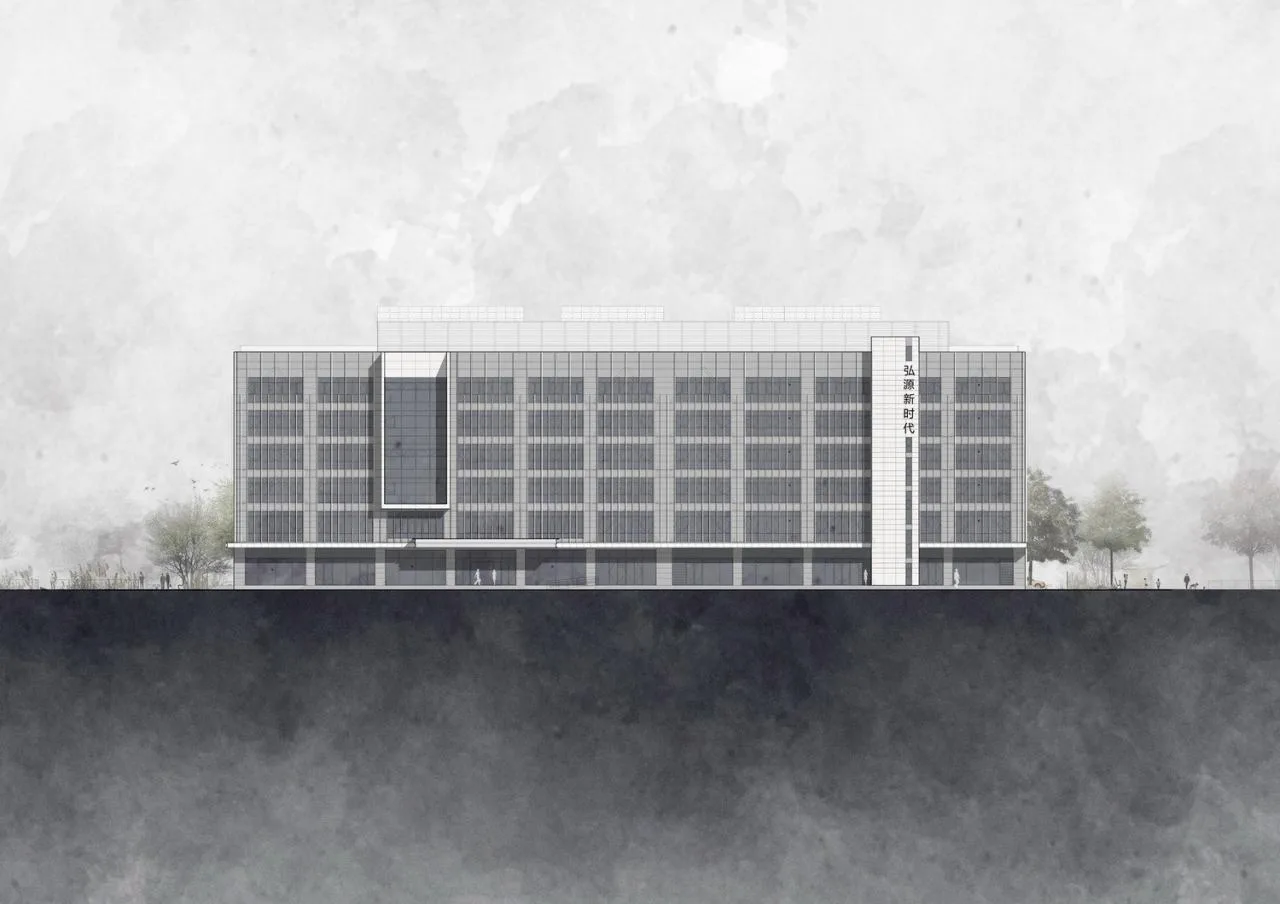
△ Elevation Drawing
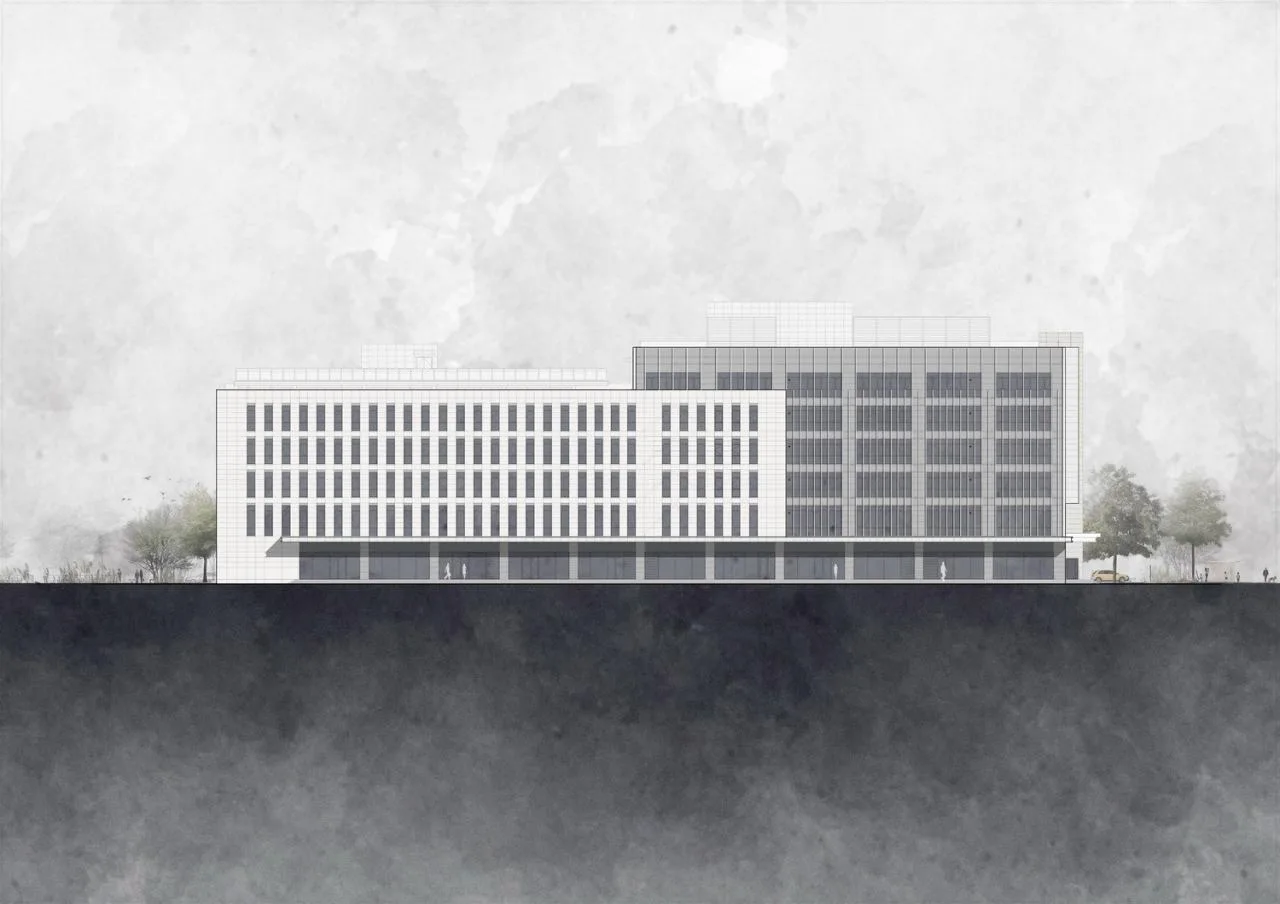
△ Elevation Drawing
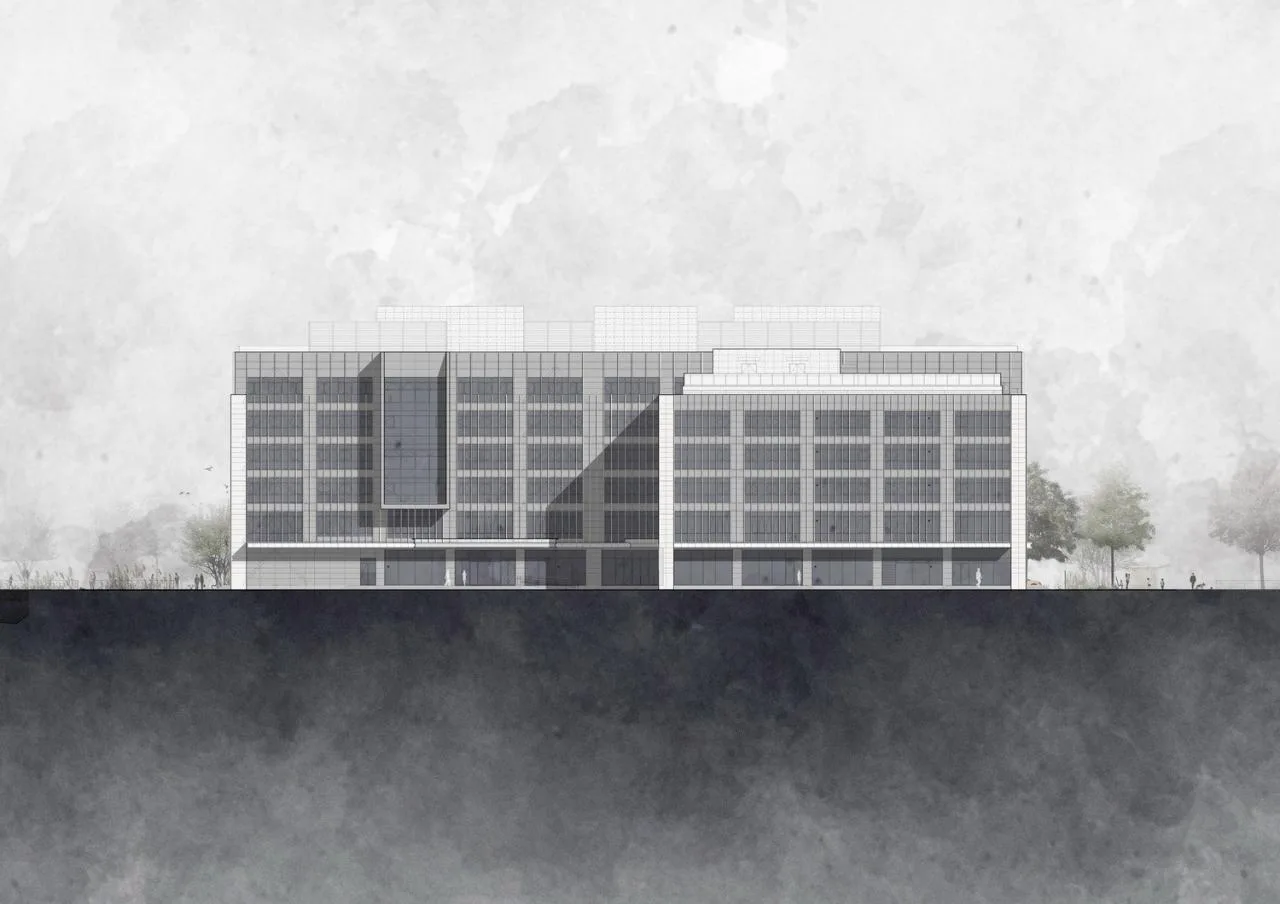
△ Elevation Drawing
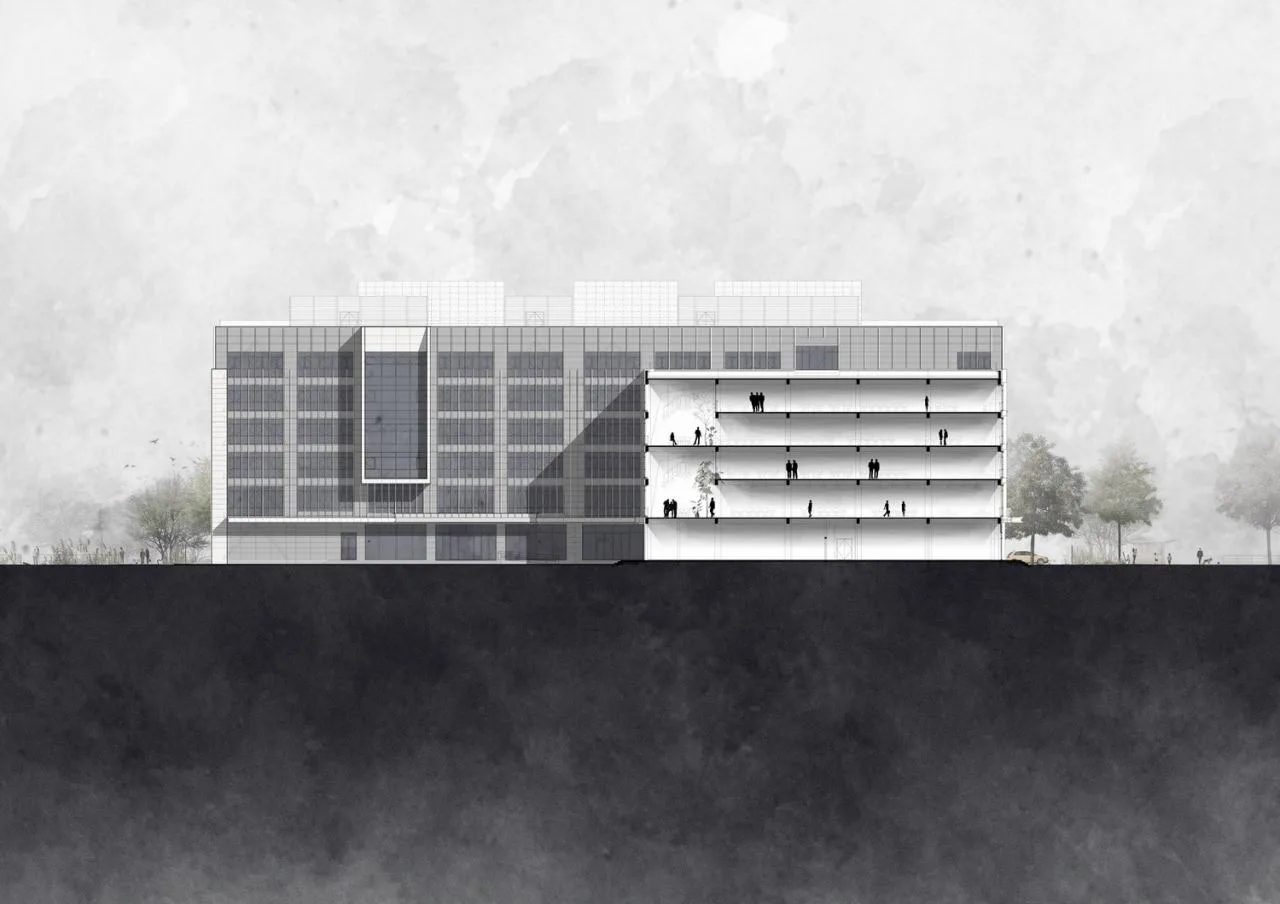
△ Elevation Drawing
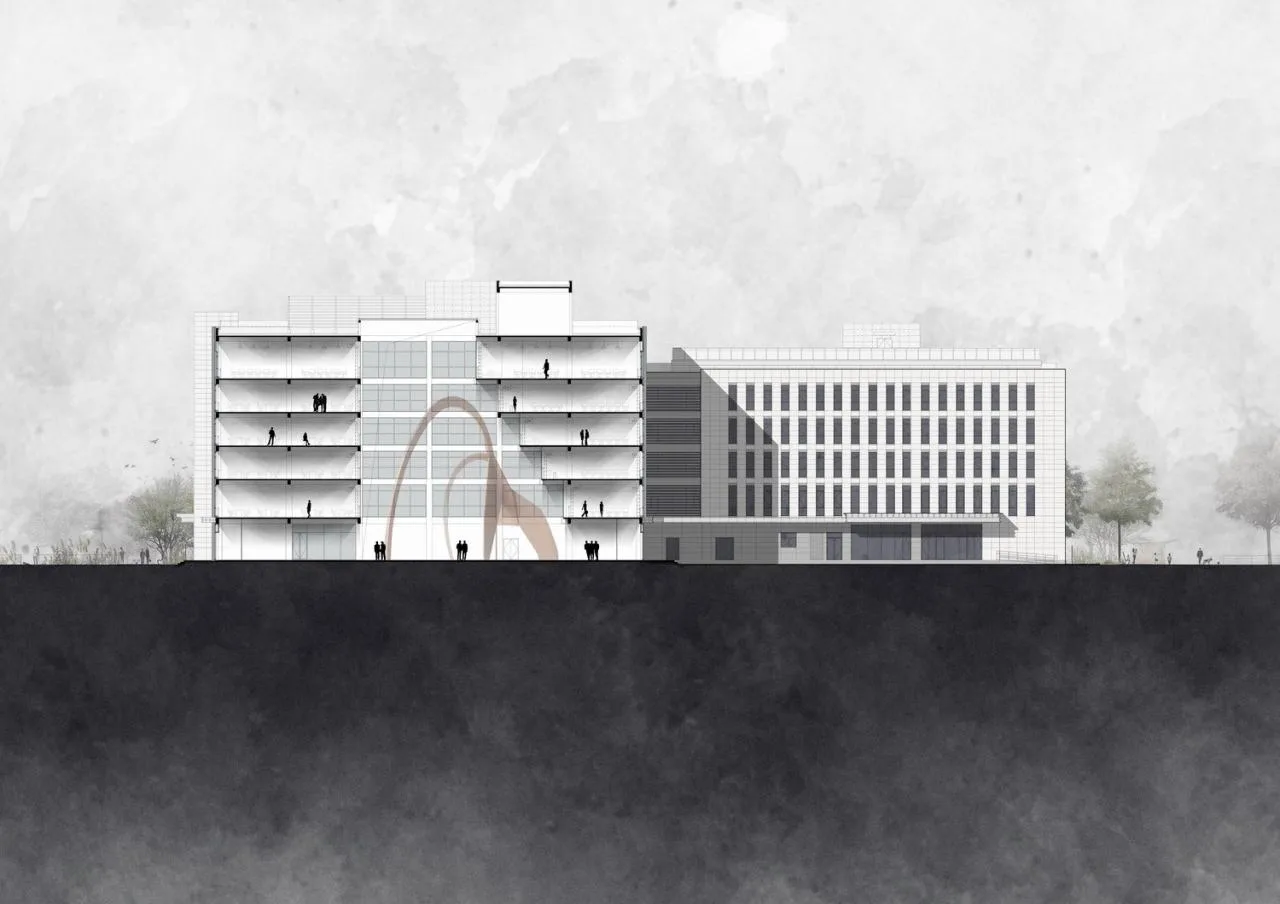
△ Elevation Drawing
Project Information
Project Name: Hongyuan New Era Building
Designer: Beijing Puzuo Architectural Design Co., Ltd
Company Official Account: Puzuo Building PUDO
Design Year: 2018
Year of Completion: September 2020
Creator: Zhenhui
Design Team: Xu Wenting, Fan Zheng
Project Address: 38 Shangdi West Road, Haidian District, Beijing
Building Area: 26,000 square meters
Photography Copyright: Hongyuan Asset
Landscape Design Unit: Lu Kai (Beijing) International Landscape Design Co., Ltd
Indoor Hard Decoration Design Unit: Beijing Pengming Building Decoration Engineering Co., Ltd
Lighting Design Unit: Beijing Sansaishi Environmental Art Design Institute Co., Ltd
Construction Drawing Design Unit: China Construction Technology Group Co., Ltd
Client: Hongyuan Asset














Must log in before commenting!
Sign Up