
For many years, architects have relied on flat drawings to communicate their designs, using sketches to unleash their creativity and visualize the spaces they imagine. However, traditional 2D CAD drawings are often cumbersome, prone to errors, and challenging for collaboration and communication. When used for coordination and synthesis, these drawings tend to reveal only surface-level issues after significant time, making it difficult to detect deeper, hidden problems. This frequently results in numerous design changes later in the project.
1. Collaborative Design Using BIM
Collaborative design focuses on exchanging data and files, sharing ideas within and between design firms. Errors within individual disciplines are usually minimal; the main causes of design changes arise from poor coordination between disciplines and between design and construction teams.
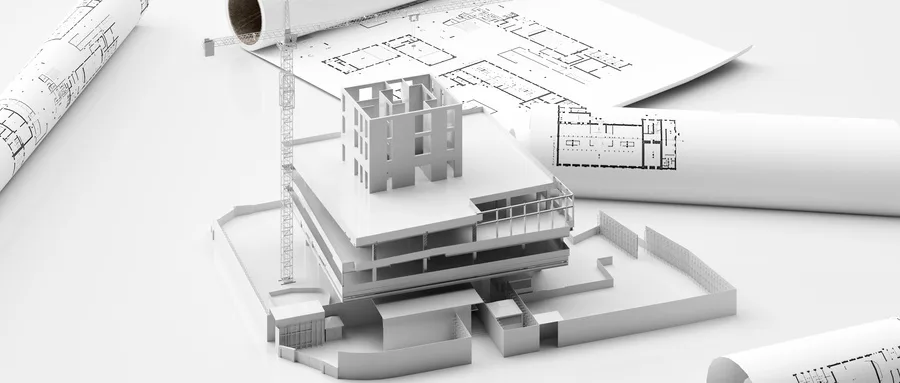
A project involves multiple disciplines such as site layout, architecture, structural engineering, interior decoration, plumbing, electrical systems, HVAC, and power supply. BIM provides an integrated platform for these disciplines to collaborate by combining their 3D models into a unified BIM information model. This model can generate accurate and intuitive plans or sectional views for any discipline.
BIM technology replaces the traditional segmented design approach—which required manual coordination and fragmented communication—with a parallel, interactive workflow. This enhances collaboration and offers a centralized communication platform for all disciplines. The integration of various design models into a single BIM model fosters better teamwork and coordination throughout the project.
2. BIM-Driven Design Decision-Making
During the conceptual design phase, designers must make critical decisions regarding site selection, orientation, appearance, structural form, energy efficiency, sustainability, as well as cost estimates for construction and operation. BIM enables simulation and analysis of multiple design schemes, allowing more stakeholders to participate early in the process and provide feedback to ensure decisions are sound and feasible.
BIM supports modeling, volumetric and spatial analysis, energy consumption studies, and construction cost estimations, making initial planning data more reliable. It allows the creation of detailed BIM models across disciplines such as architecture, structure, and MEP (mechanical, electrical, plumbing). These models facilitate analysis of energy use, structural integrity, acoustics, thermodynamics, sunlight exposure, clash detection, and quantity takeoffs.
For complex projects, BIM plays a crucial role in optimizing designs, comparing alternatives (including surface rationalization), and assessing feasibility. Performance analyses—such as energy use, daylighting, sunlight penetration, and evacuation simulations—are invaluable for refining building designs.
Excellent designs often emerge through repeated comparisons of alternatives. Traditional 2D methods make this process challenging, especially during the construction drawing phase. In contrast, BIM’s 3D models provide architects with an intuitive visualization of different design options, helping them understand how details relate to the overall building style within a virtual environment. This clarity supports more informed final decisions.
3. BIM-Based Clash Detection
Design work across different disciplines and systems is often done separately, with limited information exchange. The complexity of systems and varying skill levels contribute to frequent design inaccuracies and clashes. Traditional 2D drawings rarely reveal all potential conflicts between systems, making manual review slow, inefficient, and prone to missed issues.
By leveraging BIM’s 3D visualization capabilities, designers can create comprehensive models that enable clash detection of pipelines and other systems. This approach helps identify and resolve conflicts early, reducing on-site rework and ensuring compliance with design and construction standards. It also helps maintain necessary maintenance clearances and ensures the final model is clash-free, translating into cost savings and improved efficiency.
Visual BIM models are easier to update before construction documentation is finalized. Designers can quickly spot errors and make corrections within the 3D environment. This greatly reduces errors, omissions, and clashes by improving design accuracy and enabling thorough 3D reviews. Early error detection minimizes subsequent design changes and, when combined with BIM coordination workflows, prevents unreasonable or problematic solutions from advancing, significantly reducing rework and delays.
4. Data Integration Through BIM
In a traditional 2D workflow, each drawing is treated as a separate “mini-project,” starting with plans and then moving on to elevations and sections, which must all be updated individually as the project evolves.
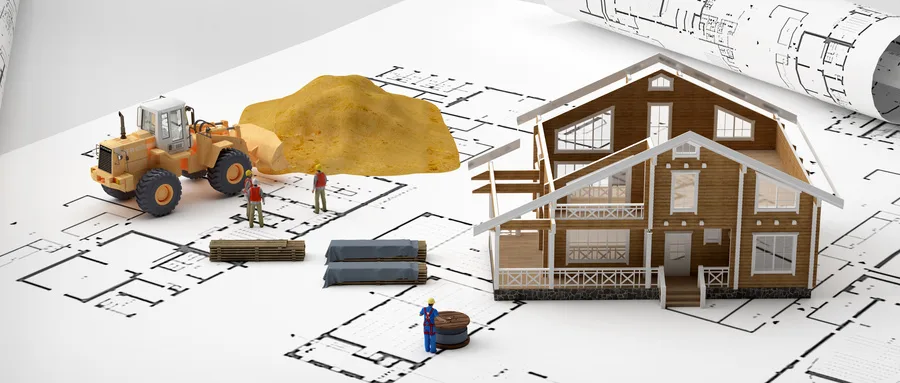
BIM revolutionizes this process by placing the building model at the core of design rather than the drawings. All drawings are generated directly from the BIM model, turning them into byproducts of the design process. This allows architects to generate any view—plans, elevations, sections, 3D perspectives, or detailed drawings—whenever needed.
Additionally, BIM automatically produces material takeoffs, area calculations, cost estimates, and more from the model, reducing errors and omissions caused by manual updates.
In a 2D CAD environment, managing complex changes and coordination is time-consuming and draining. BIM streamlines this by ensuring that all modifications are instantly reflected across the entire project dataset. Because all data is centralized in the model, updates made in one view automatically propagate to all related views, keeping drawings current throughout the design process.
This automation significantly reduces the workload on architects by eliminating repetitive revisions and enabling the generation of hundreds of updated drawings effortlessly. The efficiency gains from BIM’s data management allow architects to focus more on creative design rather than administrative tasks.
In conclusion, BIM delivers tremendous value by enabling designers to simulate and analyze multiple design options through comprehensive 3D parametric models. It provides a collaborative platform for interdisciplinary communication and spatial coordination, eliminates clashes, shortens design cycles, and minimizes errors.
The automatic updating of BIM models allows project teams to adapt flexibly to design changes, reducing discrepancies between construction and design documentation. Furthermore, by integrating analysis software, aspects such as structural integrity, airflow, lighting, temperature control, sound insulation, water supply, and wastewater treatment can be continuously evaluated and optimized. This ongoing feedback ensures the design’s accuracy and feasibility throughout the project lifecycle.
















Must log in before commenting!
Sign Up