
In the Shanghai Center Building project, BIM plays a crucial role throughout all phases—from design and procurement to construction and operation. Autodesk’s Basel platform is employed for collaborative management during the project’s overall implementation. The project focuses on three main objectives through the BIM platform: enhancing design quality, improving construction management efficiency, and facilitating operational management on-site.
Figure 1 illustrates the relationship between the BIM platform and the stages of design, investment procurement, construction, and operation. Serving as a central information platform, BIM is essential for organizing, communicating, and managing project data.
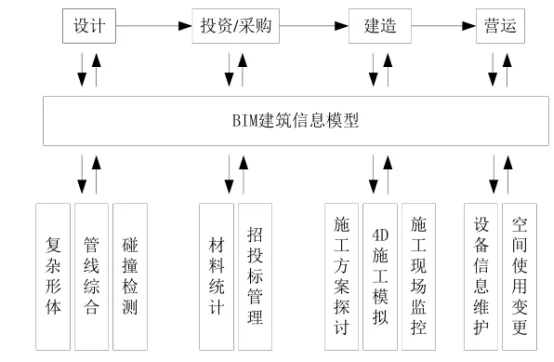
Figure 1: Relationship between BIM Work Platform and Design, Investment Procurement, Construction, and Operation.
The Shanghai Center Building exhibits specific deformation characteristics, with a floor zoom ratio of 99.998904. Parametric design is adopted to address these features, especially for the exterior curtain walls, where parametric models are critical. The entire exterior curtain wall system requires precision due to its complexity.
Since January 2011, Chang Cong has addressed many complex challenges. Despite extensive use of information technology, several critical nodes remain incomplete. Without the support of a BIM platform, the research timeline would likely have extended. The external curtain wall’s support system is a flexible structure, allowing a maximum theoretical deformation of 430mm. More than 10,000 glass curtain wall panels vary in geometric dimensions. Considering factors like processing and construction errors, strict control and precise measurements are essential. Measurement data must be integrated with models to generate accurate processing and installation drawings.

Figure 2: Exterior curtain wall rendering based on the BIM model (external view).

Figure 3: Interior rendering of the exterior curtain wall based on the BIM model.
Application of BIM Technology in Change Control During the Design Phase
Using 3D design to develop a BIM model for the Shanghai Center Building has promoted deeper design integration, enhanced design quality, and improved drawing accuracy. It has enabled designers to resolve numerous issues and ensured the feasibility of the construction scheme while improving performance control and reducing design changes.
The following sections detail BIM’s application in complex modeling, visual design, pipeline integration, and its role in design-phase change control.
1. Automated Drawing Generation
Although BIM models are created using advanced software, the industry still predominantly relies on 2D drawings for review. For example, the equipment layer of the main tower, which also serves as the structural reinforcement layer, contains complex spatial trusses that require extensive time and effort to depict accurately in 2D CAD. Any changes in truss dimensions necessitate redoing previous work.
By building the BIM model in Revit Structure and adjusting parameters, component dimensions can be easily modified, and any required elevation views can be exported. This streamlines the drawing and adjustment process, as shown in Figures 4 and 5. This approach significantly reduces architects’ workload, minimizes human errors and omissions, and facilitates factory customization.
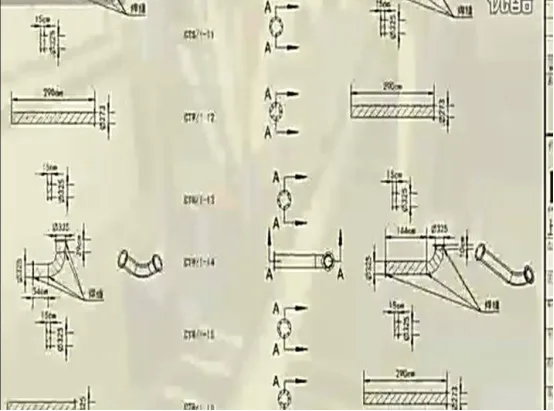
Figure 4: Pipeline processing drawings exported from the BIM model.

Figure 5: Simulation of pipeline cutting using BIM technology.
2. Visual Design
BIM models provide designers with clear insight into their design intentions, ensuring accuracy and rationality. Additionally, construction teams and general contractors can better understand the overall design concept through these models, facilitating smoother collaboration.
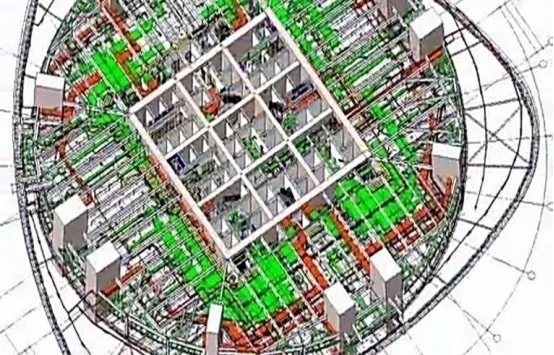
Figure 6: Screenshot of the 21st Floor Design Model for Project 6.
3. Deepening Design
During deepening design, extensive professional coordination is required. The general contractor integrates models from various subcontractors on a unified platform to identify and resolve clashes before construction. Regular collision reports compare sub-projects to detect issues early, allowing solutions to be implemented during detailed design.
This approach enhances design quality and drawing accuracy, laying a solid foundation for construction. Errors in drawings can cause significant delays and extra labor costs onsite. Data analysis confirms the substantial value BIM brings to the project.
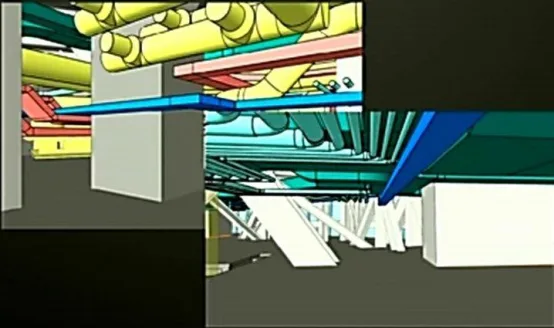
Figure 7: Partial perspective view from the BIM model.
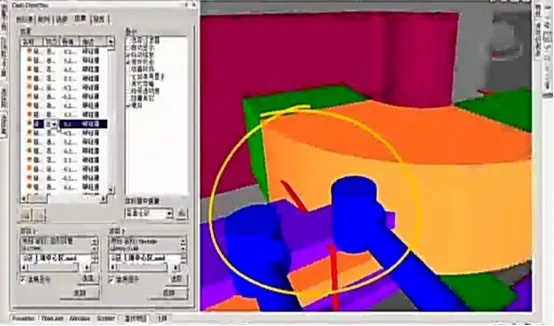
Figure 8: Screenshot showing BIM collision detection.
Application of BIM Technology During the Construction Phase
The Shanghai Center Building is a supertall structure with a unique shape and complex structural system, presenting numerous engineering challenges during construction. BIM models are utilized to monitor the construction site effectively and provide visual support for decision-making by coordinating with the engineering department and general contractor.
Additionally, BIM technology supports 4D construction simulation and electromechanical simulation to detect potential issues early and optimize construction processes, ensuring smooth progress. The following examples highlight BIM’s role in change control during construction.
1. Tower Crane Spatial Layout and Coordination
Challenge: Four tower cranes are positioned closely on-site, assisted by a 300t crawler crane. Coordinating these cranes presents a significant construction challenge.
BIM Application: Virtual construction is used to optimize the construction plan.
Outcome: BIM simulates the spatial positions and operating status of tower cranes, checks for interference, and verifies the feasibility of countermeasures. Operation parameters, such as the requirement for a tower crane to rotate 360° during operation and maintain a vertical operating angle between 44° and 85°, are established. During typhoon season, the wire rope’s hanging length should not exceed 5 meters to prevent entanglement.
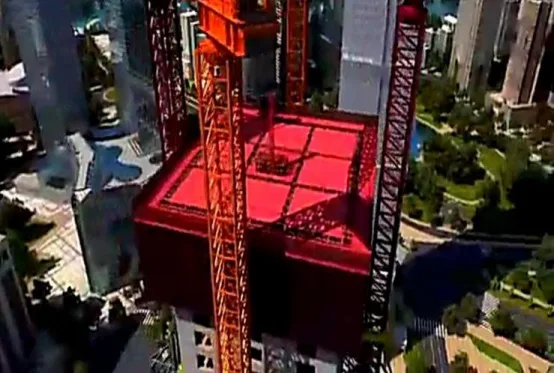
Figure 9: Tower crane position in the BIM model.
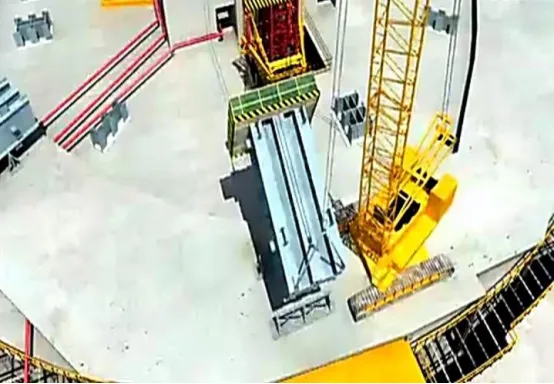
Figure 10: Crawler crane position in the BIM model.
2. Vertical Transportation Planning and Optimization
Challenge: Heavy vertical transportation demands for personnel and materials.
BIM Application: Virtual construction technology is used to optimize and select the best vertical transportation plan.
Solution: Due to the rotating and rising façade of the Shanghai Center Building, installing external construction elevators is costly and impactful. BIM analysis determined that 12 elevators within the core tube structure would be used for both personnel and materials, supplemented by 8 permanent elevators for later-stage vertical transportation.
The first elevator serves from the B1 floor to the steel platform top, mainly for core tube construction, while the second supports steel frame construction. Dual-use elevators handle structural equipment installation and decoration. After the high-rise machine room completion, permanent elevators assist ongoing construction and are converted into dual-use elevators. As the project progresses, these dual-use elevators are dismantled sequentially and replaced by permanent ones.
3. Installation Planning for Large Electromechanical Equipment
Challenges: The project involves numerous large, widely distributed equipment pieces with demanding lifting requirements. Vertical transportation needs are significant, and cross-disciplinary coordination is complex due to overlapping construction spaces. The scale and complexity of mechanical and electrical works make system debugging challenging.
BIM Application: BIM 4D construction simulation ensures that unforeseen problems are identified and addressed before actual installation.
Solution: The mechanical and electrical installation is divided into four zones. Construction follows principles of zone management, model guidance, workflow overlap, and staged acceptance.
4. Optimization of Construction Schedule and Organization
Challenge: Complex construction organization is required to improve investment efficiency by opening the podium and main building below the 22nd floor sooner, posing significant organizational challenges.
BIM Application: BIM models combined with project schedules enable 4D construction simulation. This process uncovers scheduling errors and allows timely adjustments to prevent rework.
Key Milestones:
- September 18, 2010: Construction commencement.
- February 6, 2012: Podium structure construction begins.
- July 27, 2012: Completion of podium structure.
- September 17, 2013: Main building structure topped out at 580 meters.
- September 30, 2013: Podium and main building below 22nd floor opened for use.
- February 2, 2014: Roof crown construction completed.
- June 2, 2014: Curtain wall project completed.
- December 30, 2014: Overall project completion.
Throughout this project, the team experienced the extensive applications of BIM technology. BIM’s impact goes beyond transitioning from 2D to 3D drawings; it creates a platform that provides comprehensive building information, promotes collaborative design, reduces errors, improves quality, and supports the entire building lifecycle.
BIM also assists construction and operation teams with scheduling, minimizes engineering changes, and ultimately enhances building efficiency. With ongoing software advancements and the development of localized “family libraries,” BIM technology will continue to improve design efficiency and quality. The widespread adoption of BIM across the industry is imminent.
















Must log in before commenting!
Sign Up