
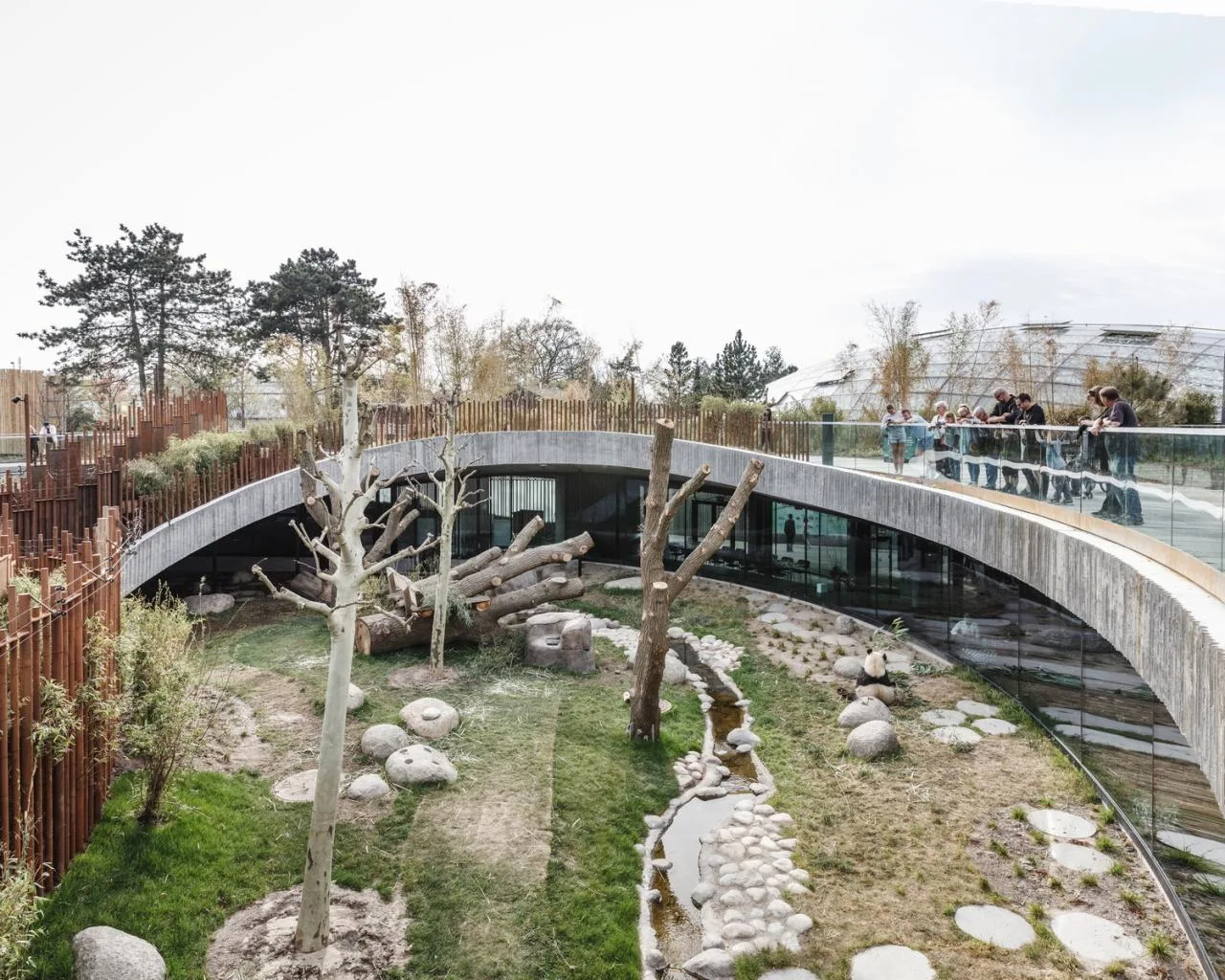
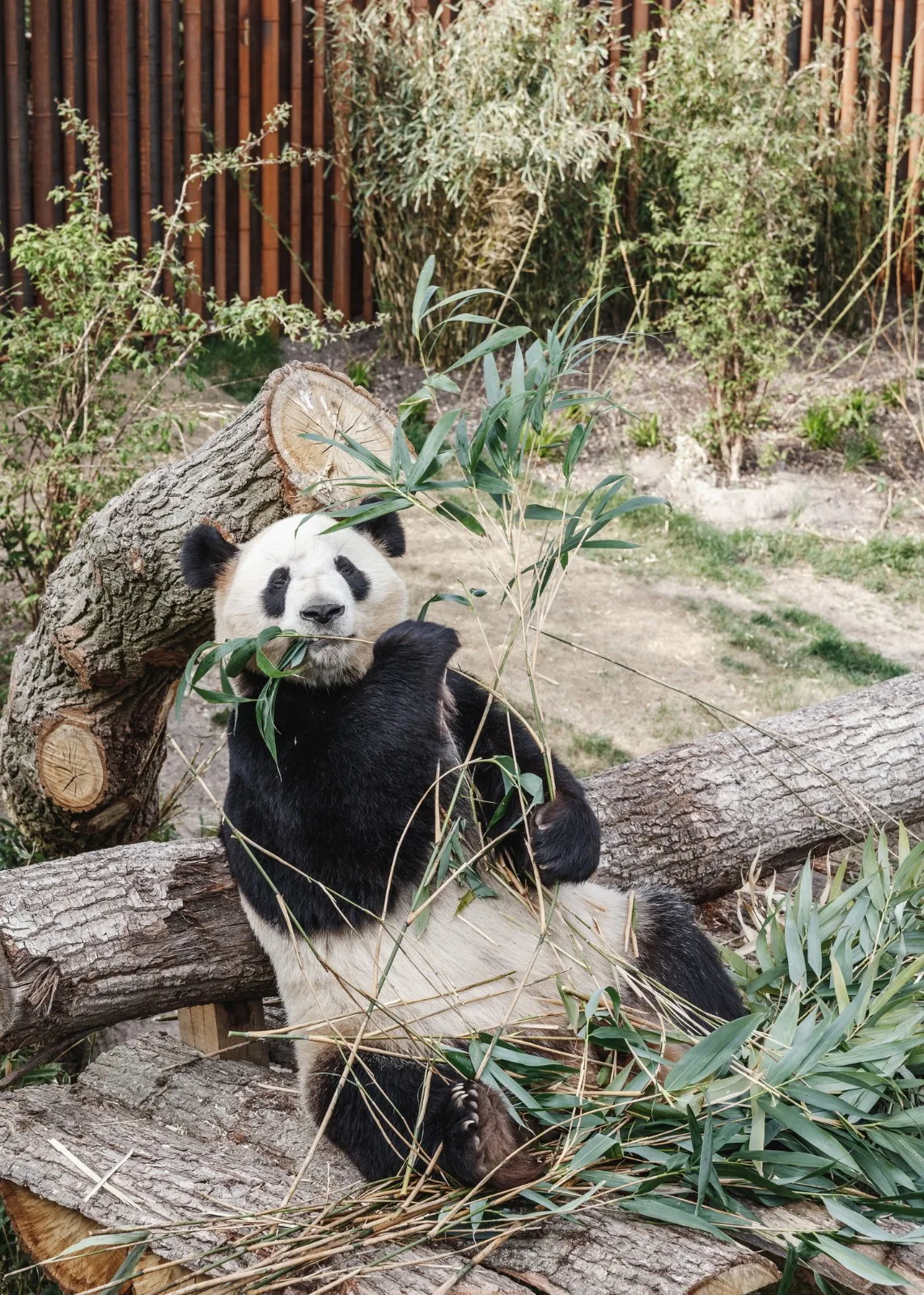
The “Yin Yang” Panda Pavilion at Copenhagen Zoo is specially designed to house two giant pandas, Mao Sun and Xing Er. The design aims to recreate a natural habitat and provide a peaceful environment for these rare mammals. These two pandas were relocated from Chengdu, China, and have now settled into their new home at one of Europe’s oldest zoos.
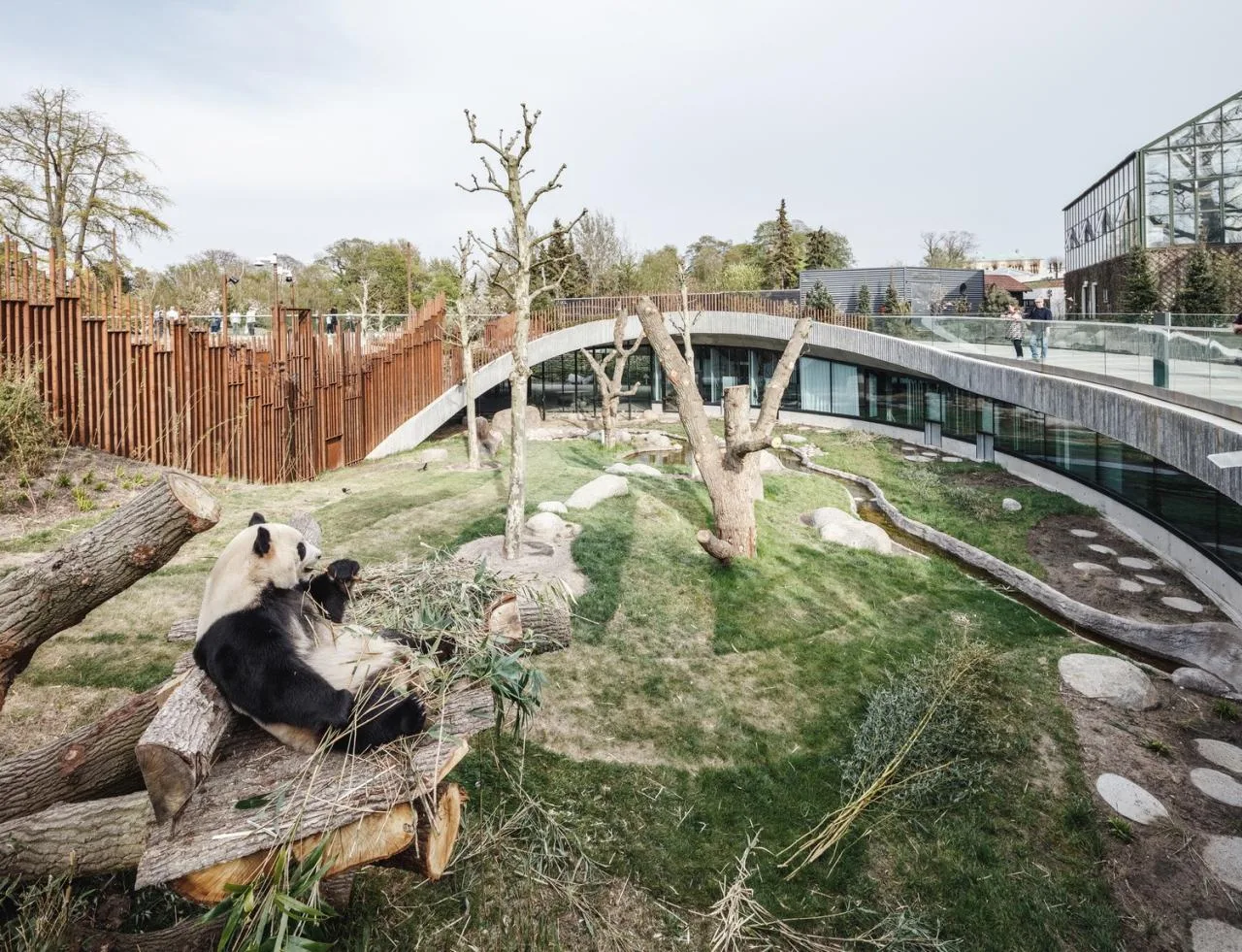
Covering 2,450 square meters, the new panda enclosure offers a harmonious blend of indoor and outdoor gardens where the pandas can roam freely. It also serves as an ideal breeding environment, addressing the critical conservation needs of this vulnerable species.
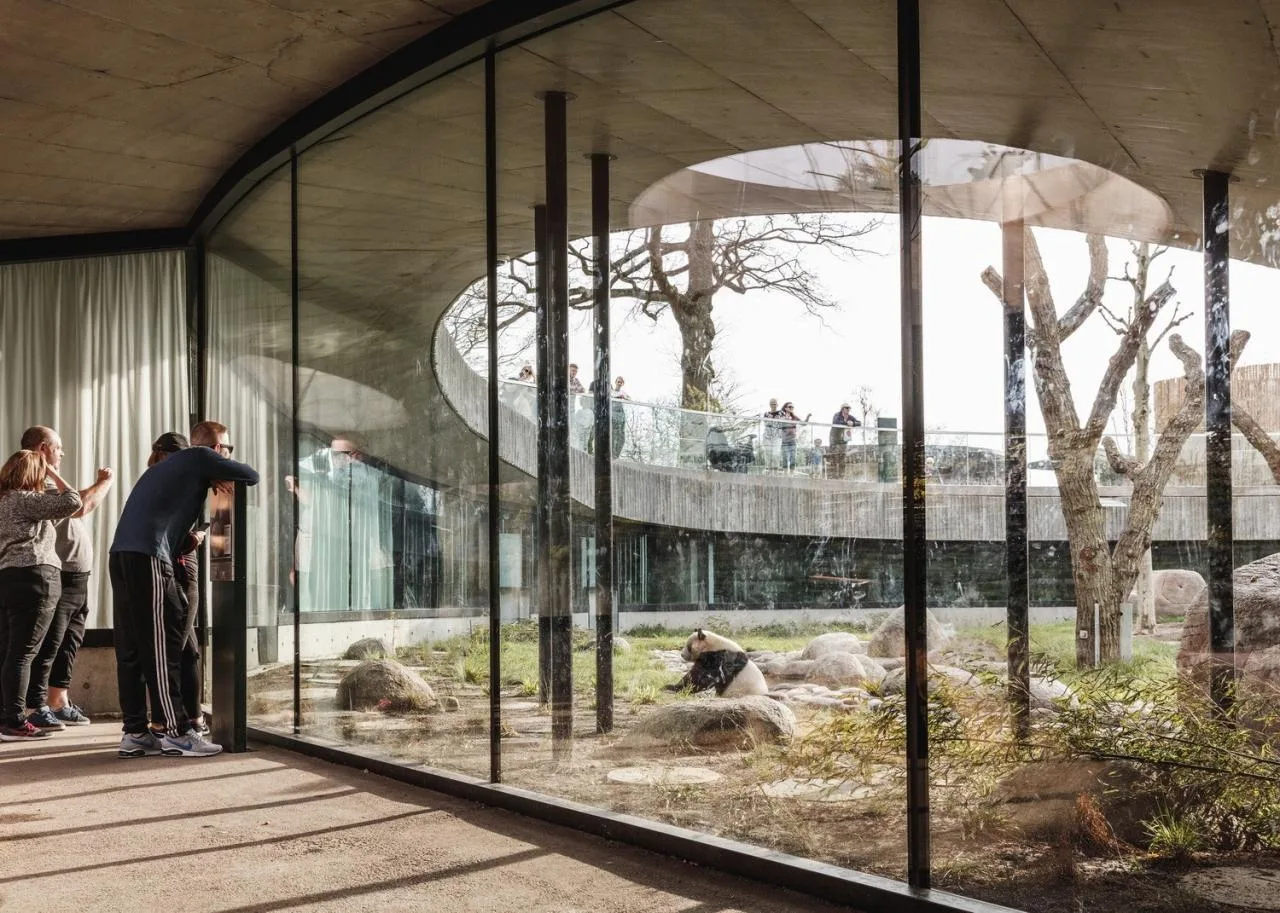
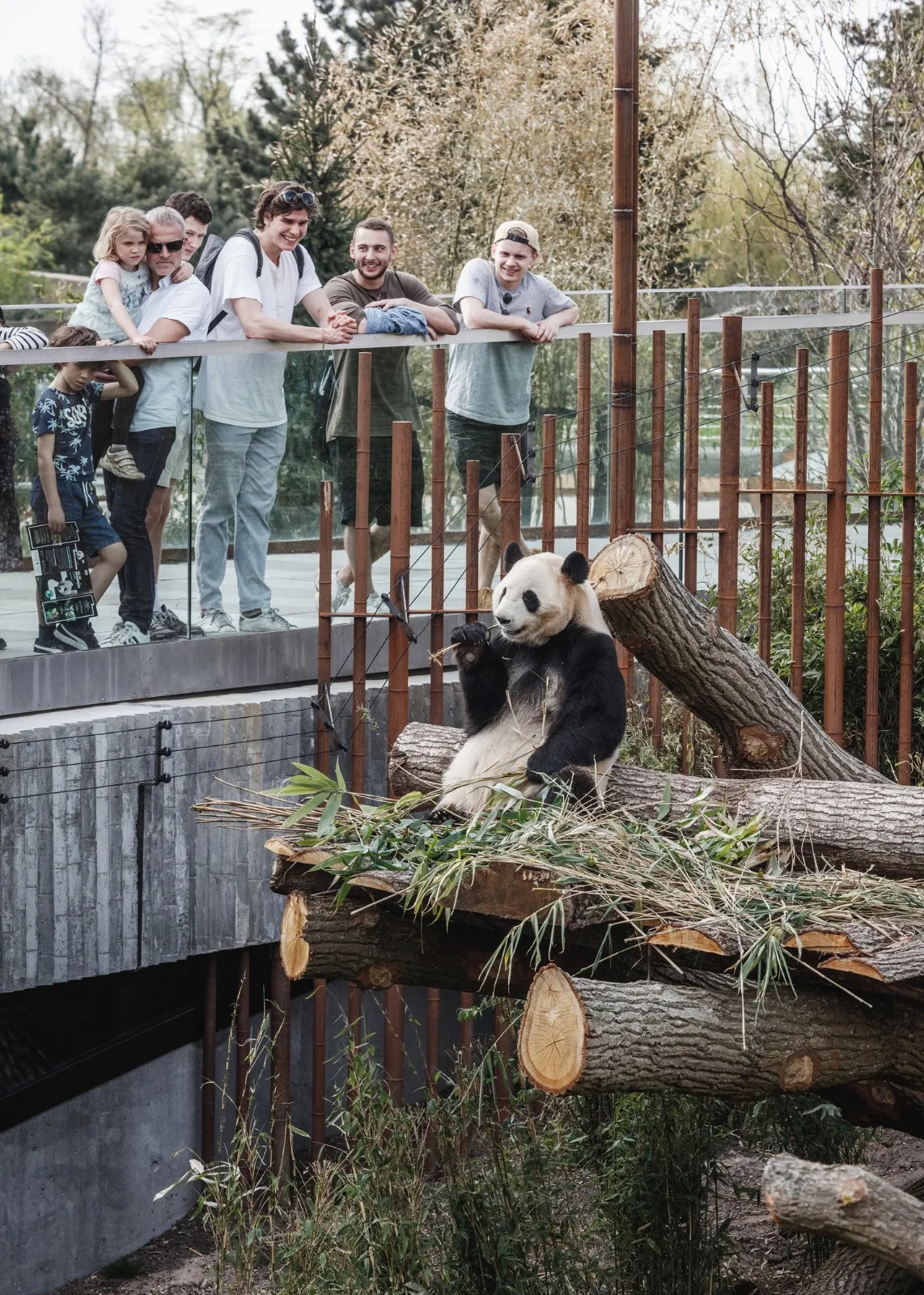
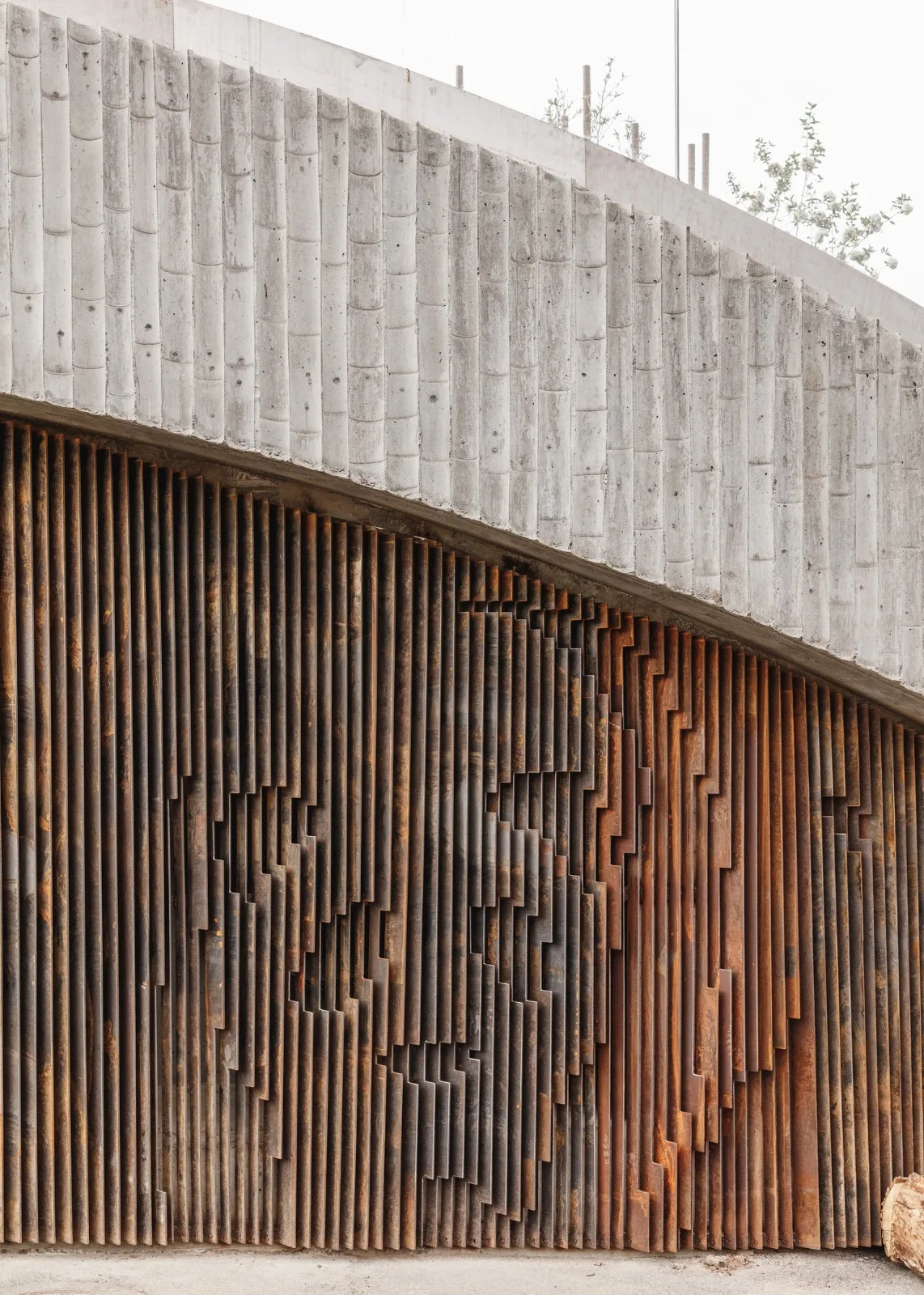
The panda enclosure is thoughtfully integrated with the surrounding central square, Nordic animal park, monkey park, and elephant park. The designer divided the circular habitats of Mao Sun and Xing Er into two distinct areas, symbolizing the concept of yin and yang. This layout provides an ecological and free-living environment that facilitates the pandas’ well-being and interaction.
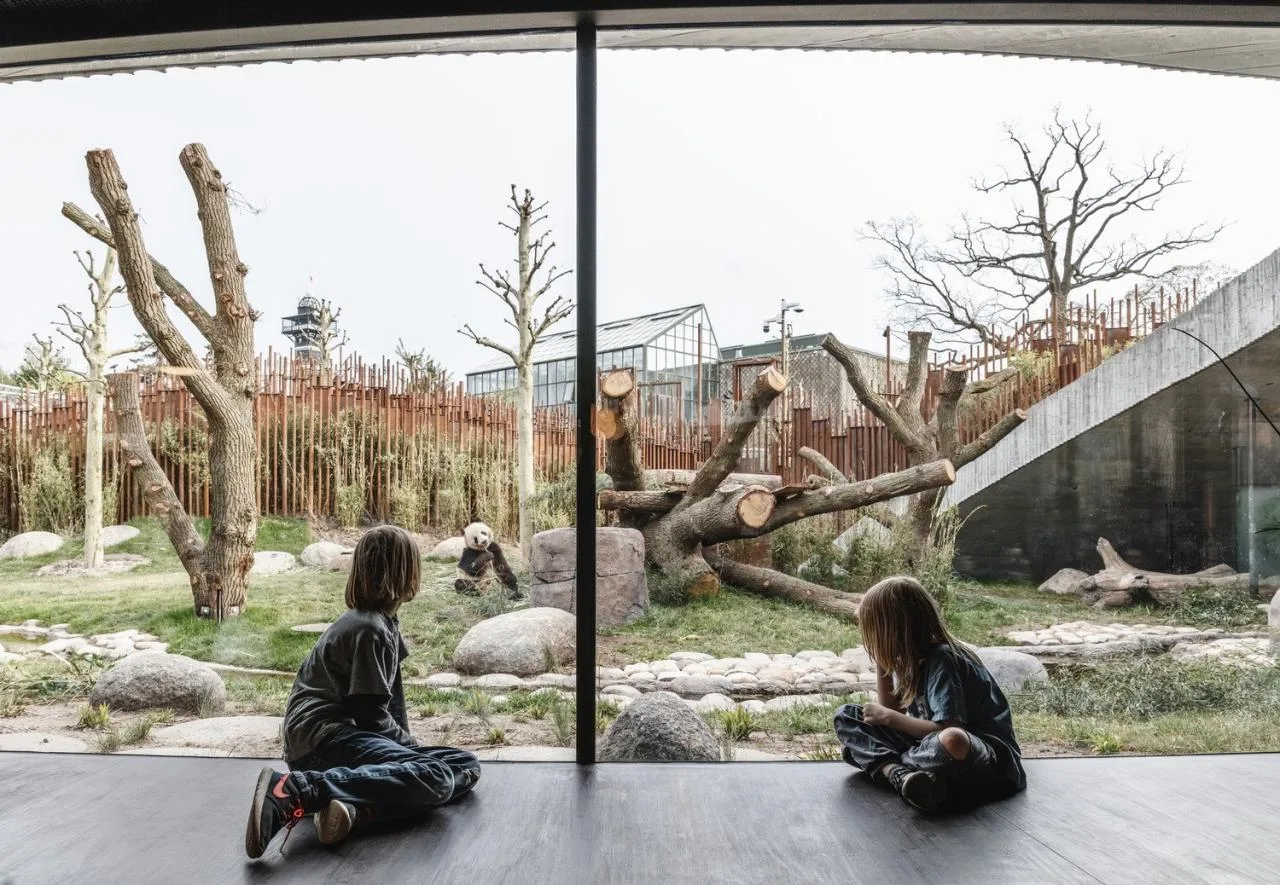
The designer carefully managed the transition between these two zones, ensuring that neither the pandas nor visiting guests clearly perceive the division. Specific enclosures and infrastructure elements were strategically placed to blend the spaces seamlessly into the natural environment. Additionally, the terrain is elevated at both ends of the yin and yang zones, allowing visitors unobstructed views of the pandas’ habitat.
Visitors can observe the pandas and their surroundings from ground level and also access a separate area via a gentle slope. This space offers insights into the daily work of zoo staff, veterinarians, and horticulturists, enhancing the educational experience.
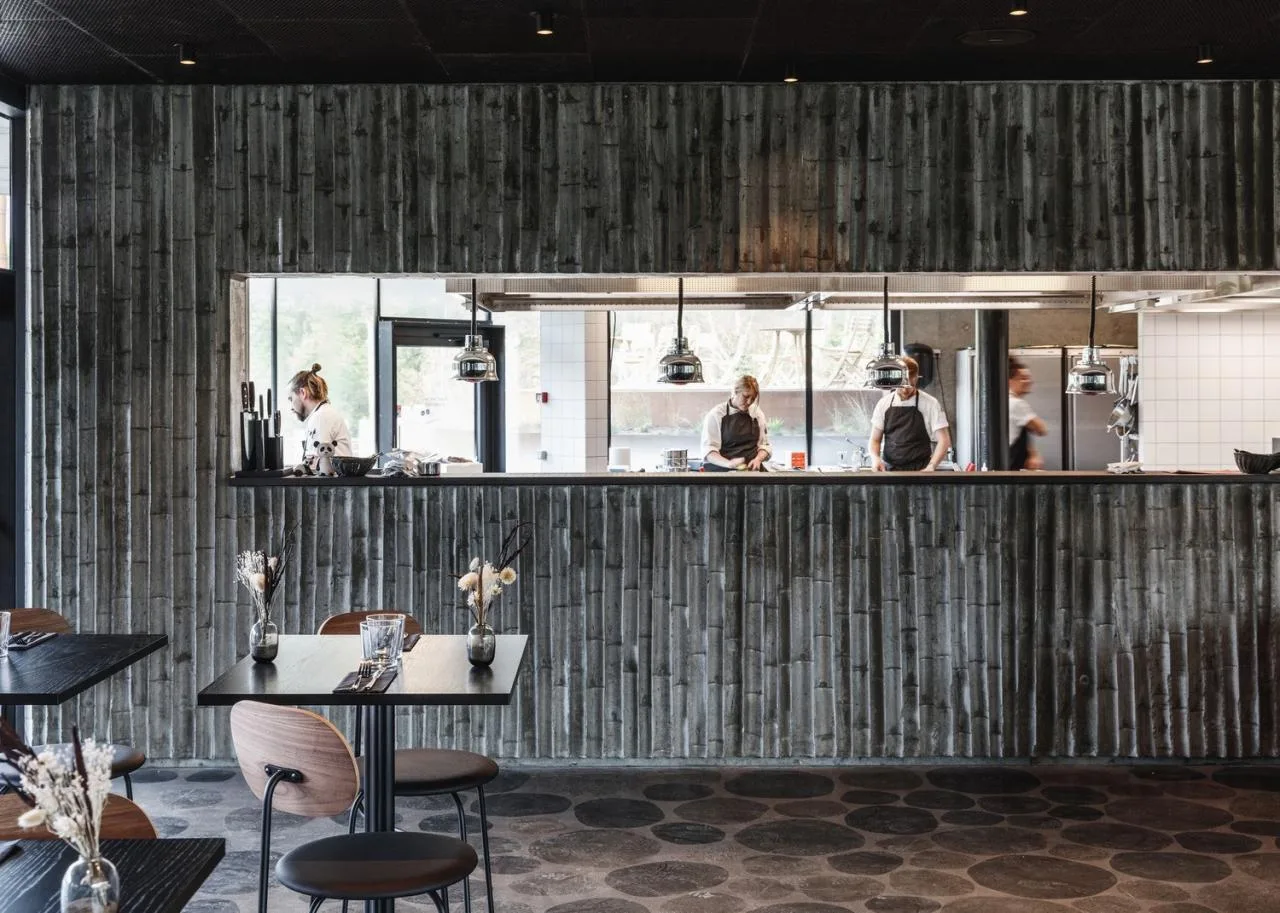
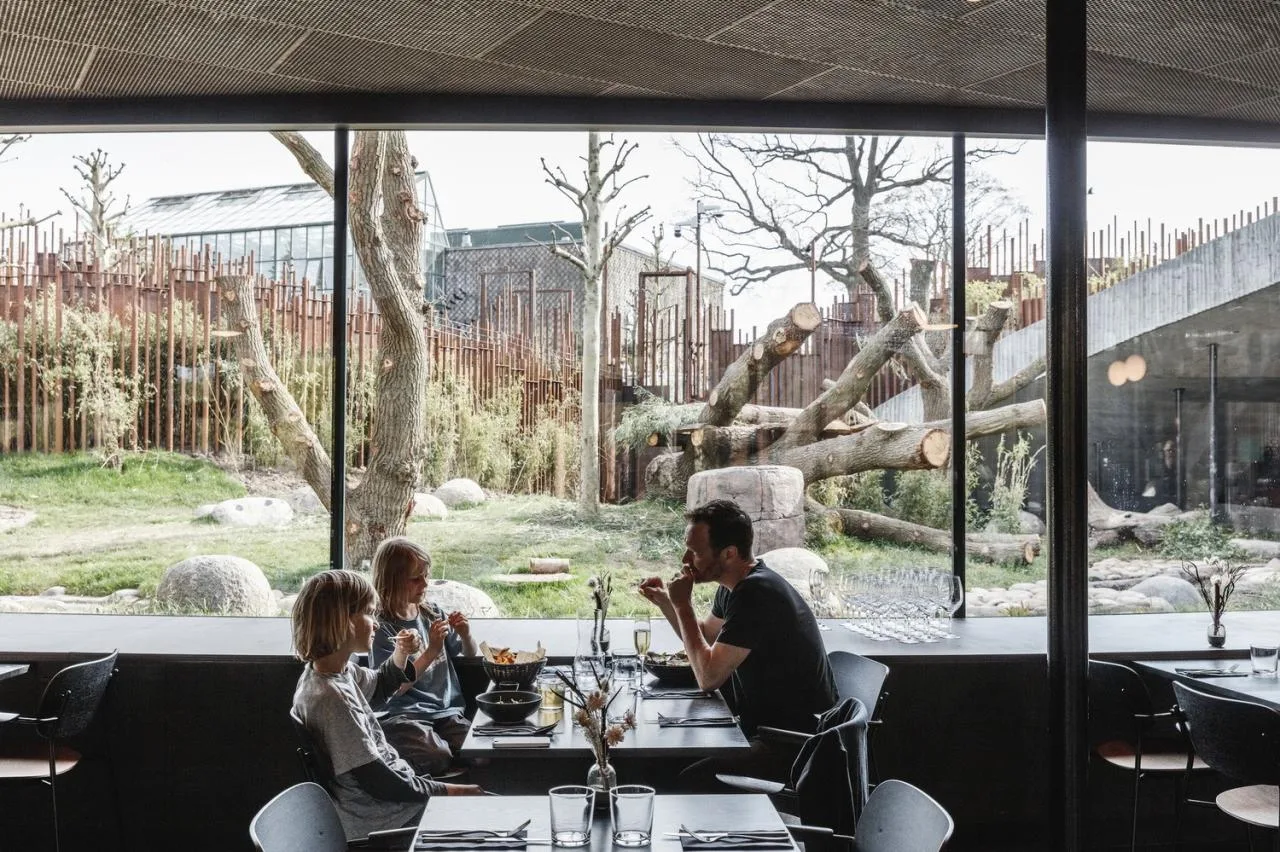
The Panda Pavilion spans two floors. On the first floor, PanPan, a French-Asian restaurant, invites visitors to dine while enjoying views of the pandas and elephants through large glass panels. The second floor features a variety of Nordic plants and a pathway leading to dense bamboo forests.
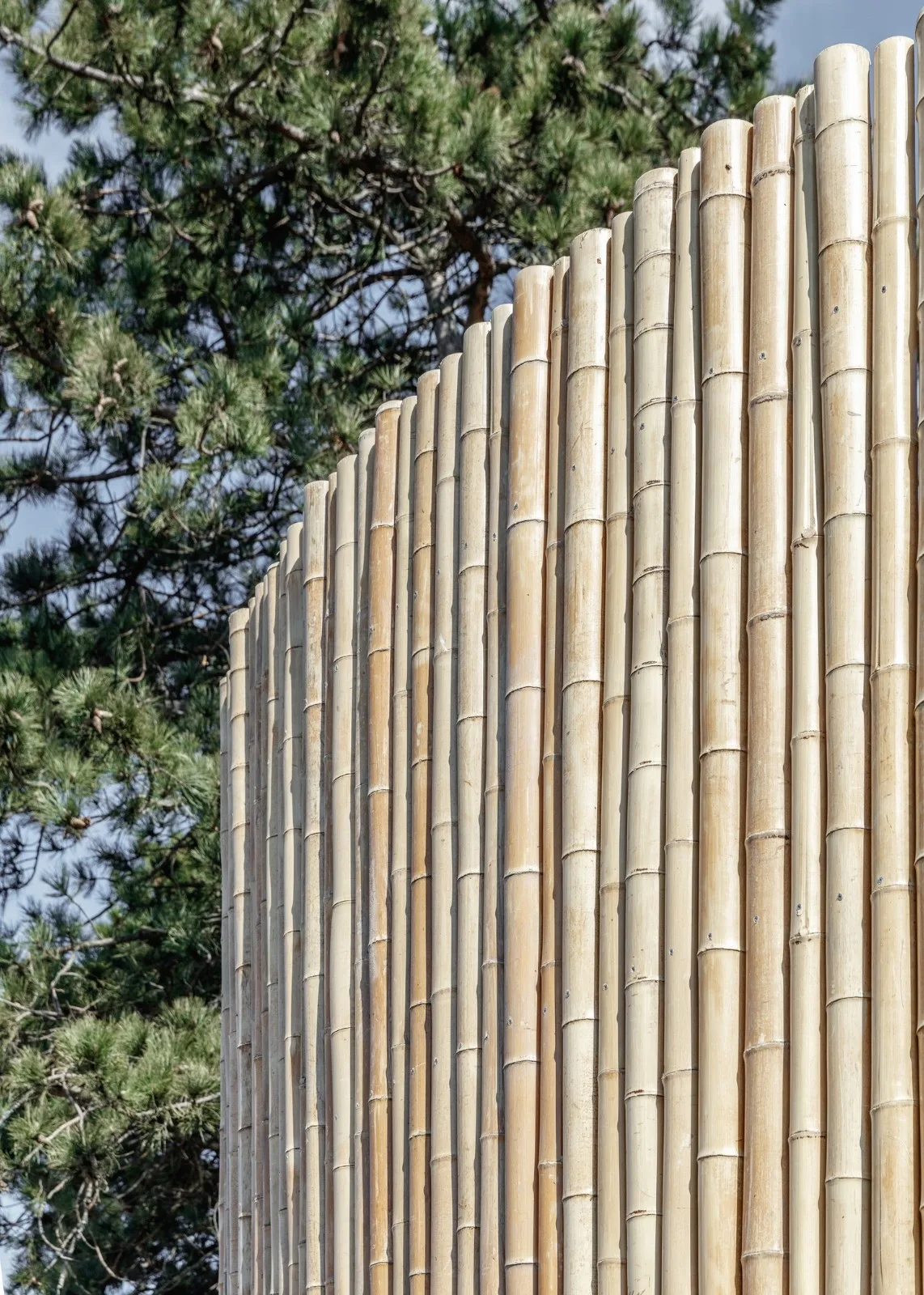
The designer’s intention was to create an immersive indoor environment filled with lush vegetation, evoking a sense of being in nature. By incorporating bamboo forests, the design closely mimics the pandas’ natural habitat, providing essential light, shade, food, and water.
This dual forest landscape allows Mao Sun and Xing Er to explore diverse natural settings that shift with the seasons and temperature changes, from humid dense forests to lighter bamboo groves.
Project Drawings
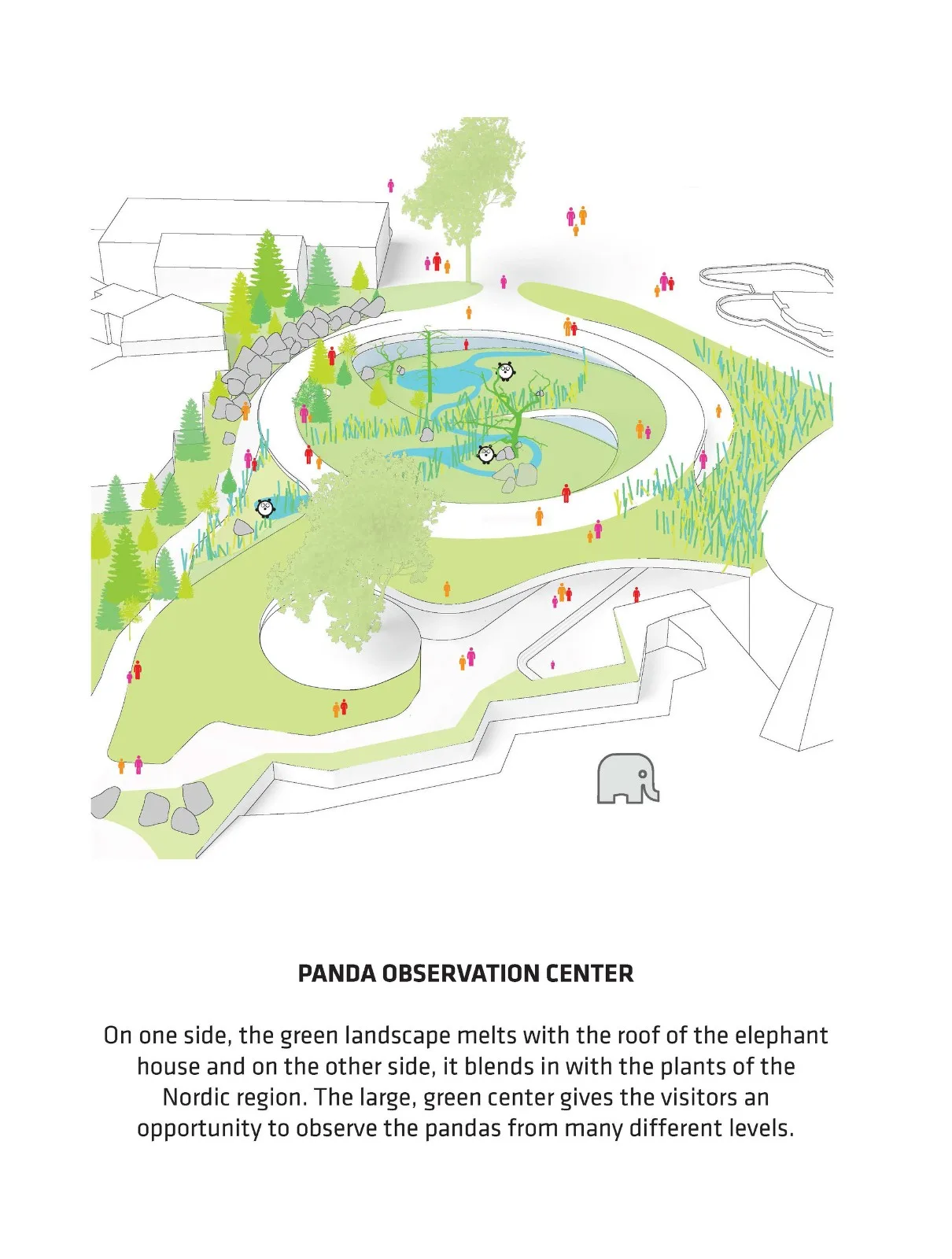
△ Panda Park Diagram
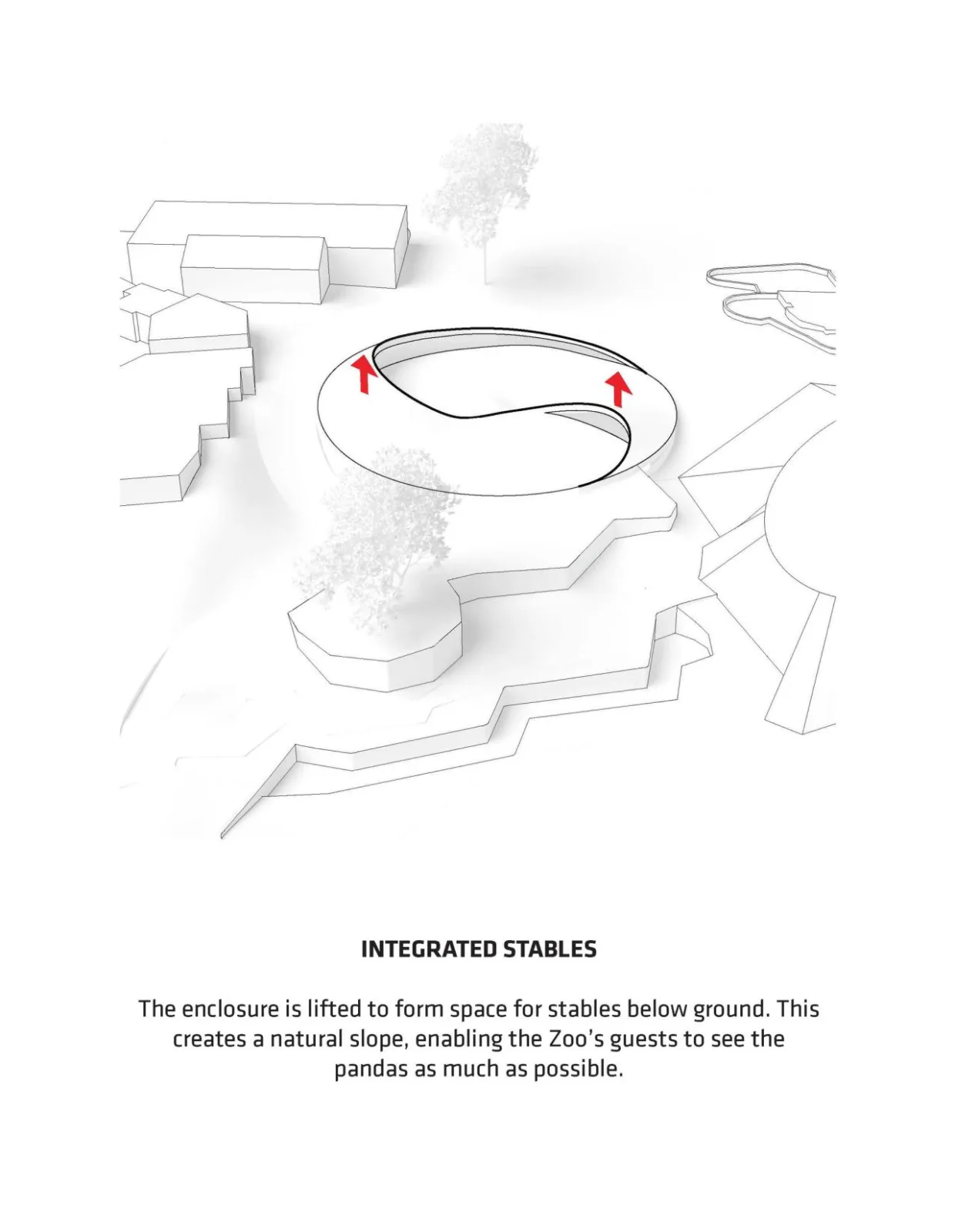
△ Analysis Chart
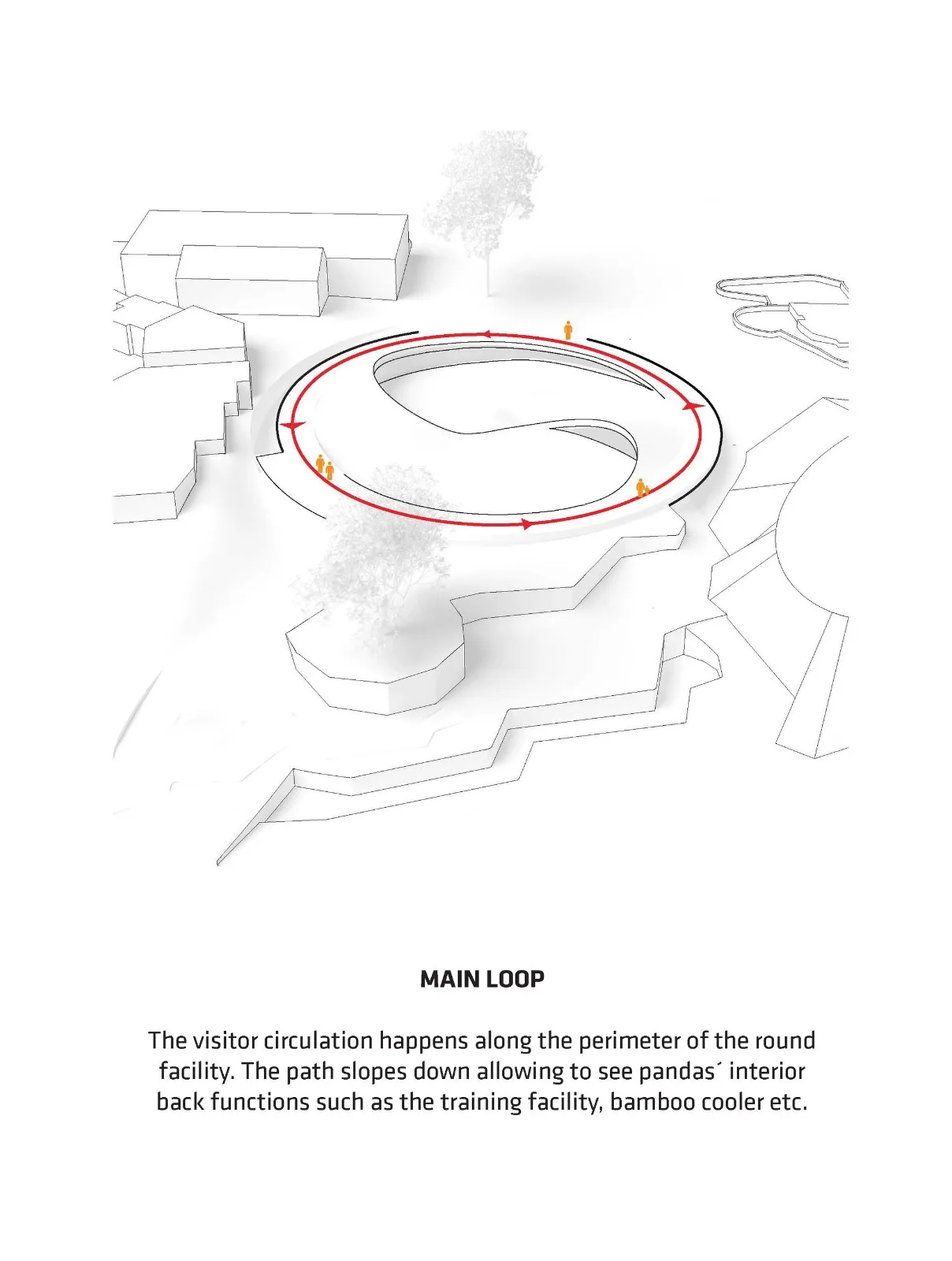
△ Analysis Chart
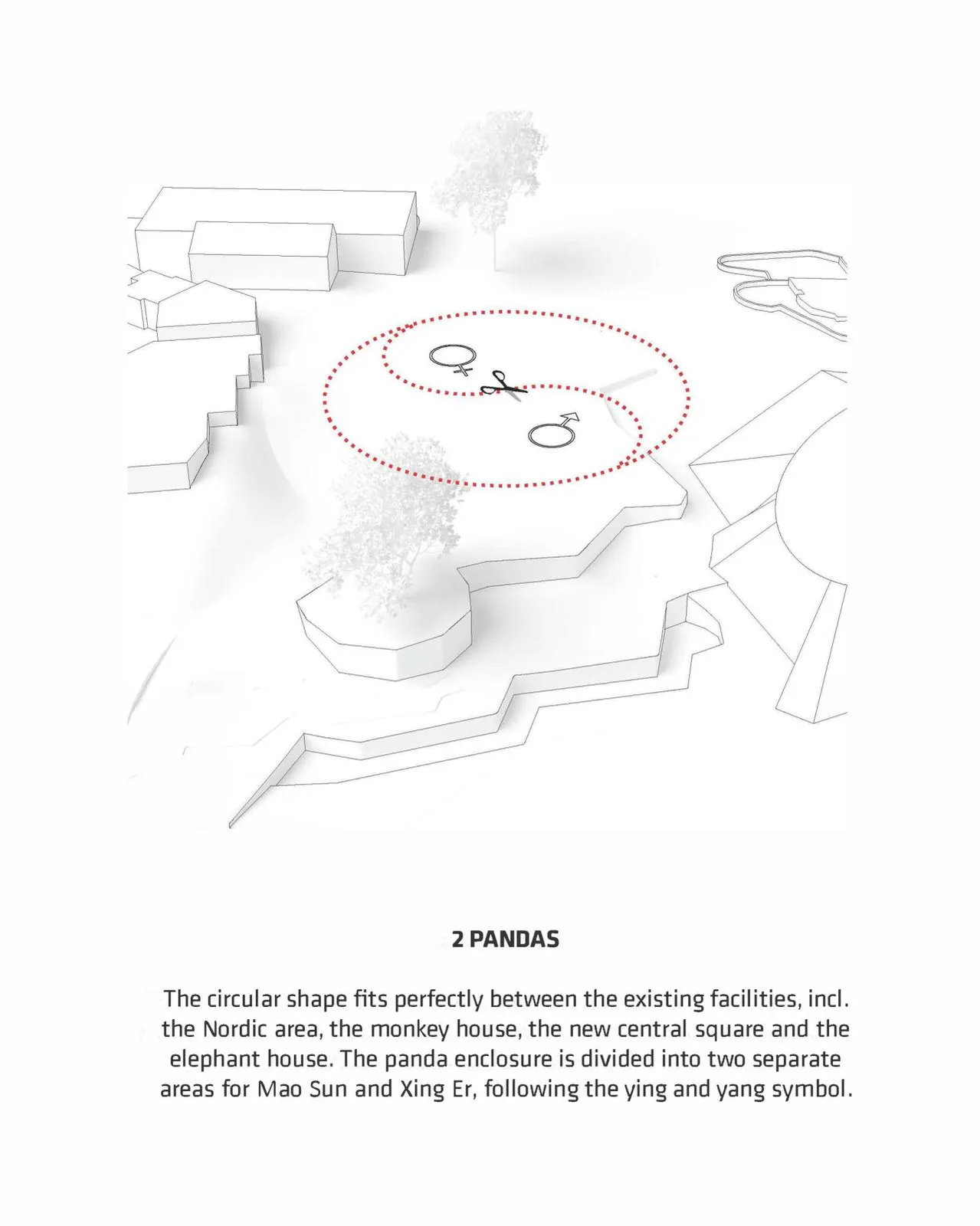
△ Panda Park Diagram
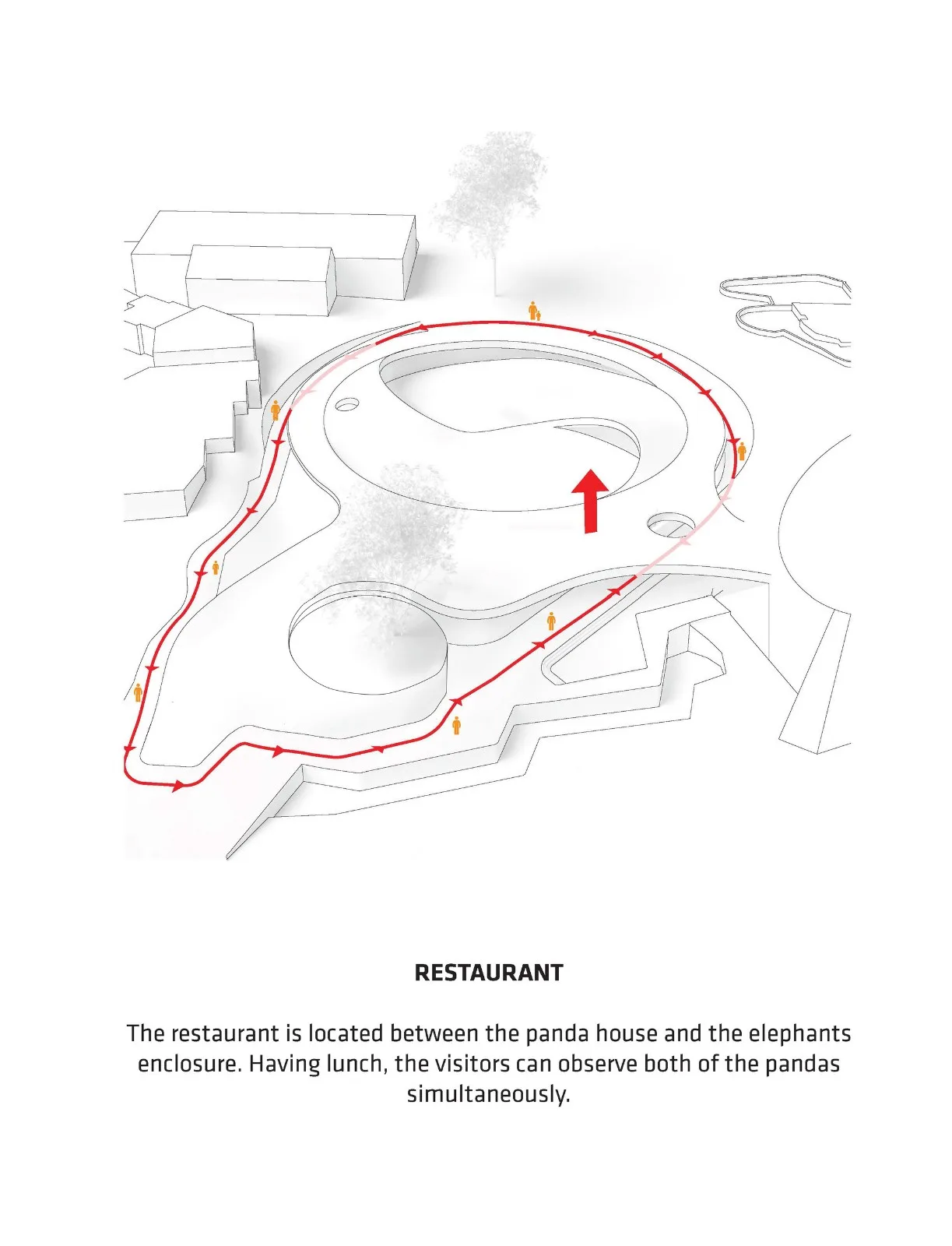
△ Restaurant Schematic
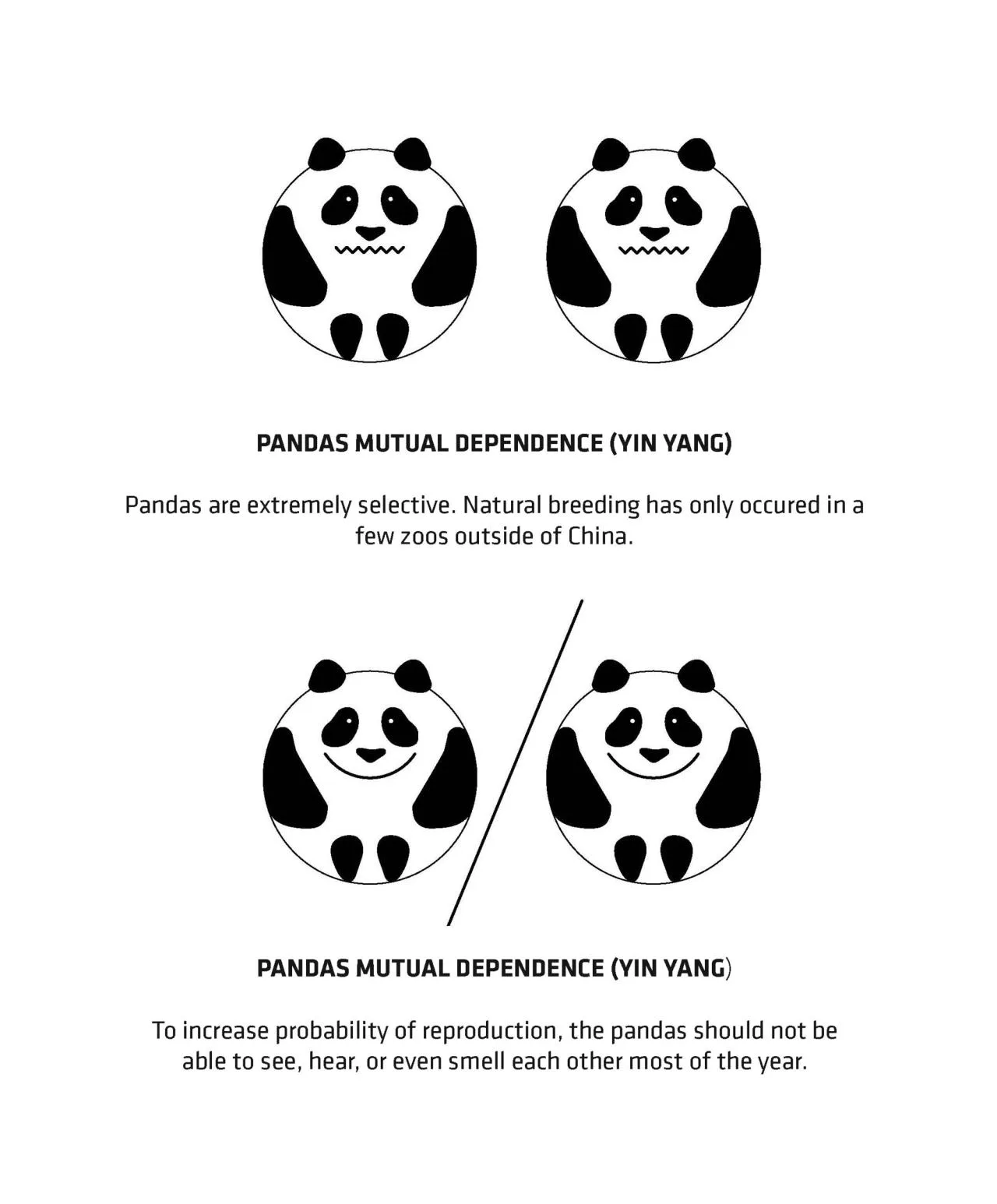
△ Icon
Project Information
Architect: Bjarke Ingels Group
Area: 2,450 m²
Year of Completion: 2019
Photographer: Rasmus Hjortshoj
Lead Architects: Bjarke Ingels, David Zahle
Project Manager: Ole Elkjær-Larsen
Project Leaders: Nanna Gyldholm Møller, Kamilla Heskje, Tommy Bjørnstrup
Project Team: Alberto Menegazzo, Alex Ritivoi, Carlos Soria, Christian Lopez, Claus Rytter Bruun de Neergaard, Dina Brændstrup, Eskild Schack Pedersen, Fabiana Cortolezzis, Federica Longoini, Frederik Skou Jensen, Gabriele Ubareviciute, Gökce Günbulut, Hanne Halvorsen, Høgni Laksáfoss, Jiajie Wang, Jinseok Jang, Joanna Plizga, Lone Fenger Albrechtsen, Luca Senise, Maja Czesnik, Margarita Nutfulina, Maria Stolarikova, Martino Hutz, Matthieu Brasebi, Pawel Bussold, Richard Howis, Seongil Choo, Sofia Sofianou, Stefan Plugar, Tobias Hjortdal, Tore Banke, Victor Bejenaru, Xiaoyi Gao
Location: Frederiksberg, Denmark












Must log in before commenting!
Sign Up