
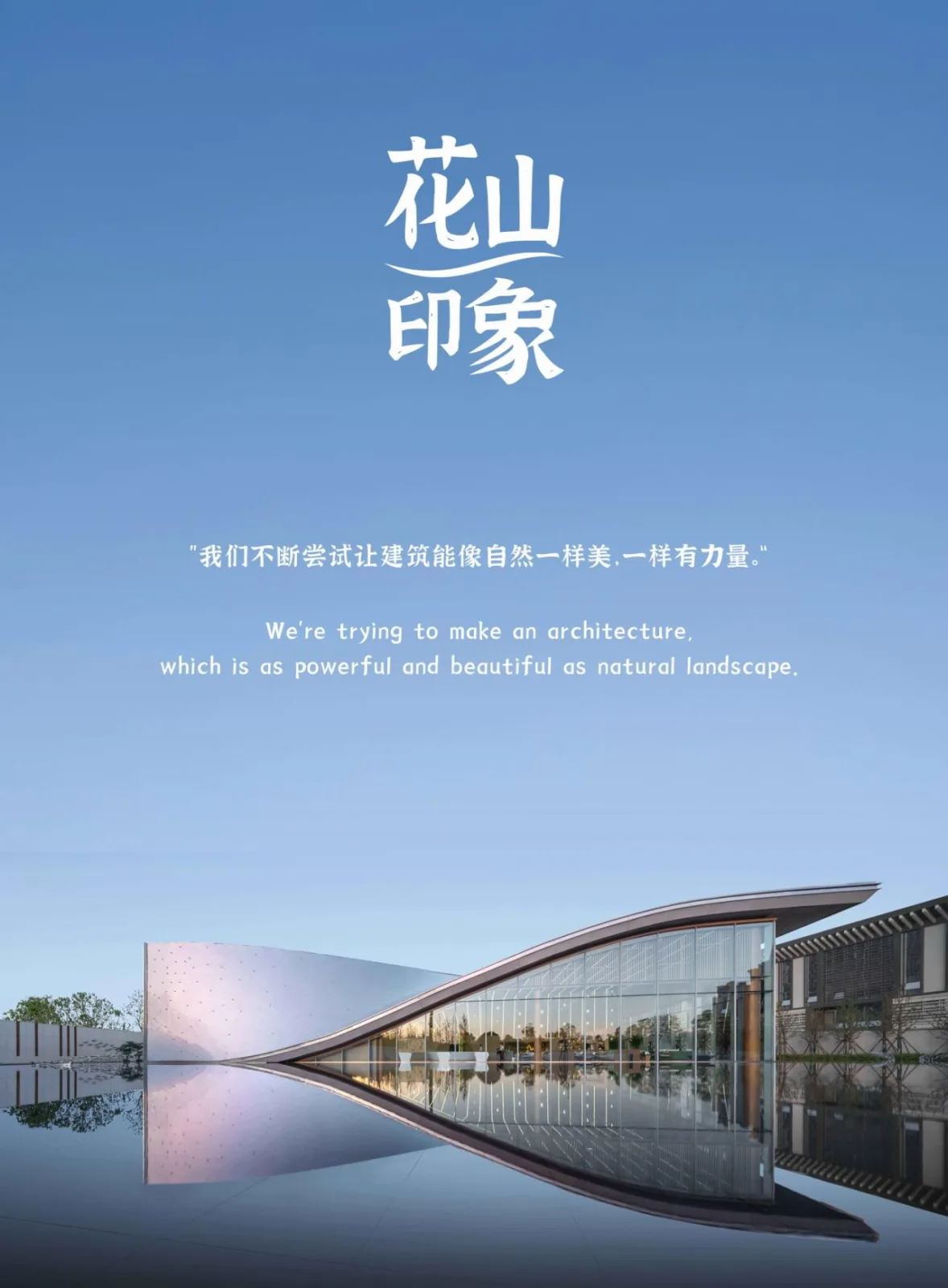
Weaving Urban Texture
Street Space of Ecological New City
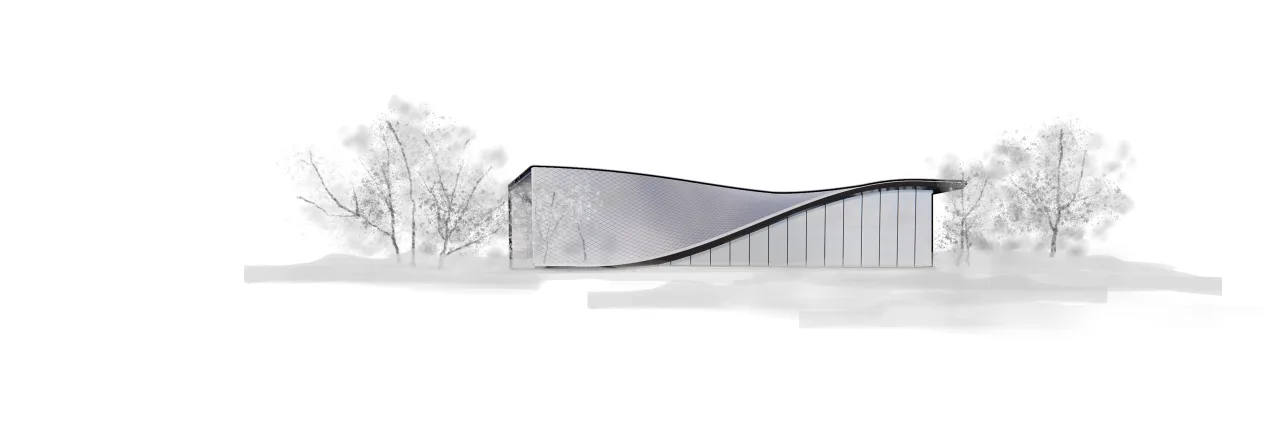
Huashan New City is situated at the confluence of the Yangtze River, Beihu Lake, Yanxi Lake, and Yandong Lake in the eastern suburbs of Wuhan. According to the latest urban planning update, Huashan New City aims to become an international first-class ecological city and cultural ecological zone. To achieve this, 29 ecological urban development indicators have been introduced, emphasizing the refinement of green building energy-saving measures tailored to “Wuhan characteristics.”
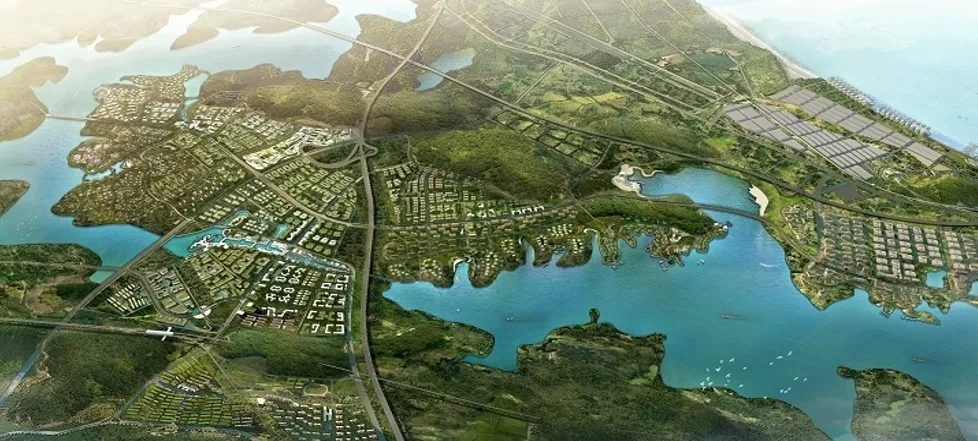
⊙ Geographic layout of Huashan Ecological New City (Image source: internet)
This project is located within the Huashan area of Wuhan’s Donghu High-tech Zone, adjacent to several lake forest parks including Huashan River Park, Automobile Theme Park, and Ecological Agricultural Science Park. These areas are part of the Donghu Lake ecological green wedge, offering abundant natural landscapes. Responding to Huashan New City’s overall plan, the project designer chose green prefabricated wooden structures as the main construction method, complemented by traditional bricks and tiles to create a “green model city.”
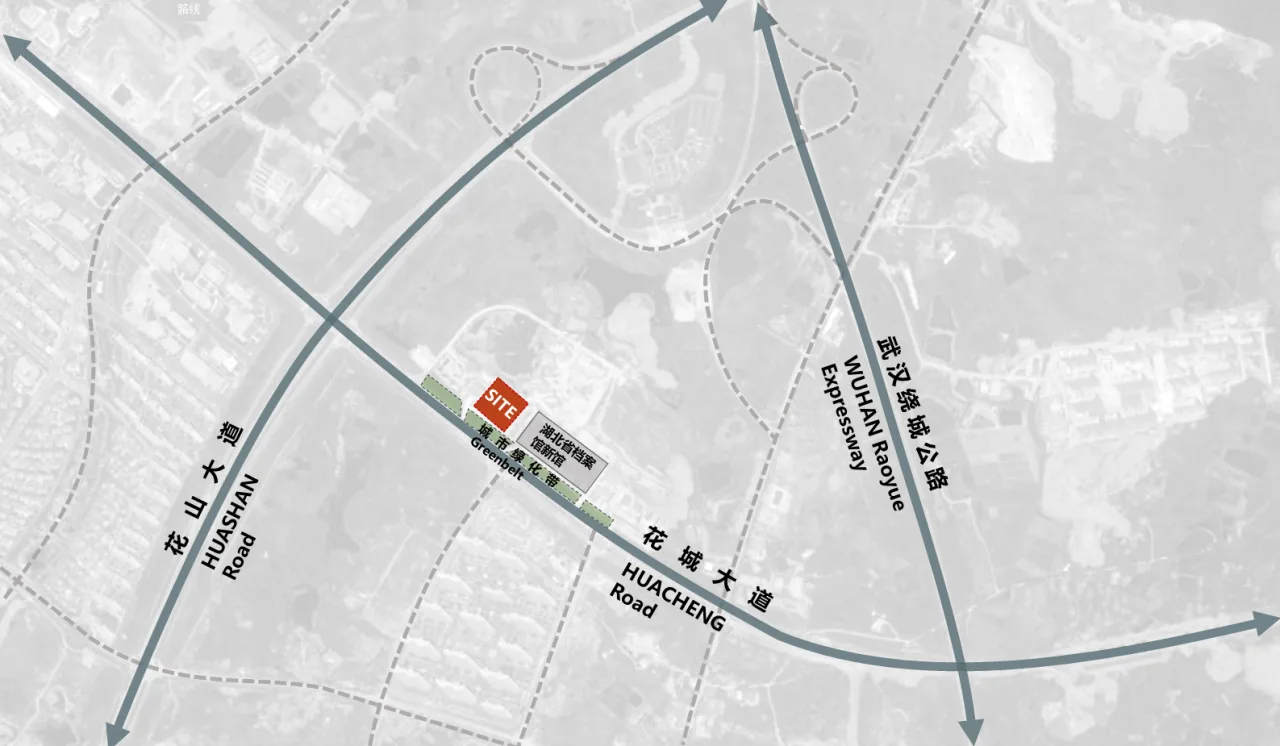
⊙ Project location
Surrounded by abundant parks and green spaces, the environment is serene and inviting. The site neighbors the new Hubei Provincial Archives, which occupies approximately 60,000 square meters. In studying urban texture utility, recognizability is key to a city’s spatial quality. Faced with the large archive and complex site conditions, the primary challenge was coordinating the building to create spatial clusters that are easily identifiable.
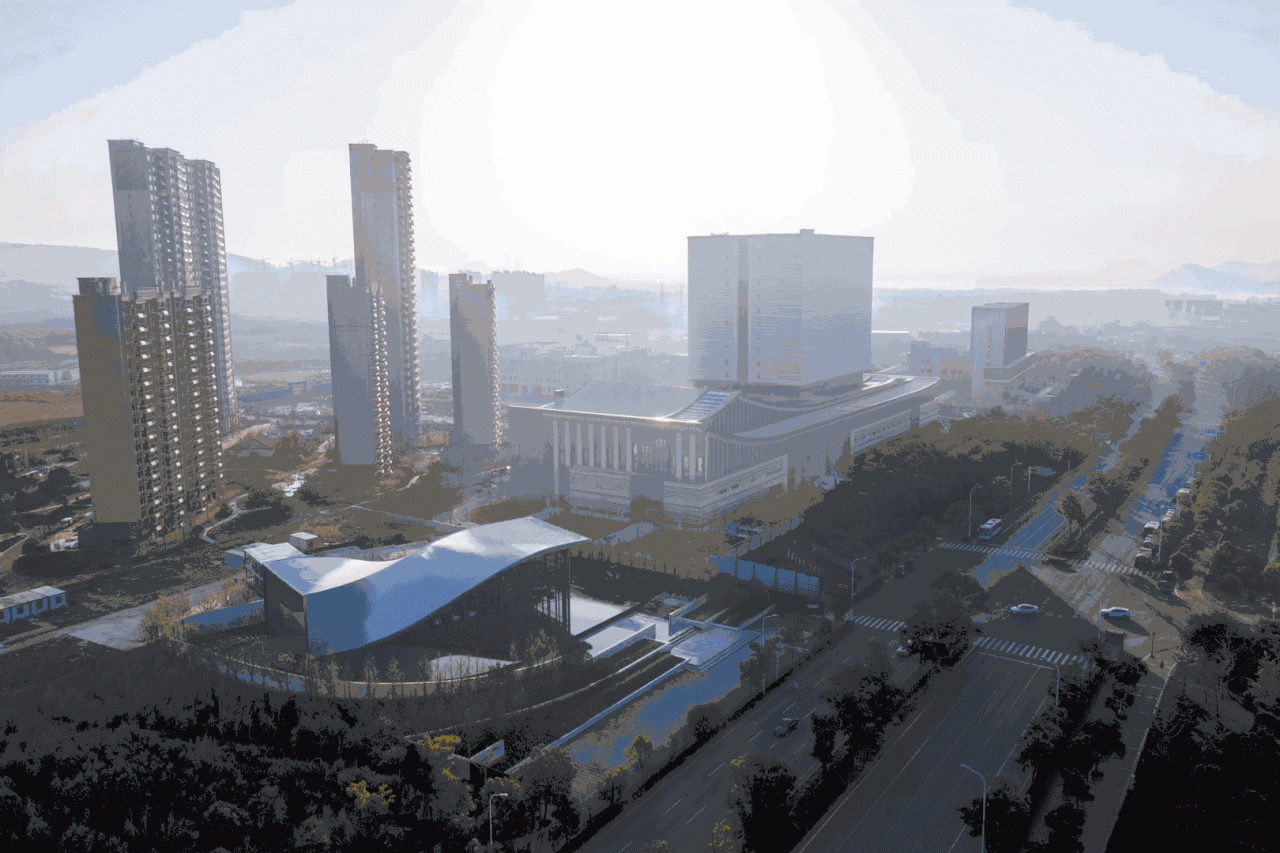
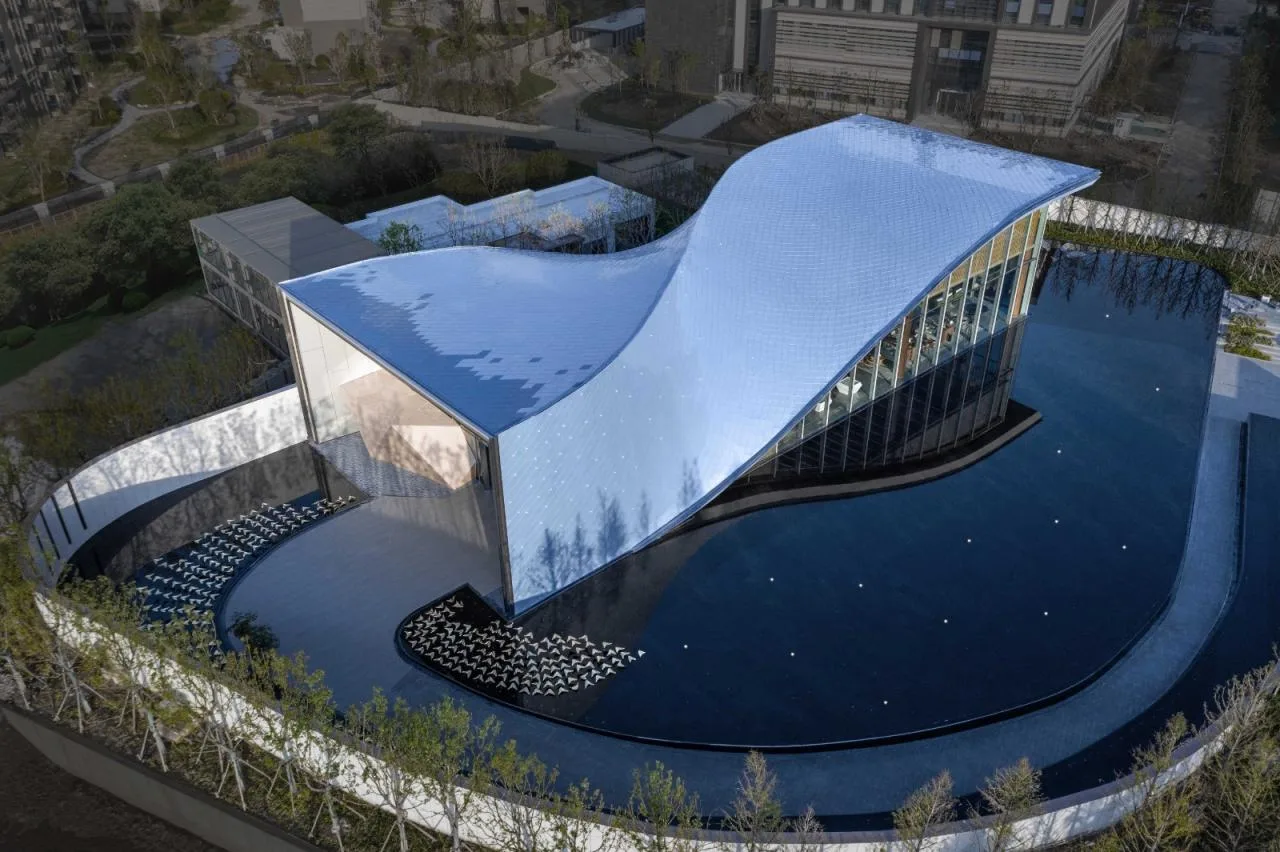
To address this, the designer elevated the site by 2.5 meters to minimize visual mass differences. The building is oriented at a 20° angle on the innermost site edge, preserving a large foreground landscape. This orientation enhances the building’s visibility and highlights its role as an urban living room, inviting visitors to enter and engage in activities that activate the space.
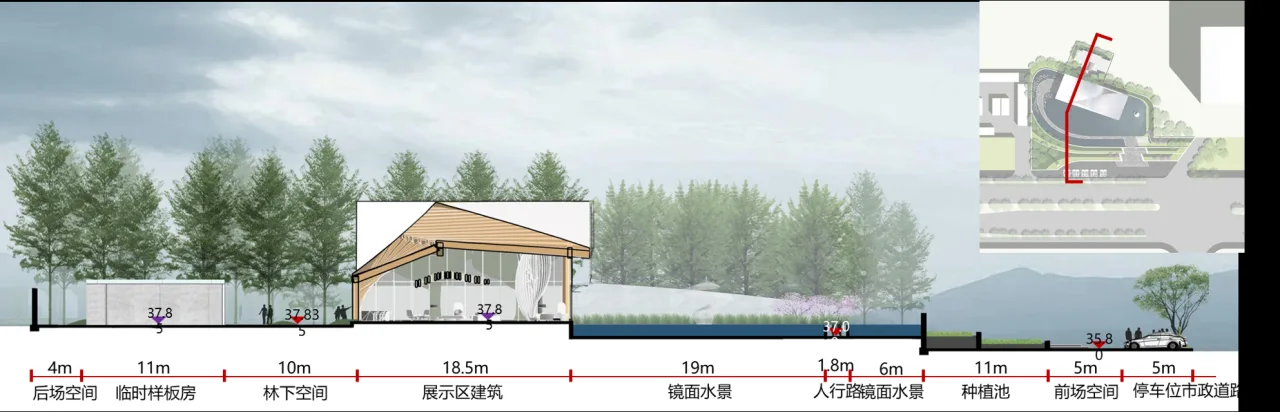
⊙ Vertical analysis
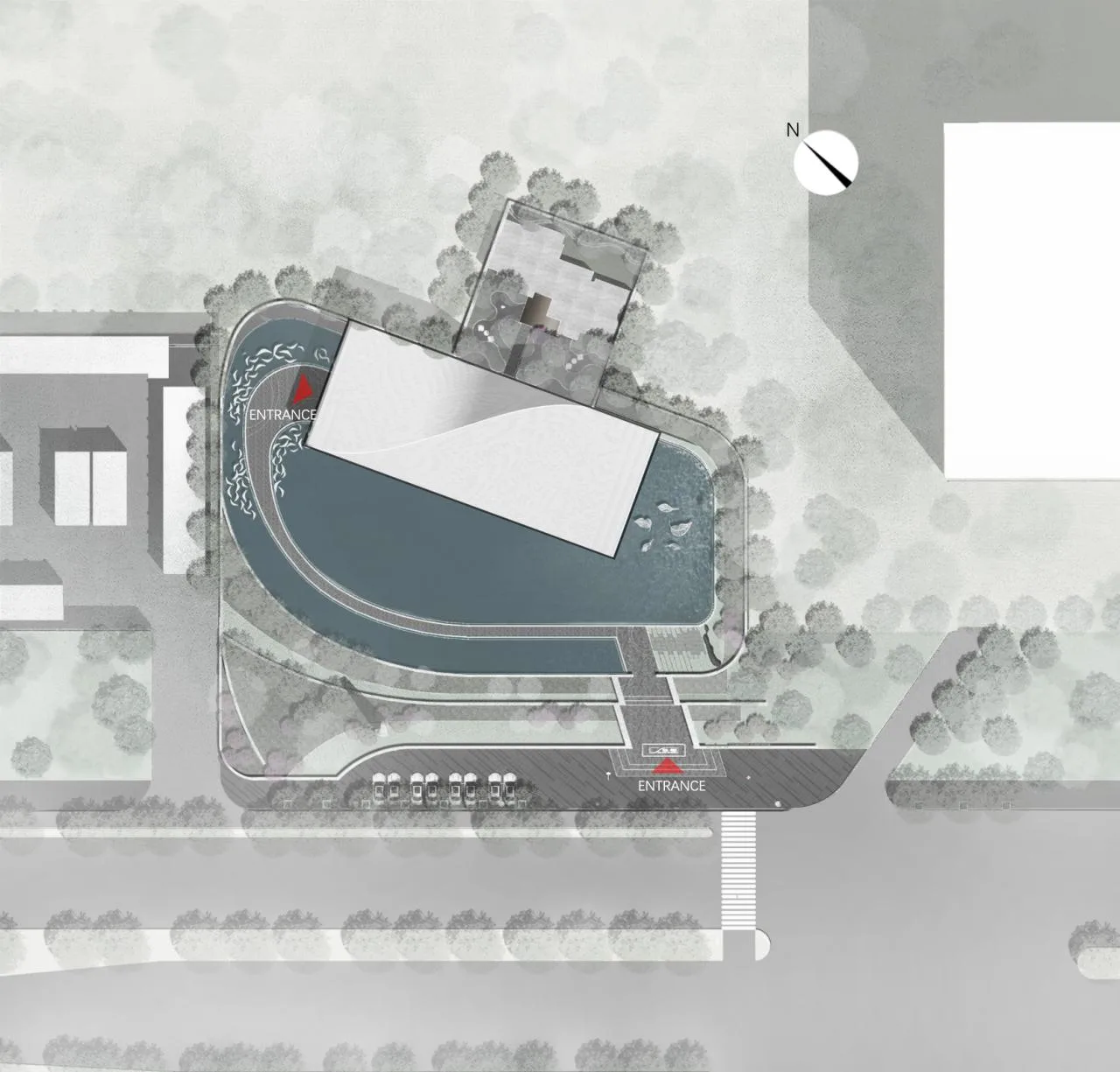
⊙ General layout plan
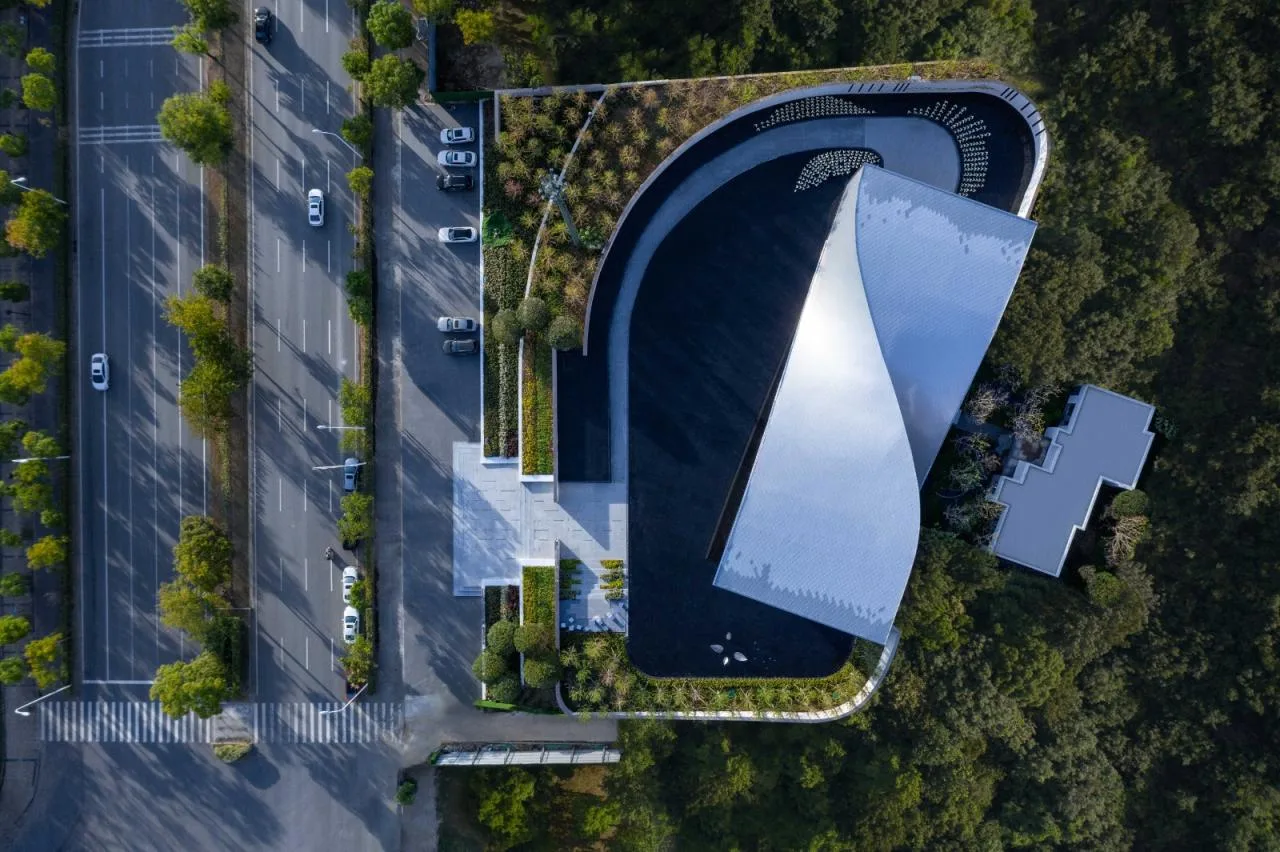
Architectural Construction in the Field
Tranquility, Simplicity, and Freedom
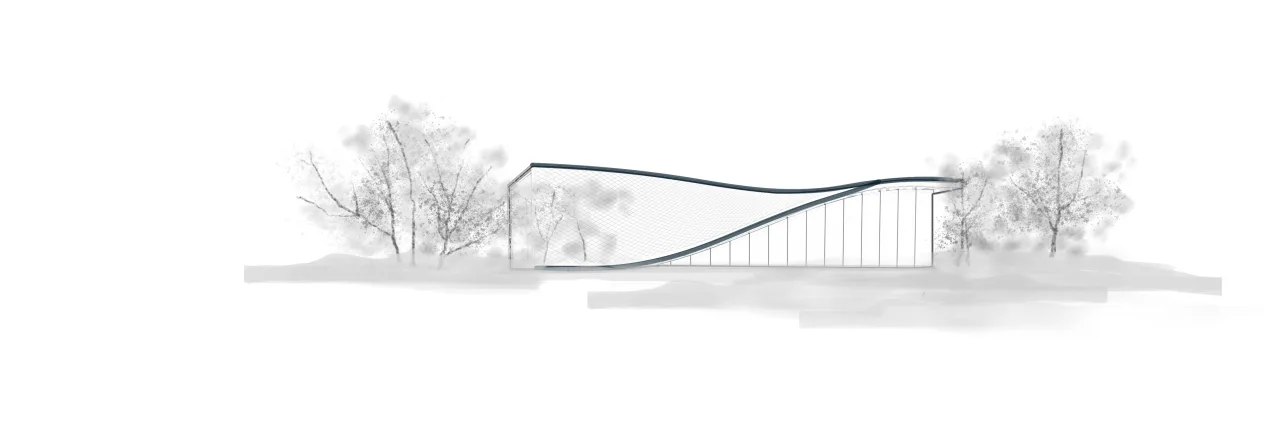
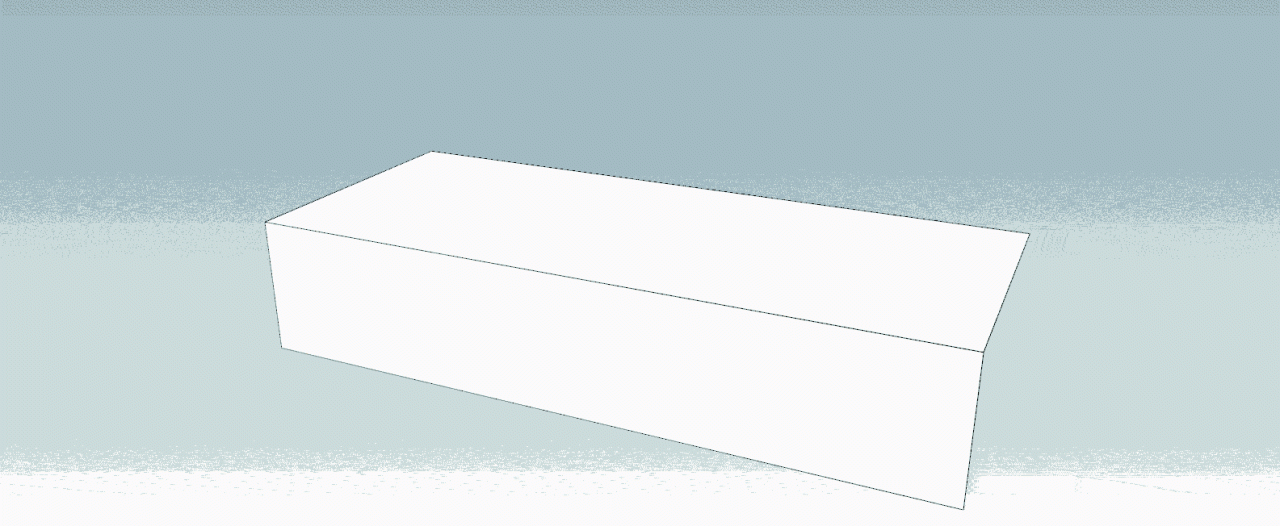
Inspired by the Taoist concept of “Tai Chi,” the design embraces the balance of yin and yang through dynamic twisting forms. Starting from a rigid square, natural curves soften the building’s contrasting surfaces, creating a seamless transition between roof and walls. Unlike linear buildings, these curves express transformation and natural imagery with greater fluidity.
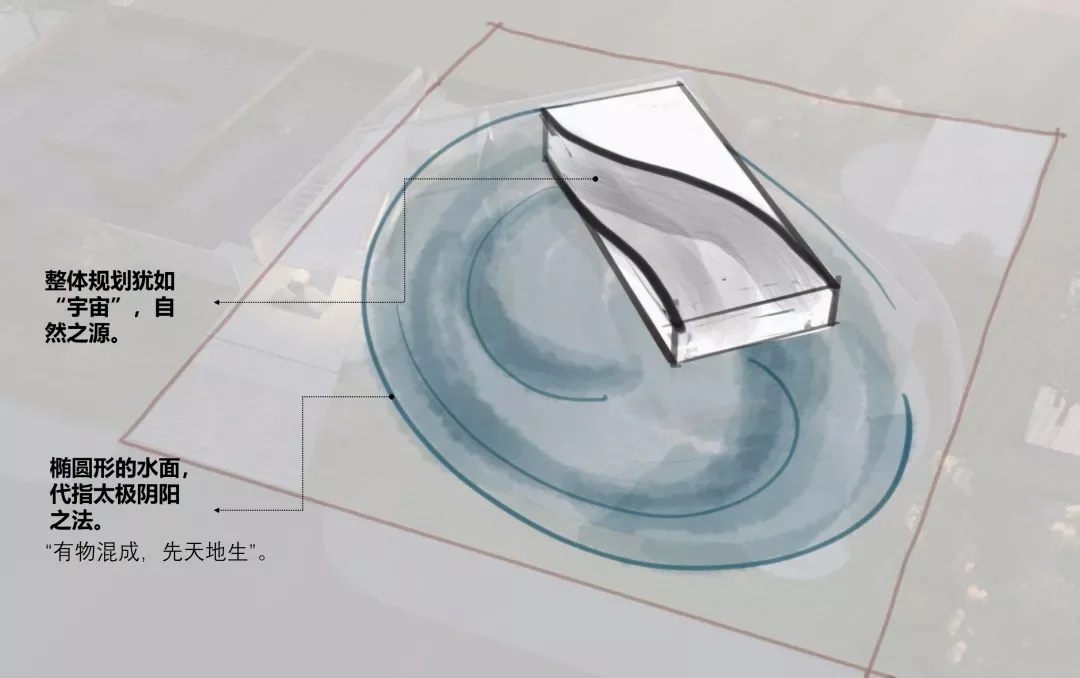
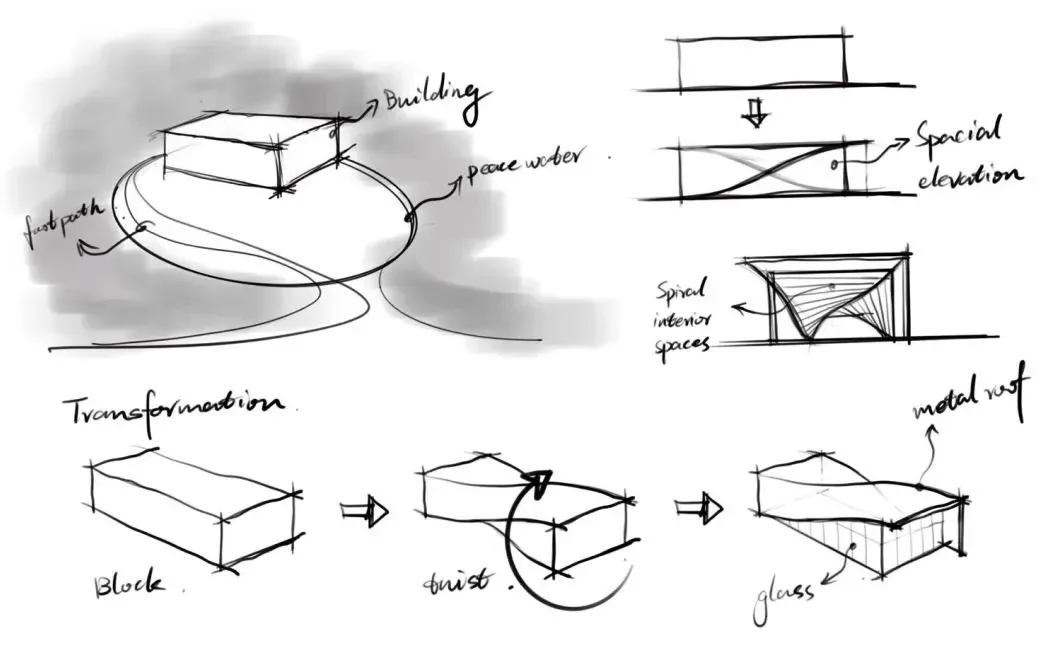
⊙ Hand-drawn form generation
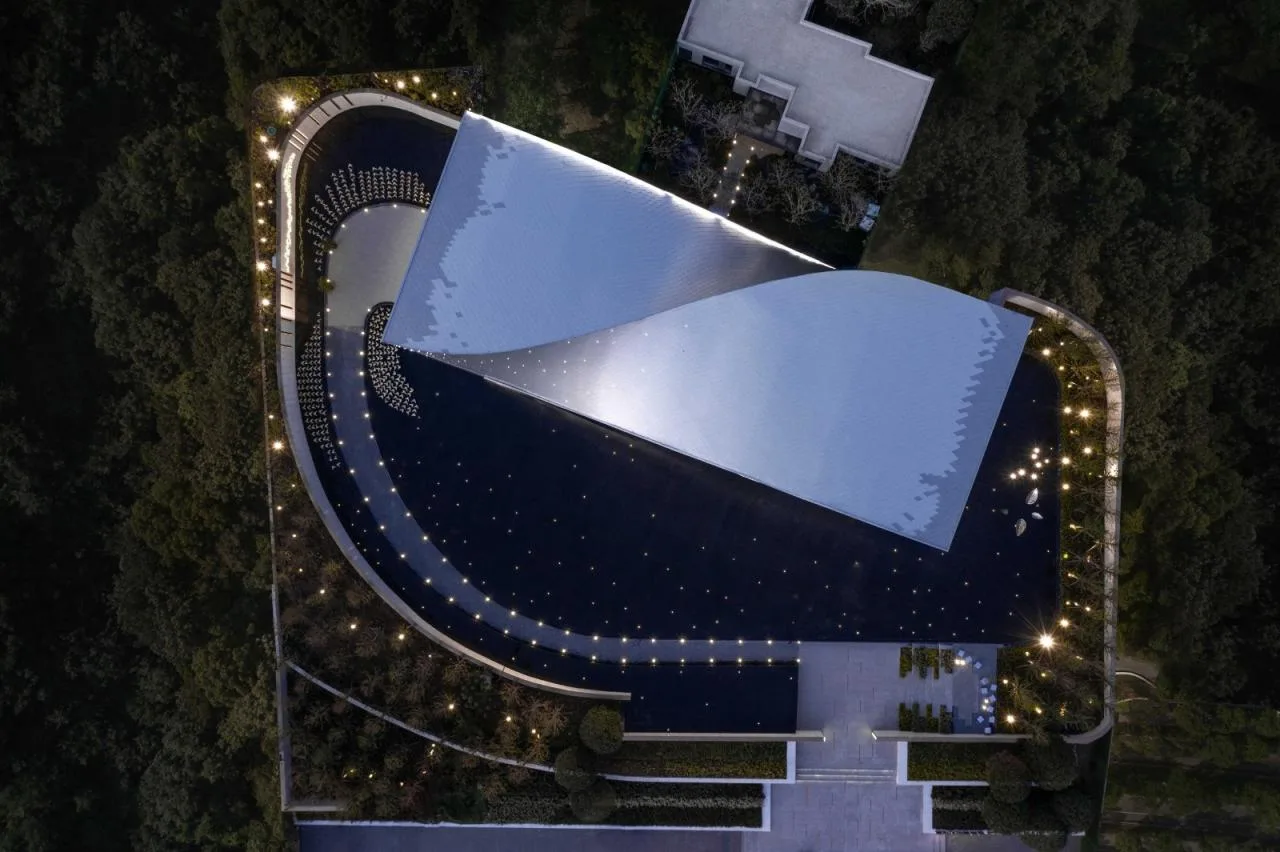
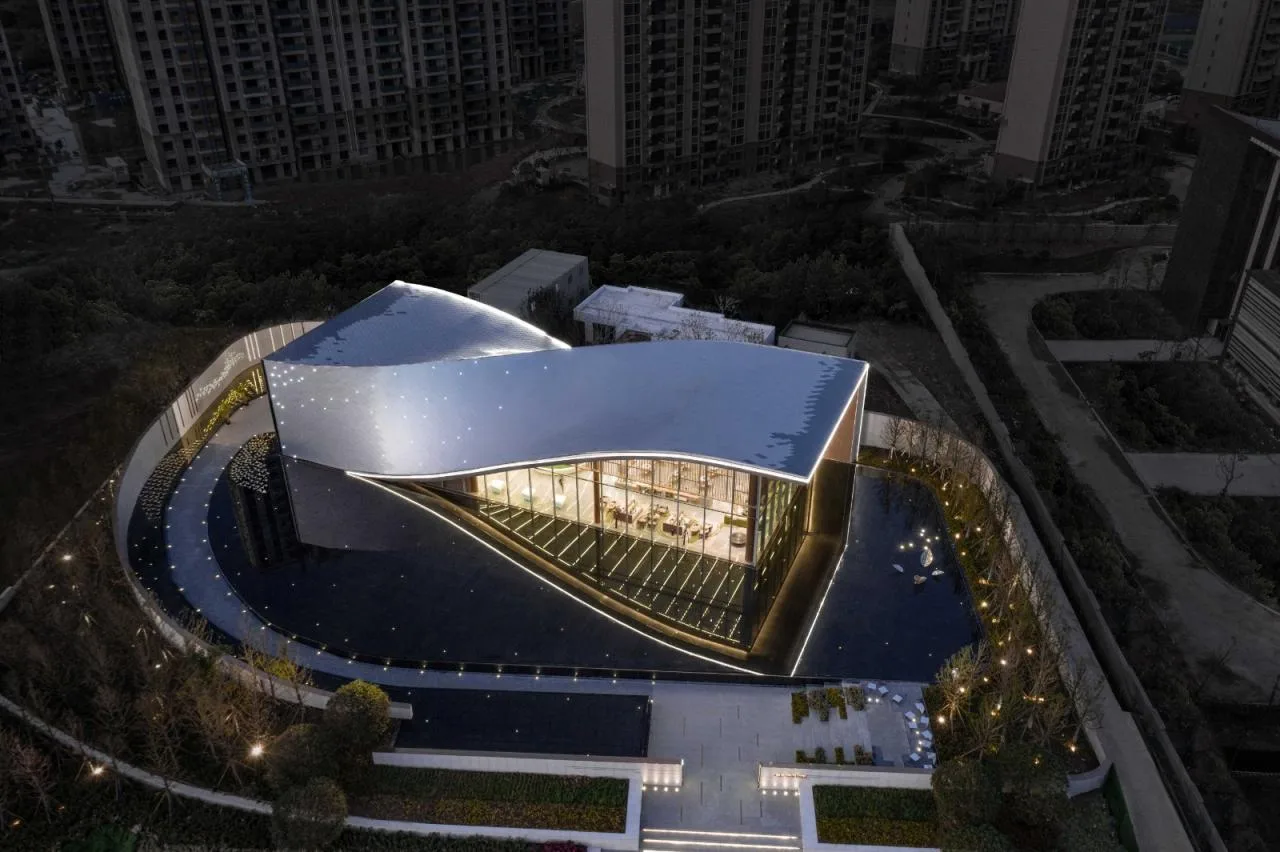
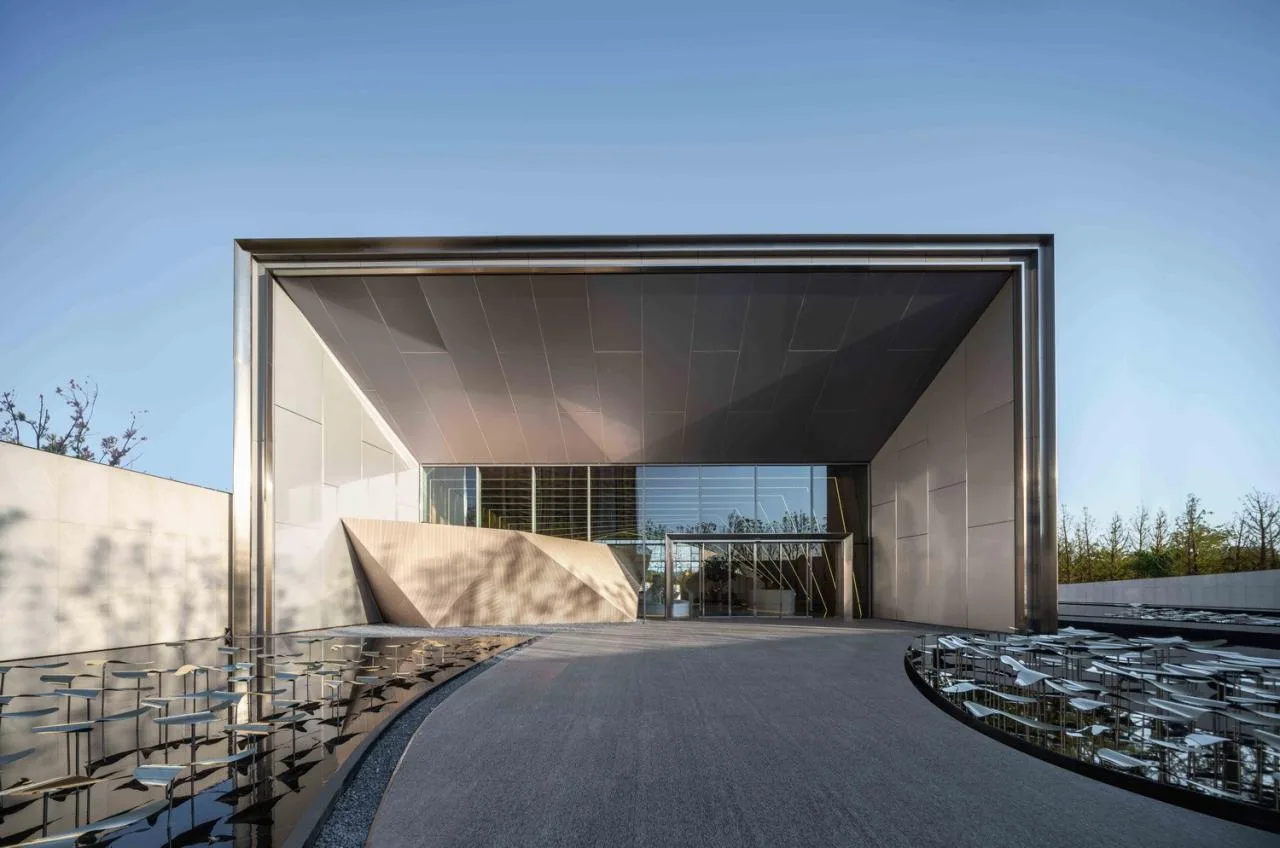
The designer incorporated a calm water surface with curved vessels and a large, semi-human-scale water feature that can be traversed. This elevated water element integrates seamlessly with the building, while a gently curving ramp extends naturally from the structure. The expansive water feature acts as a buffer, isolating visitors from the surrounding urban noise and offering a serene experience of crossing “water and clouds.”
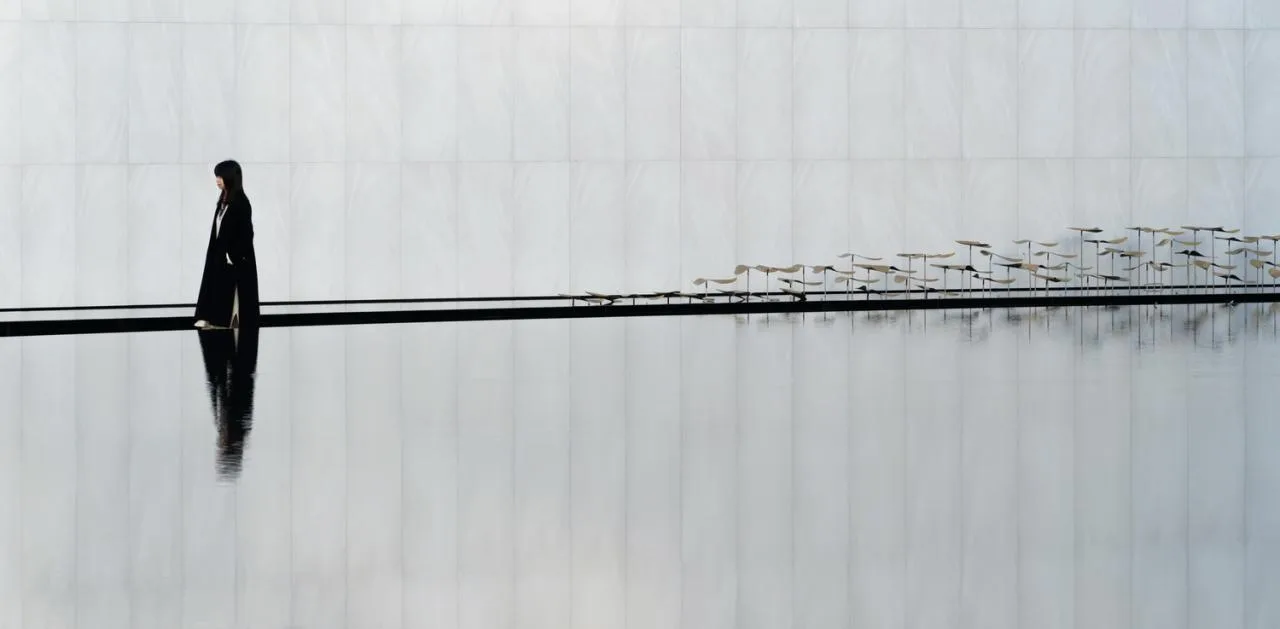
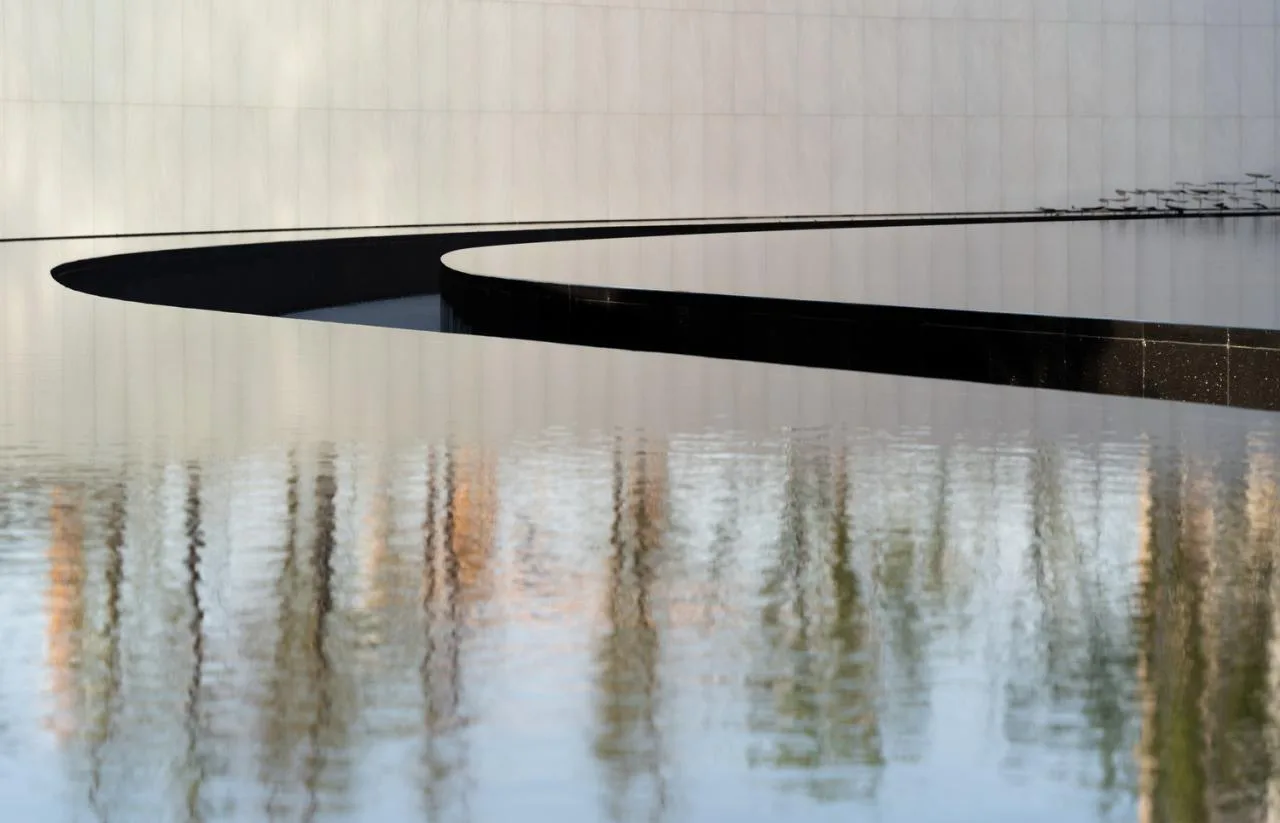
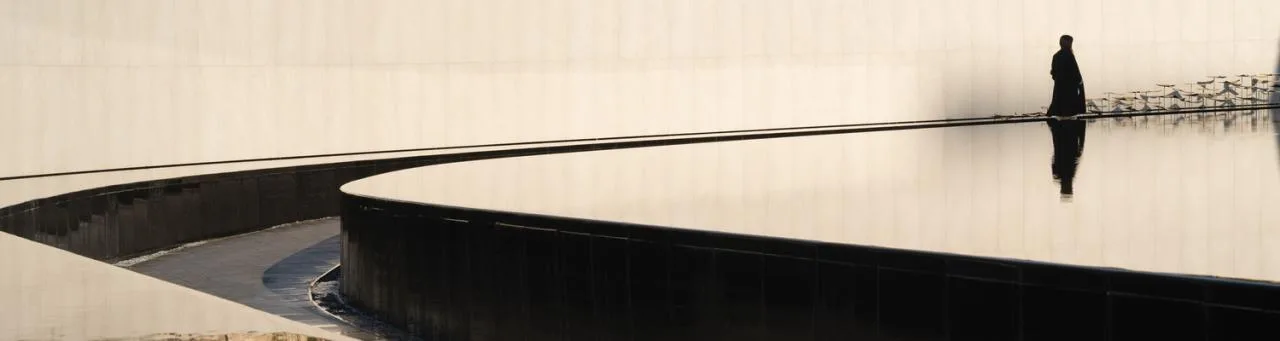
The architectural beauty of “virtual stillness” is achieved through peaceful spaces, still water, and natural greenery. These elements convey clarity, lightness, tranquility, elegance, and transcendence, expressing profound meanings through the interplay of lightness and stillness.
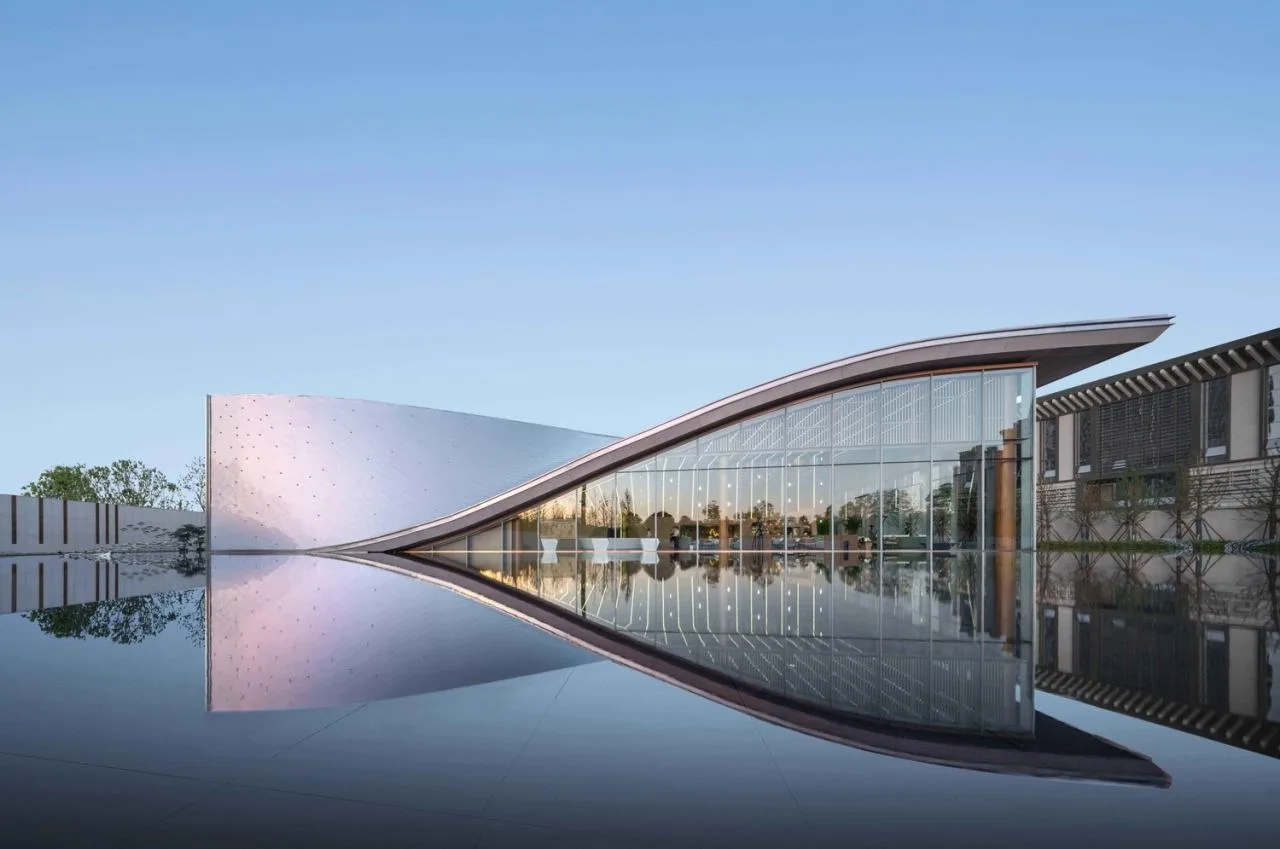
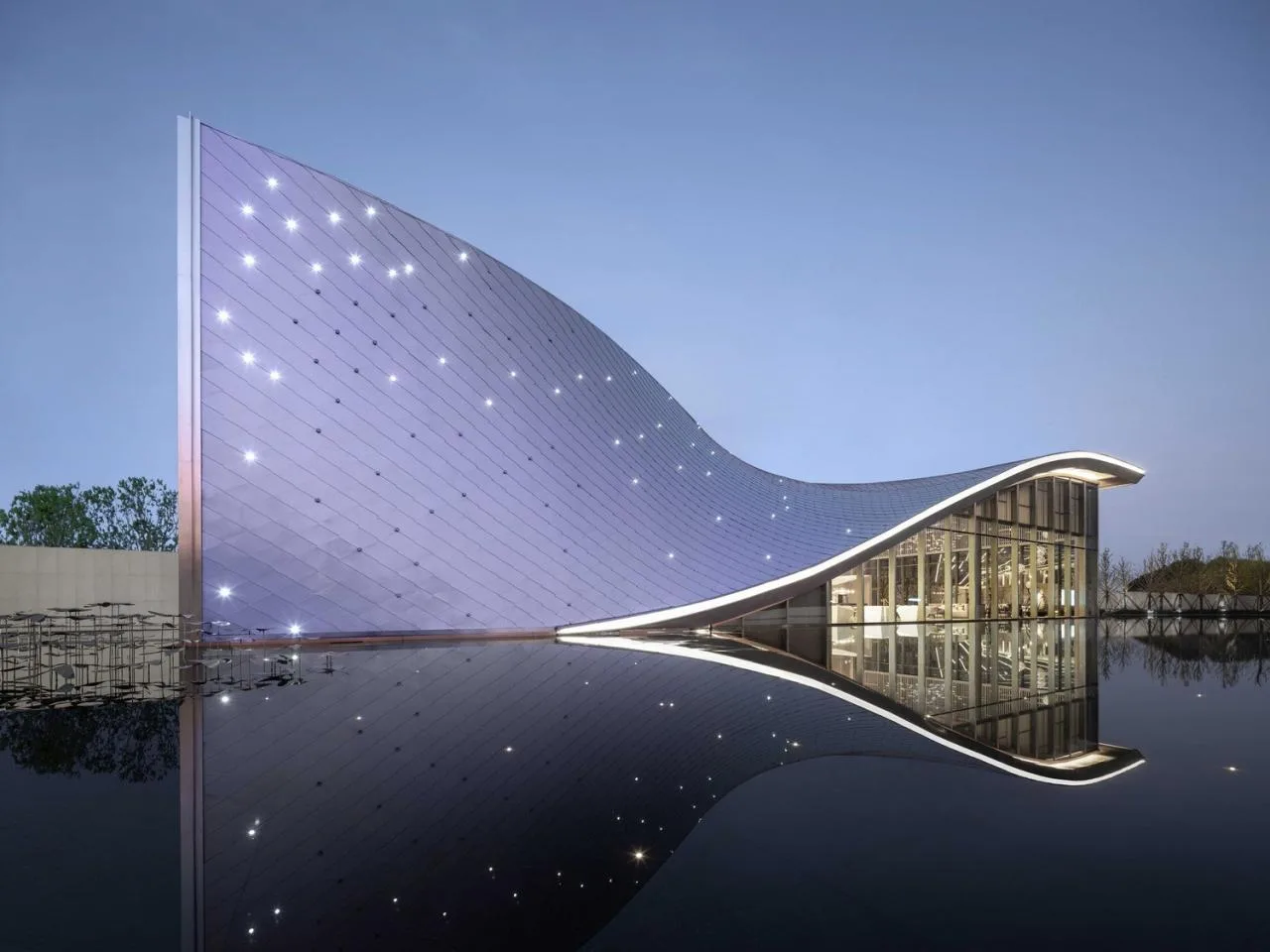
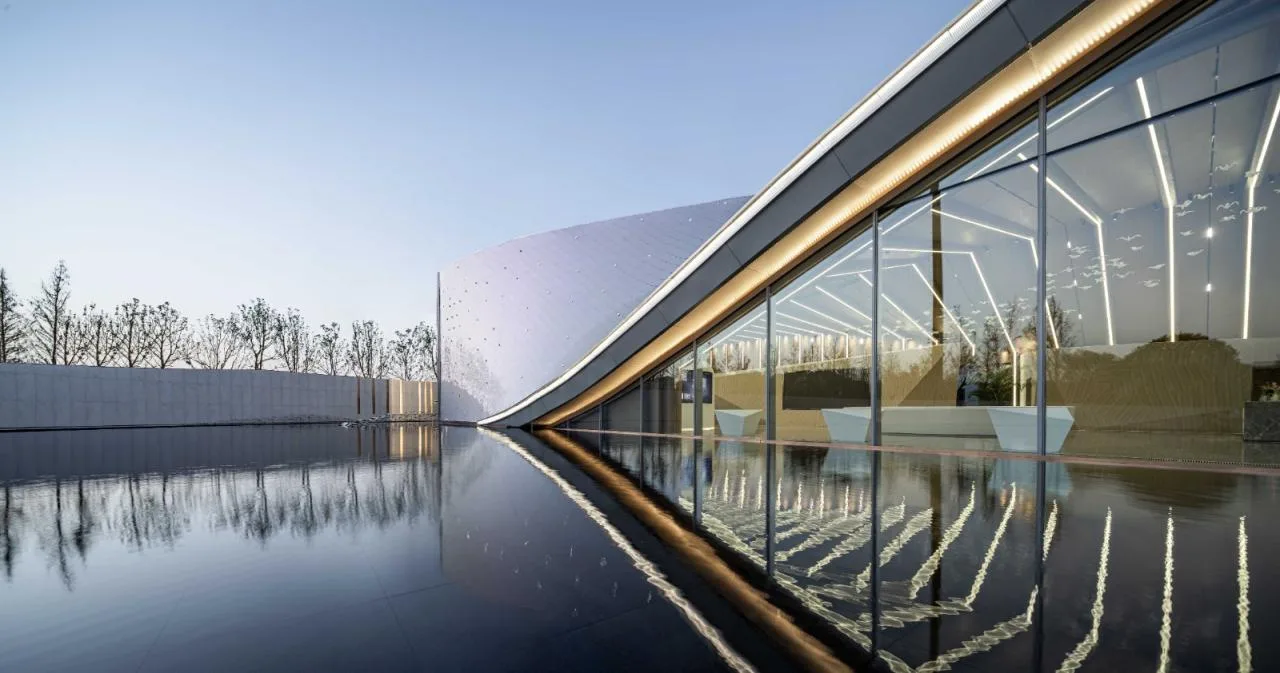
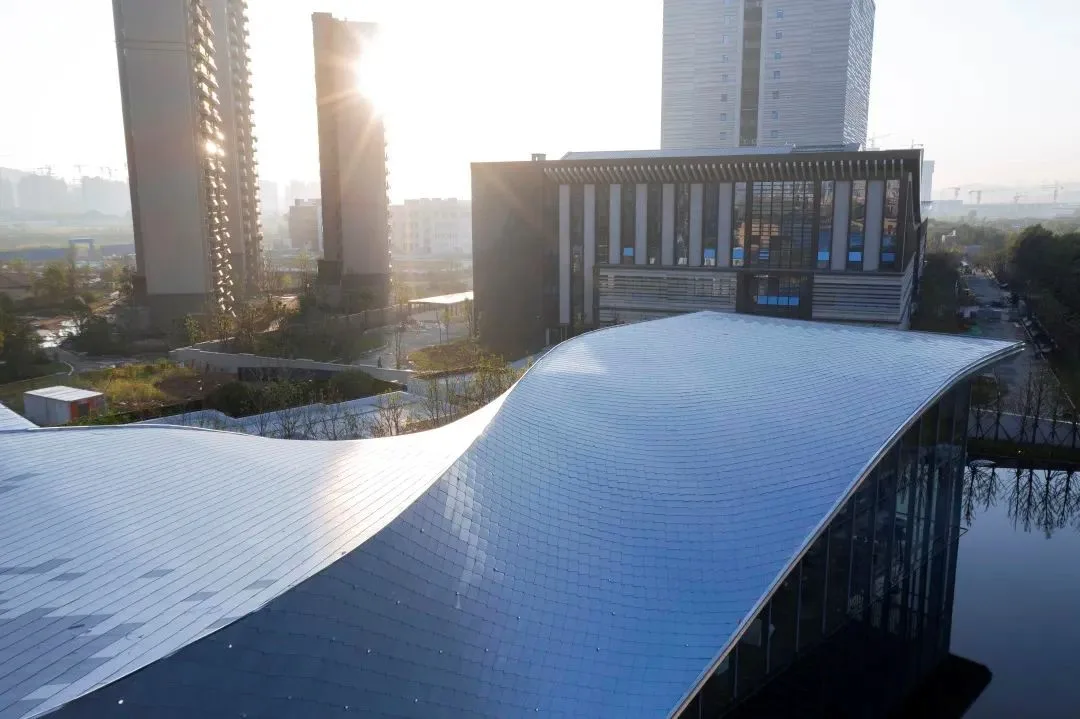
The building’s continuous roof mirrors the neighboring new Hubei Provincial Archives, undulating like mountains with unified rhythm and order.
Architectural expressions vary: some buildings, like the archives, have massive volumes and heavy overhangs deeply embedded in the urban texture; others feature lightweight structures and transparent facades that seem to dissolve into nature.
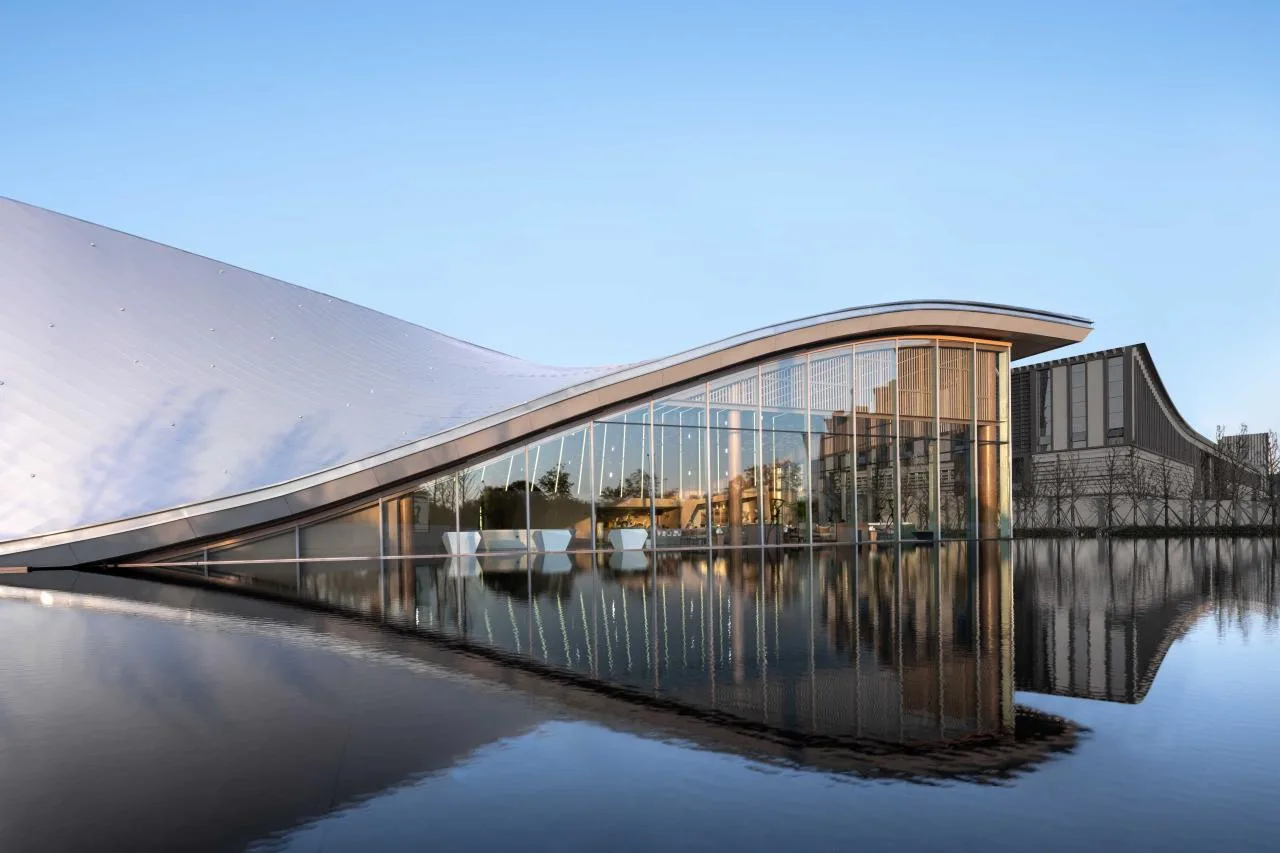
Situated between two bodies of water, the building’s transparent glass curtain walls extend interior space and blur boundaries between inside and outside. This interpenetrating relationship creates a transparent spatial experience. The glass walls and metal roof are naturally divided by elegant arcs formed by the twisting blocks, distinguishing the facade’s real and virtual aspects.
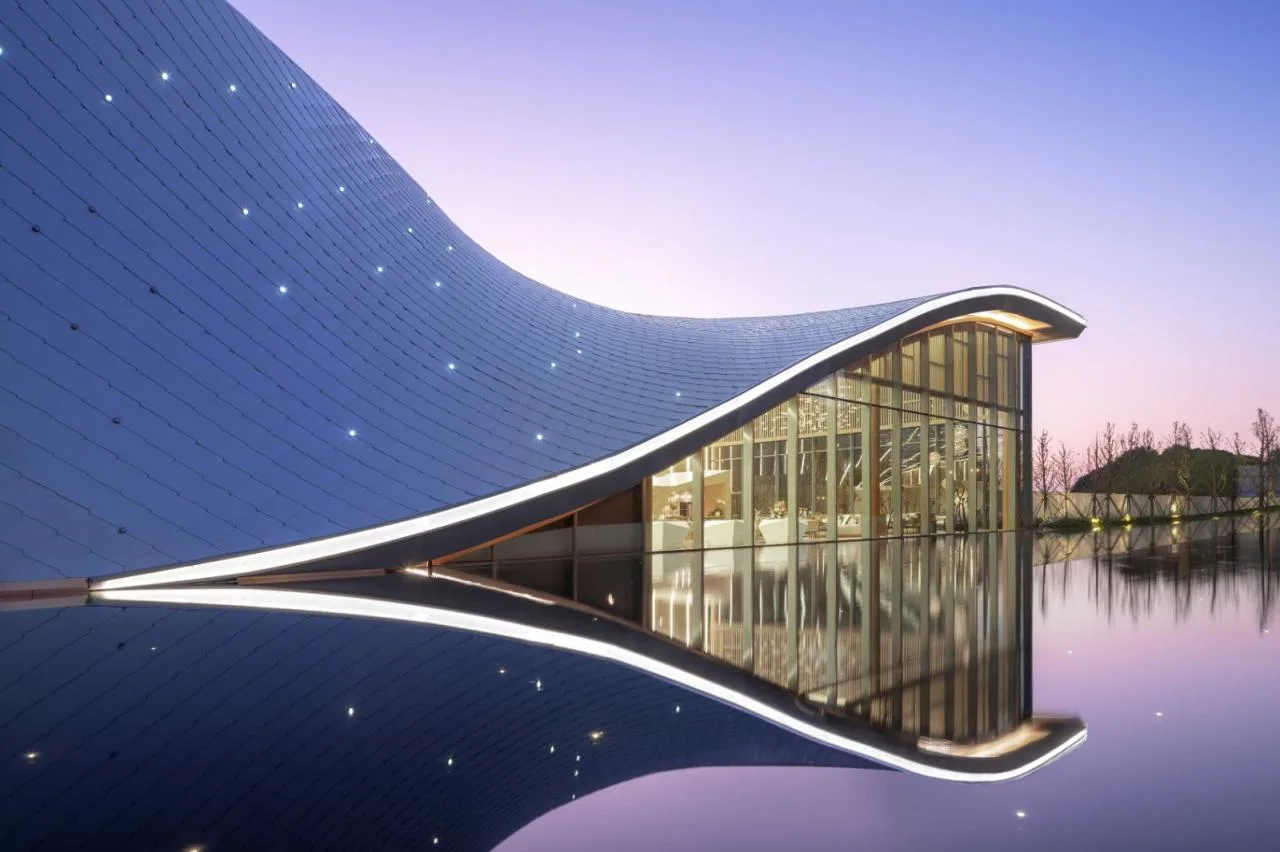
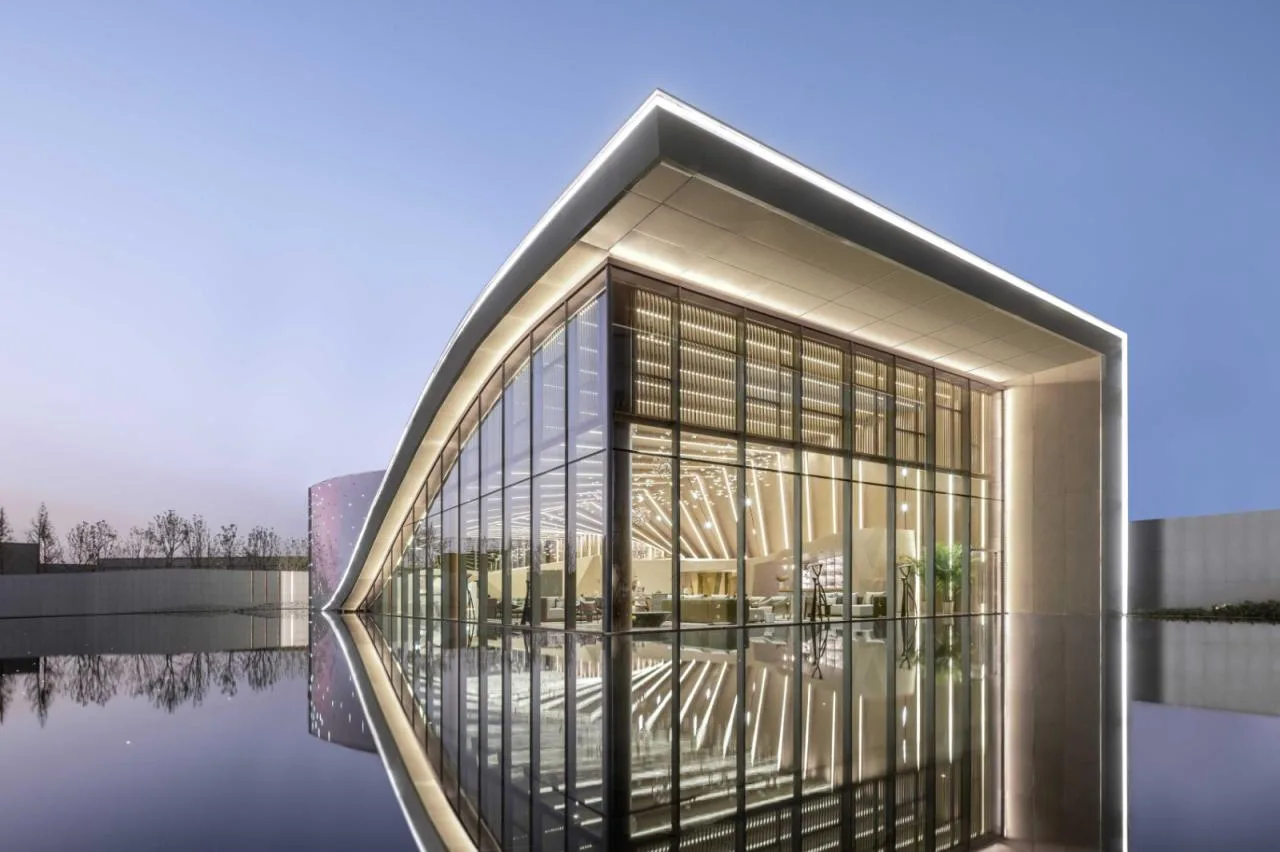
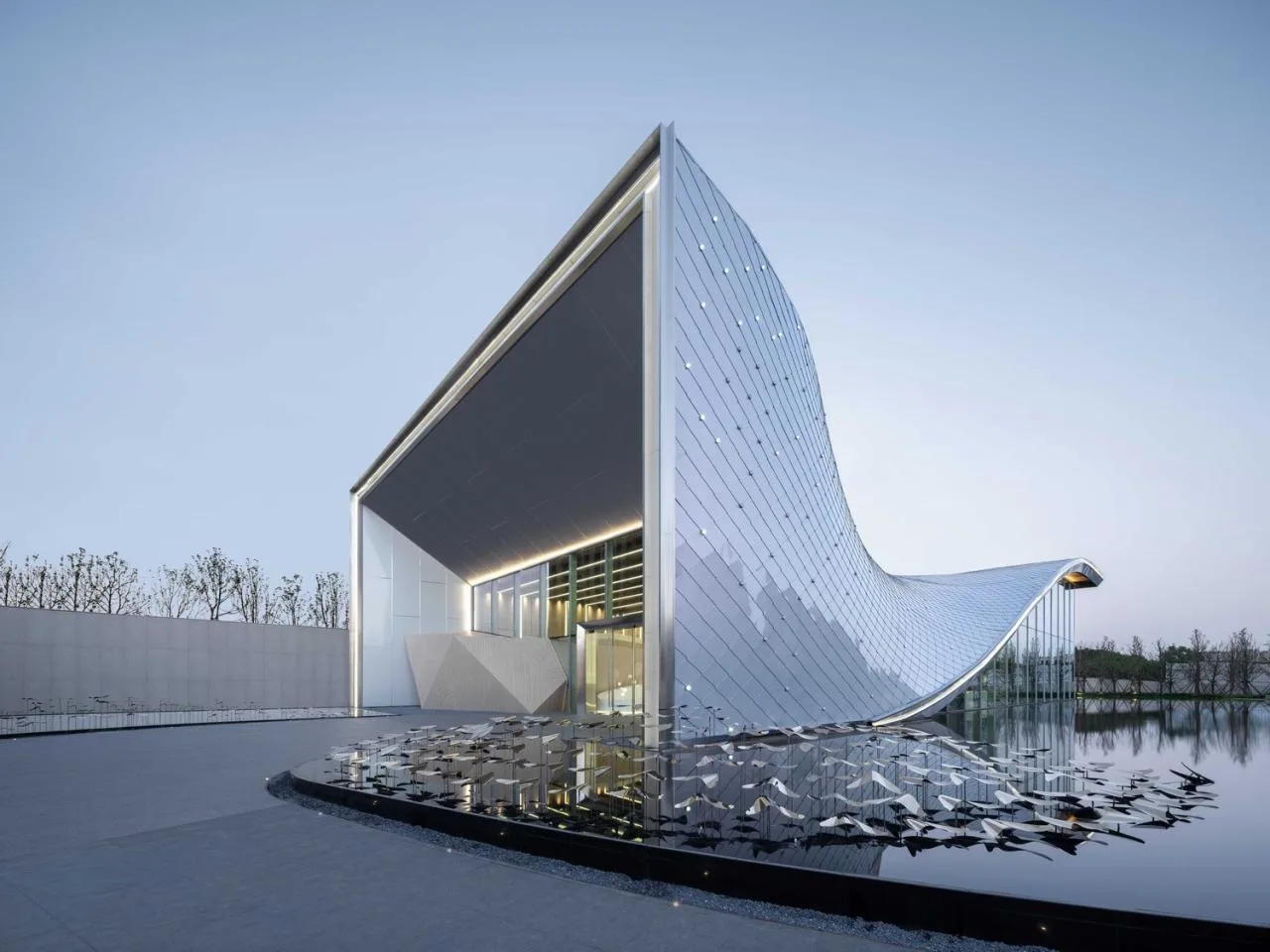
The flow of people is guided by a path hidden beneath the water’s surface, offering a continuous water scenery experience. As visitors move, the environment gradually calms, leading them to restful spots. The architectural form twists back to a square at the entrance, where metal art installations mimic shimmering waves on sandbanks. This changing form creates unique spatial experiences that psychologically guide movement.
Expression of Structural Logic
The Vitality and Simplicity of Wooden Structures
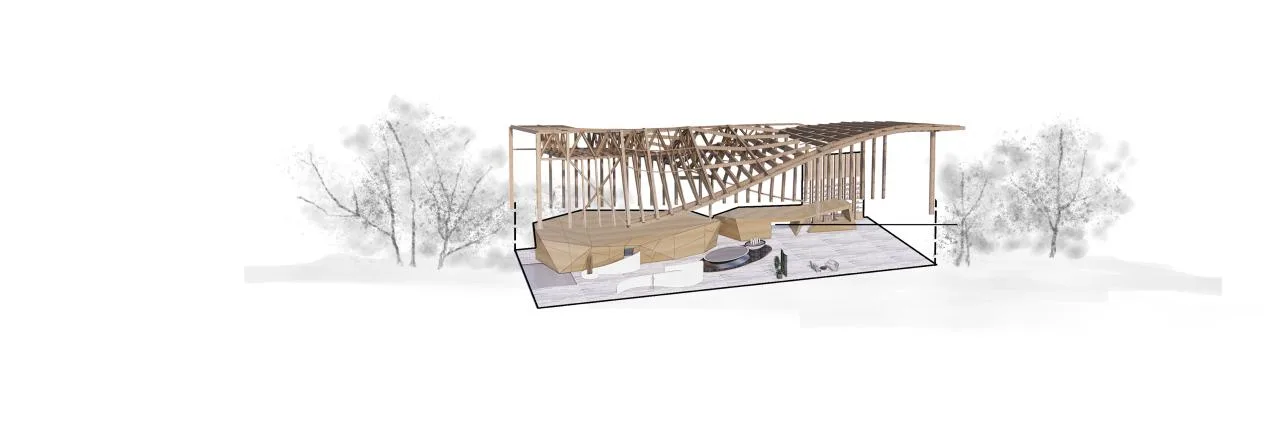
The architectural form results inevitably from structural mechanisms and force relations. Art in architecture shapes character through these connections. The design’s expressive power is rooted in its connection methods, which dictate spatial formation.
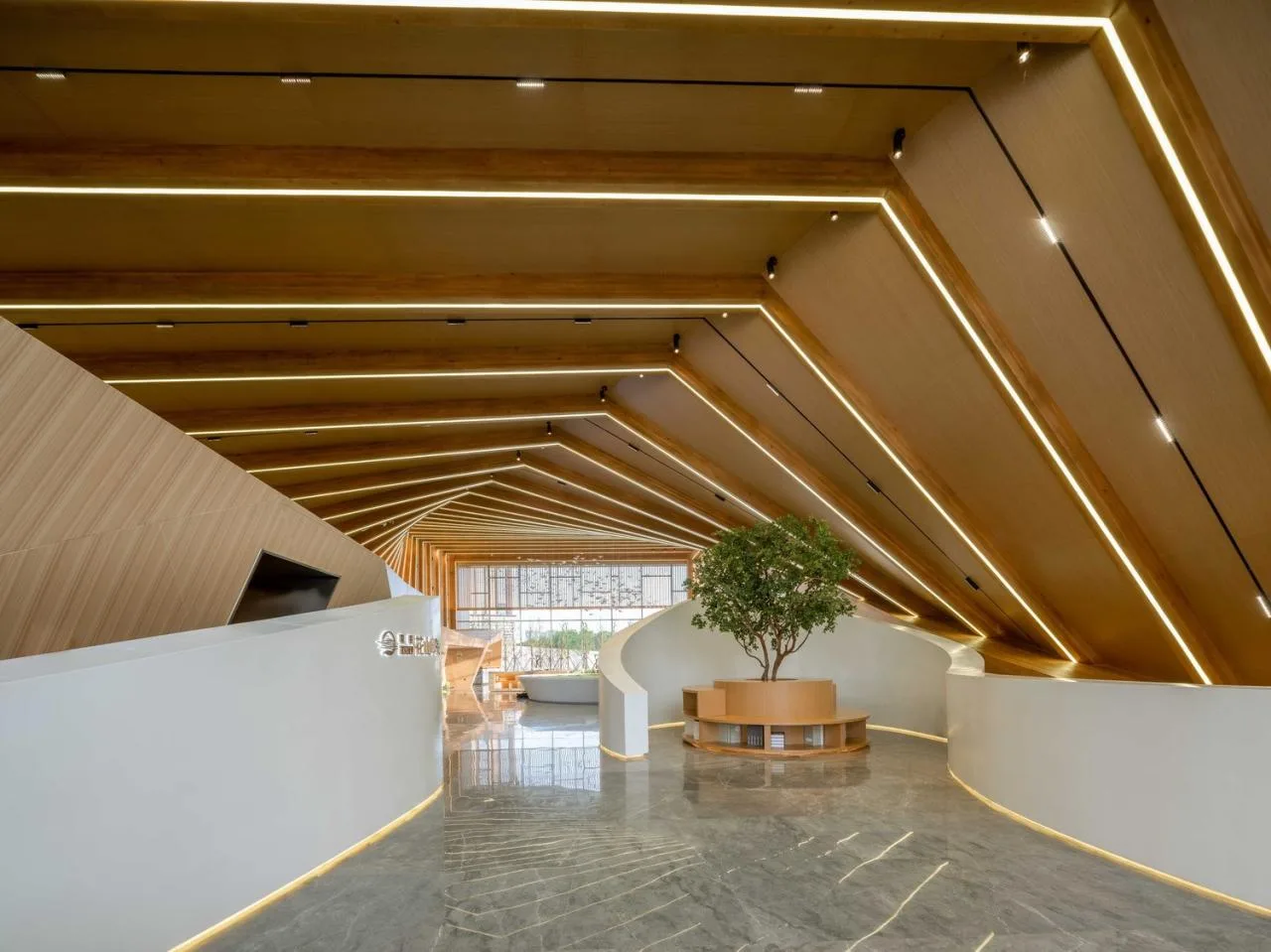
This project features laminated wood as the primary structure, embodying simplicity, unity, authenticity, and continuity. The twisting structure and form are intertwined, using natural materials to express infinite structural variations. Inside, visitors experience a sequential spatial rhythm that unfolds progressively.
⊙ Structural analysis diagram
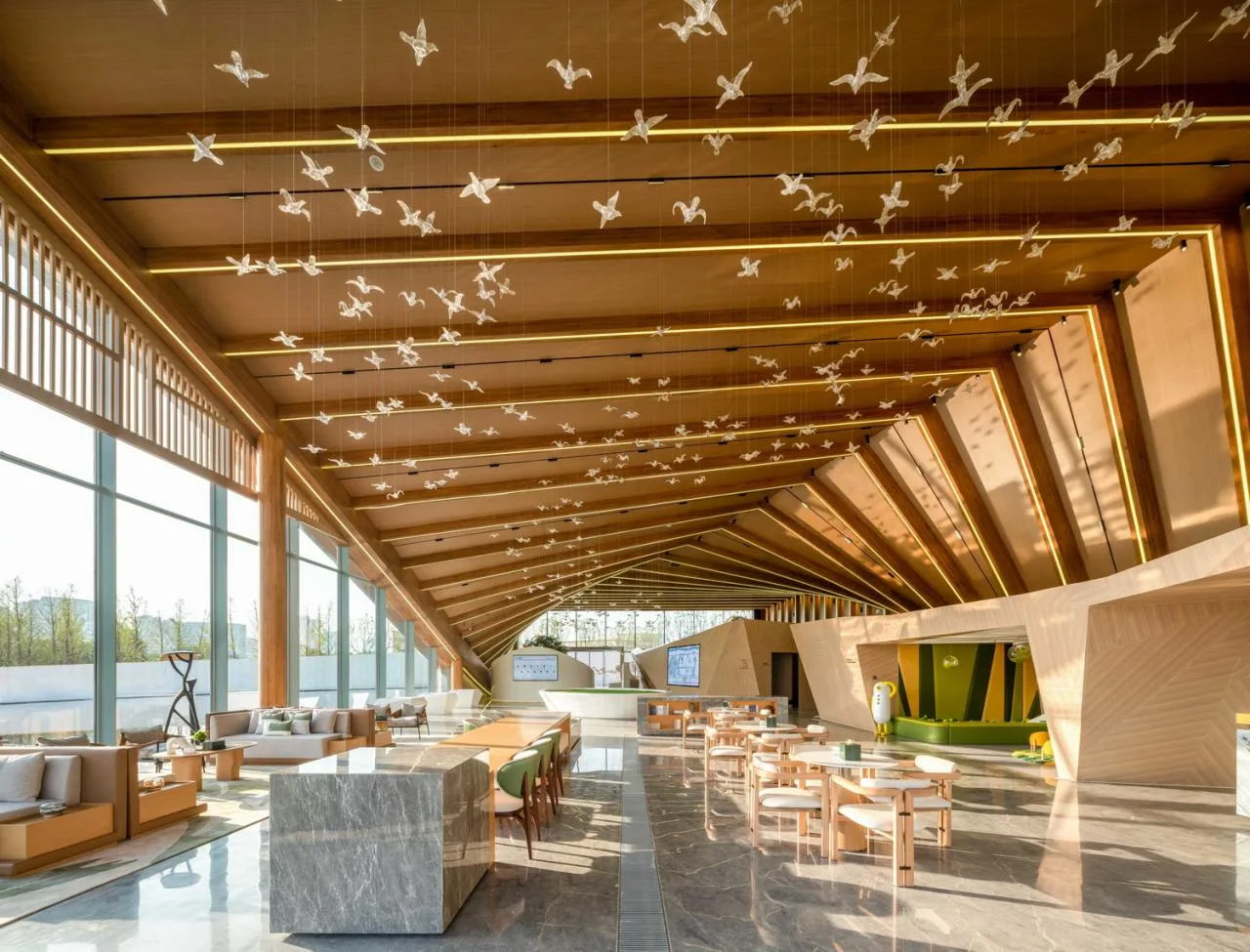
The boundary between the French windows and the roof is defined by a twisting curve, lending the building volume a dynamic vitality. The spiral wooden skeleton follows this curve, embodying natural intentions—akin to the twisting dance of human genetic sequences—evoking a sense of life force.
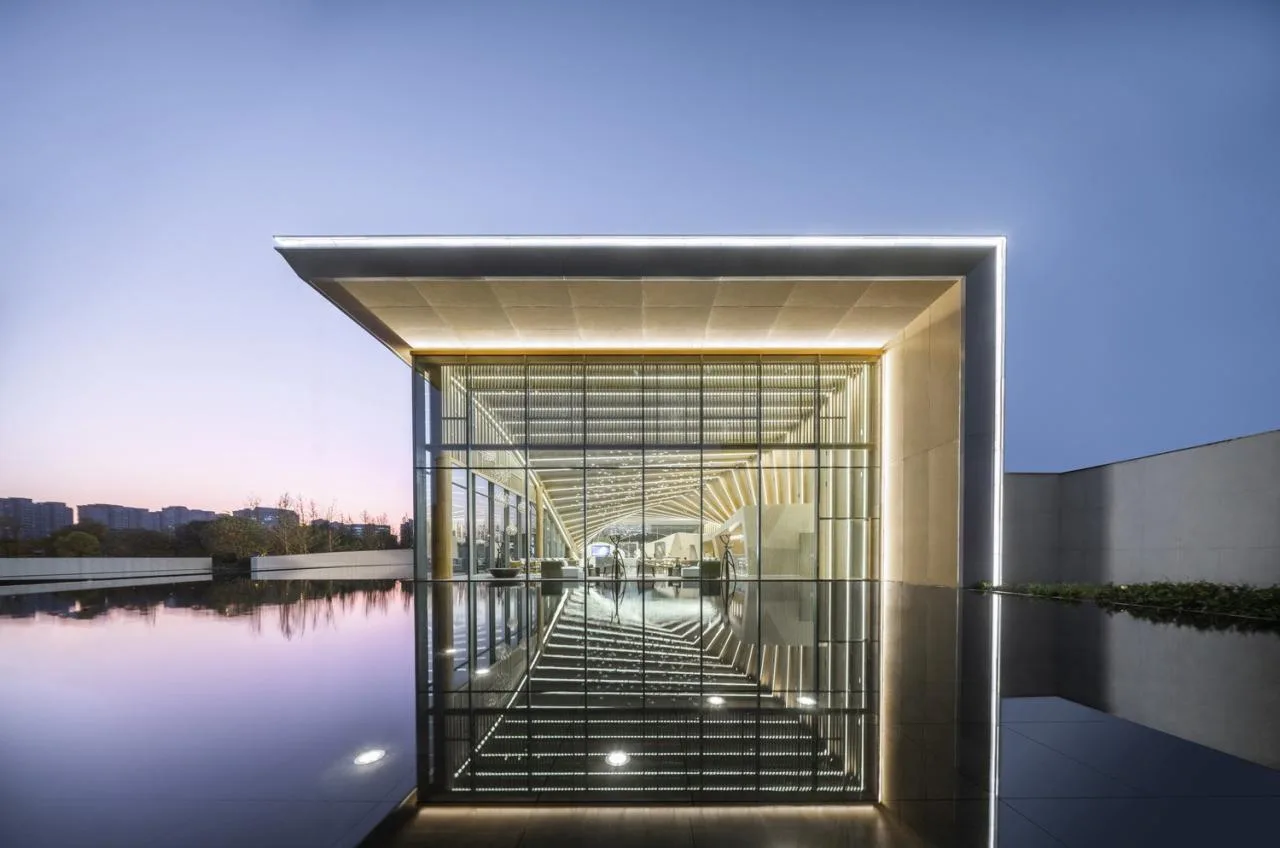
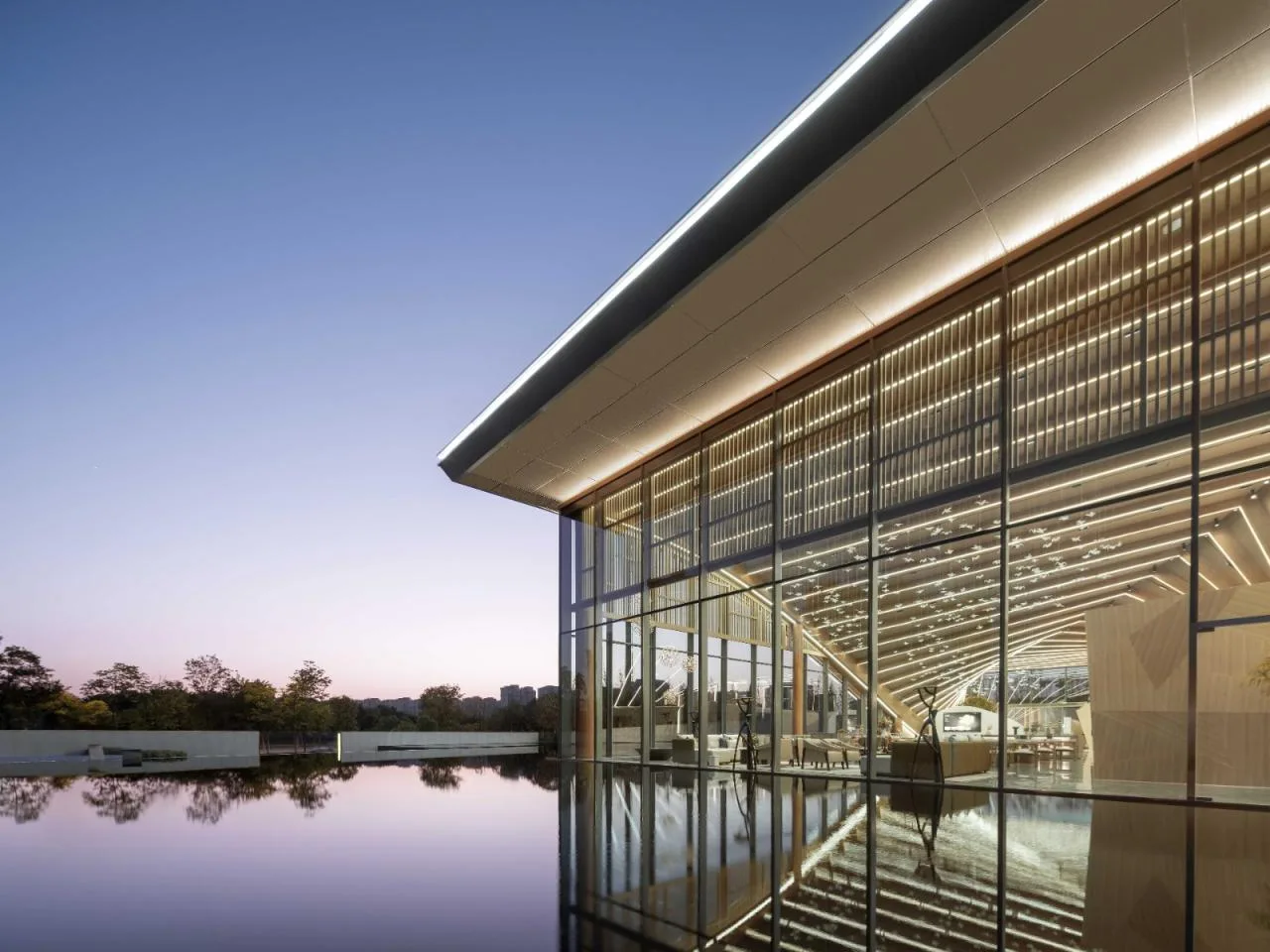
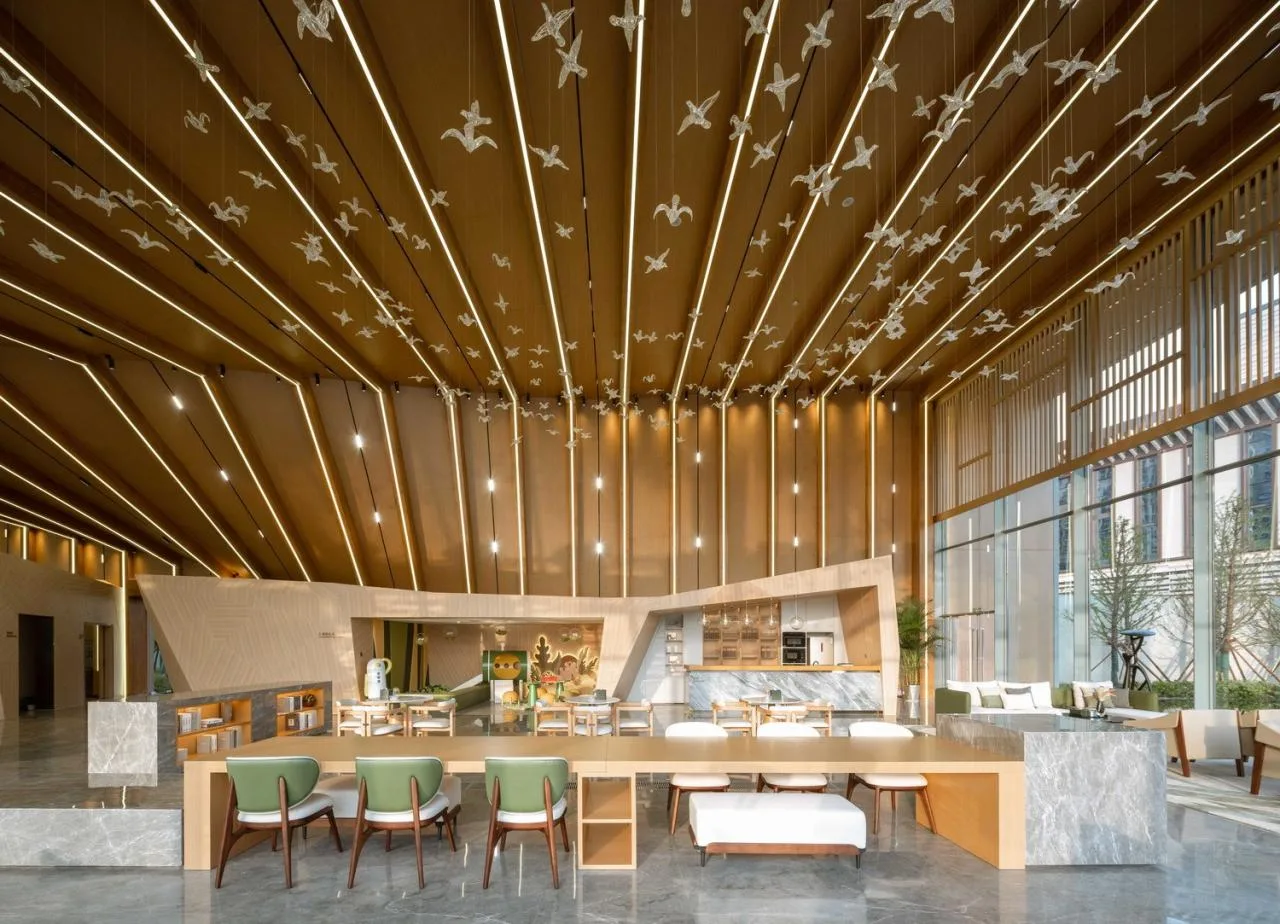
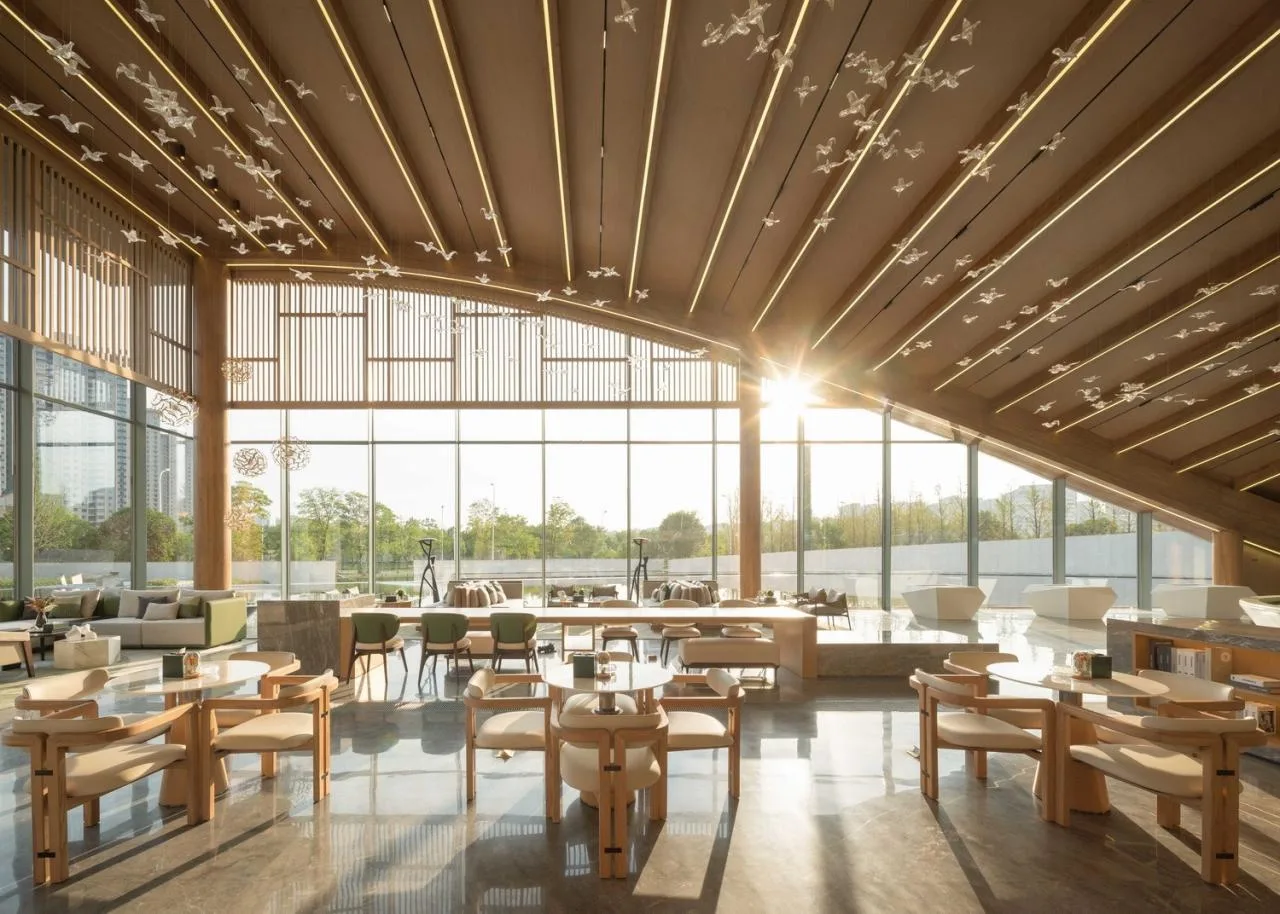
Functional rooms are arranged on one side with partitions, preserving a tall, spacious lobby serving as a book bar and coffee shop, avoiding spatial fragmentation. Large French windows introduce natural light, creating varied spatial sequences. The designers leverage light and shadow changes to produce spatial differentiation, enriching the experience of reading and social interaction with a dynamic spatial hierarchy.
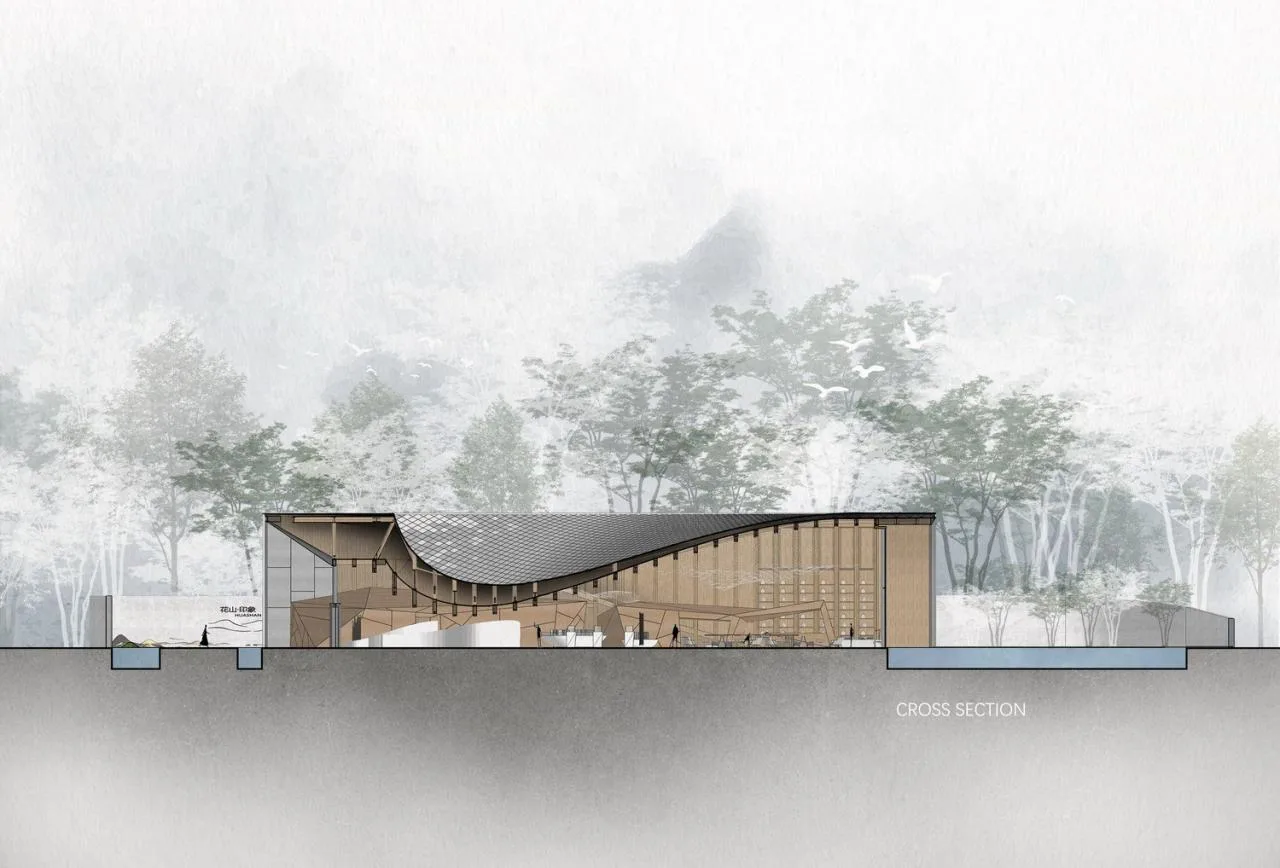
⊙ Sectional drawing
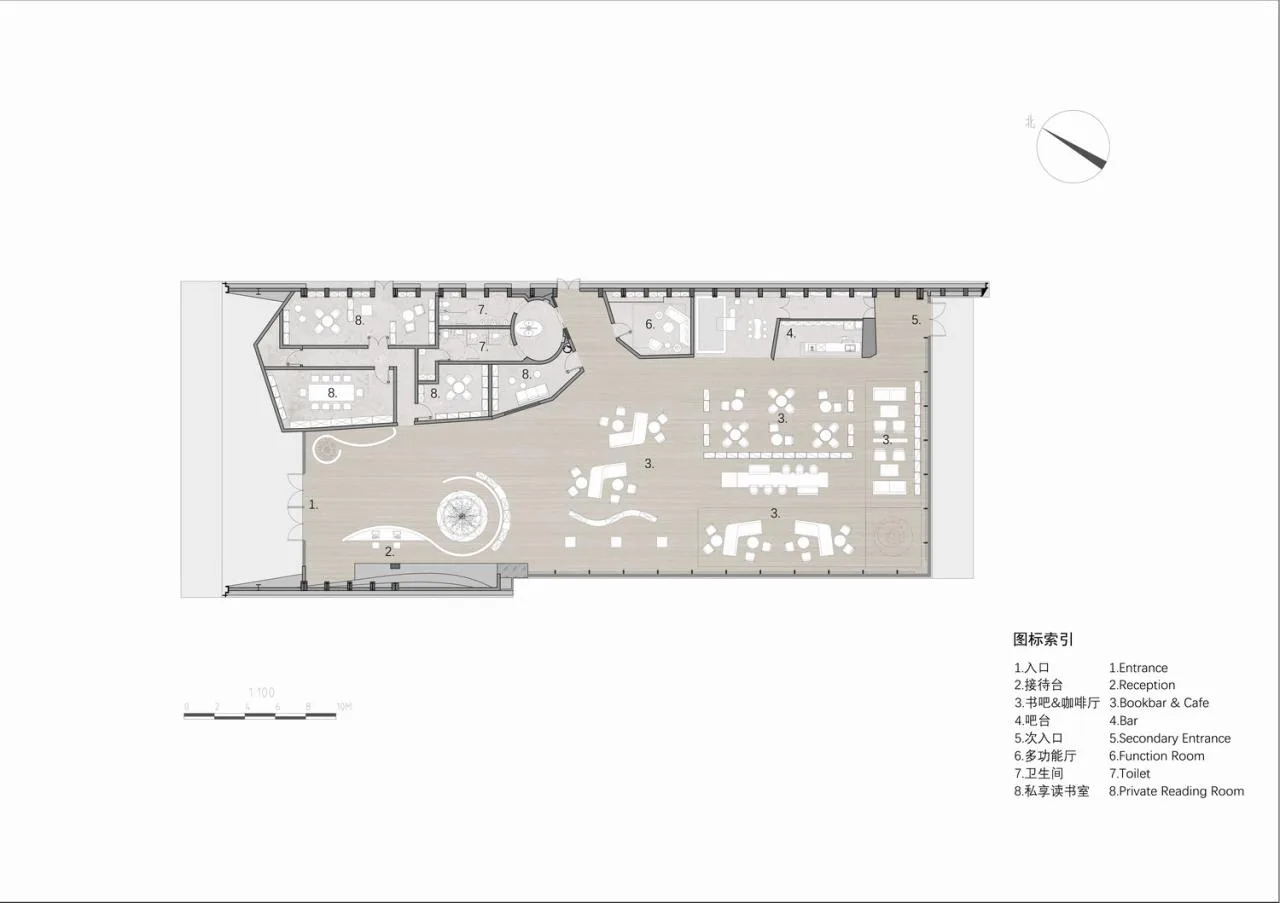
⊙ Plan view
The Art of Perceived Construction
One pillar, one beam, one ridge, and one side
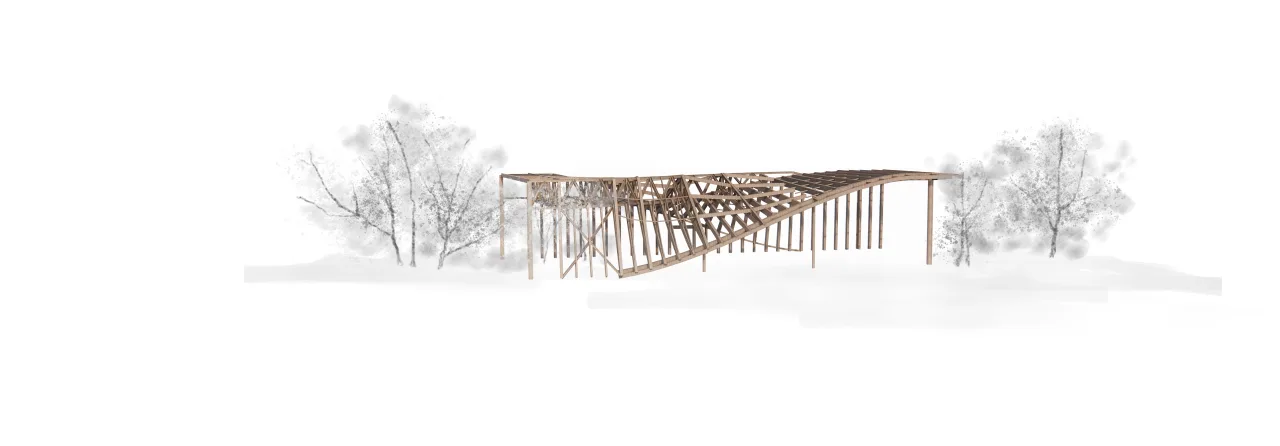
The designer distorted the rectangular building by removing one of the longitudinal portal columns, which imposed strict requirements on indoor height, beam appearance, and torsion angles. This made structural implementation particularly challenging. The goal was to present a complete wooden structure without any exposed steel elements, which the conventional beam-column system could not fulfill. After thorough interdisciplinary discussions, the structural engineer emphasized the principle of “one column, one beam, one ridge, and one side” to integrate the gradually twisted skeleton with the two “S”-shaped ridges indoors and outdoors. This approach fully met the architectural demands for independence, large spans, cantilevering, torsion, curvature, transparency, and all-wood structure, achieving a seamless blend of steel and wood.
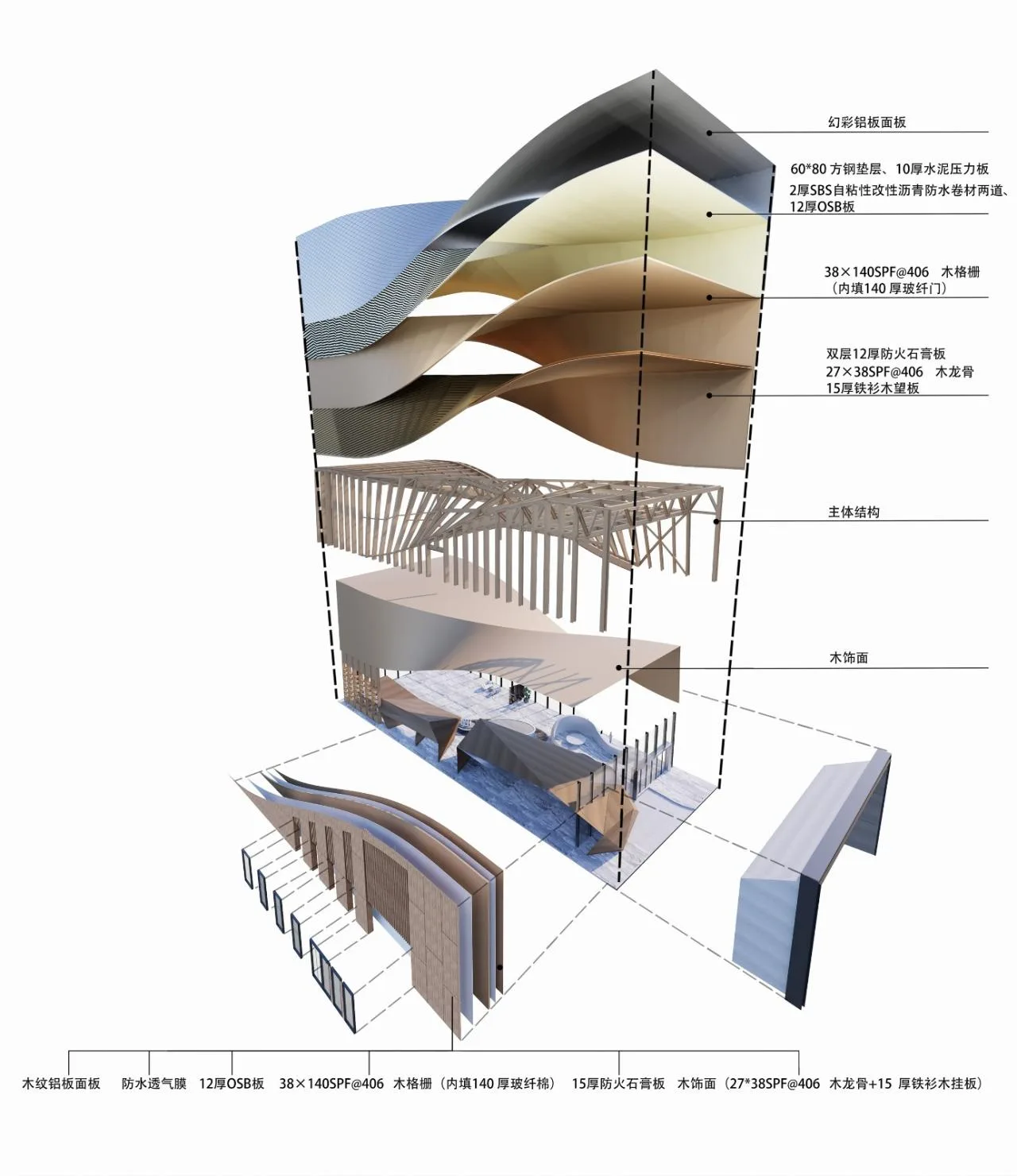
⊙ Material analysis diagram
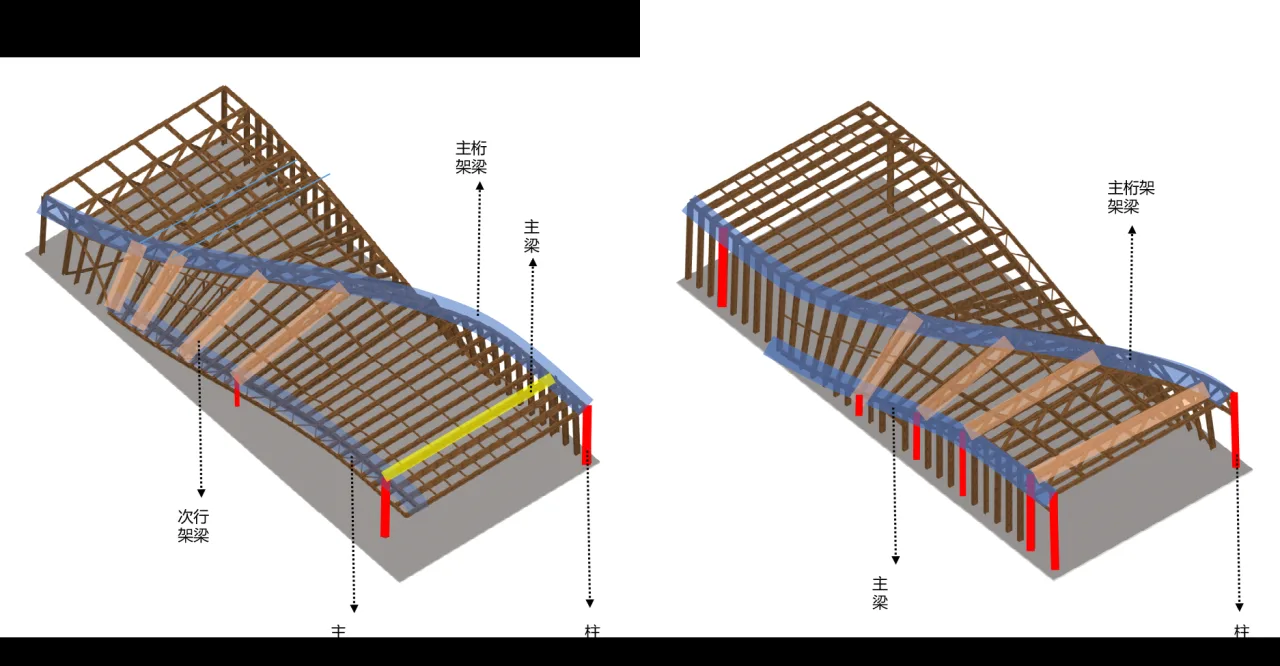
⊙ Structural models from various angles
⊙ Huashan Impression Construction Video
A Pillar
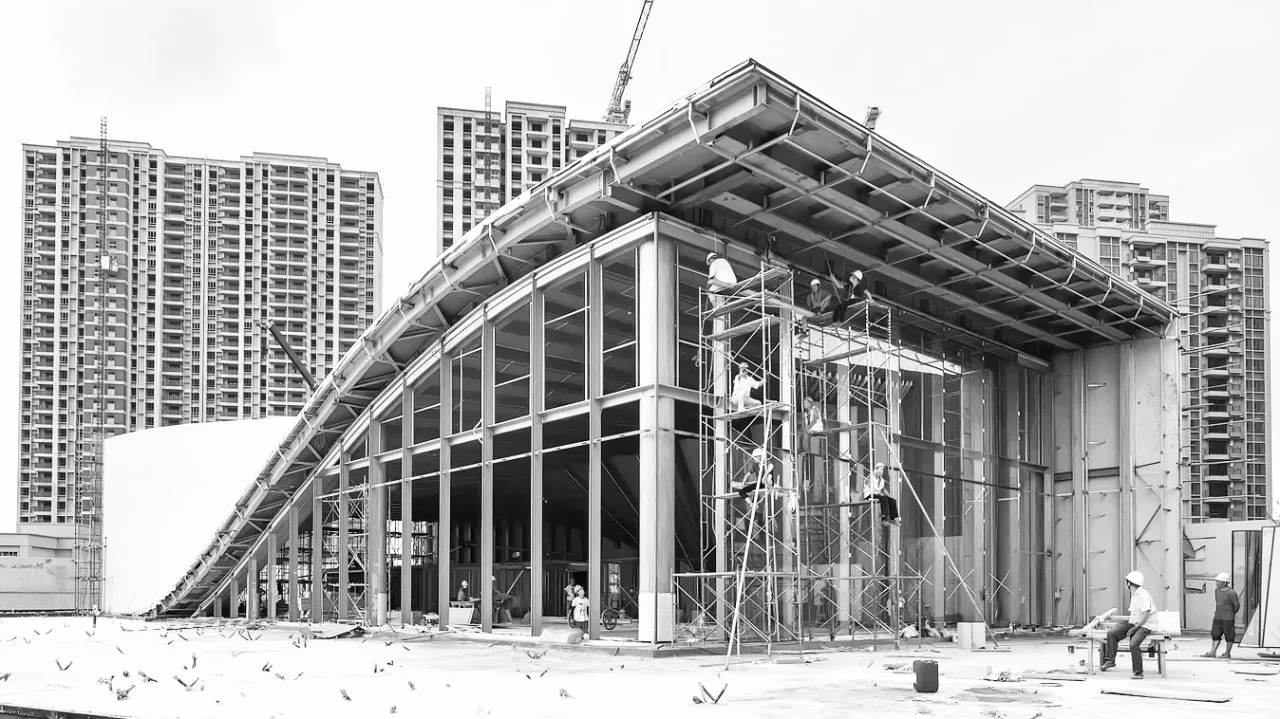
With the removal of the longitudinal portal columns and absence of horizontal columns, the vertical-horizontal intersection columns are critical, bearing vertical loads from half the building and lateral forces from both sides at a 180° angle. The steel column, 600 mm in diameter, is deeply embedded 2,500 mm into the foundation with secondary foundation pouring to meet load requirements.
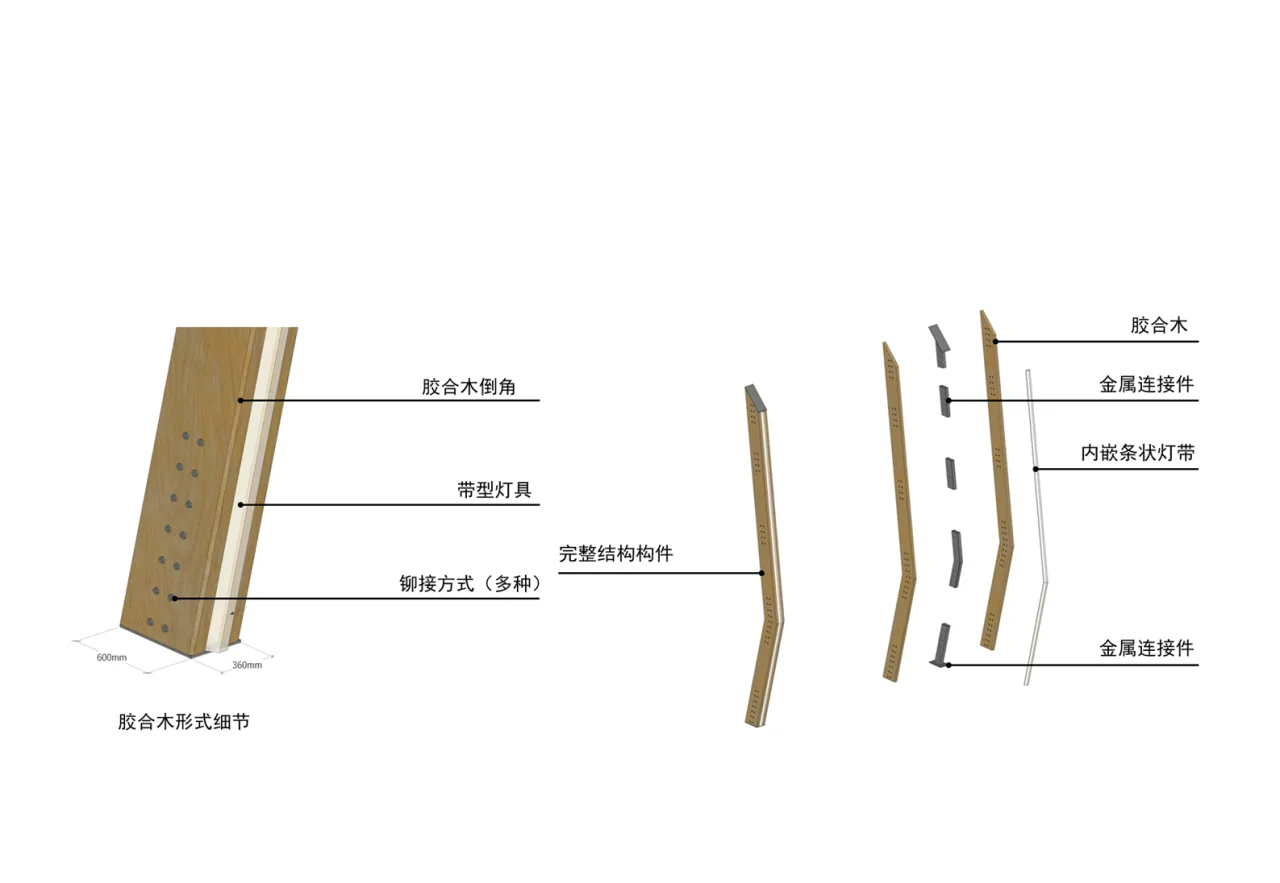
⊙ Node sample
A Beam
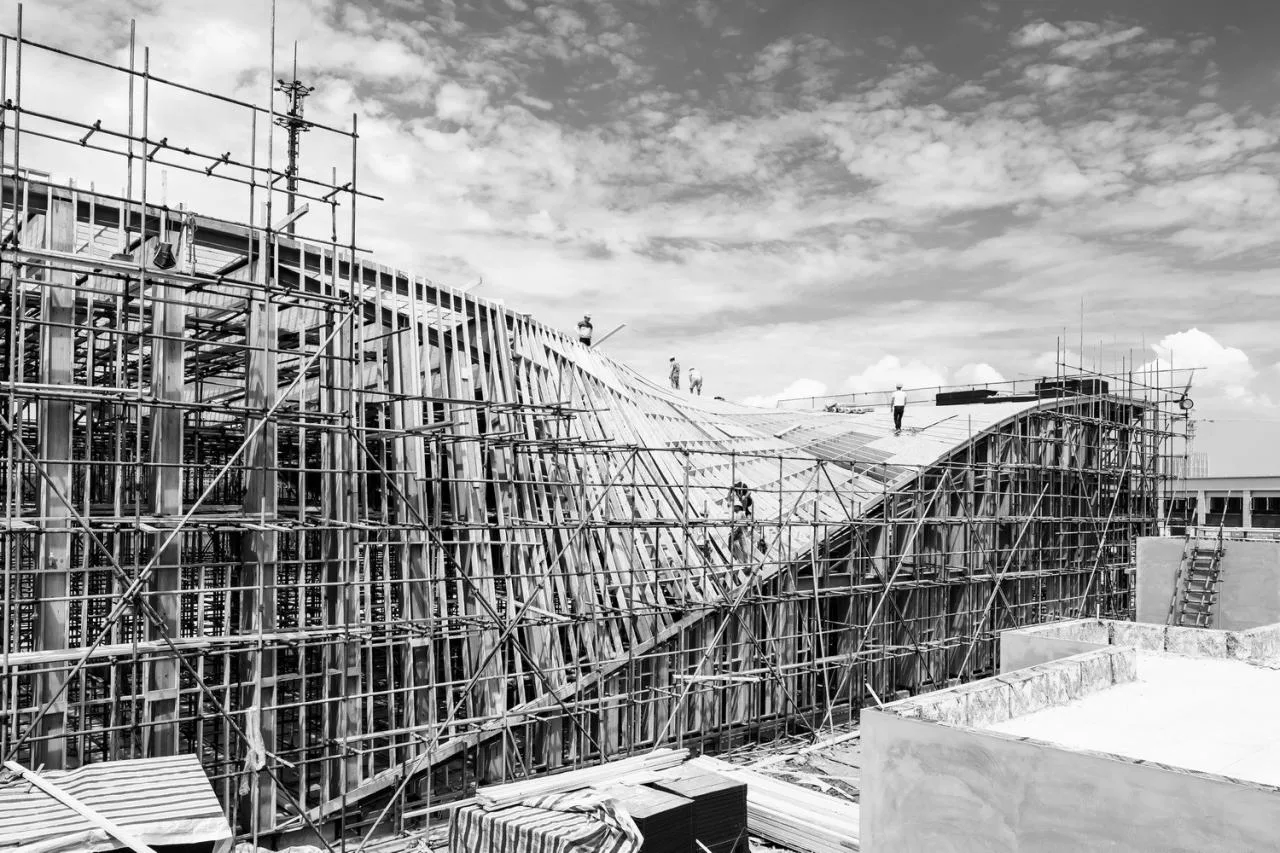
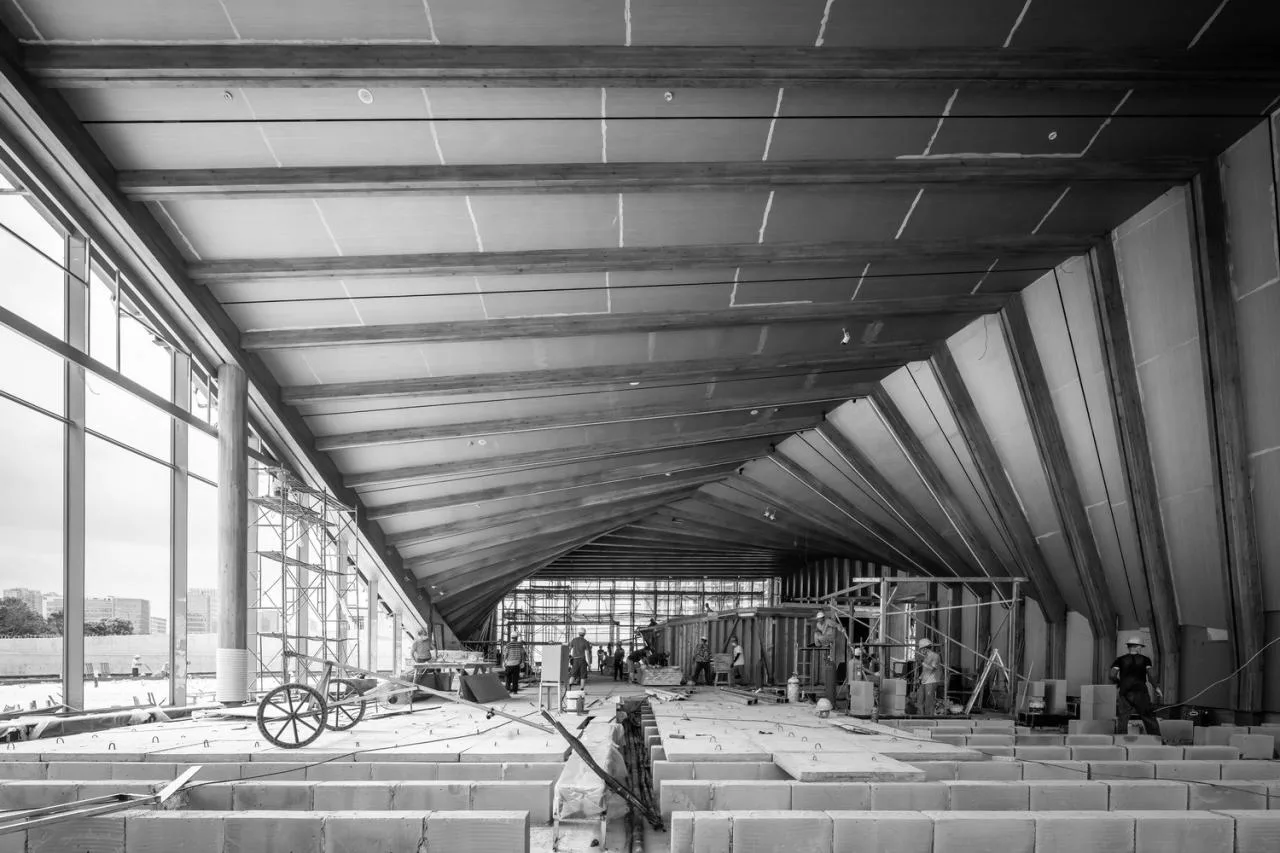
A key feature is the curved beam spanning 40 meters, connecting to the glass curtain wall. This demands exceptional deformation control and construction precision, requiring accurate 3D positioning during assembly. The project combines factory pre-assembly with on-site construction to ensure millimeter-level accuracy.
A Spine
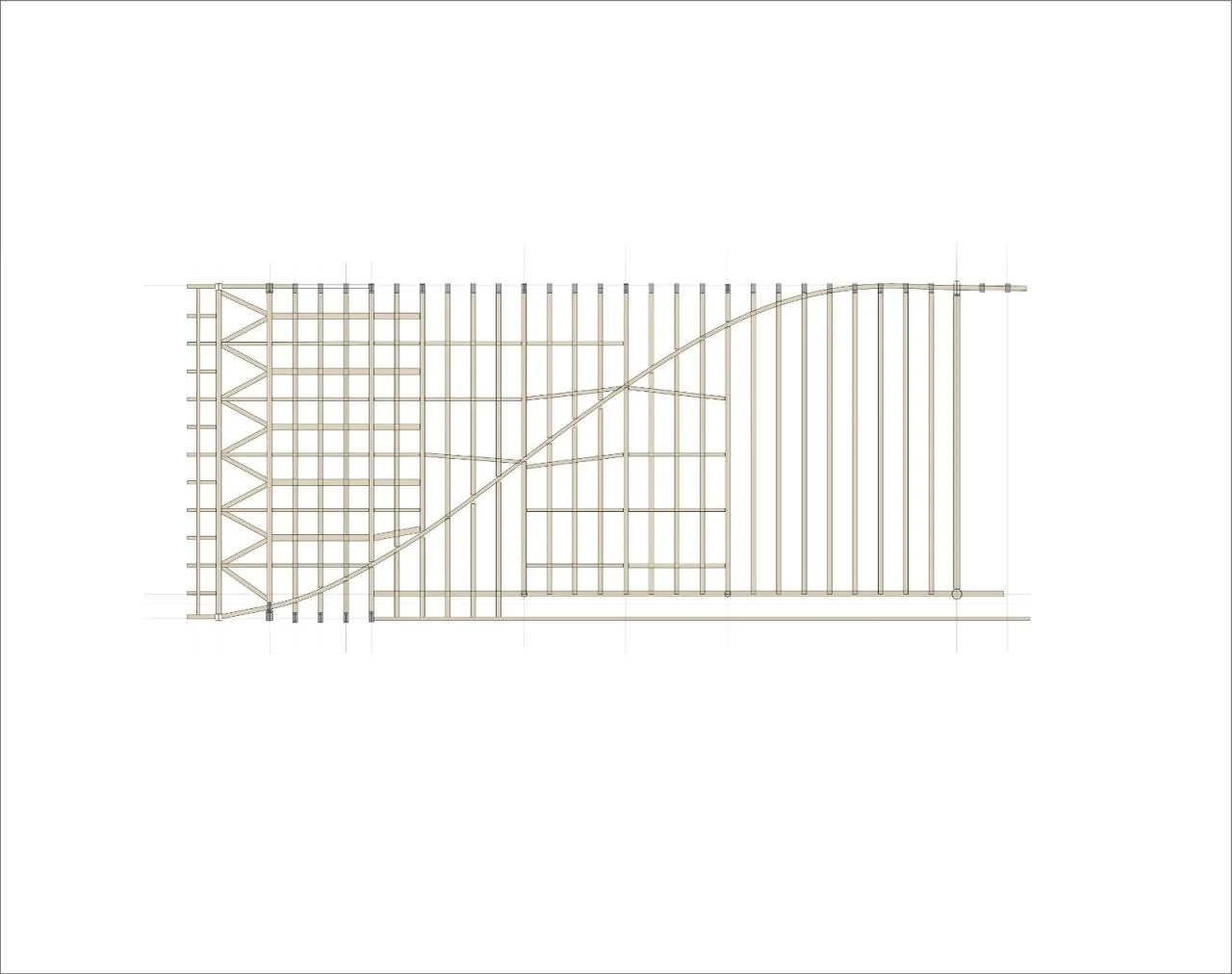
The torsion of the roof truss is a unique challenge. Managing the twisting forces of the curved beam is difficult since the ridge experiences eccentric loads typically balanced by twisted columns. However, this project forbids middle columns, making the ridge beam a crucial load-bearing element. The structure supports the “S”-shaped trusses and balances steel structure distortion in designated areas to control overall building deformation.
⊙ Top structure schematic
One Side
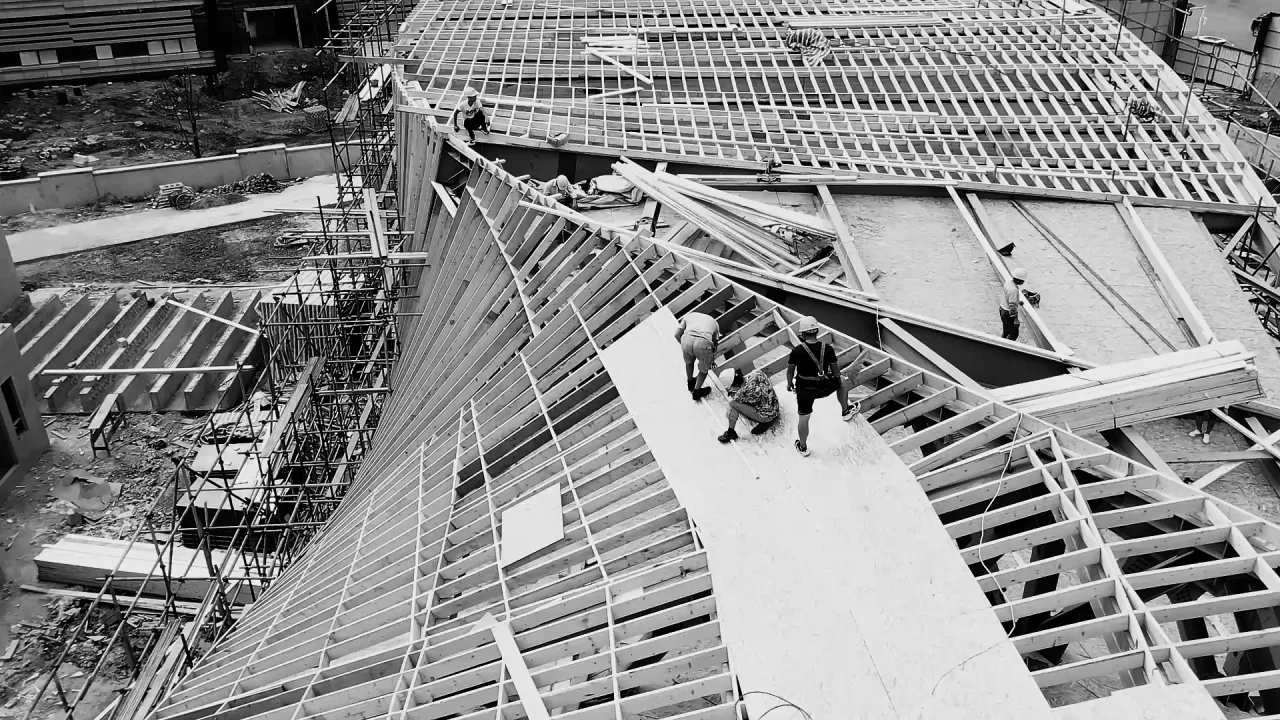
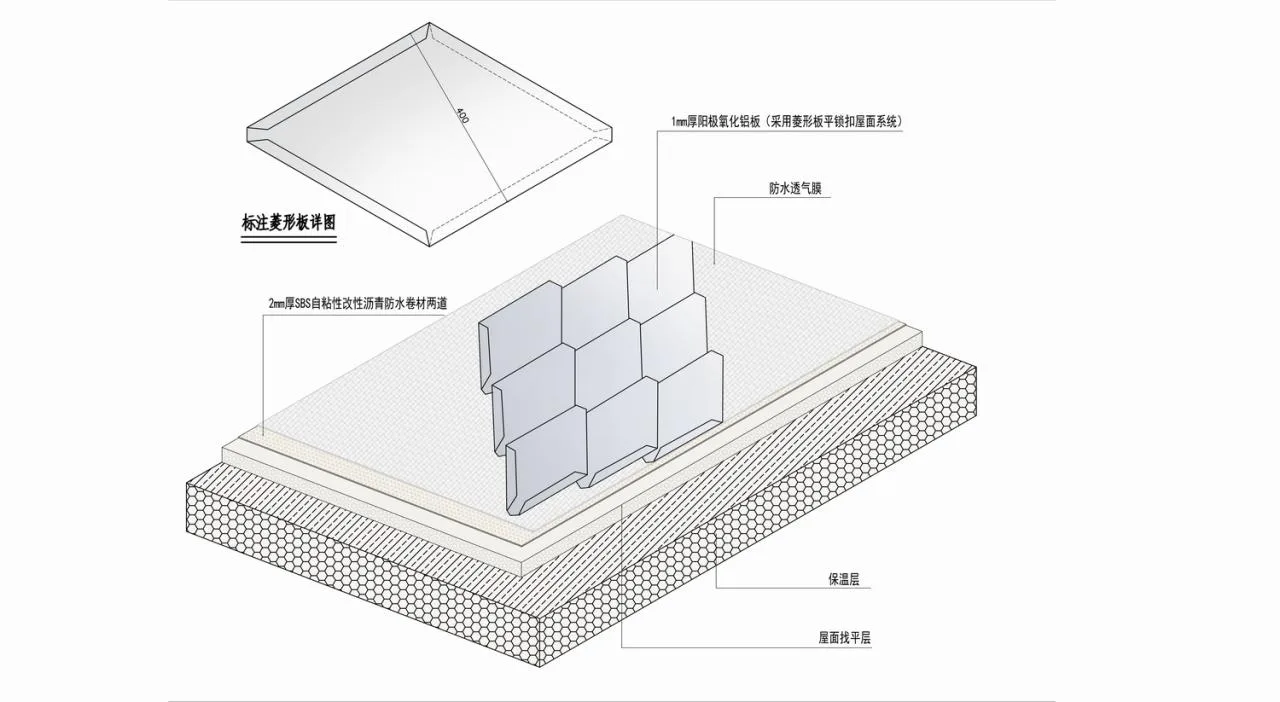
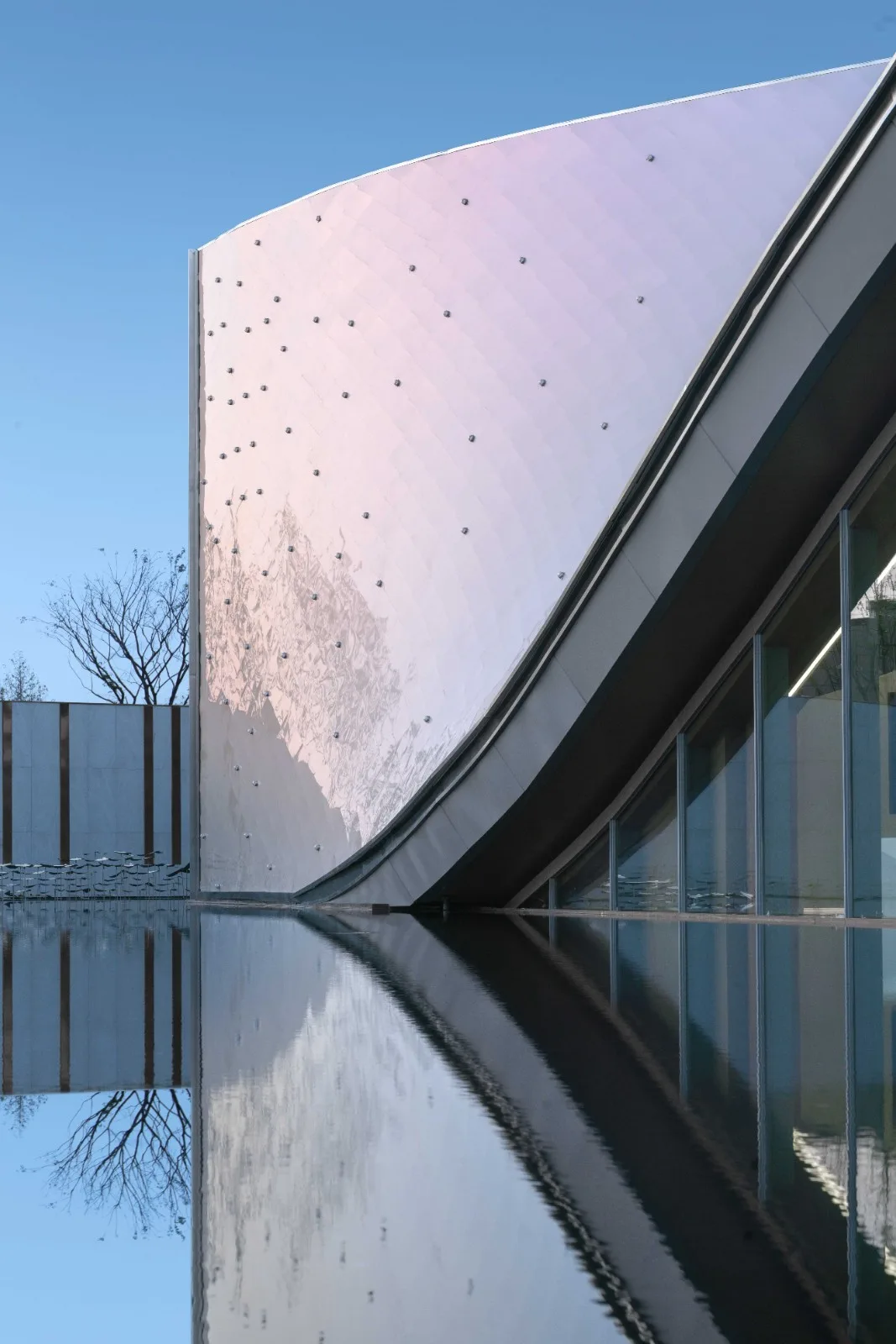
With the building’s hyperbolic roof forming a unified surface with the walls, material application required full integration of material properties. Since concrete was not an option for the structure, roof tiles could not be made from long strips of aluminum-magnesium-manganese alloy.
Instead, the twisted surface was divided into blocks spaced 300mm apart, using wooden structural keels. Each twist was carefully adjusted, employing 15mm OSB boards for their natural shape and load-bearing capacity to achieve qualitative bending. The twisted roof’s preliminary form was completed to meet the requirements of a seamless, naturally twisted aluminum-magnesium-manganese surface. A second layer of 12mm OSB boards was installed based on a 300mm grid to finalize the structure.
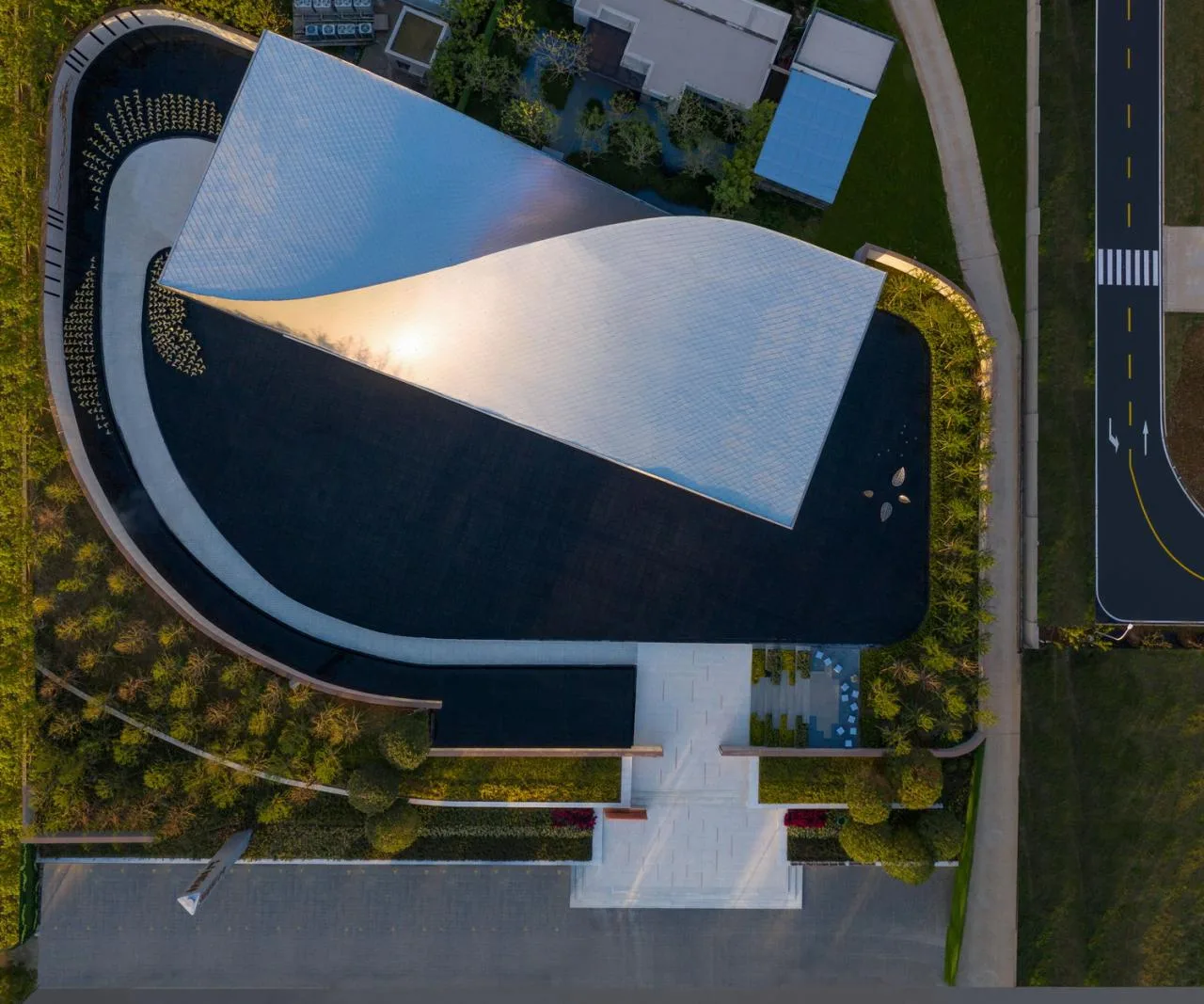
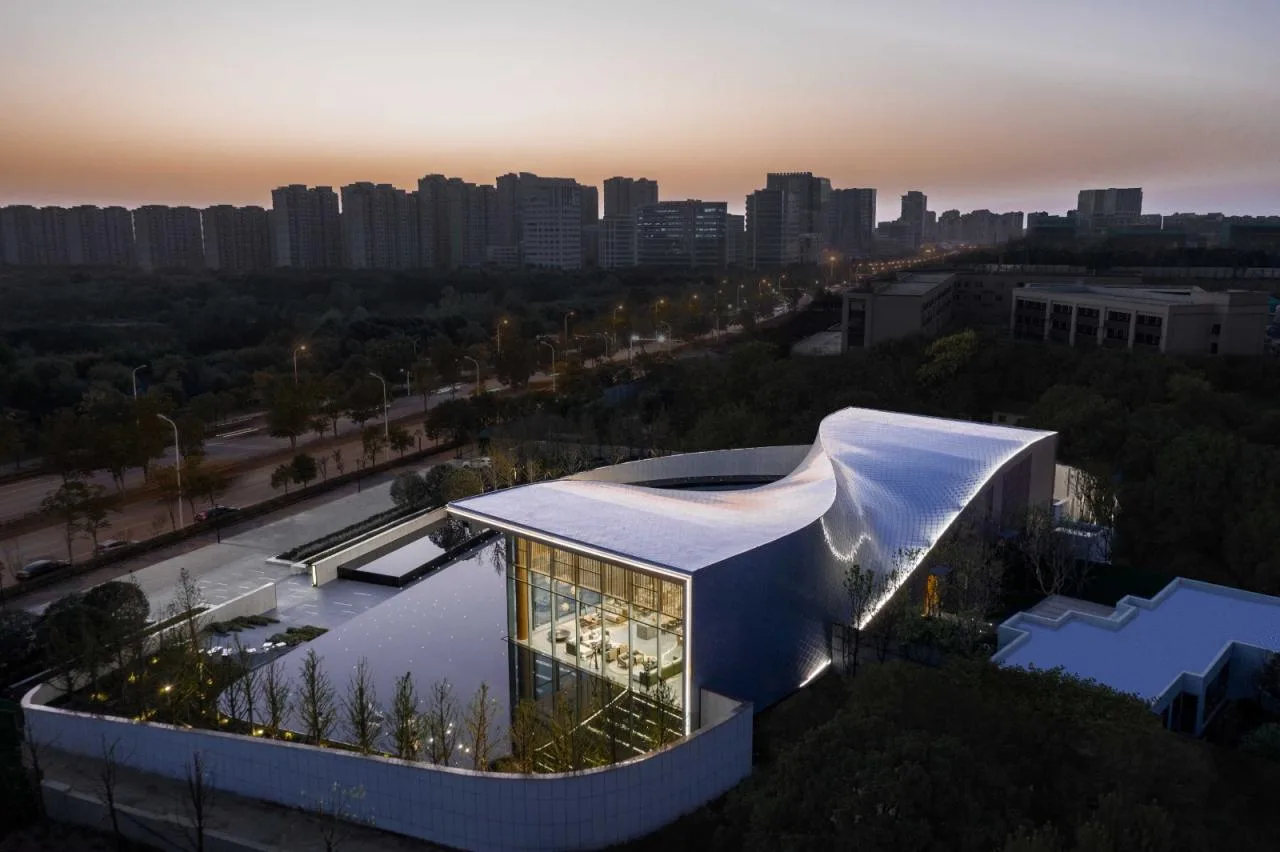
The silver-gray iridescent aluminum panels reflect sunlight, softening the building’s appearance and emphasizing its flowing curved lines. The addition of mirror-like water elements stimulates an imaginative spatial experience, vividly capturing the natural light’s dynamic changes.
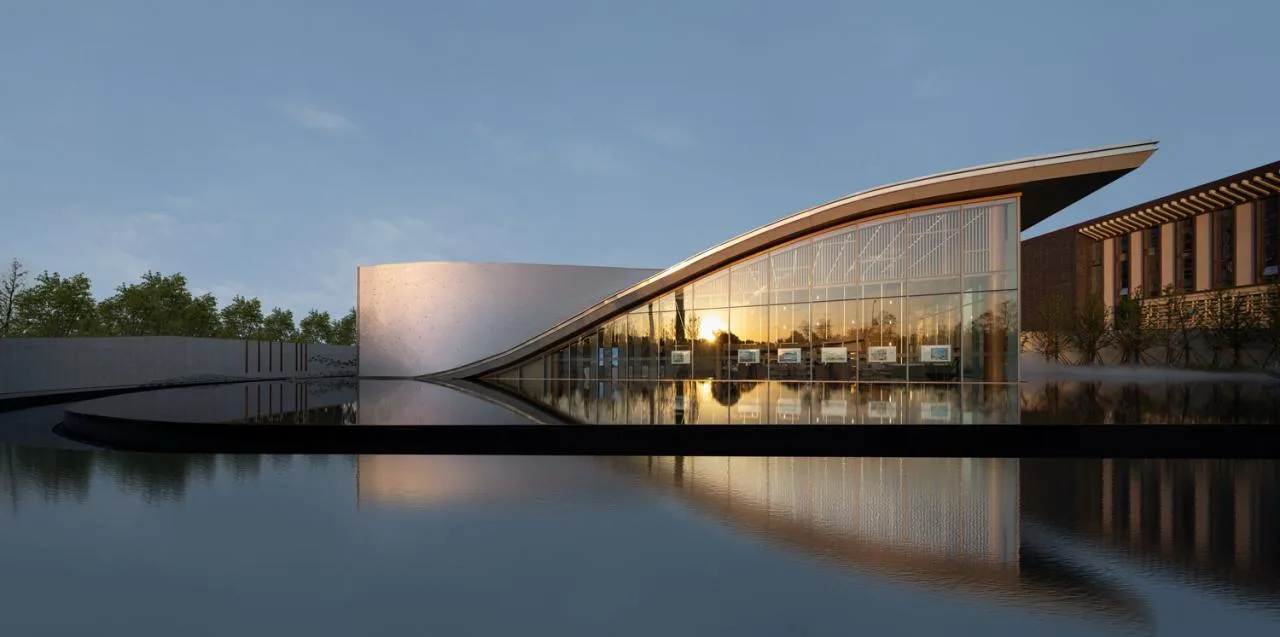
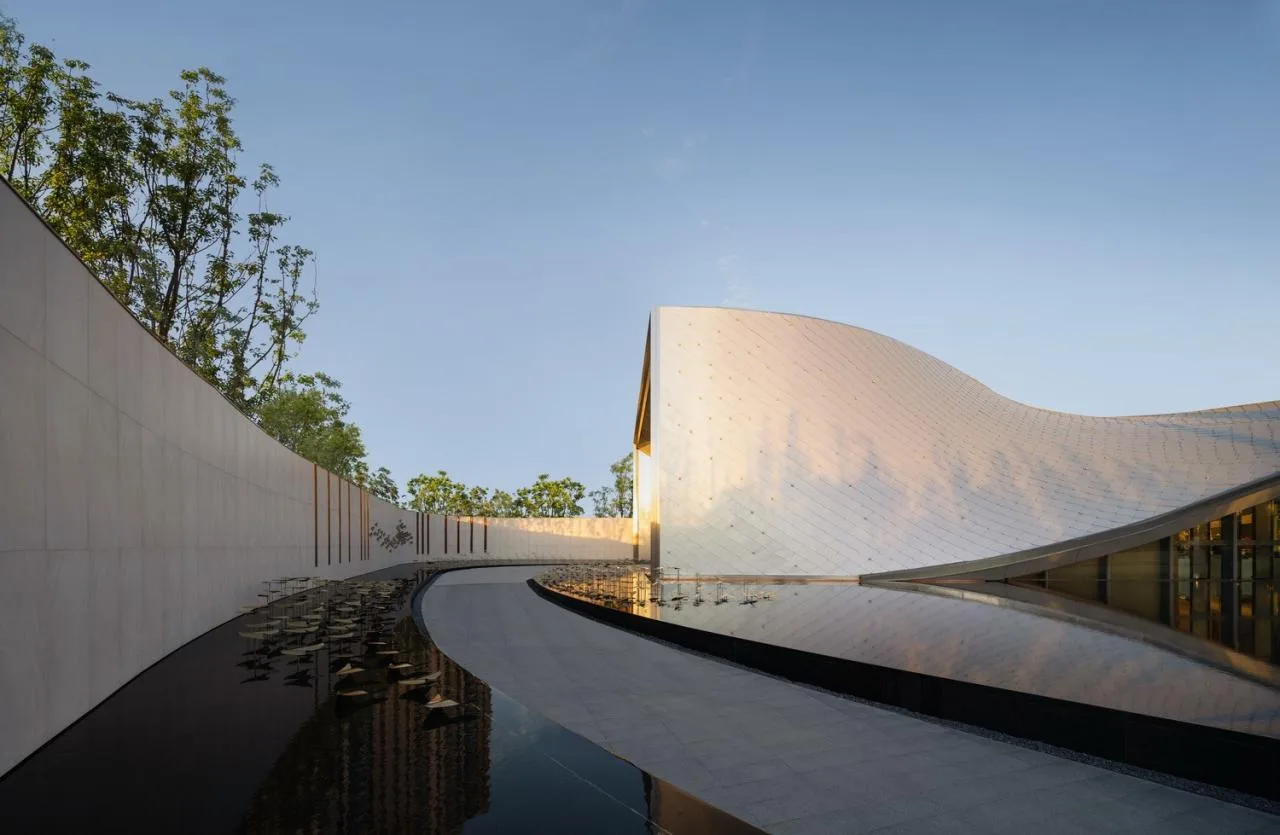
Lighting design is a standout feature of the facade. Using parametric design, point lights are systematically placed at the joints of aluminum panels. The light density decreases from the facade to the roof, creating a galaxy-like effect on the silver building at night—an elegant interplay of light and architecture.
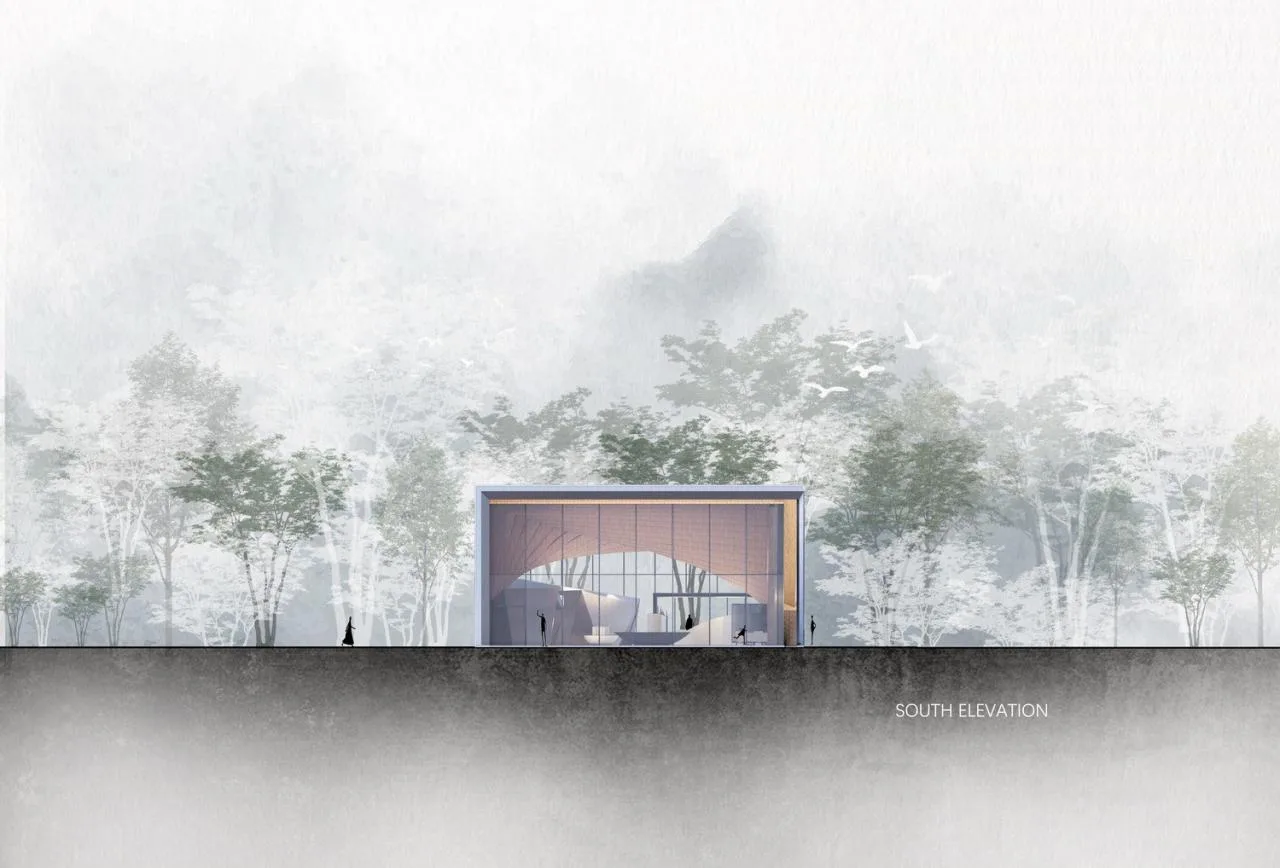
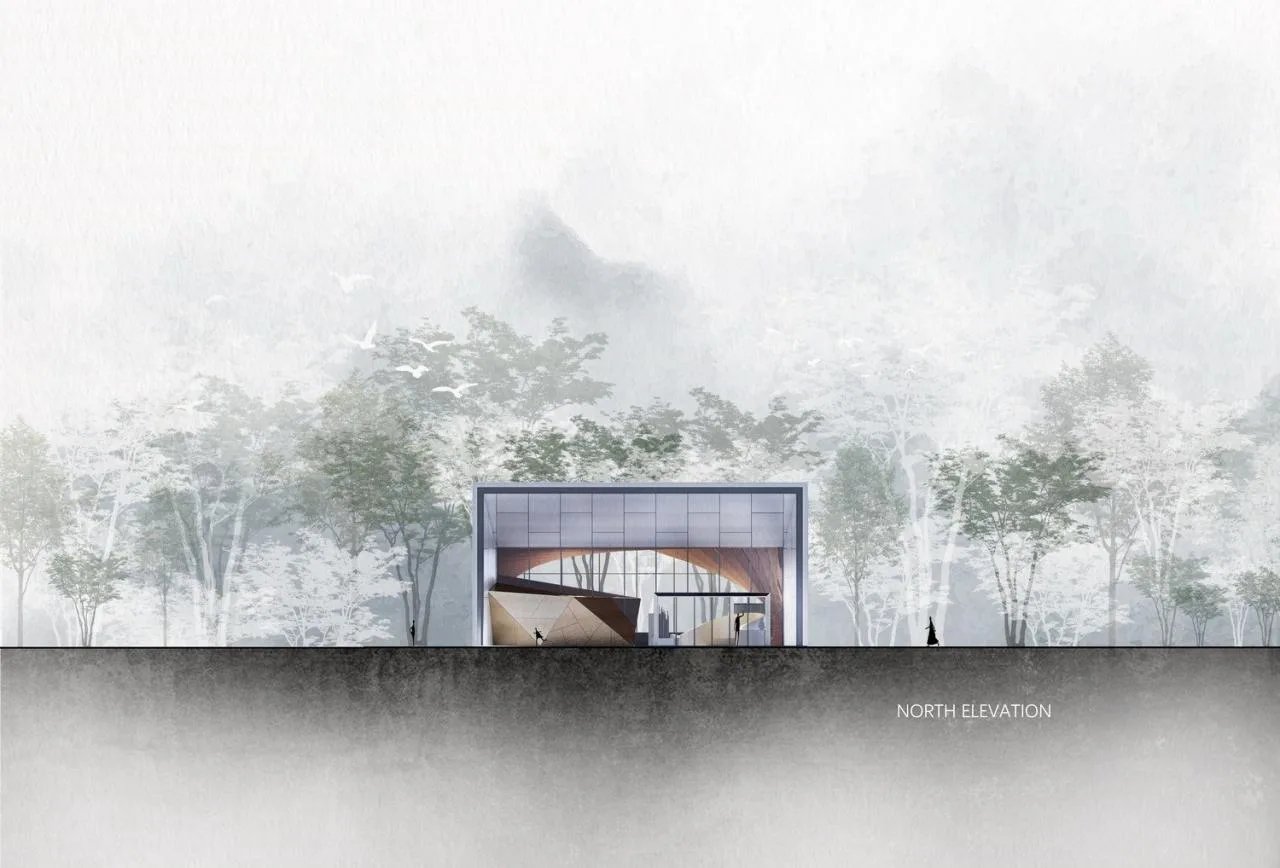
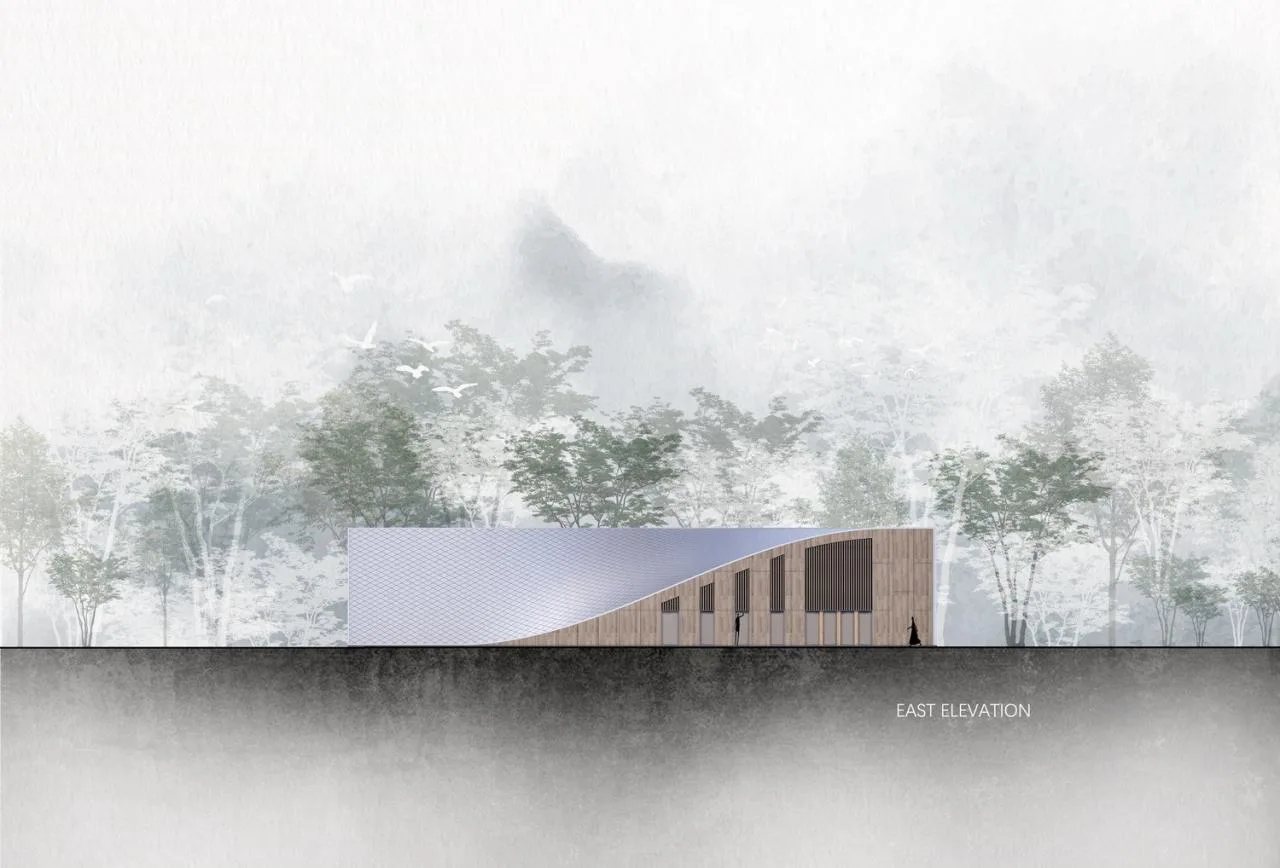
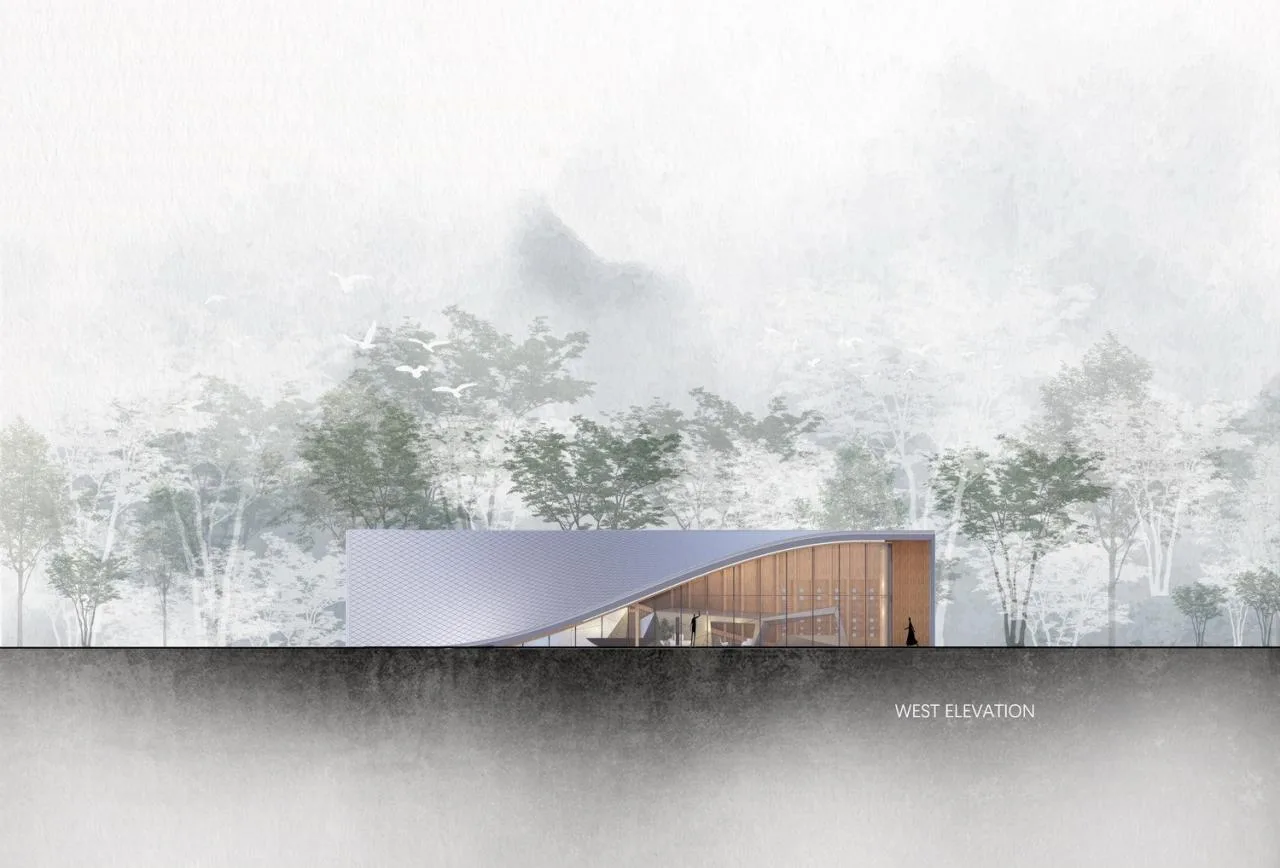
⊙ Slide to view elevation view
Conclusion
This project integrates humbly into its site without overpowering presence. It features modern materials such as laminated wood, glass, and steel. Structural elements are designed slender and minimal, creating a lightweight, transparent form that naturally blends with the environment. The result is a building that is simple, authentic, and free of artificiality.
Project Information
Project Name: Wuhan Urban Construction · Huashan Impression
Location: Intersection of Huacheng Avenue and Huashan Avenue, Guanggu District, Hubei Province
Project Owner: Wuhan Urban Construction Group
Function: Urban Reception Room
Building Area: 1,022 square meters
Architectural Design: Chengzhi Design – ArtLab Innovation Space Laboratory
Interior Design: Chengzhi Design
Chief Architect: Li Jie
Architectural Design Director: Yan Fang
Architectural Design Team: Hu Ruibing, Lin Wei, Zhu Liang
Interior Design Director: Wang Jirong
Interior Design Team: Yu Guobao, Gong Lei
Wooden Structure Design and Construction: Junzhi Technology
Construction Controller: Chen Dilong
Wooden Construction Drawings: Chen Lang, Huang Limin
Landscape Design: Wuhan Zhongchuang Huanya Architectural Landscape Design Engineering Co., Ltd.
Curtain Wall Design: Beijing Kaishun Teng Architectural Design Co., Ltd.
Design Period: February 2021
Completion Date: September 2021
Project Photography and Video: Architectural Photography and Spatial Architectural Photography Here














Must log in before commenting!
Sign Up