
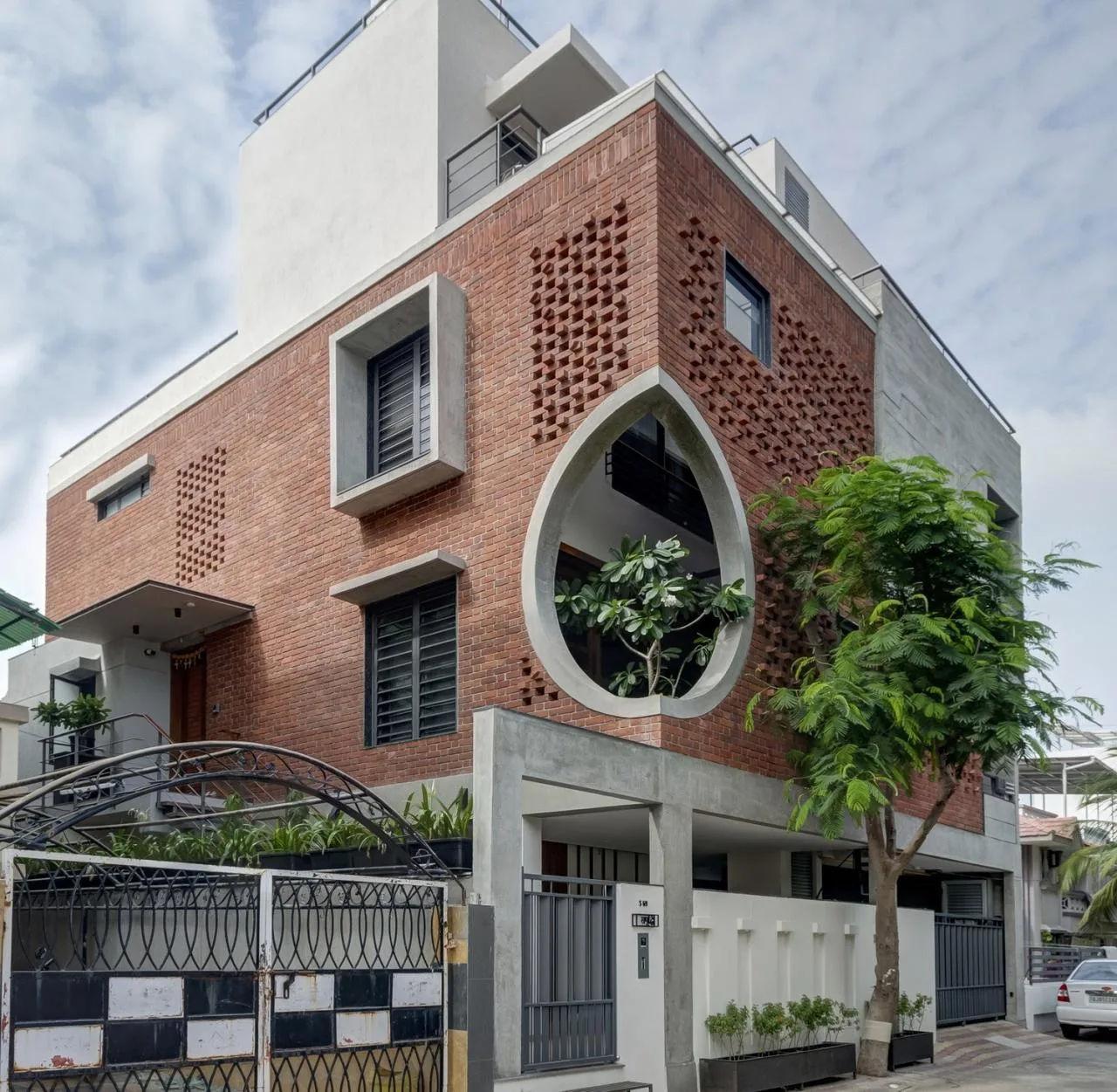
Located in the newly developed suburban area of Surat city, the Samruddhi Residence is designed for a three-generation family. The name “Samruddhi” means prosperity in Gujarati, reflecting the home’s essence. This project creatively addresses the fundamental need for a functional and sustainable residence by integrating courtyards, natural light, and permeable exterior walls. The design thoughtfully responds to the local climate and environment to achieve sustainable living.
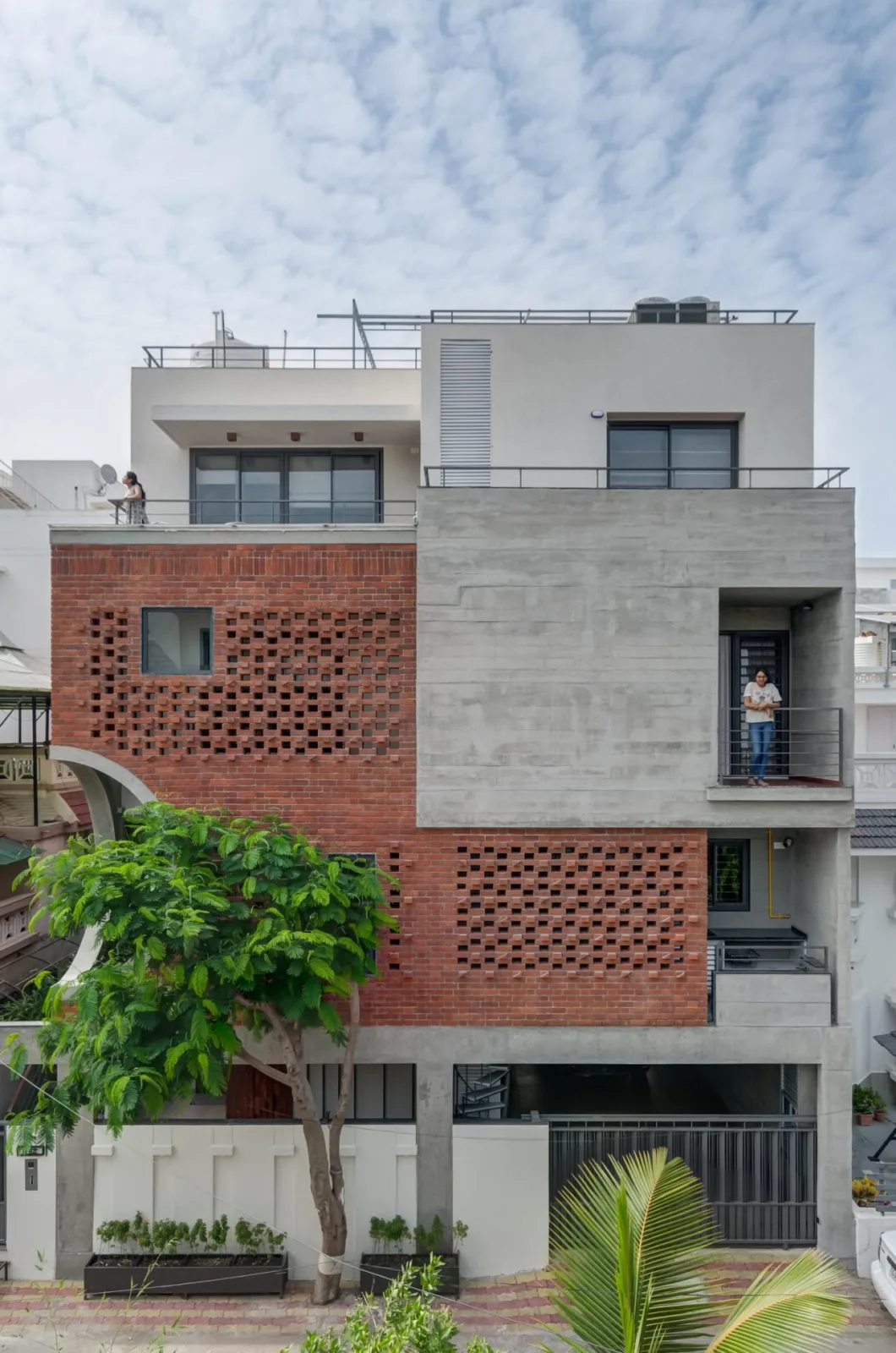
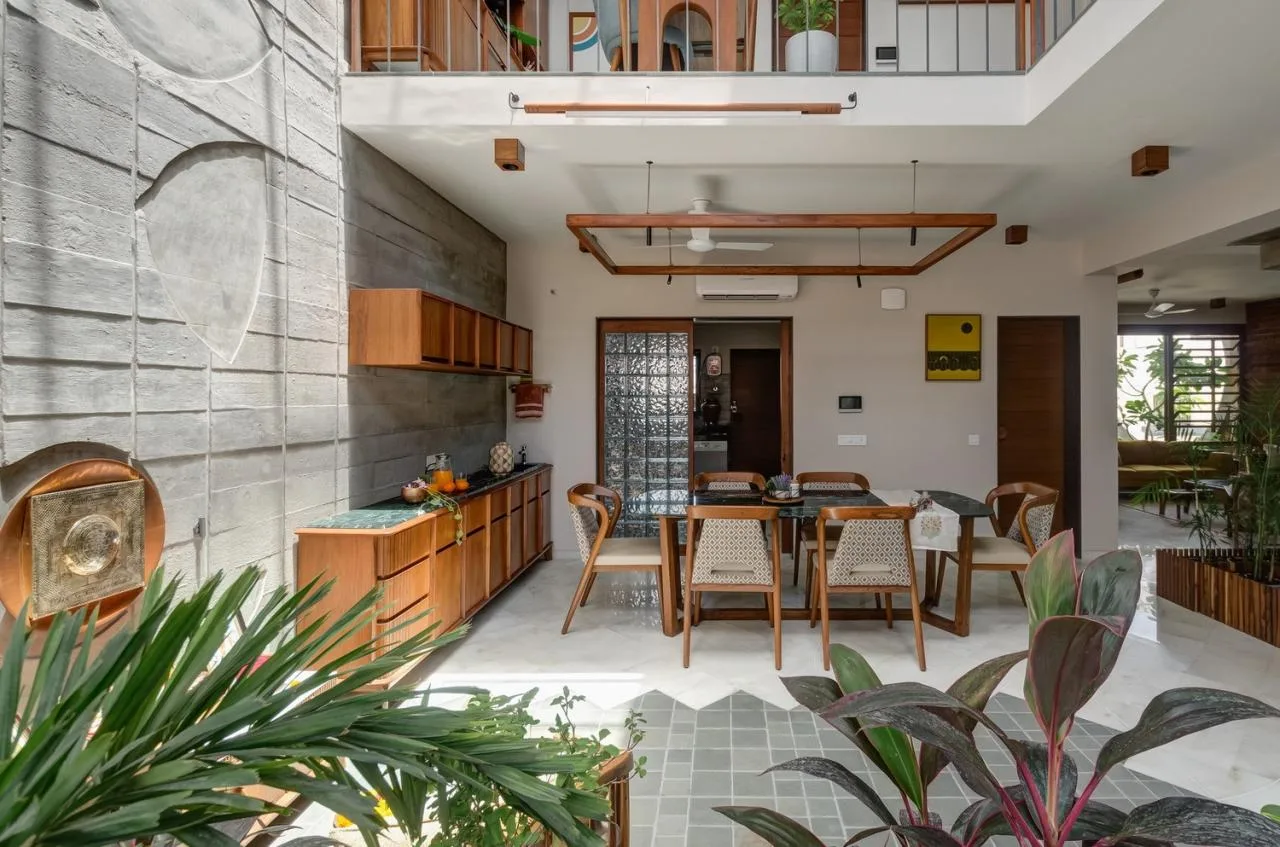
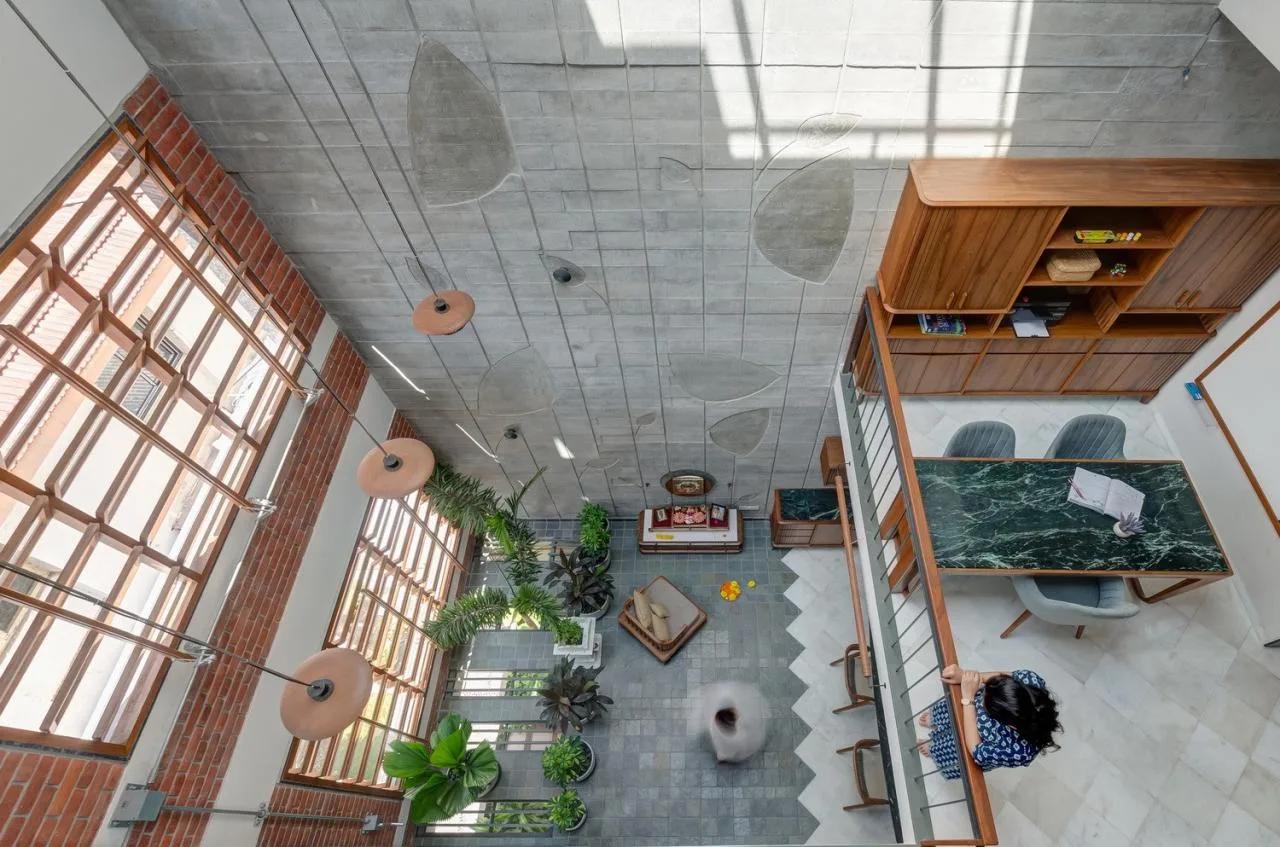
The project occupies a compact site of only 190 square meters but must accommodate approximately ten distinct spatial functions. To maximize the footprint, the building rises four stories high. The challenge was to maintain a simple scale while avoiding the typical appearance of low-rise apartments. A key design feature is a double-height courtyard that brings natural light and ventilation into the living spaces, creating a cohesive family environment. Additionally, all service areas are located at the front entrance, adding complexity to the visual and experiential connections within the house.
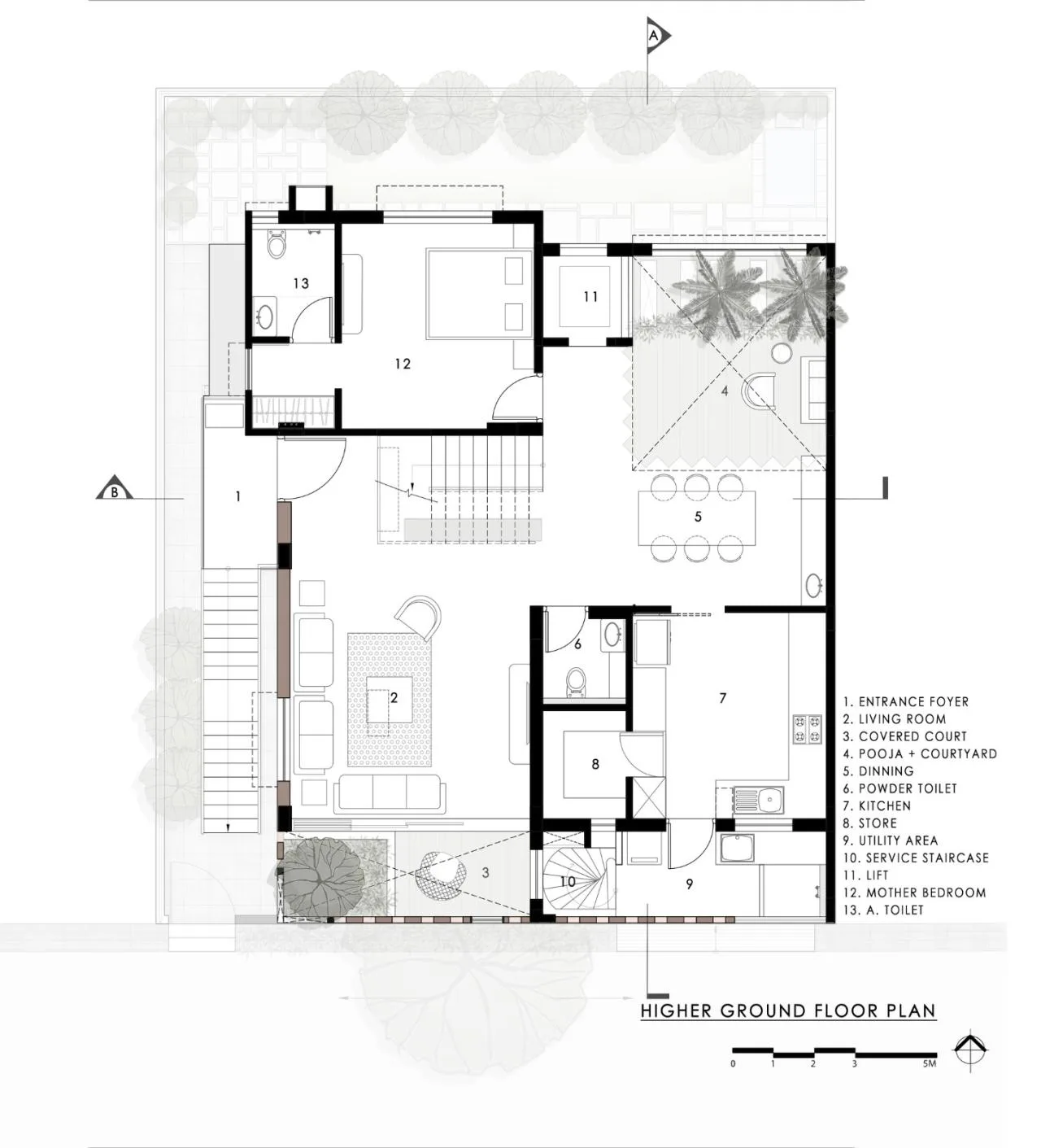
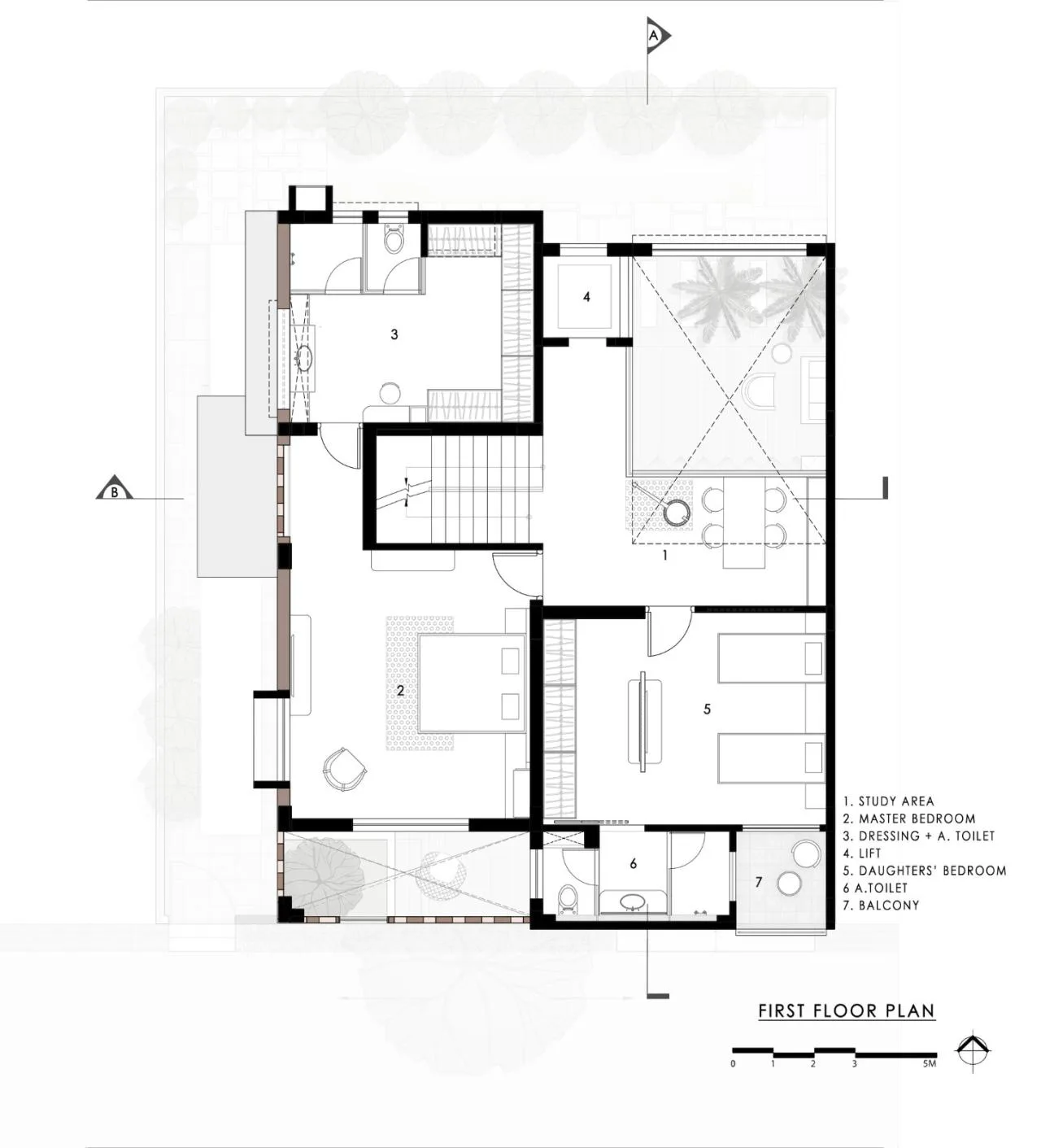
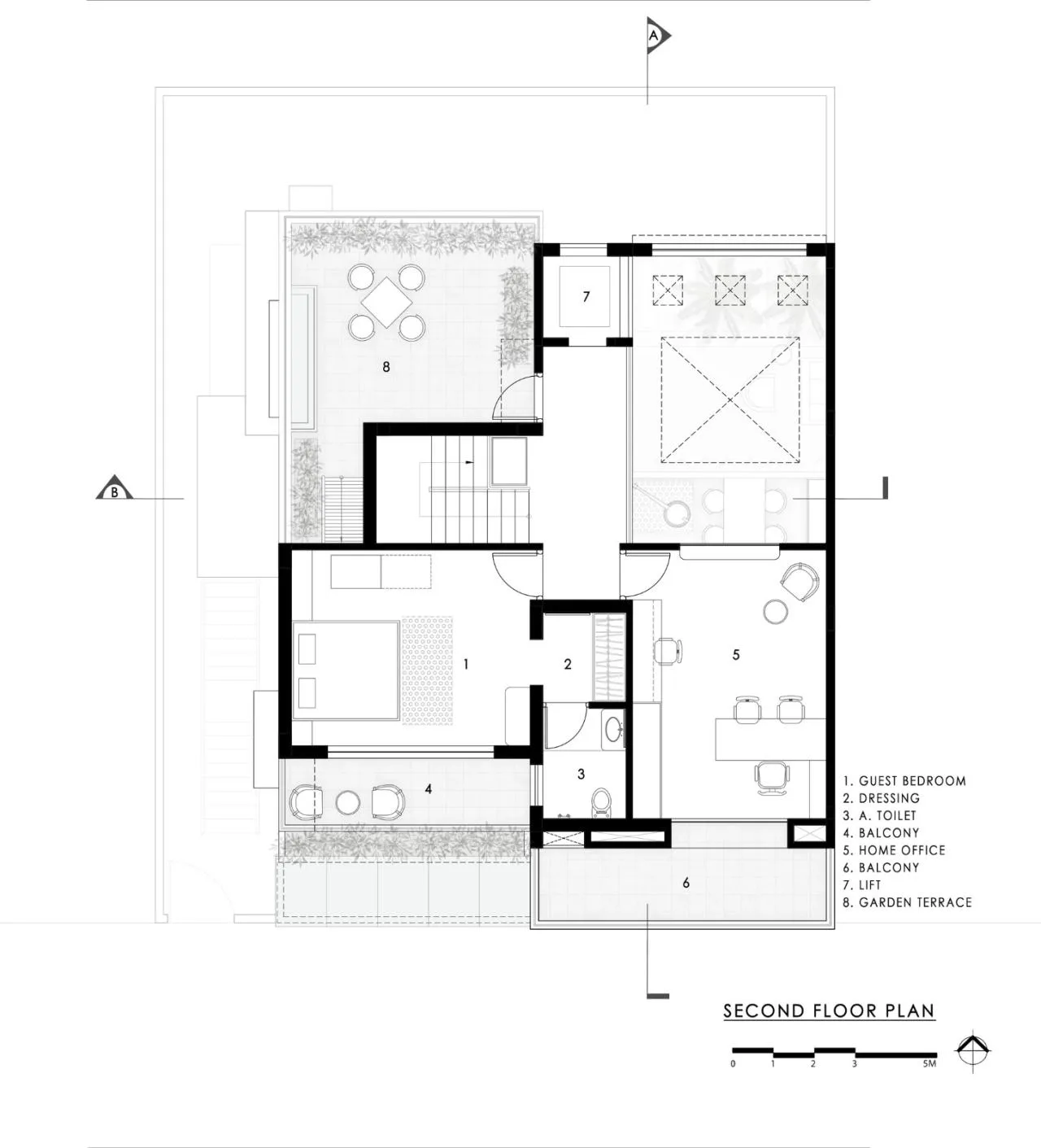
The architectural layout centers around the courtyard, extending physical and visual connections up to the third floor. Private and semi-private spaces are carefully arranged around the courtyard to ensure privacy. Positioned on the northeast side, the open courtyard links the living and dining areas, an elevated Pooja space, as well as the upper-level study and home office. In line with traditional Indian “Vastu Shastra” principles, the kitchen and living room face south, buffered by a functional space enclosed by a brick screen that provides privacy, ventilation, and passive cooling for the southern facade.
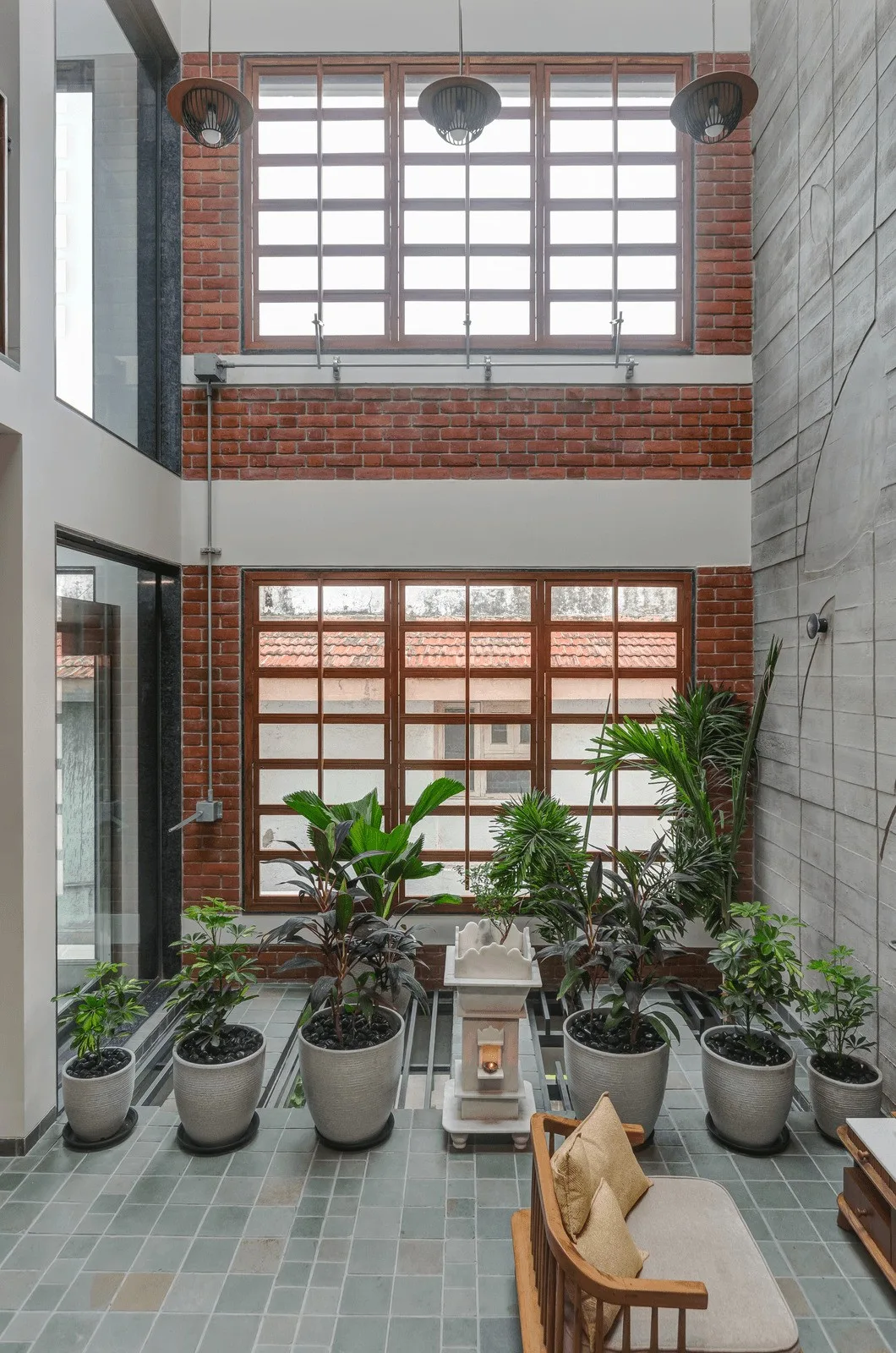
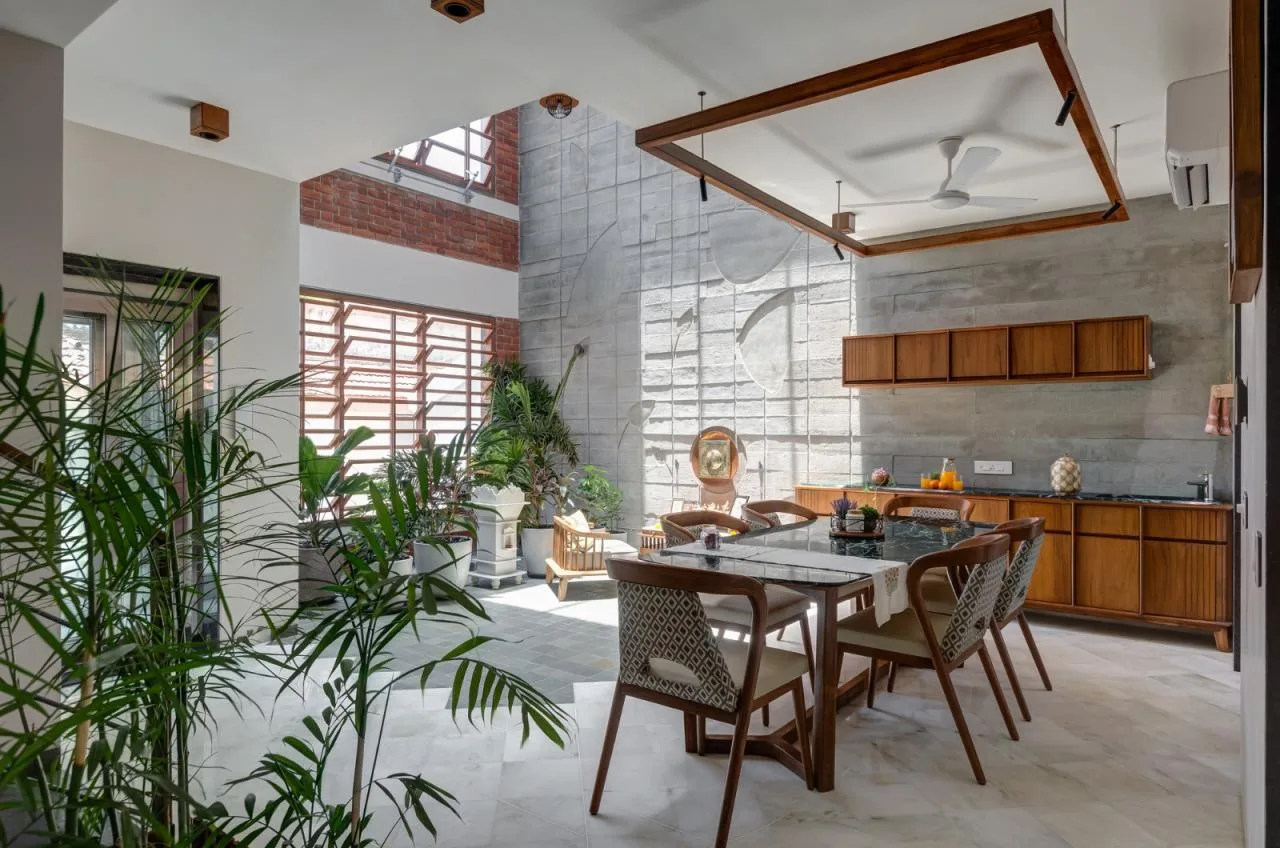
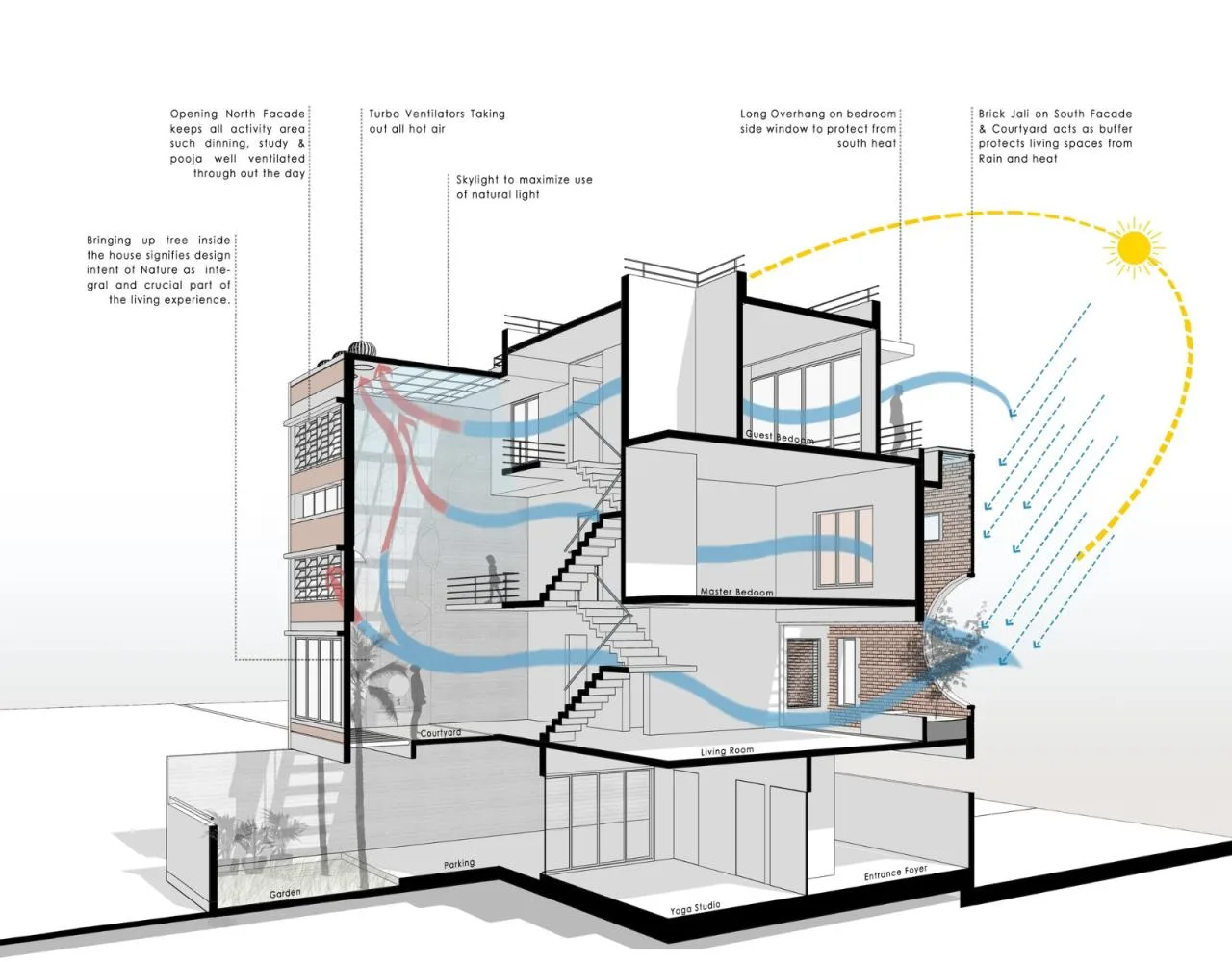
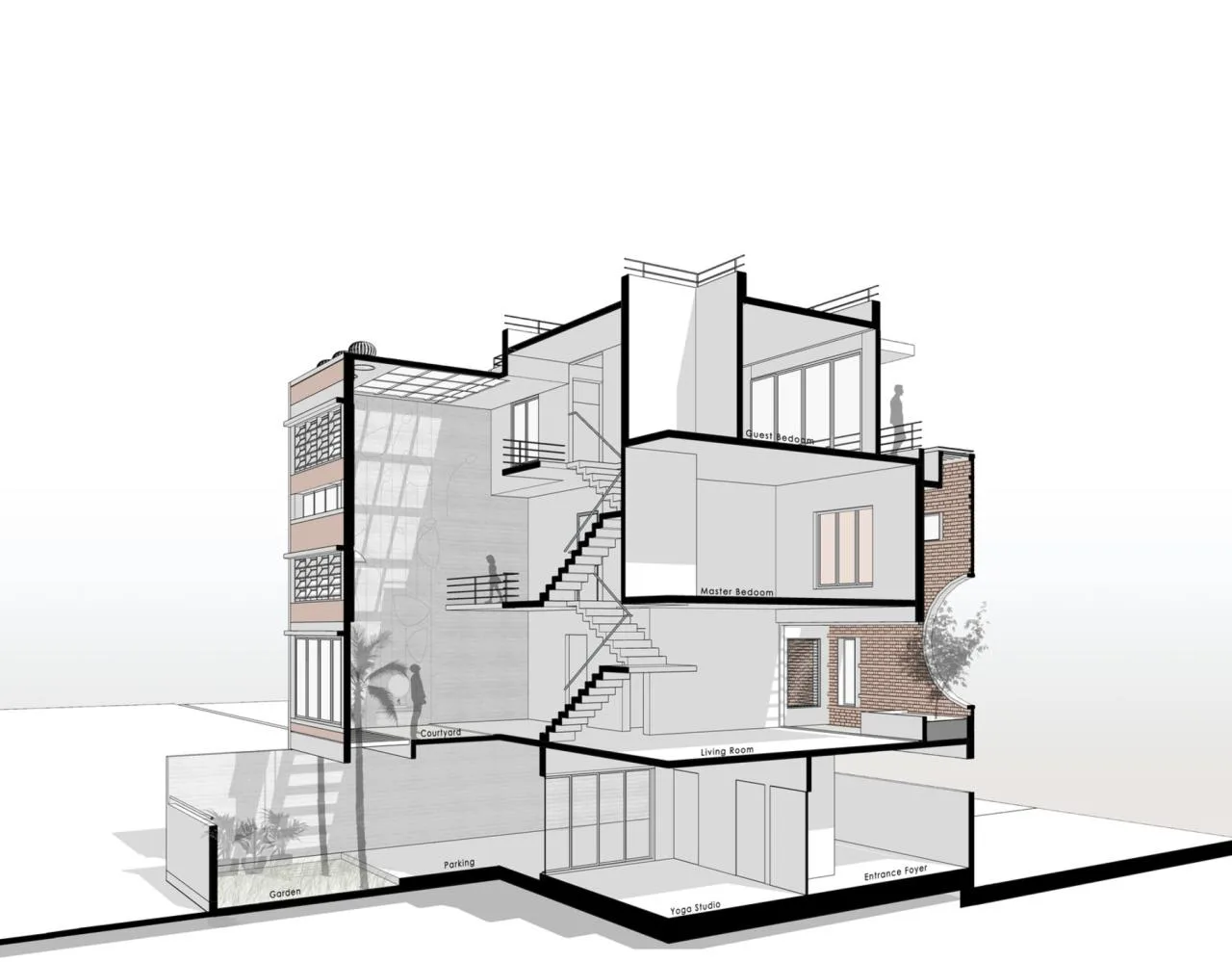
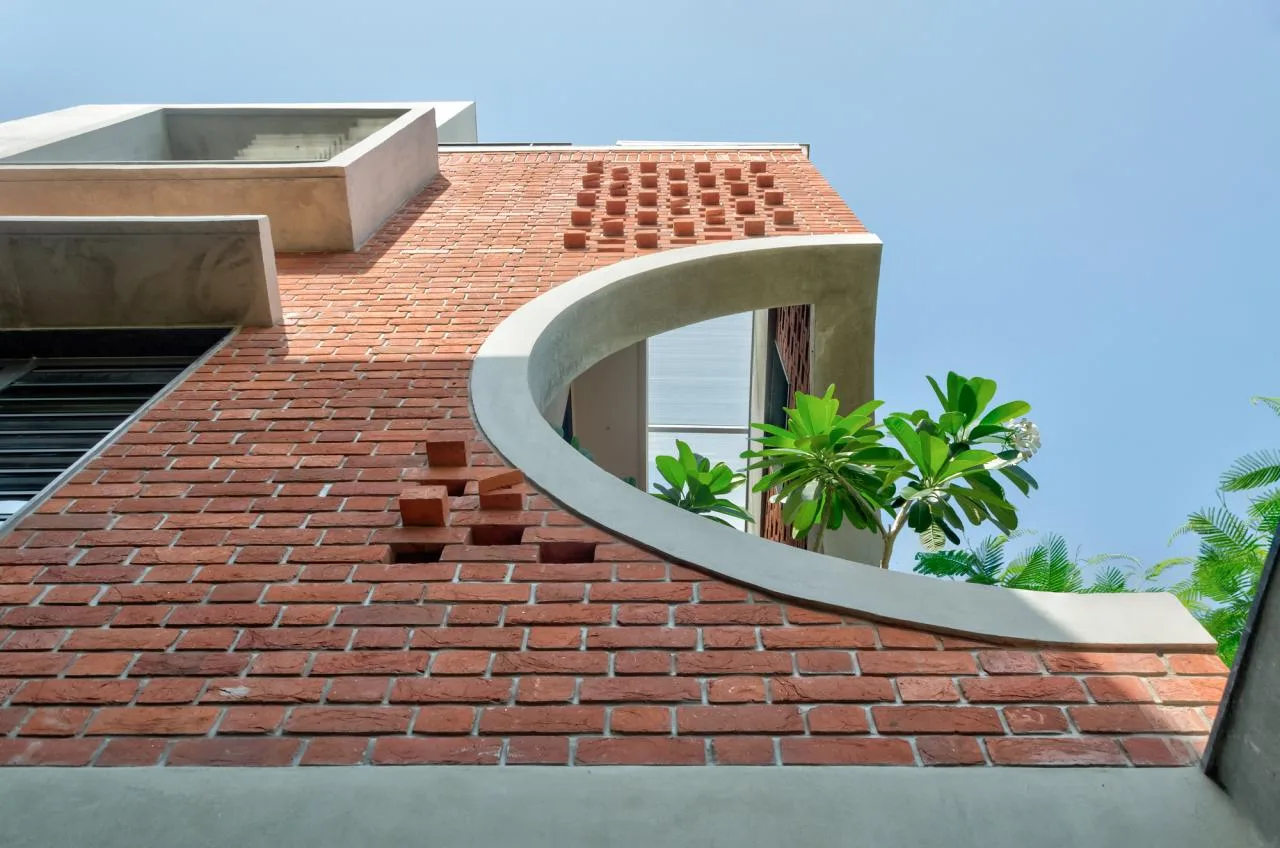
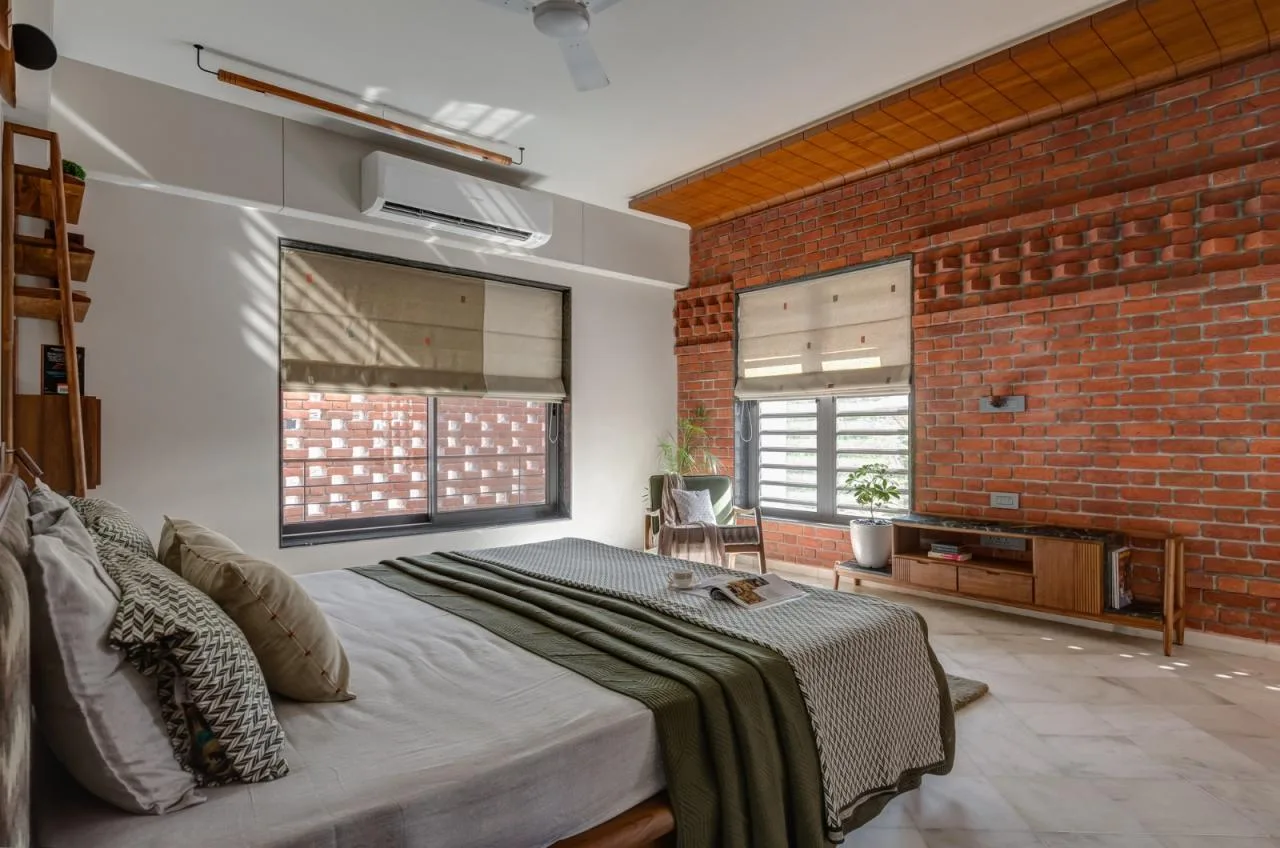
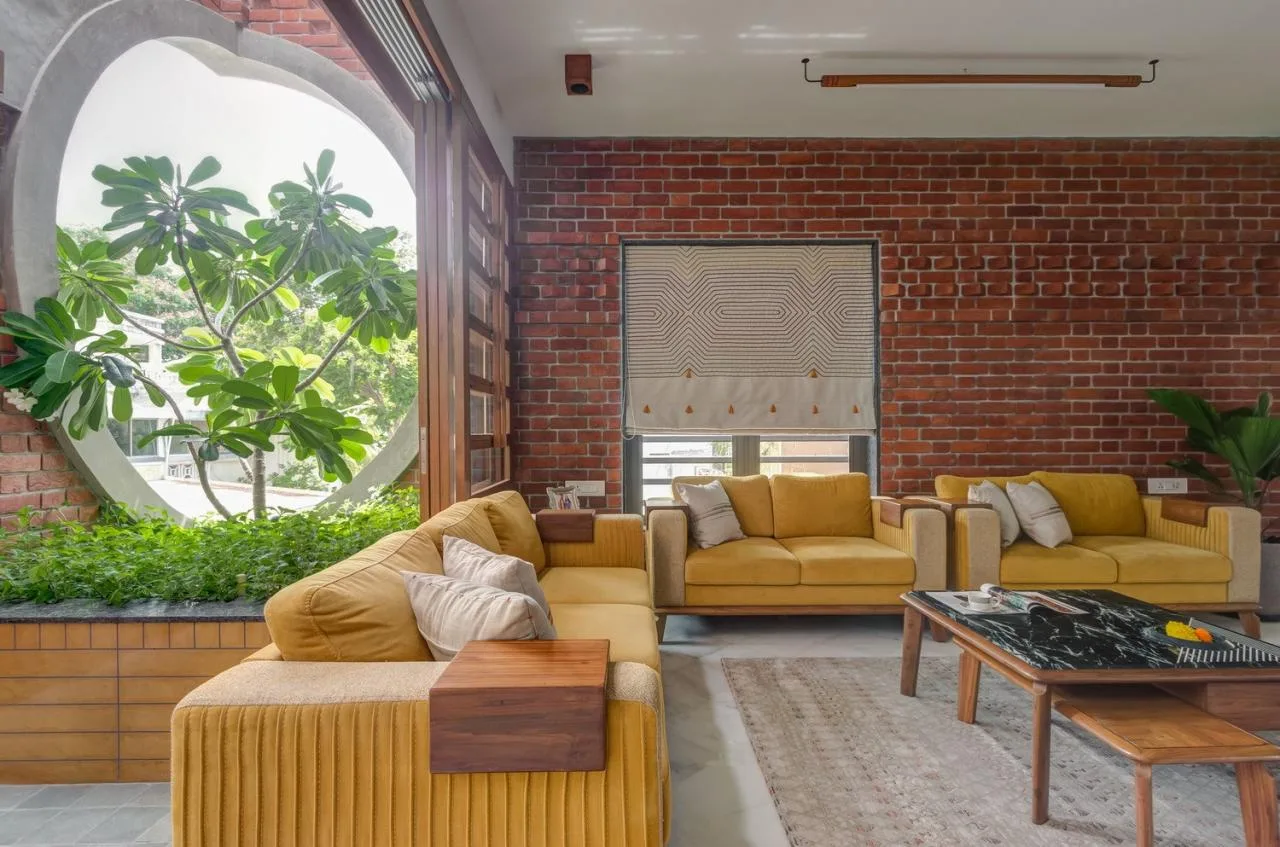
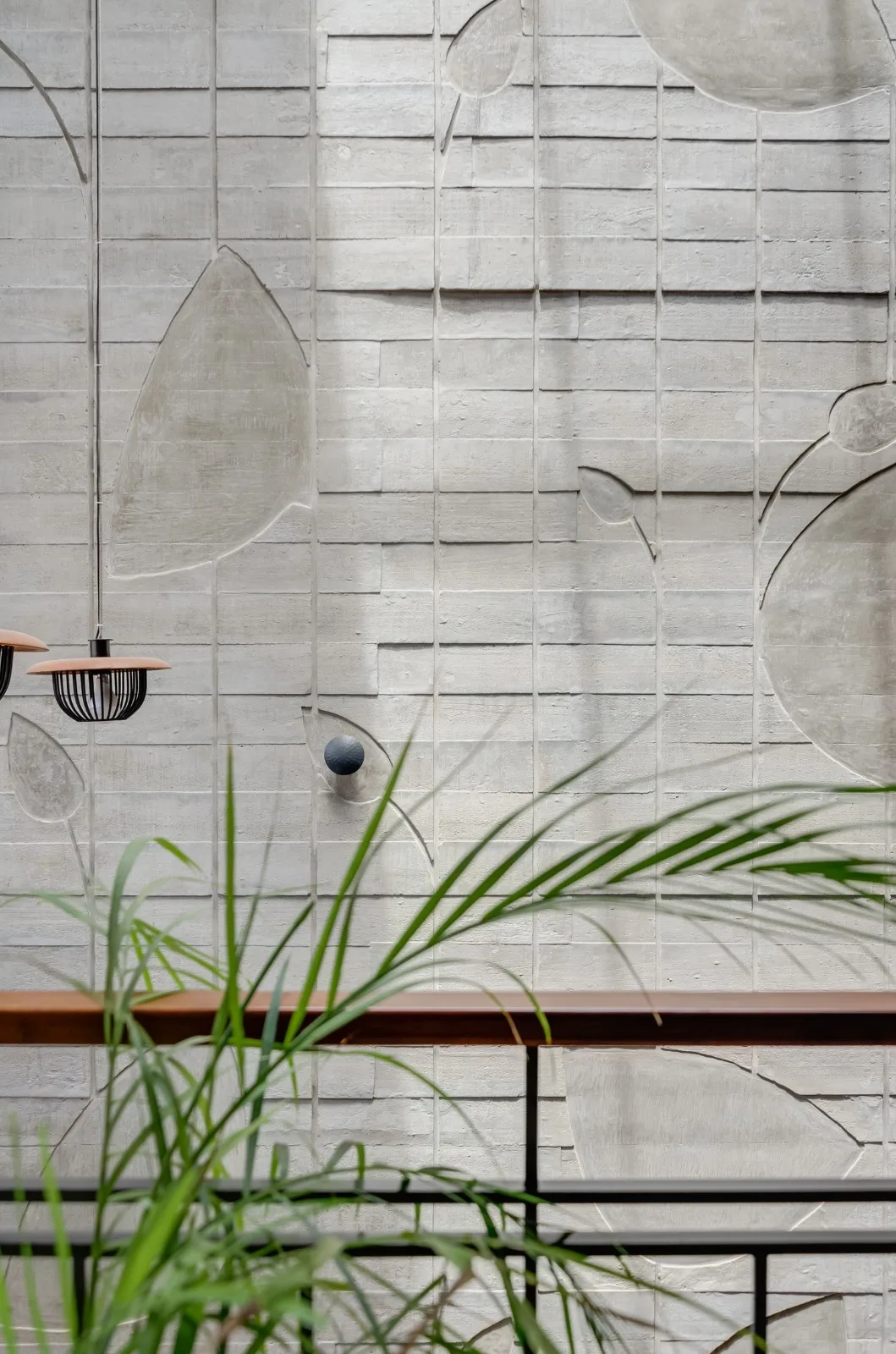
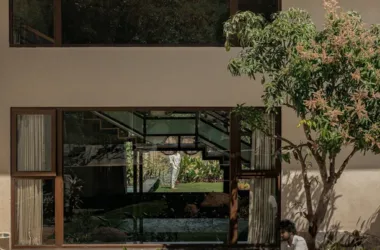
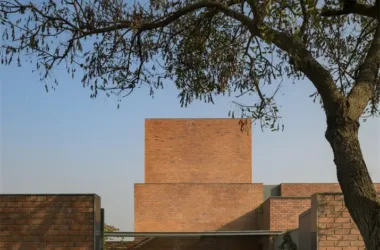
The design intentionally opens the interior to nature by incorporating trees into the living spaces, emphasizing the integration of the natural environment. The building employs simple materials—bricks and exposed concrete—that address structural, climatic, and aesthetic needs authentically. While traditional in material use, the creative arrangement and forms transform these elements into an aesthetic expression for both interior and exterior. The use of Flemish brickwork, with its cavity and thickness, supports passive cooling.
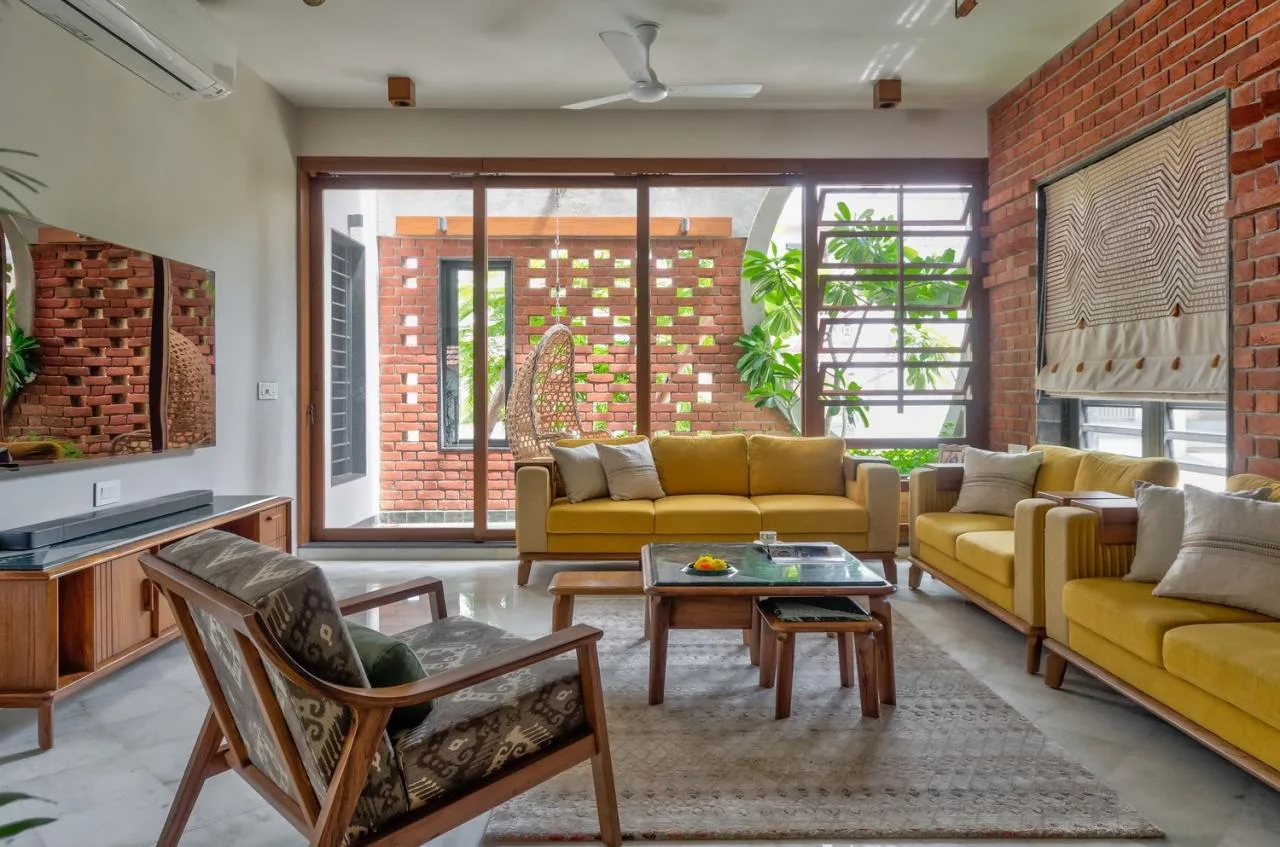
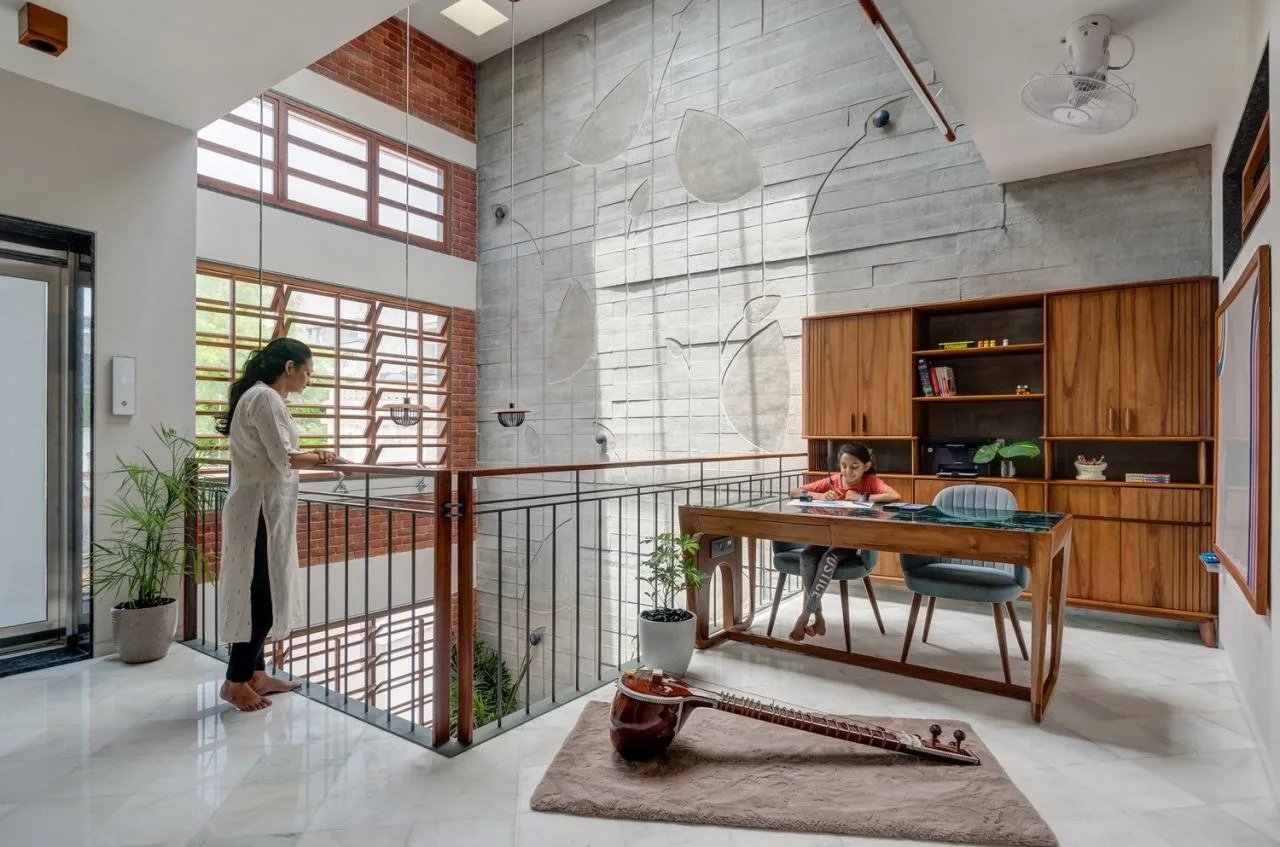
Indian white stone flooring adds a modern touch with its traditional texture and color. Bricks not only form the main facade material but are also used to create interior features such as door handles and blinds. The large ventilated north-facing facade in the courtyard incorporates a mechanical system for ventilation. This glass window system with multiple louvers is manually operated using gears and a fork-shaped rotary opener.
Project Drawings
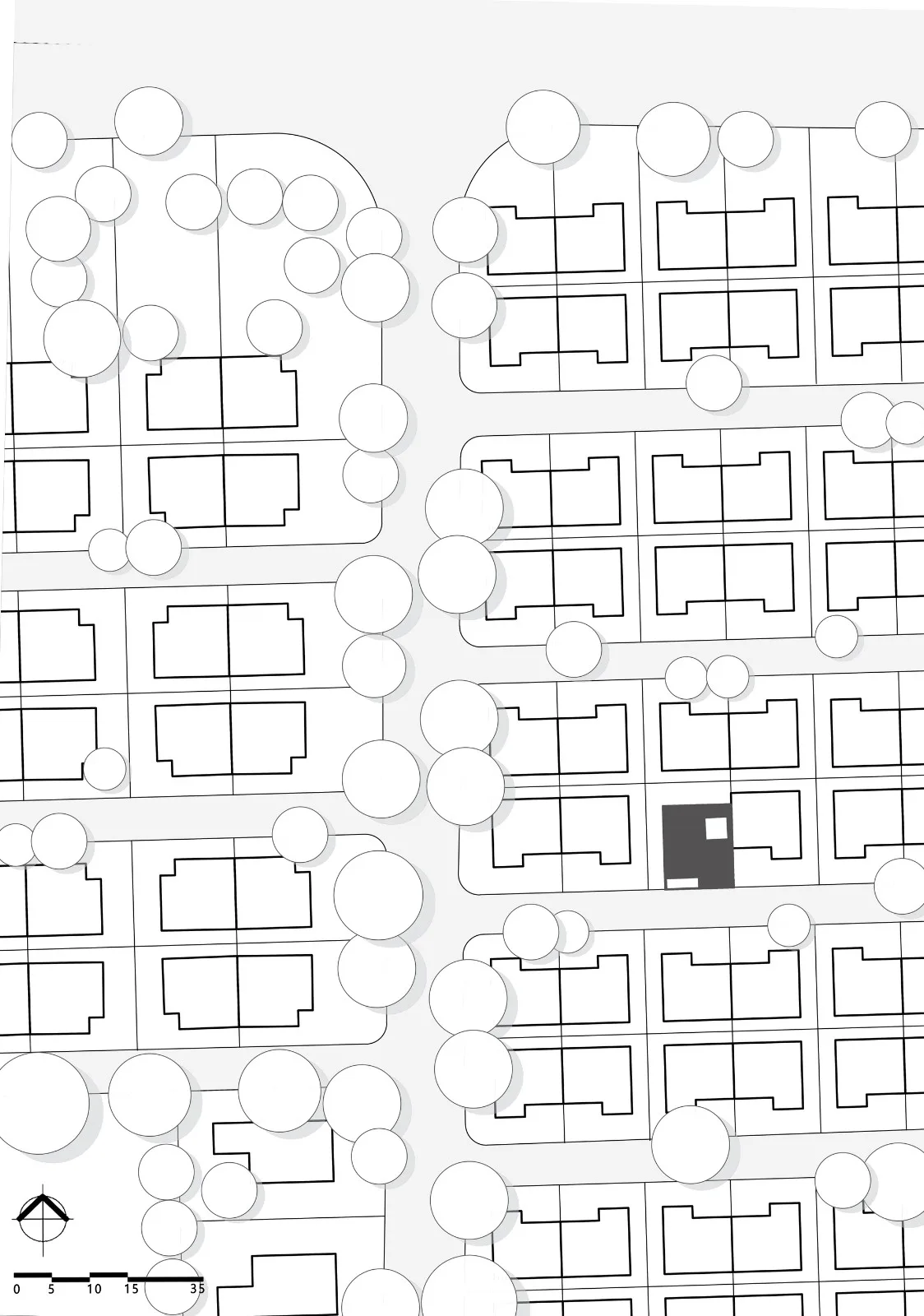
△ Base schematic diagram
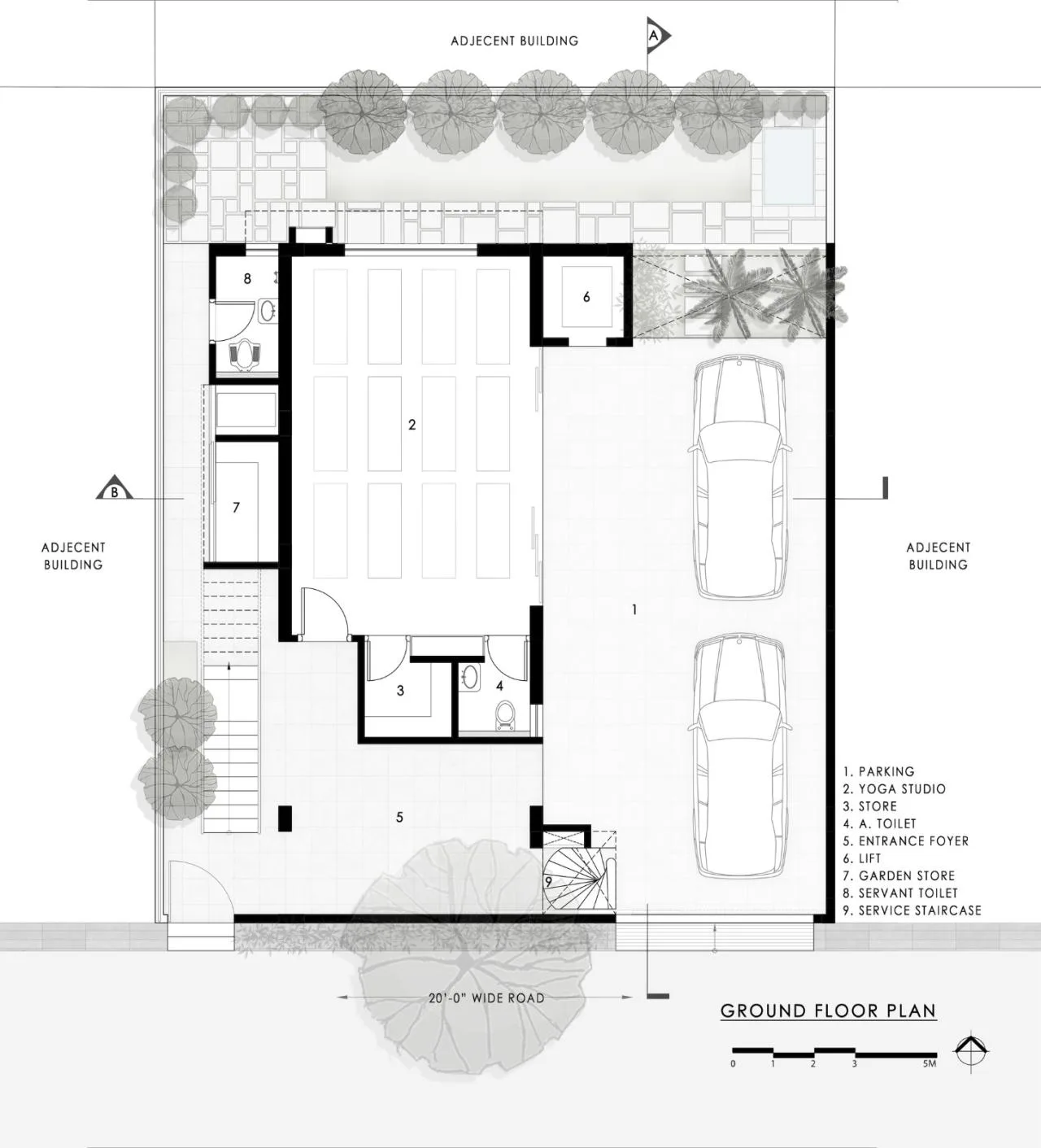
△ First floor plan
△ Second floor plan
△ Third floor plan
△ Fourth floor plan
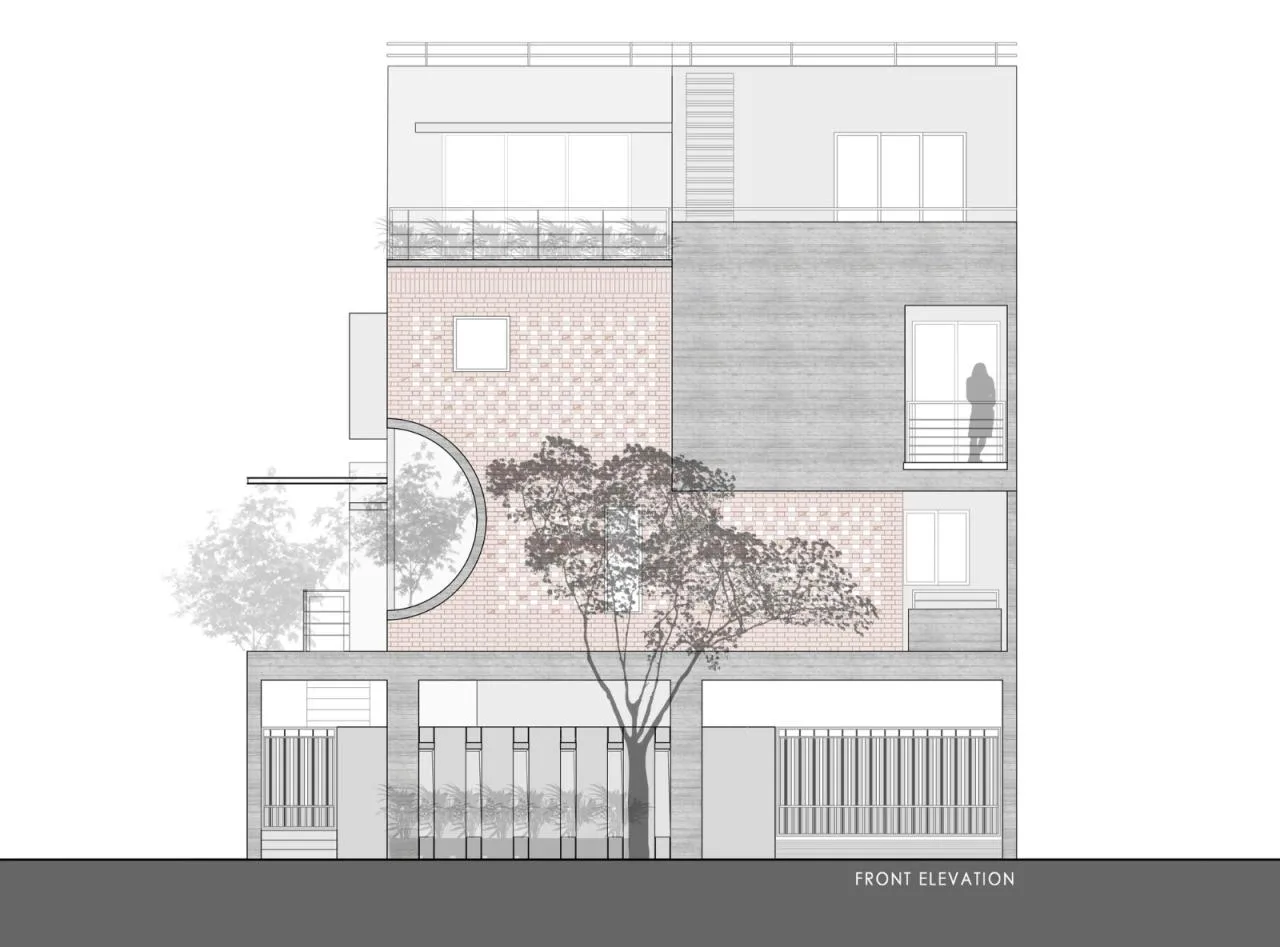
△ Elevation drawing
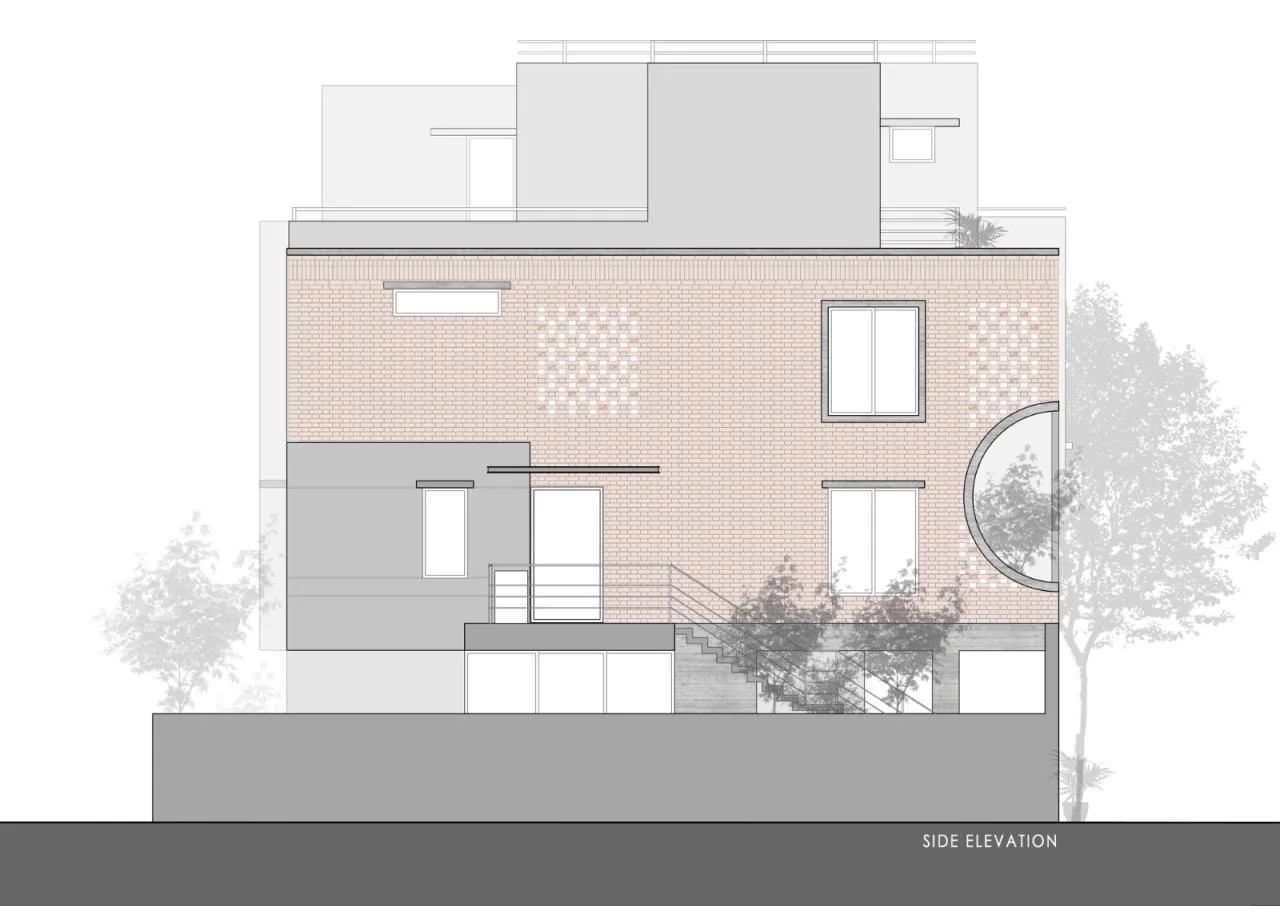
△ Elevation drawing
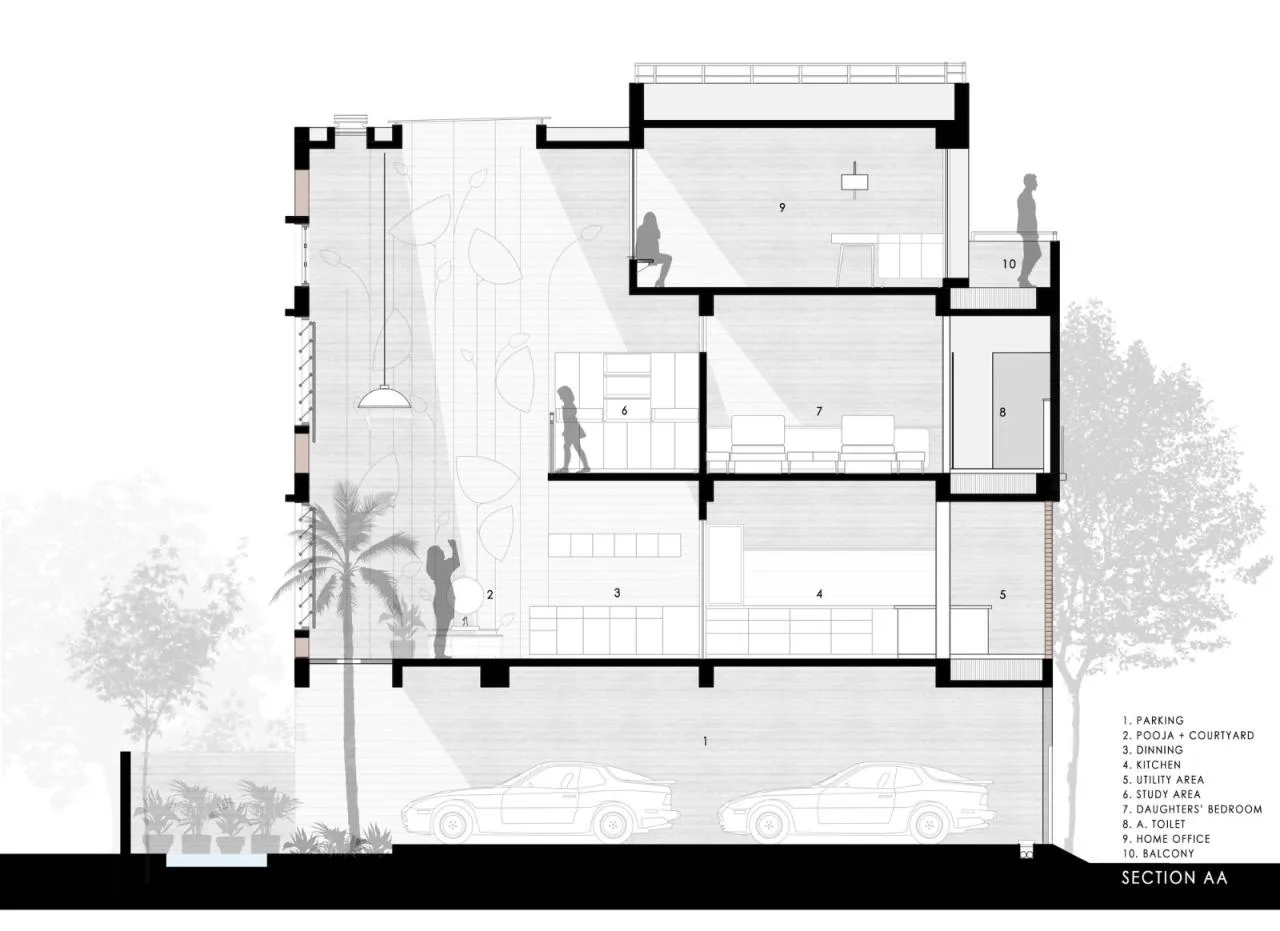
△ Section diagram
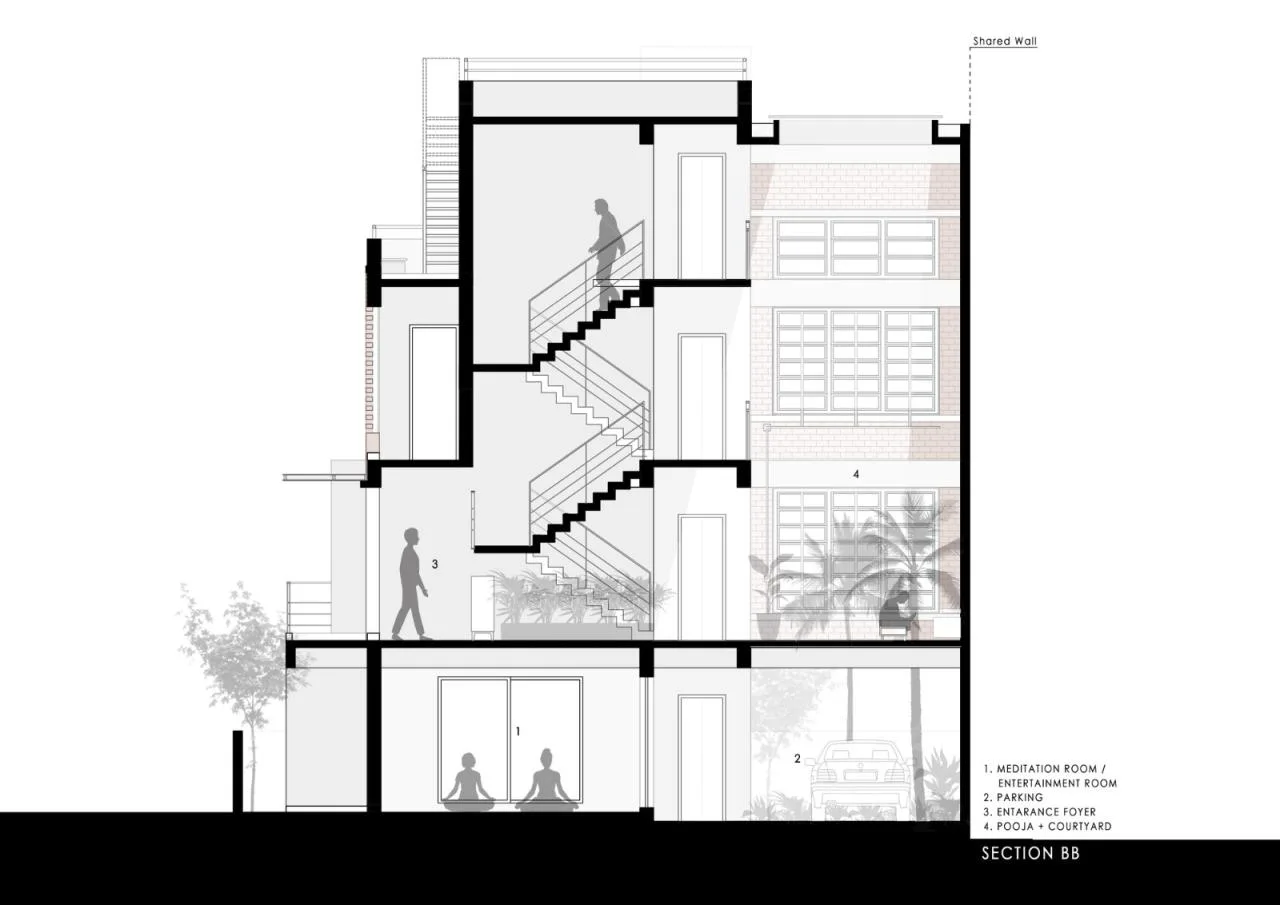
△ Section diagram
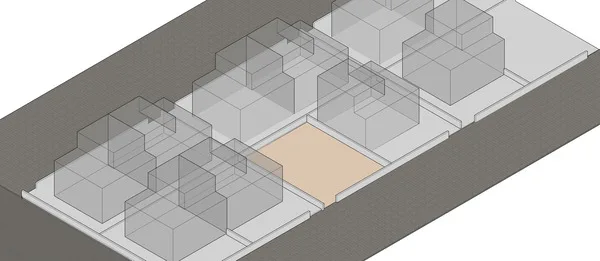
△ Generation process diagram 1
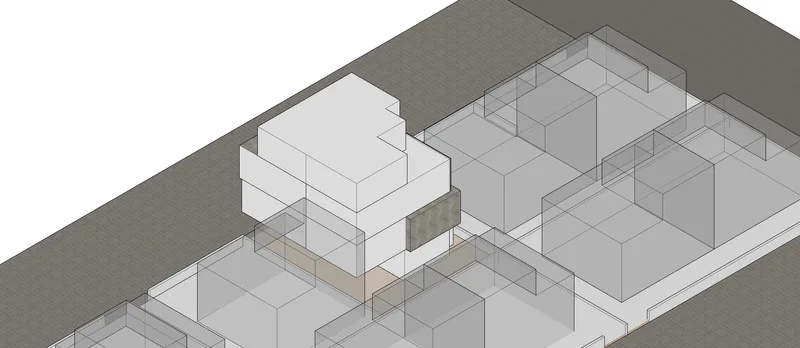
△ Generation process diagram 2
Project Information
Architectural Design: AANGAN Architects
Area: 430 m²
Project Year: 2021
Photographer: Pratikruti09
Suppliers: Kohler, AltraTech Cement, Armano Tiles, Astral Pipes, Futura Lights, Jay Jalaram Brick Works, Legrand, Mitsubishi, New Age Lifts, Rajveer Corporation, Solarium Green Energy LLP, Technal, TechnoFab, Telesia Windows, Yale Locks
Lead Architects: Vishal Shah, Vishal Desai
Project Architect: Payal Lukhi
Project Engineer: Jigar Ariwala
Cartographer: Ishita Bardolia
Landscape Architect: Niti Shah
Location: Surat, India












Must log in before commenting!
Sign Up