
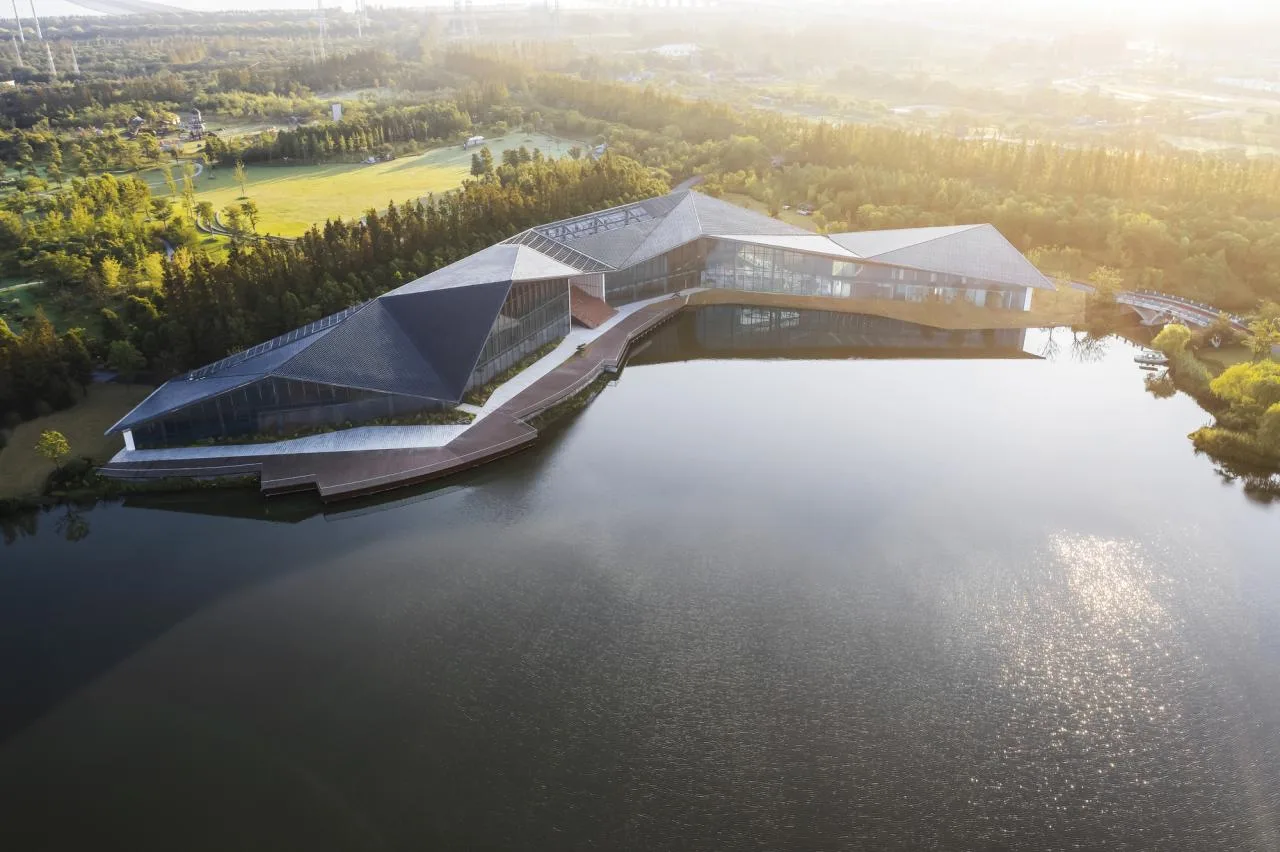
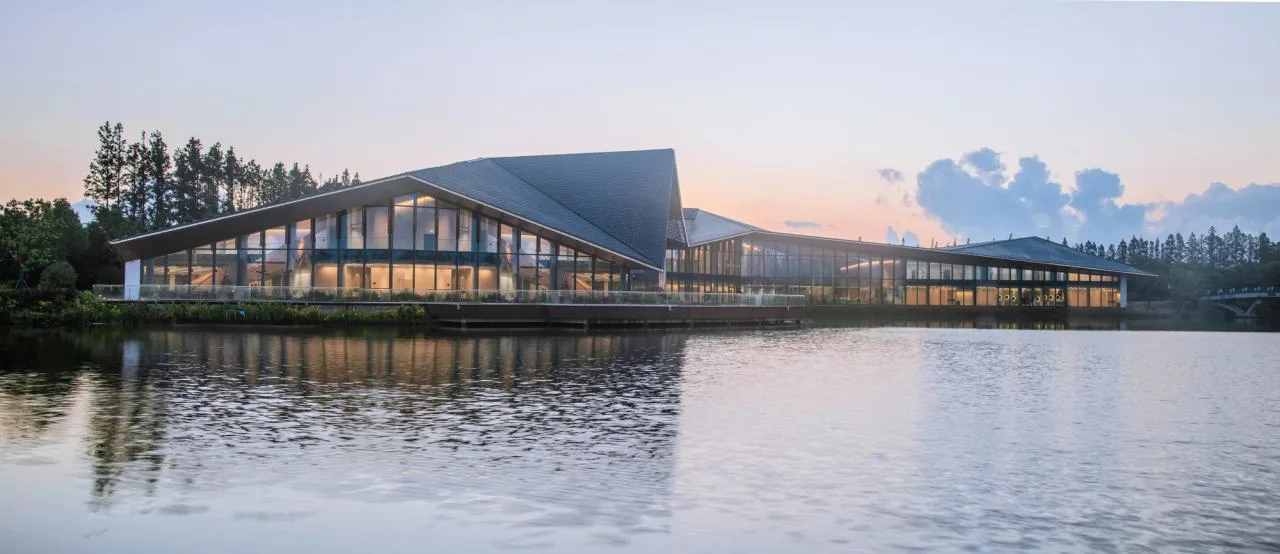
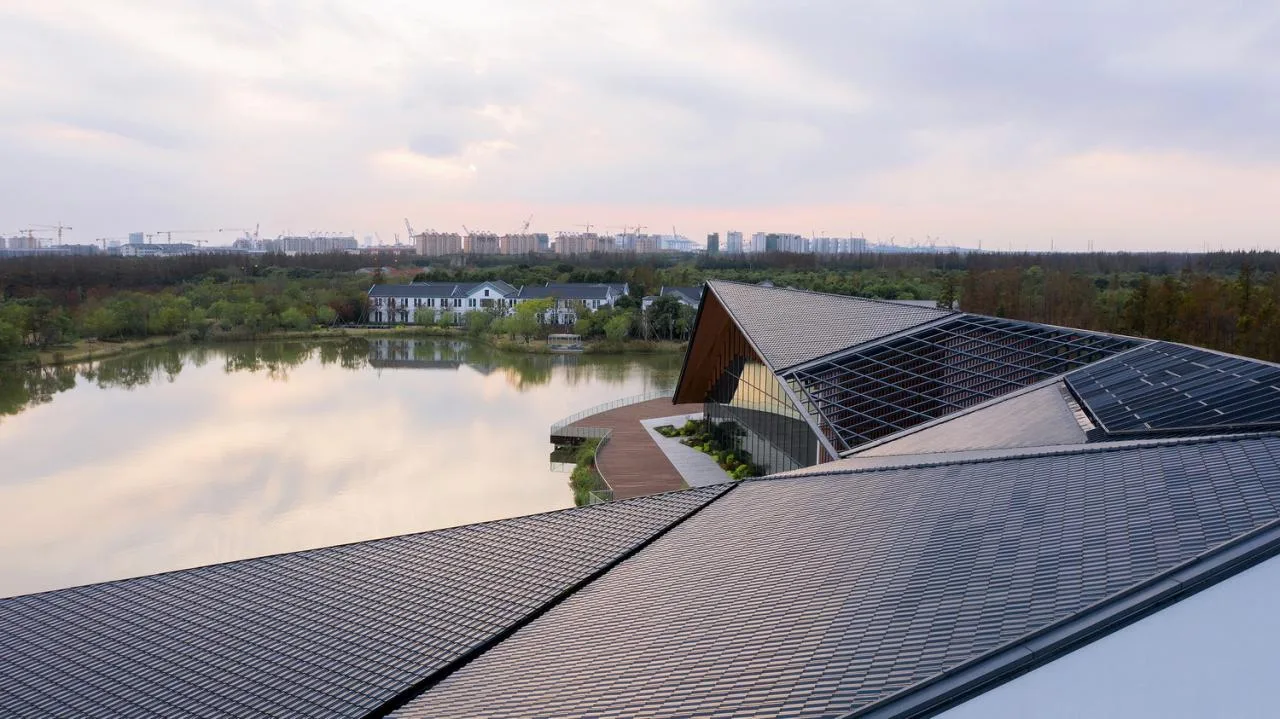
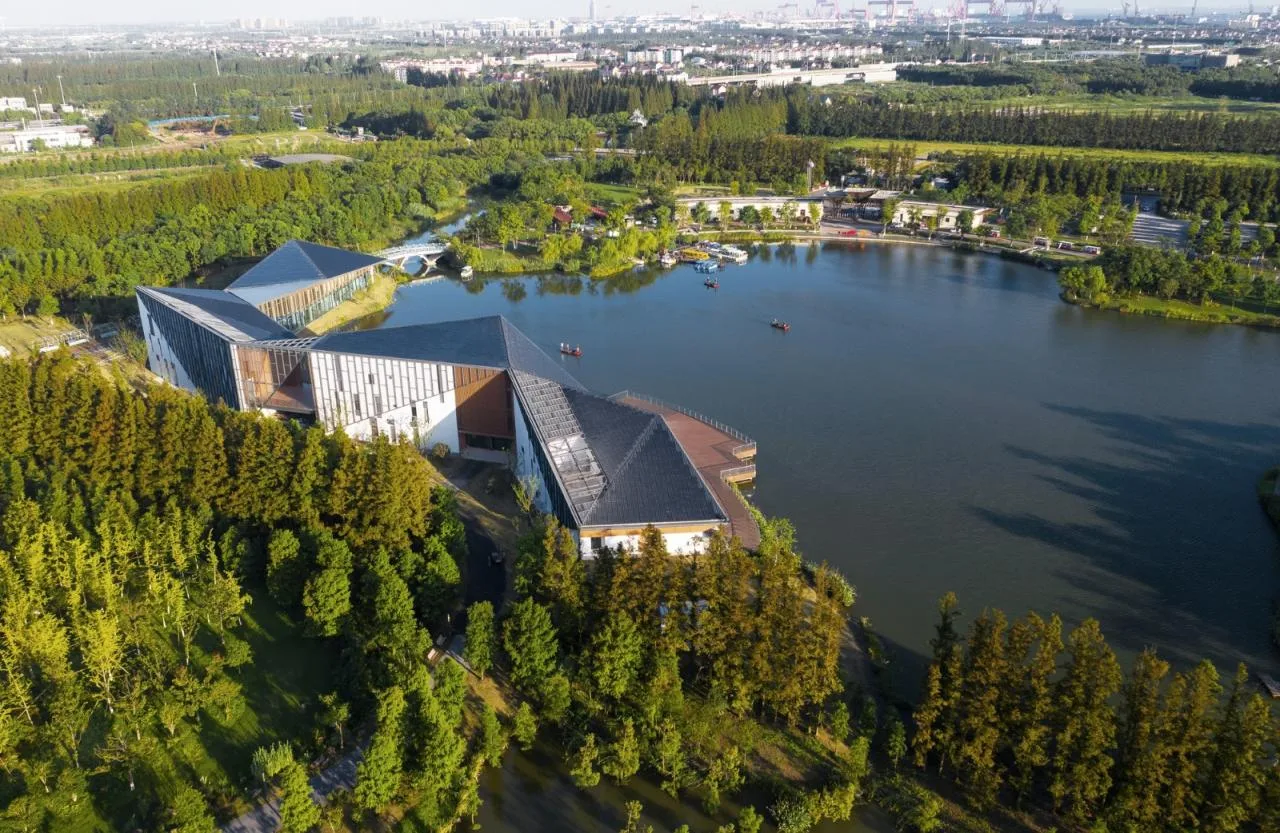
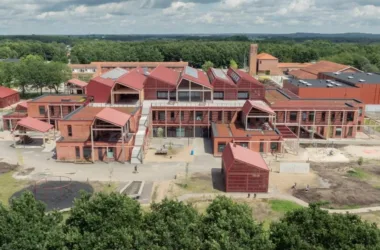
Changxing Countryside Park is a suburban ecological conservation area defined by its focus on nature, ecology, and wilderness. Situated on the northern shore of Huaxi Lake within Changxing Island Country Park, the project faces the park’s main entrance across the lake and is enveloped by a dense forest of towering Metasequoia trees. This project introduces a series of new functional spaces to the park, which is rich in ecological resources and reclaimed fields, while fulfilling the needs of visitor services. It is designed to serve as a fresh focal point and a showcase “window” for the entire park.
The site’s narrow, elongated S-shaped footprint presented significant design challenges, yet the nearly 180-meter-long lakeside landscape corridor offered great opportunities. Our approach carefully adapts to the site’s conditions, aiming for the building to blend harmoniously and effortlessly into its natural surroundings.
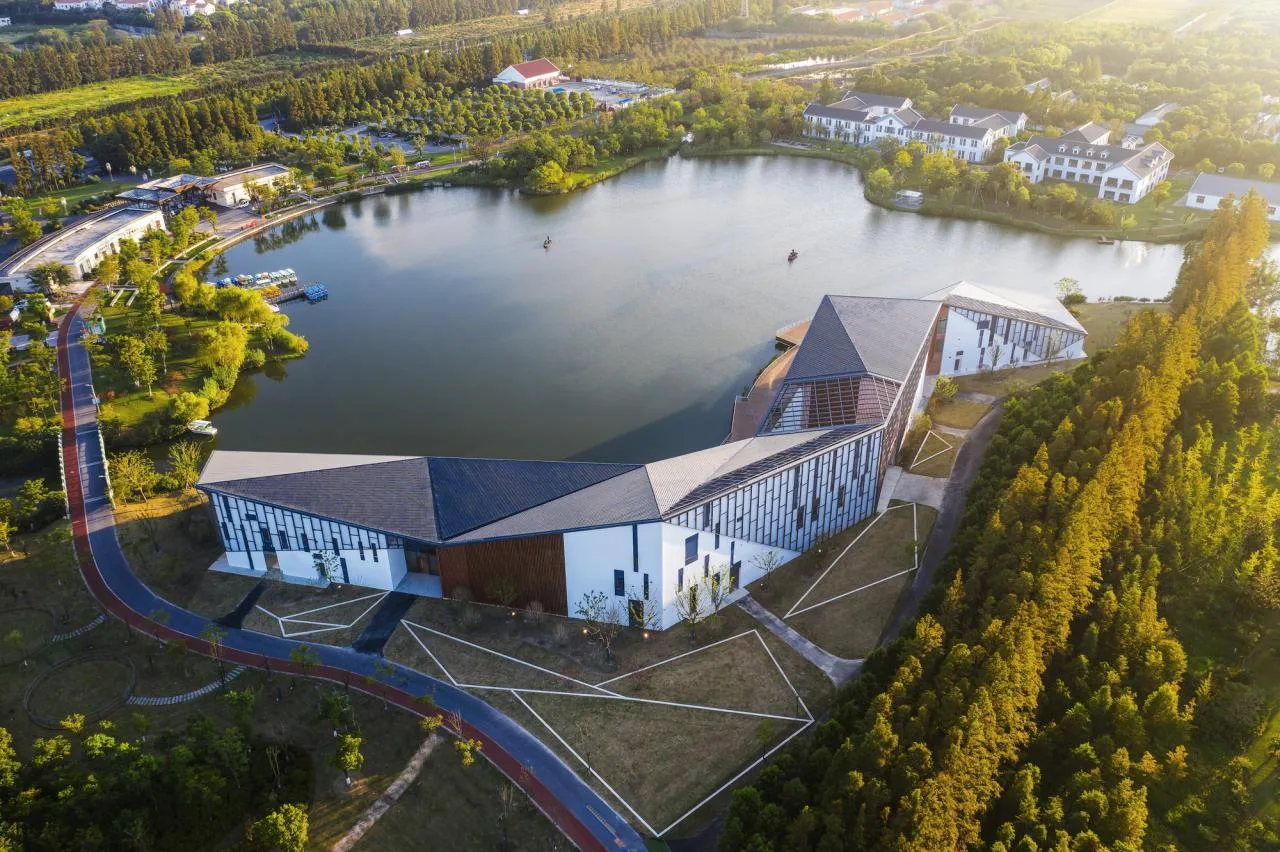
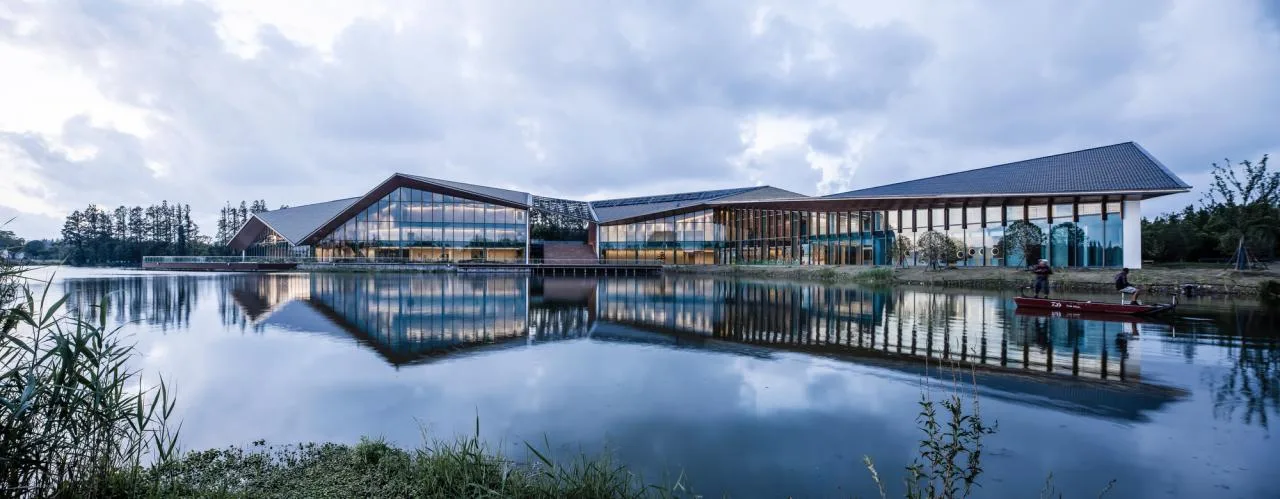
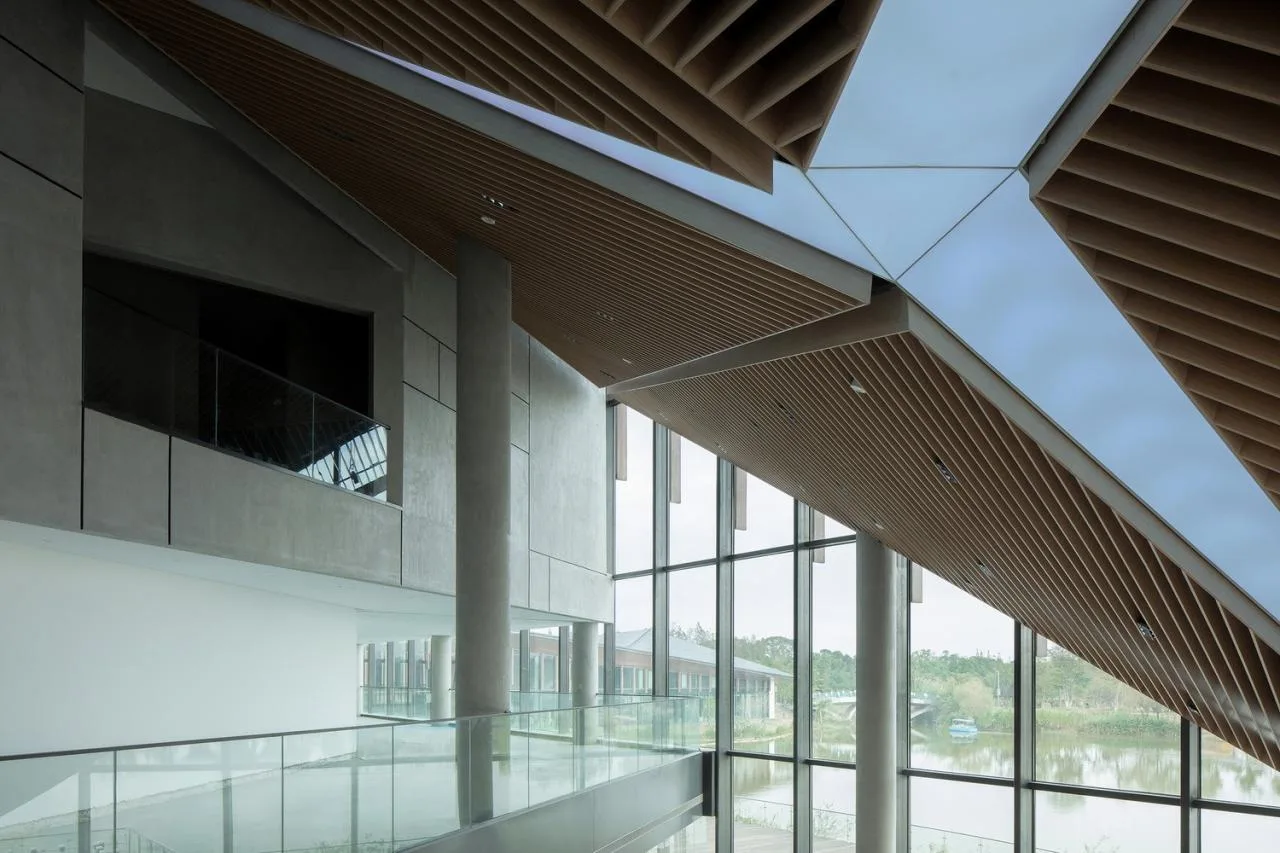
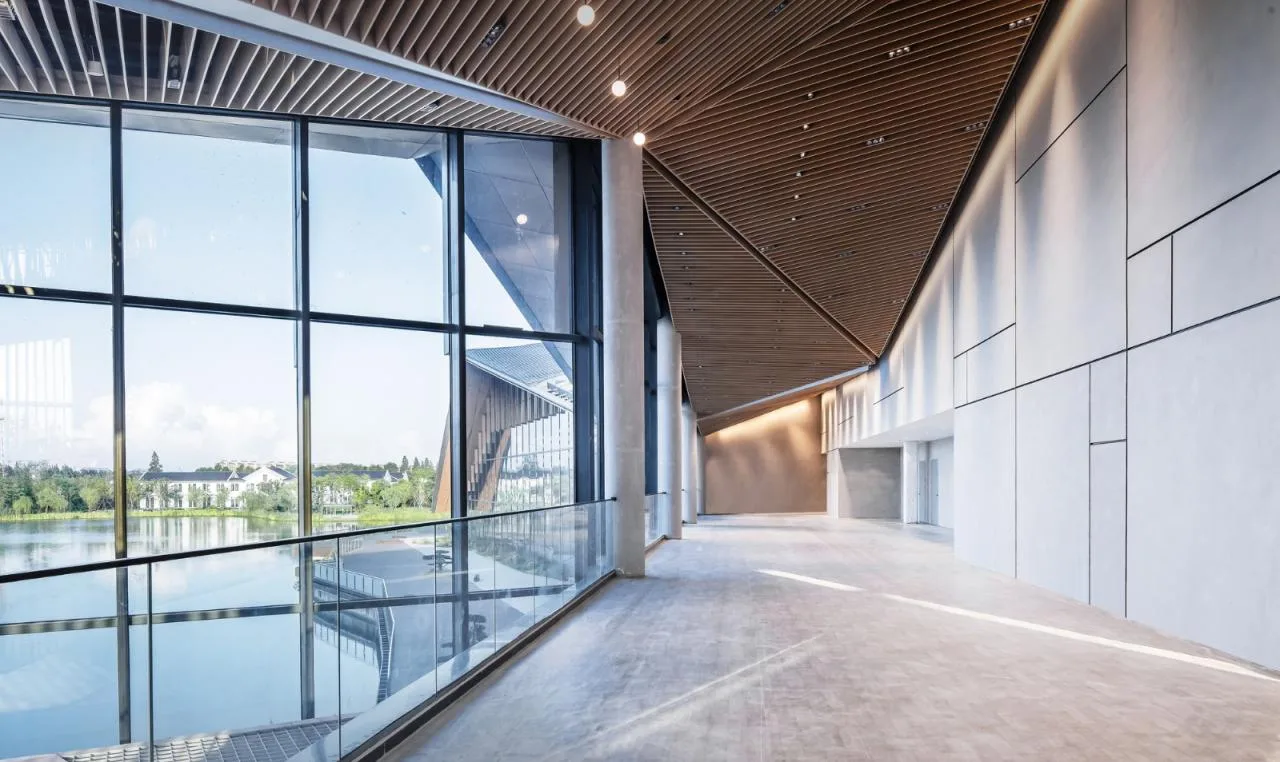
The building’s undulating roof, reminiscent of mountain ranges, draws inspiration from the local spirit—reflecting themes of islands, boat canopies, and villages unique to Chongming. This mountain-like roofline creates a natural skyline that seamlessly merges with the environment. A continuous, transparent facade invites the stunning views of Huaxi Lake inside, framing the interior like a slowly unfolding Chinese landscape painting.
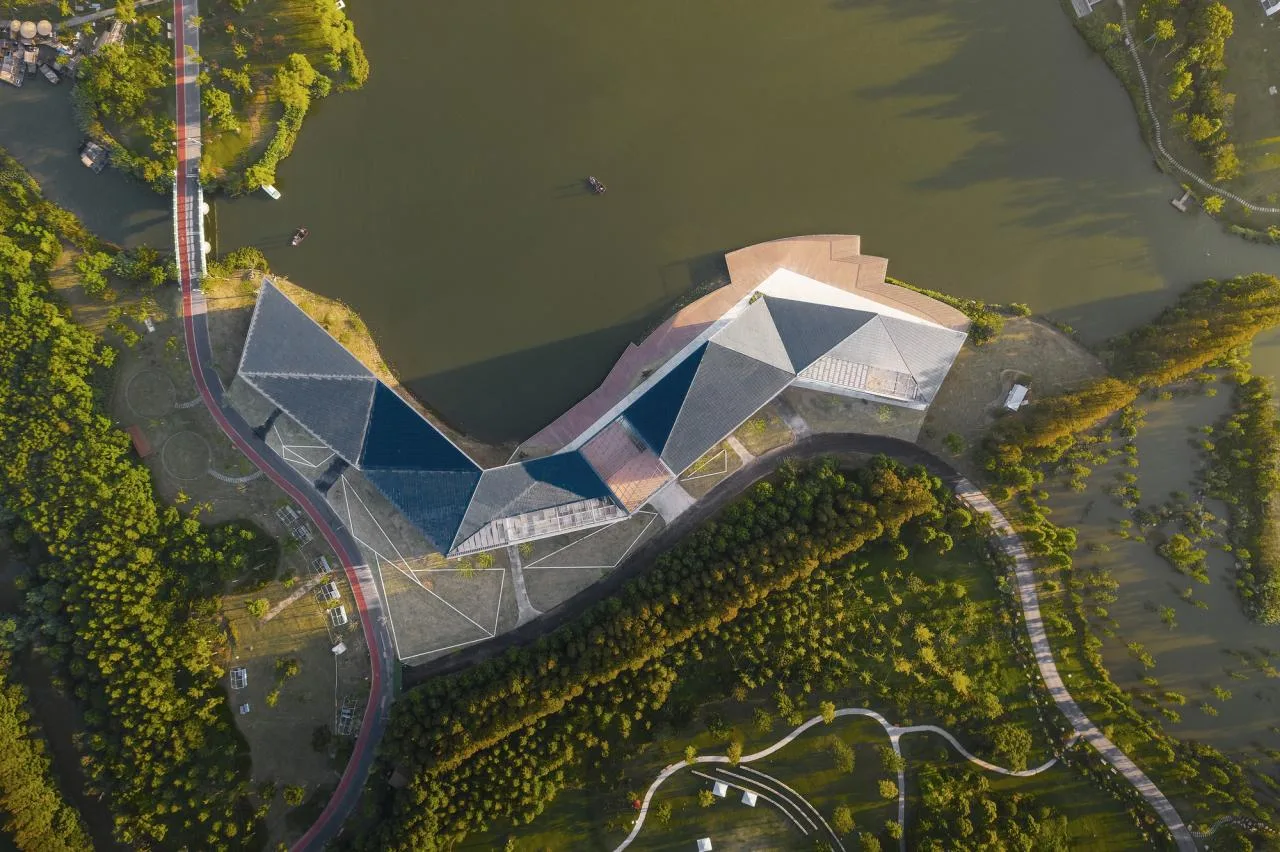
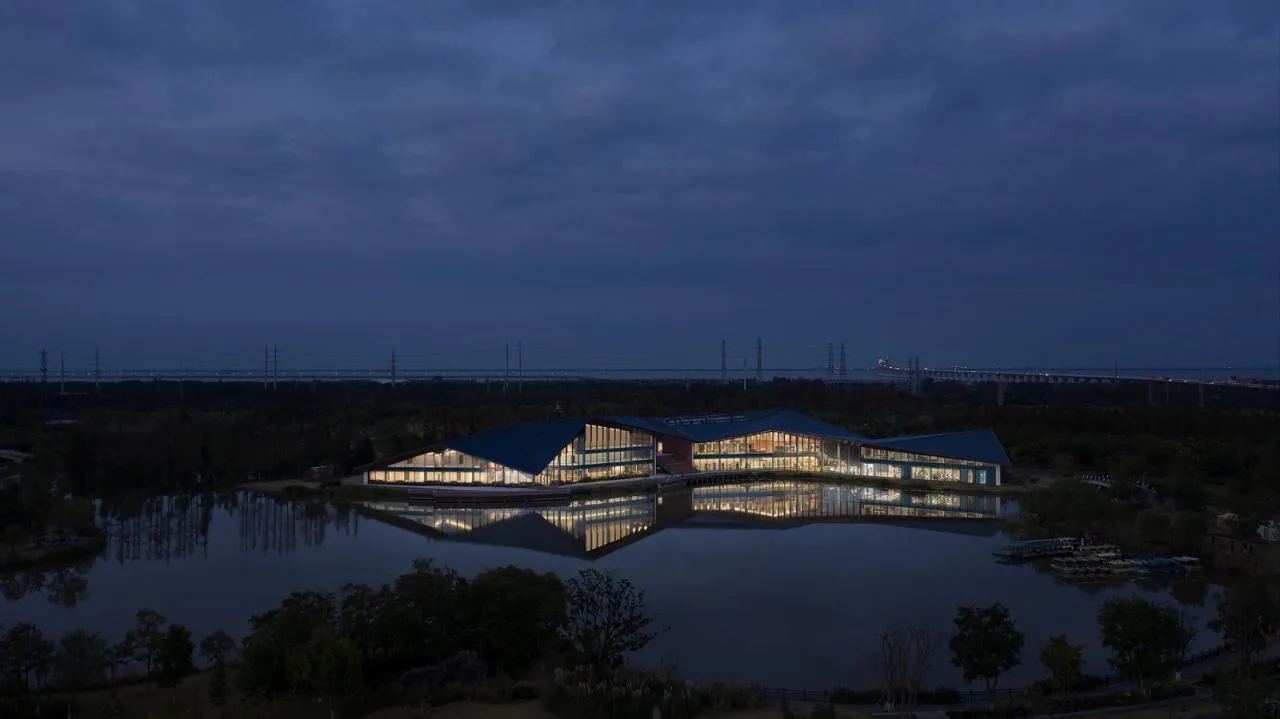
The building and its natural surroundings engage in a dynamic dialogue of “seeing and being seen.” As visitors approach the center along the lakeside path, the winding contours of the structure reveal shifting perspectives, evoking the feeling of “viewing mountains horizontally with peaks rising on the sides.” During the day, the continuous glass curtain wall reflects the sky and lake, allowing the building to blend into the landscape. At night, warm interior lighting contrasts with moonlight, outlining the building’s silhouette in reverse.
Inside, a continuous open space flows along the southern landscape side, with the undulating roof shaping the internal volumes—sometimes soaring, sometimes intimate. Flexible second and third-floor spaces complement the roof’s curves, creating dramatic spatial experiences. Visitors enjoy various viewing angles throughout the building.
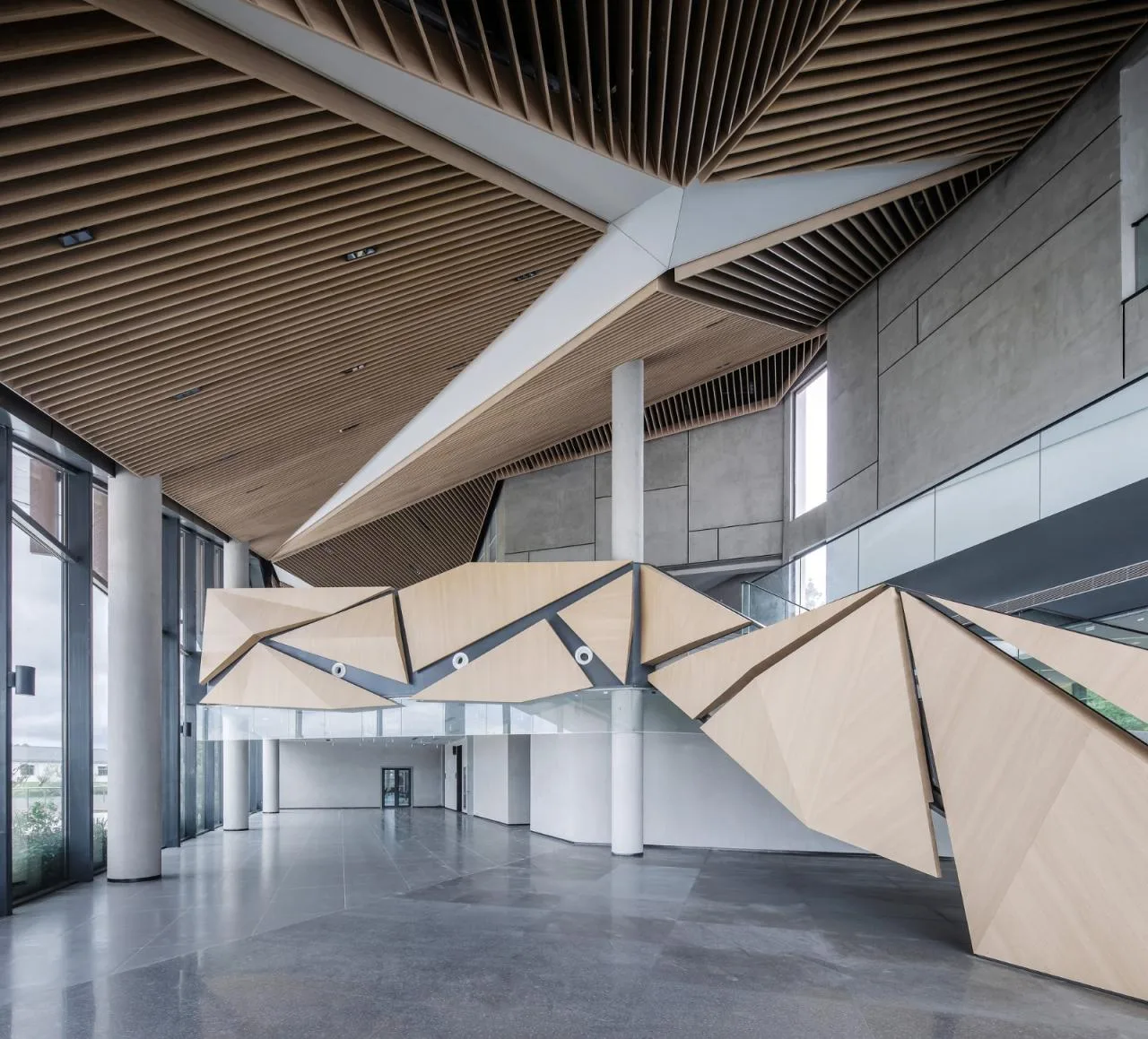
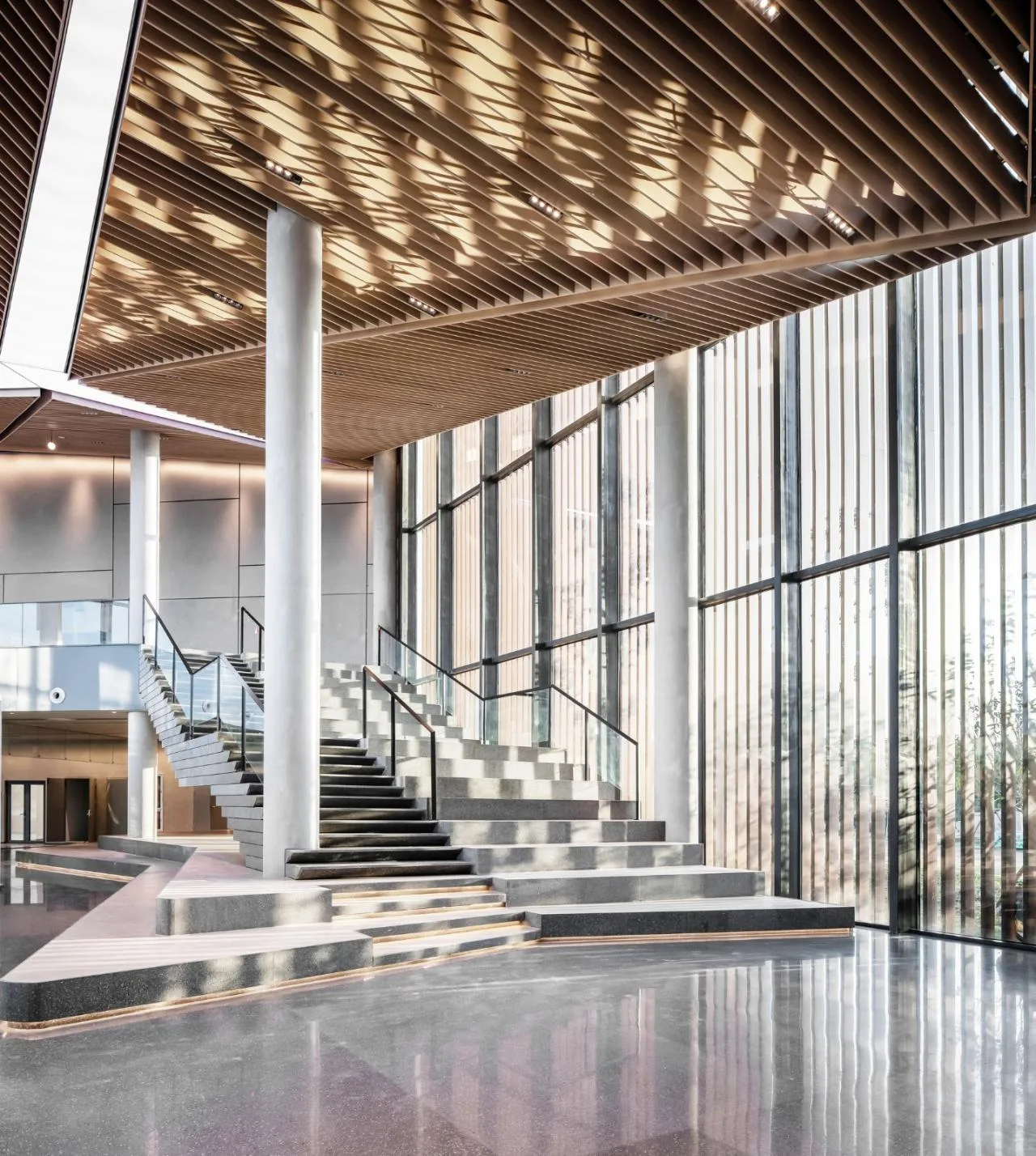
To ensure seamless integration of spatial hierarchy and material textures, the visitor center maintains a unified design vocabulary throughout its interior and exterior. The ever-changing lake and mountain views pour into the interior through floor-to-ceiling glass curtain walls, immersing visitors in the vividness and vastness of nature. Under one roof, tourists, activities, and spaces naturally come together.
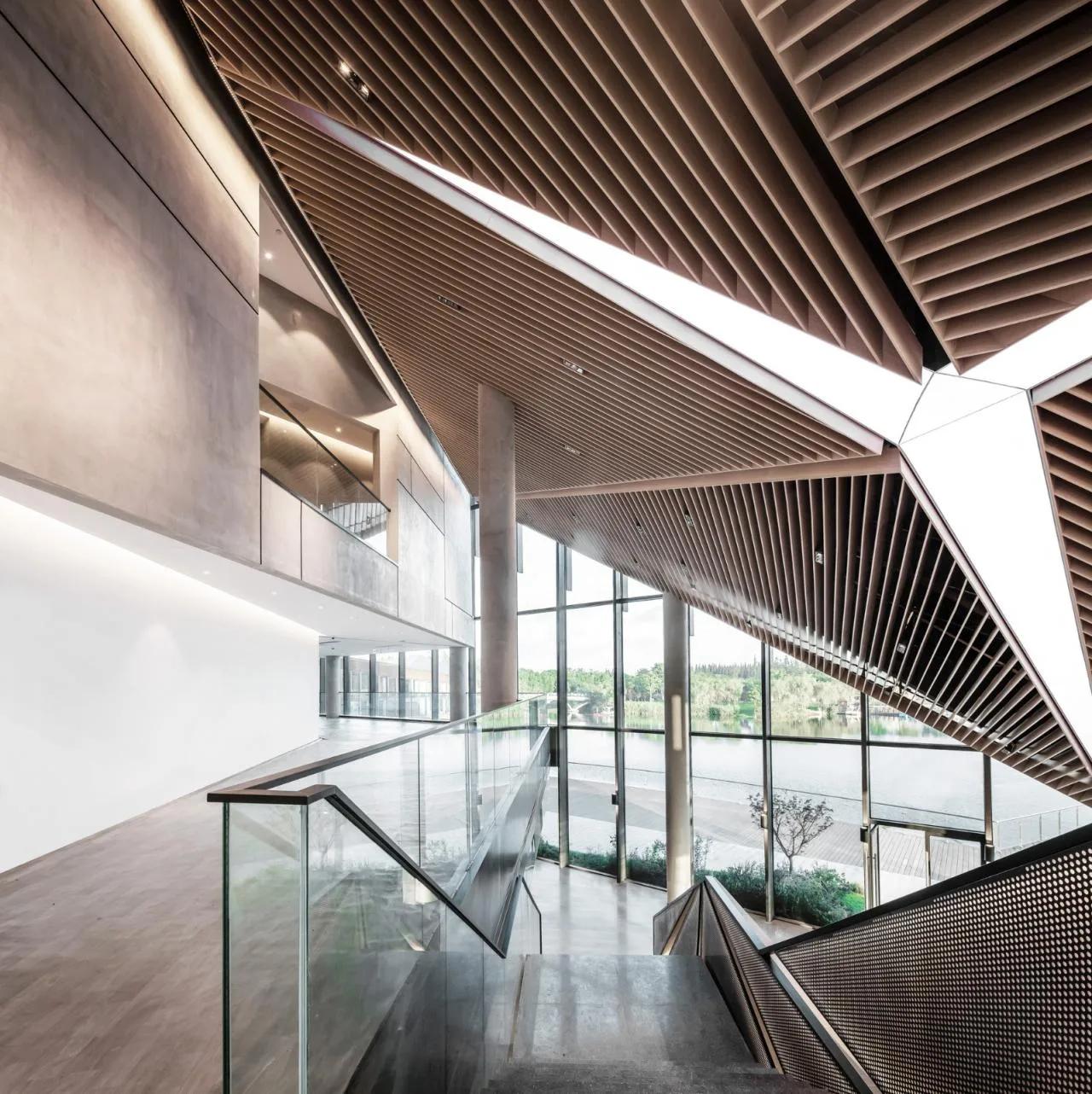
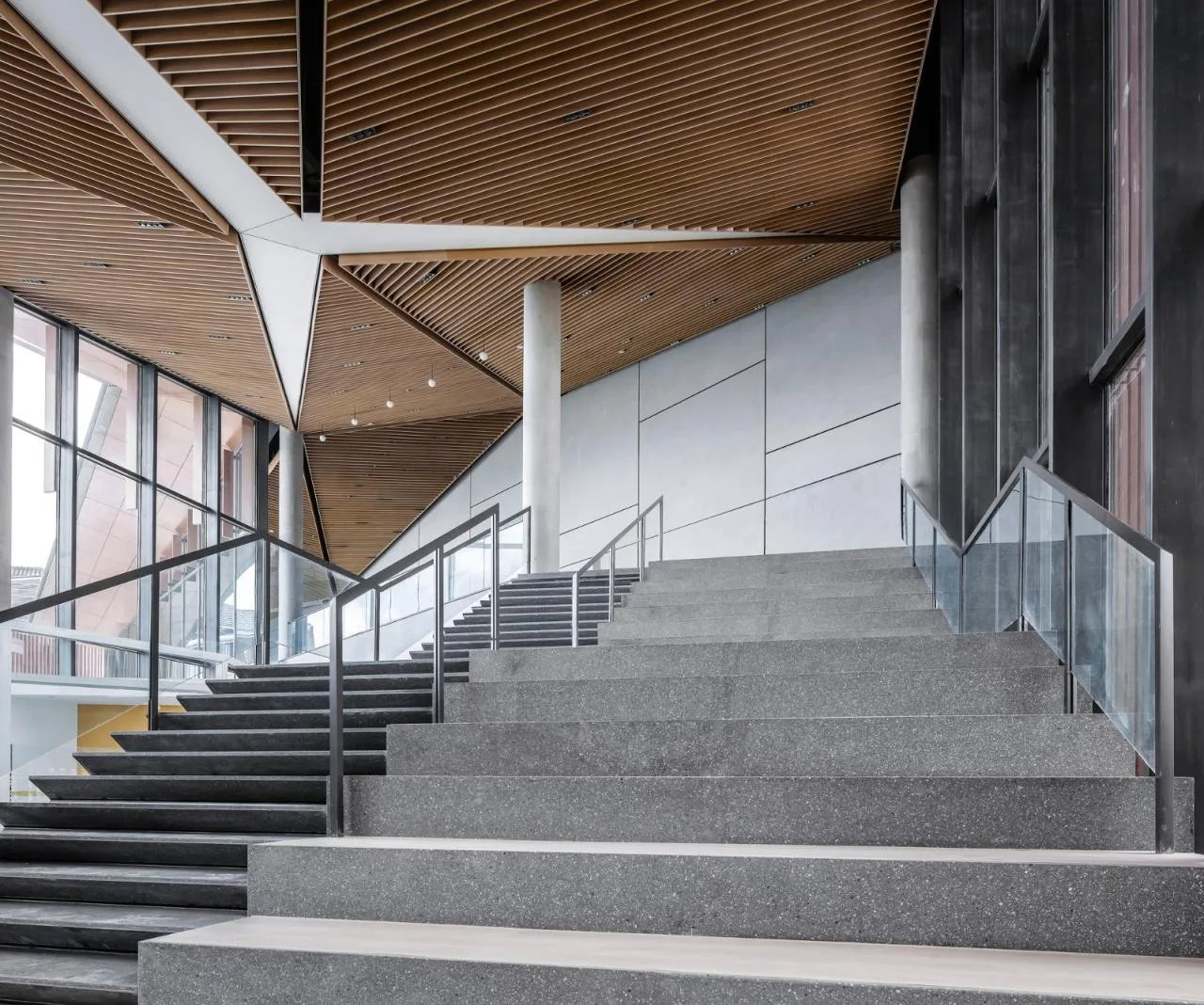
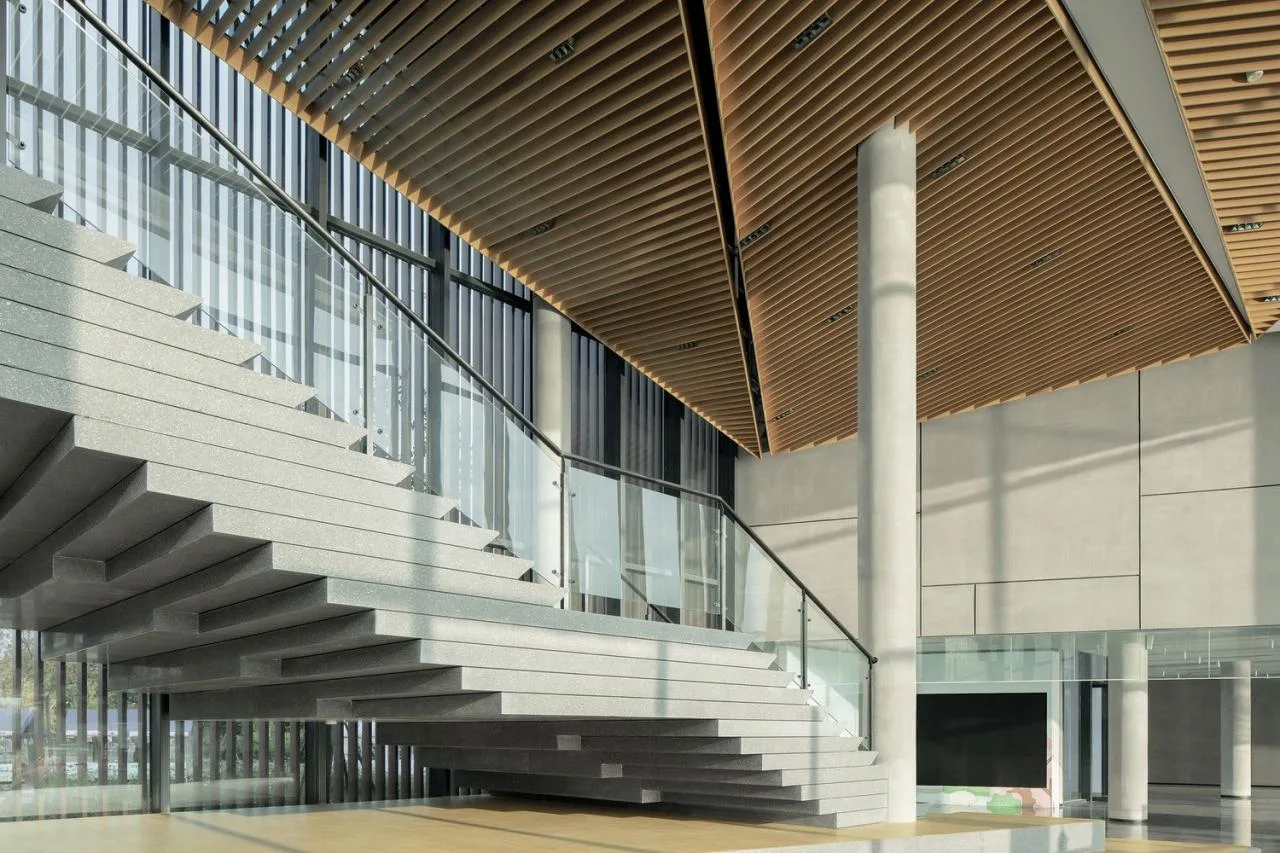
The eastern building primarily accommodates visitor services, featuring a reception hall, rest area, cultural and creative specialty exhibition space, and a fast-food service area. Near the main entrance, a large triangular staircase connects the exhibition area’s upper and lower levels and serves as a venue for roadshows, product launches, and exhibitions. This sculptural staircase creates a public gathering space that breaks conventional boundaries of staircases serving only as circulation paths, offering multifunctional and interactive experiences for visitors.
The western building focuses on themed activity spaces, including a children’s play area, coffee and book bar, 5G technology experience zone, audiovisual room, specialty dining, and special exhibitions. A dramatic three-story-high space under the roof’s highest point creates a dynamic volume within the building. A sculptural staircase here enhances the playful atmosphere, inviting visitors to explore and interact, transforming the act of ascending stairs into an engaging experience.
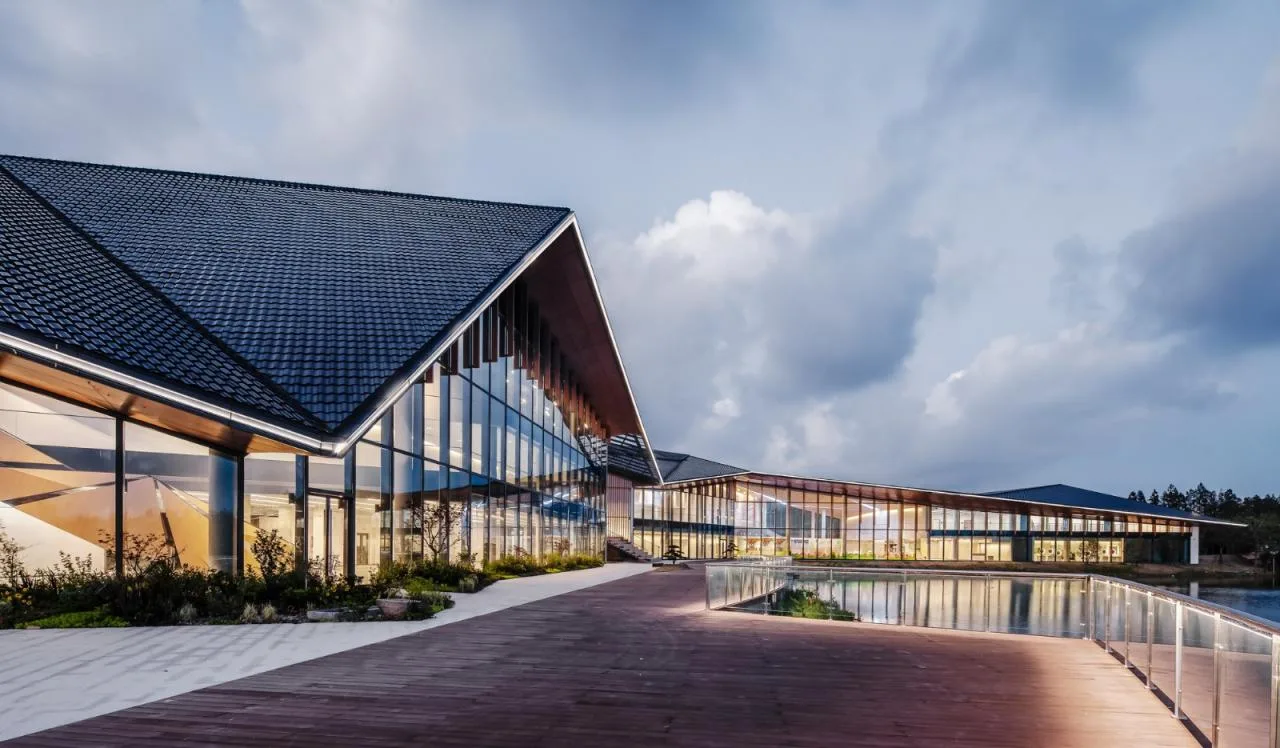
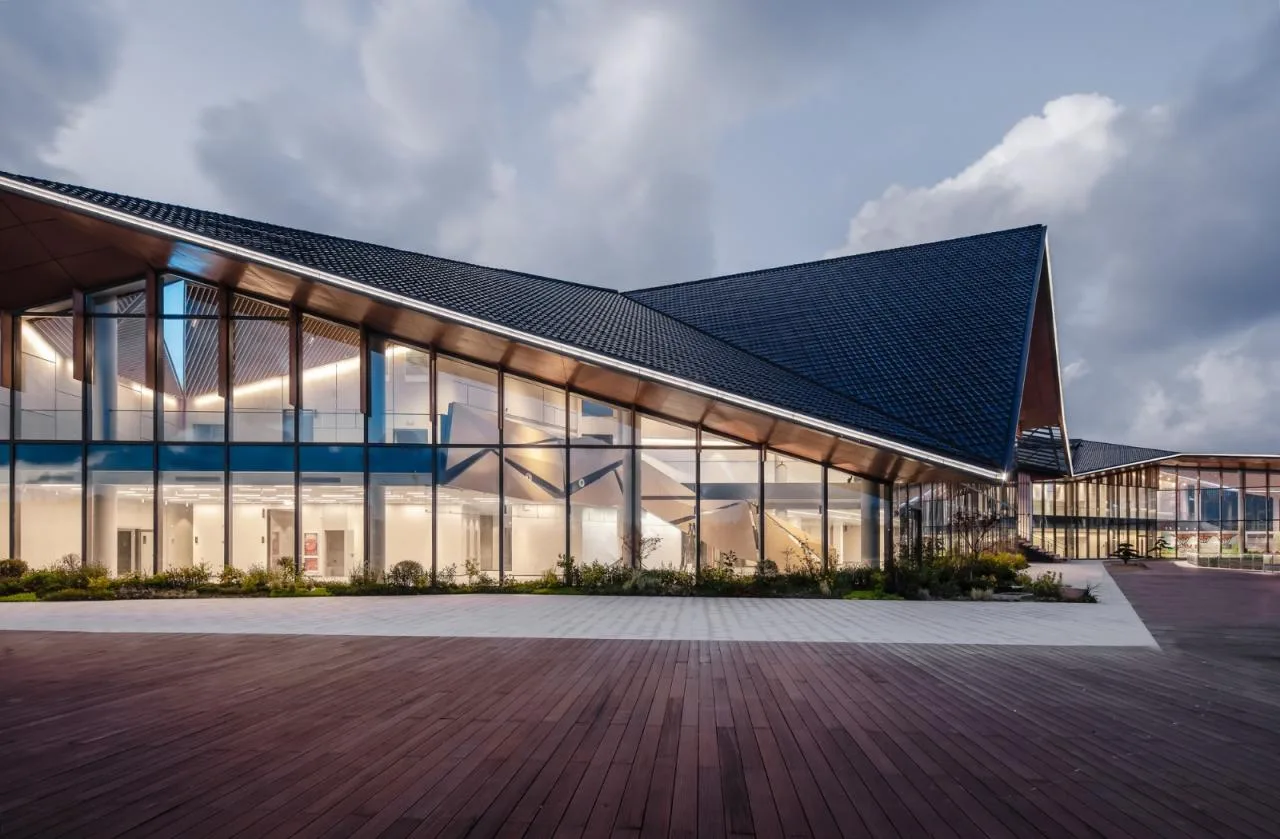
We prioritized opening up the best south-facing lakeside views for public spaces, while locating all service functions on the northern side. The building’s belt-shaped layout allows dedicated support areas for all service spaces, maximizing inclusivity and adapting to diverse spatial uses. This flexible, inclusive design offers endless possibilities for future programming. Visitors are invited to experience a sense of freedom and exploration in spaces that are fluid, interconnected, and comfortably welcoming.
At the intersection of the highest roofs of Buildings 1 and 2, we installed a “skylight” visual installation that produces gradual changes in light and shadow. Its imagery can be themed dynamically, enriching the space with broader imaginative possibilities.
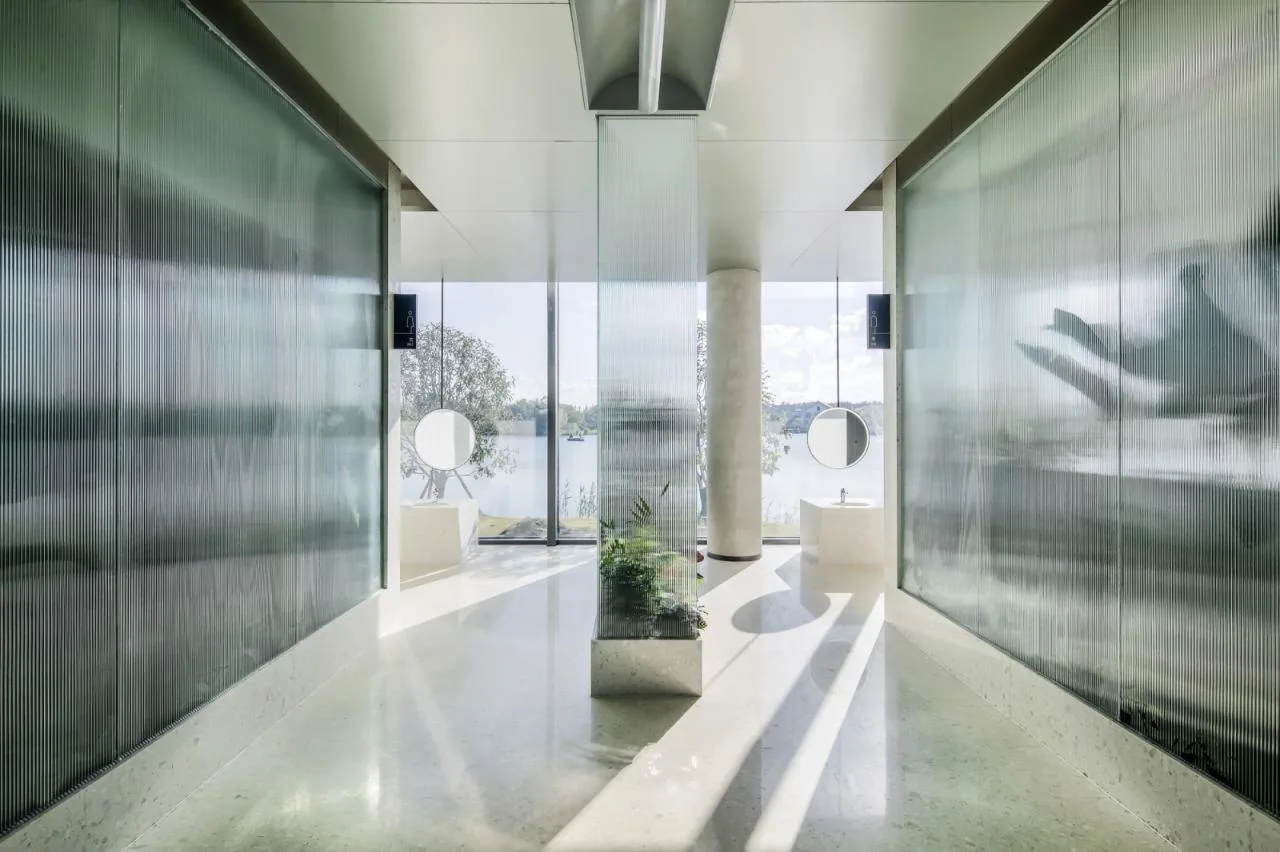
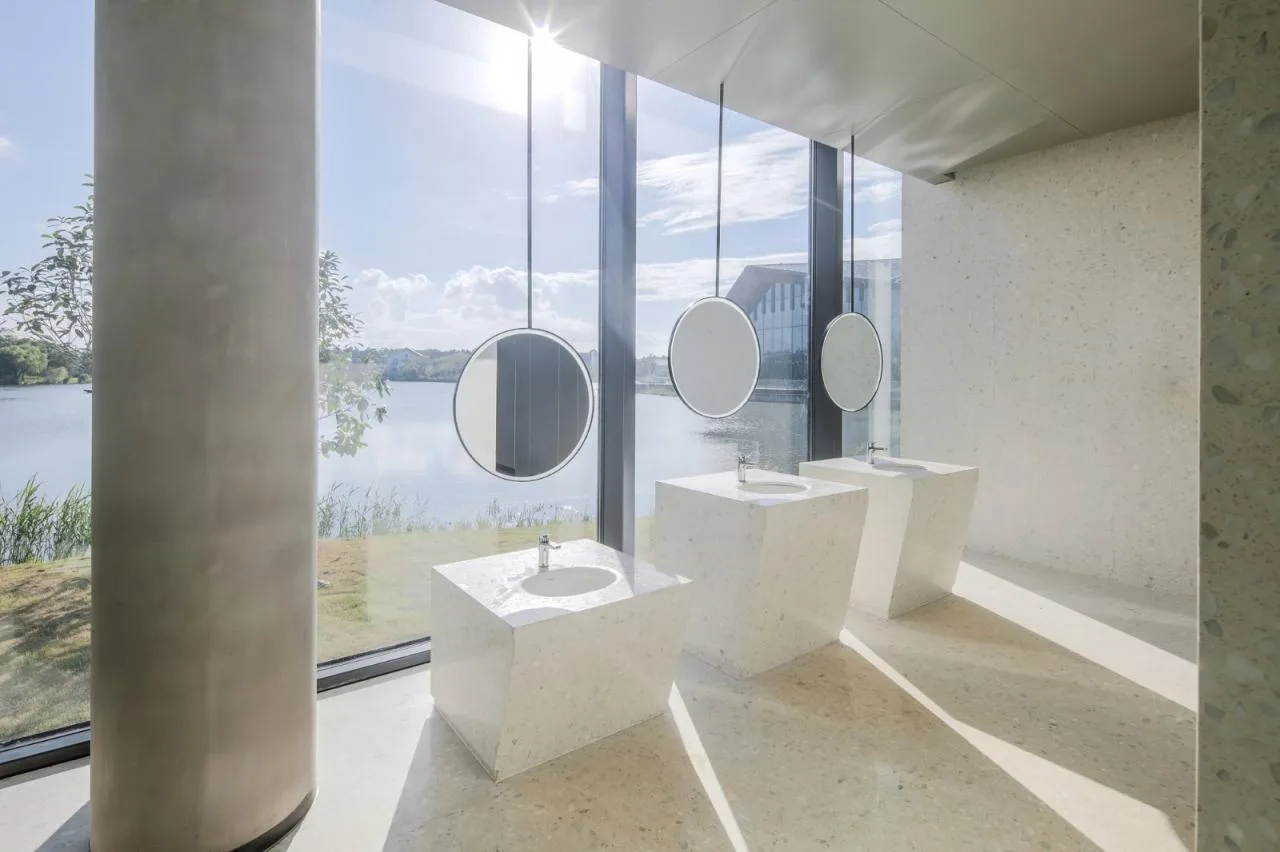
Human-centered design is reflected in the panoramic tourist restroom, an AAA standard facility serving the entire suburban park. Breaking tradition, it is placed on the south side of the lake to maximize scenic views. The washbasins in both men’s and women’s restrooms face floor-to-ceiling windows that overlook the lake, allowing visitors to enjoy the view while freshening up. Green plant elements are incorporated into partition designs, bringing the park’s natural wilderness indoors.
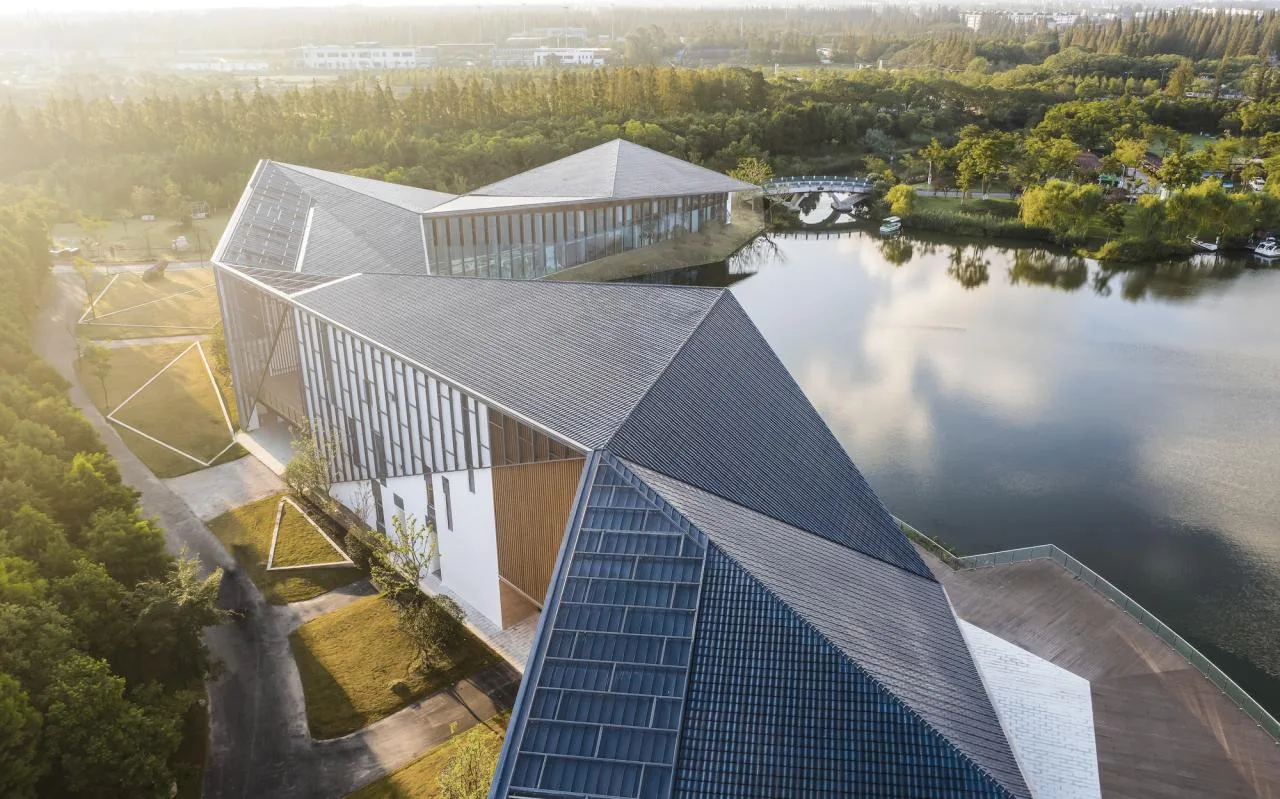
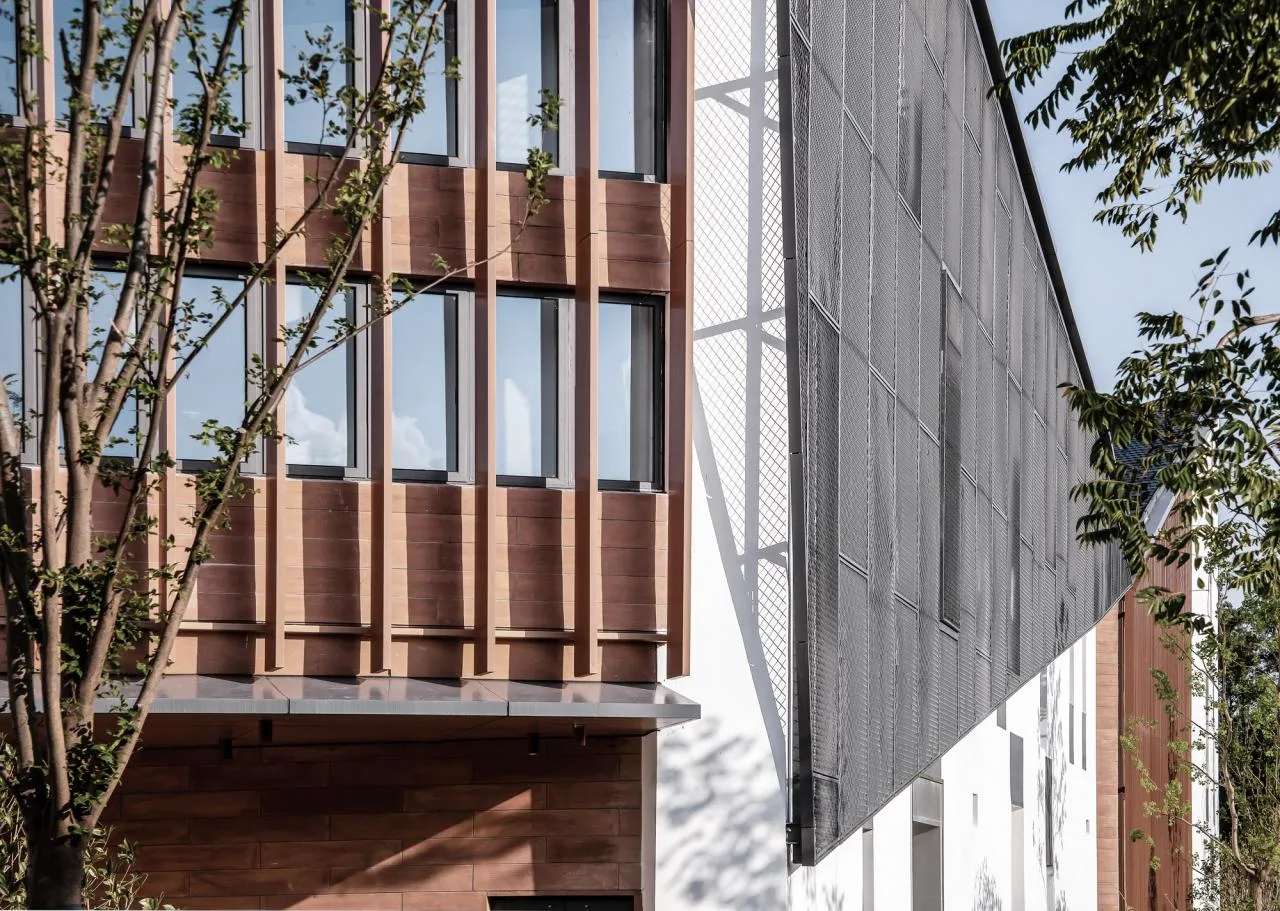
Our design strategy embraces coexistence with nature, staying true to the “spirit of place.” Material colors are carefully controlled, focusing on wood, dark gray, and white tones. Dark gray metal aluminum mesh on the lakeside echoes the folded roof’s form and serves as a support for climbing vines, allowing the building to grow organically with its environment over time.
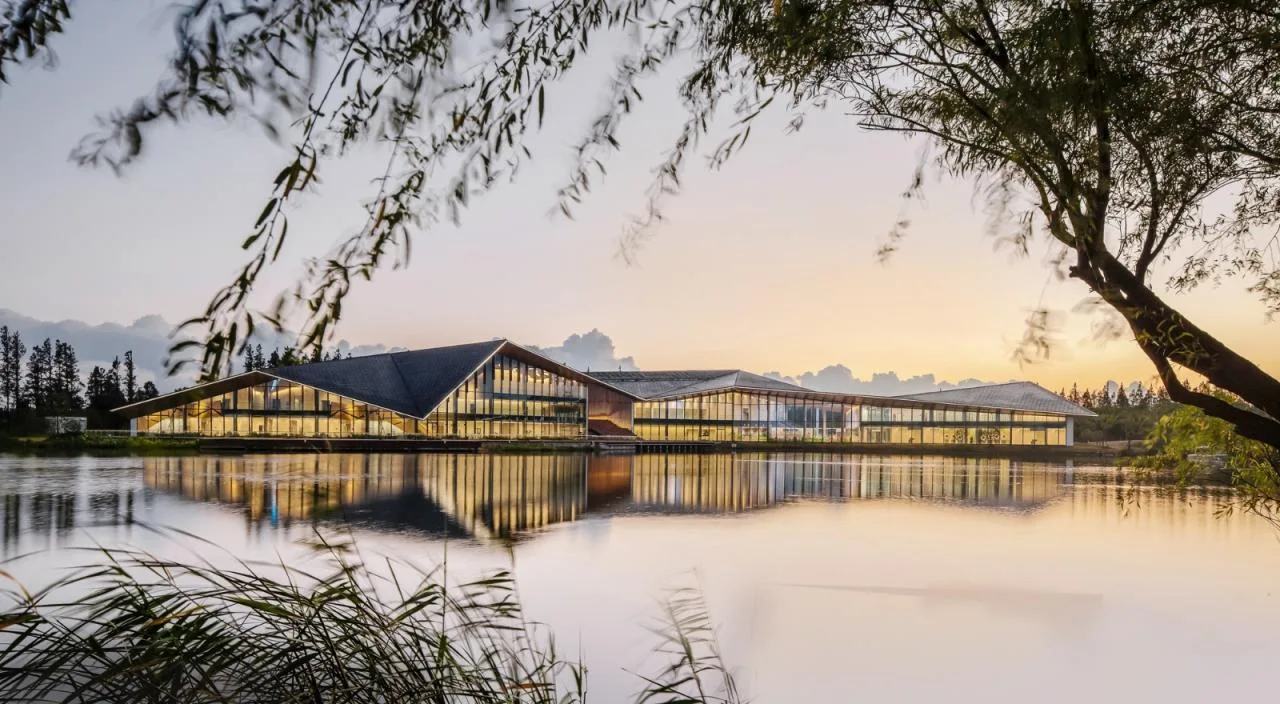
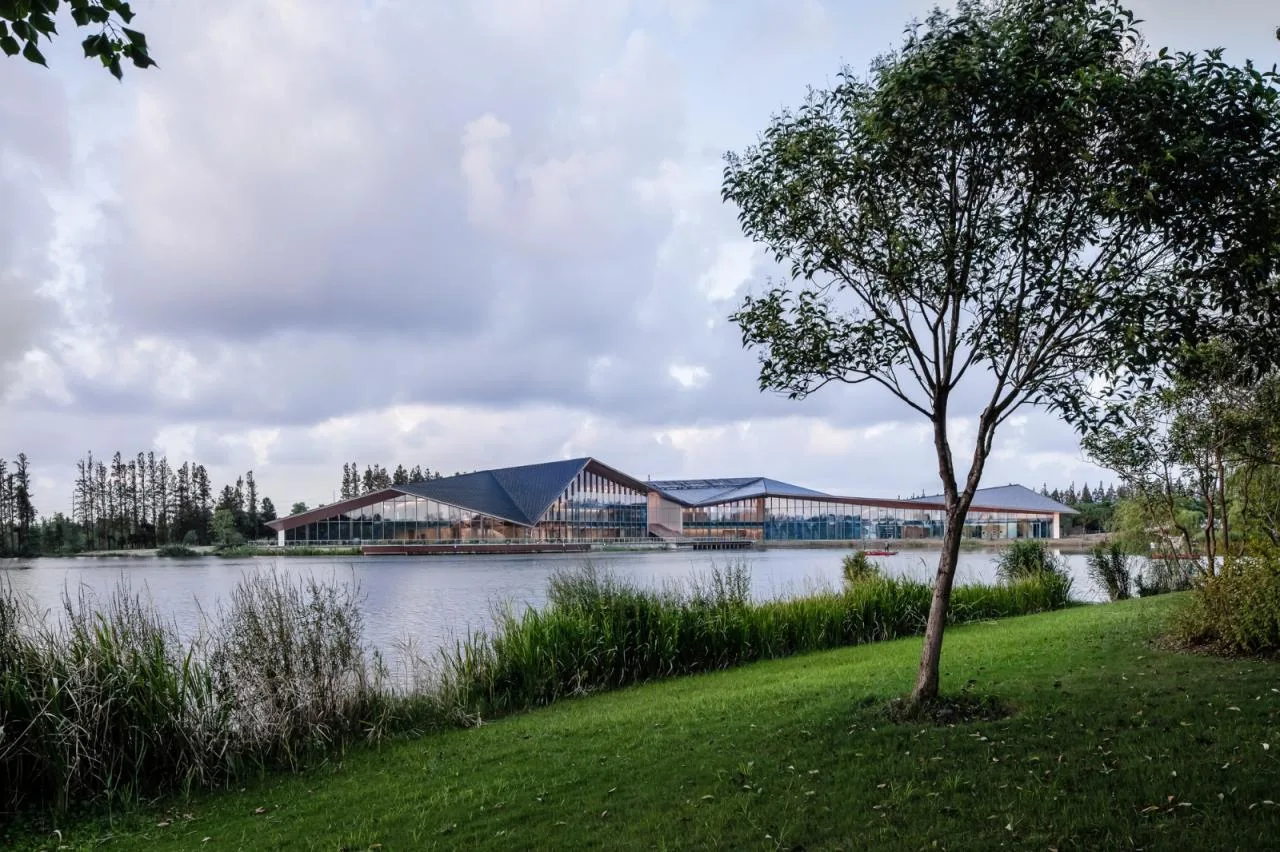
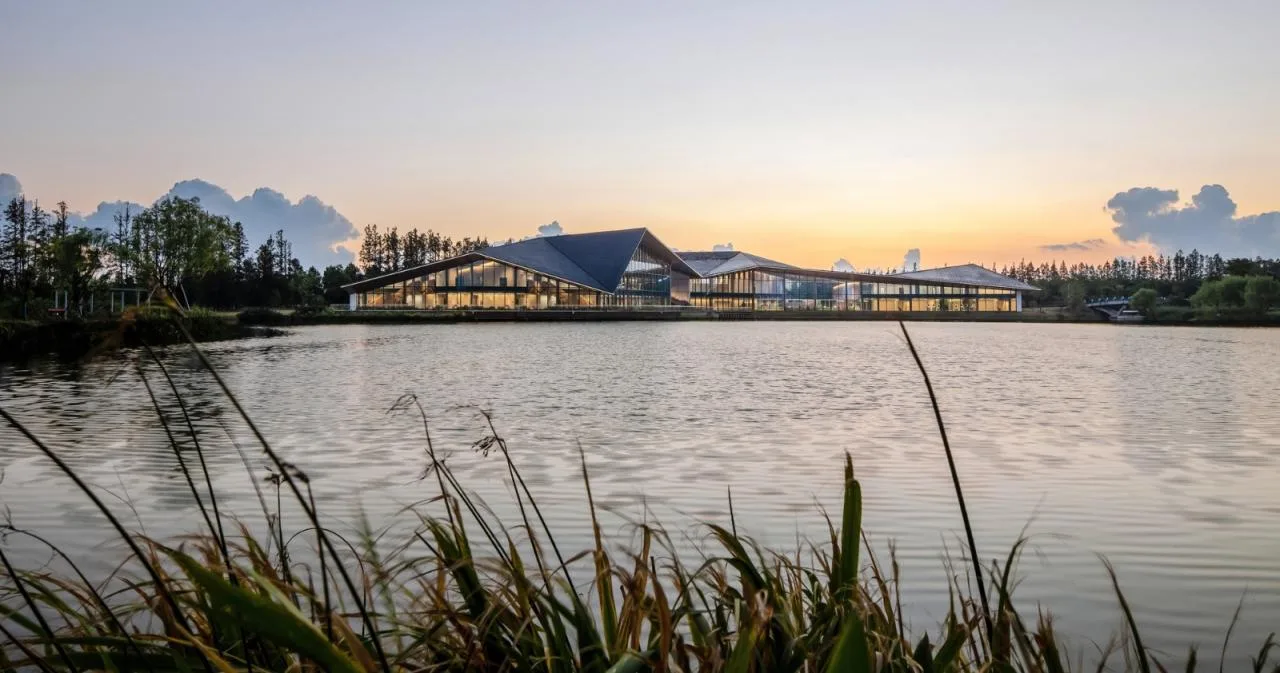
Committed to sustainable development, the visitor center features a 3,500 square meter roof equipped with photovoltaic tiles—the largest known building roof area using this technology. These ceramic-style, dark gray, triple-curved photovoltaic tiles (Hanwa) have an installed capacity of approximately 317.6 kW. Based on local solar exposure and efficiency analysis, the first year’s power generation is estimated at 300,000 kWh, with an average annual output of 250,000 kWh over 30 years, totaling around 7.5 million kWh. The generated power supports both onsite use and grid supply, providing economic benefits. This project served as a sub-venue for the 2021 Flower Expo and stands as a showcase for new energy applications.
Project Drawings
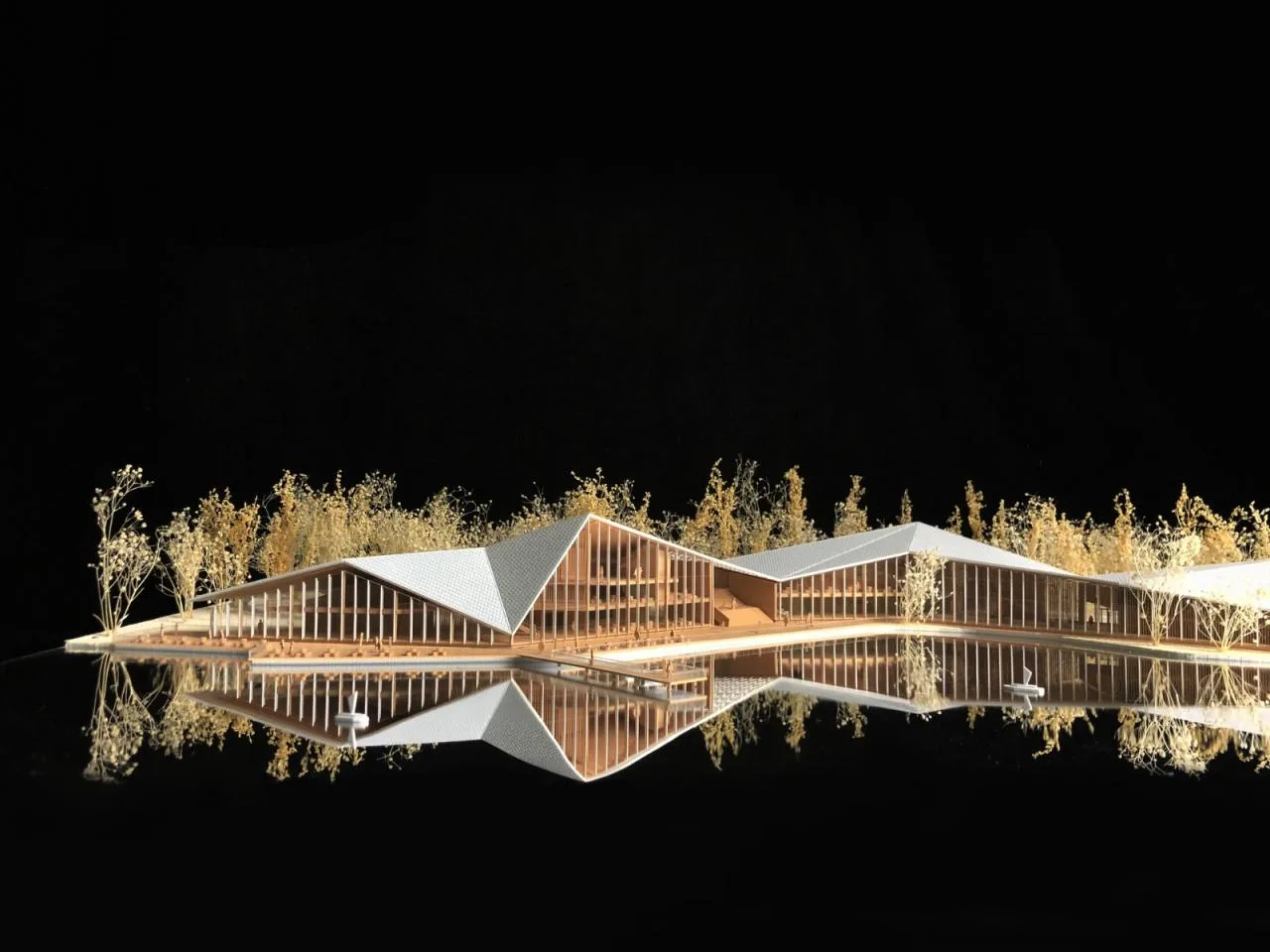
△ Model Diagram
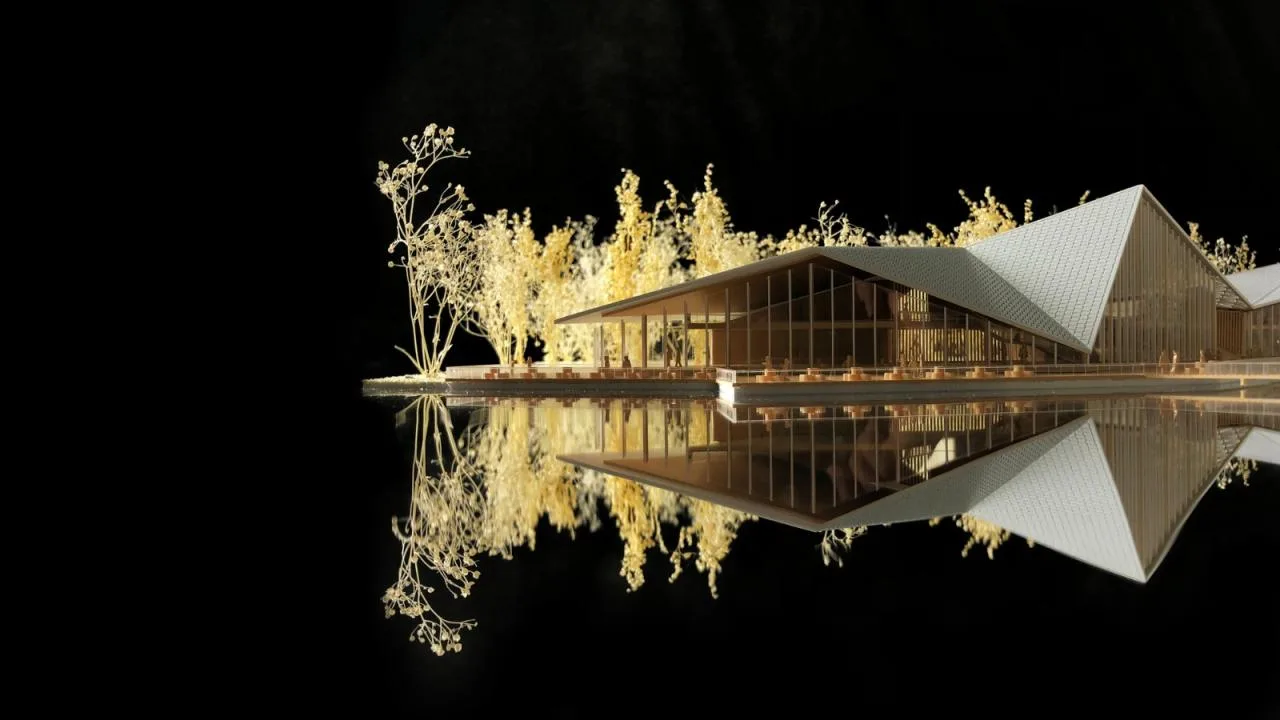
△ Model Diagram
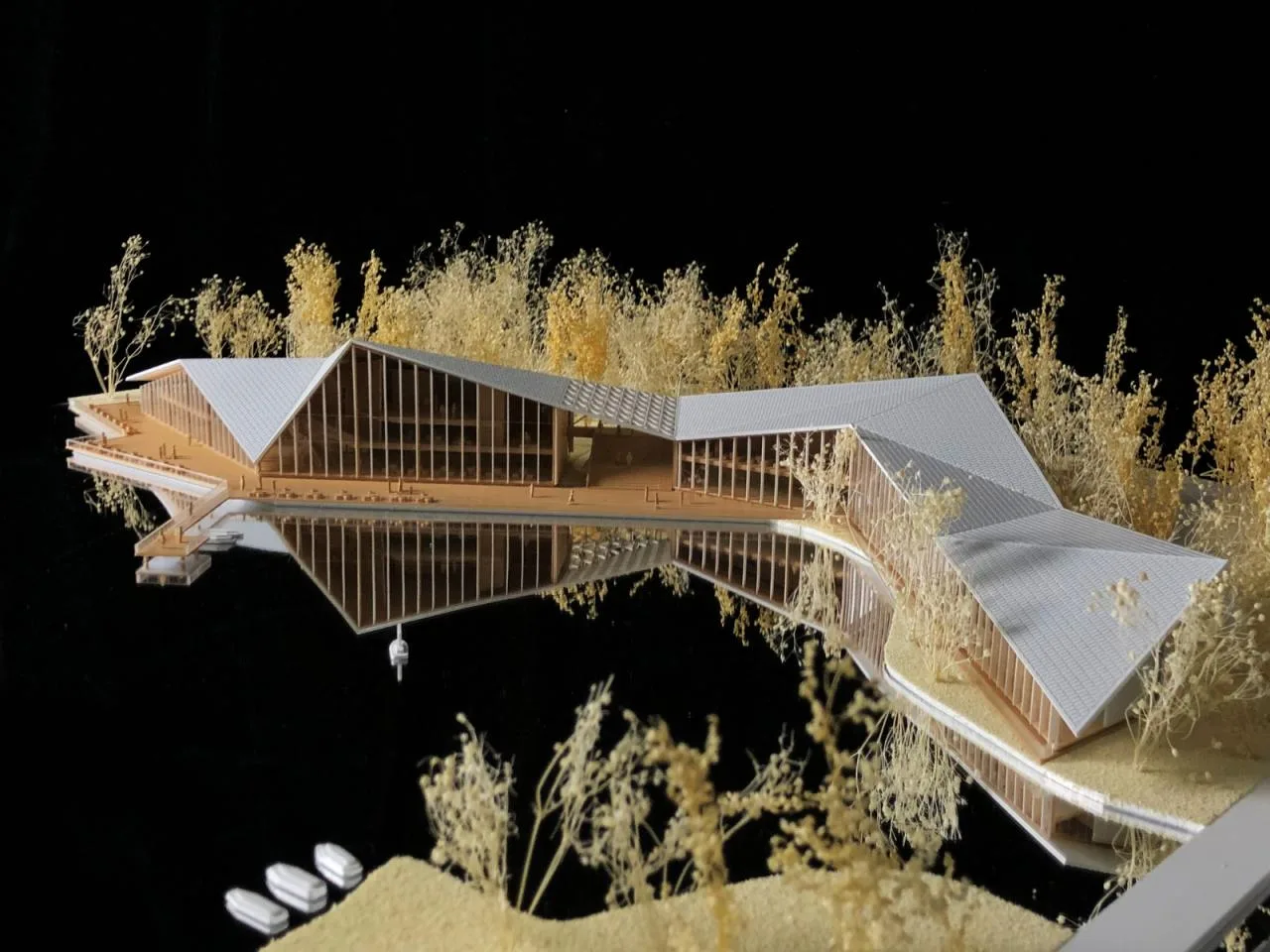
△ Model Diagram
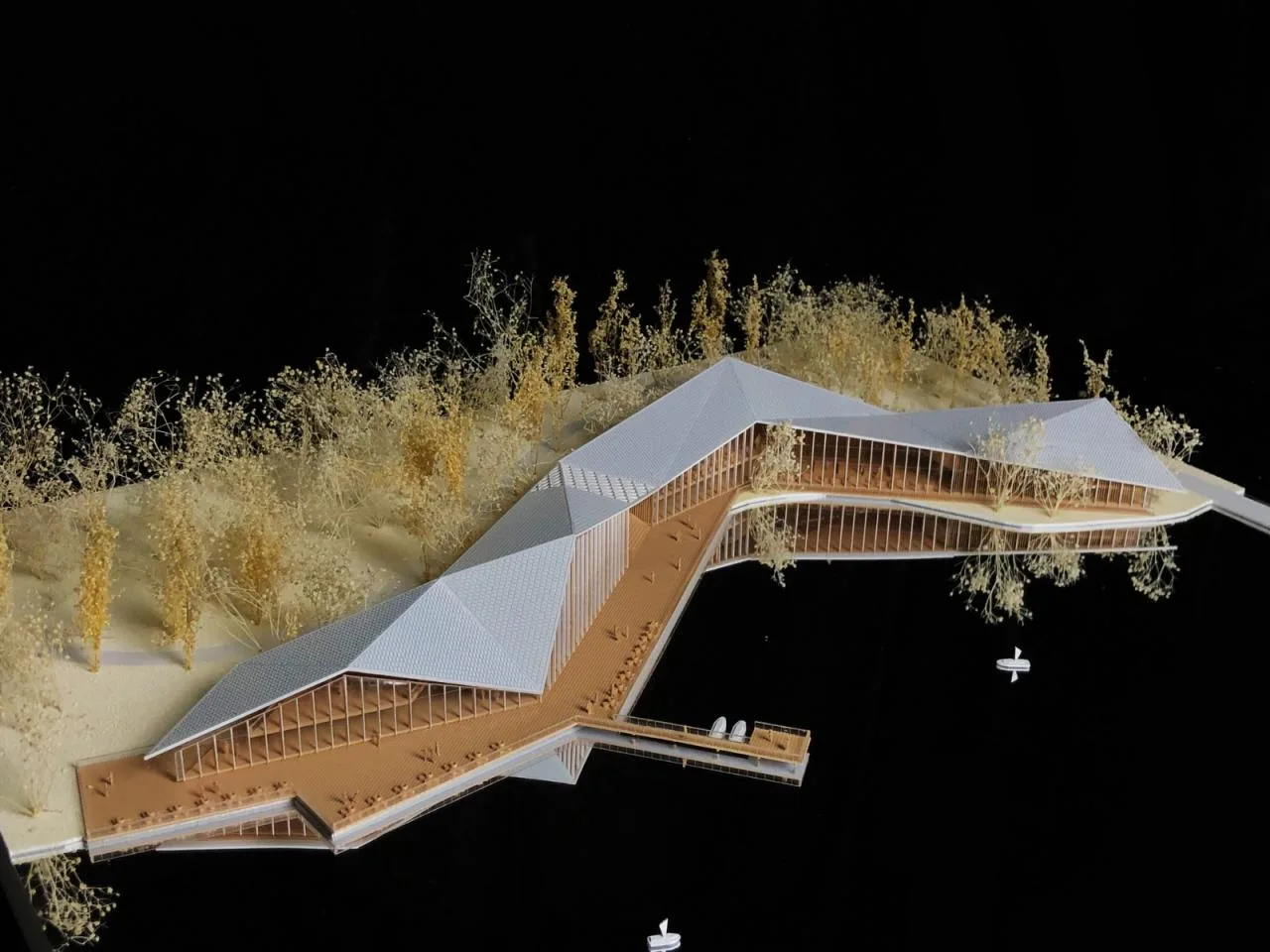
△ Model Diagram
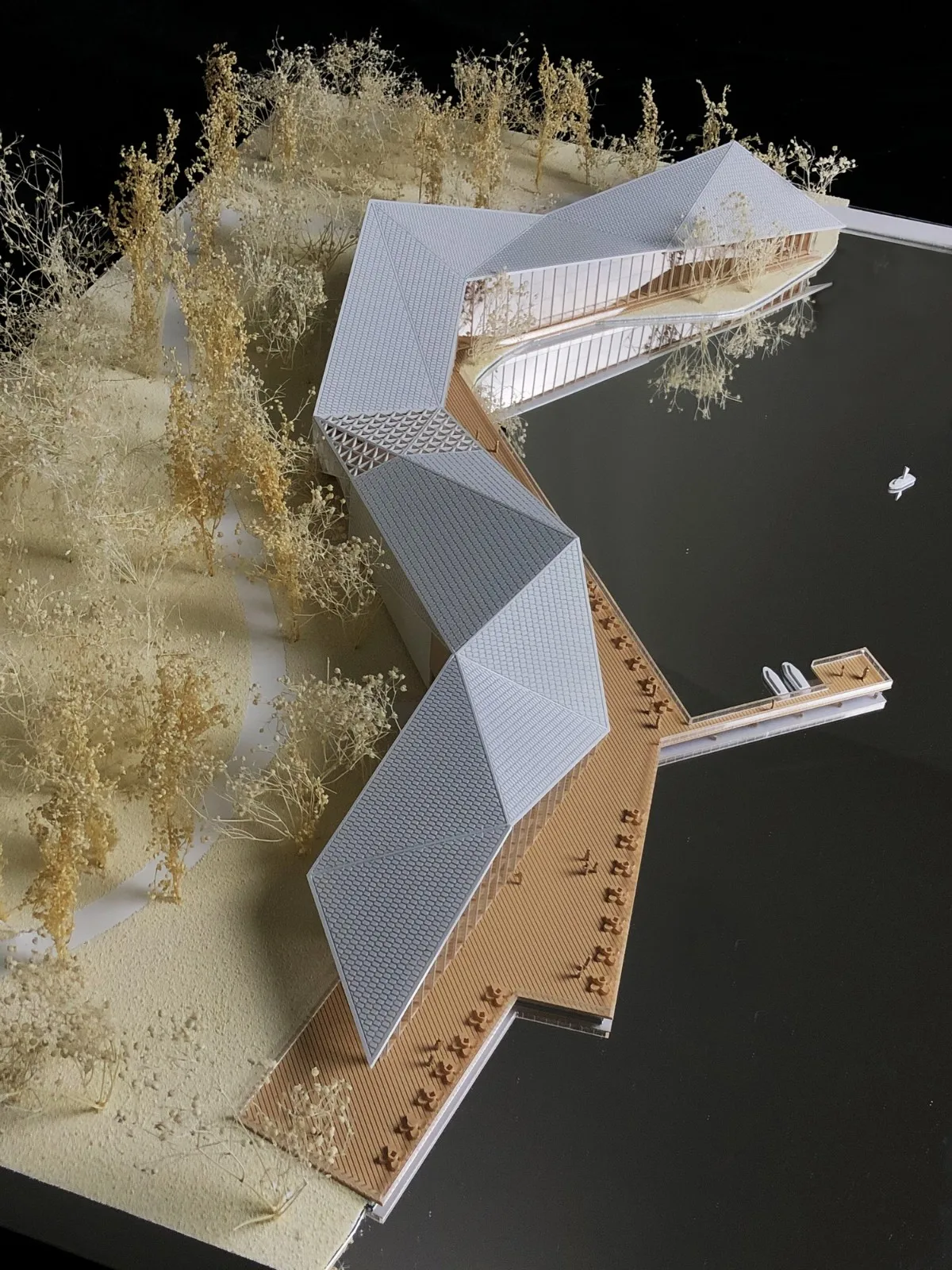
△ Model Diagram
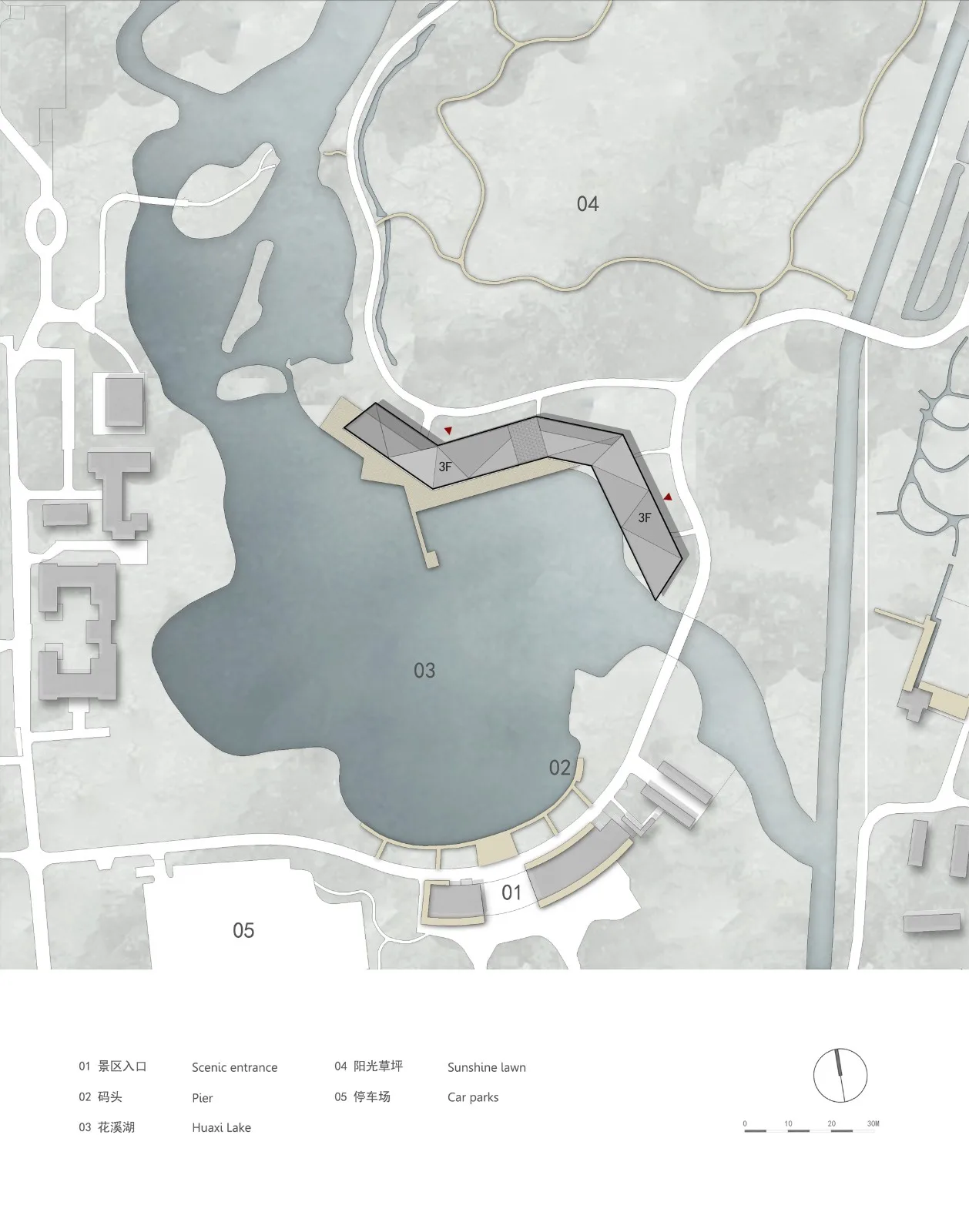
△ General Layout Plan
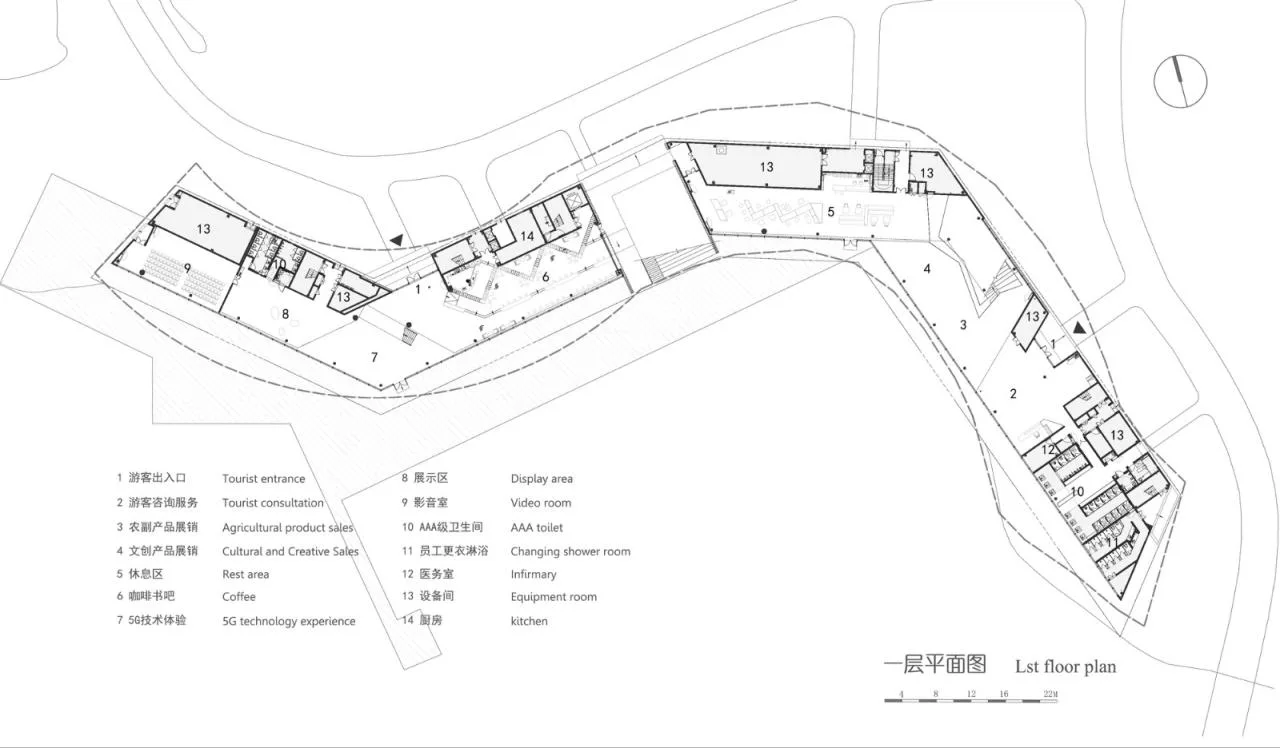
△ First Floor Plan
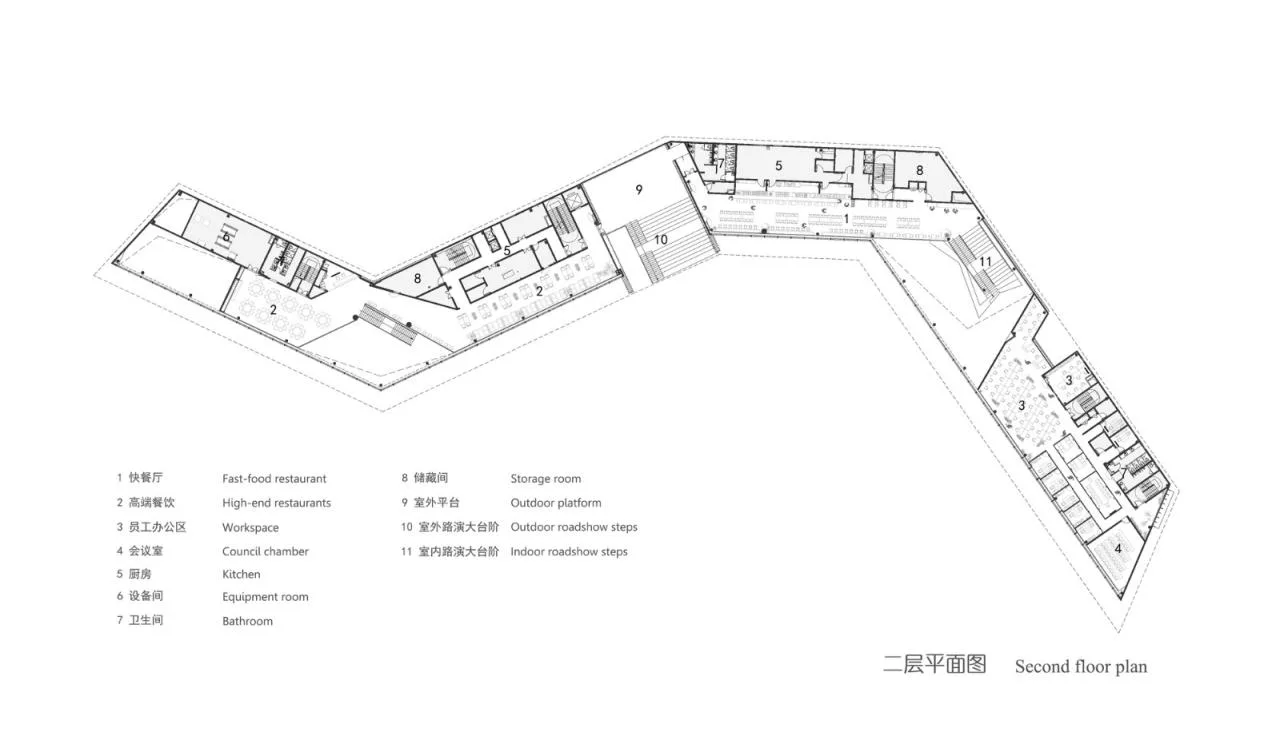
△ Second Floor Plan
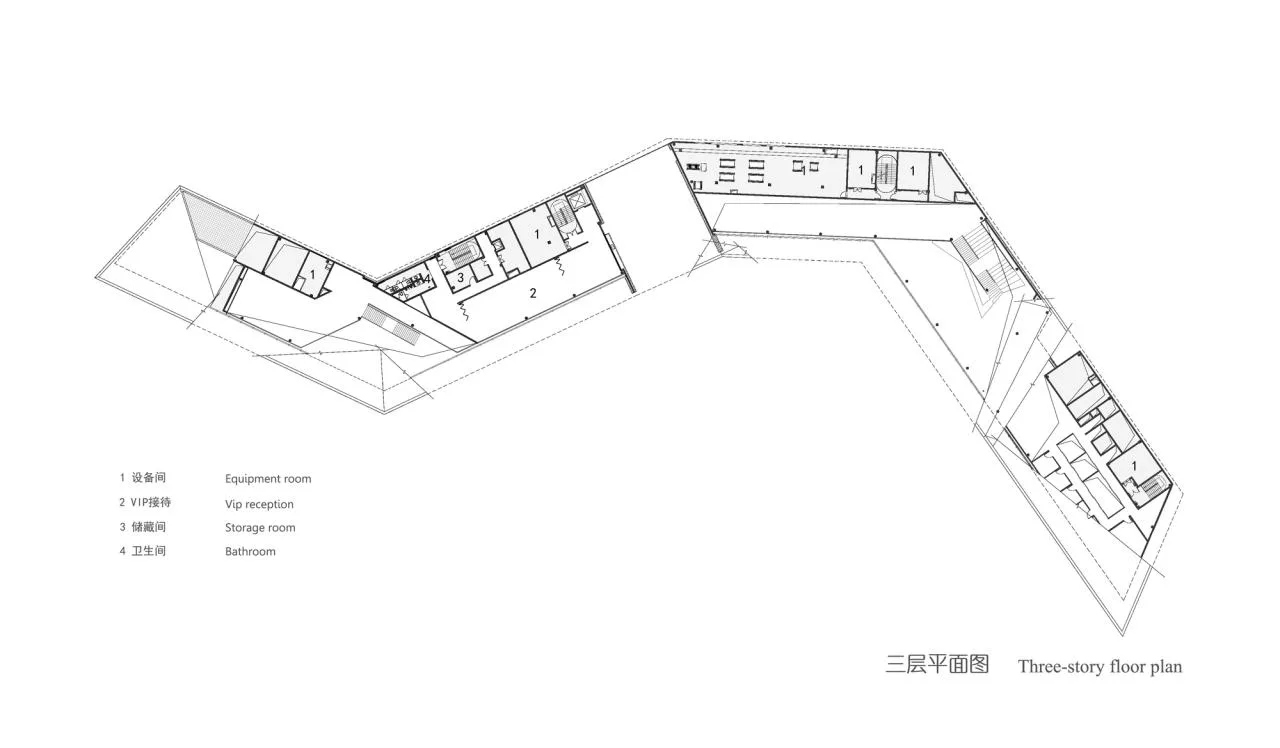
△ Third Floor Plan
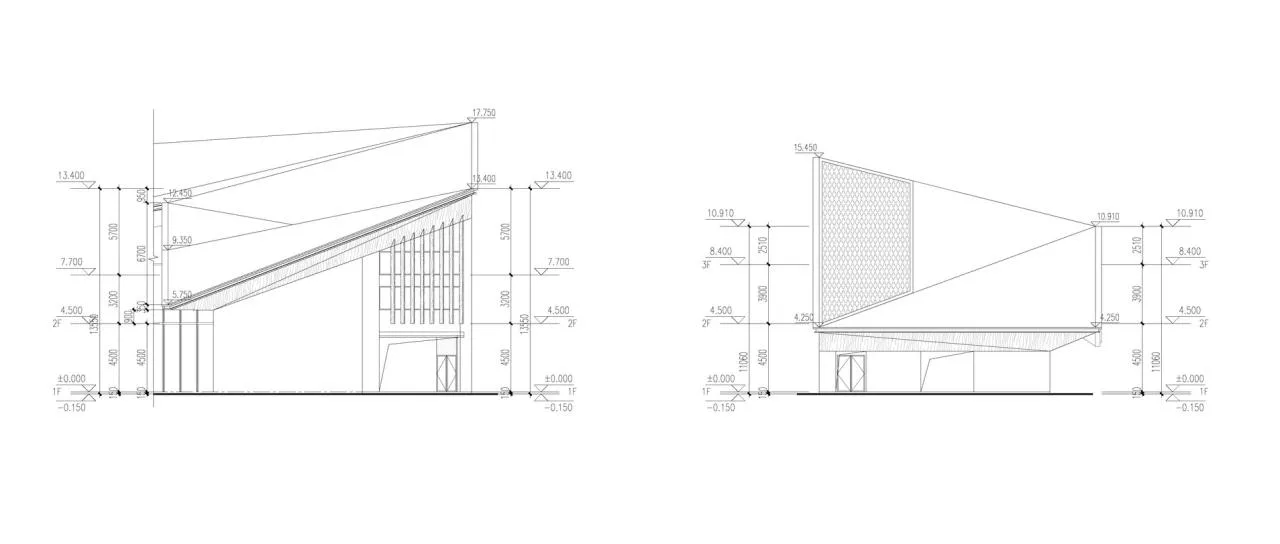
△ Elevation Drawing
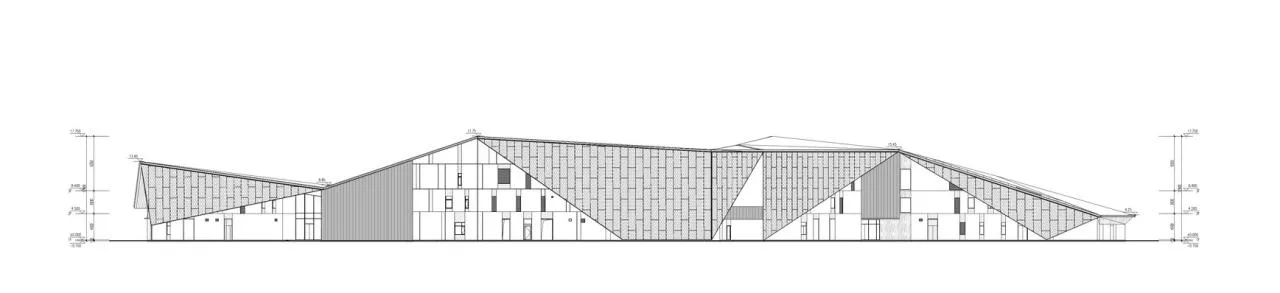
△ Elevation Drawing
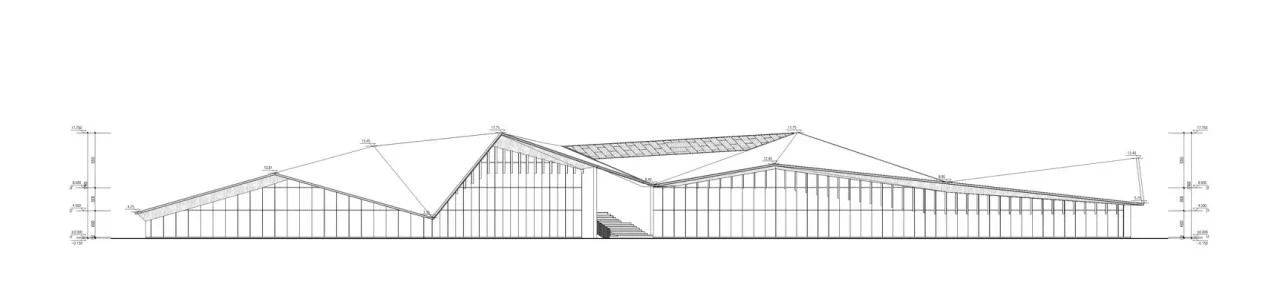
△ Elevation Drawing
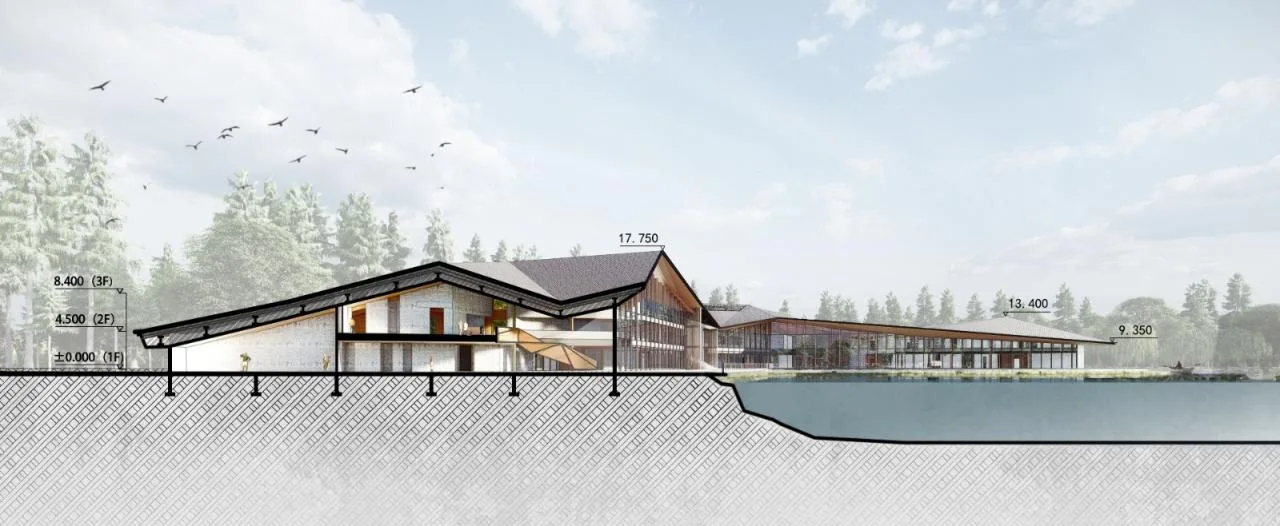
△ Sectional Perspective
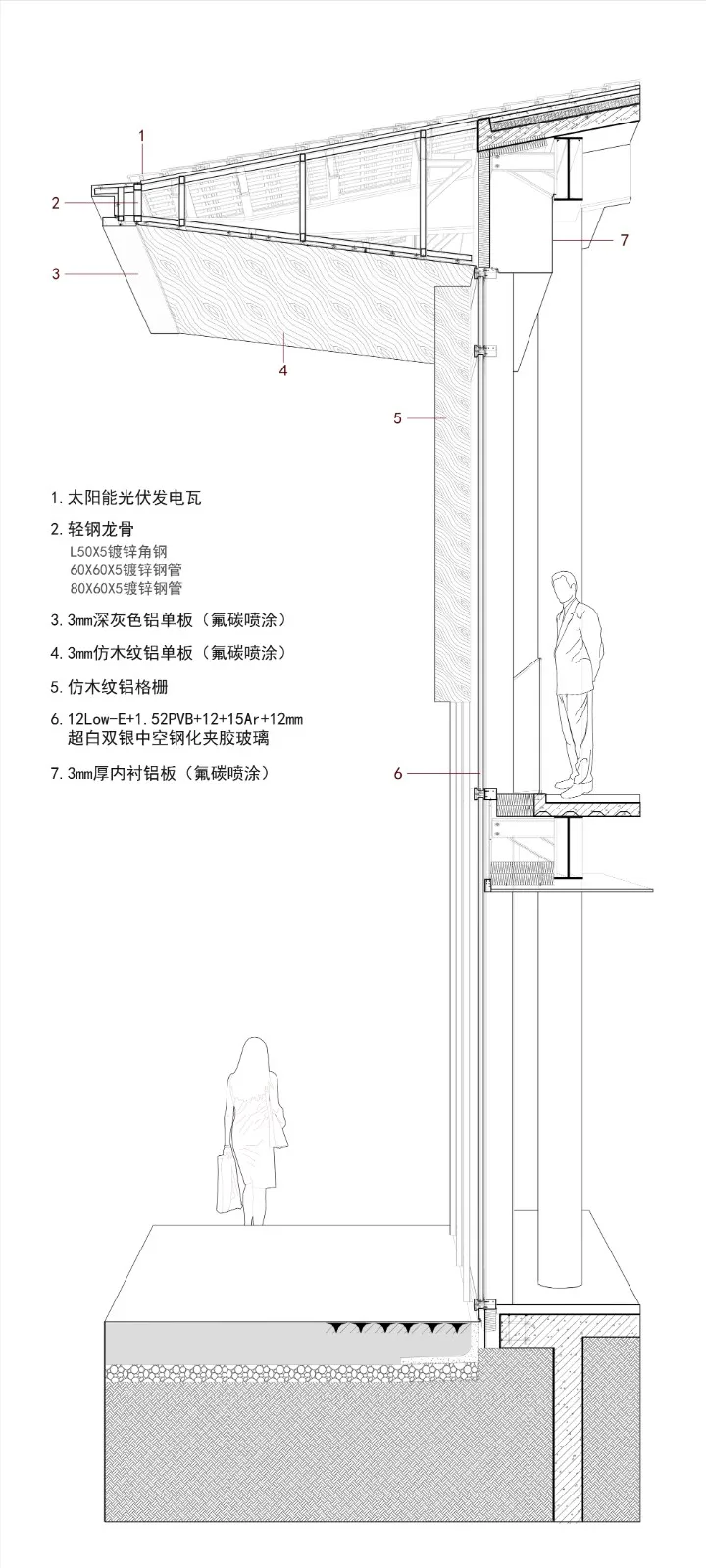
△ Detailed Drawing
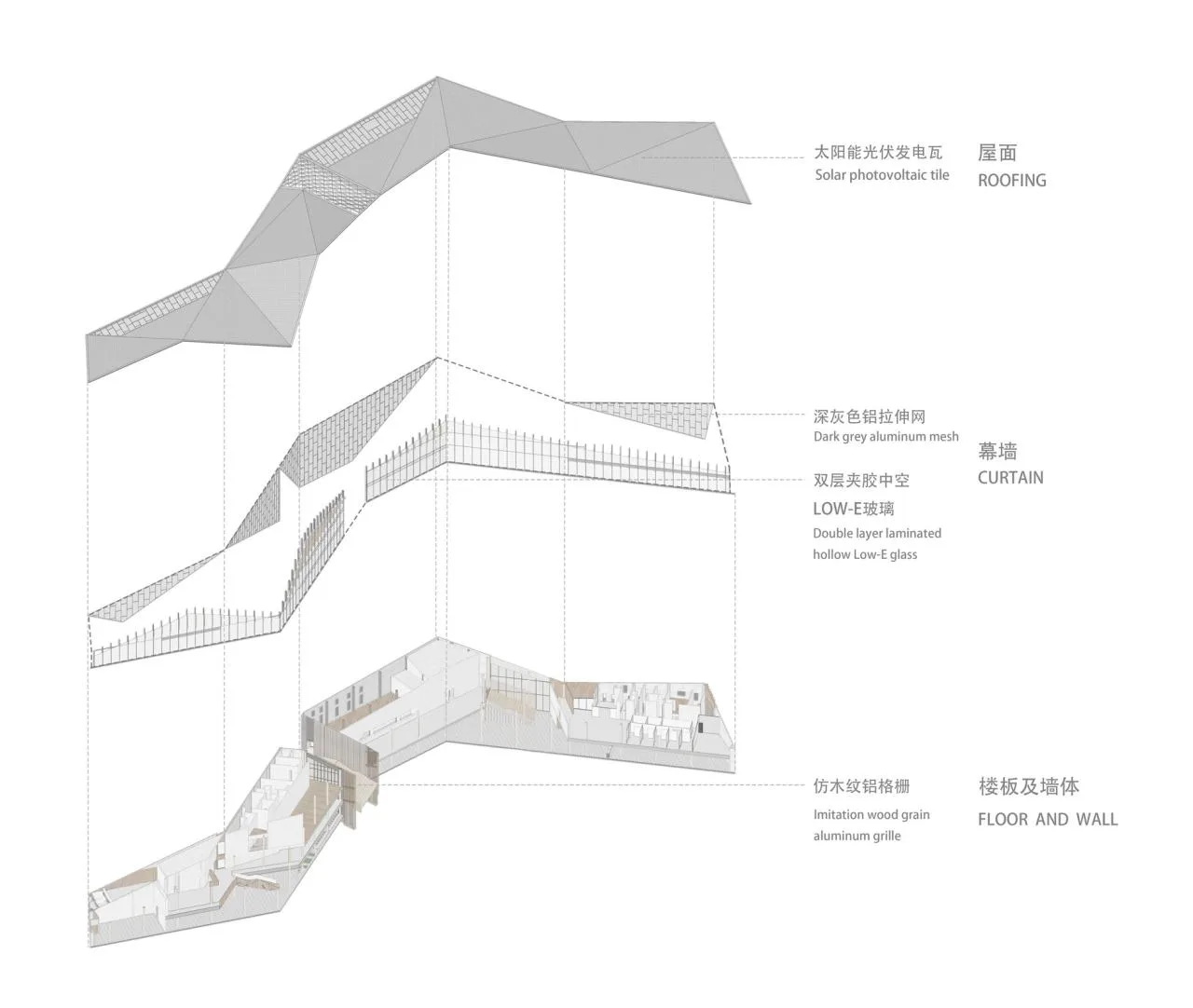
△ Construction Exploded Diagram
Project Information
Architectural Design: Mikawa Studio, Mizuki Design
Area: 6,030 m²
Year: 2021
Photographers: Hu Yijie, Summer Solstice
Manufacturers: Sanshiwu Metal Technology (Shanghai) Co., Ltd., Shanghai Guyuanren New Materials Co., Ltd., Shanghai Qiya Construction Technology Co., Ltd.
Lead Architects: Xie Jian, Xu Jinwei
Team Members: Wang Youwen, Li Wenzhang, Hu Bo, Wang Meng, Cai Shangzhi, Zhang Kairui
Architectural Design Team: Li Bin, Xia Peng, Chen Xiaofeng, Li Xuan, Shi Jiale, Fu Zhoukai
Structural Design Team: Zhu Huajun, Du Xiawei, Cao Faheng, Chen Wei
Water Supply and Drainage Team: Zhang Kejie, Hu Di, Zhang Zhinan
Electrical Design Team: Gu Rongrong, Zheng Yao, Xu Mengqian, Fan Linmin
HVAC Design Team: Lin Xingchun, Yin Jin, Cui Jun, Zhang Xiaohan
Logo Design Team: Chen Hewen, Liao Qiang, Zhang Hui
Interior Design Team: Xu Xujun, Cui Qiangsong, Zhang Xudong, Qi Shiyuan, Ji Jie, Shen Yun, Yang Yuqing
Lighting Design: Pang Lei, Zheng Jiahao
Project Photography: Hu Yijie, Summer Solstice, Zhu Runzi
Article Writing: Xie Jian, Xu Xunjun
Owner: Shanghai Qianwei Industrial Co., Ltd.
Architectural Scheme Design: Mikawa Studio
Construction Drawing Design: Water Stone Engineering, Water Stone Technology Research and Development Center
Logo Design: Urban Space Visual Design Studio
Interior Design: Mushroom Cloud Design Studio
Landscape Design: Shanghai Agricultural and Industrial Vanguard Horticulture Co., Ltd
Location: Shanghai, China














Must log in before commenting!
Sign Up