
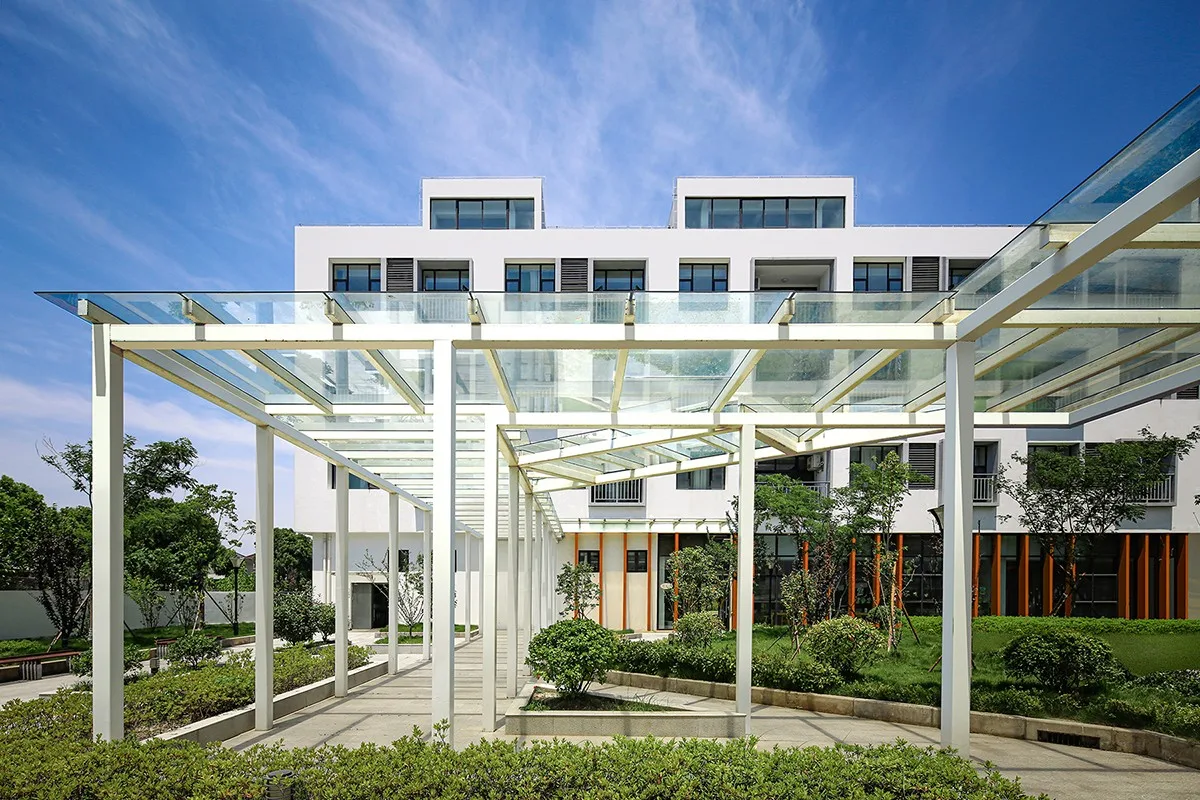
Project Overview
This nursing home project is grounded in a deep understanding of the elderly’s physical and psychological needs. It explores themes and aspirations for later life through flexible architectural design and innovative use of color.
Do seniors truly depend on routine and familiar habits, or is this a misconception held by younger generations with a sense of superiority? Is the choice to enter a nursing home driven by the elderly themselves, or by their children who arrange their later years, potentially disconnecting them from life’s passions and new experiences? Must physical care come at the cost of losing spiritual autonomy?
The design of this elderly care facility not only offers a peaceful refuge but also encourages seniors to embrace new experiences, celebrate life, and enjoy their golden years.
Project Description
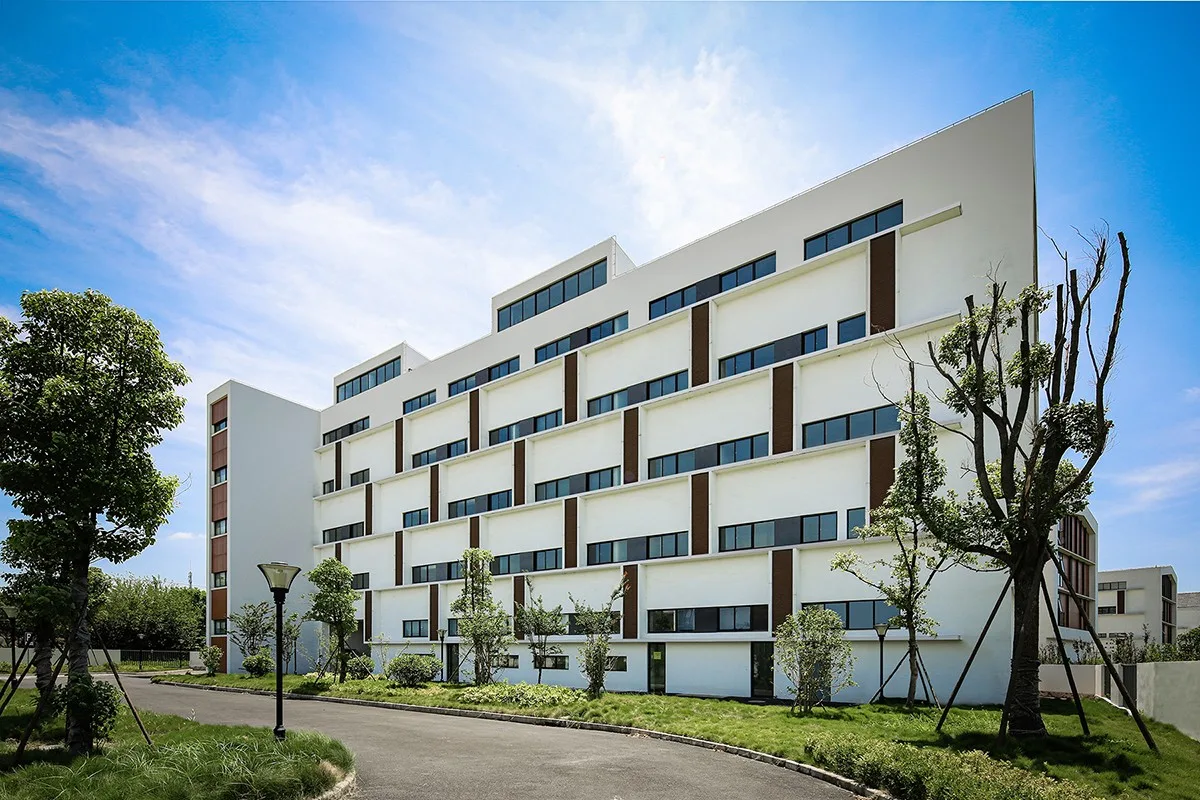
The Zhaoxiang Kangning Nursing Home architectural design comprises a complex tailored to meet the comprehensive needs of elderly care. It includes facilities such as living rooms, dining areas, activity and reading rooms, medical clinics, psychological counseling centers, and fitness spaces.
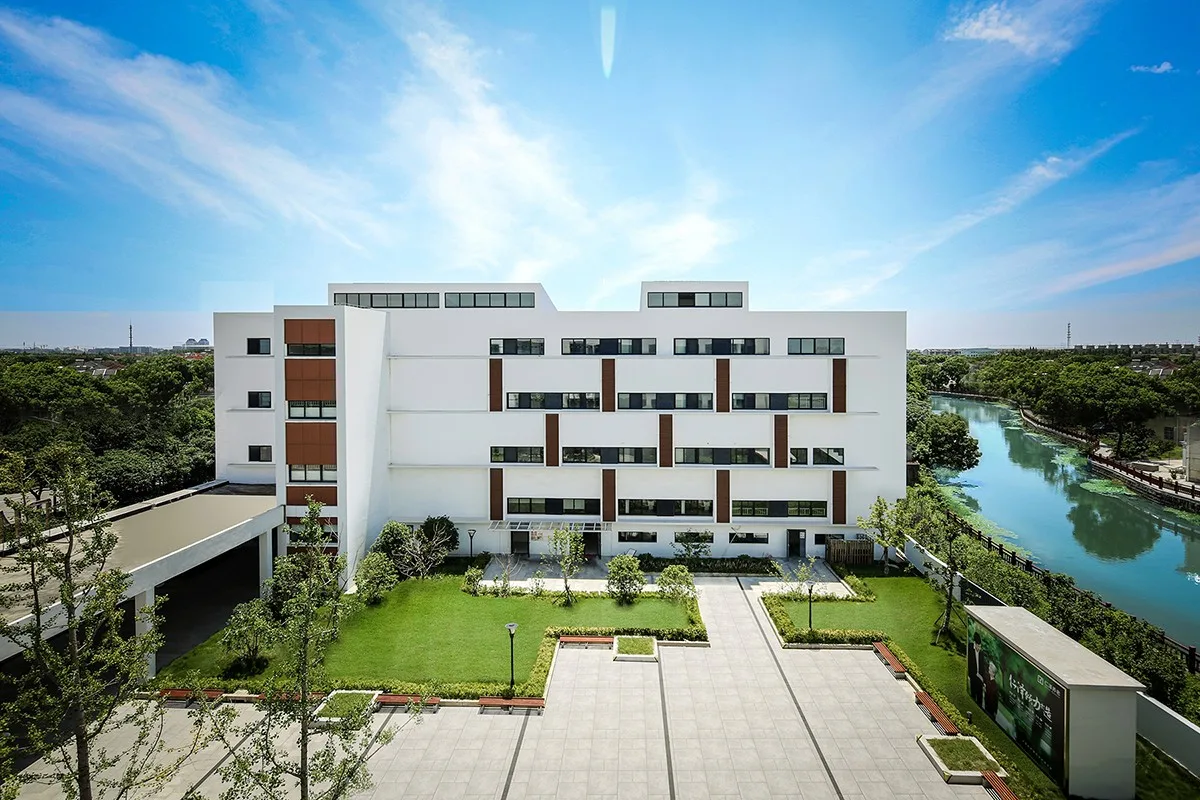
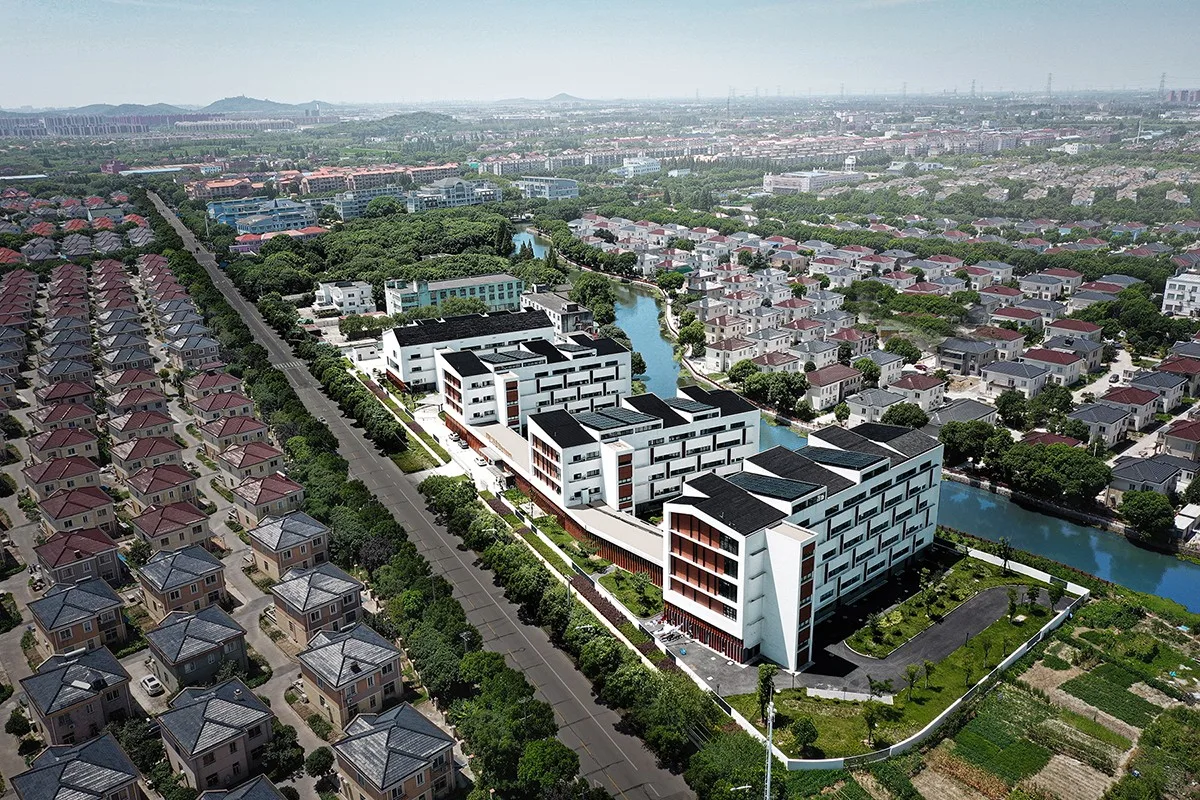
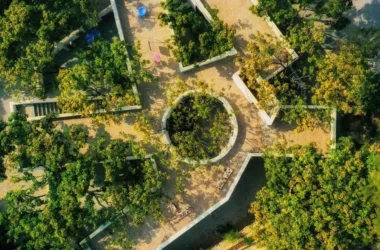
The layout features a central Sanyang Center, a day care building, and three residential buildings arranged south to north. These structures are connected by an open corridor along the eastern side, creating an inner courtyard interlaced with open walkways.
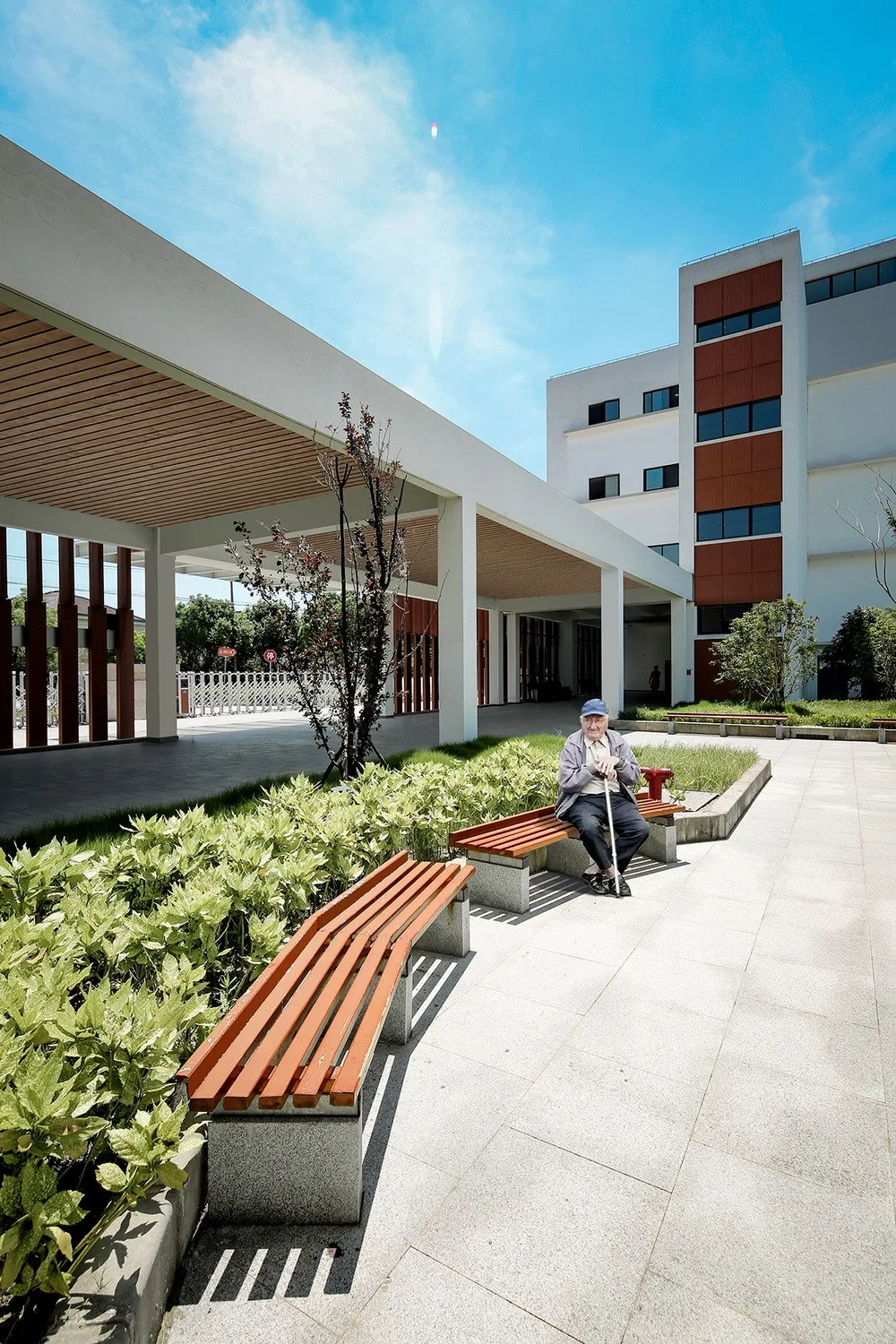
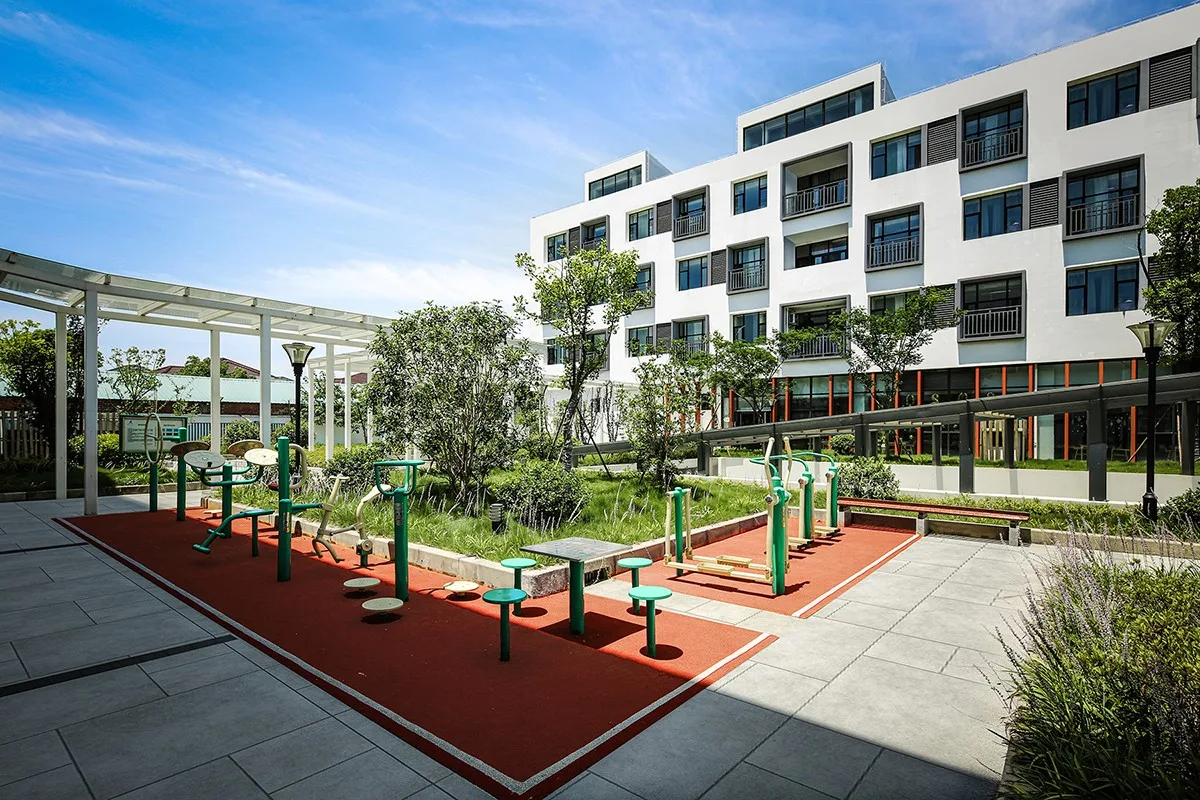
The entire project covers 13,003 square meters of land with a total built area of 17,107.19 square meters, including 13,510.69 square meters above ground and 3,596.50 square meters underground, with a floor area ratio of 1.039.
Located in Zhaoxiang Town, Qingpu District, Shanghai, the site enjoys a quiet, elegant environment with favorable terrain. Roads border the north and south sides, providing convenient access and a healthy setting ideal for elderly care.
Design Highlights
Sense of Order and Security
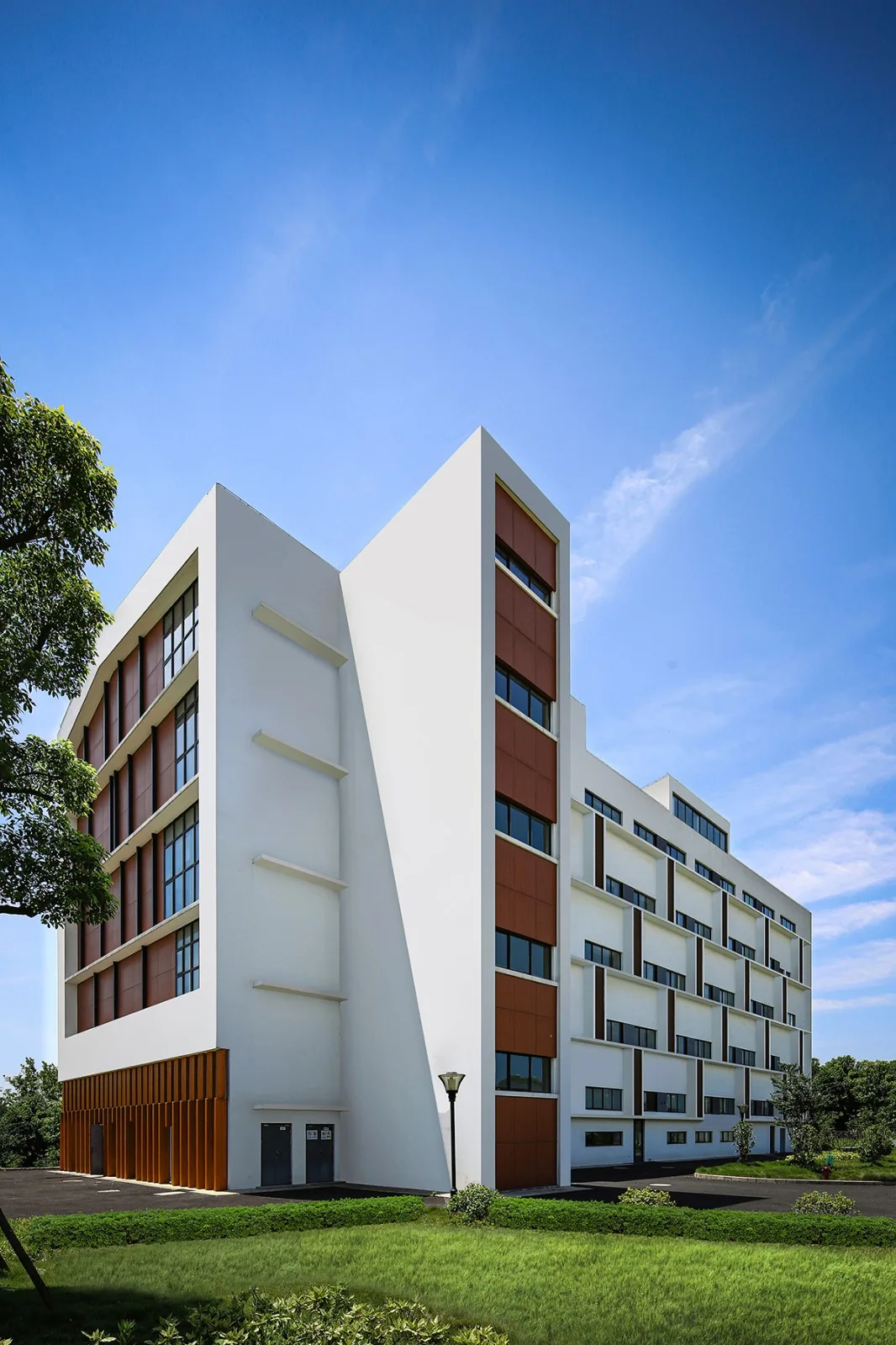
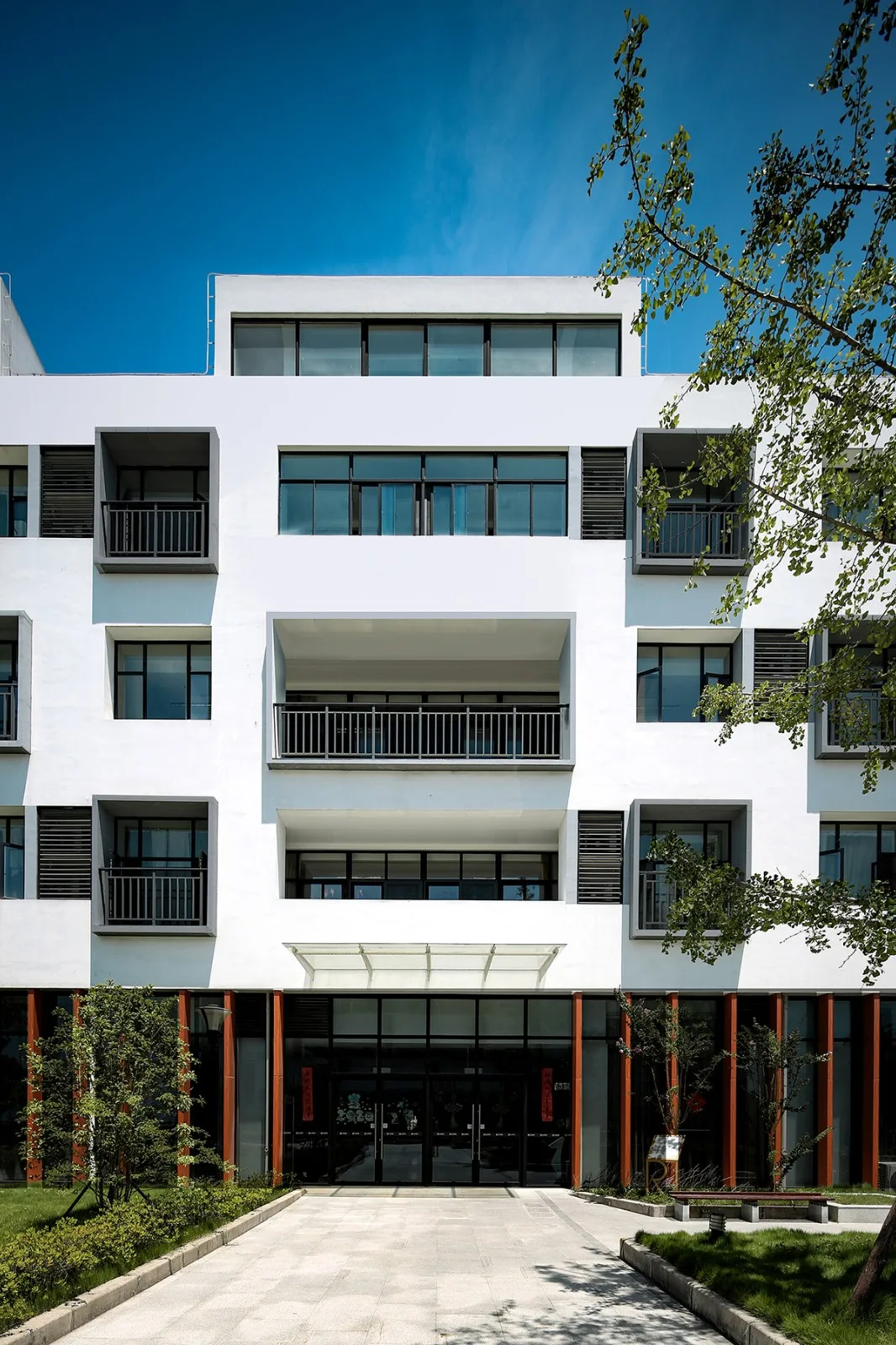
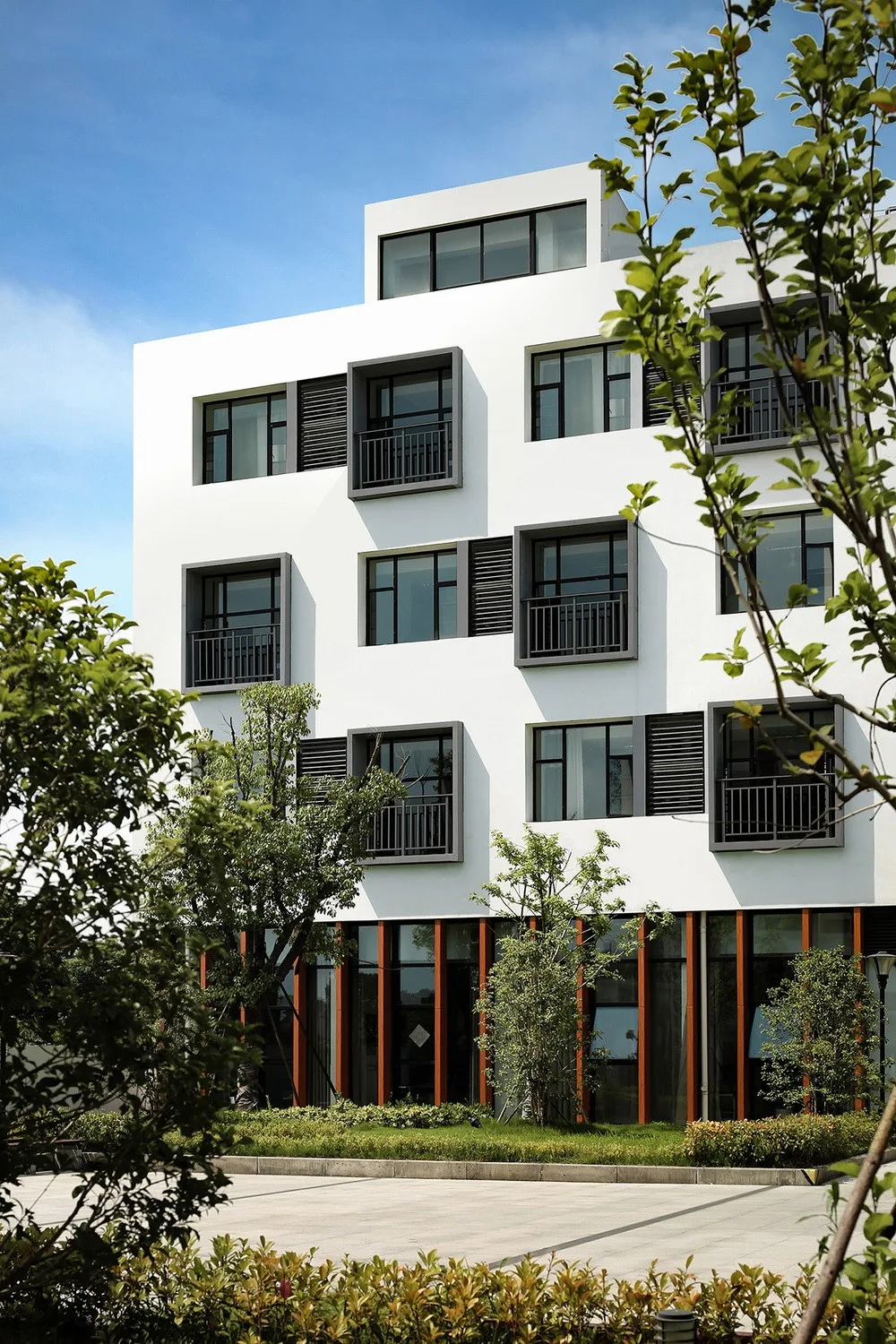
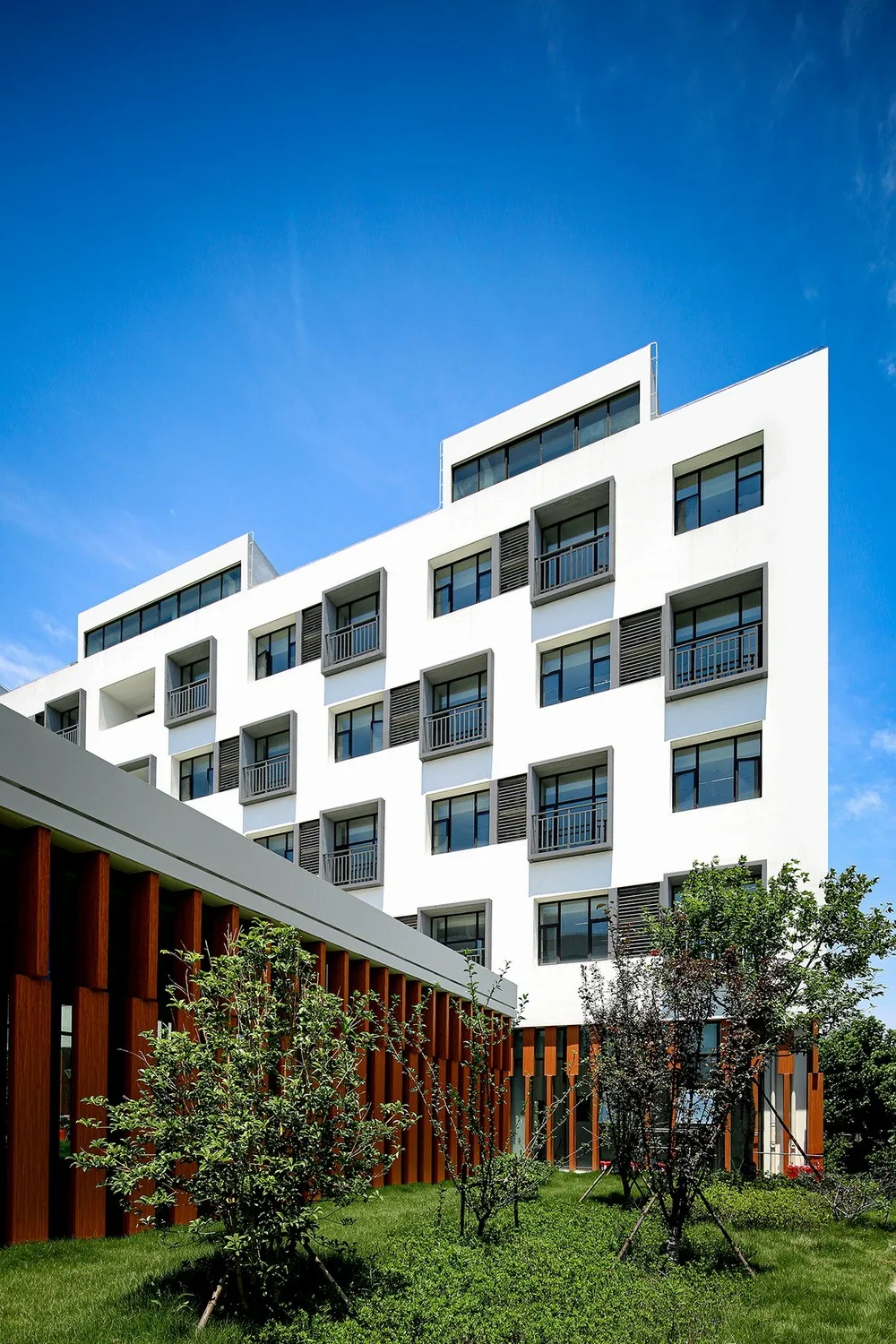
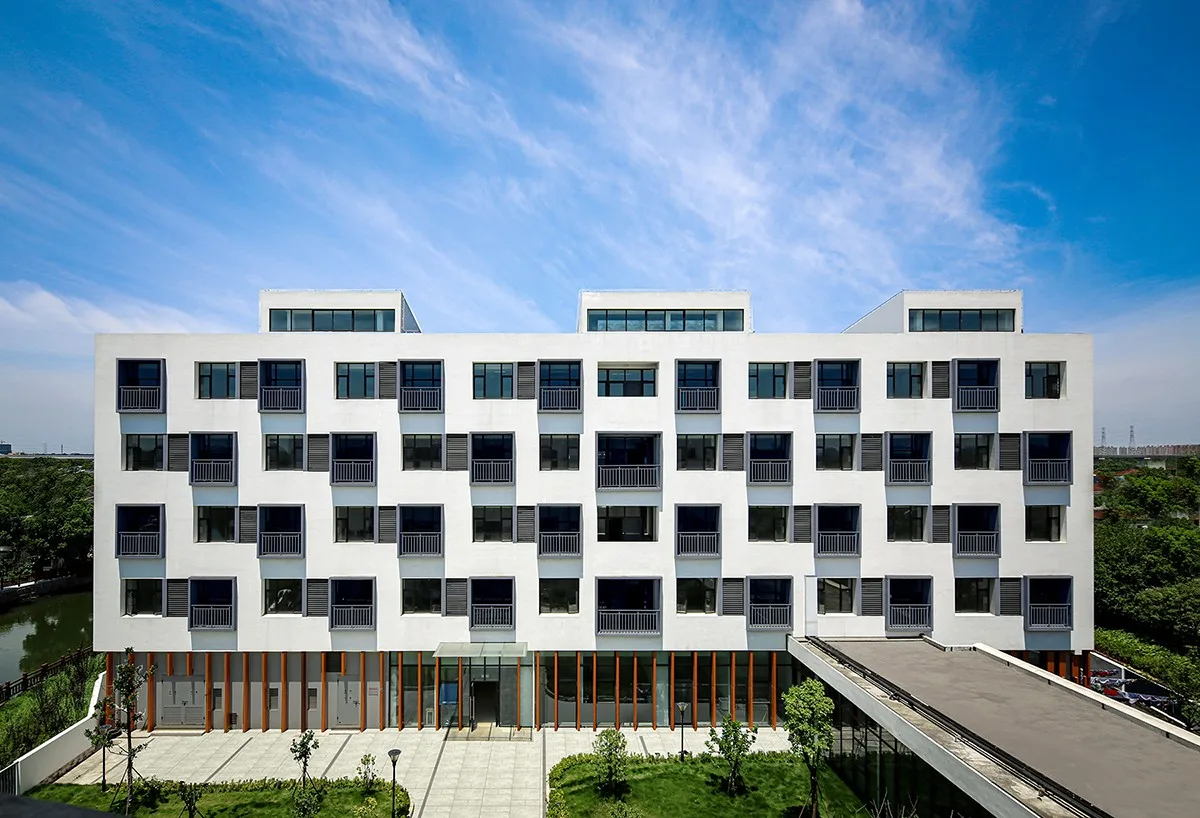
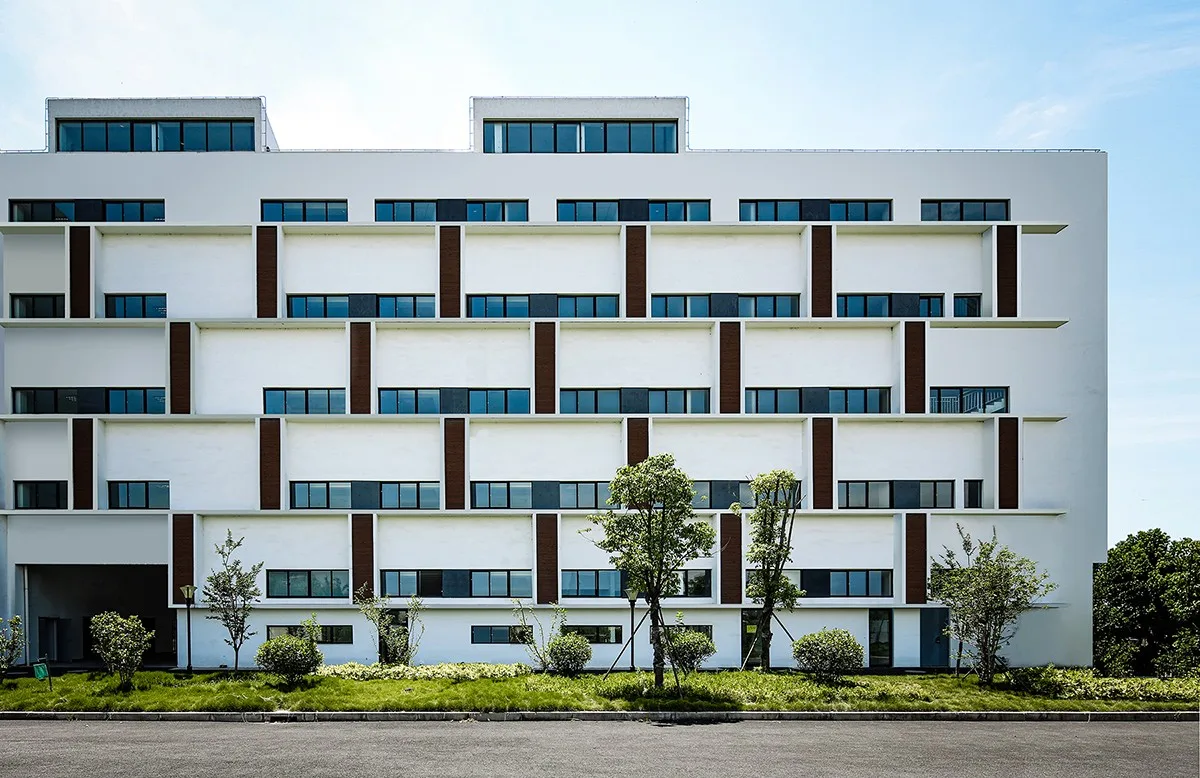
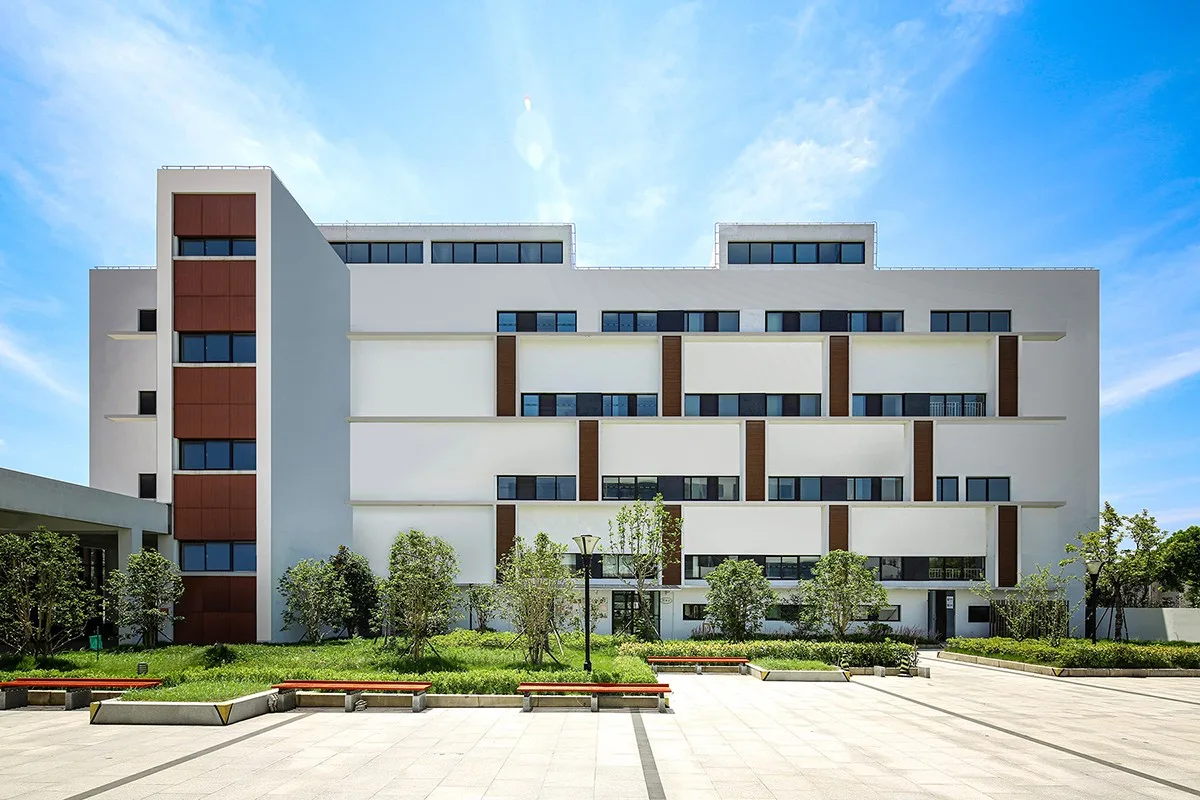
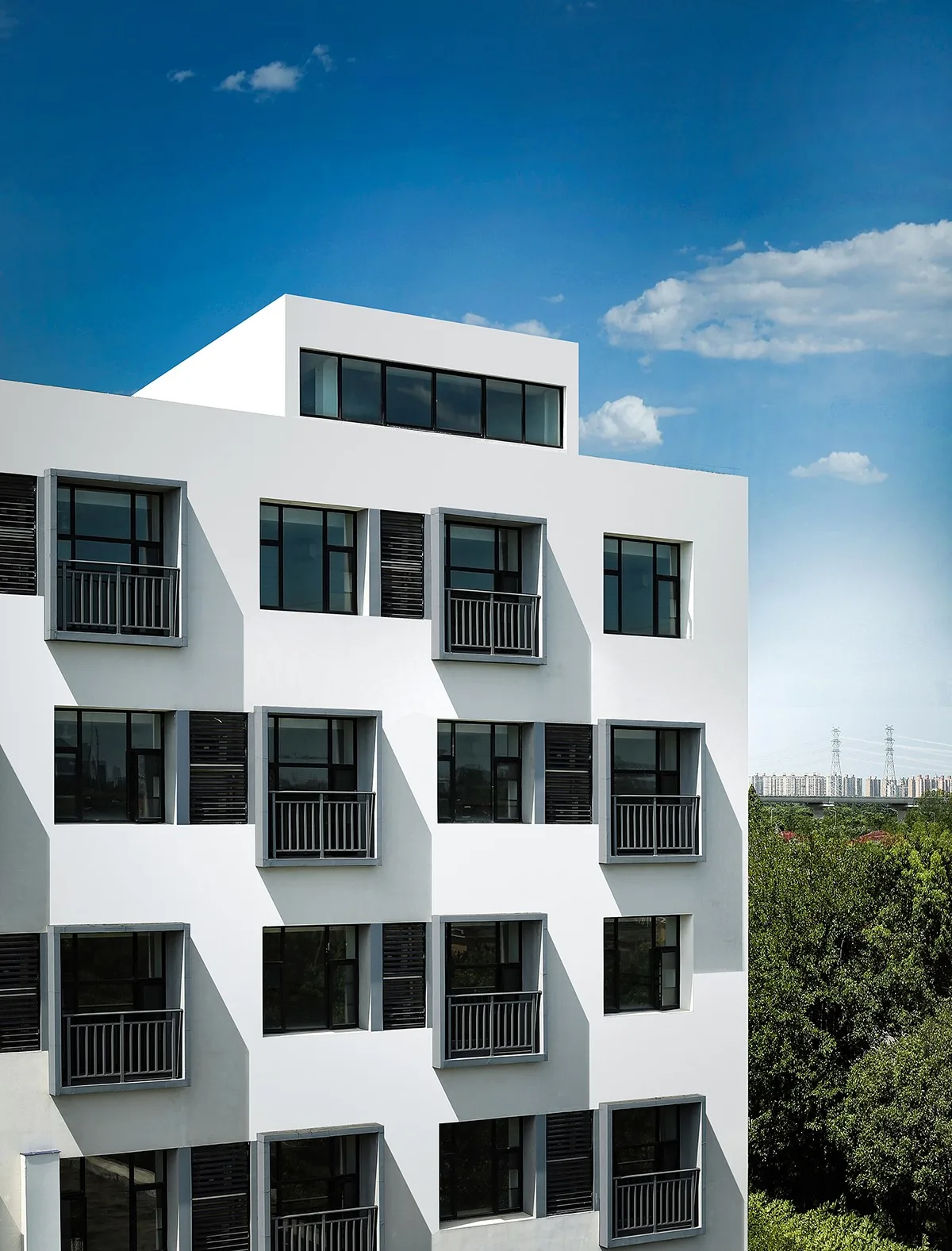
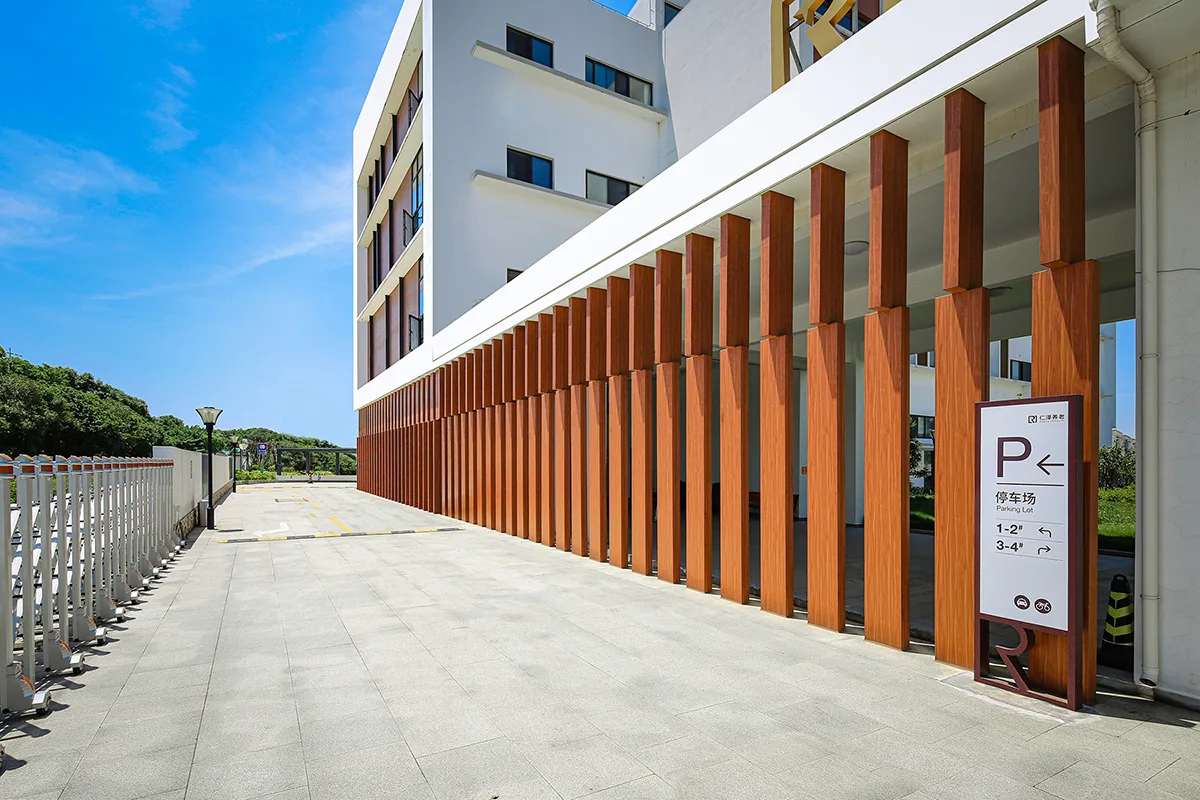
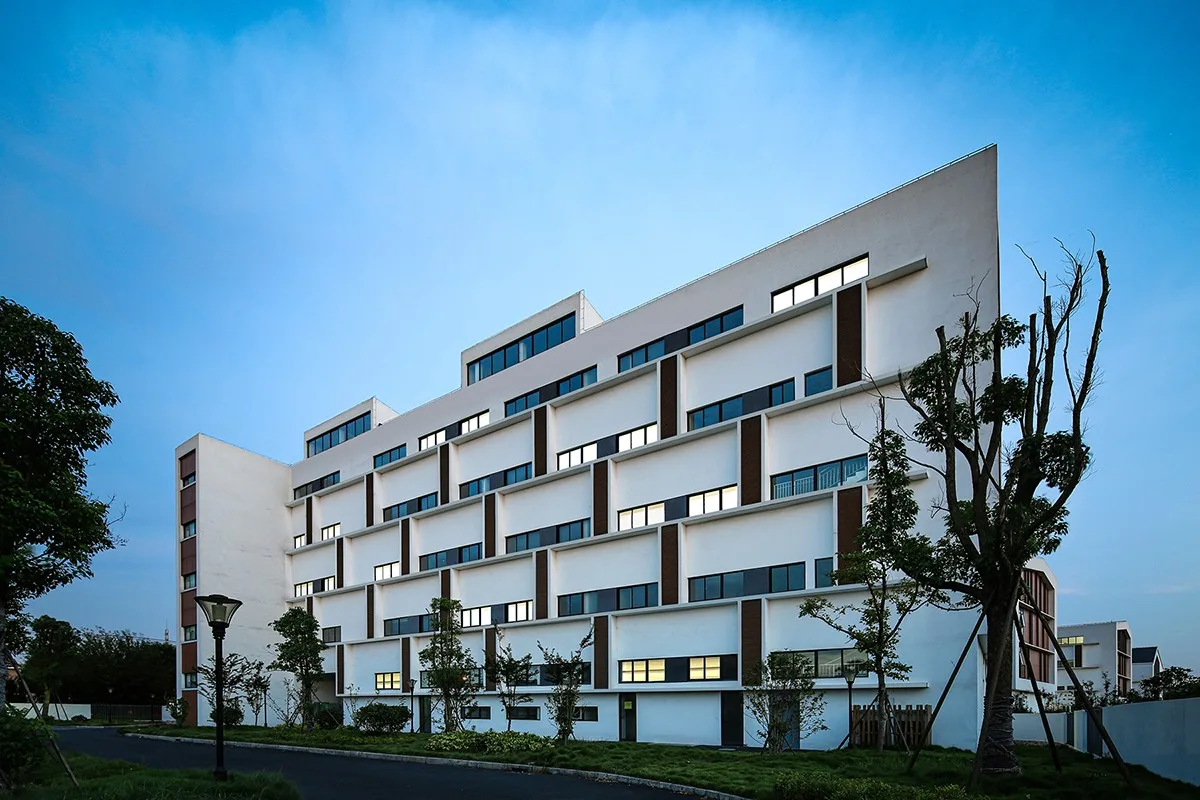
The building facade and decorative elements are arranged in a regular pattern to create a stable sense of order. This design not only offers a comfortable visual experience but also imparts a feeling of stability, organization, and proper management across the entire complex.
Vibrant Colors and Gray Spaces
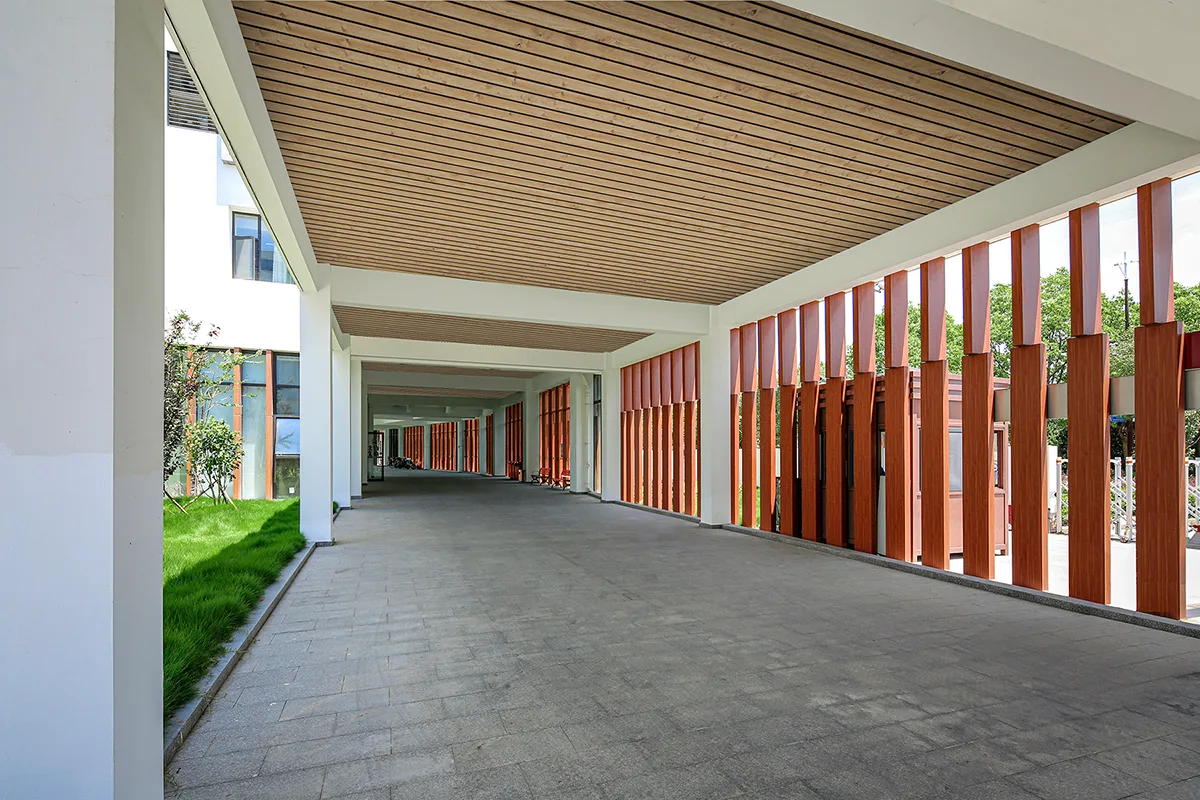
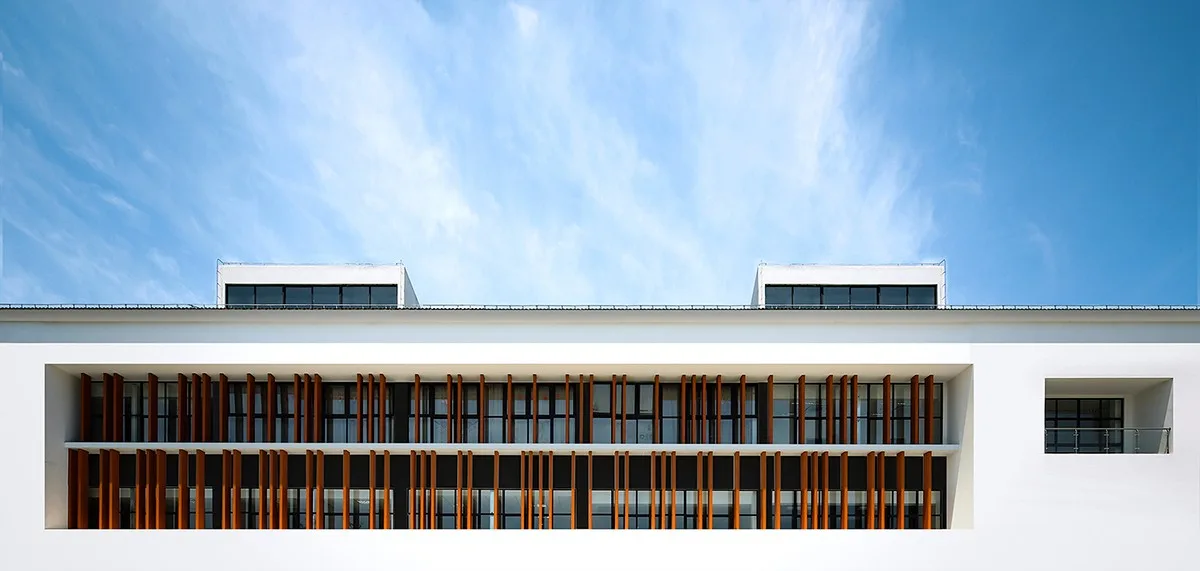
The color palette is mainly warm orange wood tones combined with accents of dark gray. This approach not only delivers a striking aesthetic but also addresses age-related sensory challenges such as declining organ functions and nervous system disorders, which can impair spatial and visual recognition.
The recognizable orange hue paired with natural wood helps seniors better identify and navigate public spaces, reducing confusion and promoting autonomy. This vibrant color also injects a sense of warmth and vitality, helping alleviate negative emotions linked to physical discomfort or limited mobility.
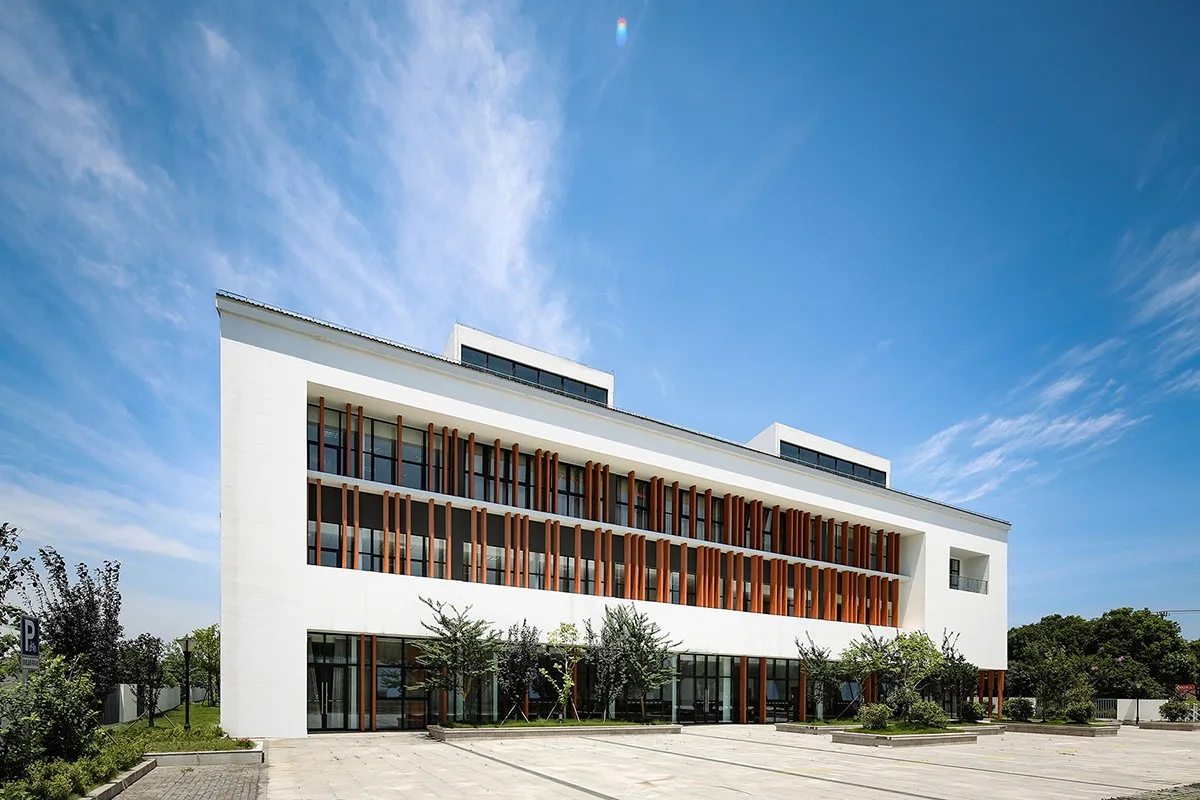
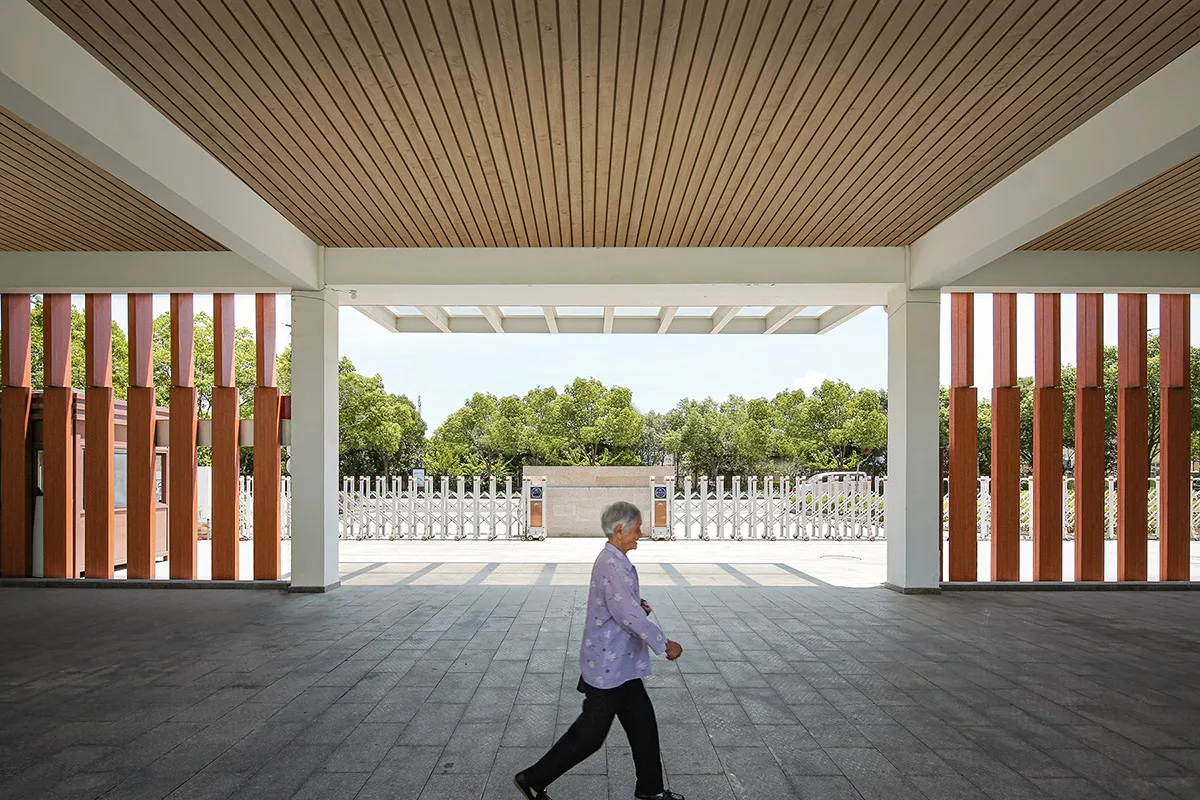
The four buildings are fully functional, spatially independent yet connected by a continuous corridor. The interplay between the building framework and corridors creates a dynamic spatial order, generating extensive gray spaces—semi-outdoor transitional areas.
Spacious, transparent corridors and lush green spaces between buildings offer diverse venues that cater to the social needs of the elderly.
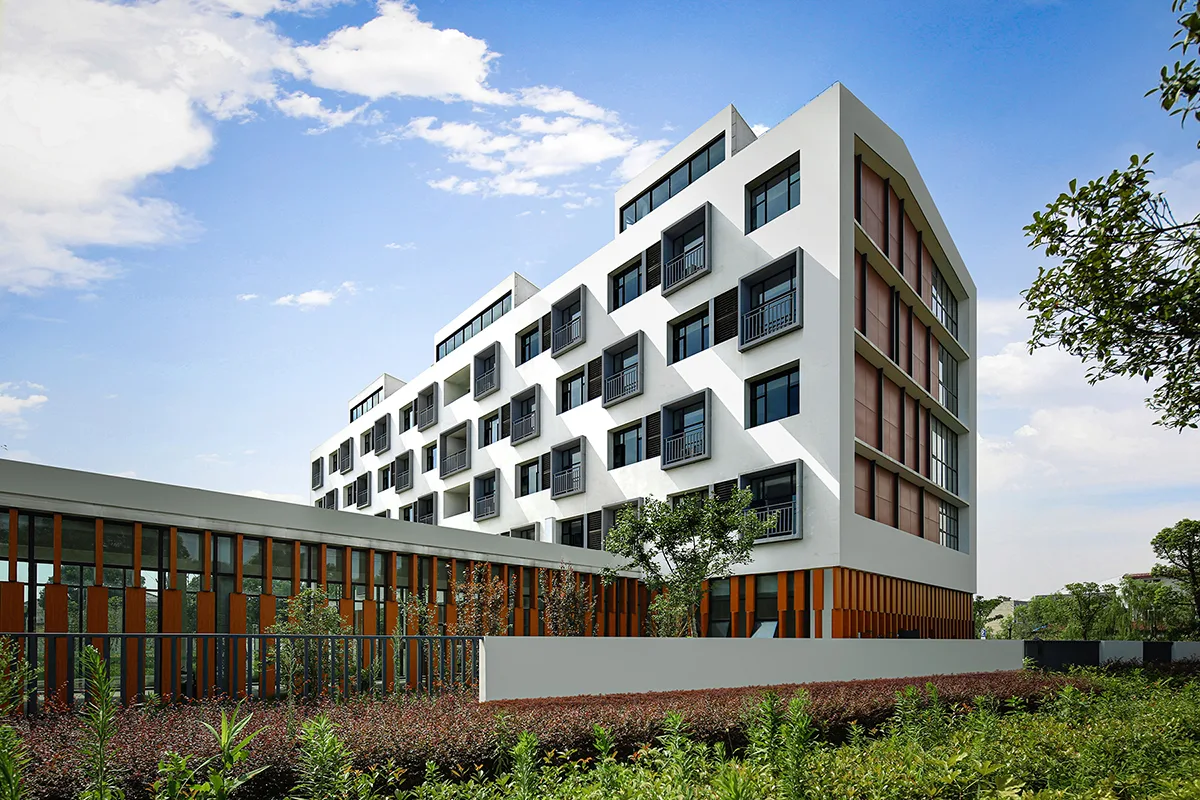
Pedestrian and vehicle routes are distinctly separated to ensure safety and minimize disturbances. Clear spatial orientation and bright colors create an uplifting atmosphere throughout the site.
Whether it’s sunny or rainy, alone or in groups, the design ensures comfortable spaces year-round, offering warmth in winter and coolness in summer.
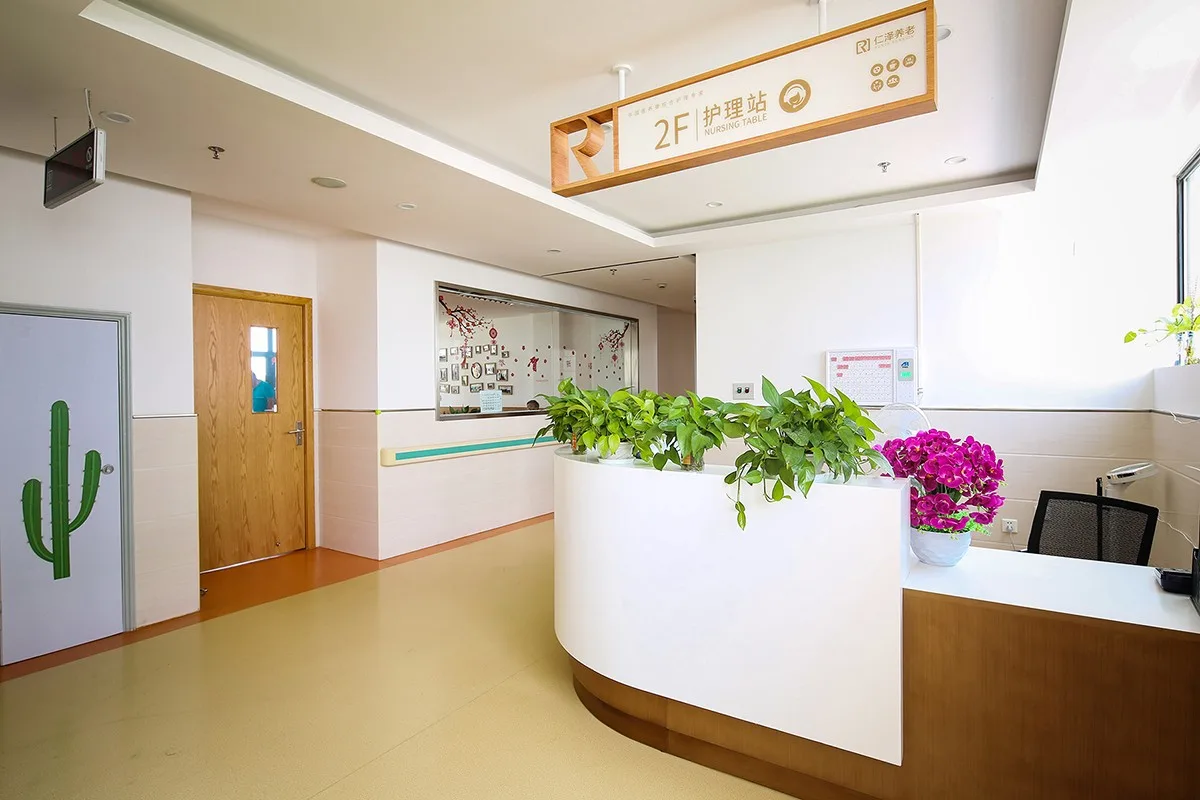
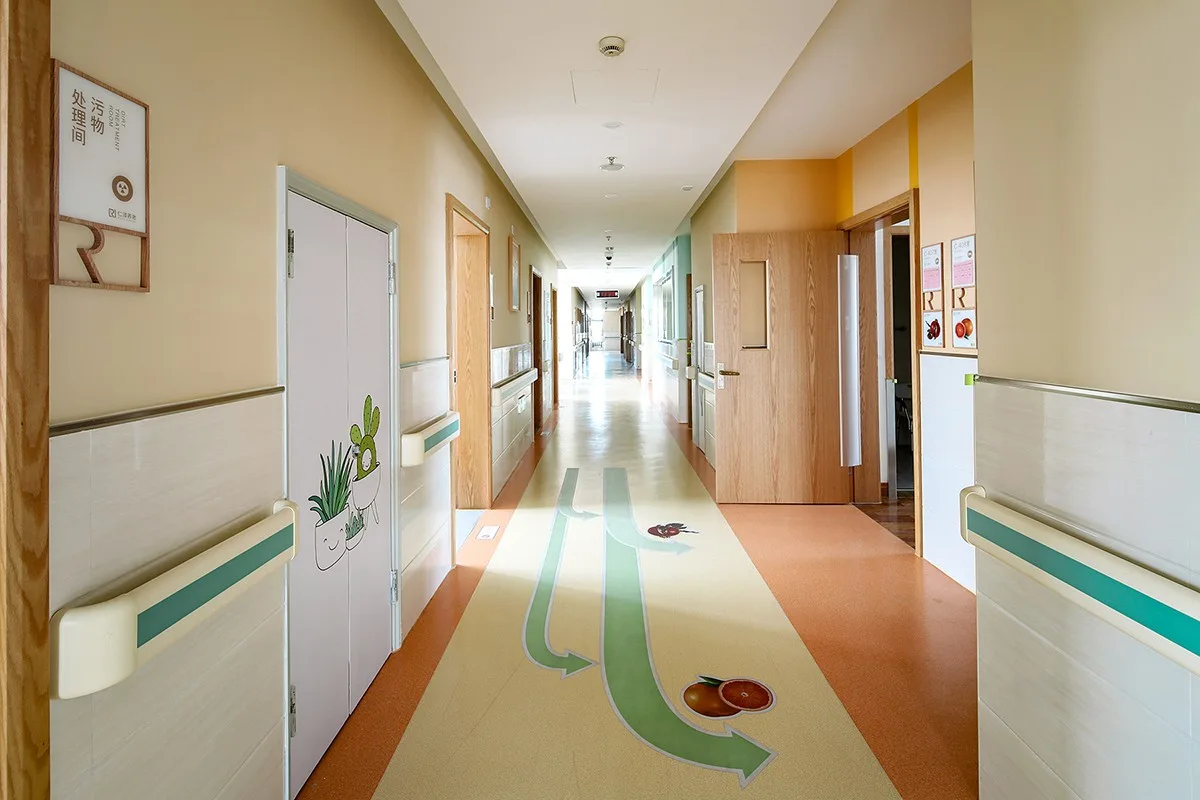
The interior design continues this fresh and bright aesthetic. Room types are tailored to accommodate seniors with varying physical conditions.
Spaces are open and well-lit, with functional zoning enhancing usability. Medical facilities are available on every floor, and bathrooms have been enlarged to better support residents with mobility challenges or those requiring therapeutic equipment and assistance.
Public care zones, gyms, hair salons, and other amenities provide a variety of leisure options, ensuring that residents have ample opportunities for relaxation and engagement.
Project Summary
As society faces the challenges of aging and evolving family structures, collective elderly care is becoming more prevalent. Nursing home design must go beyond providing physical shelter to become a nurturing haven for the soul.
Architectural design should thoughtfully address how to create environments that honor the elderly’s ongoing aspirations, desires, and zest for life.
Project Drawings
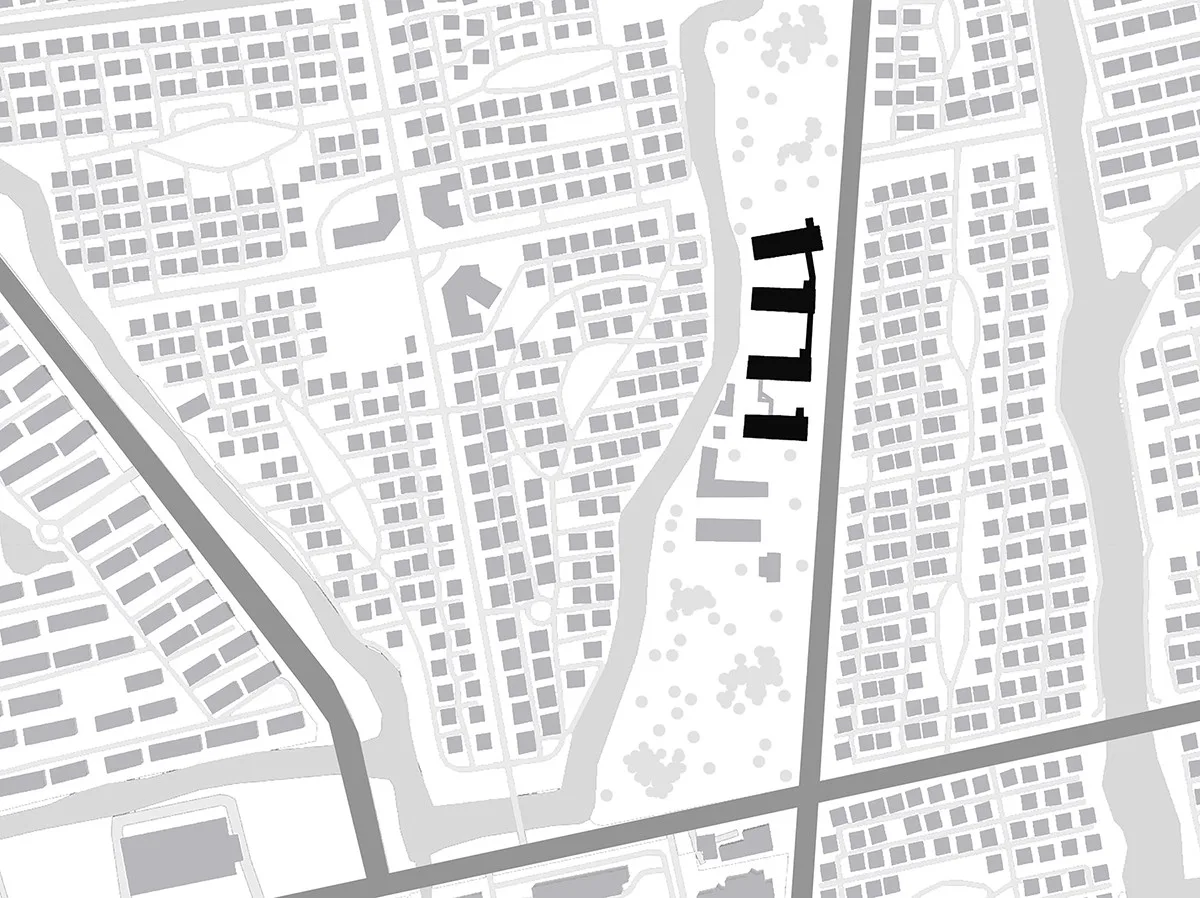
△ Location Analysis
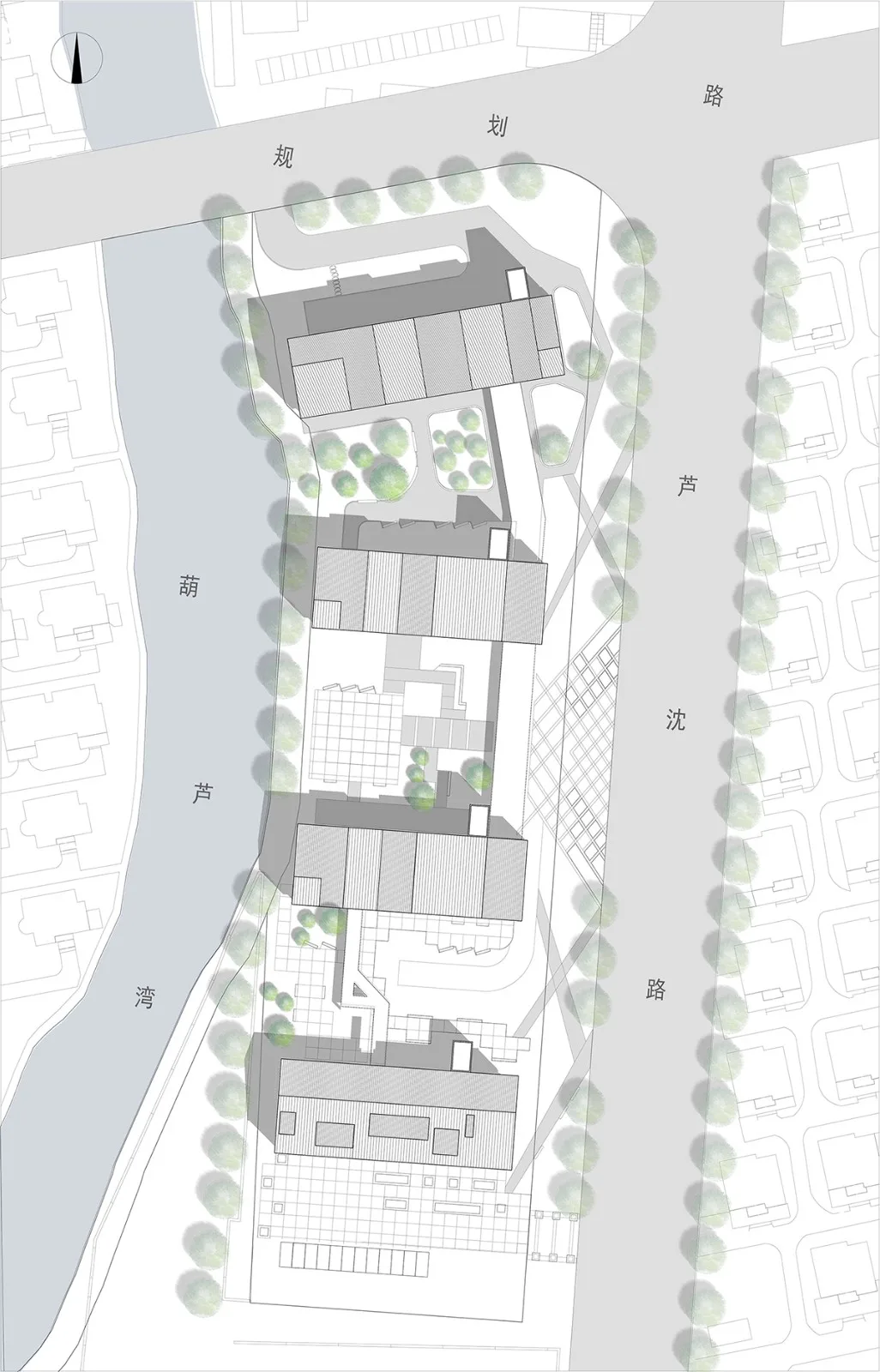
△ Master Plan
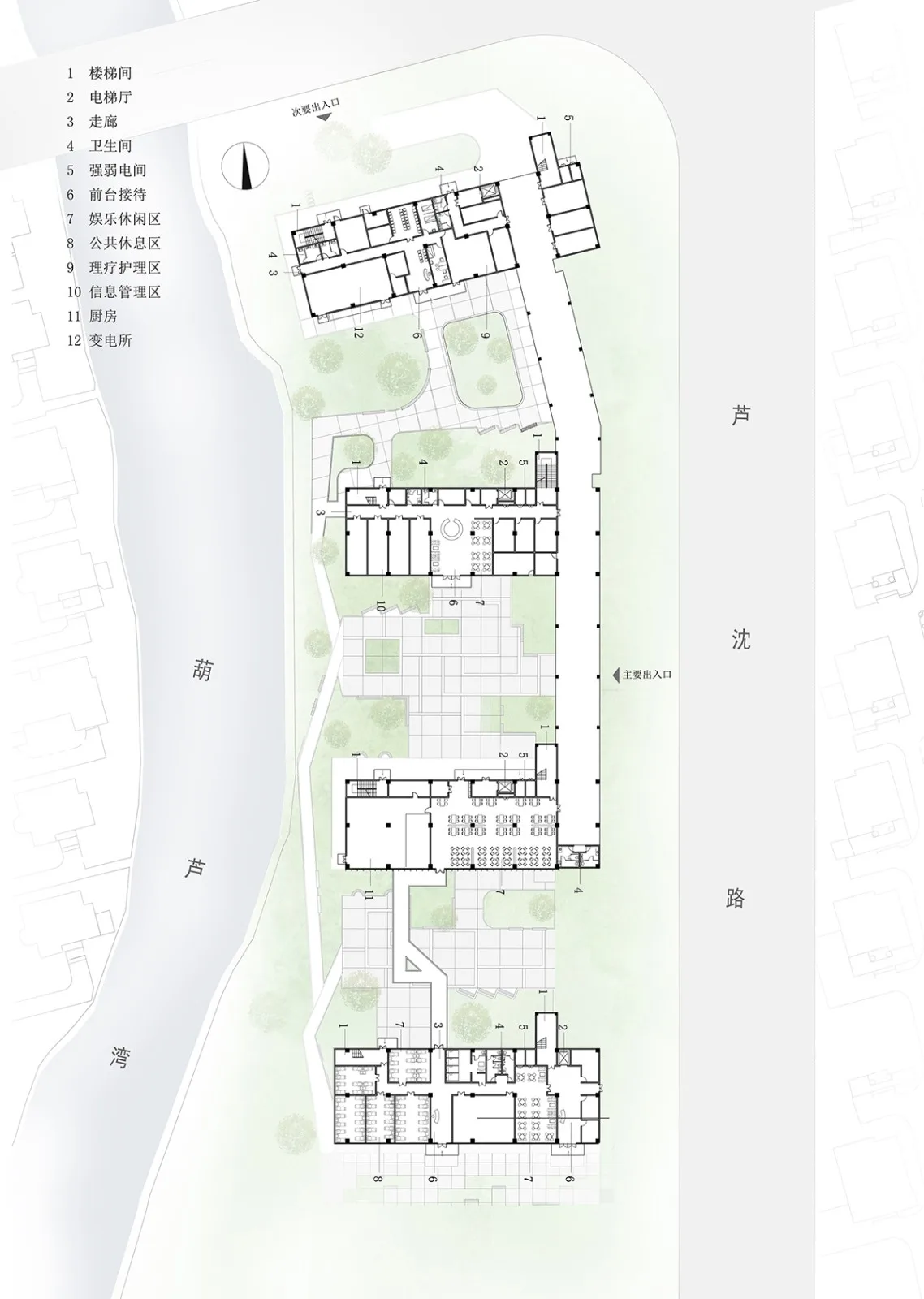
△ First Floor Plan
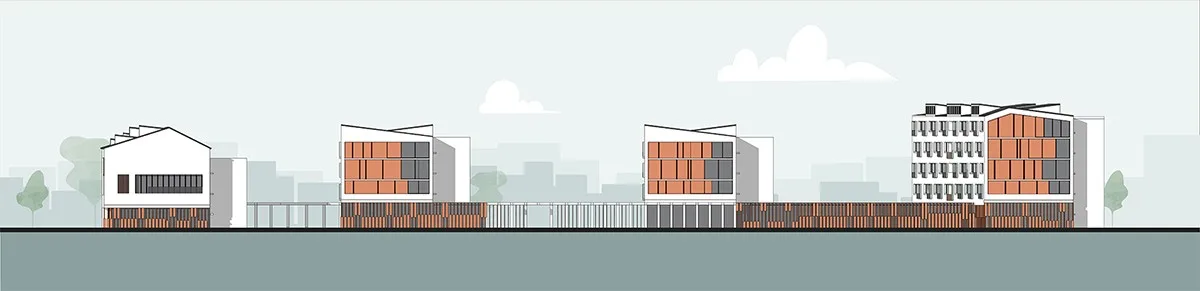
△ East Elevation
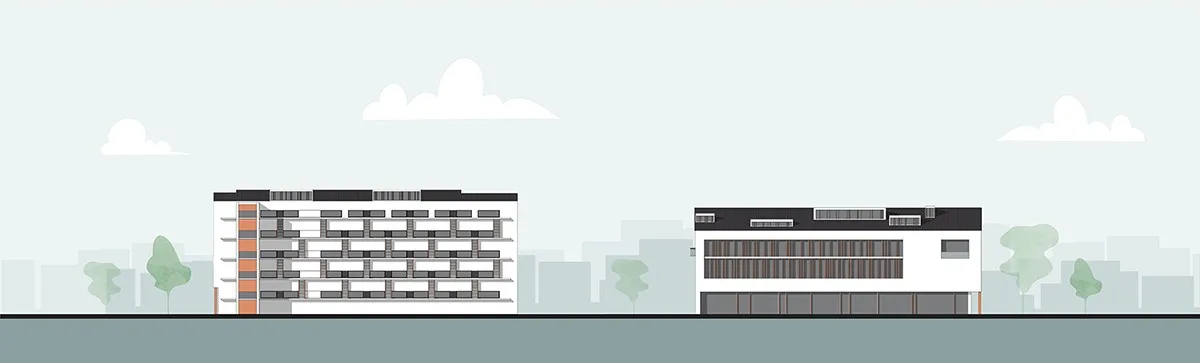
△ North-South Elevation
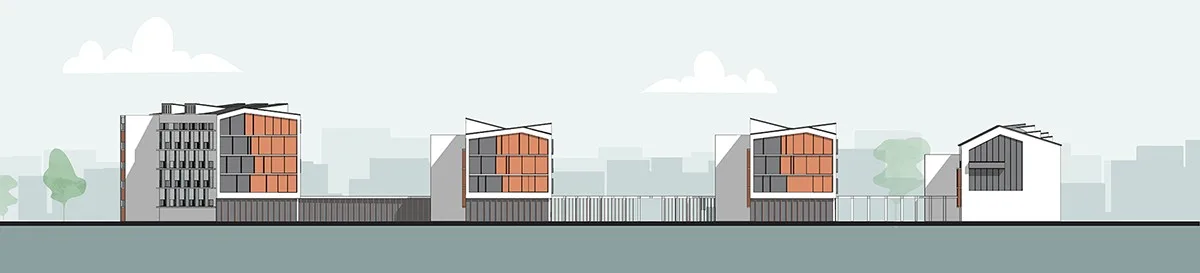
△ West Elevation
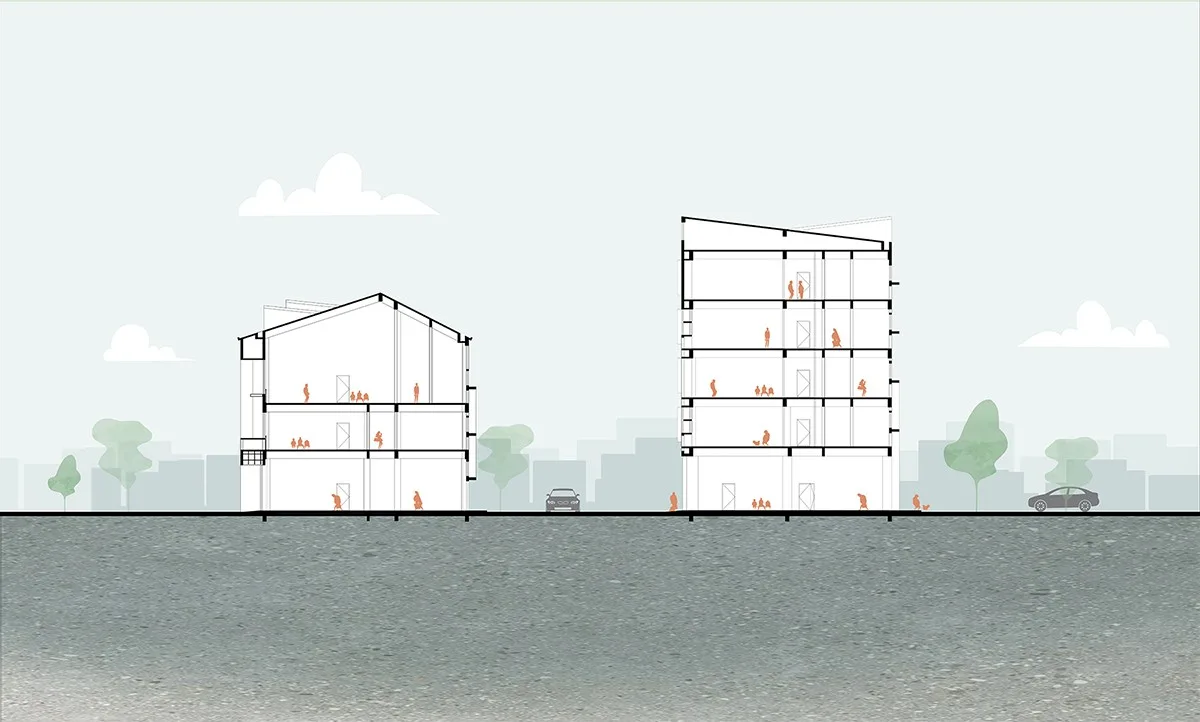
△ Section View
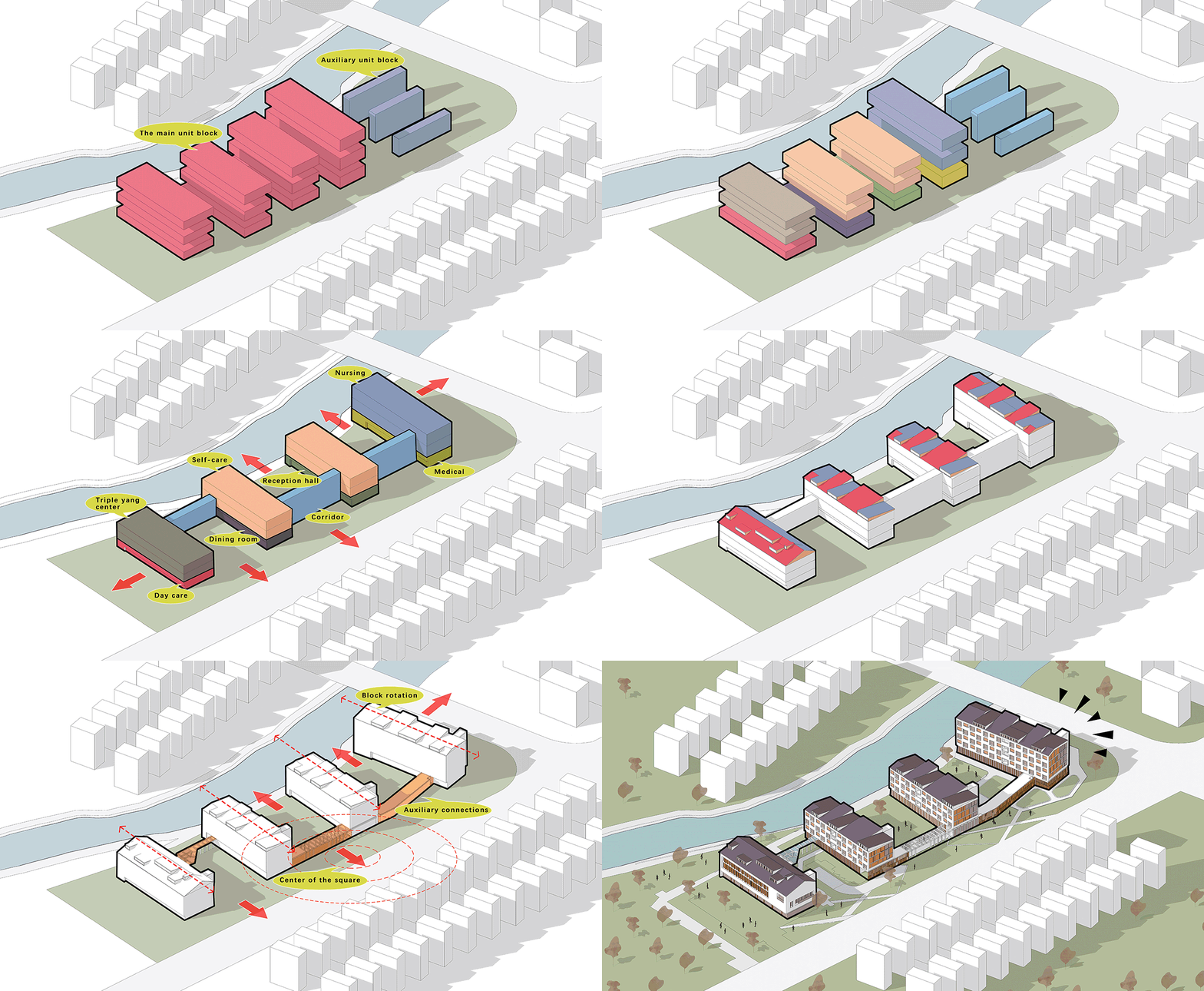
△ Dynamic Building Diagrams
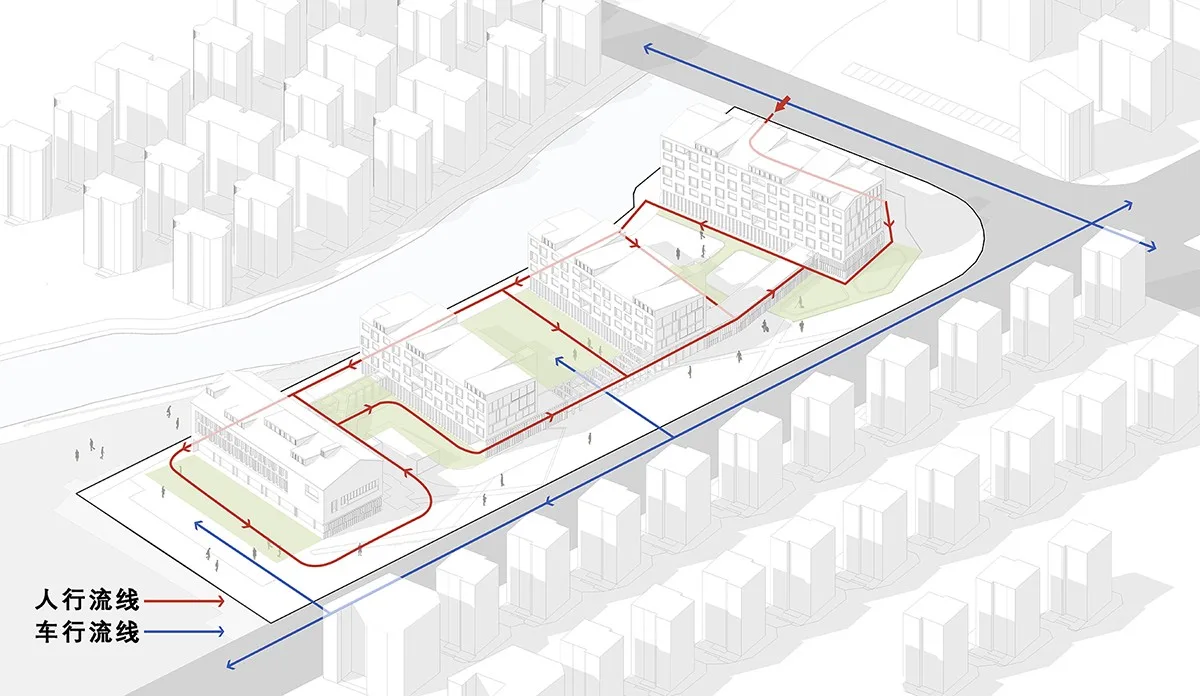
△ Streamline Analysis (Axonometric)
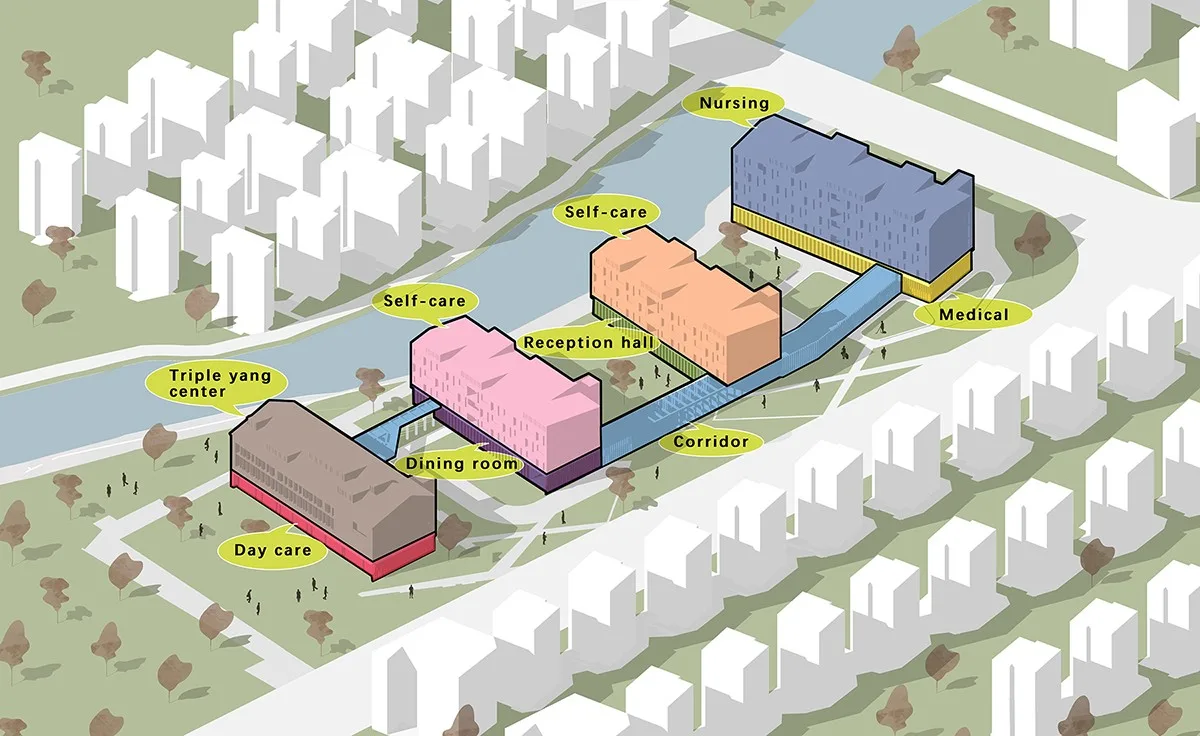
△ Functional Block Analysis
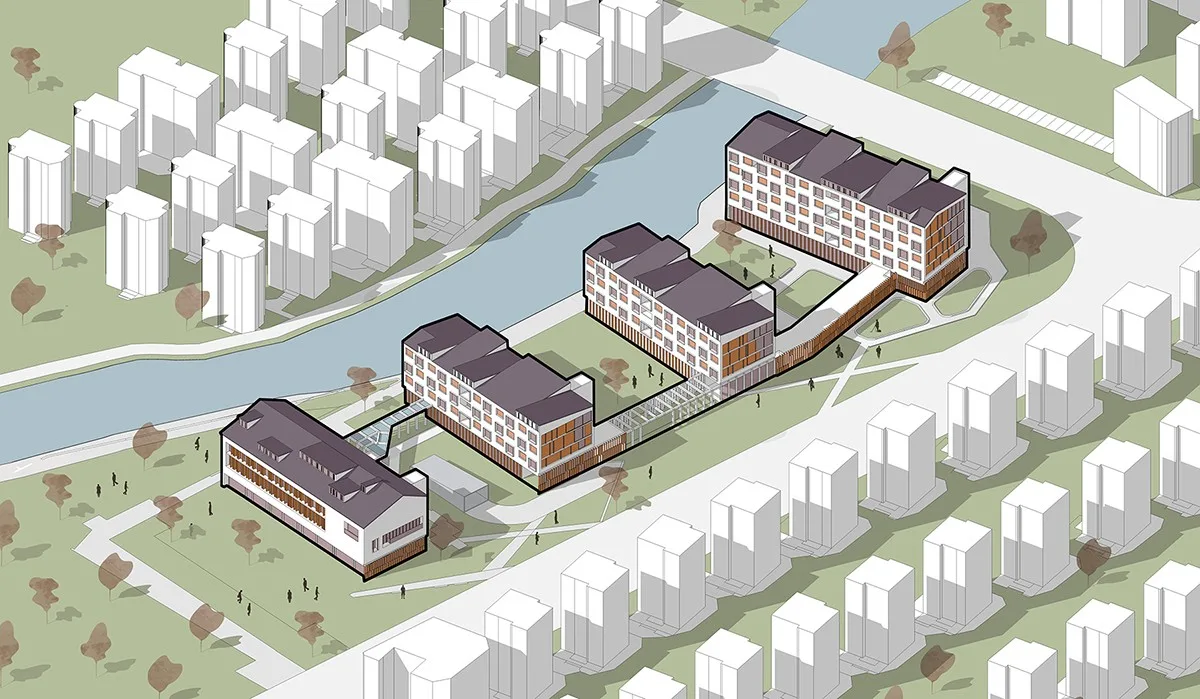
△ Axis Perspective View
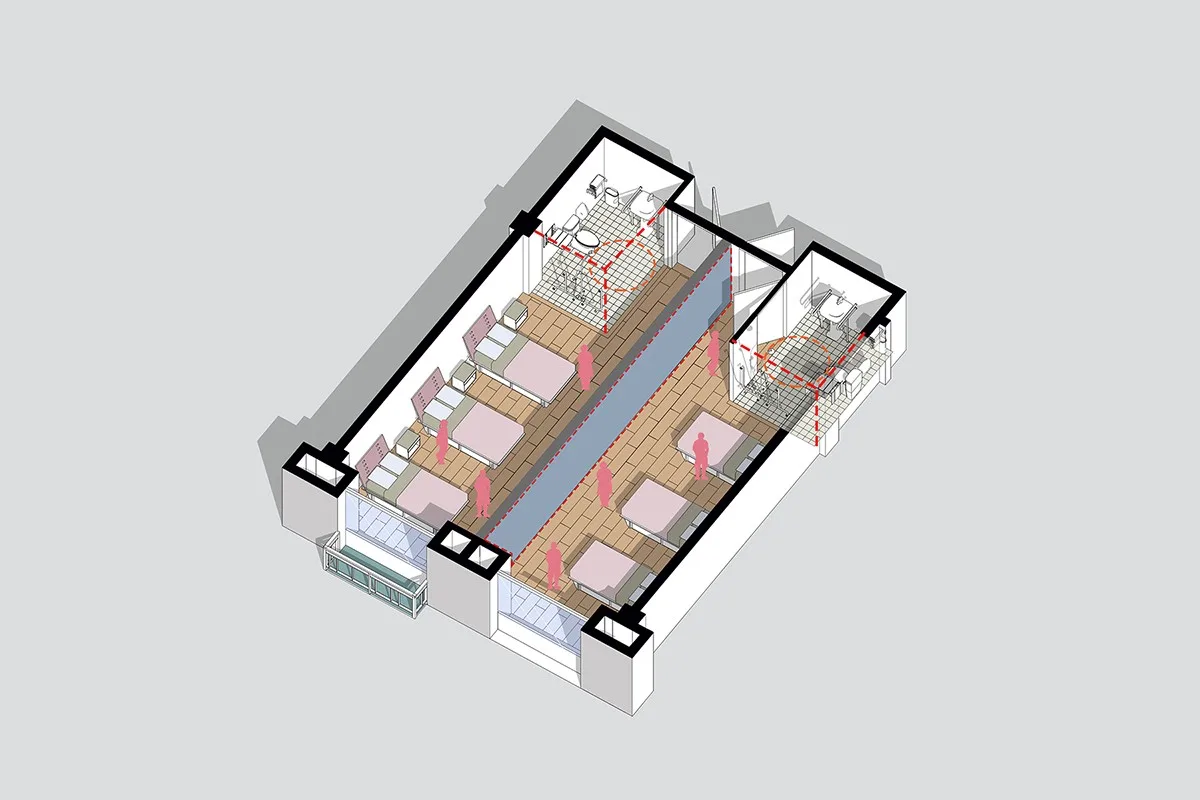
△ Indoor Axonometric View of Living Room
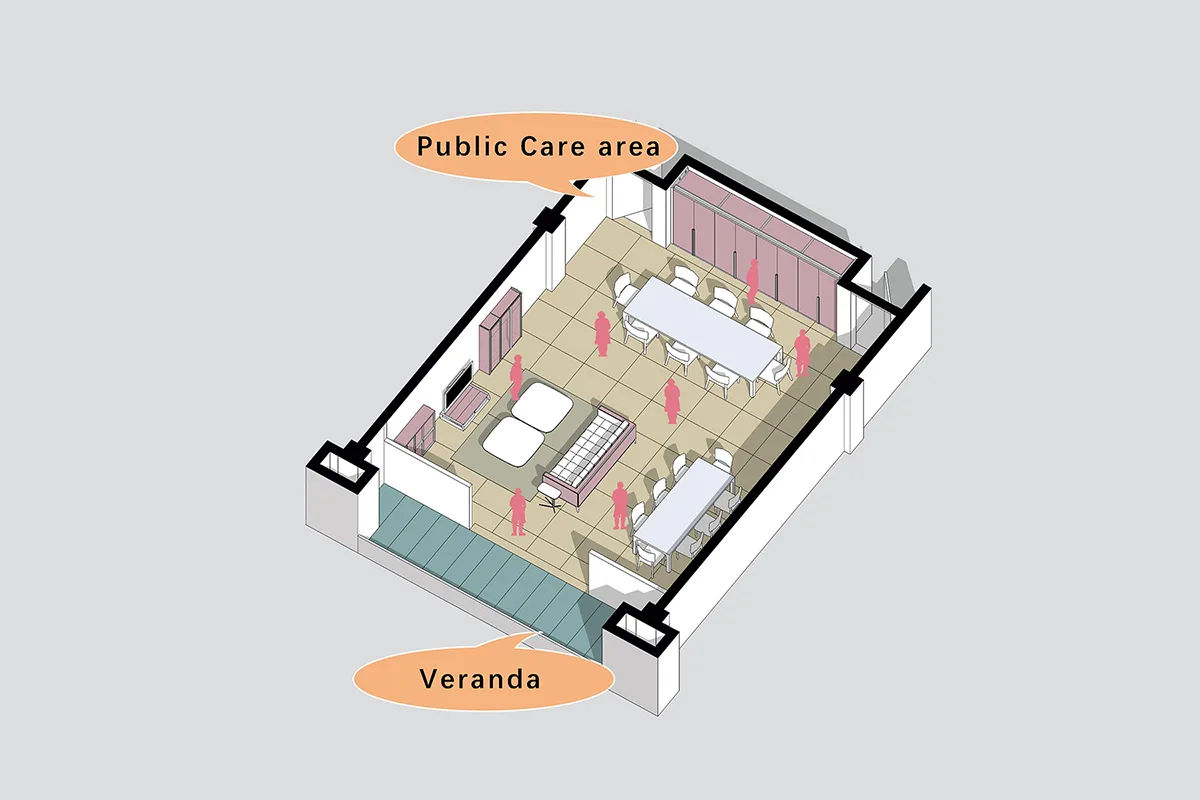
Indoor Axonometric View of Leisure Room
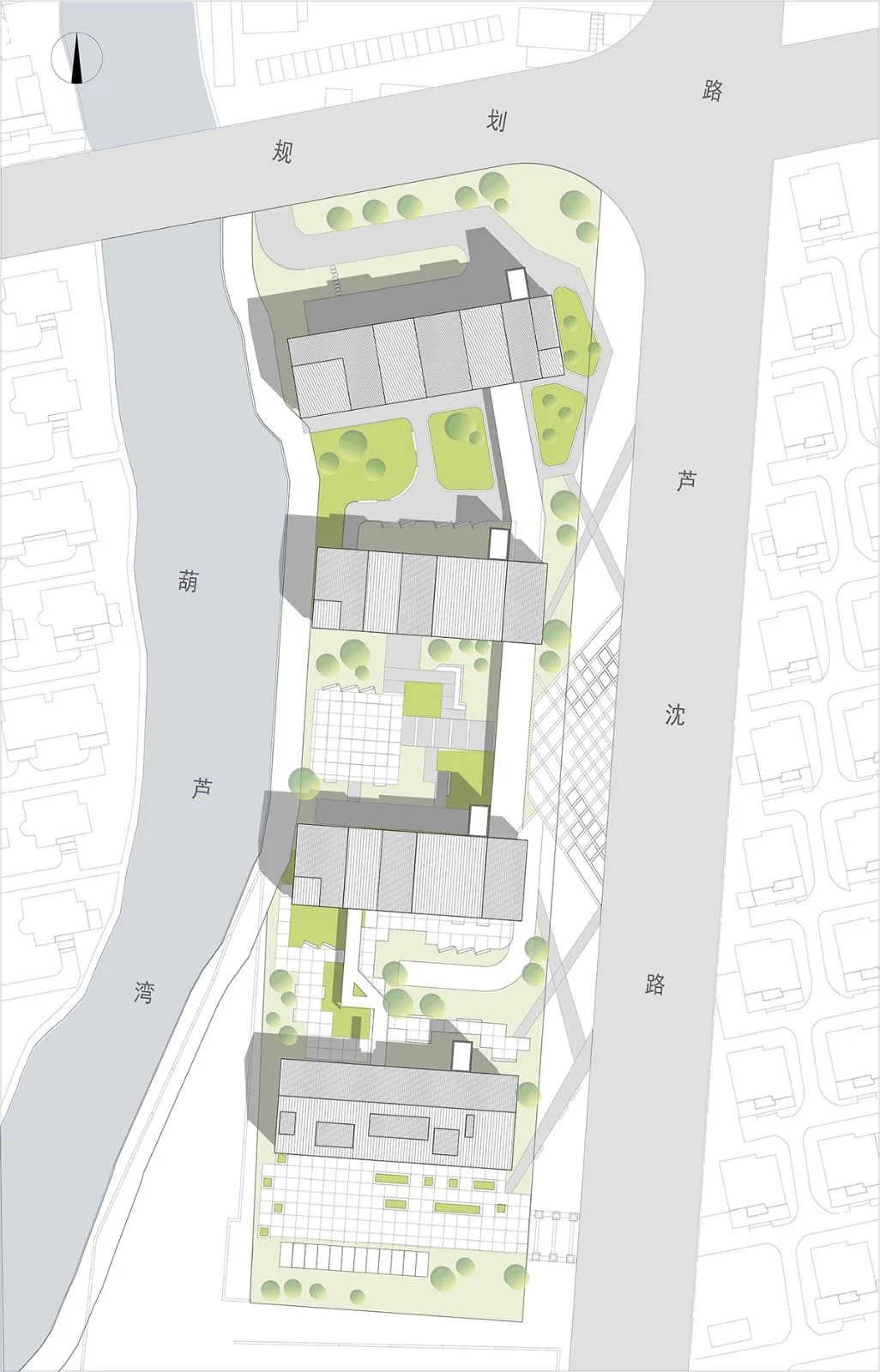
△ Landscaping Analysis
Project Details
Project Name: Zhaoxiang Kangning Nursing Home
Project Type: Elderly Care Facility
Location: Zhaoxiang Town, Qingpu District, Shanghai
Design Firm: Shanghai Jiuli Architectural Firm
Office Website: __AI_ST_URL_0__
Lead Architect: Gao Ming
Design Team: Li Miao, Zhu Rongqi, Xiao Huan, Chen Haiming, Zhang Likai, Ma Zhiheng, Zhang Ziyi
Owner: People’s Government of Zhaoxiang Town, Qingpu District, Shanghai
Status: Completed
Design Year: 2015
Construction Year: 2017
Land Area: 13,003 square meters
Building Area: 17,107.19 square meters
Structural Design by: Shanghai Urban Architectural Design Co., Ltd
Architectural Photography: Xiangdao Culture Media (Shanghai) Co., Ltd












Must log in before commenting!
Sign Up