
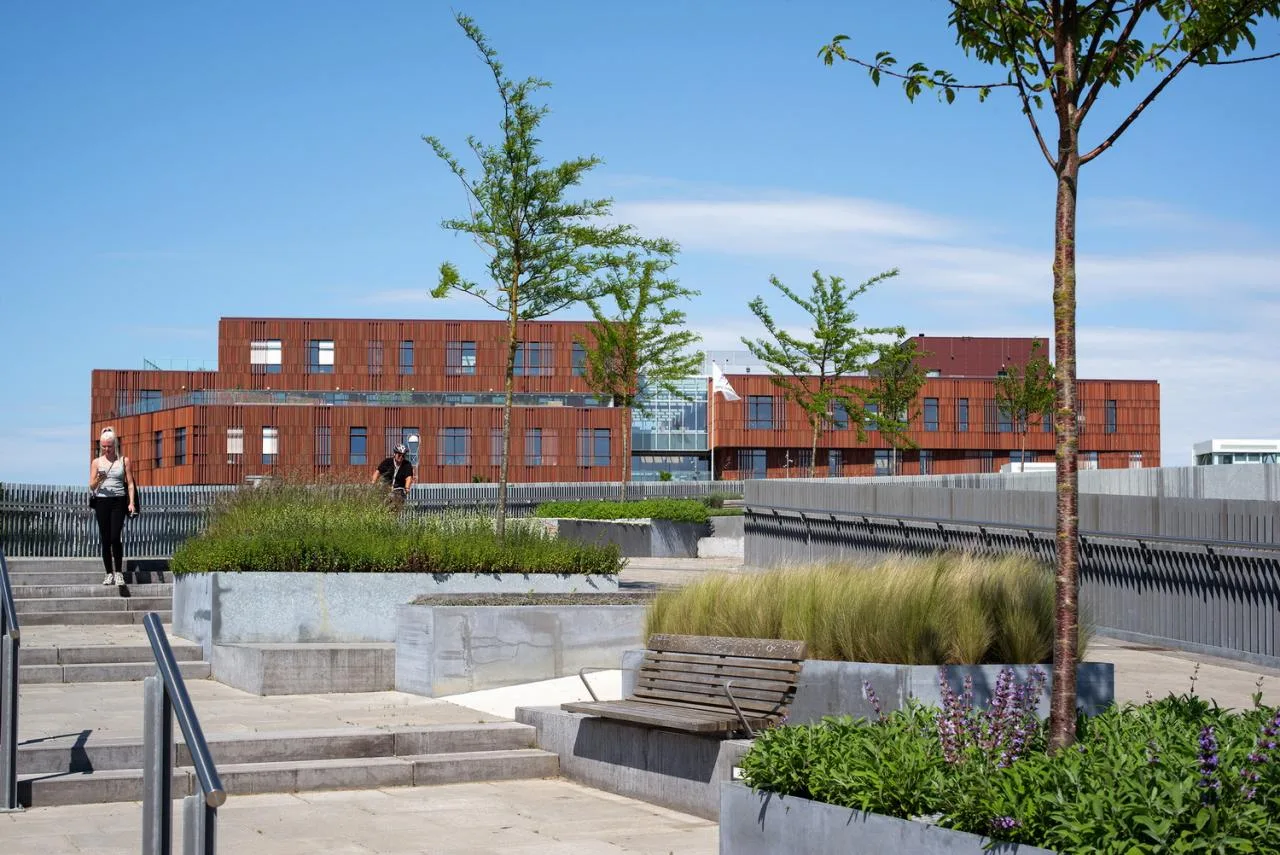
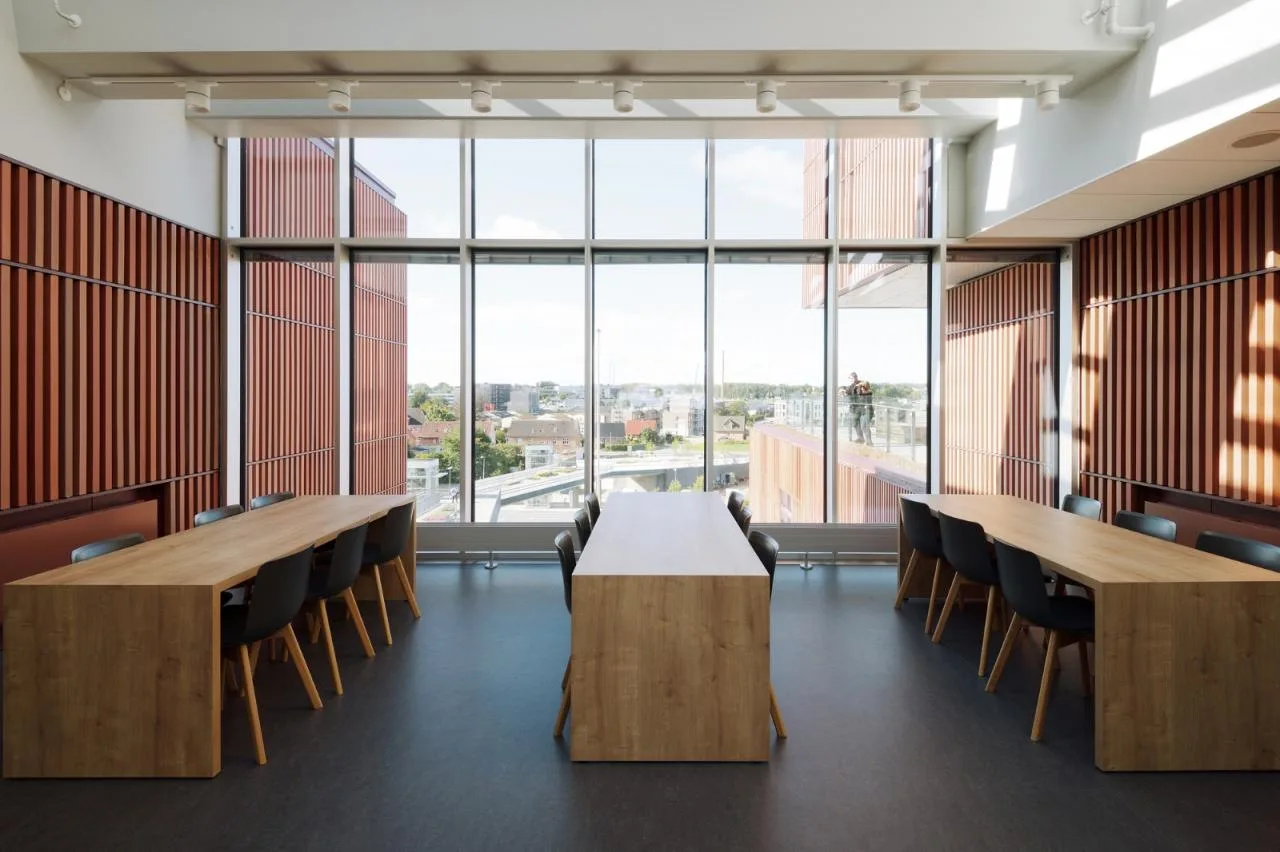
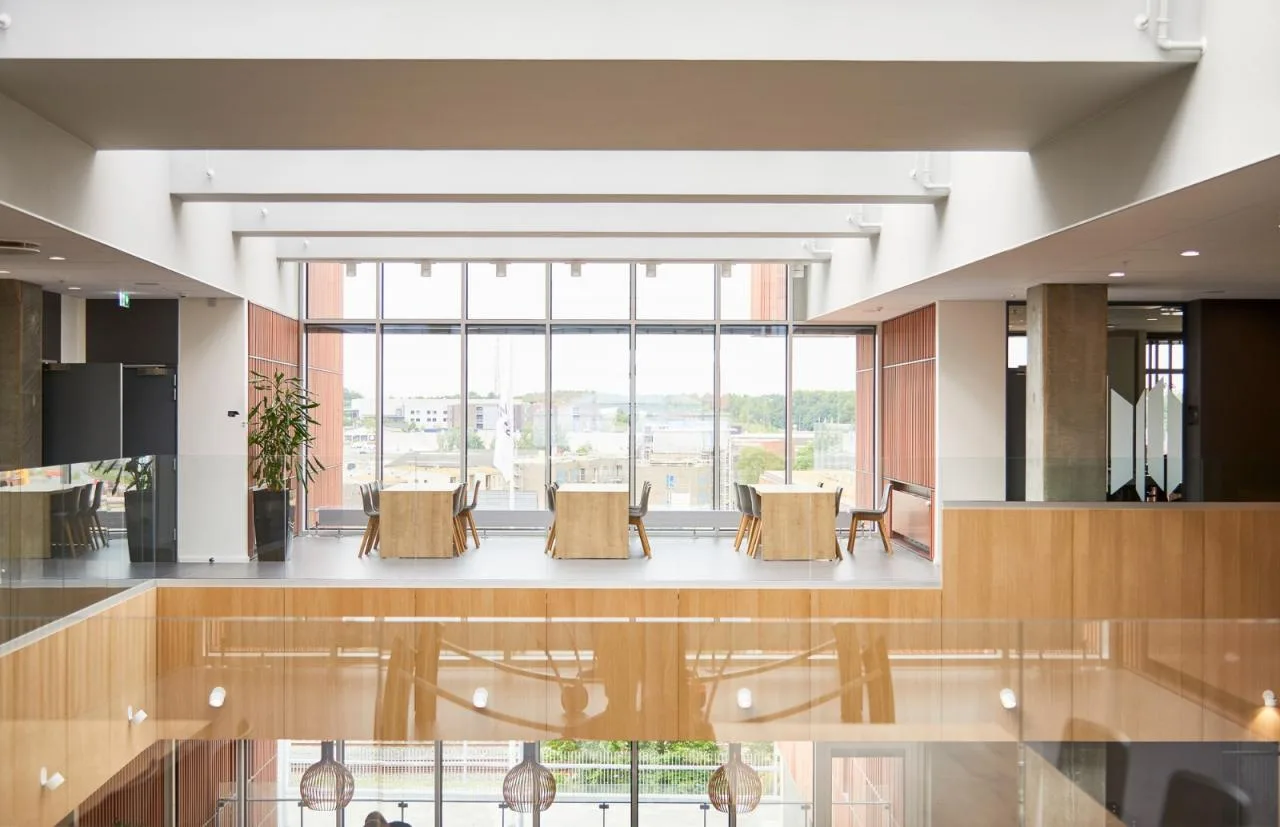
The new Mercantec Midtbyens Gymnasium embodies the city’s ambitious vision for urban development. Designed to accommodate 1,200 students and 130 staff members, the school offers a highly creative and inspiring environment that fosters learning, growth, and social engagement both inside and around the building. This project is part of a broader urban development initiative led by Cubo Architects, which also includes two bridges along the historic “Hærvejsbroen” road. This ancient route stretches from northern Germany to the northern tip of Denmark, and the two new bridges serve as vital connections linking the city center to the emerging Viborg Baneby district.
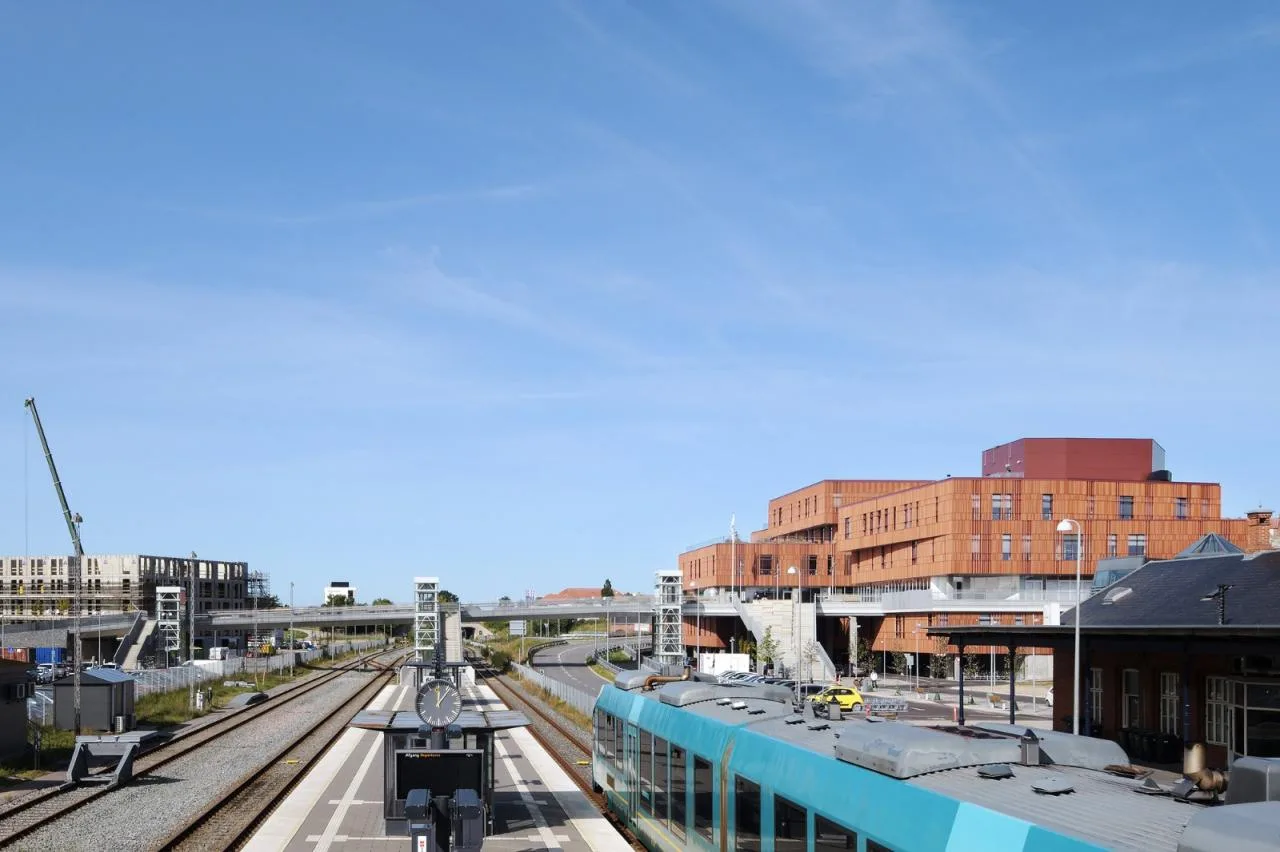
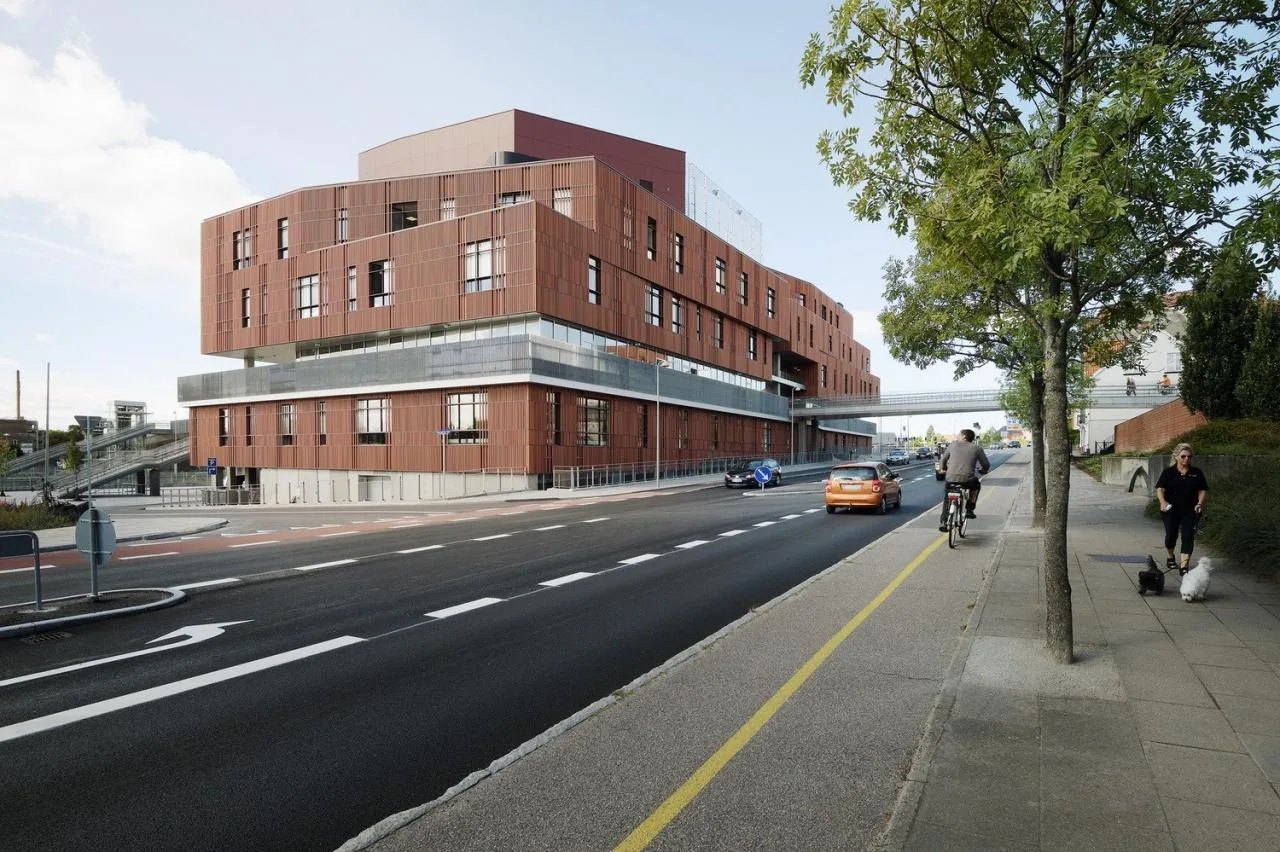
Located amidst a local train station, parking facilities, the main city library, and a leisure center, the high school’s central position influenced the design of its visible exterior walls. The building’s expressive architecture respects the city’s historical context while breaking away from overwhelming scale. It is a robust structure designed with future adaptability in mind. From the outset, the choice of design methods and materials considered evolving needs and long-term sustainability.
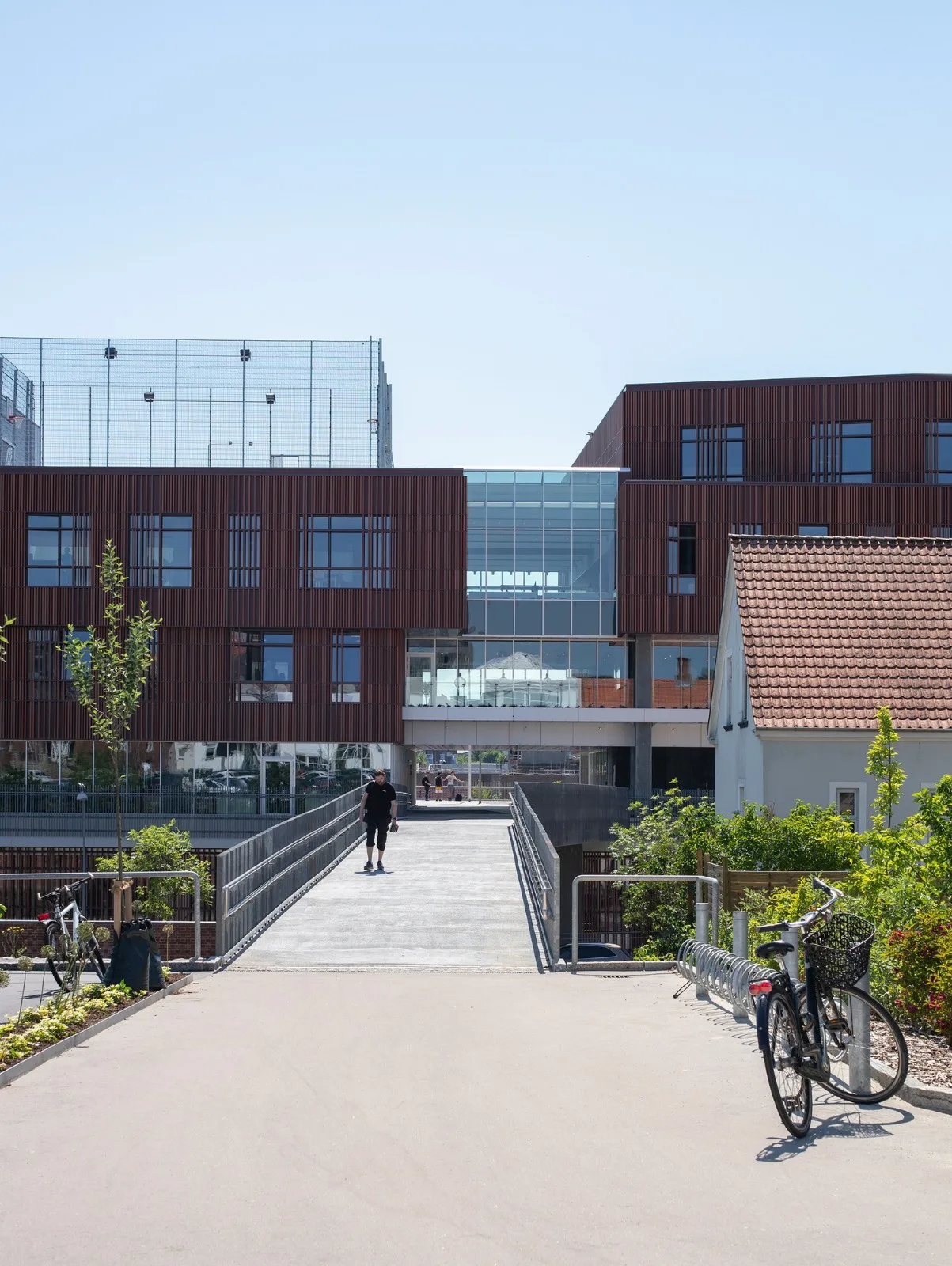
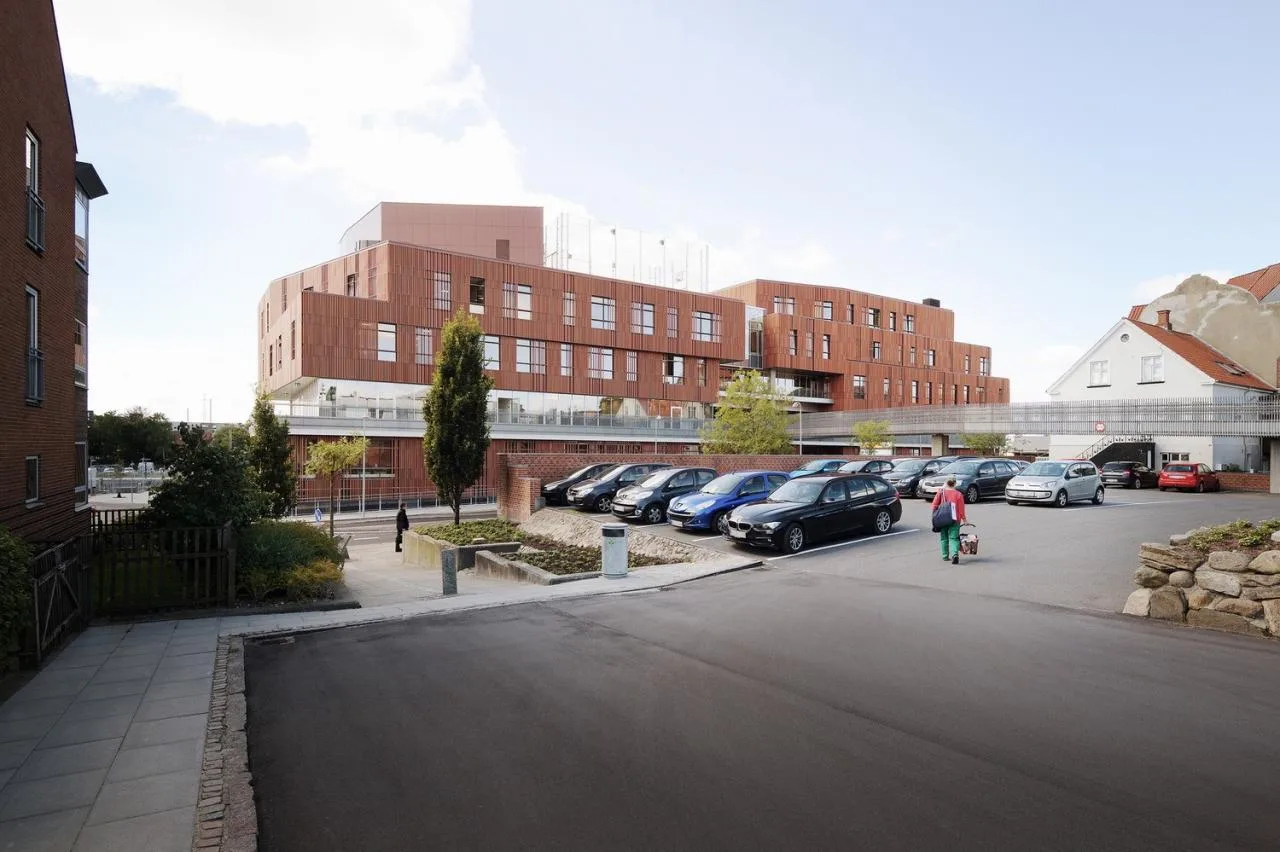
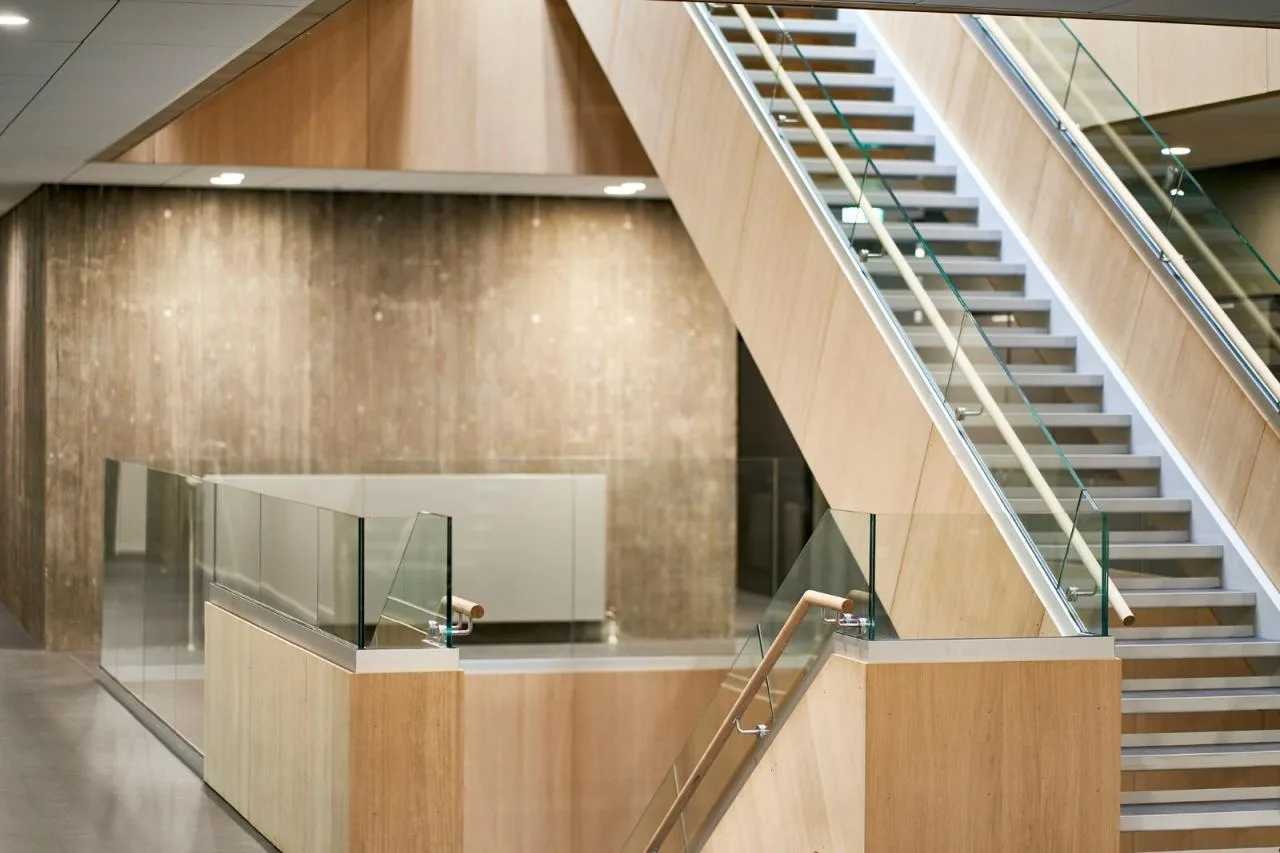
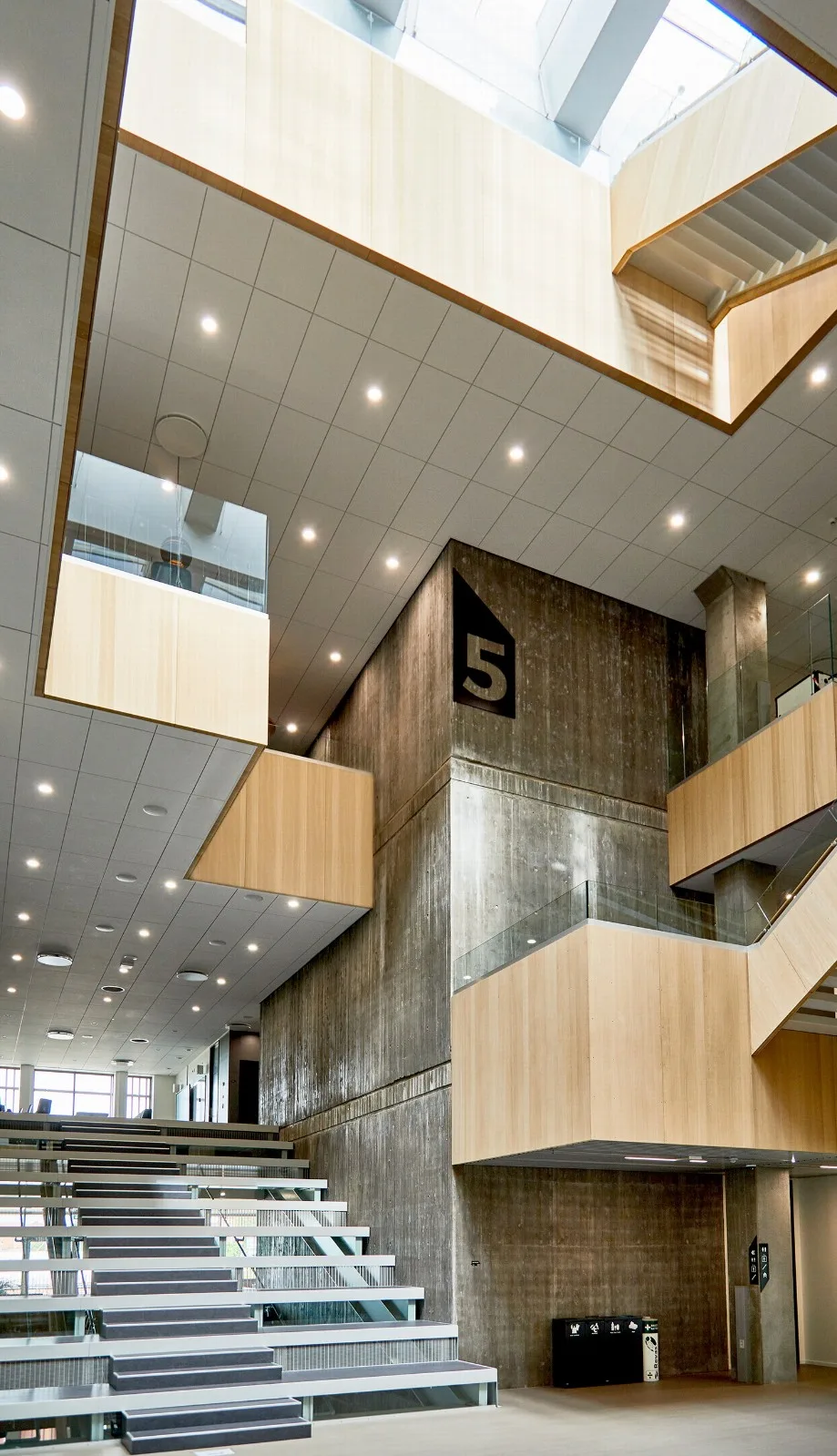
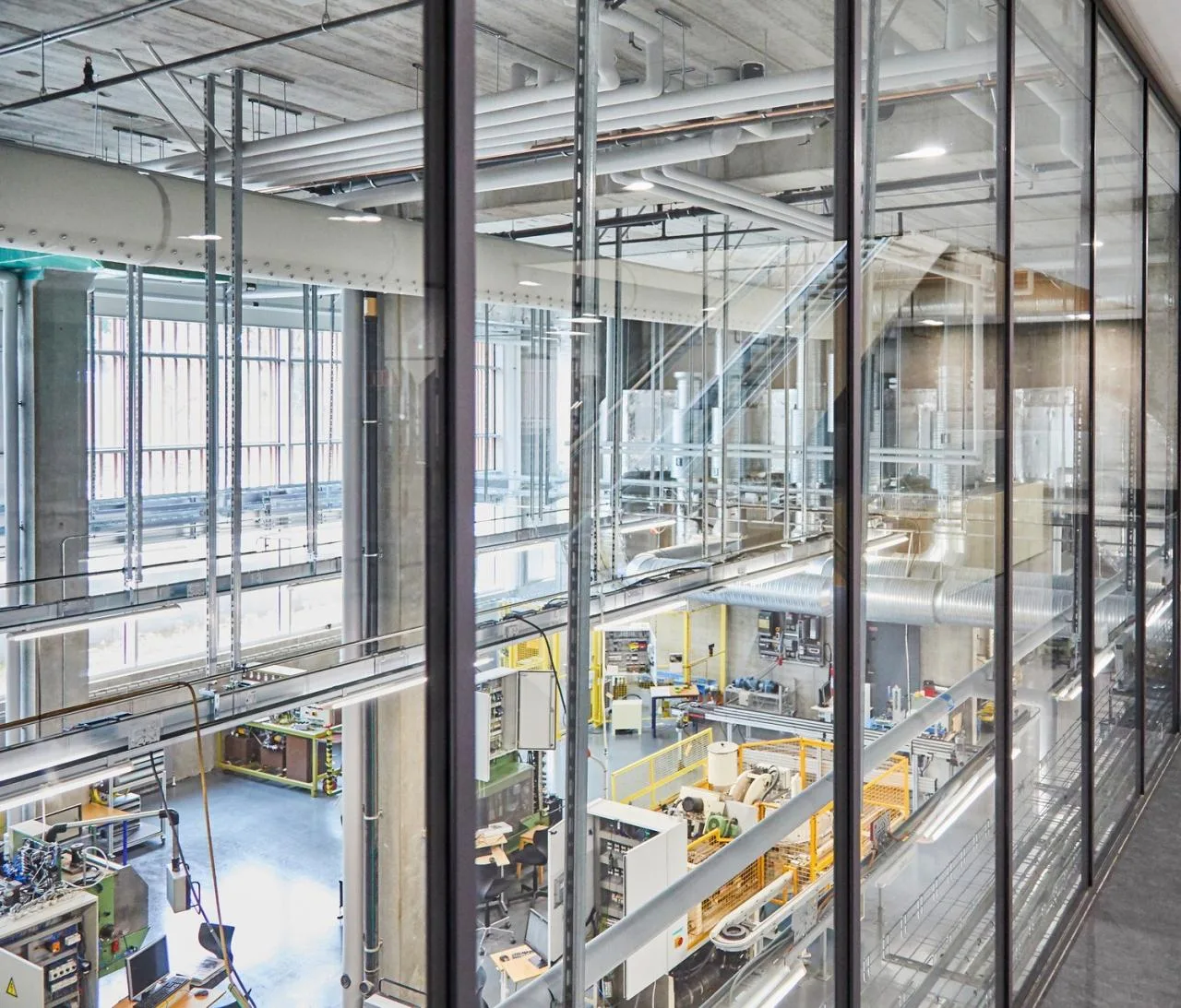
The entire architectural complex reflects openness, flexibility, and fluidity. The project is forward-looking, designed to accommodate new relationships, diverse educational functions, and various teaching methods. It creates a “city within a city” through architectural language. The primary concept of Midtbyens Gymnasium is to design a facility that captures educational diversity while giving each learning project a distinct identity. The plan envisions a dense, compact, and sustainable three-dimensional structure, organized hierarchically with squares, streets, alleys, and passages—forming a mirrored collage of the surrounding urban environment.
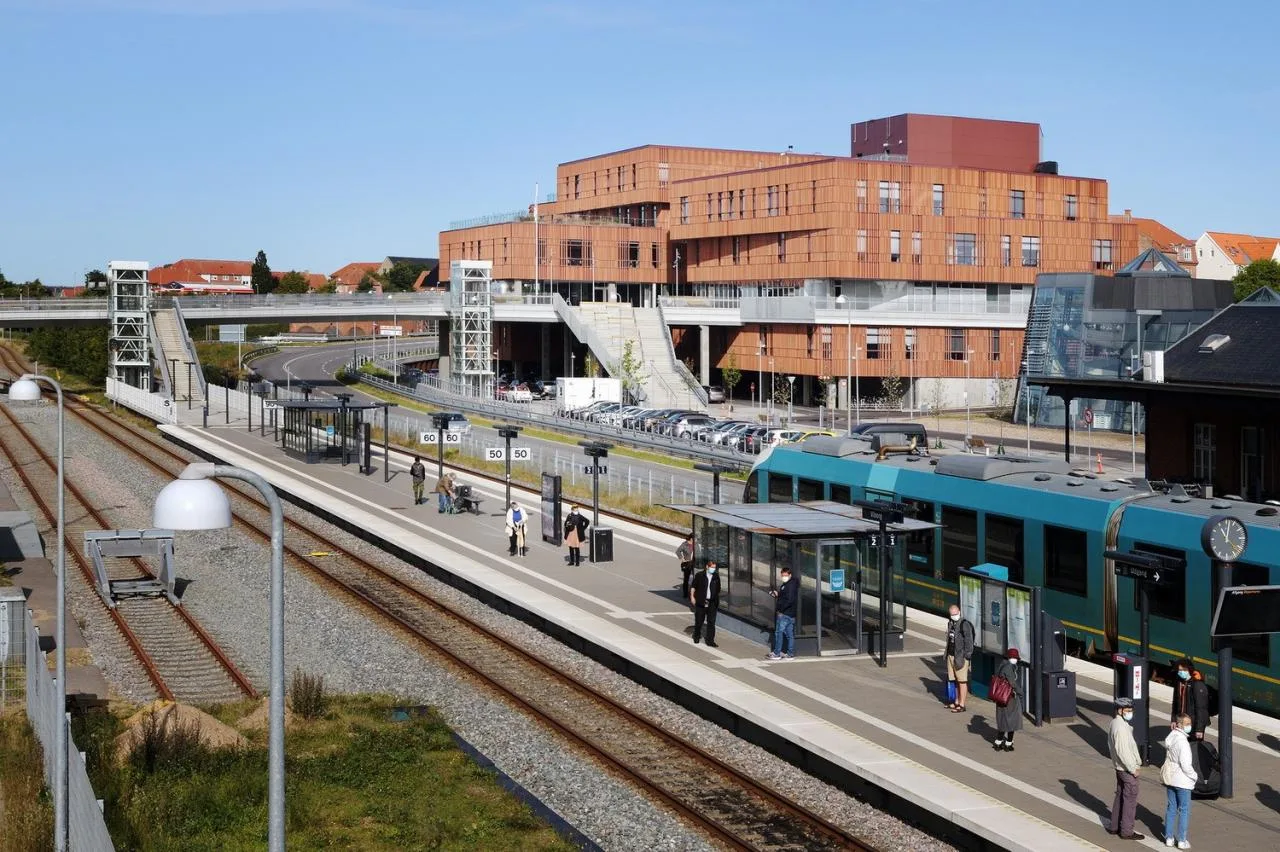
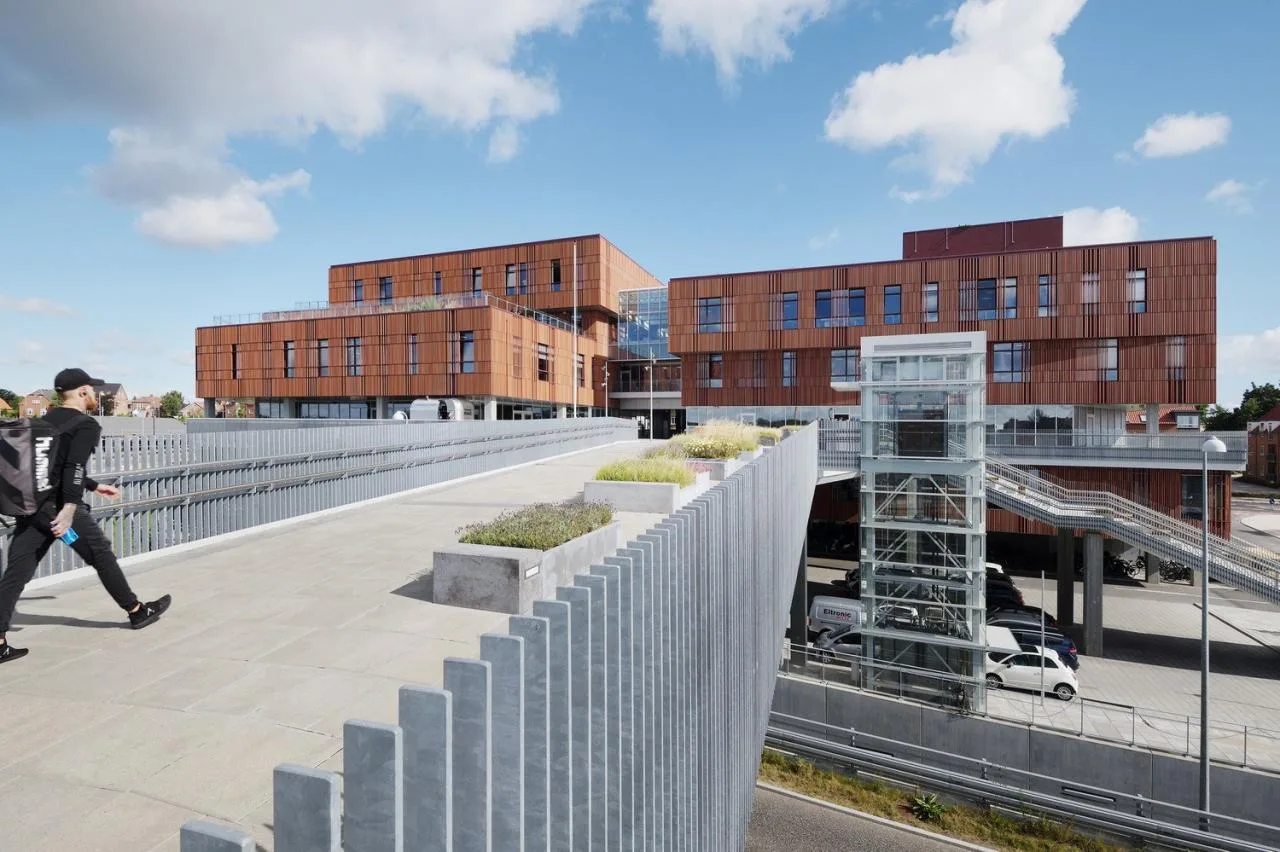
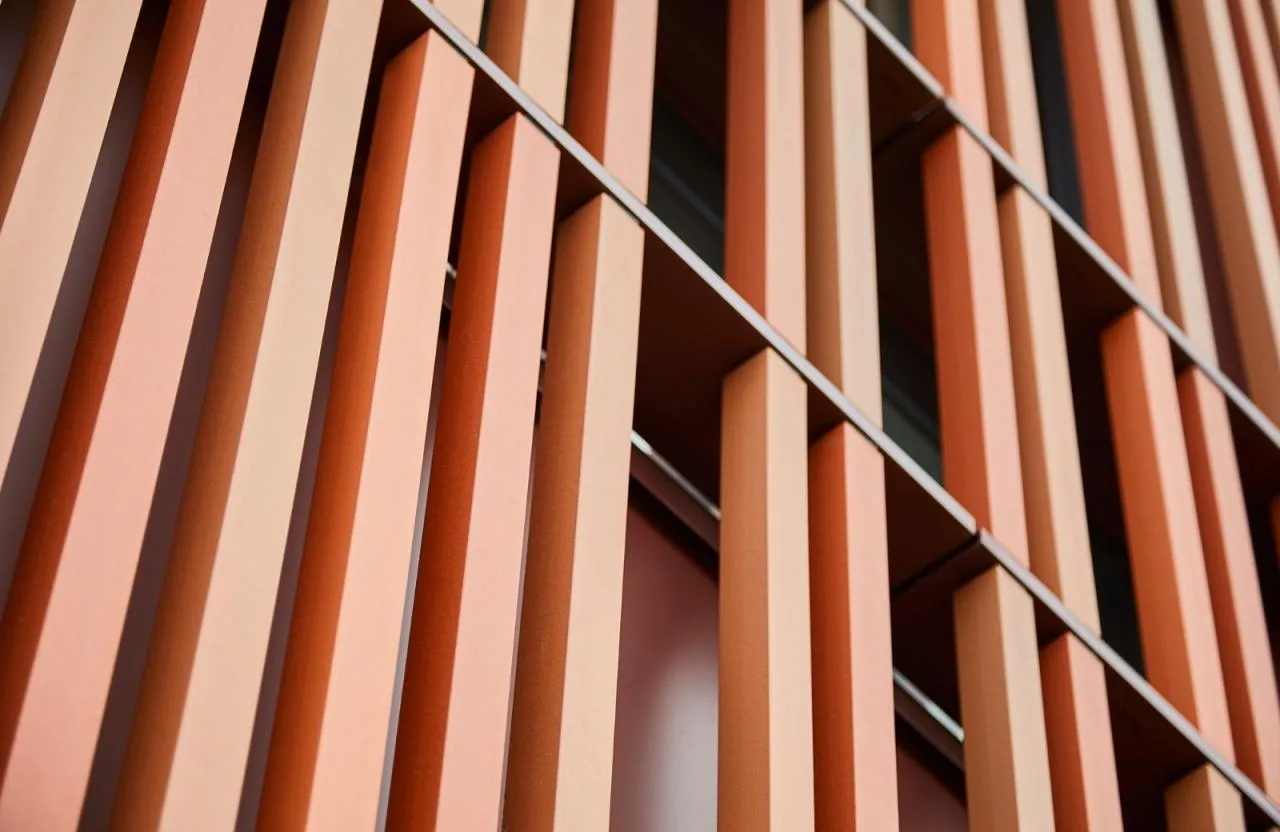
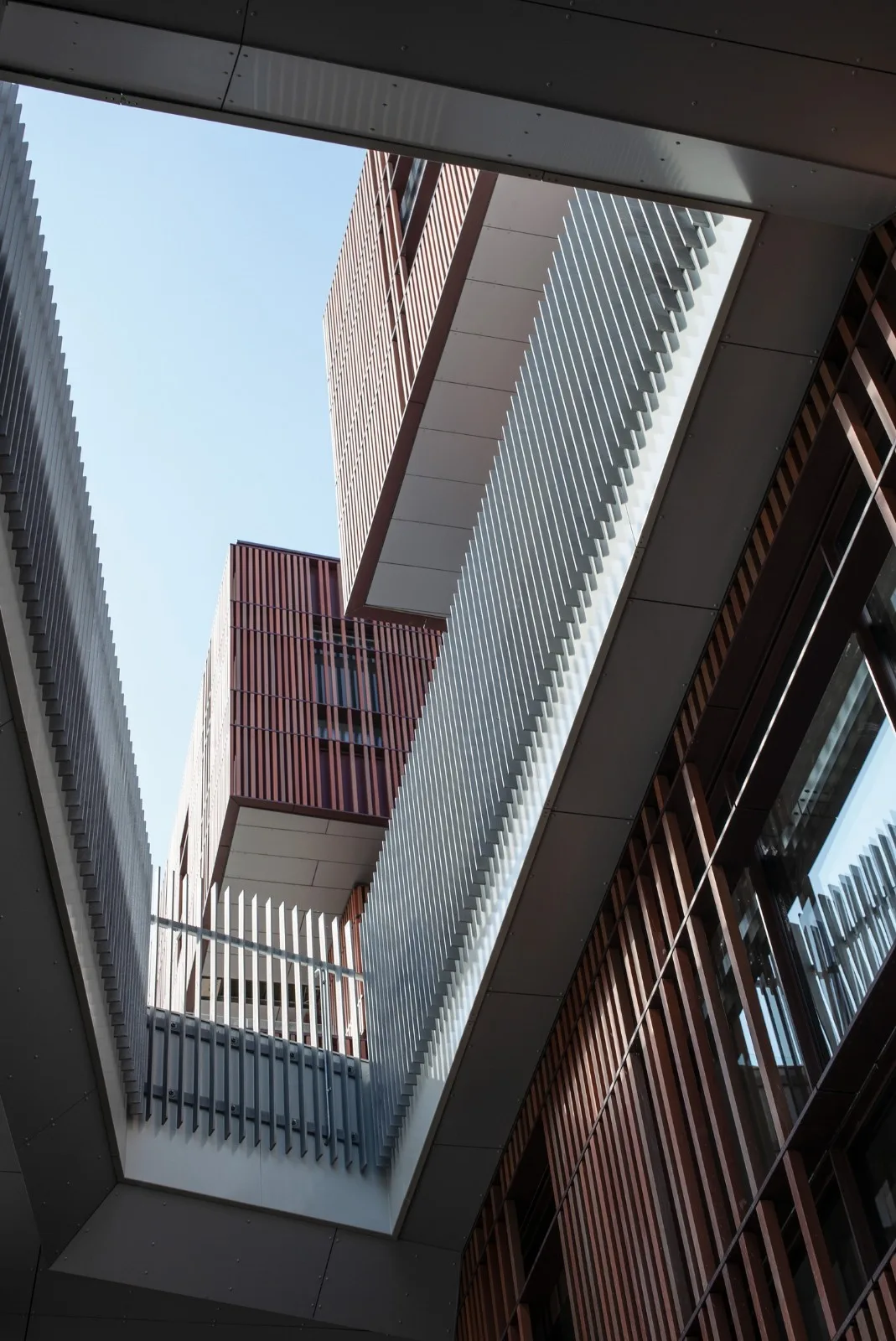
The school’s exterior is distinguished by ceramic tiles known locally as “Tile Baguettes.” This peaceful façade expresses local character and visually extends into the surrounding architectural complex, which extensively features classic Danish red bricks. This new high school adds to a series of educational and research buildings designed by Cubo Architects, emphasizing the studio’s commitment to empathy, inclusivity, and innovative frameworks that address contemporary Scandinavian needs.
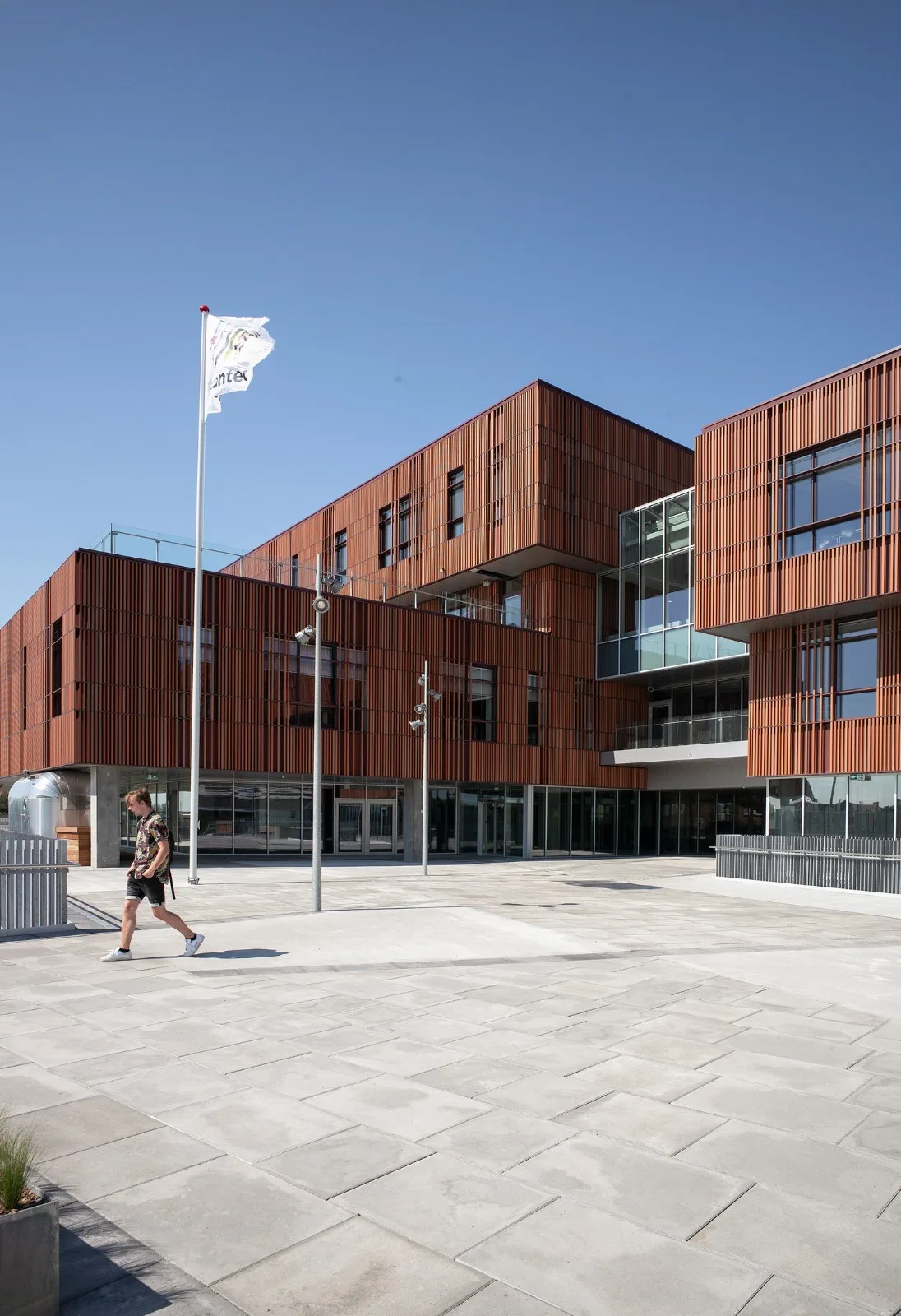
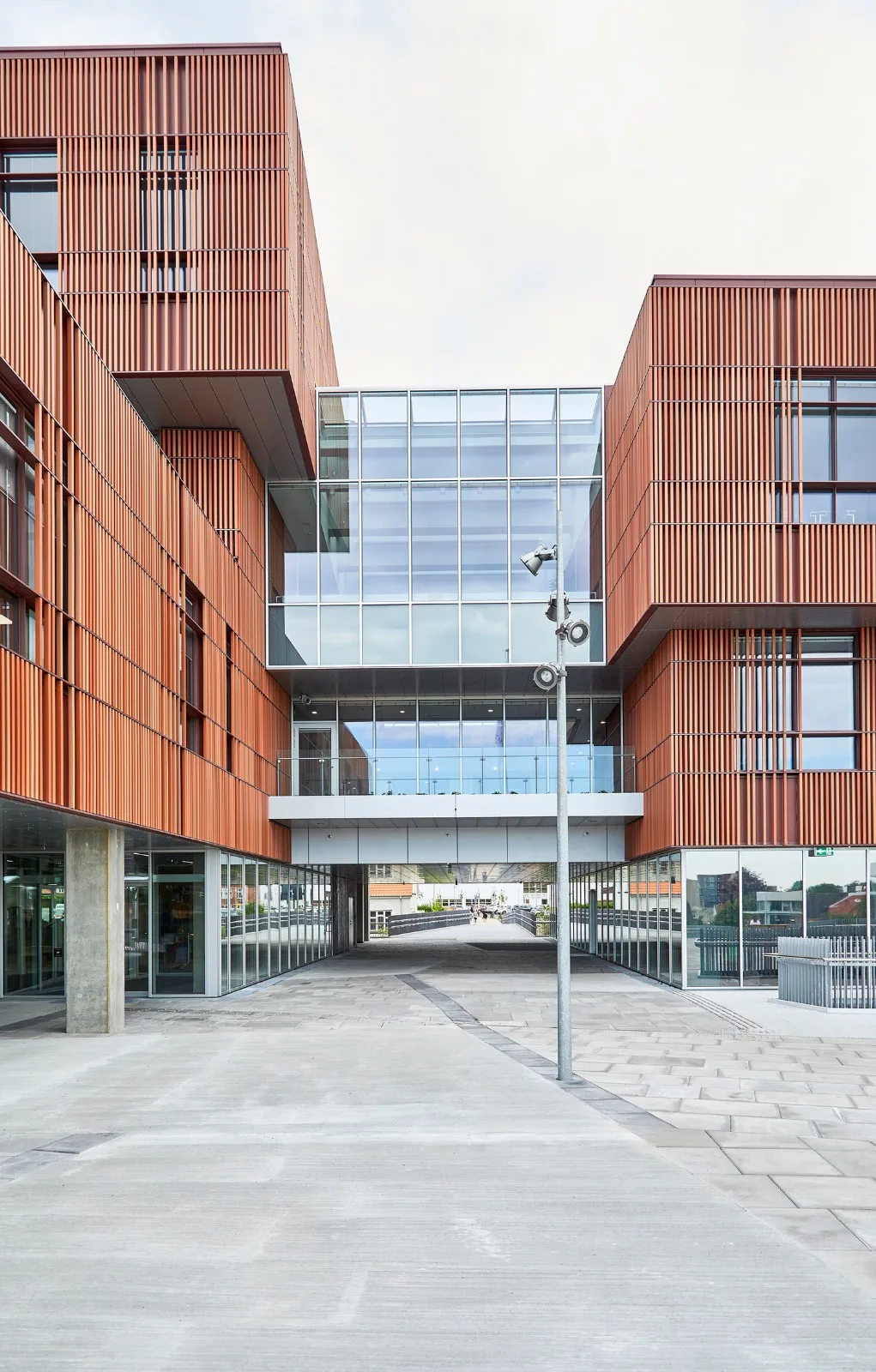
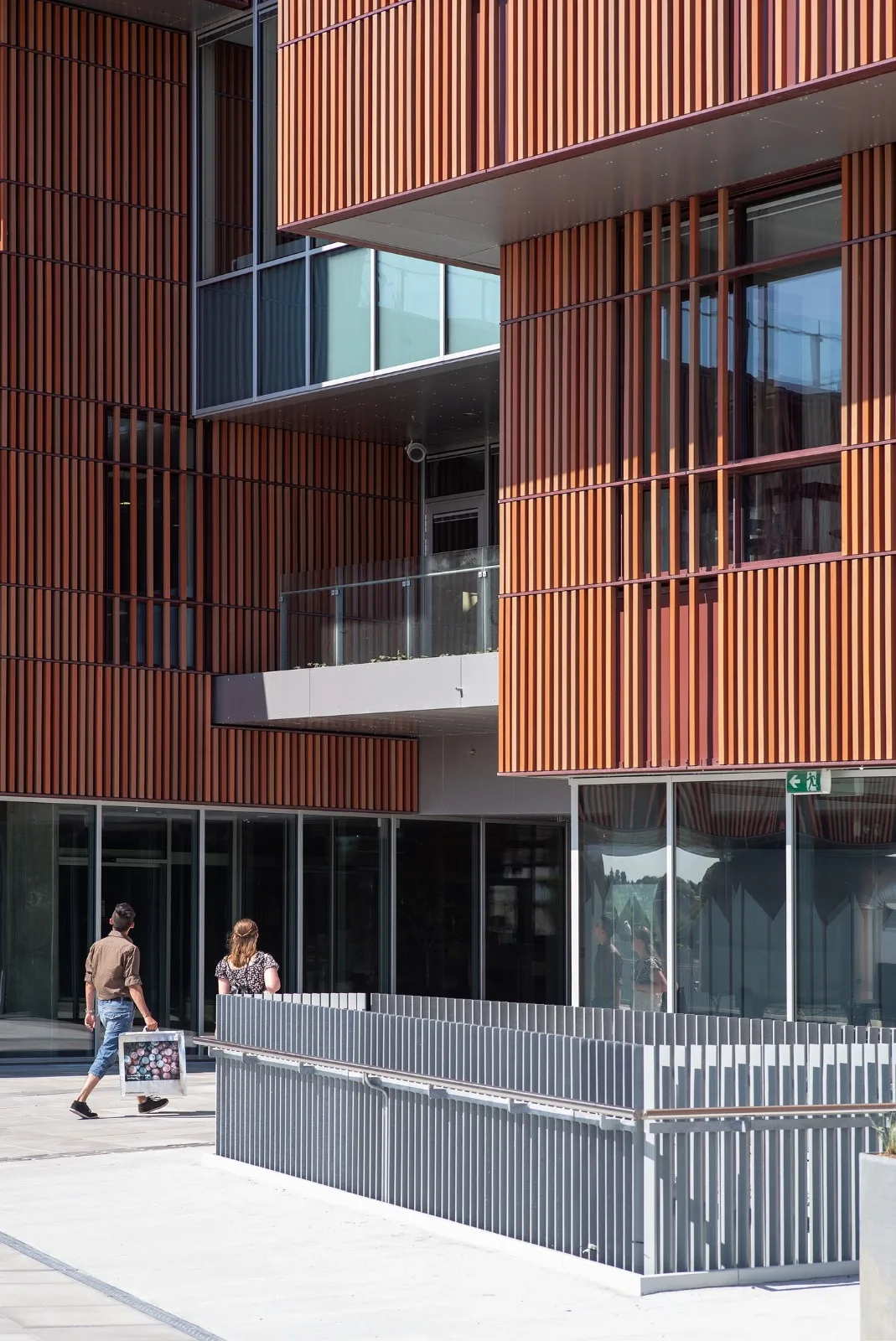
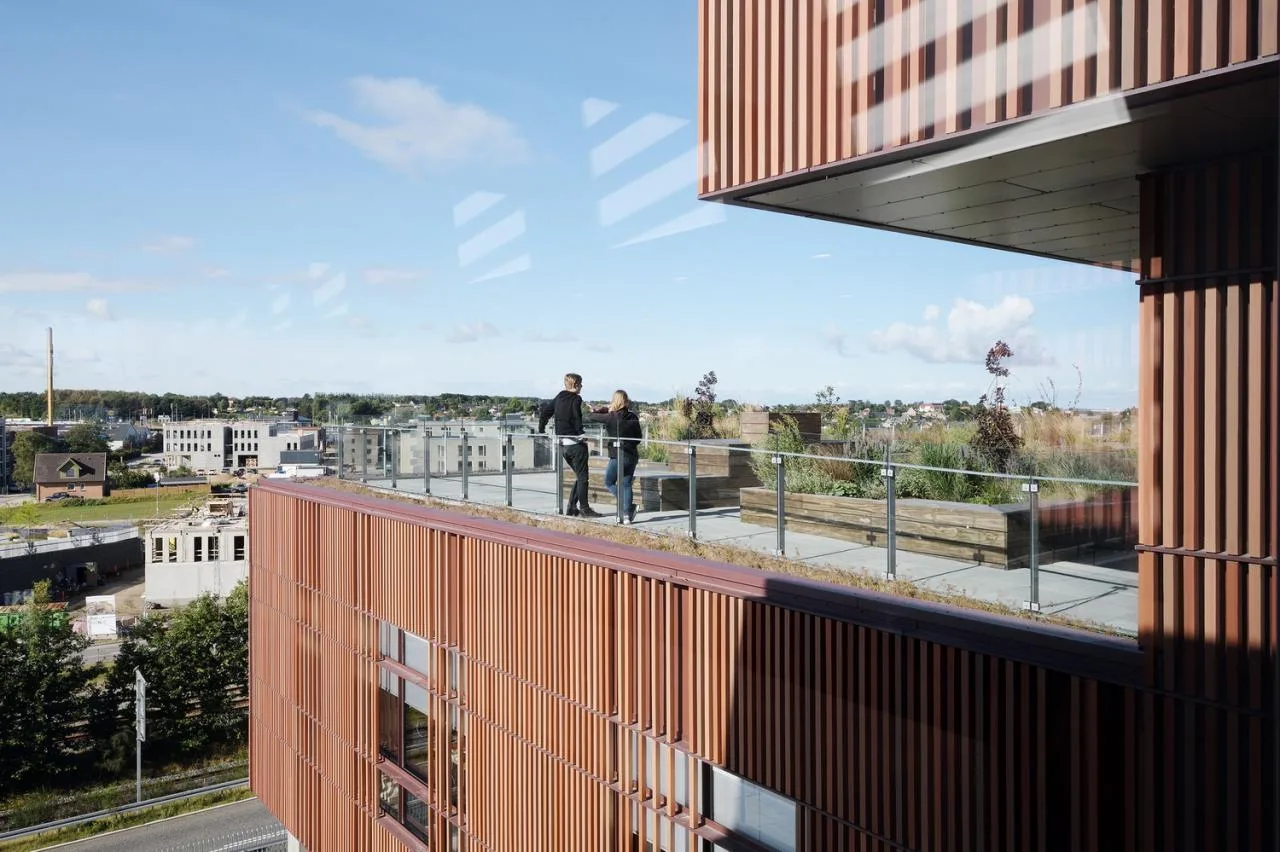
The project also features a new bridge spanning the railway and roadway, creating fresh connections between the city center, Midtbyens Arena, and Viborg Baneby. This development transforms the central urban space into a public area that offers meeting places and green leisure spaces, enhancing the experience for residents and visitors alike. The bridge’s most significant feature is the urban facility “Hærvejspladsen,” or the square, which creates an active urban space on the first floor near the main entrance. This area hosts multiple meeting points and connects various levels—from the lower parking area to a rooftop basketball court offering stunning city views.
Project Drawings
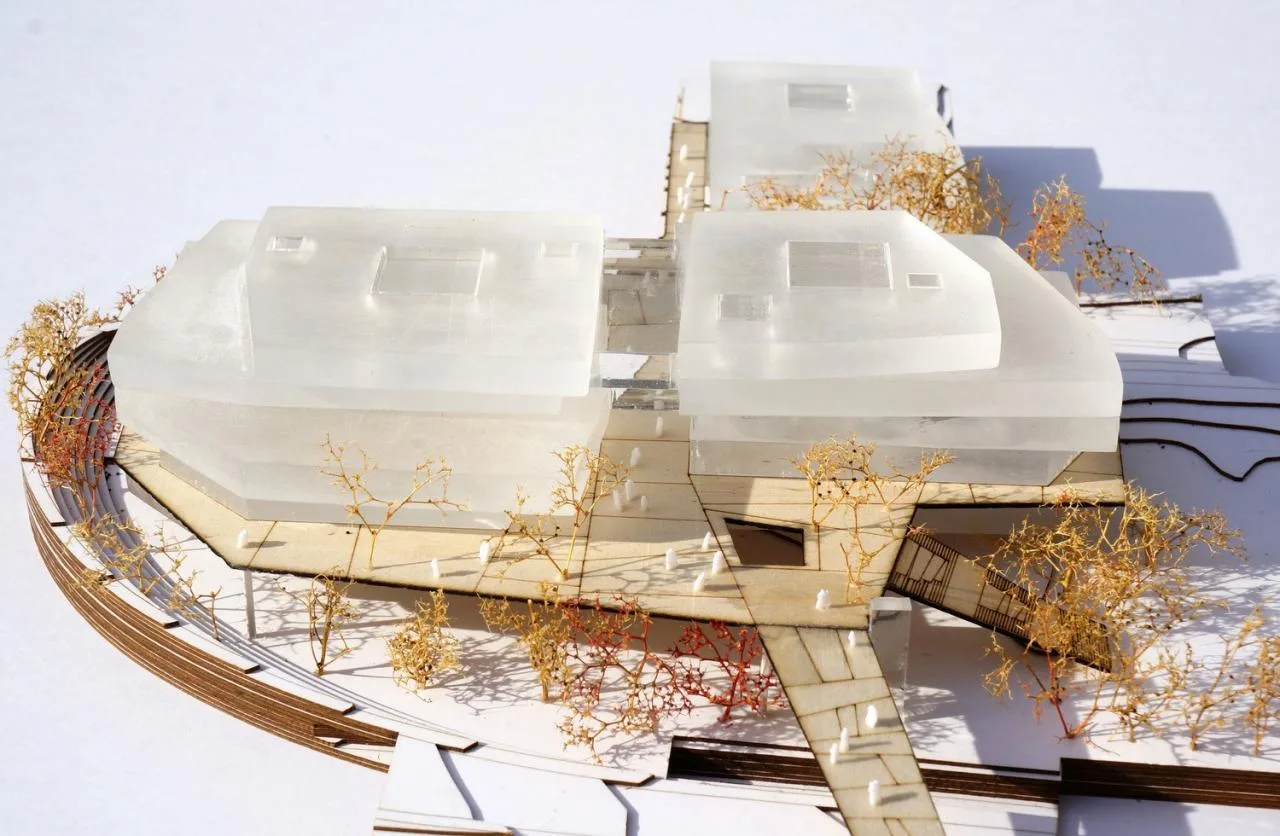
△ Model Diagram
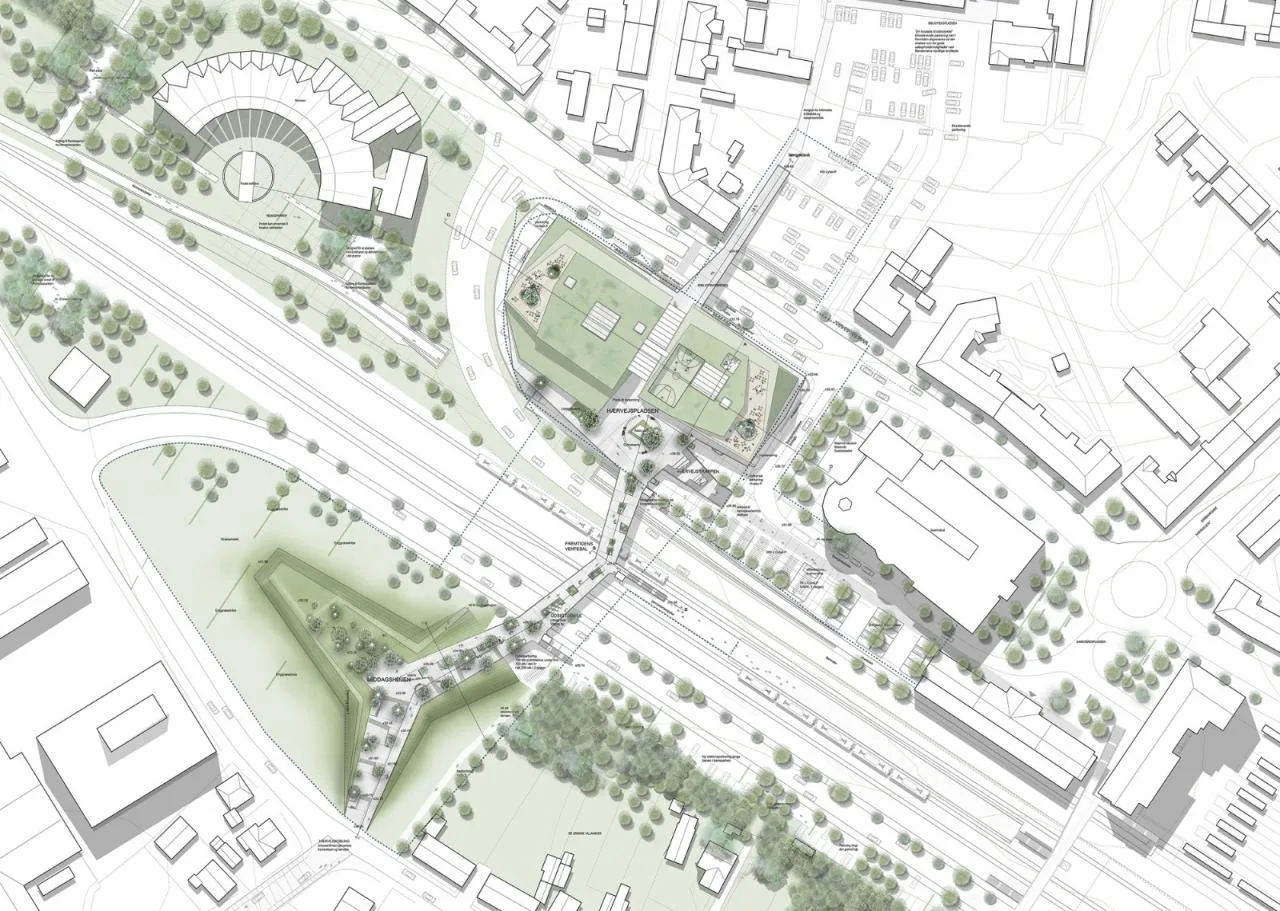
△ Base Schematic Diagram
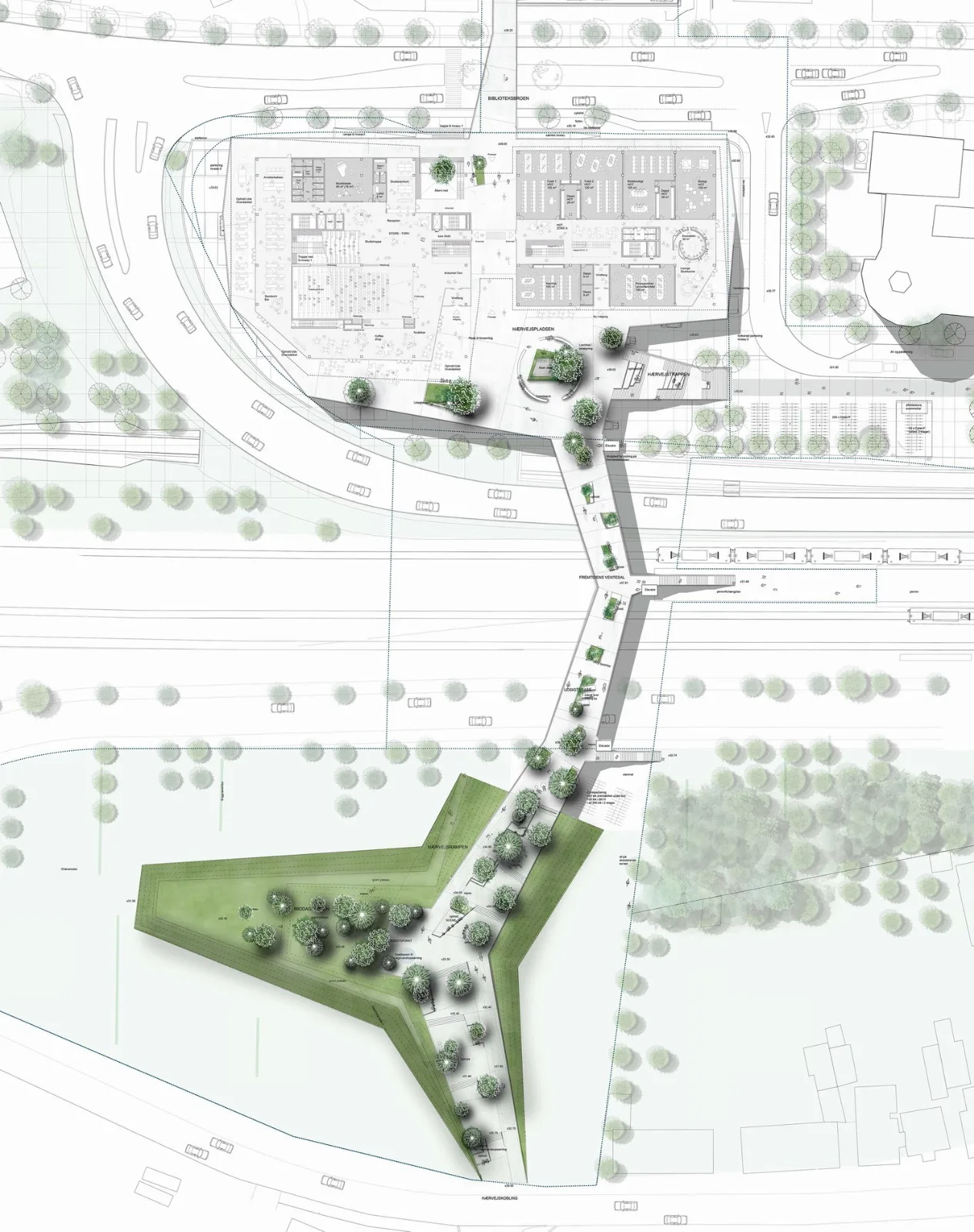
△ First Floor Plan
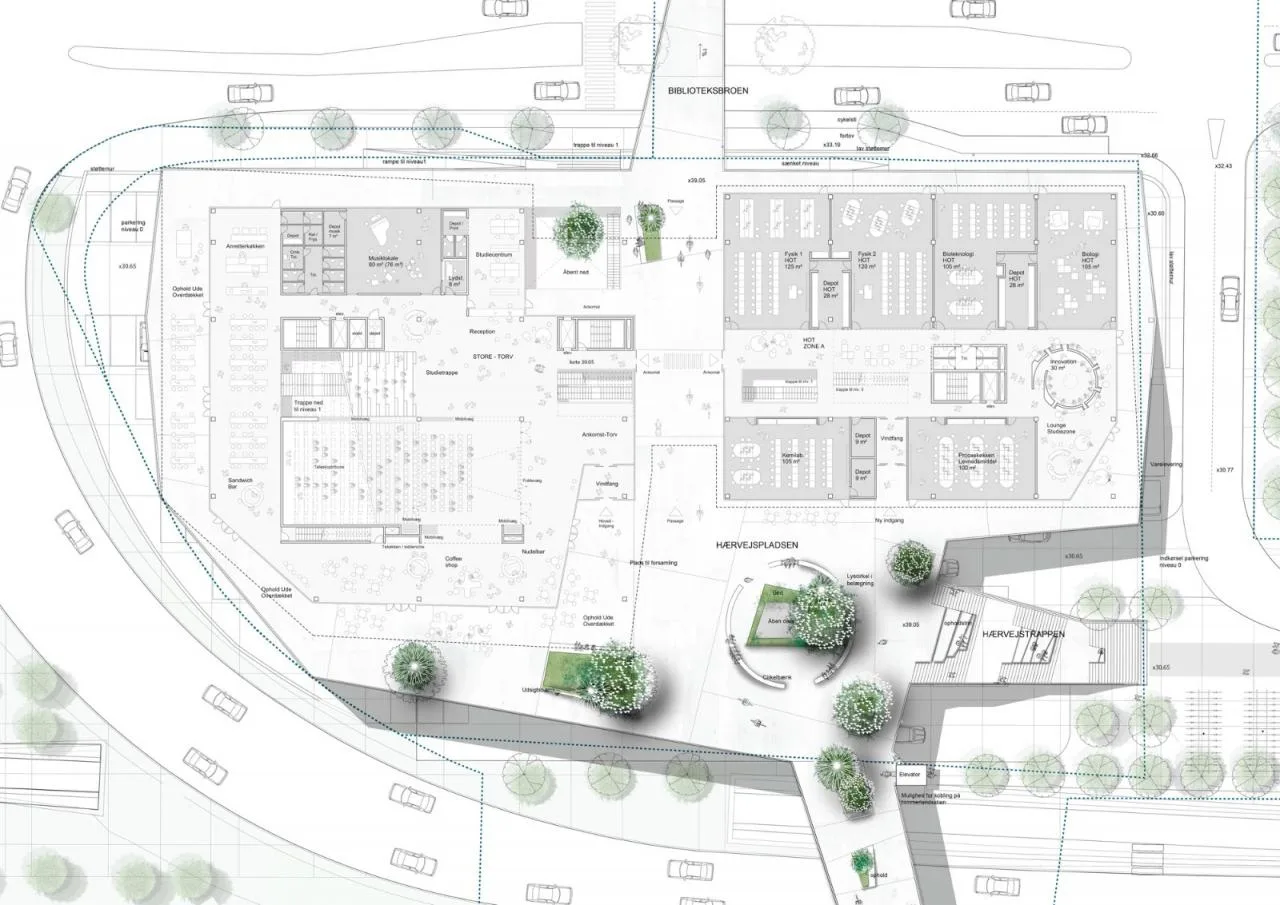
△ Second Floor Plan
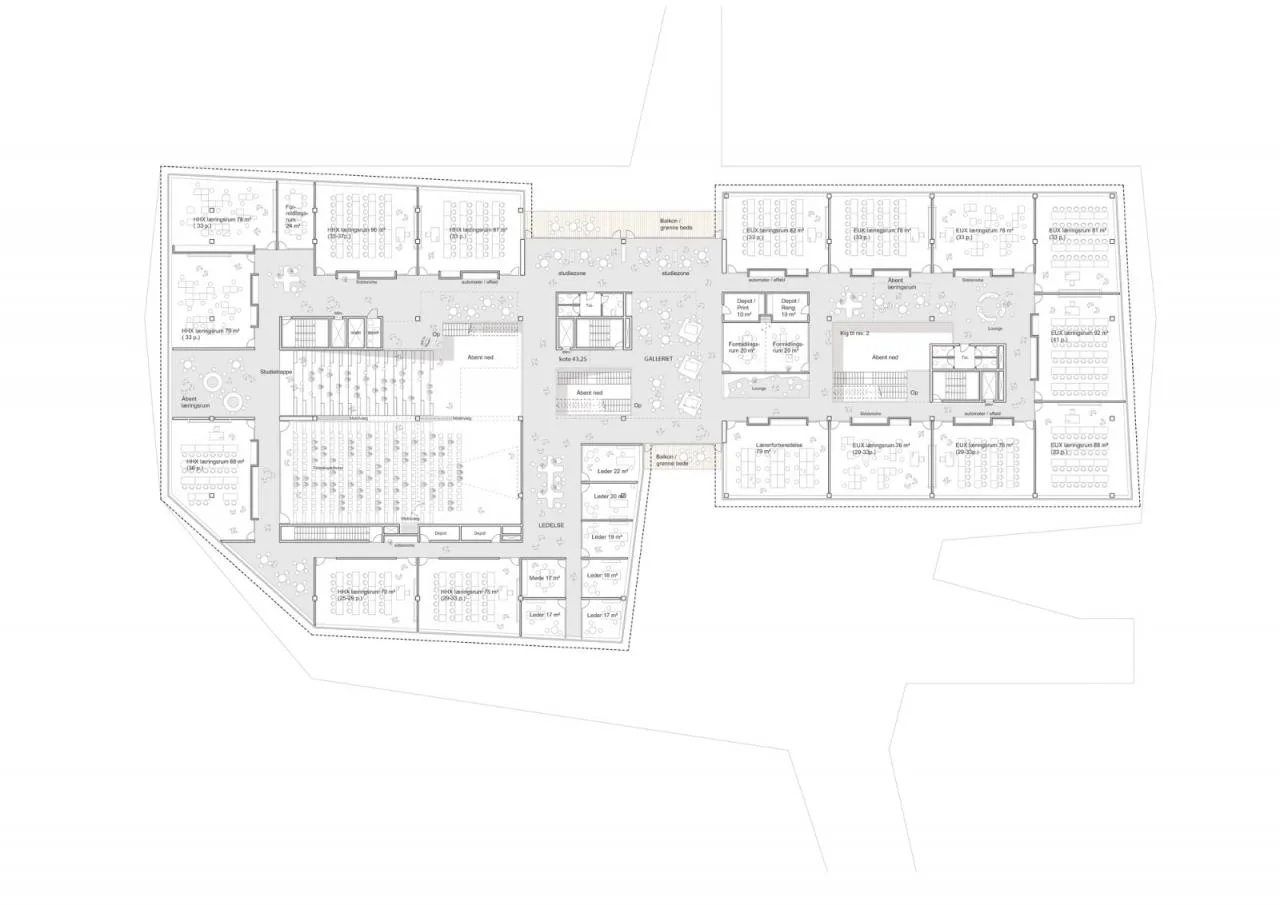
△ Third Floor Plan
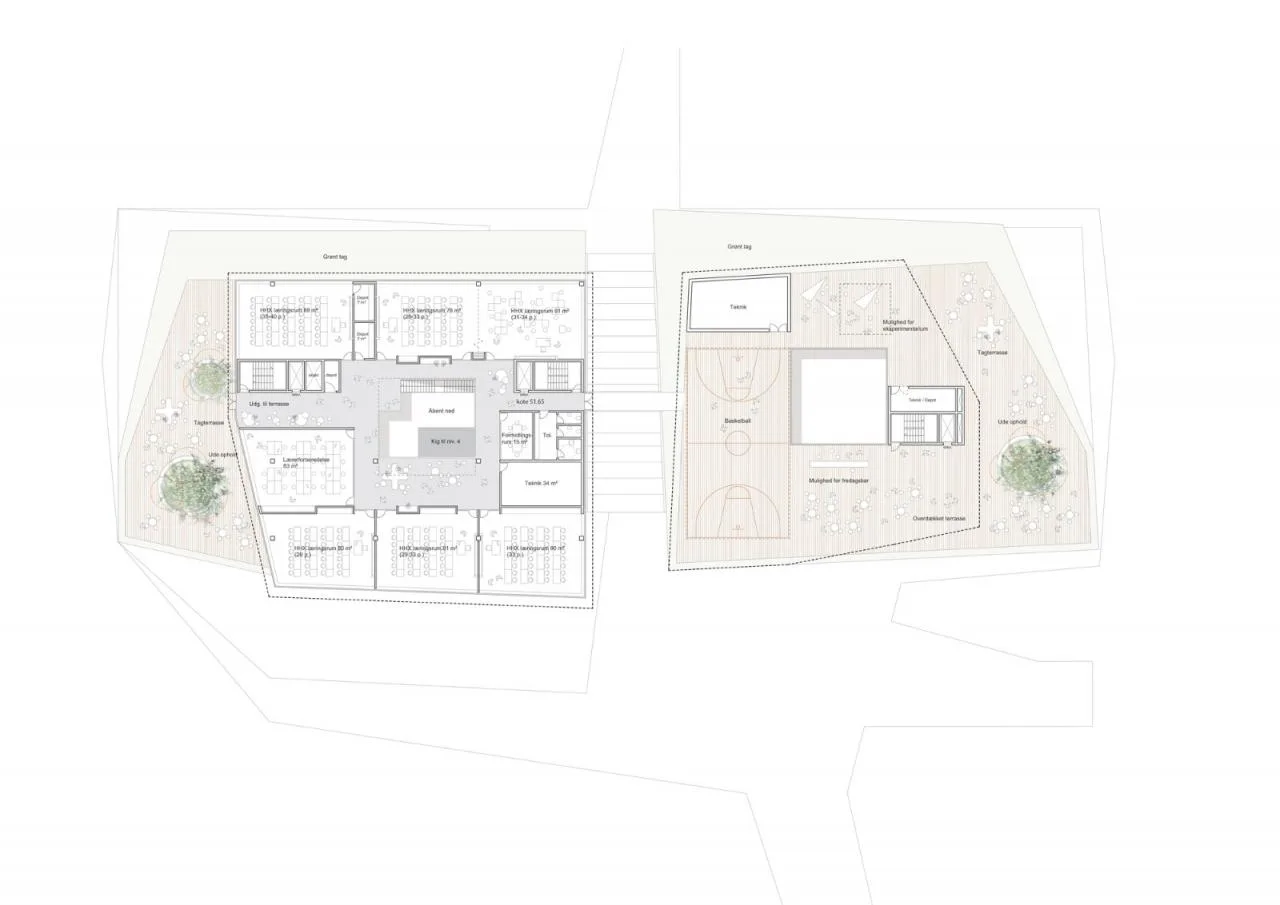
△ Fourth Floor Plan
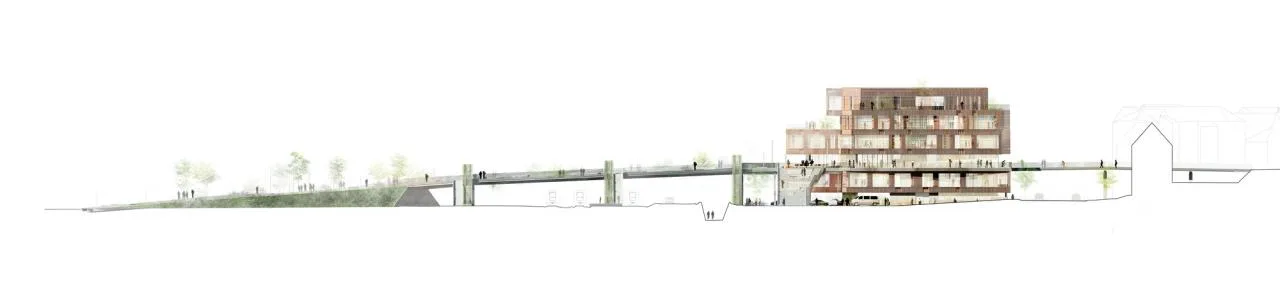
△ Elevation Drawing
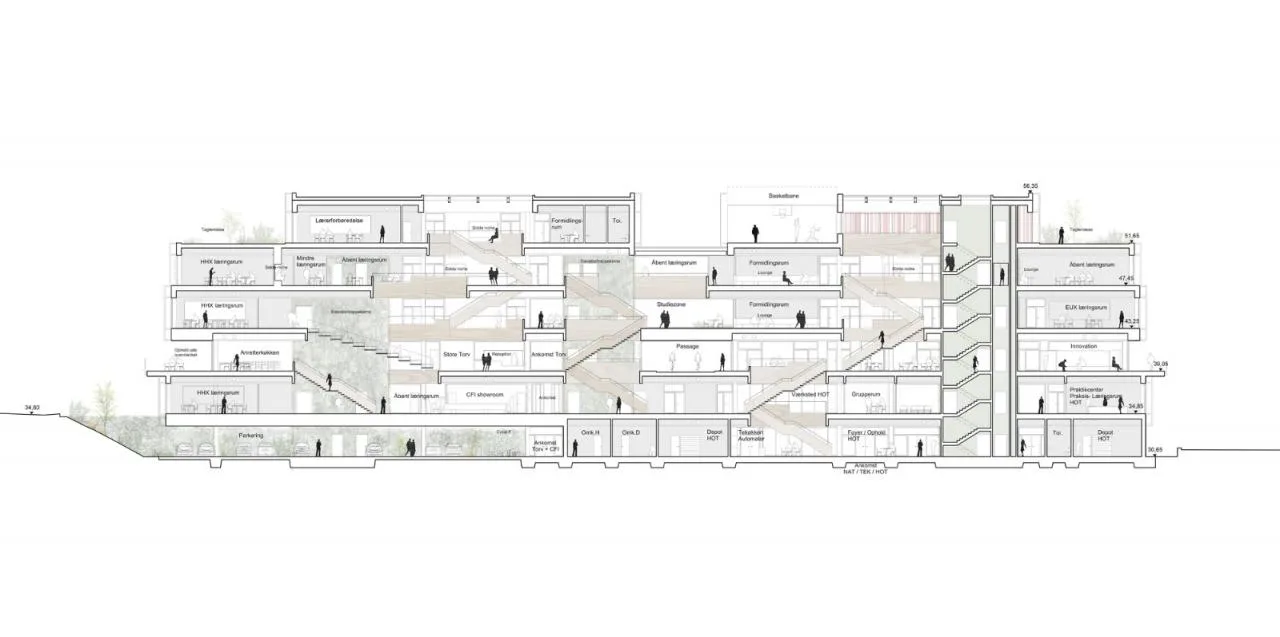
△ Section Diagram
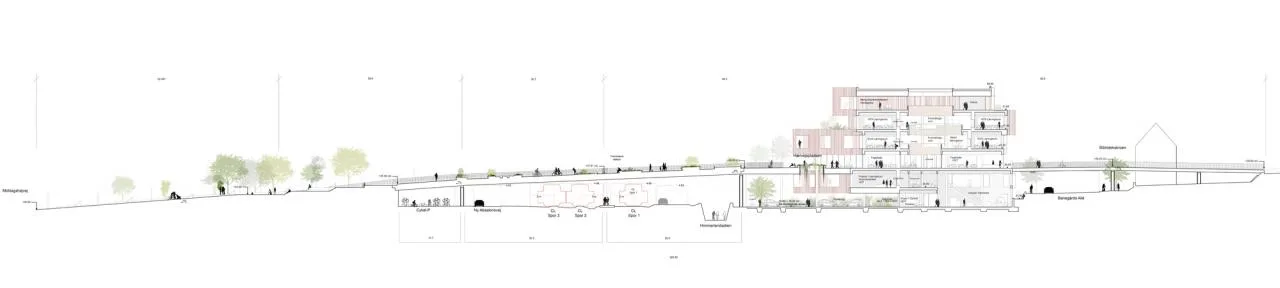
△ Section Diagram
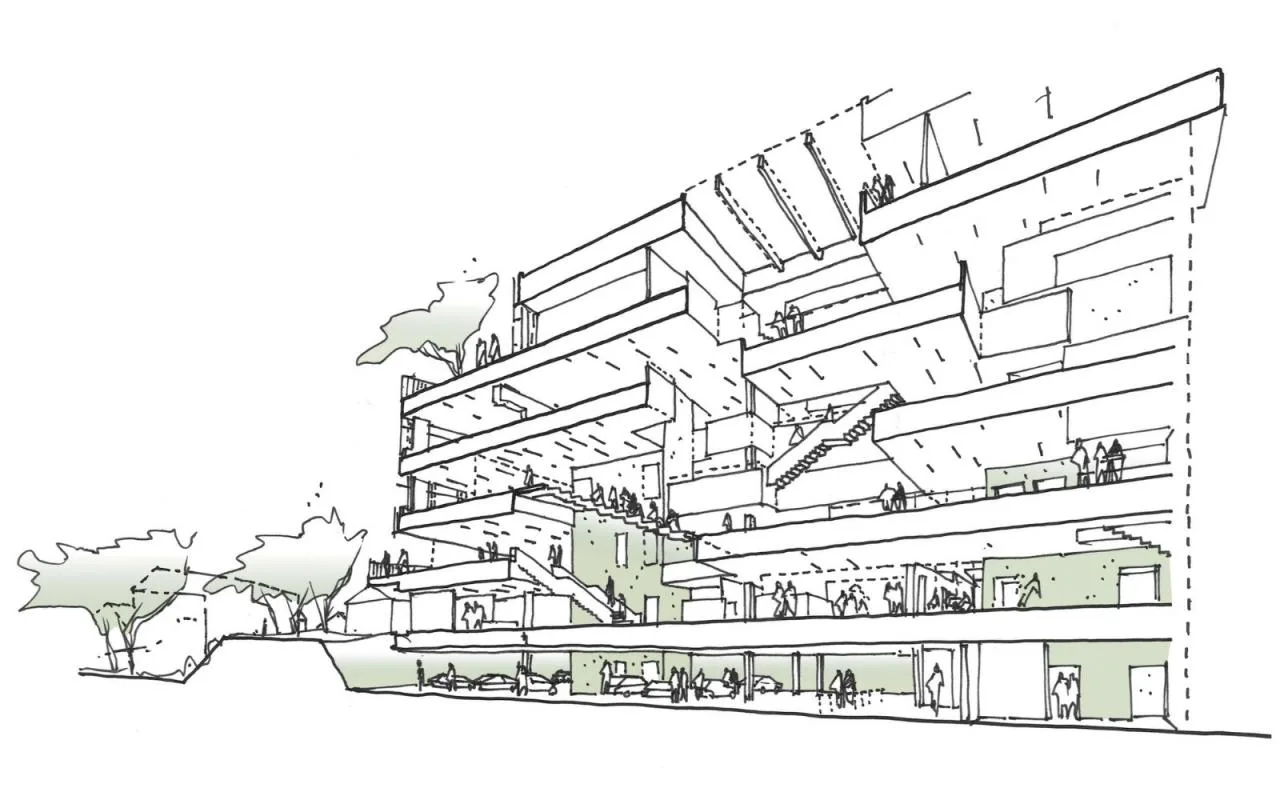
△ Hand-Drawn Sectional Perspective
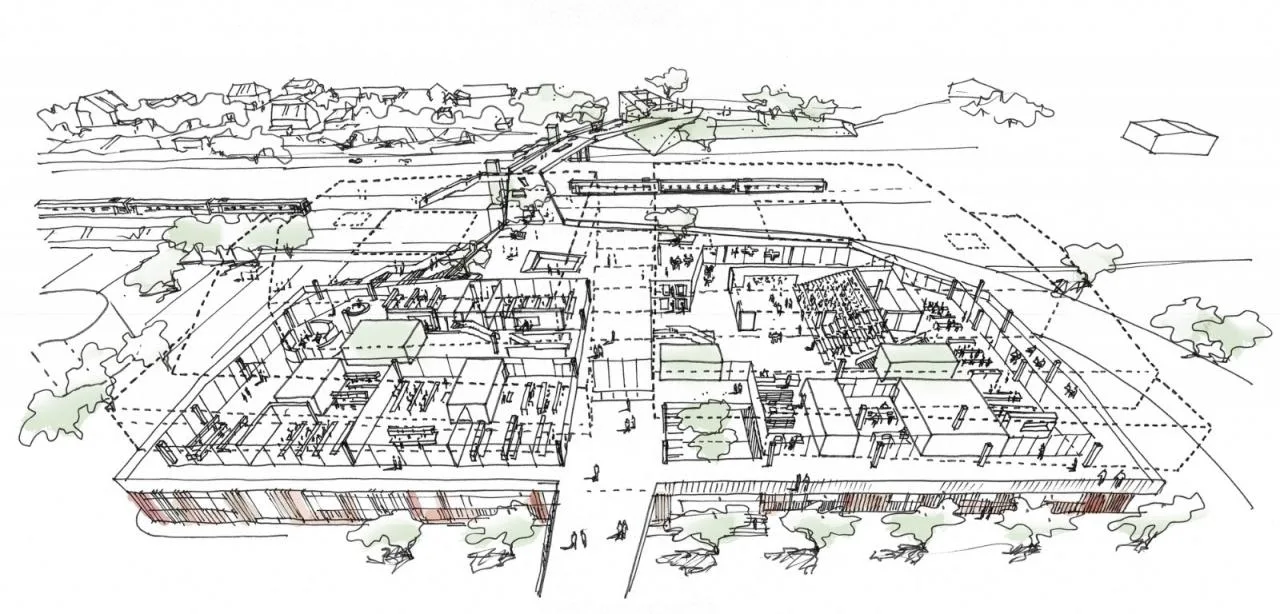
△ Hand-Drawn Sketch
Project Information
Architectural Design: Cubo Arkitekter
Area: 13,000 m²
Project Year: 2020
Photographers: Martin Schubert, Helene Høyer, Ruben Damhave
Manufacturers: C2Elements, HS Hansen, Moelven, Riis Carpentry, Velux
Location: Viborg, Denmark












Must log in before commenting!
Sign Up