
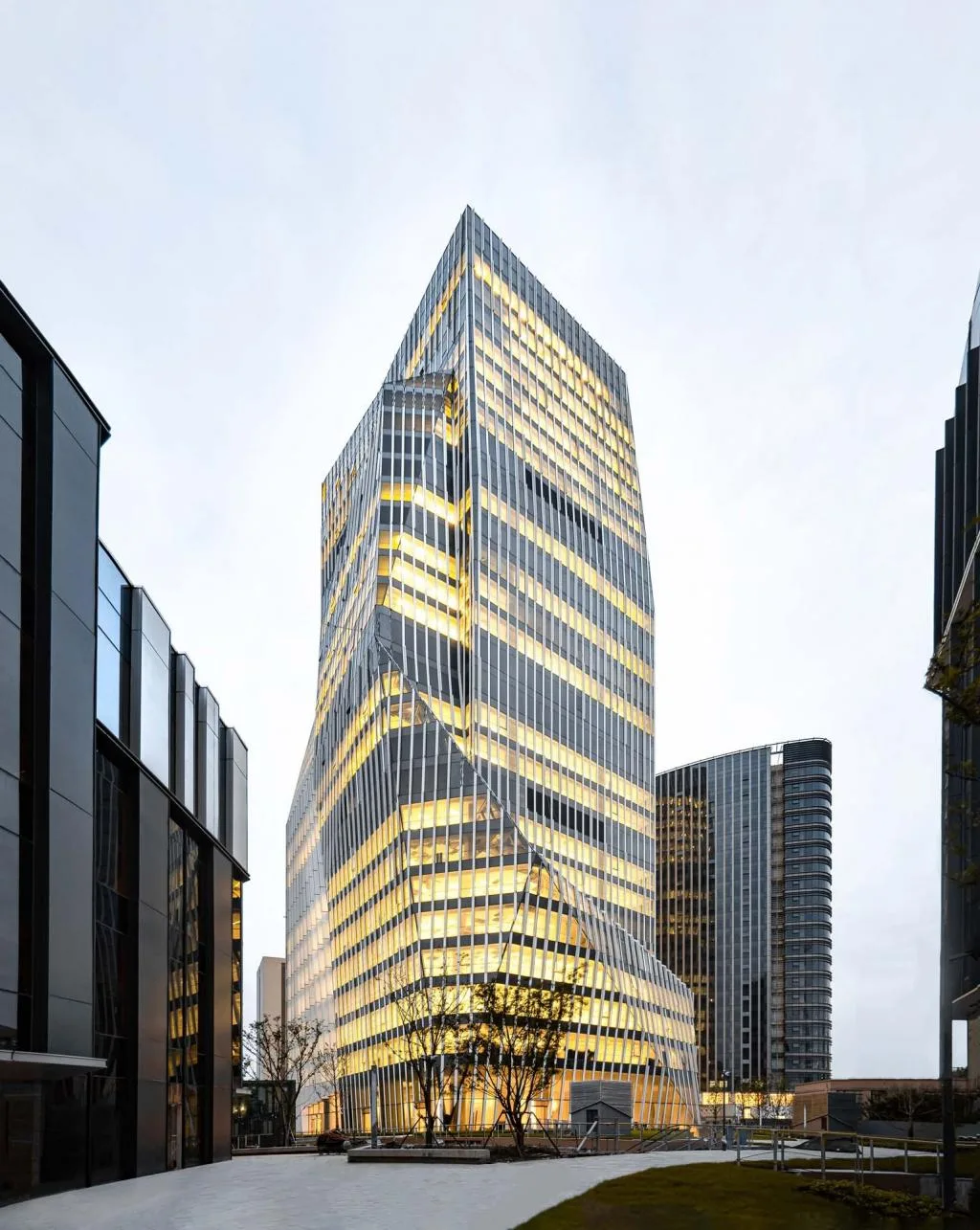
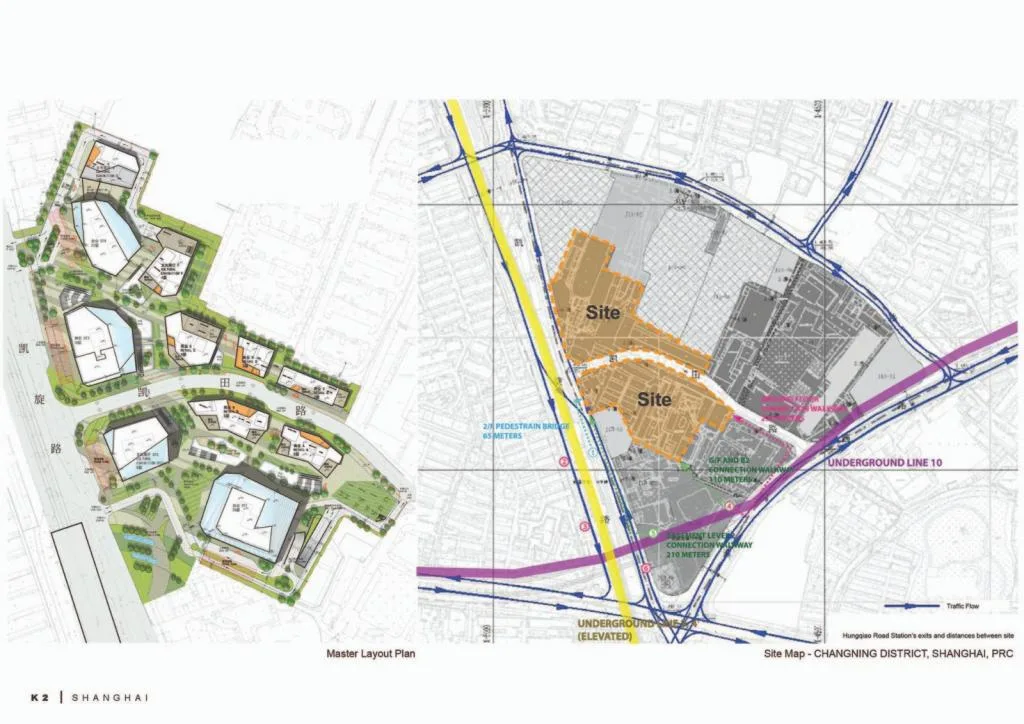
Located at the intersection of Kaixuan Road and Huaihai West Road in Changning District, this project sits near the Hongqiao Road subway station on Line 10. It is adjacent to cultural and creative landmarks such as the Shanghai Urban Sculpture Art Center and Hongfang Creative Park, yet distant from Shanghai’s main CBD areas. At the project’s outset, the primary challenge was to unlock the commercial potential of the site, attract a diverse range of tenants and visitors, and seamlessly integrate the building into its urban context.
“Our goal was to create Changning International Development Plaza as a distinctive and recognizable destination. By designing a social gathering complex inspired by the area’s unique mountainous terrain, we aim to foster interpersonal connections in today’s digital age,” explained Lin Jingheng, Global Design Director of Aedas.
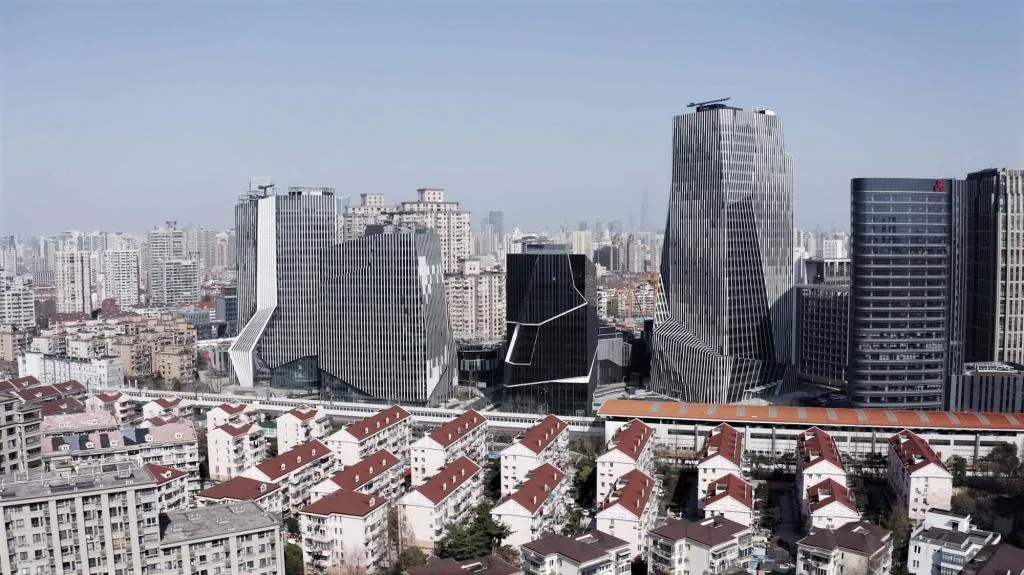
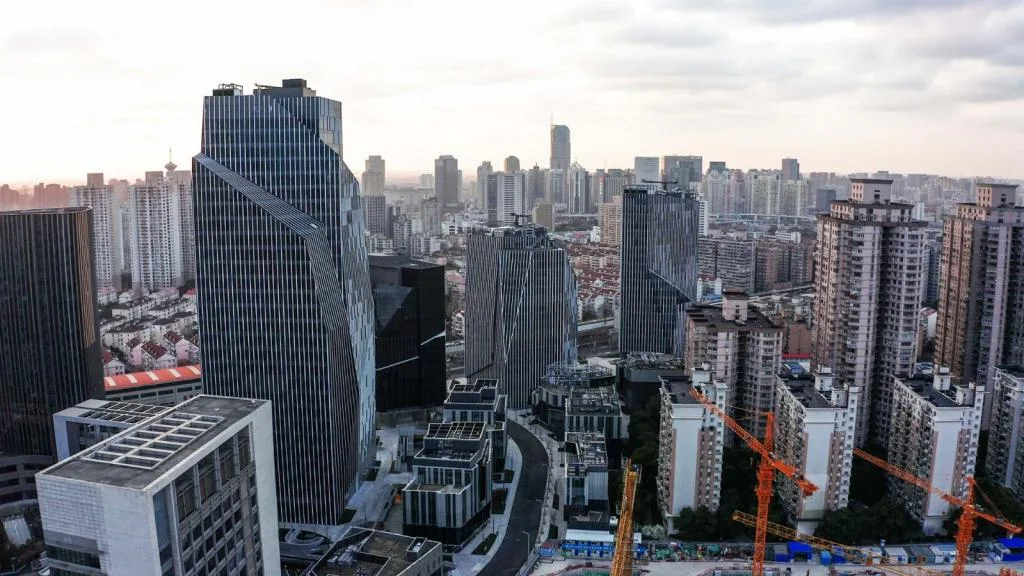
The design draws inspiration from traditional ink paintings depicting rugged mountains and rivers, using the natural landscape as a foundation to create a lively streetscape featuring cliffs and winding valleys. The sculptural forms compensate for Shanghai’s lack of natural mountain scenery. The complex includes a cultural building, three office towers, two exhibition halls, and five commercial buildings, all shaped to resemble mountain peaks and rocky outcrops.
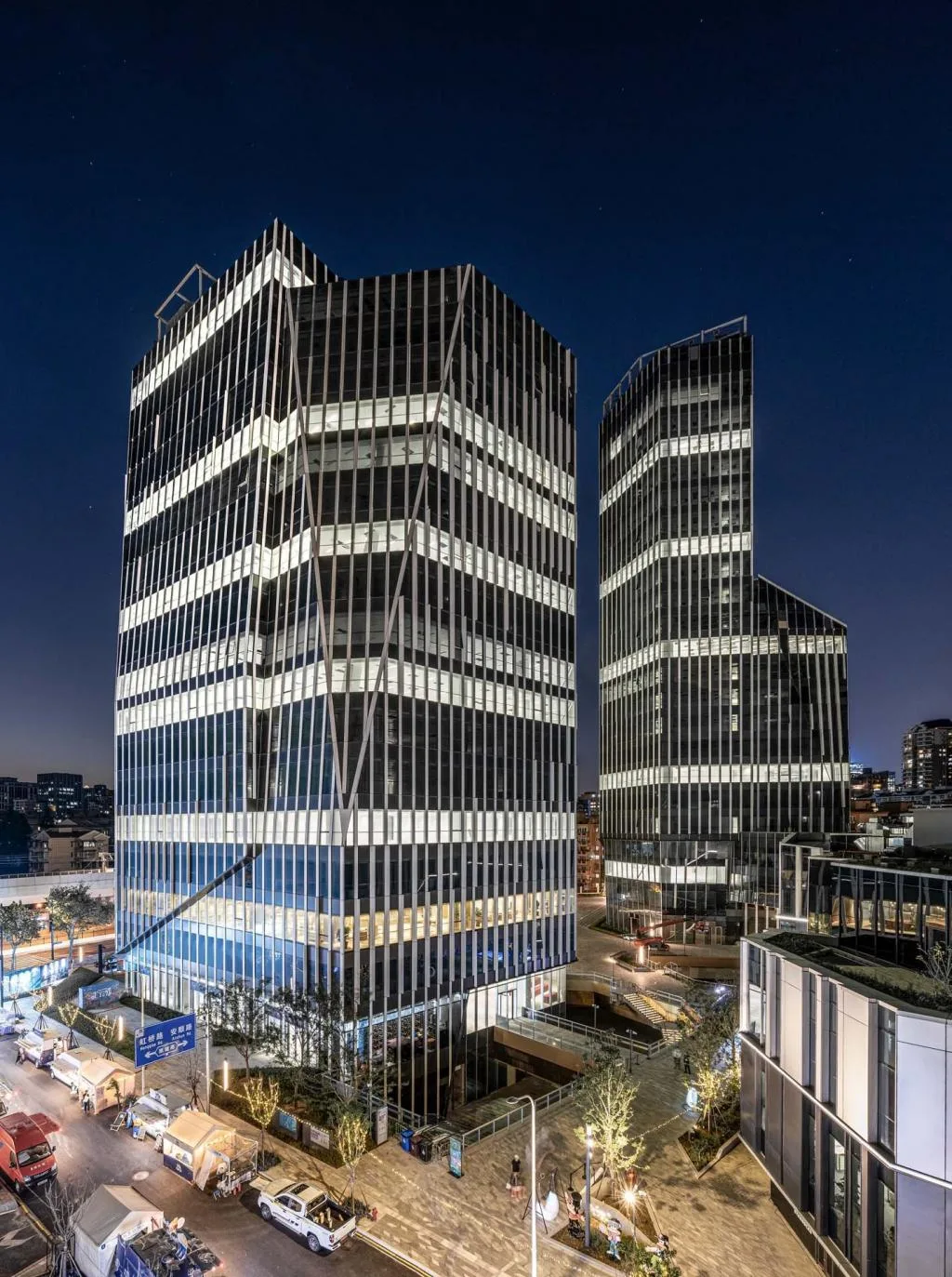
The office buildings are uniquely cut diagonally to form multiple conical incisions, evoking the sharp peaks of weathered rocks. These forms direct the gaze towards mountain summits, subverting conventional office design and creating innovative, technology-driven workspaces beneath the sculpted “mountain” peaks. This imagery reflects the resilience and ambition inherent in entrepreneurial spirit.
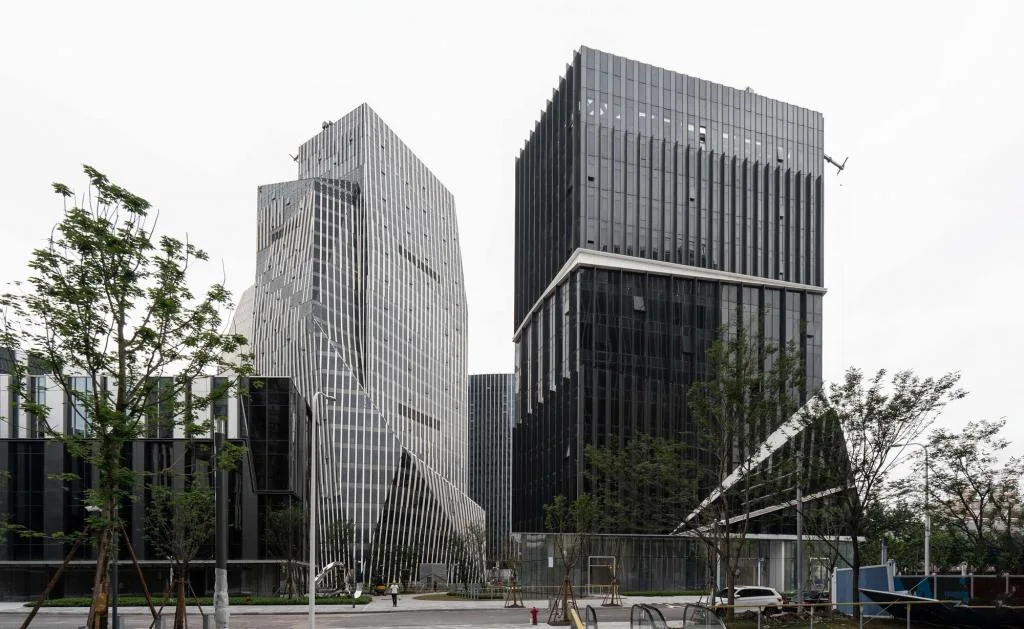
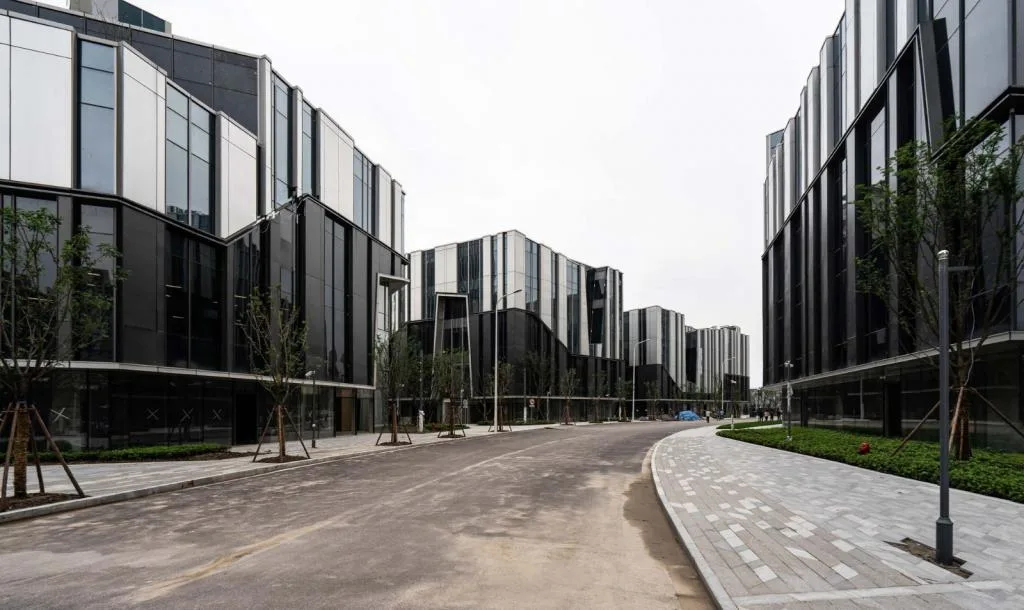
The facade’s vertical lines evoke the brush strokes of ink painting, alternating between dense and sparse textures to vividly portray the rugged contours of mountain rocks. The exhibition hall and commercial buildings feature simple stone-like shapes, while sloping glass curtain walls on their roofs mimic cracks and textures found in natural stone. These shapes echo one another across the street, creating a cohesive visual language.
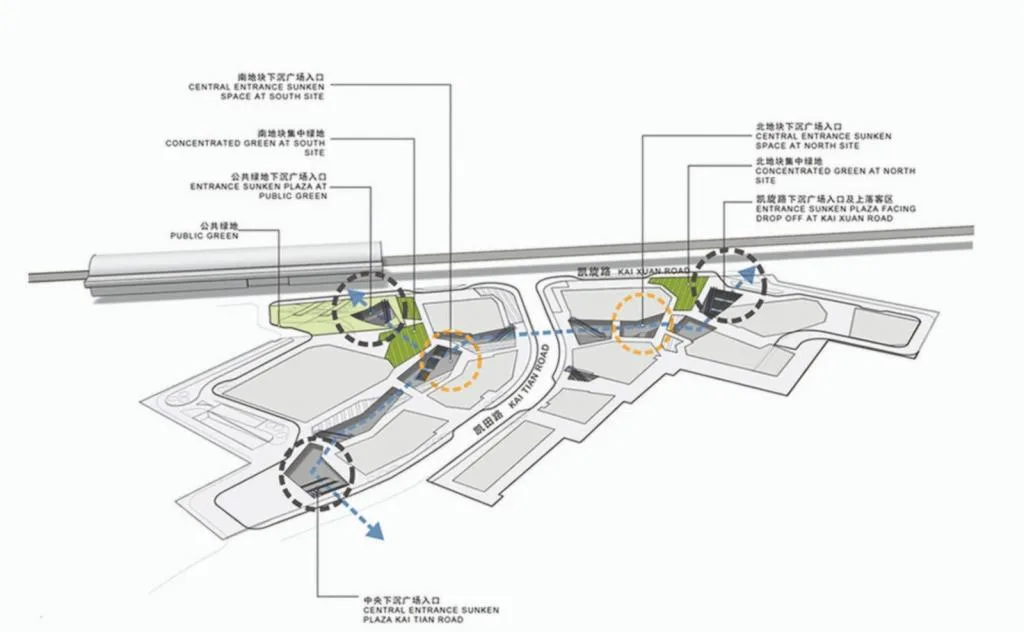
Terraces carved into the tops of commercial buildings overlook a sunken plaza, offering spaces to enjoy meals while admiring the architectural “mountain” scenery. The sunken plaza itself resembles an underground cave, allowing natural light to penetrate below ground and connecting the north and south sides of the street, thus encouraging pedestrian flow.
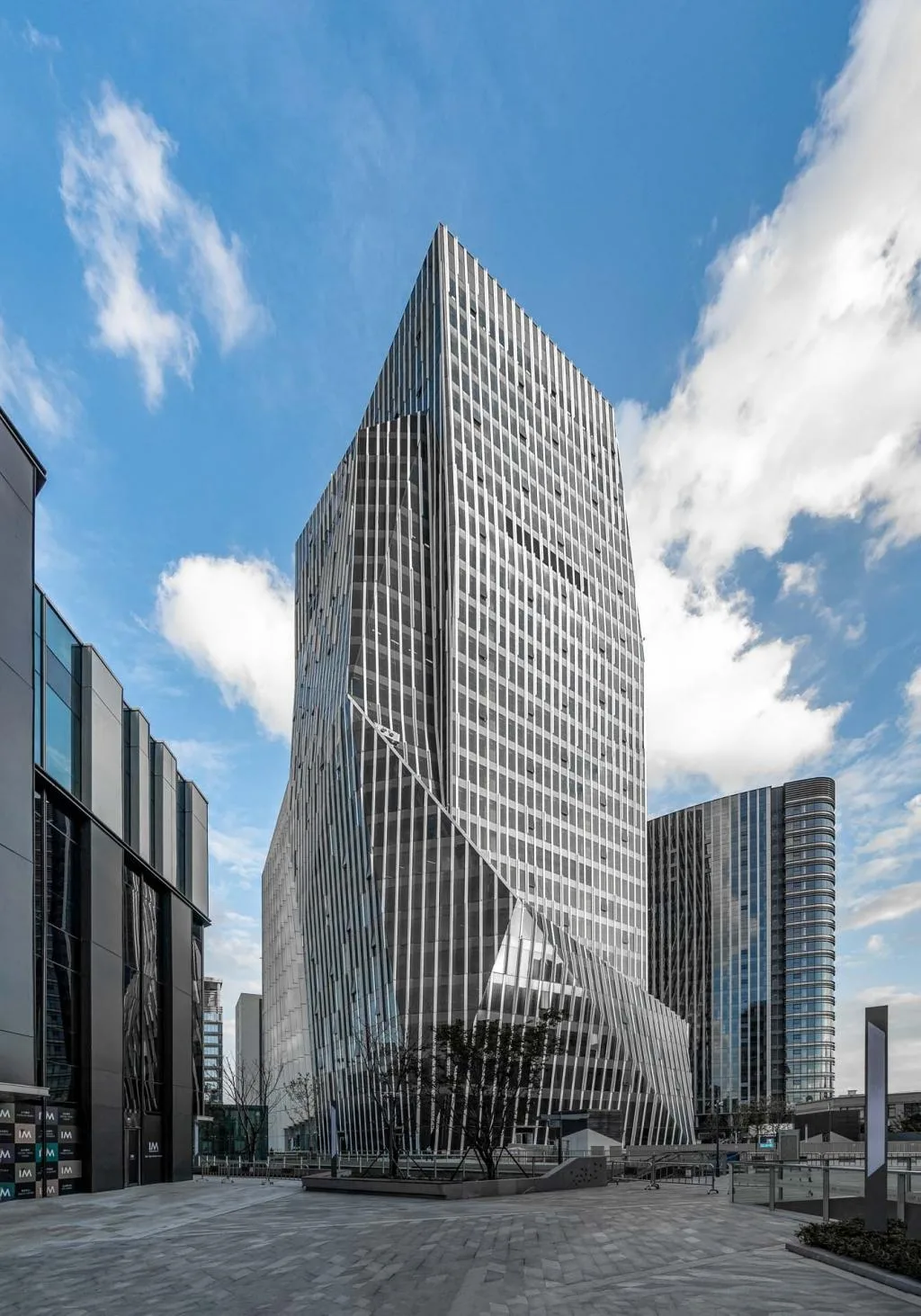
The overall site plan mimics the flow of mountain water as seen from above, shaping buildings and spaces to resemble mountain peaks, stone forests, caves, courtyards, and canyons, piecing together an urban ink painting. Kaitian Road bisects the site like a crack in the mountain range, dividing the rocks into two parts and allowing multi-level commercial buildings to face each other across the street. The bustling traffic below represents a rushing river at the base of the mountain crack.
Exhibition halls, office towers, cultural buildings, and commercial spaces are staggered to create a dynamic, organic profile when viewed from Kaixuan Road’s west side. The sunken plaza acts as a cave fissure, connecting the north and south ends of the site and collectively forming the iconic “mountain” silhouette.
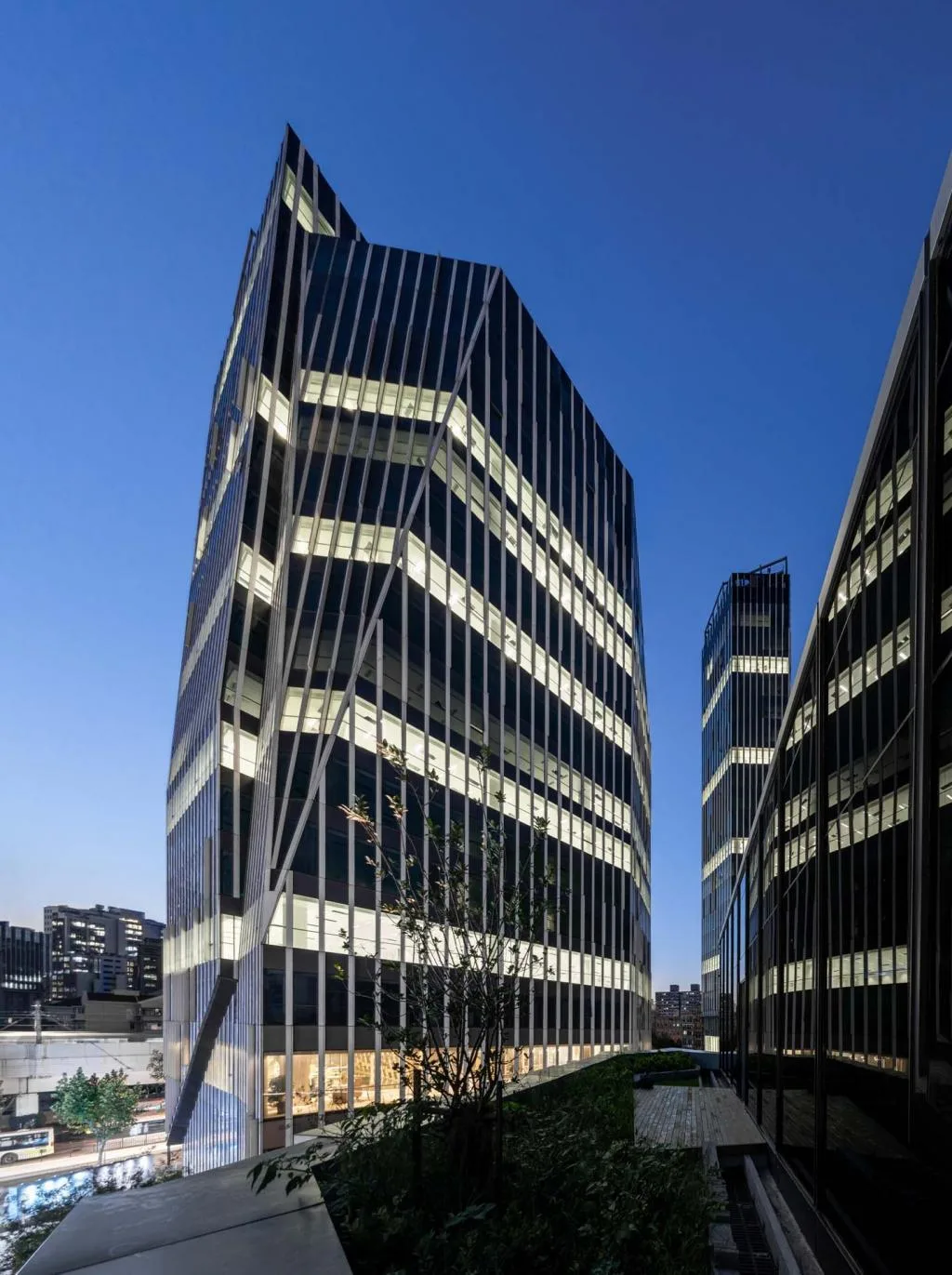
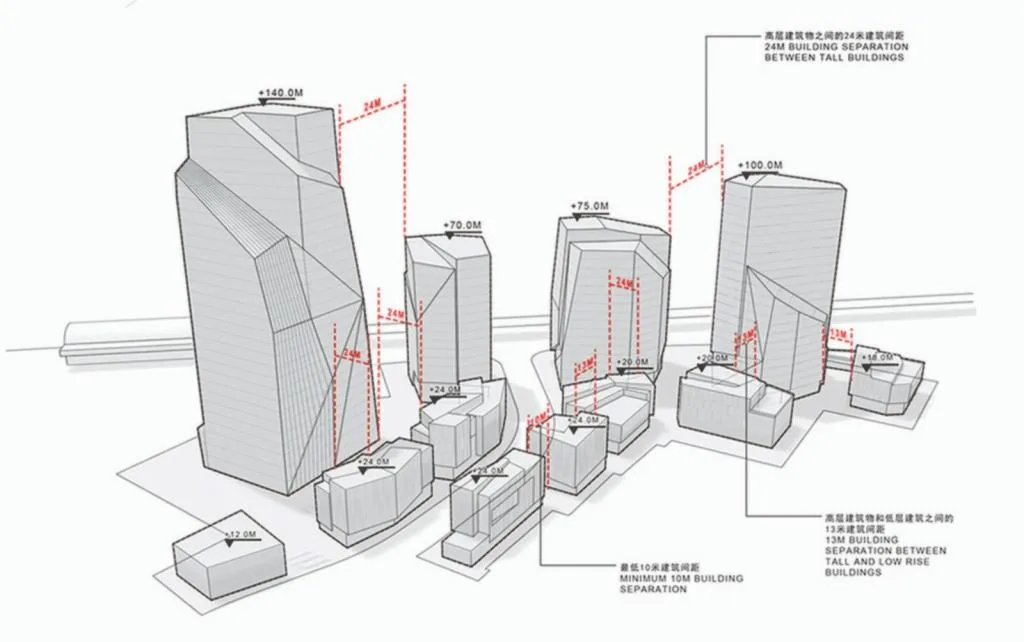
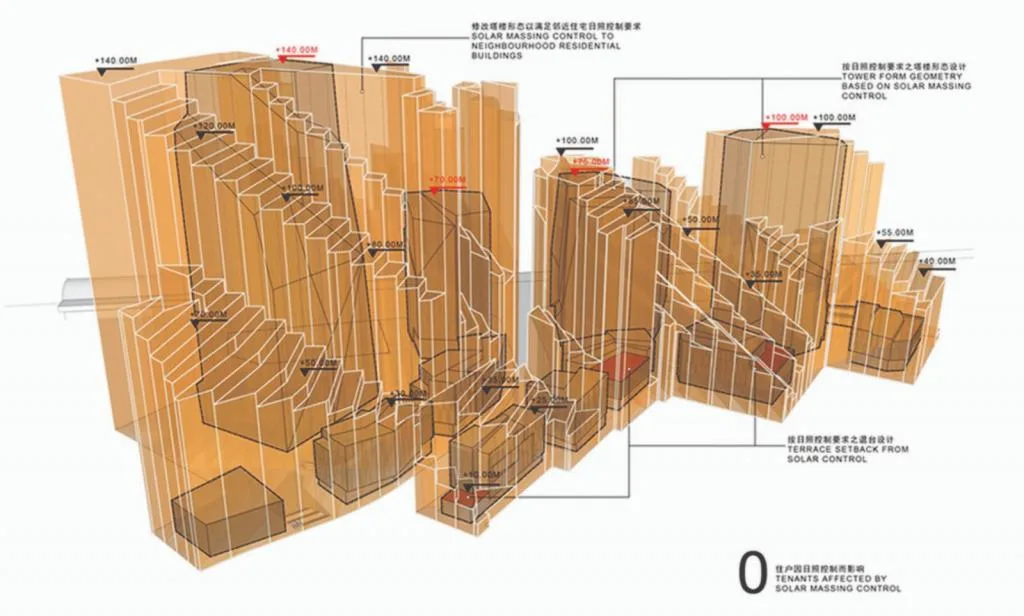
The layout optimizes spacing between buildings of varying heights to maintain a comfortable scale. A comprehensive sunlight analysis led to a stepped building volume design that gradually decreases from south to north on both sides of the road, effectively mitigating sunlight obstruction for surrounding residences.
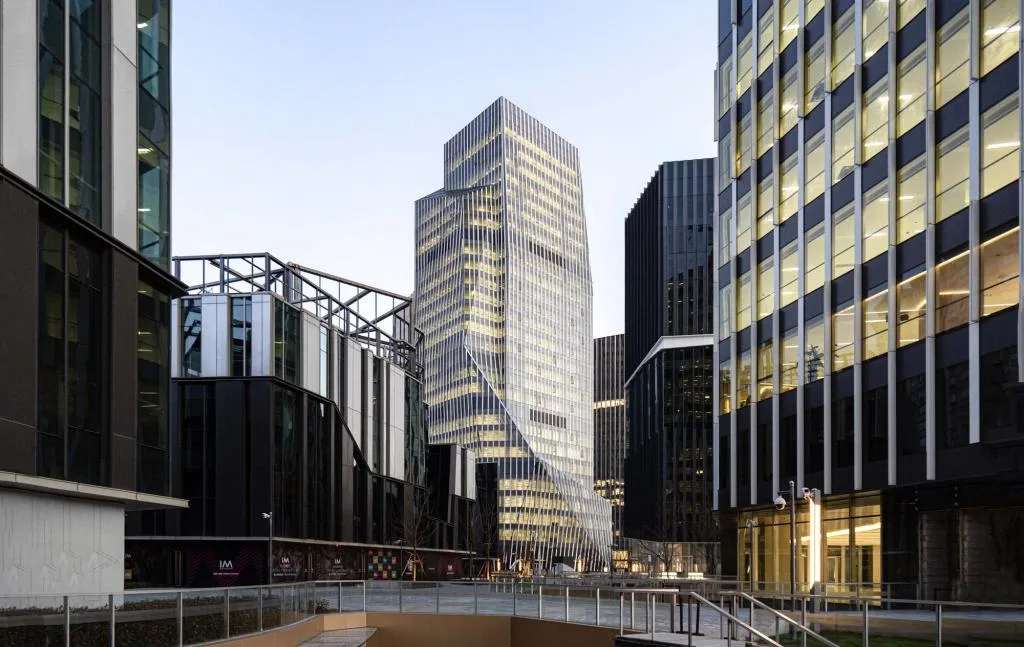
Anticipating future diverse office needs even before coworking became popular in Asia, the design features flexible and expandable public office spaces. Positioned uniquely to stand apart from typical office buildings, the office tower offers more than just inexpensive shared desks or rentals. Instead, it provides commercial office spaces designed for long-term partnerships, with personalized environments of varying sizes and multifunctional amenities comparable to corporate headquarters.
“Is there a better option than this?” asked David Clayton, Global Design Director of Aedas.
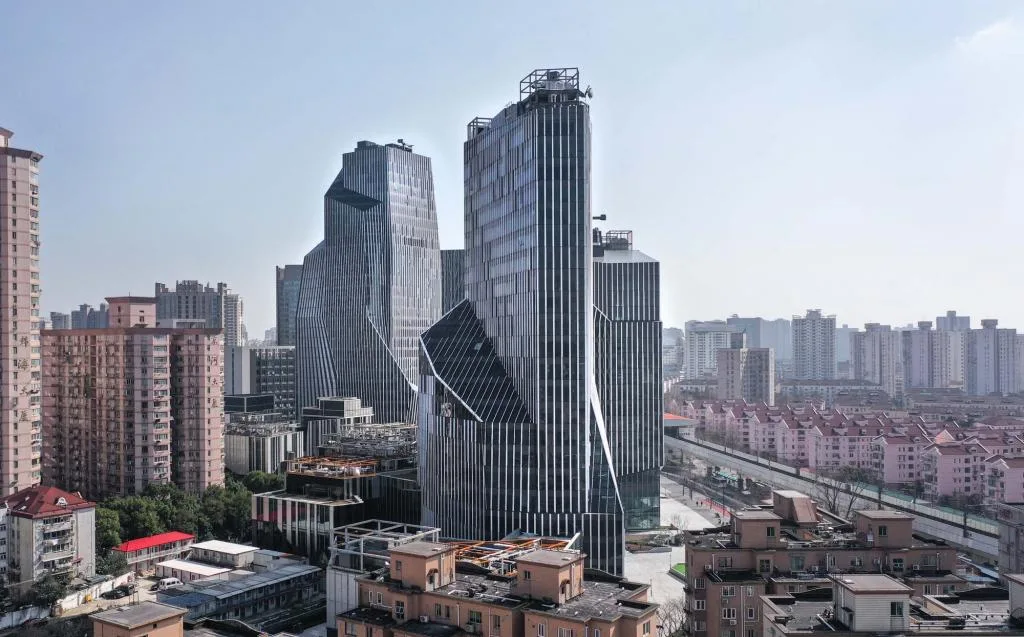
Bathed in sunlight, the organic glass curtain walls reflect surrounding scenery, blending modern materials with traditional Eastern mountain and rock imagery. This fusion creates a futuristic yet elegant aesthetic. The tall entrance lobby, framed by transparent glass and internal geometric patterns, exudes a sophisticated business atmosphere akin to a corporate headquarters.
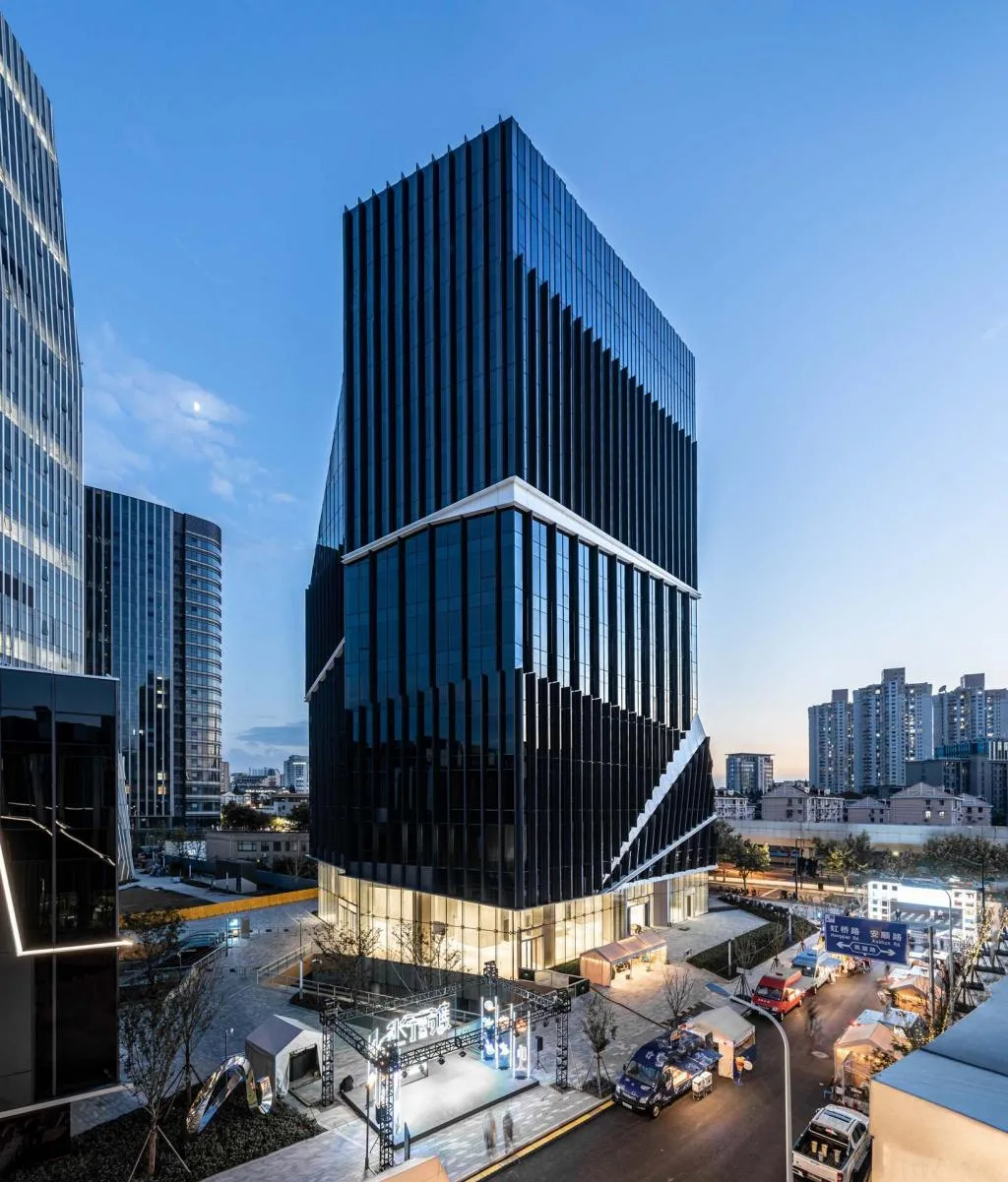
The design balances practicality and flexibility with a unique architectural style. The tower uses an efficient central core tube, featuring a polygonal square floor plan with optimized depth. Passenger elevators are divided into high and low zones, and the high zone incorporates a recessed core to create wider office spaces. An inclined column structure adapts the building’s form while maintaining spatial functionality.
Independent office spaces provide startups with small-scale headquarters environments, offering a more attractive alternative to traditional coworking spaces. Additionally, exhibition spaces are integrated within the complex, eliminating the need for companies to seek external venues. The spiral atrium and sky garden foster interactive communication among enterprises, enhancing office comfort and collaboration.
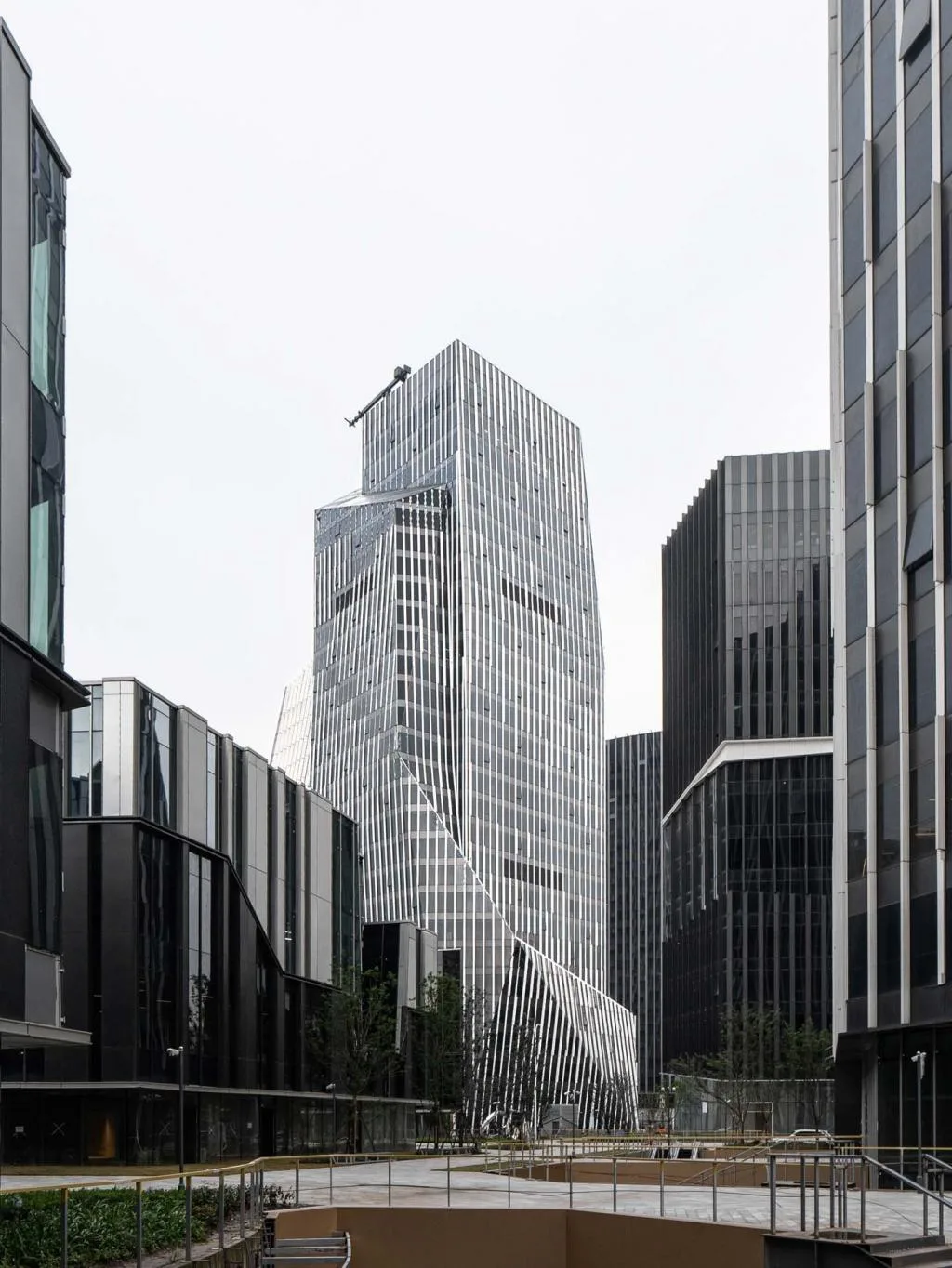
As a local development project amid urbanization, the key to success lies in improving area quality while fostering shared community values and capacity. “Guided by urban regeneration policies and responding to the evolving needs of interconnected digital cities, our team infuses unique identity and character into communities through personalized architecture and public spaces within a connected hub framework,” noted the design team.
This approach encourages residents to feel a sense of belonging and become active participants in ongoing community operations, ensuring sustainable development.
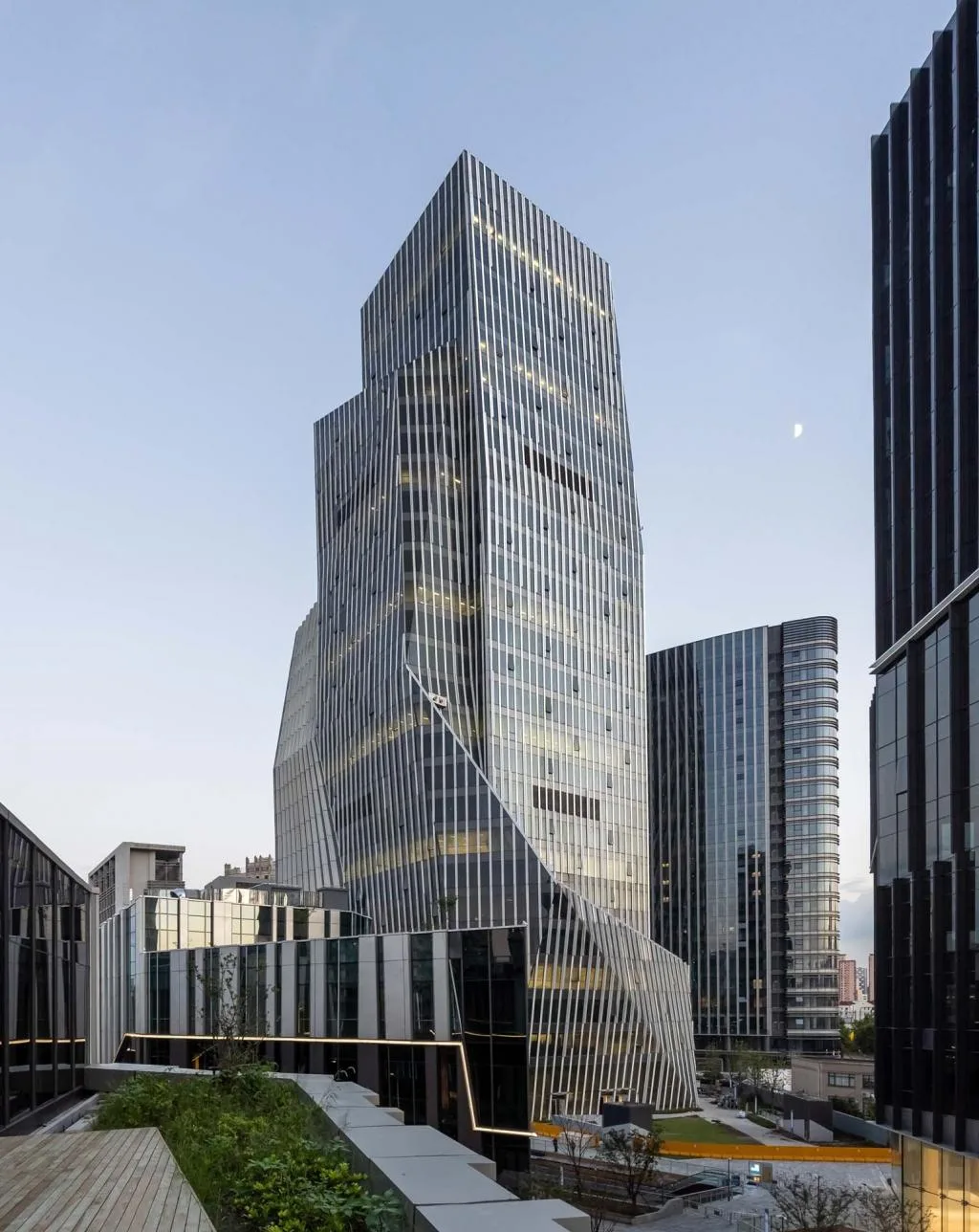
Additionally, the design thoughtfully integrates with surrounding transportation networks, providing new office, commercial, and service facilities that optimize the urban interface. Coordinated with systematic city management, this development promotes balanced growth throughout the region.
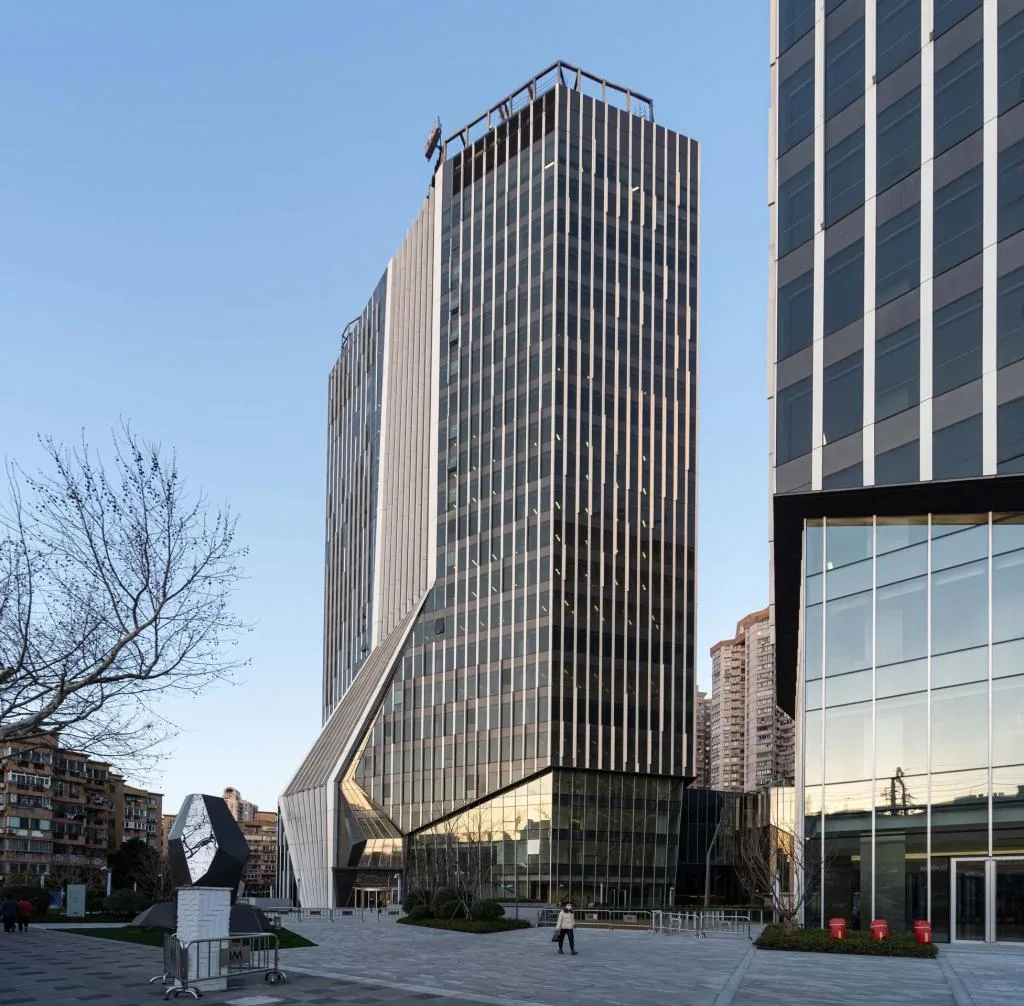
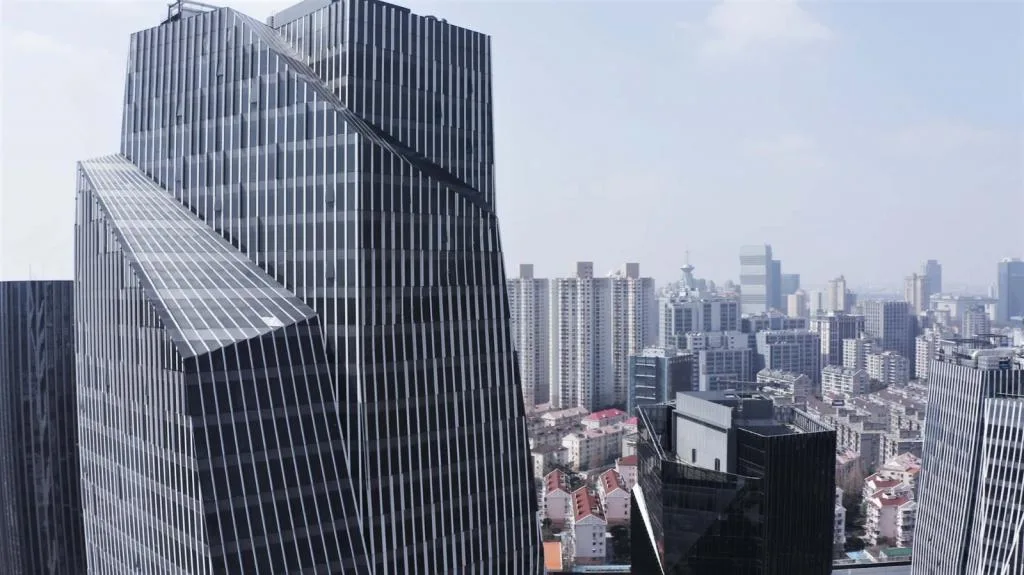
Project Drawings
Project Information
Architectural Design: Aedas
Area: 259,000 square meters
Project Year: 2021
Photographer: Aedas
Lead Architects: Lin Jingheng, Global Design Director; David Clayton, Global Design Director
Owner: Shanghai Brown Stone Investment Development Co., Ltd
Location: Shanghai, China















Must log in before commenting!
Sign Up