
The project is situated in Morelia, Michoacán State, specifically in the La Loma area. Originally constructed in the mid-20th century, it has undergone several renovations and modifications since the 1990s.
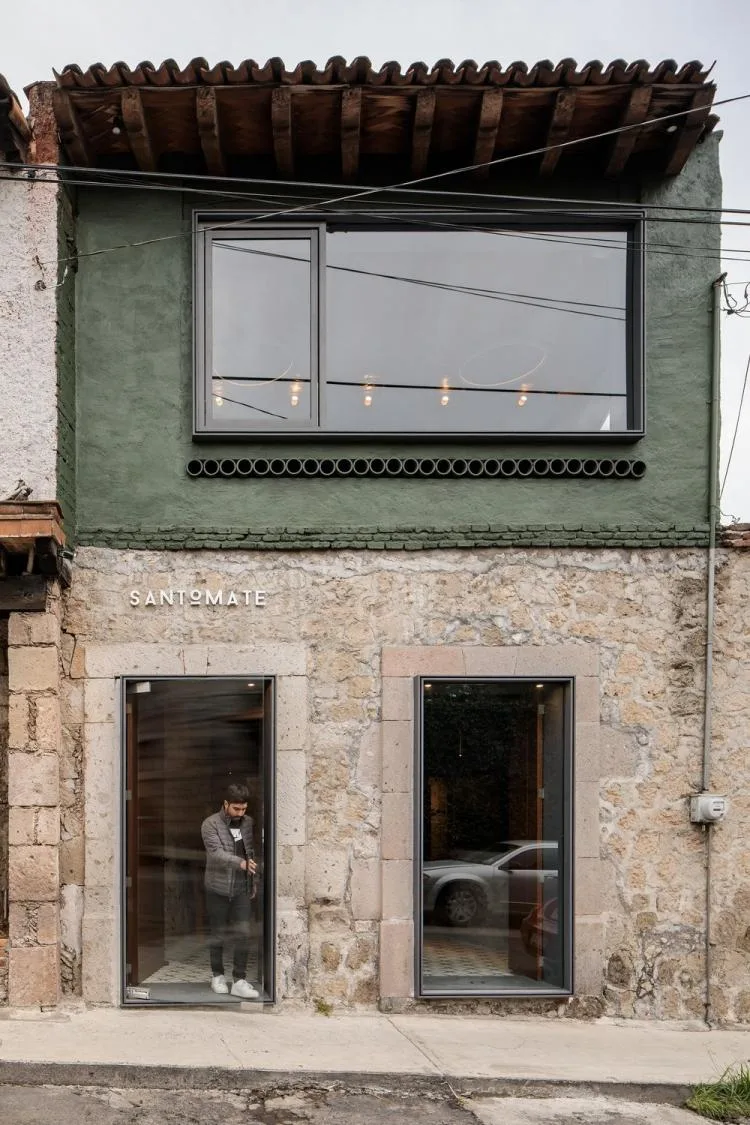
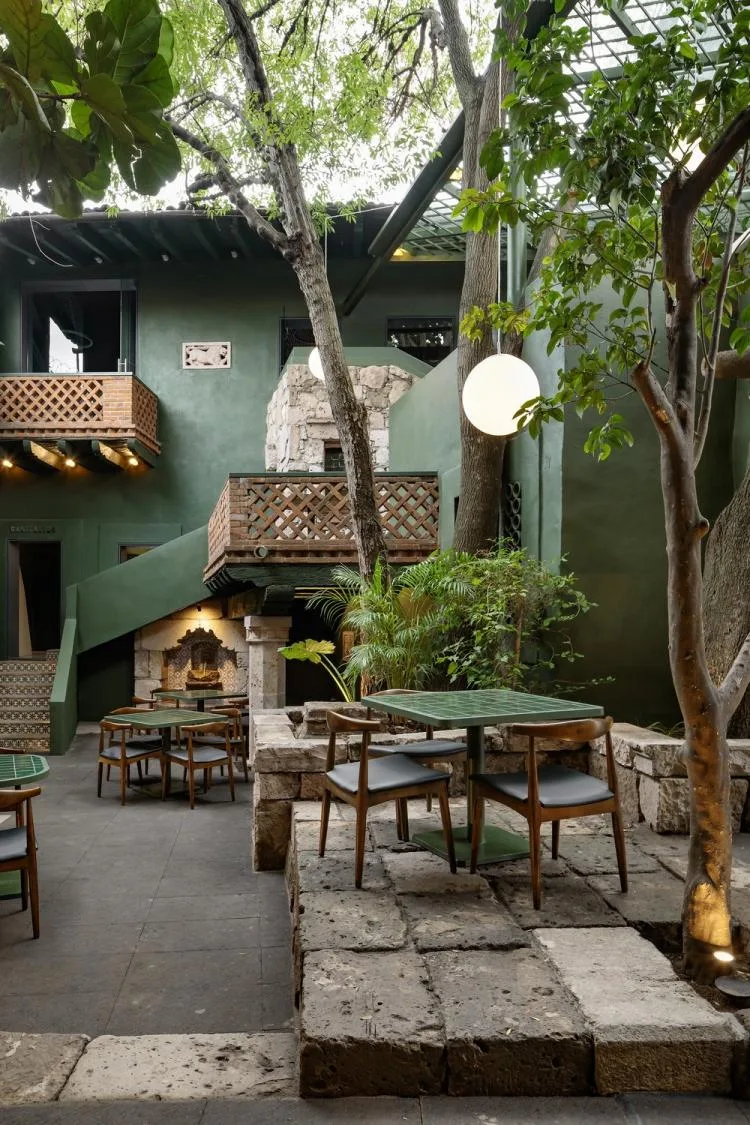
This project combines three separate properties, connecting two of them through a central atrium. The atrium features a variety of plants and materials, preserving the colonial architectural style characteristic of the region.
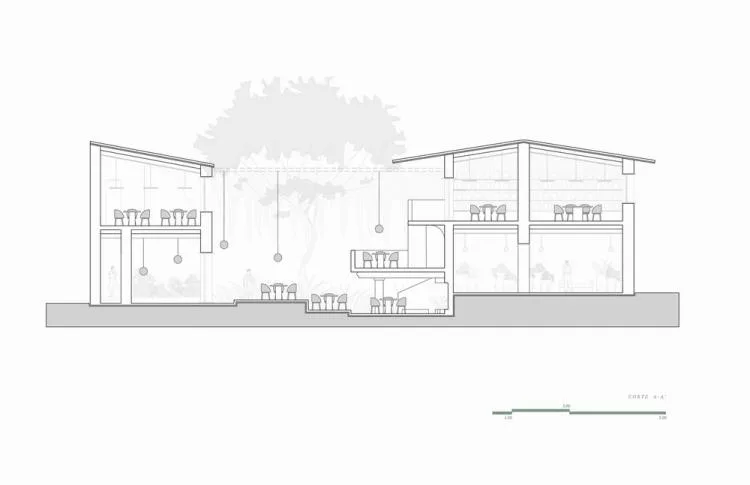
△ Section A
The design strategy for the restaurant aims to establish spatial and visual connections among the three houses, with the atrium serving as the central axis and starting point for this interaction.
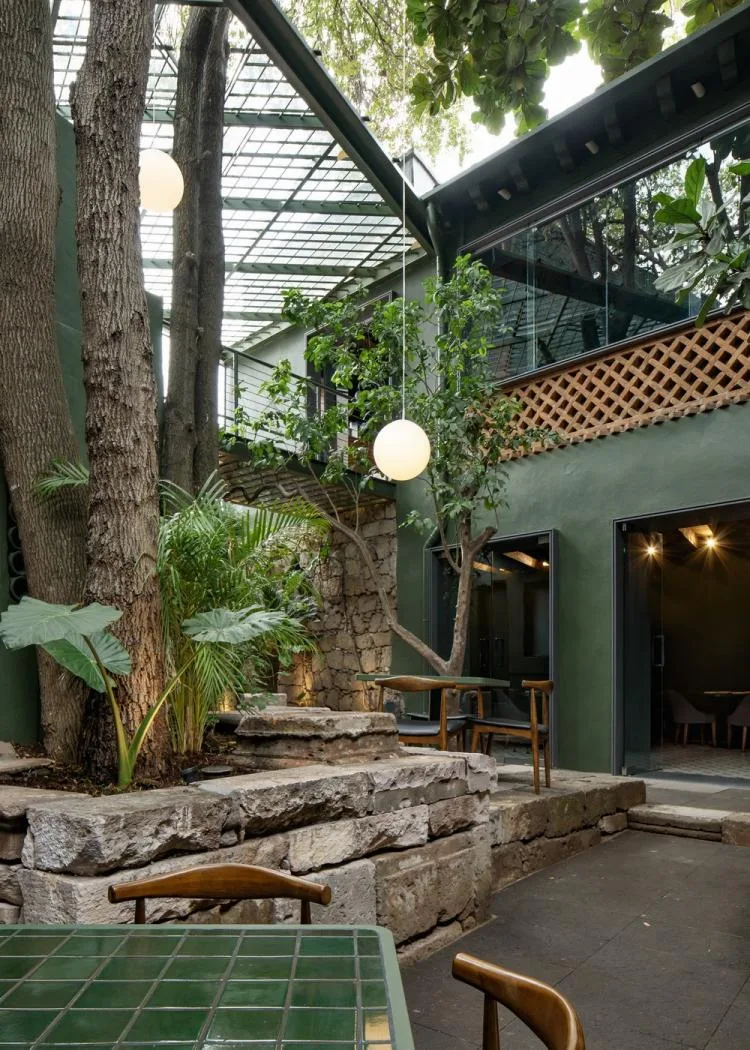
The interior and exterior spaces are predominantly monochromatic, minimizing visual distractions from various materials and textures, thereby allowing the atrium and its greenery to become the focal points.
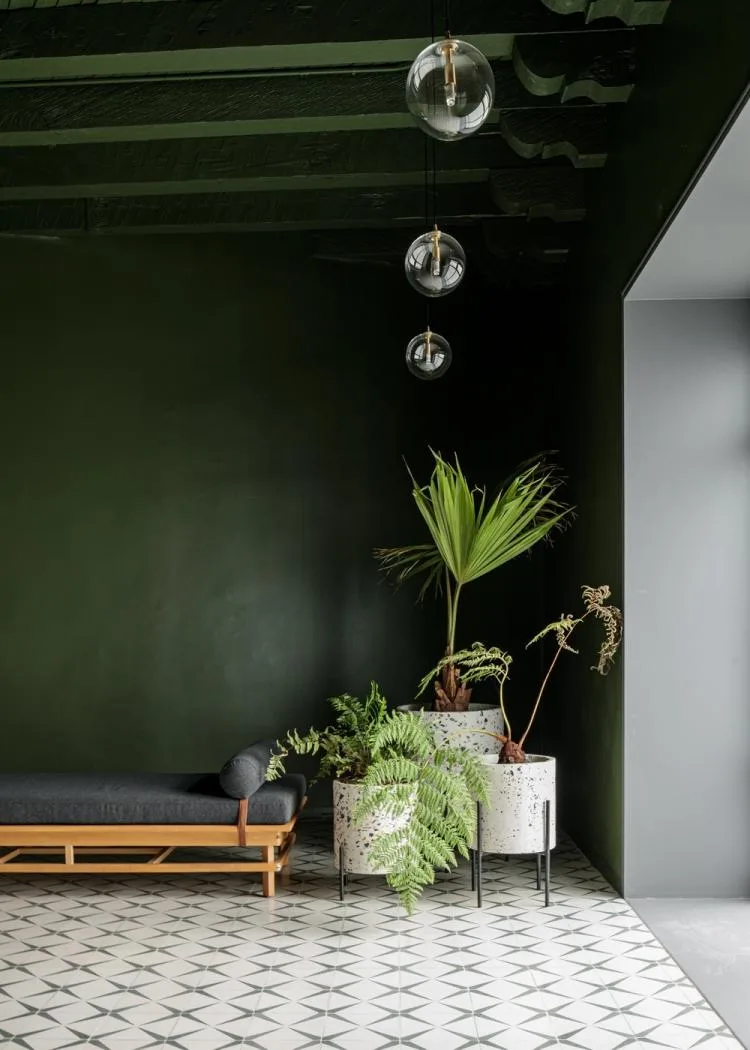
The color palette draws inspiration from the hues found in the region’s traditional glazed pottery—specifically greens, blues, and yellows.
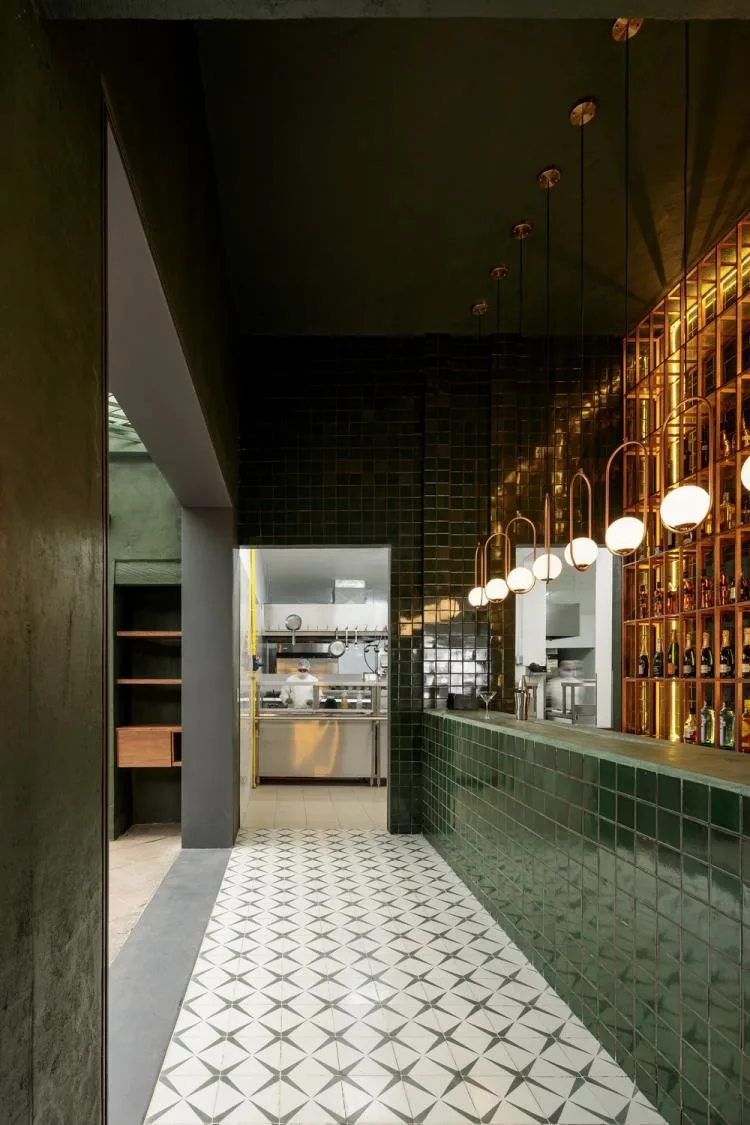
Santomate restaurant is designed as an experiential journey, inviting visitors to gradually discover and appreciate the details as they explore different areas of the building.
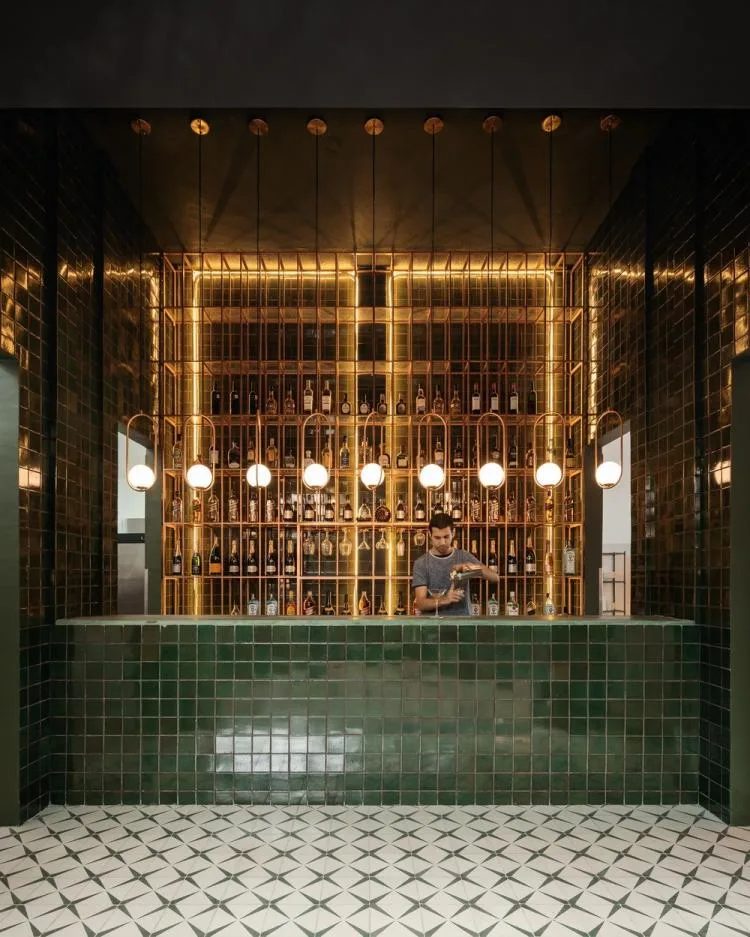
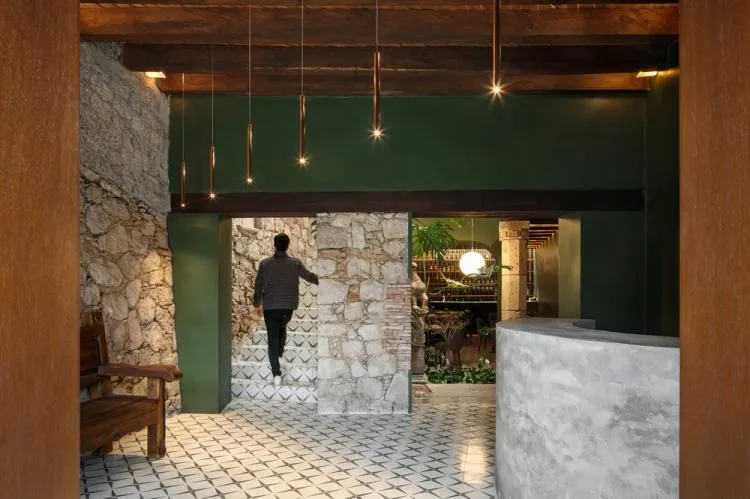
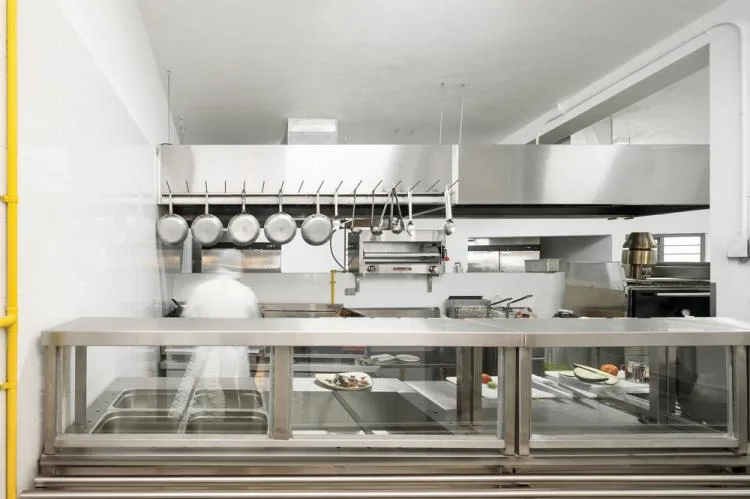
Upon entering Santomate through the narrow doorway on Patzimba Street, guests are welcomed by a deep green foyer, hinting at the atmosphere awaiting inside.
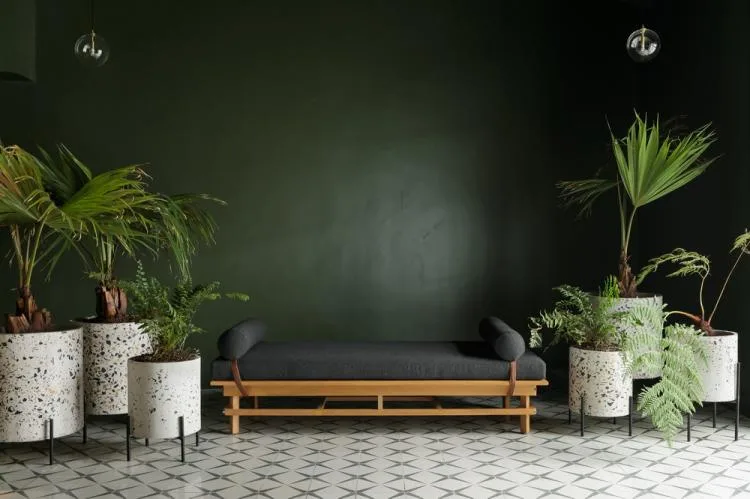
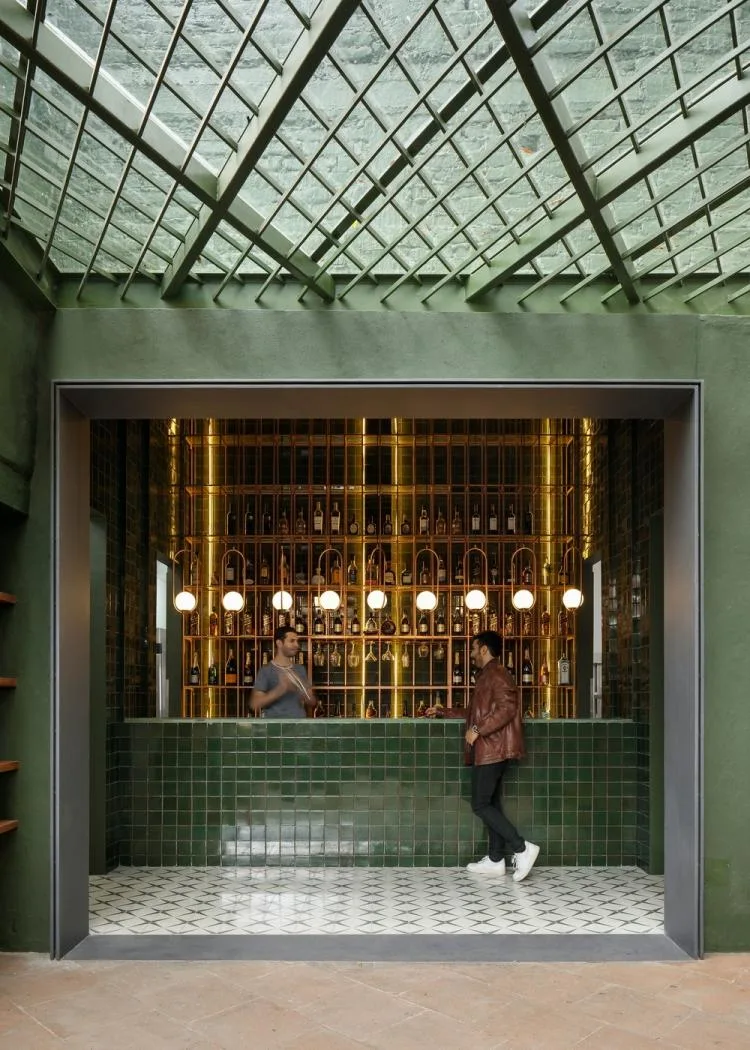
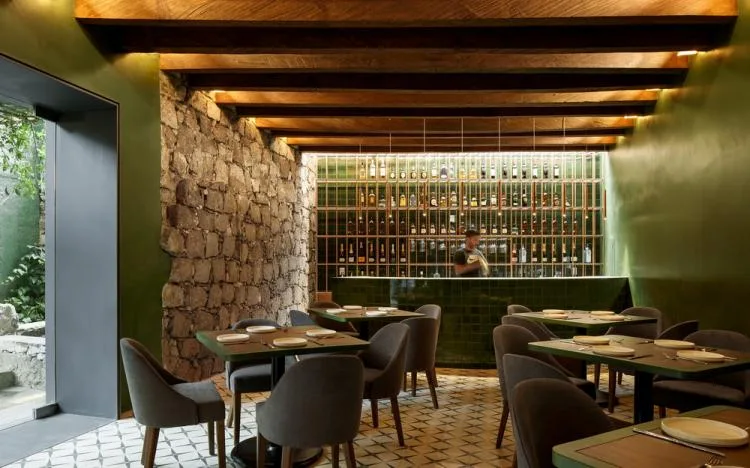
The bar features a curved counter adorned with green handmade ceramic tiles and a copper countertop, creating a striking visual centerpiece. Warm lighting accentuates the original wooden beams overhead.
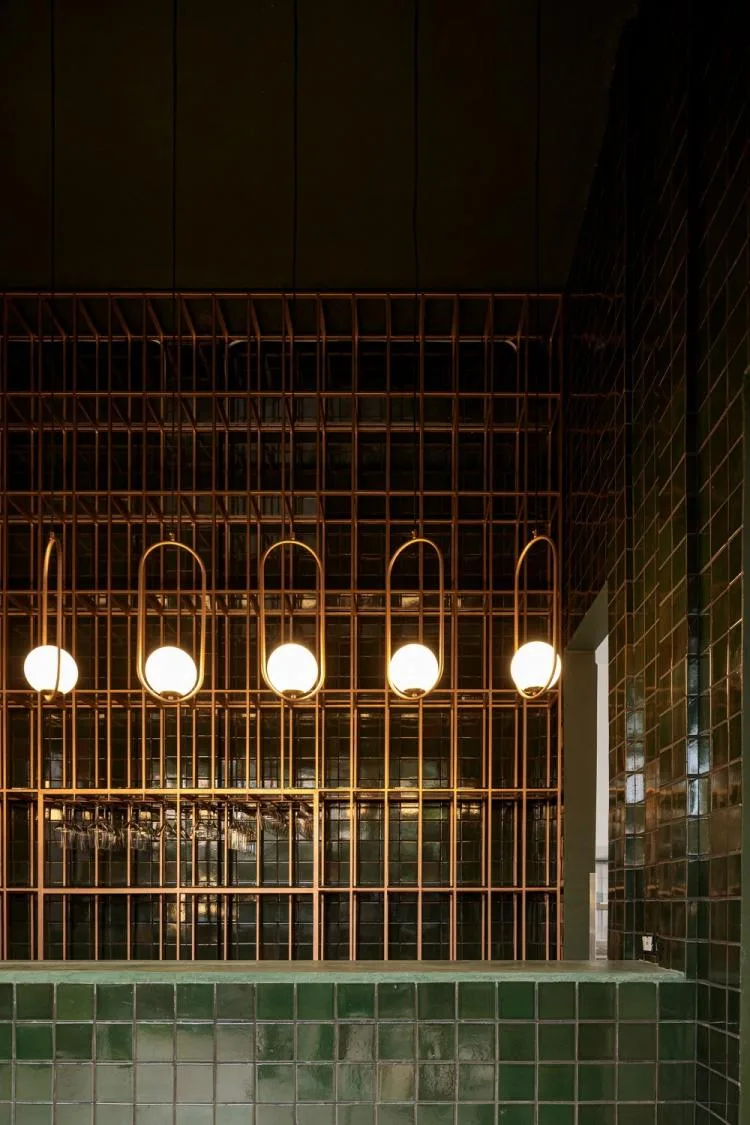
From the bar, guests can view the lush green atrium and the leaves of the central tree, which seamlessly merge to create a spacious balcony and dining area.
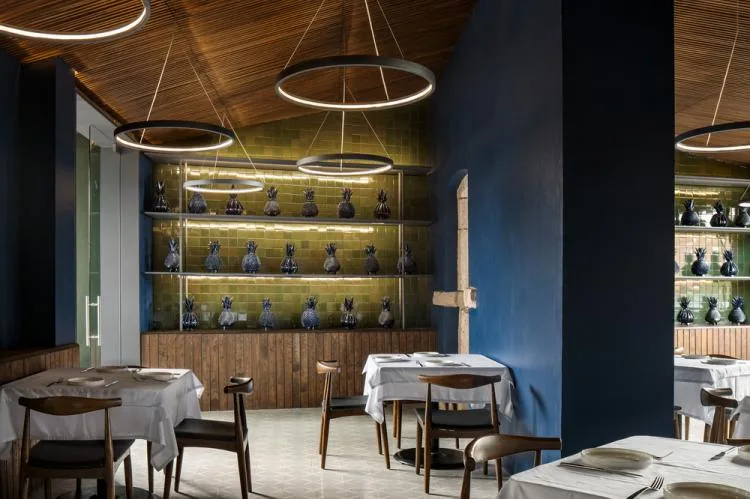
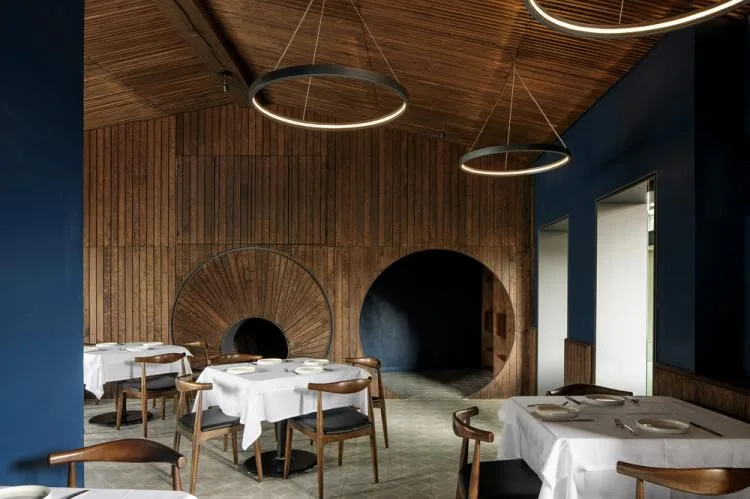
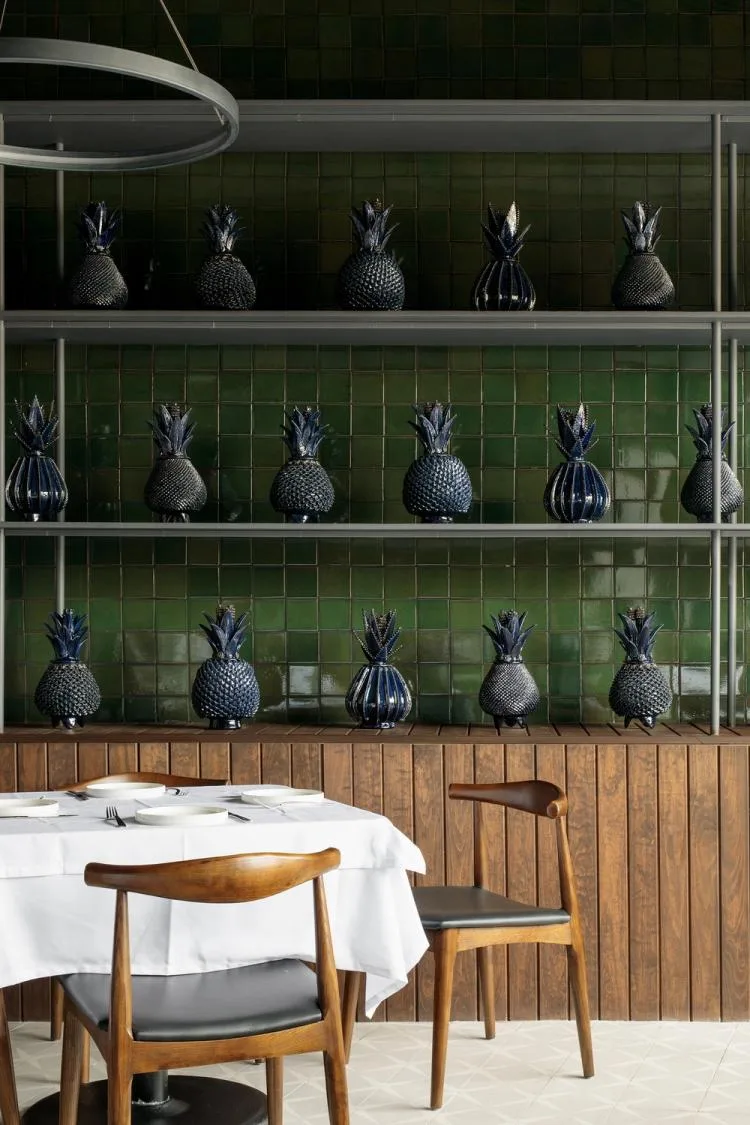
Santomate also welcomes guests into the ‘Blue Room,’ a main dining space featuring a large fireplace set against a full wooden wall. The opposite wall showcases over fifty glazed pineapple-shaped pottery pieces and handicrafts from San Jose de Gracia, Michoacán.
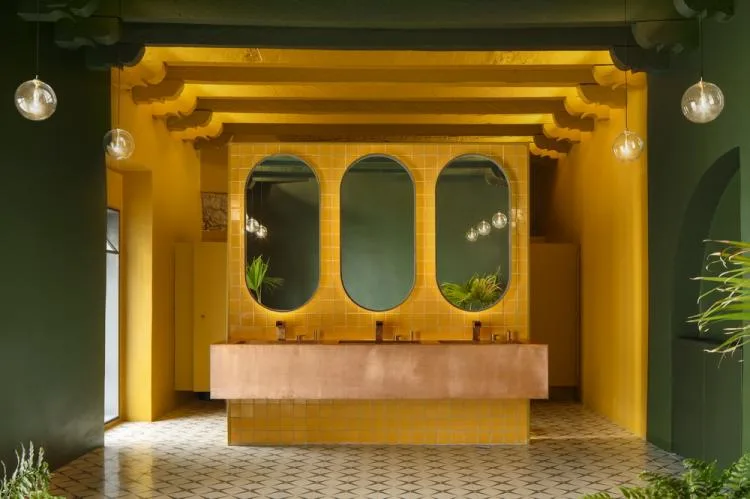
The bathrooms receive the same thoughtful design attention. Previously narrow and monotonous, the spaces now transition from green to yellow with the addition of two yellow-tiled walls in the center of each bathroom, creating both a decorative and spatial effect.
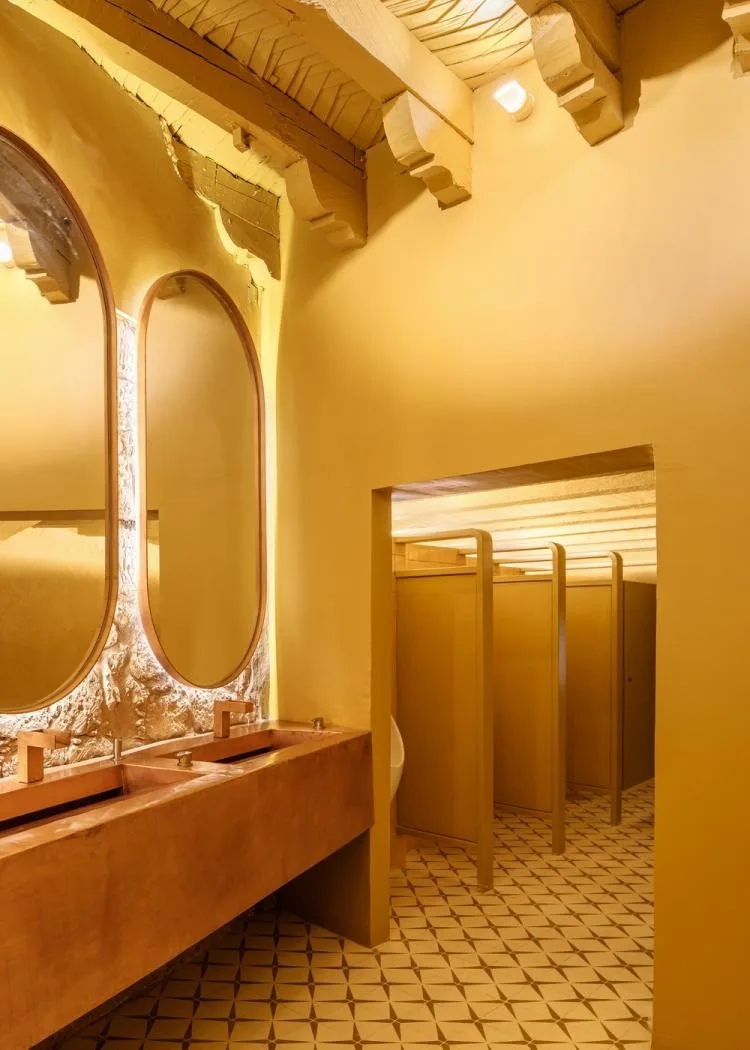
The yellow walls complement a copper basin handcrafted in Michoacán’s Santa Clara del Cobre, adding a sense of lightness and vibrancy to the space.
The overall goal of this project is to create a welcoming atmosphere that highlights Mexican craftsmanship throughout every corner of the venue.
Technical Drawings
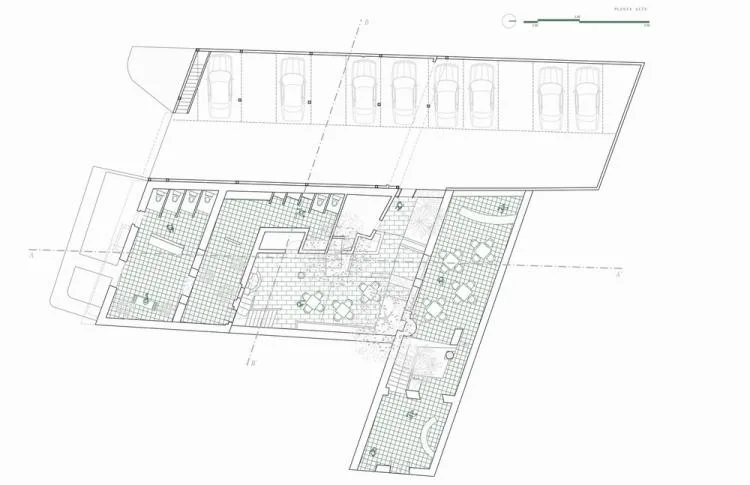
△ First Floor Plan
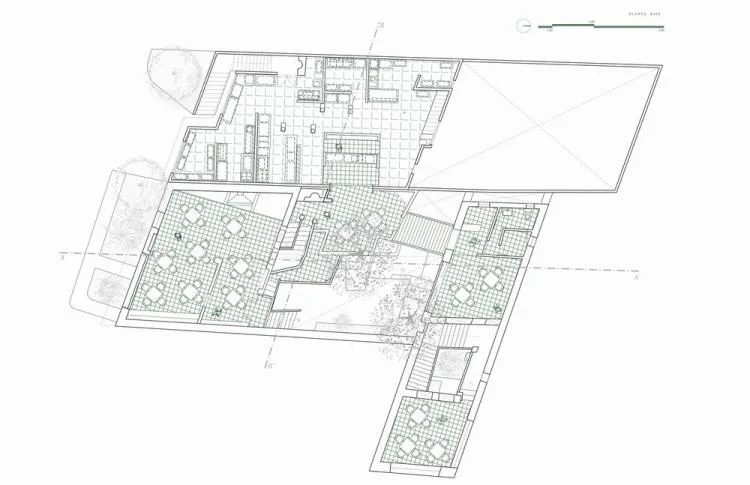
△ Second Floor Plan
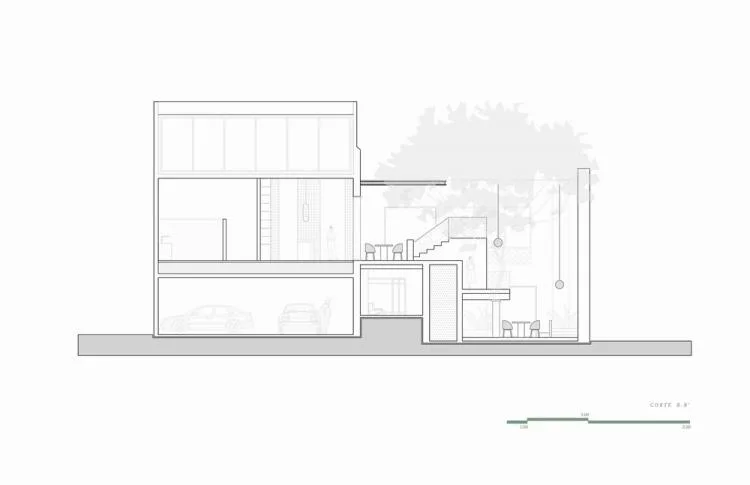
△ Section B
Project Information
Architectural Design: Daniela Bucio Sistos // Taller de Arquitectura y Diseño
Area: 870 m²
Year: 2020
Photography by Dane Alonso
Manufacturers: Hernandez Carlos Family, Mother, Luis García Santa Clara del Cobre Copper Workshop
Lead Designer: Daniela Bucio Sistos // Taller de Arquitectura y Diseño
Other Contributors: Edel Hernández, Isabel Molina Plaza, Gonzalo Nares Vázquez
City: Morelia
Country: Mexico












Must log in before commenting!
Sign Up