
Project Background
Six hundred years ago, the Hulong Bridge stood silently, and three hundred years ago, the Du Family Ancestral Hall was solemnly established. This rich historical tapestry of Huanglong Village weaves through Nan’an Lane, highlighted by two striking red sculptures in Fulin Park where history seamlessly merges with the present.
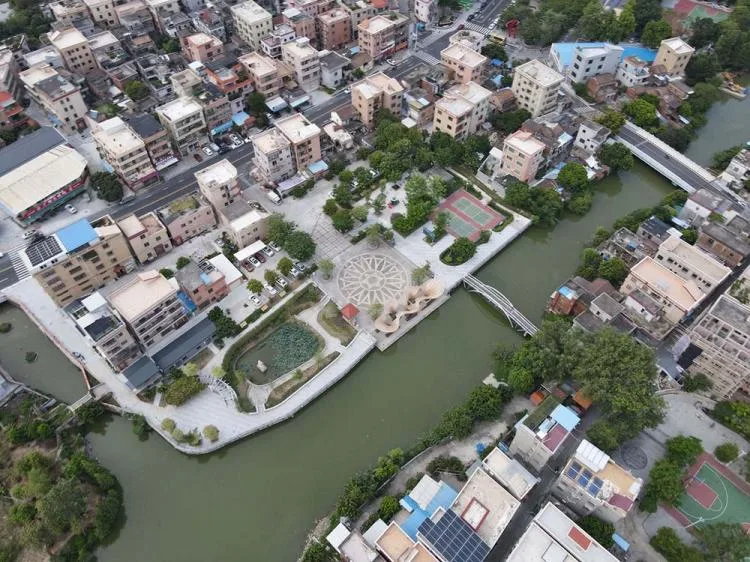
Located in Huanglonggu Village, Beijiao Town, Foshan City, Guangdong Province, Huanglongbin Water Bamboo Corridor 2.0 is set in an area once known as “Baijiao,” meaning “a hundred rivers intersecting with a dense water network.” This typical Lingnan water town benefits from a comfortable grey space climate along its waterfront.
Throughout Huanglong Village, various public spaces of different sizes are scattered, serving as popular and charming venues for community activities. By embracing nature, these spaces have evolved into water-friendly gathering spots where residents can live, socialize, and entertain.
Spatial Vitality
The bamboo corridor is situated in the newly constructed Liyusha Park at the heart of Huanglong Village. Although the park offers ample square footage and waterfront views, it lacks dense plant life for shade and shelter from rain, resulting in low visitor turnout and limited vibrancy.
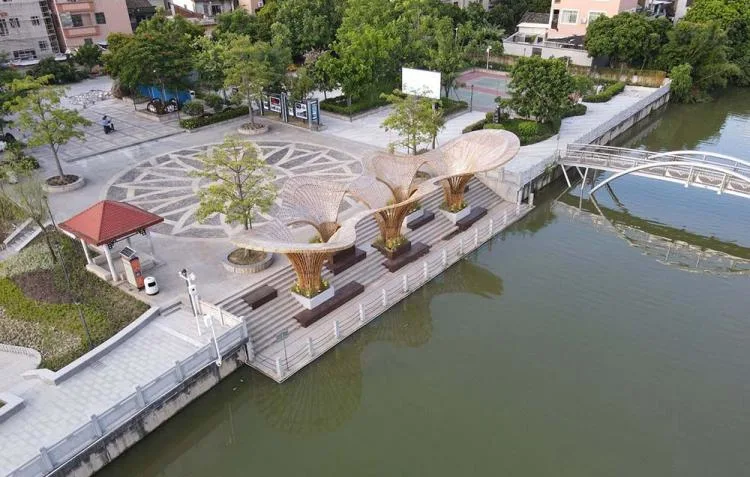
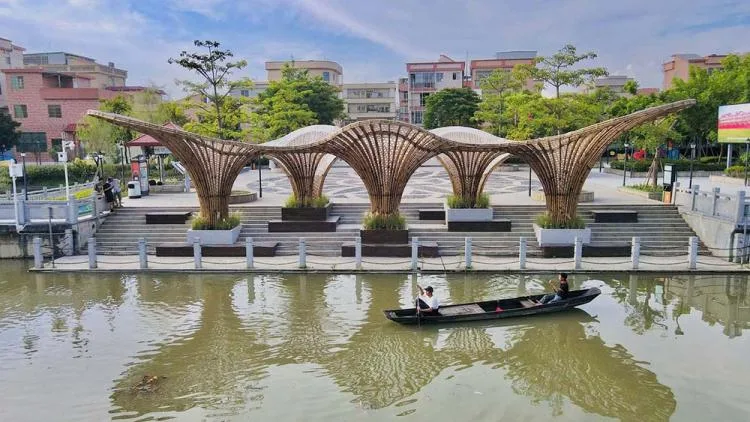
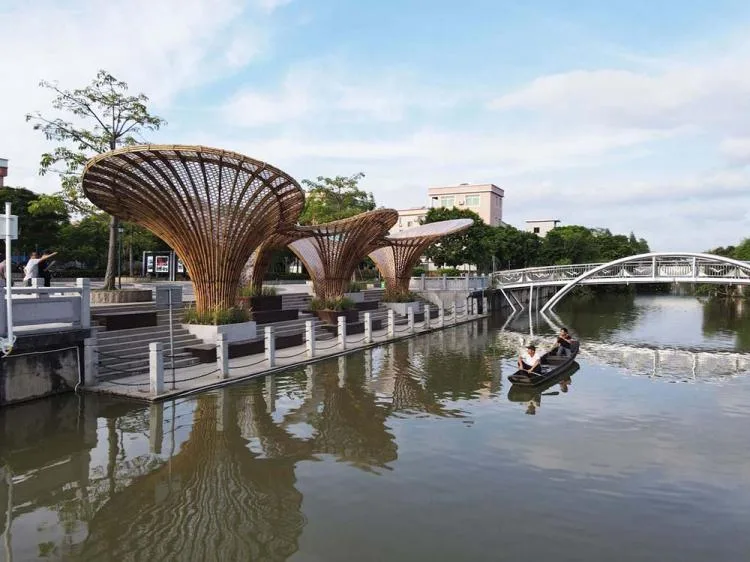
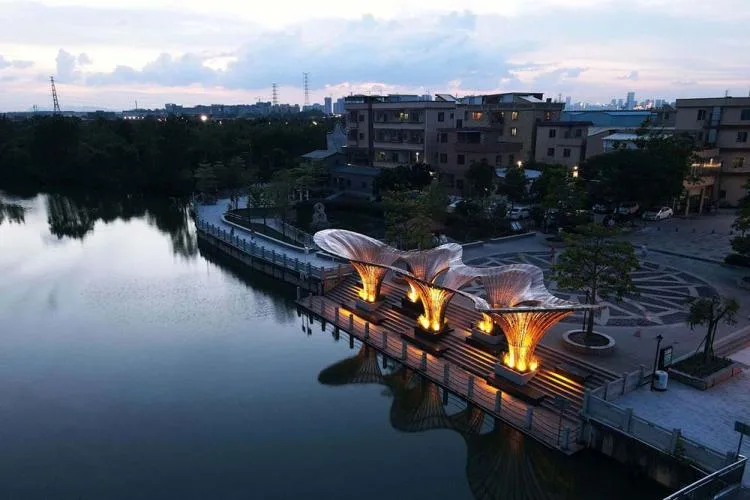
During site investigations, it was observed that villagers often fish and engage in activities on the sloping steps along the waterfront. Adding shaded areas here could transform the space into a lively spot for both locals and tourists. Consequently, a waterfront bamboo corridor was built along these steps, designed to provide shelter and enhance the water town experience.
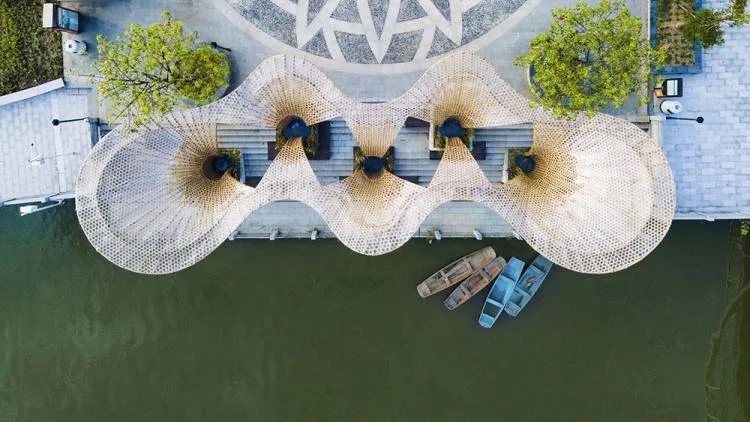
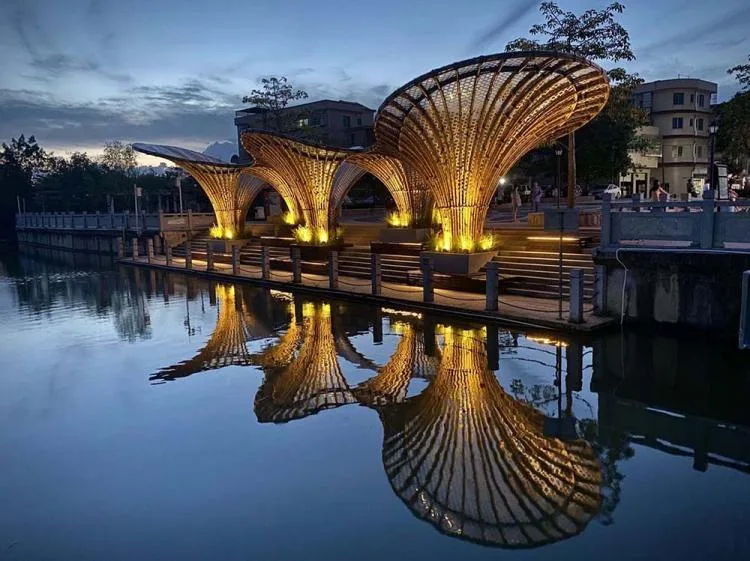
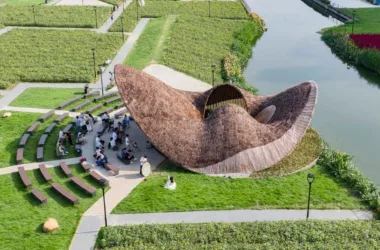
The bamboo corridor features a double-sided cantilever design that leverages the natural flexibility of bamboo to create an integrated structural skin. When combined with the steps, this design maximizes the usable grey space along the waterfront.
Underneath the corridor, multiple activities can take place, including leisure, entertainment, movie screenings, water theater performances, and docking. This multifunctional space revitalizes Huanglong Village and breathes new life into the park.
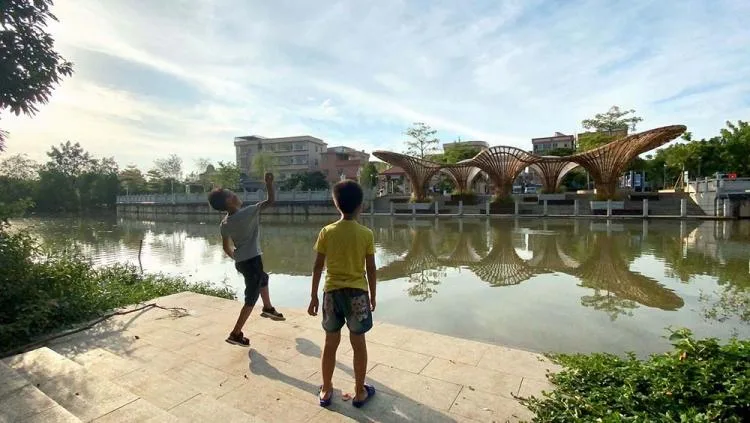
Huanglongbin Water Bamboo Corridor 2.0 quickly became a beloved spot for villagers, parents, and visitors alike. After its completion, people eagerly took photos within the corridor, and a variety of activities flourished beneath it: fishing, sightseeing, relaxation, family entertainment, fitness, and social gatherings. Liyusha Park itself gained popularity and hosted cultural events such as the Winter Melon Culture Festival. Together, the community redefined and shared stories within this vibrant space, strengthening their connections.
Constructing Continuity
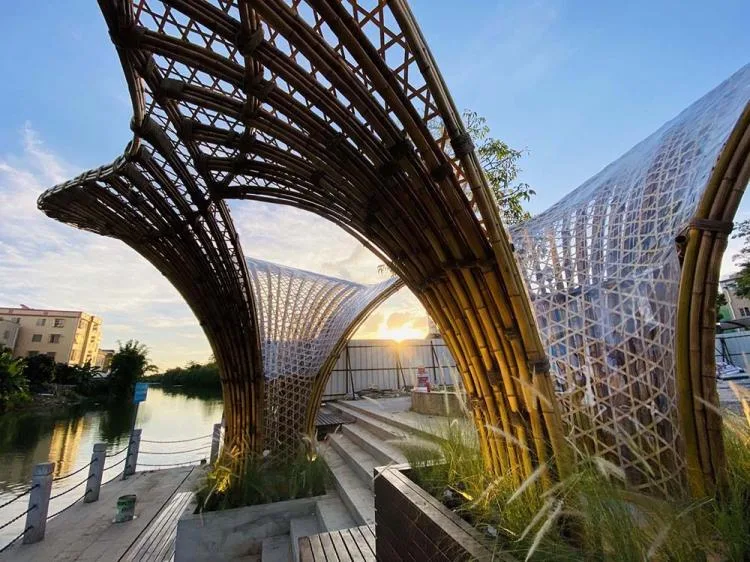
Huanglongbin Water Bamboo Corridor 2.0 continues the legacy of the Changqi Stadium Bamboo Corridor project. It further explores modern design and sustainable construction using natural, low-carbon bamboo materials. The project combines traditional rural bamboo weaving craftsmanship with contemporary techniques to create a suspended, column-free, transparent, windproof, and rainproof grey space along the waterfront steps, all without hindering activities.
© Chen Li
© Chen Li
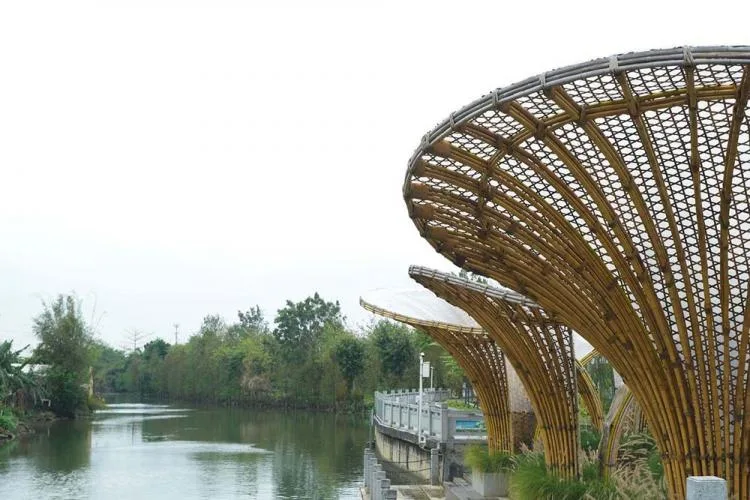
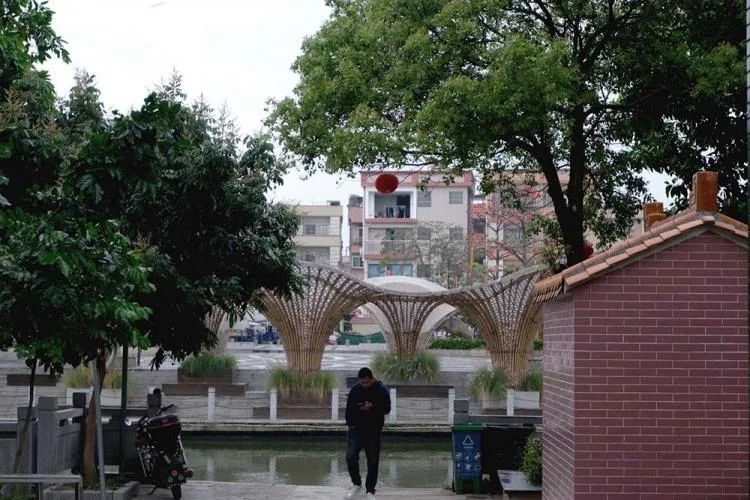
Building on the experience from Changqi Village Basketball Court Bamboo Gallery 1.0, the team optimized the integrated “structure and skin” approach. Using beam columns, original bamboo pieces are spliced and staggered to extend the overhang length. A hidden steel skeleton provides structural support and helps define the shape.
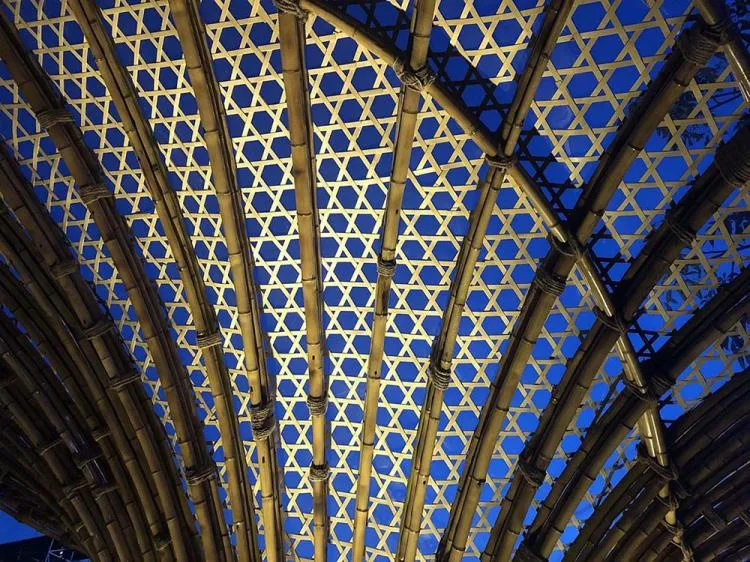
The bamboo weaving on the surface creates dynamic light and shadow effects while offering shade. This “skin” also enhances the stability and unity of the overall umbrella-like structure. A transparent waterproof film covers the top, protecting the space from rain.
Upgrading from a single-sided to a more stable double-sided cantilever design blurs the distinction between front and back, while reducing bamboo column diameters and maximizing overhang depth results in an umbrella diameter of 9.3 meters.
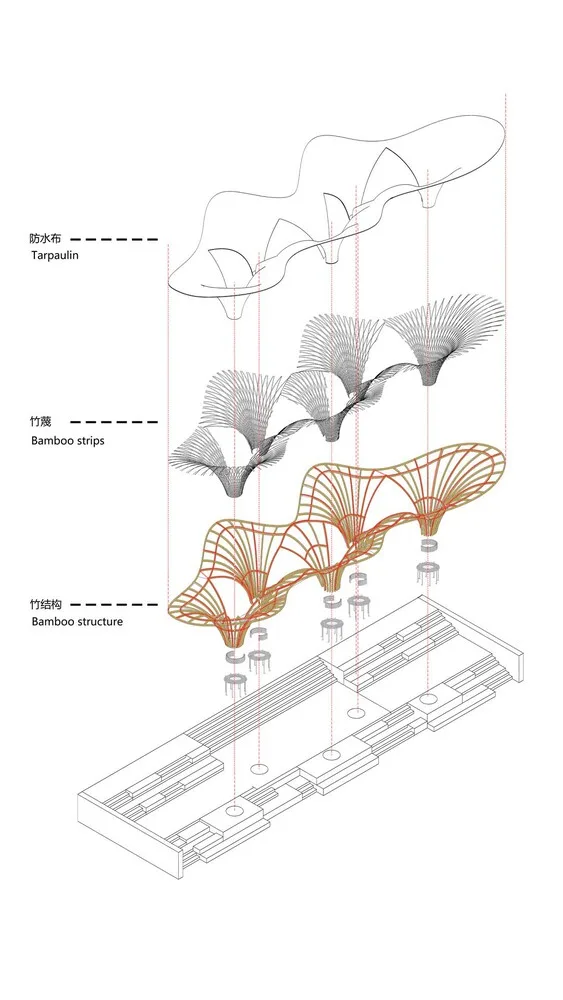
△ Structural analysis
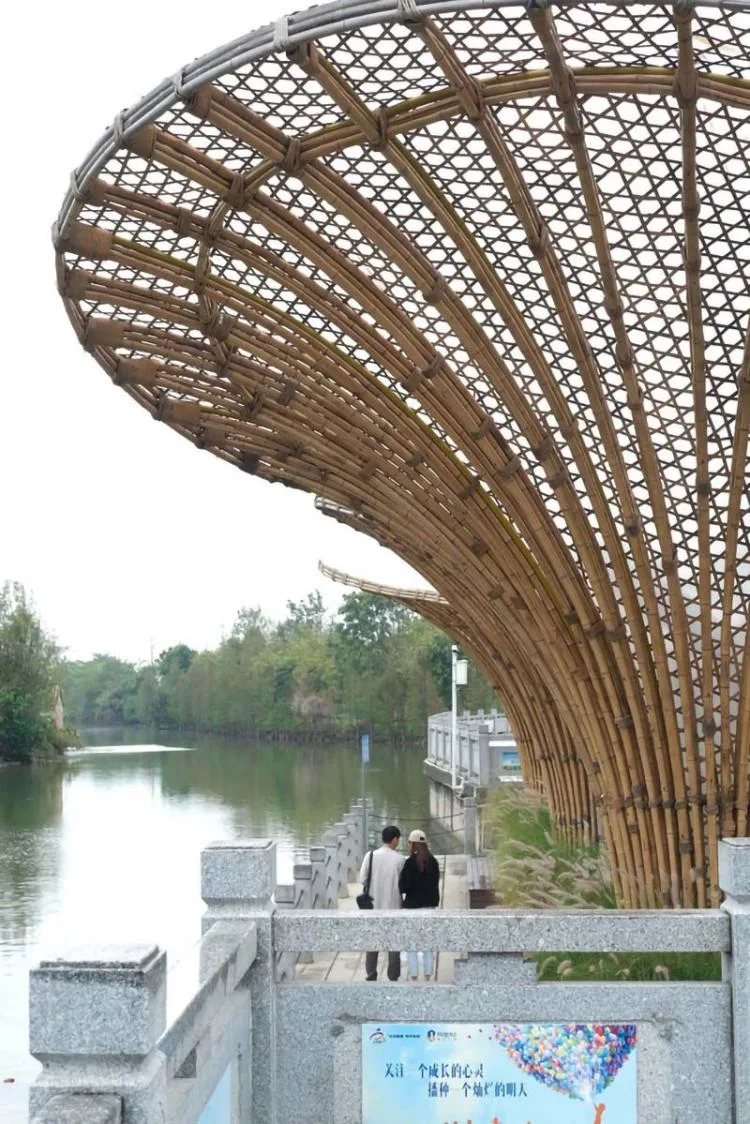
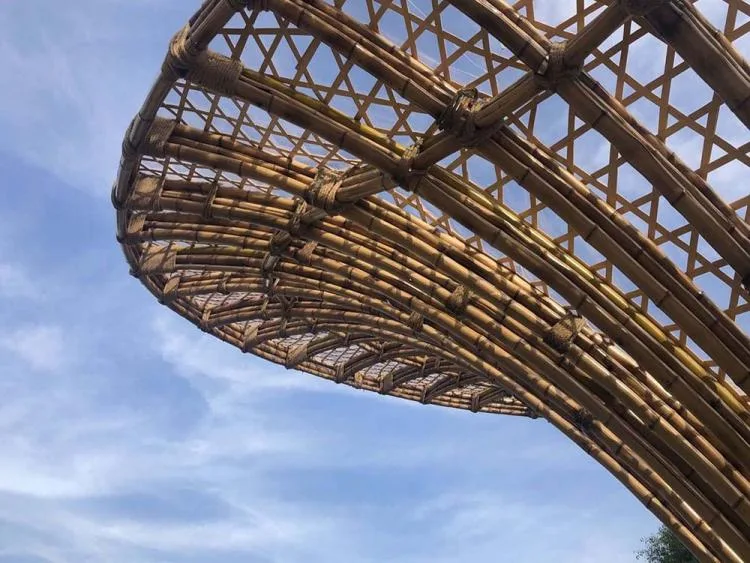
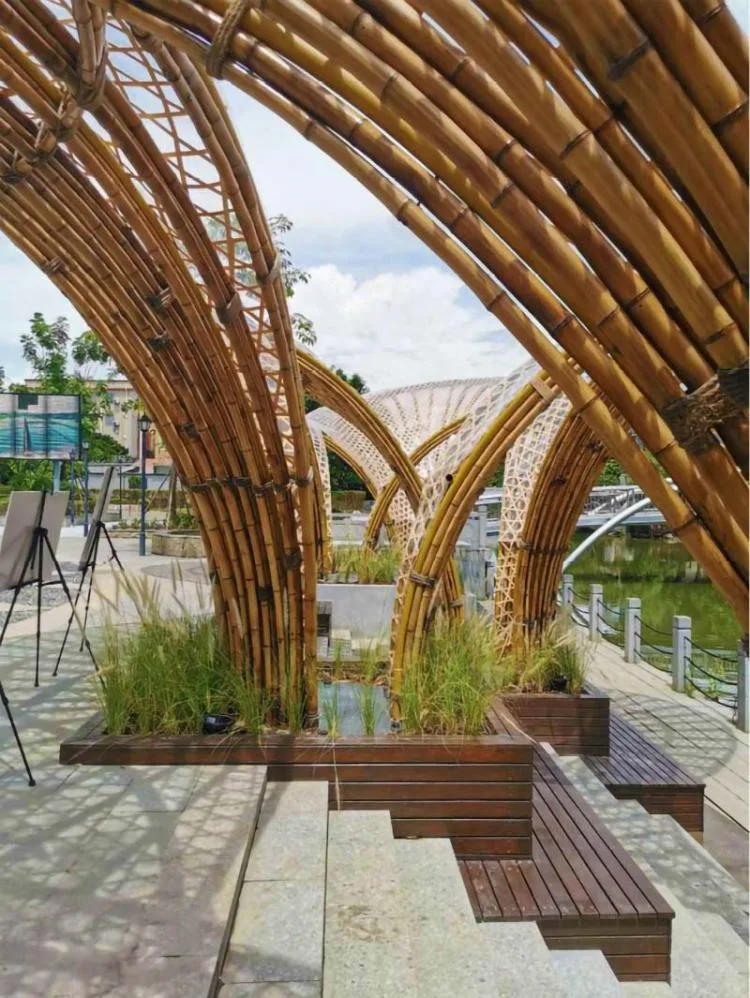
From a construction perspective, the design breaks away from the single modular approach of Changqi Village 1.0, which resulted in repetitive shapes. Instead, Huanglong Bamboo Corridor 2.0 embraces modularization of original bamboo components. This aligns production and construction logic, enabling two-dimensional curve fitting into a three-dimensional, bidirectional curved cantilever structure.
This approach supports flat two-dimensional construction, facilitating the broader application of original bamboo engineering. The skilled craftsmen from the Changqi Village Bamboo Corridor also contributed to this project, fostering collaborative progress between the design and construction teams.

Design Drawings
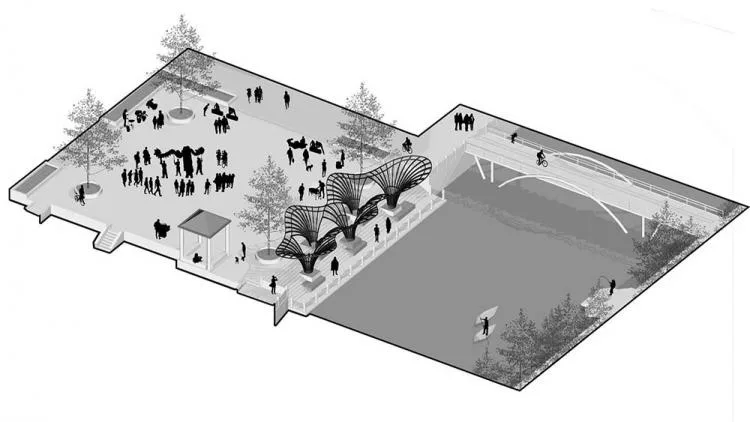
△ Scene Axonometric Diagram
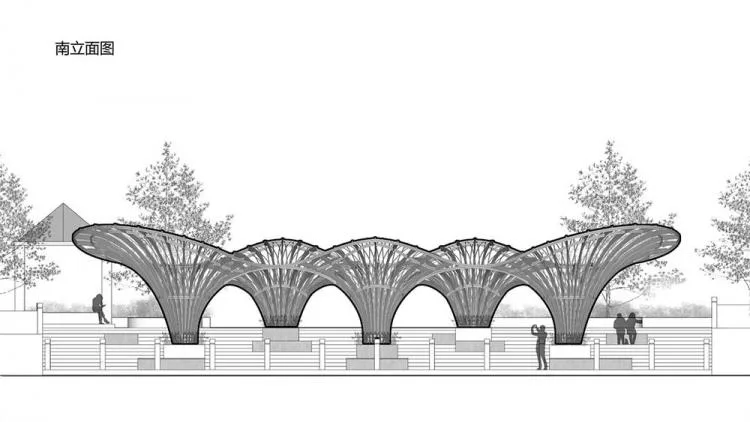
△ South Elevation View
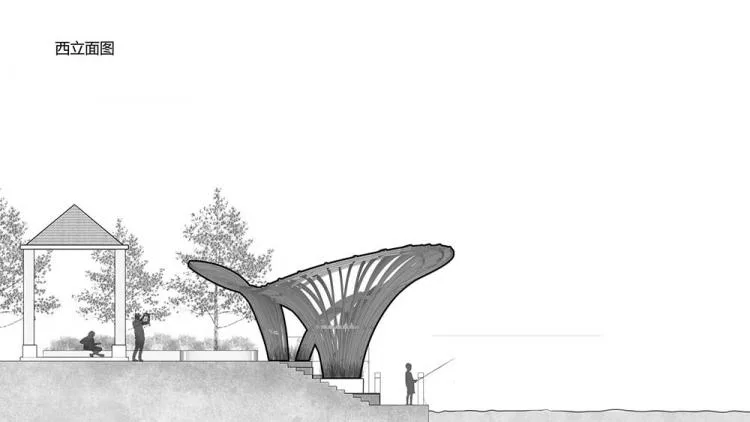
△ West Elevation View
Project Information
Location: Foshan, China
Architectural Design: Vertical Beam Society Architecture, School of Architecture, South China University of Technology
Area: 120 m²
Project Year: 2020
Lead Architects: Zhong Guanqiu, Lin Hairui, Zhang Wenhao
Design Team: Lin Hairui, Huang Wenxuan, Xiao Wenjing, Li Ruibo, Hou Jinwang
Lead Professor (School of Architecture, South China University of Technology): Zhong Guanqiu
Student Team (School of Architecture, South China University of Technology): Zhang Wenhao, Zhang Wenchu, Huang Yuhao, Tan Zhixian, Feng Yuliang, Hu Yaowen, Chen Yanzhen, Du Yu, Li Xiangling, Zeng Yixuan, Luo Yuran, Jiang Ruomin
Photographers: Ruibo Li, Li Chen












Must log in before commenting!
Sign Up