
China’s train stations are expanding into massive, palace-like structures towering over the cities, often making people feel insignificant within them. Surrounding these stations are usually wide roads, elevated bridges, and vast plazas that remain largely unused. Could city train stations move away from grand, commemorative designs and instead focus on creating beautiful environments with comfortable, human-scaled spaces, convenient transportation, and integrated urban functions? Spaces where people don’t just rush through, but feel welcome to stay and relax?
— Ma Yansong
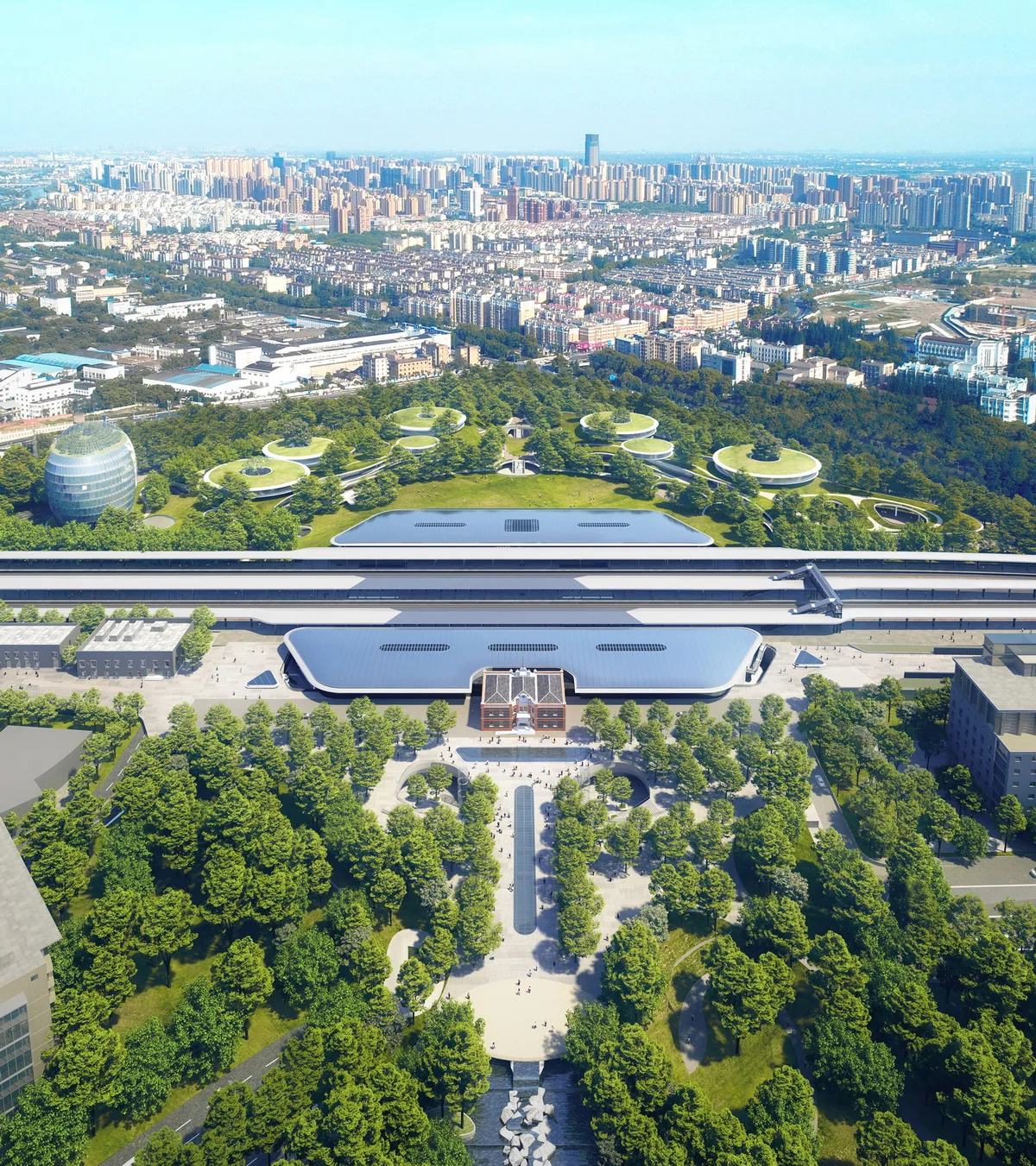
△ Jiaxing Railway Station renovation rendering, viewed from north to south
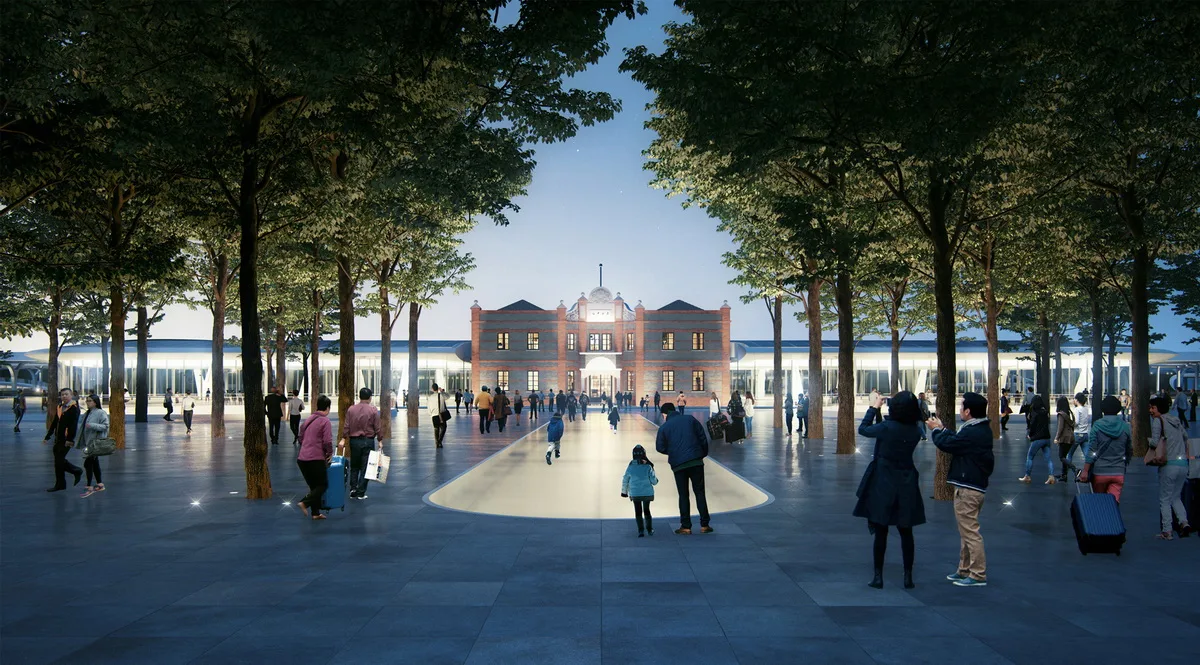
The new and old station buildings of the “Train Station in the Forest” complement each other, blending seamlessly into one harmonious whole.
△ Animated video “Train Station in the Forest”
Designed by MAD Architects under the leadership of Ma Yansong, the Jiaxing “Railway Station in the Forest” project began construction at the end of 2019 and is currently under intensive 24-hour construction, aiming for completion before July 1st of this year. Jiaxing holds historical significance as the site where the First National Congress of the Communist Party of China concluded aboard a red boat on South Lake in 1921, marking the birth of the CPC. The Jiaxing Railway Station stands as a key historical landmark commemorating this moment, and its renovation is a major project celebrating the 100th anniversary of the founding of the Communist Party of China.
Located in Jiaxing’s central urban area in Zhejiang Province, Jiaxing is known as the “Silk City” and “Land of Fish and Rice.” The city borders Shanghai to the east, Hangzhou to the west, and Suzhou to the north. Nanhu District, home to the train station, serves as Jiaxing’s main urban core and one of its oldest historical districts.
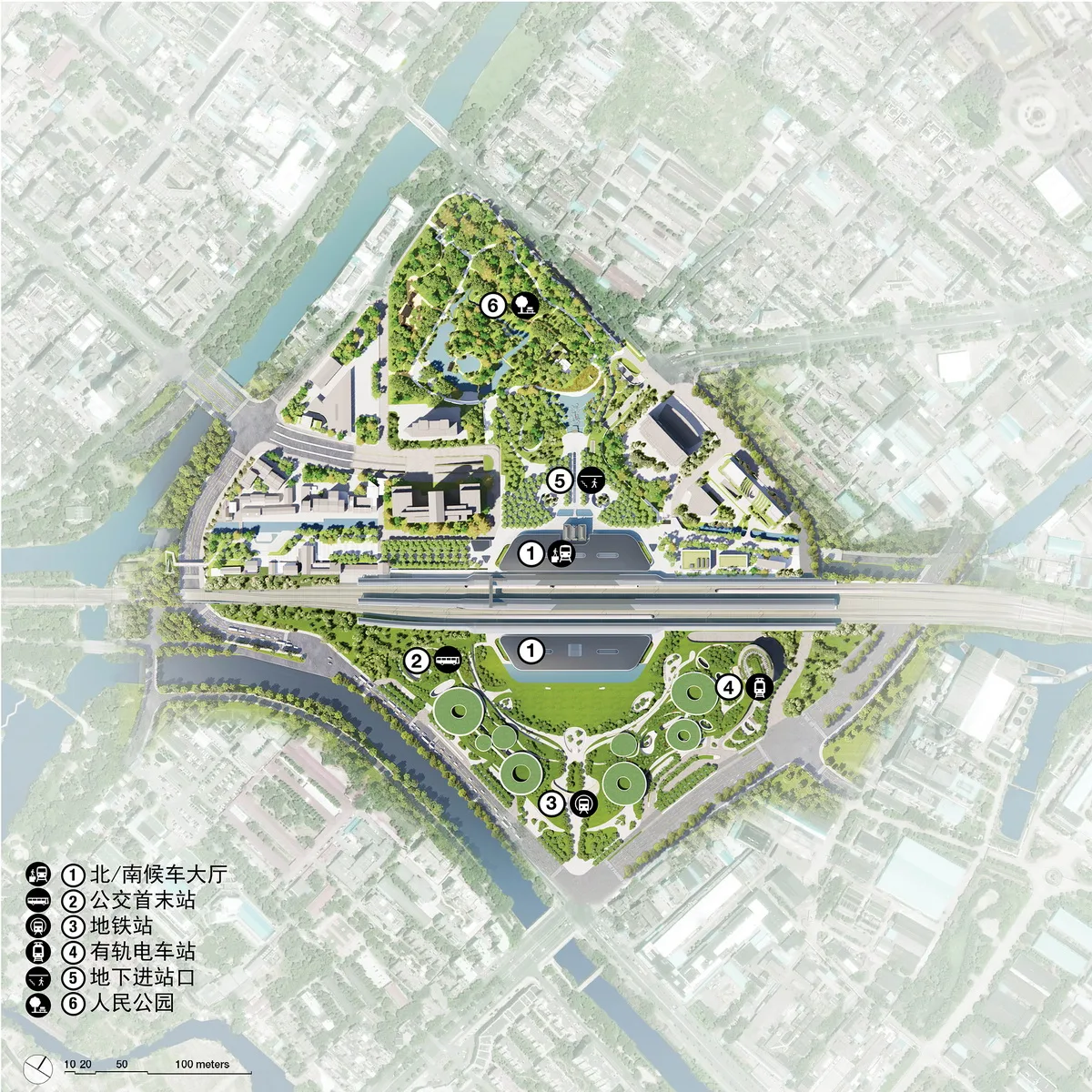
△ Overall site plan
MAD is responsible for the planning and renovation of a 35.4-hectare area, which includes Jiaxing Railway Station, the North-South Square of the station, and the adjacent People’s Park. Prior to renovation, the station had reached its capacity limits, with chaotic traffic, insufficient facilities, and a shortage of public amenities around it, all limiting its development and resulting in a low-end industrial profile.
MAD’s design deeply respects Jiaxing’s historical and cultural heritage: a precise 1:1 restoration of the old station building was carried out based on historical data; main transportation and commercial functions were relocated underground; the new station building incorporates abundant natural light, creating bright, efficient, and human-scale spaces; and large public green spaces were created at ground level, returning nature to citizens and travelers alike, transforming Jiaxing’s city center into a “train station in the forest.”
Jiaxing Municipal Party Secretary Zhang Bing expressed, “Through this project, we aim to honor history and our responsibility to recreate the legacy of the ‘One Great Road,’ while demonstrating forward-thinking approaches to development, especially emphasizing people-centered and green growth.”
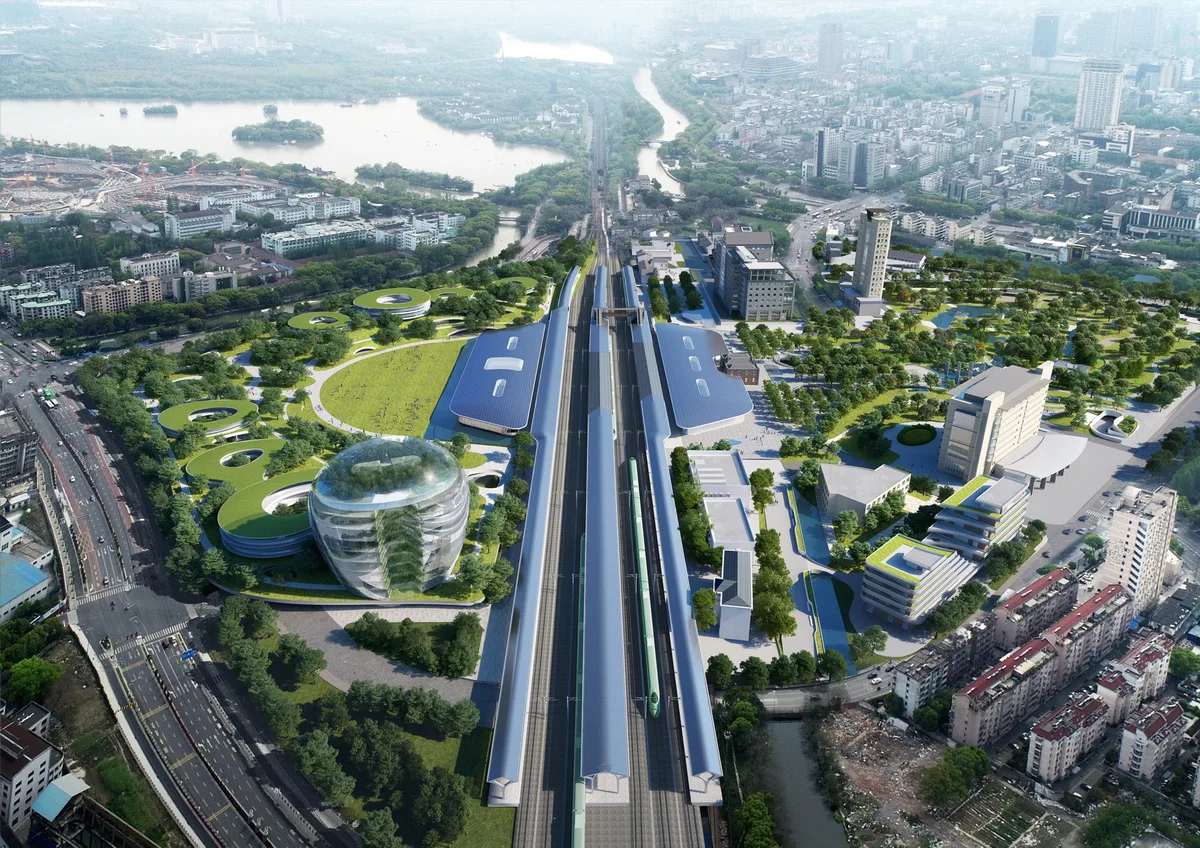
The former city center train station will be transformed into a lakeside urban park (rendered by Silk Road)
35.4 Hectares of Urban Oasis
MAD moved the previously chaotic transportation hub underground, expanded the People’s Park, and covered the city center with greenery, reshaping it into a lakeside urban oasis. The park landscape is thoughtfully designed with the old station building serving as the spiritual axis running through the site. Large mature trees provide pleasant shade in front of the station, enhancing the natural ambiance.
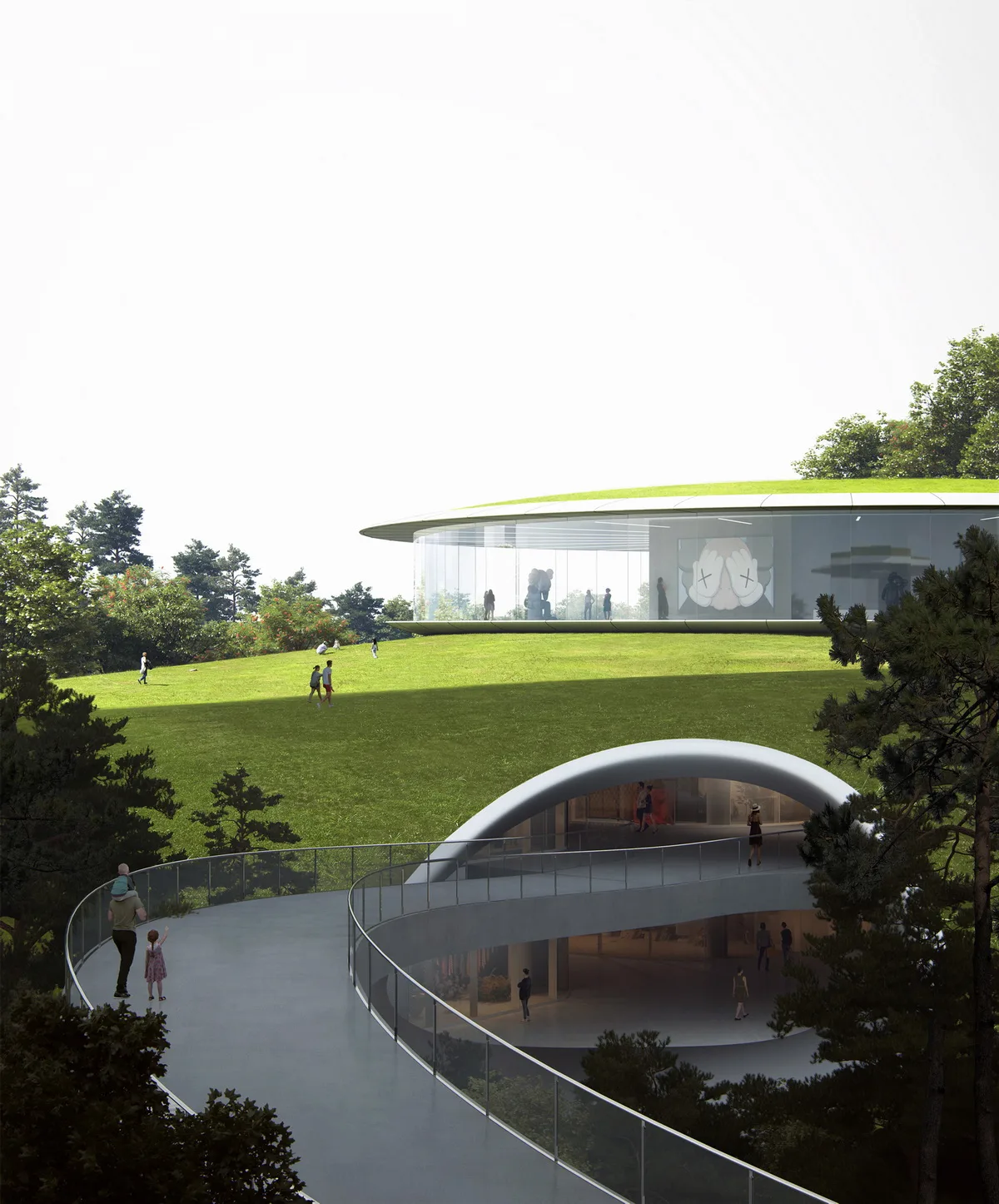
The commercial space in the South Square is vertically organized, allowing the ground level to become a green public area.
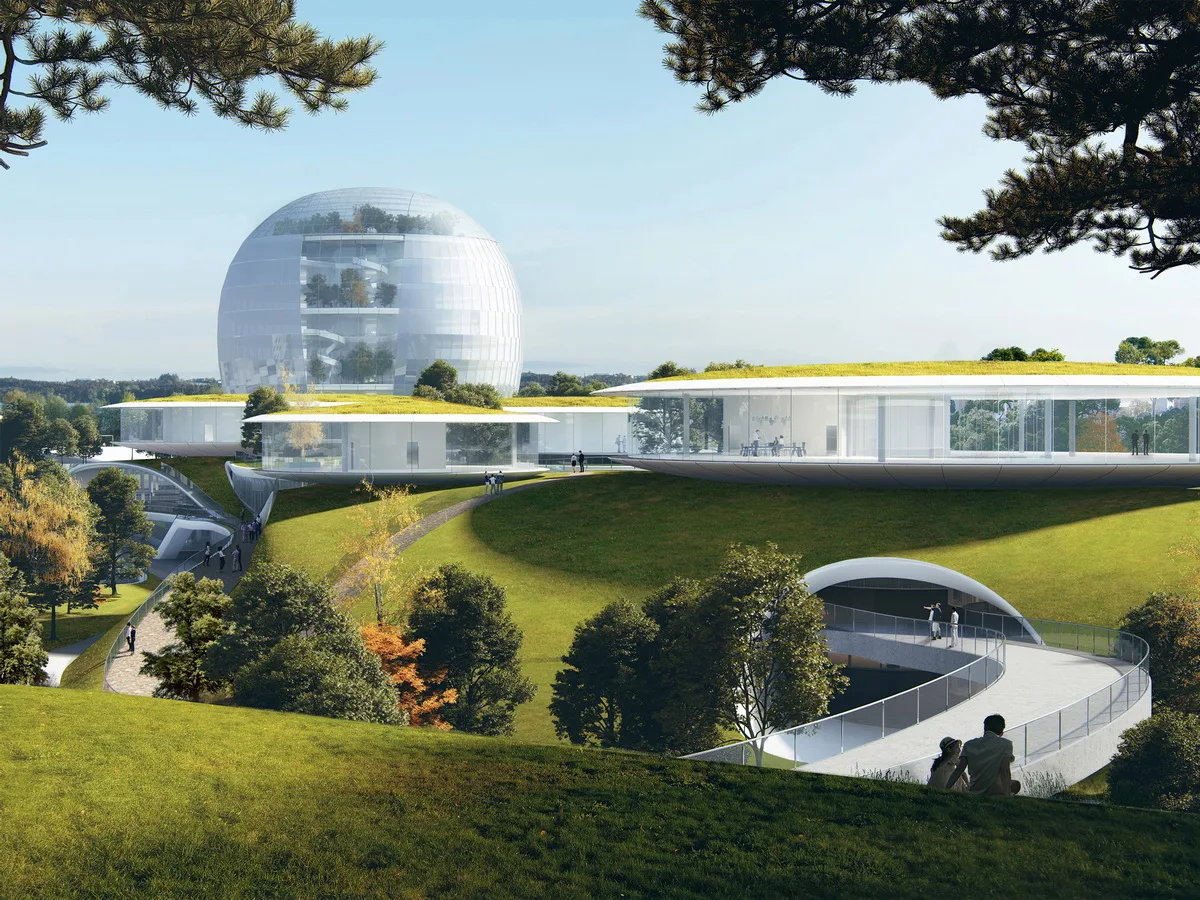
The undulating green space of the South Square wraps around the commercial area, integrating nature with urban life.
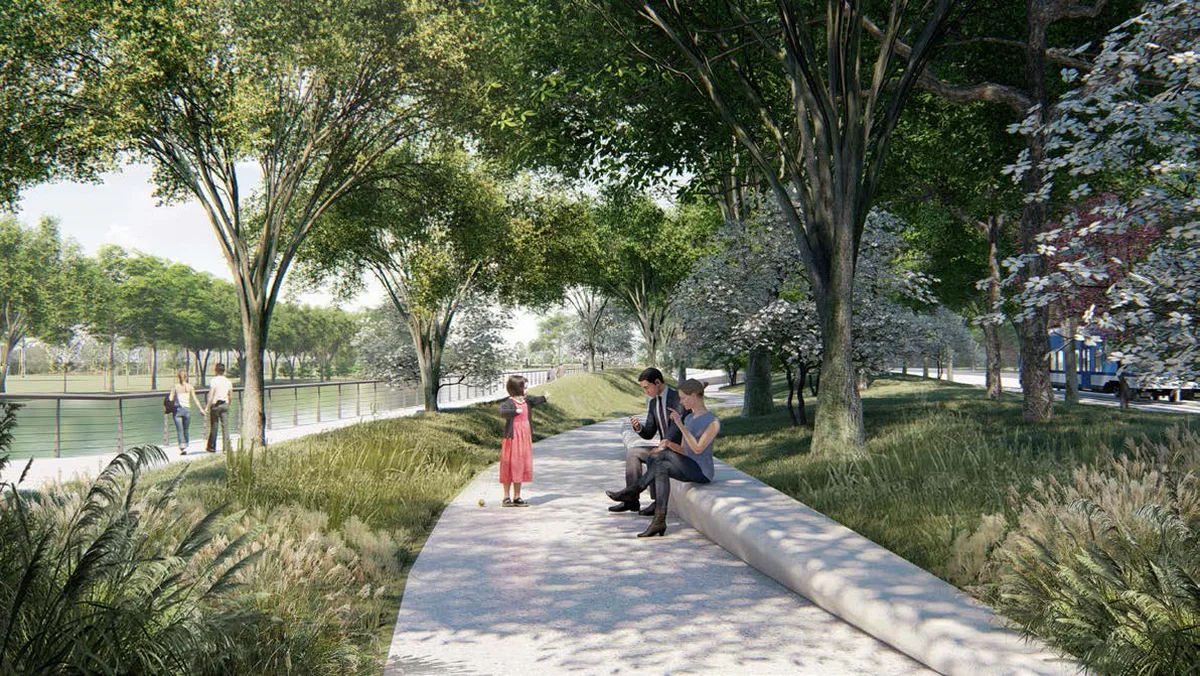
MAD preserved and restored the People’s Park, safeguarding its historic ancient trees and several key garden structures.
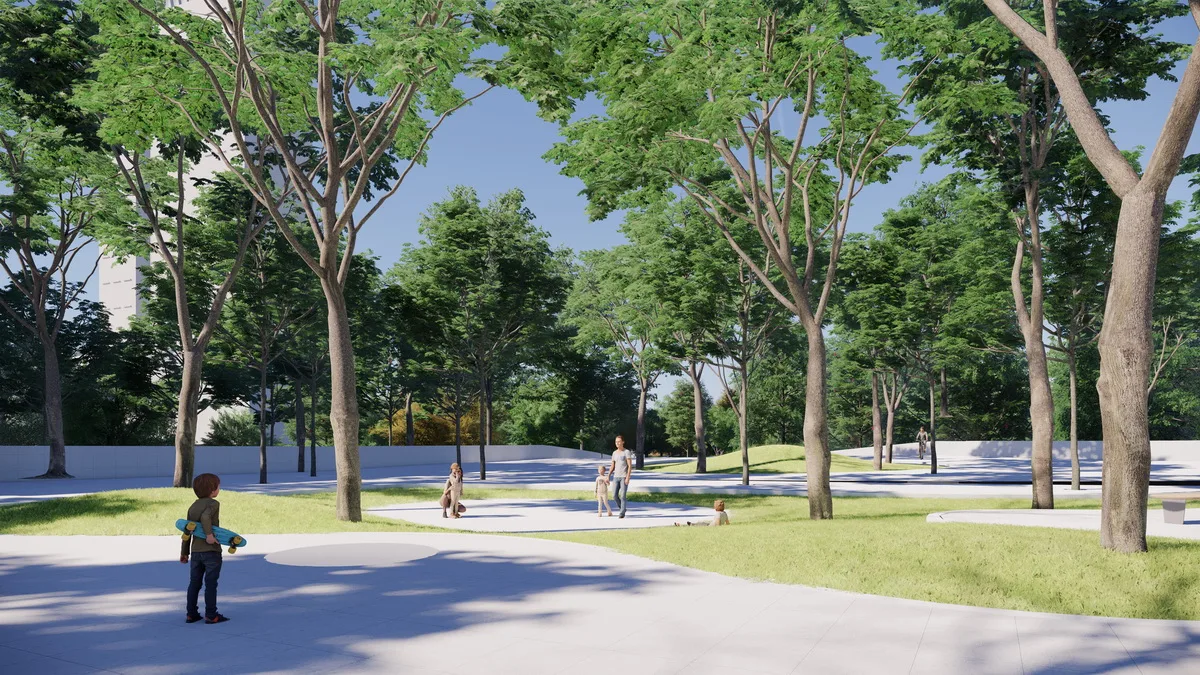
The previously noisy old city center in front of the original railway station is now covered in lush greenery.
After renovation, this seamless park welcomes tourists and residents alike with an open, inviting atmosphere. It encourages everyone to linger and enjoy the tranquil natural environment, transforming noise into peace and truly returning the city center to its people.
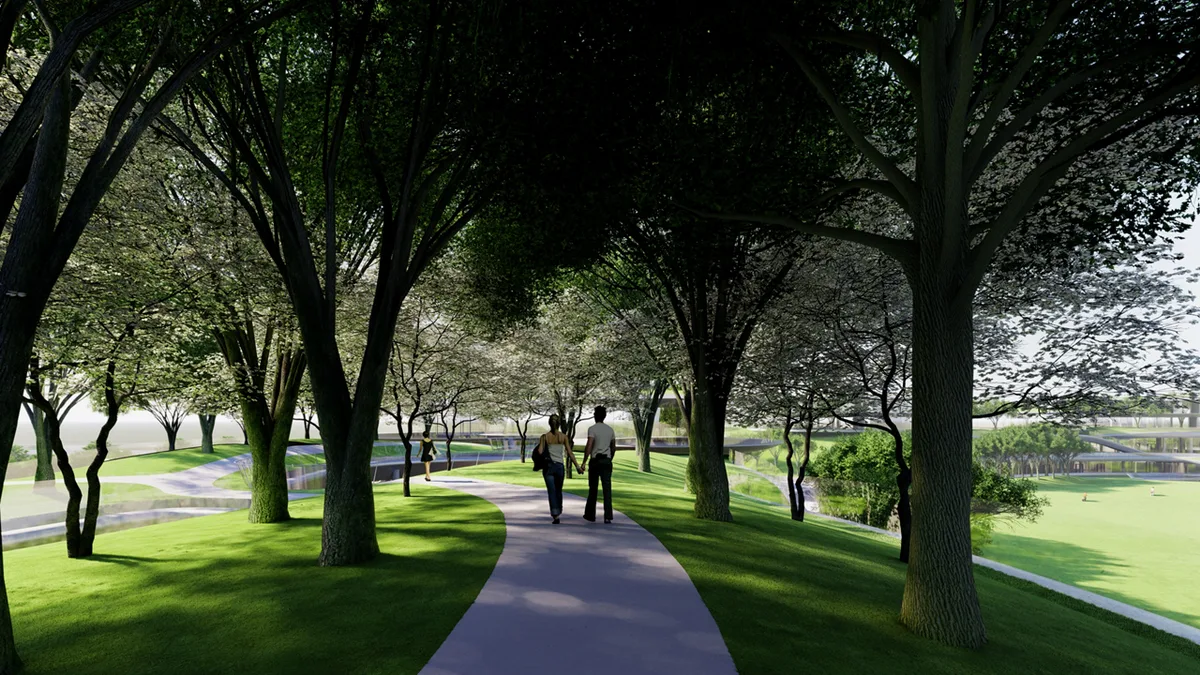
Creating a “train station in the forest” with a tall canopy in front of the North Station
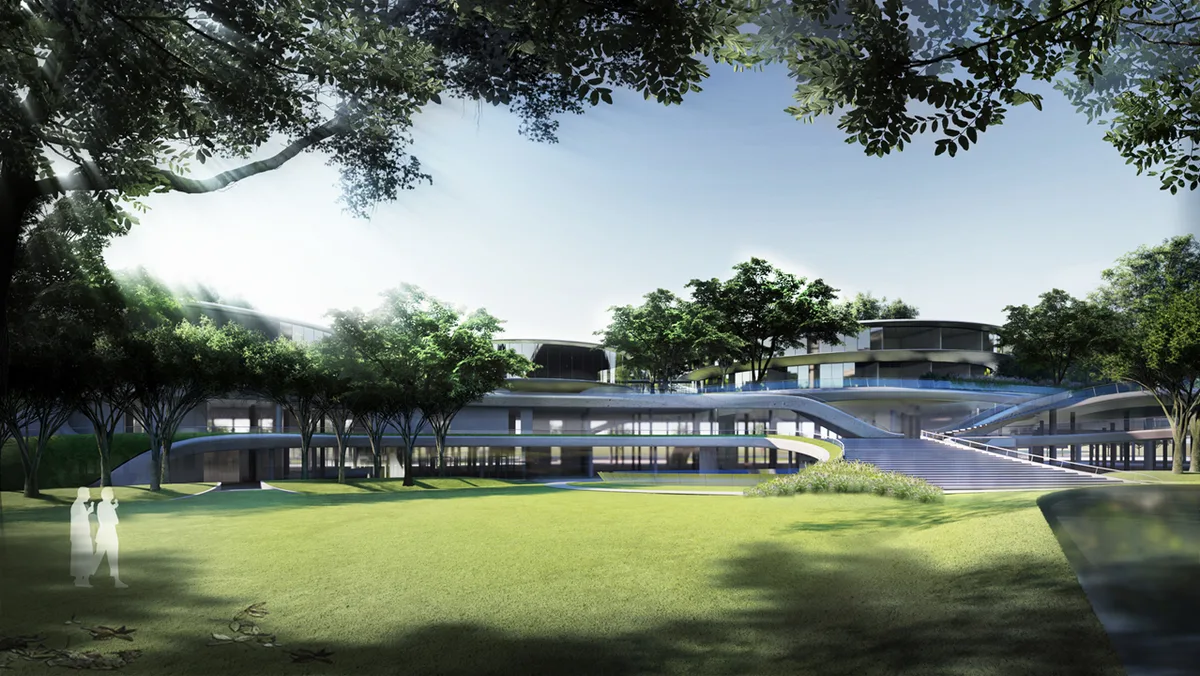
△ The commercial layout on the south side intersects with the rolling green spaces, creating a multi-dimensional urban public environment.
Restoration of Historic Station Buildings
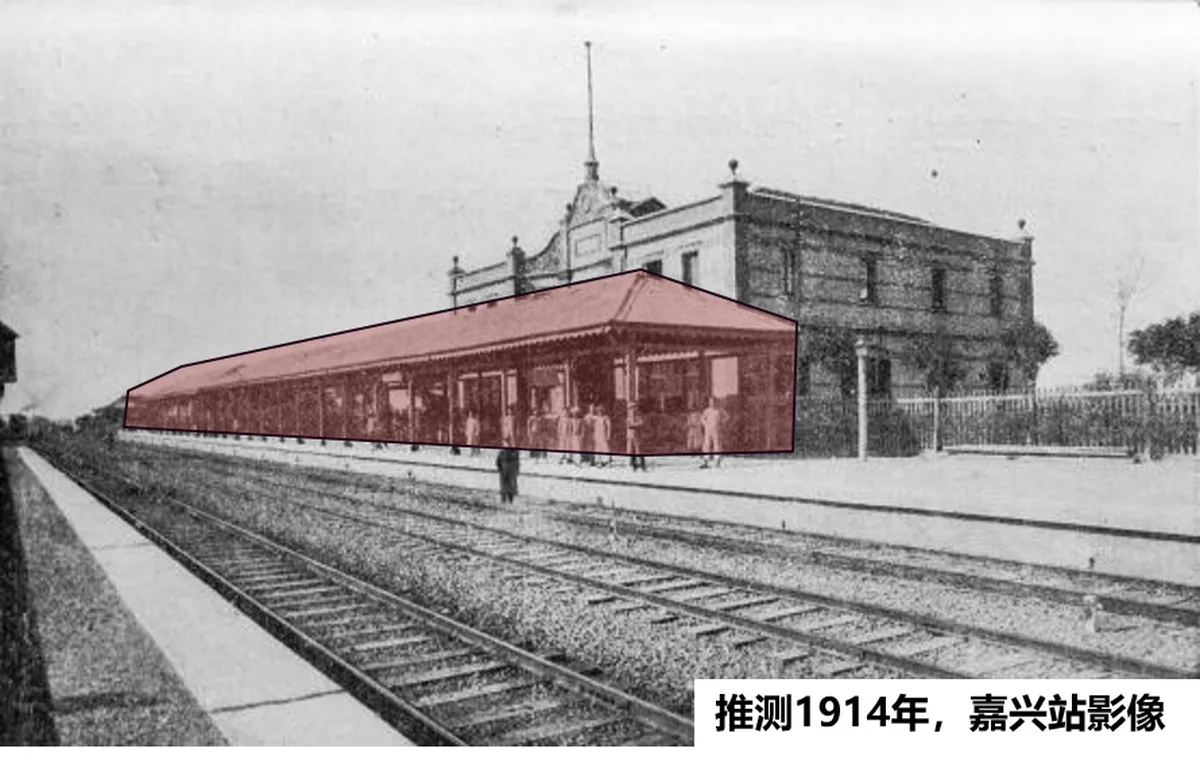
Originally constructed in 1907 and opened in 1909, Jiaxing Railway Station was a significant transportation hub on the Shanghai-Hangzhou rail line. In 1921, many Communist Party of China representatives arrived here by train, making the station a critical witness to the First National Congress of the CPC. Unfortunately, the station was bombed by the Japanese army in 1937.
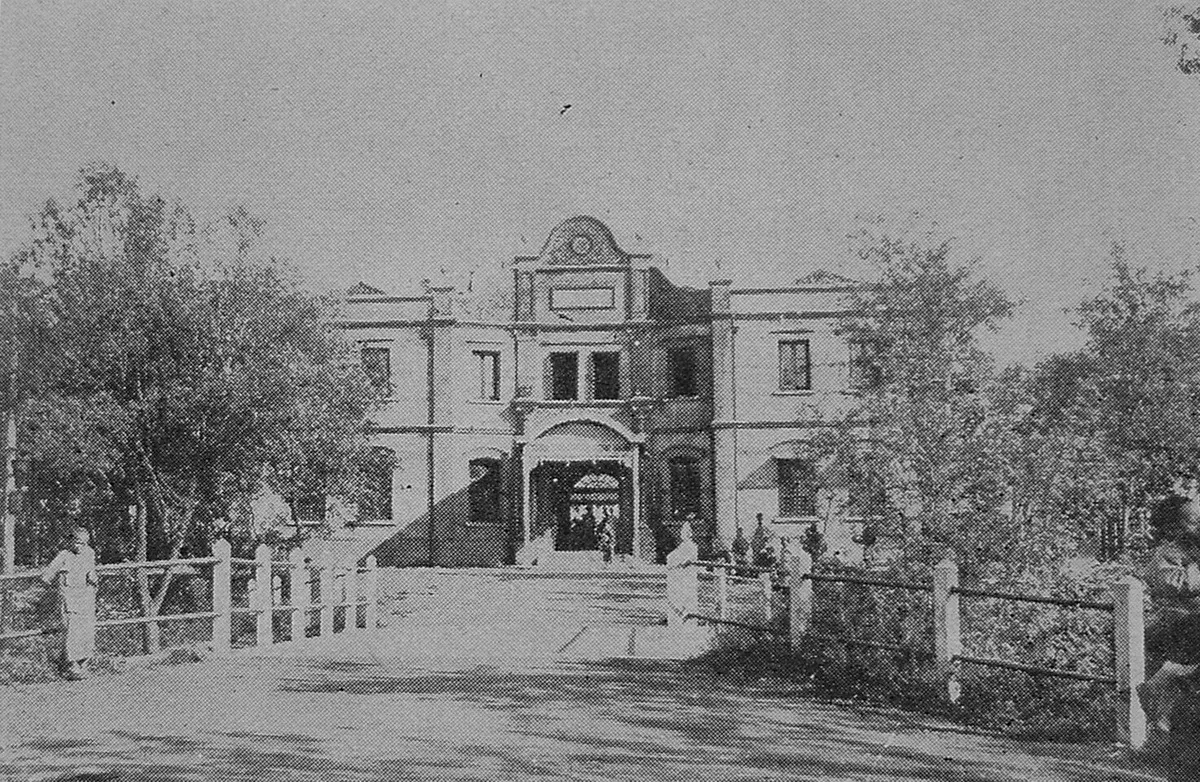
Jiaxing Station in 1909
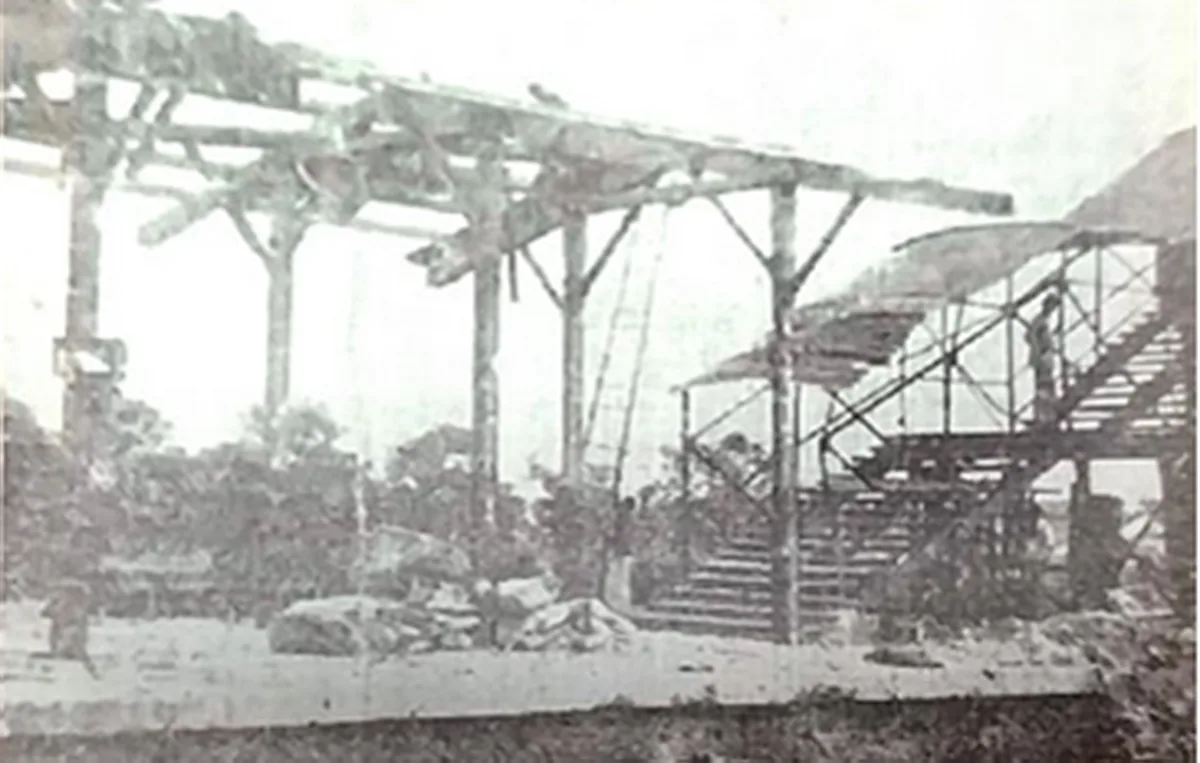
Jiaxing Station after it was bombed by the Japanese army post-1937
To ensure an authentic 1:1 reconstruction faithful to the original historic appearance, MAD collaborated with experts, scholars, and ancient architecture consultants. They analyzed and digitally restored extensive historical image data and clues from the Jiaxing City Chronicle. Using track gauge measurements and principles of perspective, they accurately determined the relationships and dimensions between the canopy, overpass, platform, and station building, aiming to replicate the station’s historical form, materials, and details comprehensively.
The rebuilt station building will be repurposed as the Jiaxing Railway Station History Museum and will no longer serve as the main railway terminal.
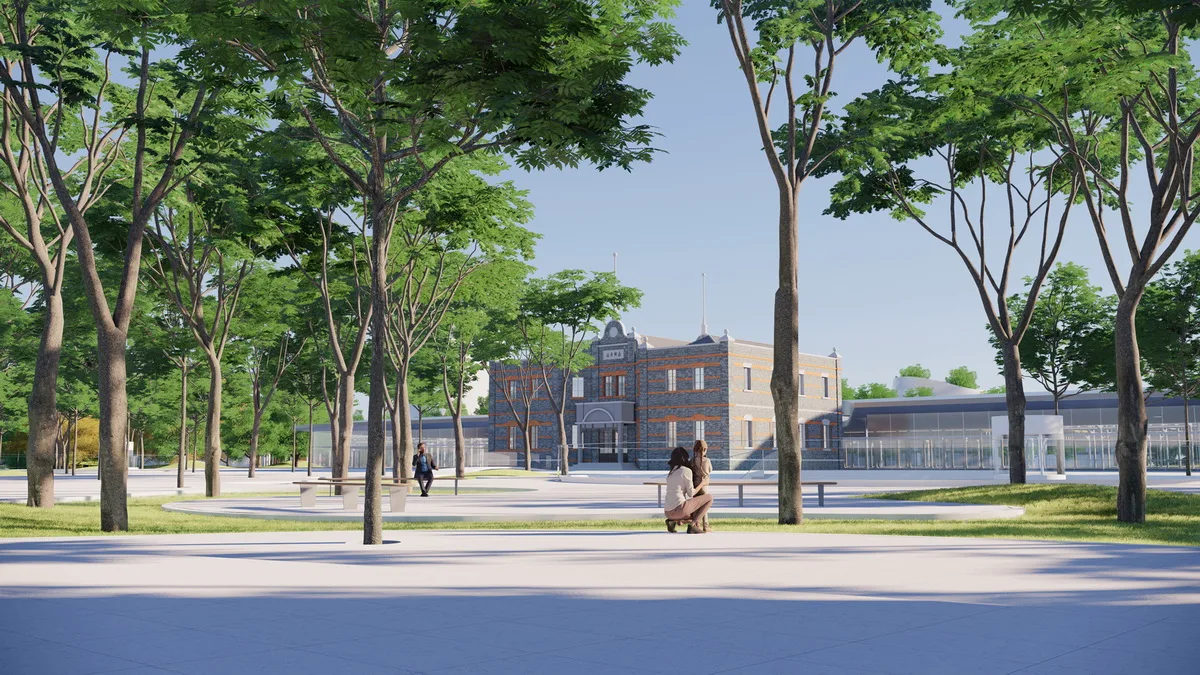
The Train Station in the Forest
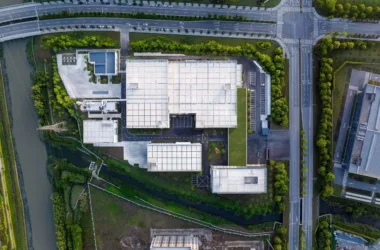
From the park, looking south along the central axis, the “floating” metal roofs of the restored old and new station buildings are faintly visible nestled among the trees. The entrance, exit platforms, and waiting hall of the new station building are located underground, with just one floor rising above ground, respecting the scale of the old station building and responding with humility.
Natural light floods the underground waiting hall through numerous skylights and a glass curtain wall, creating a spacious, bright, and welcoming atmosphere. The interior design emphasizes a comfortable scale, aiming to provide passengers with a pleasant travel experience.
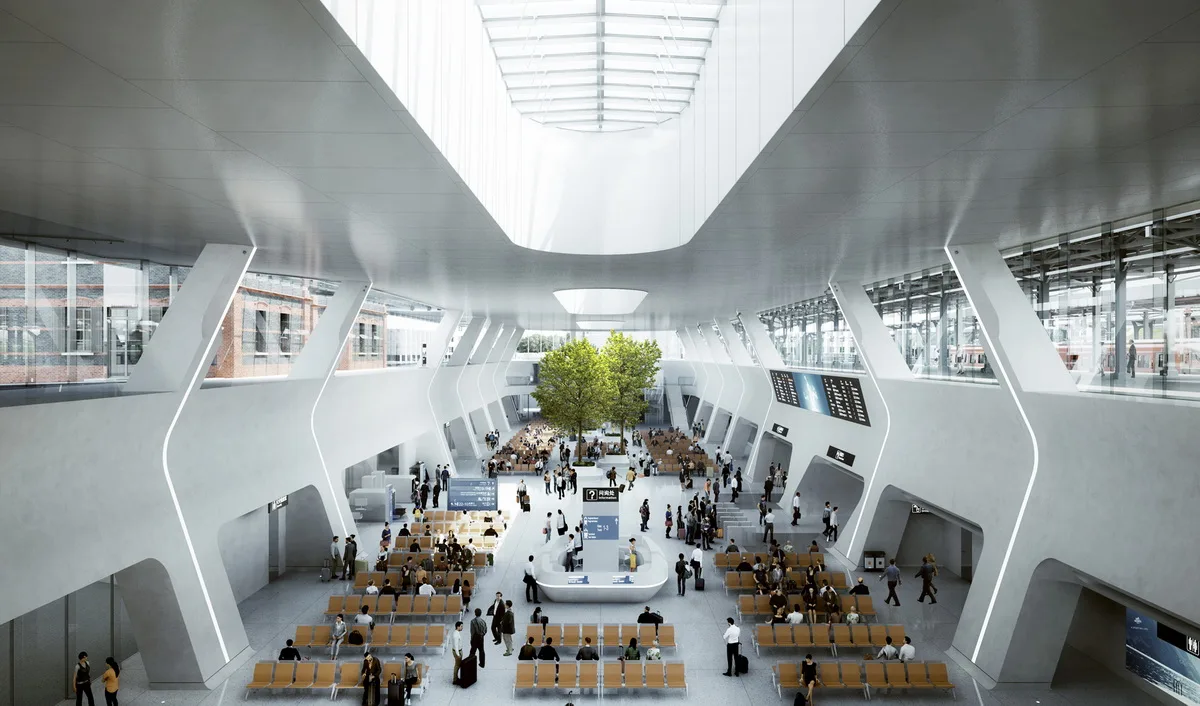
The new station building sits mostly underground but benefits from abundant natural light.
As passengers move from the waiting hall to the platform via a futuristic underground passage, they encounter the reconstructed platform ahead, which preserves the historic style from a century ago. This juxtaposition of old and new highlights a powerful intersection of past and future.
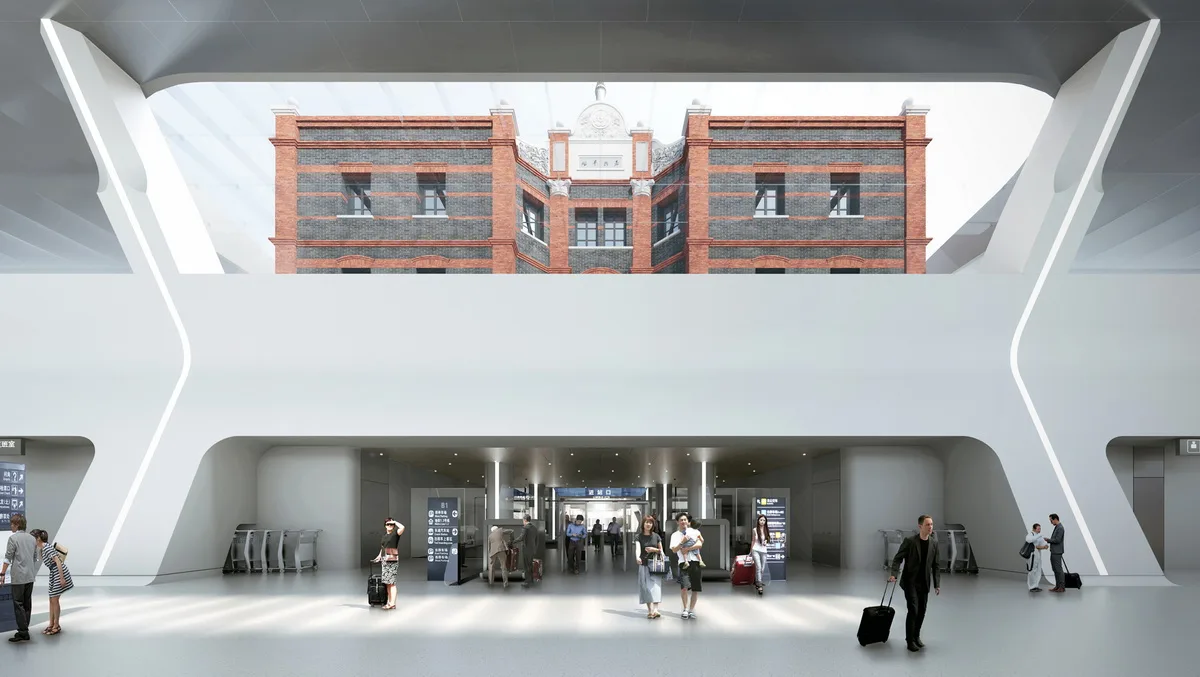
Inside the newly constructed basement-level station, the historic architectural style of a century ago is preserved and visible.
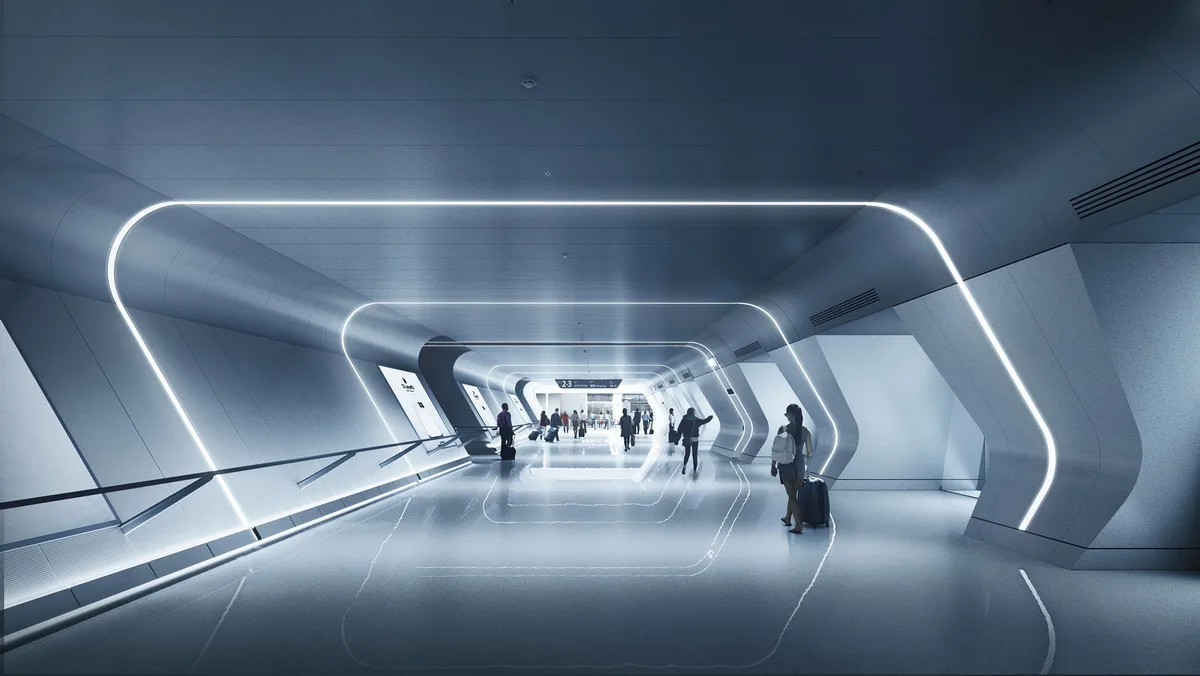
The station’s entrance passage features simple and futuristic materials.
All new station roofs will be equipped with solar photovoltaic panels, supporting sustainable development efforts.
Commercial Space Beneath the Forest
MAD designed the commercial areas in front of the station to be underground, directly connected to both the train station and the city’s transportation hub. These commercial spaces are vertically linked to the aboveground park via sunken courtyards. To the south of the station lies a newly constructed aboveground commercial area, with a lawn enclosed by buildings that serves as a public space for outdoor activities such as concerts, art festivals, and community markets.
Within this urban oasis, all functions are interconnected in every direction. Travelers can quickly access the underground levels for efficient transit, while visitors may stroll through the park, visit the history museum, and explore the underground commercial zone before beginning their journey.
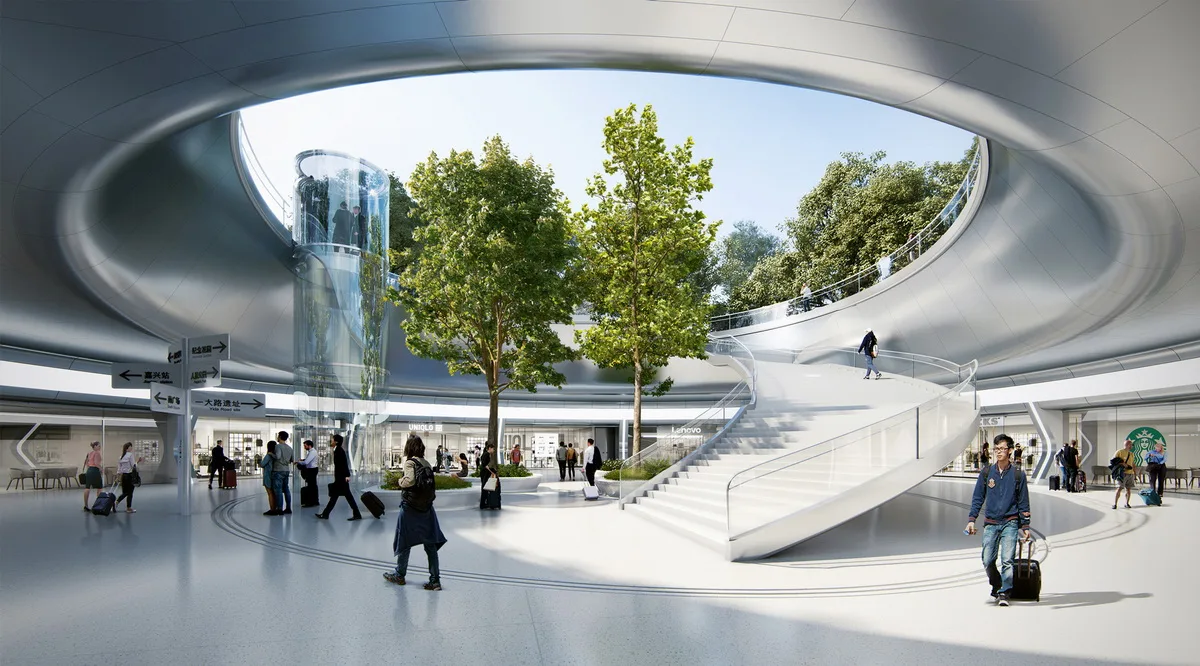
Two sunken courtyards on the north side provide direct access to the underground commercial areas.
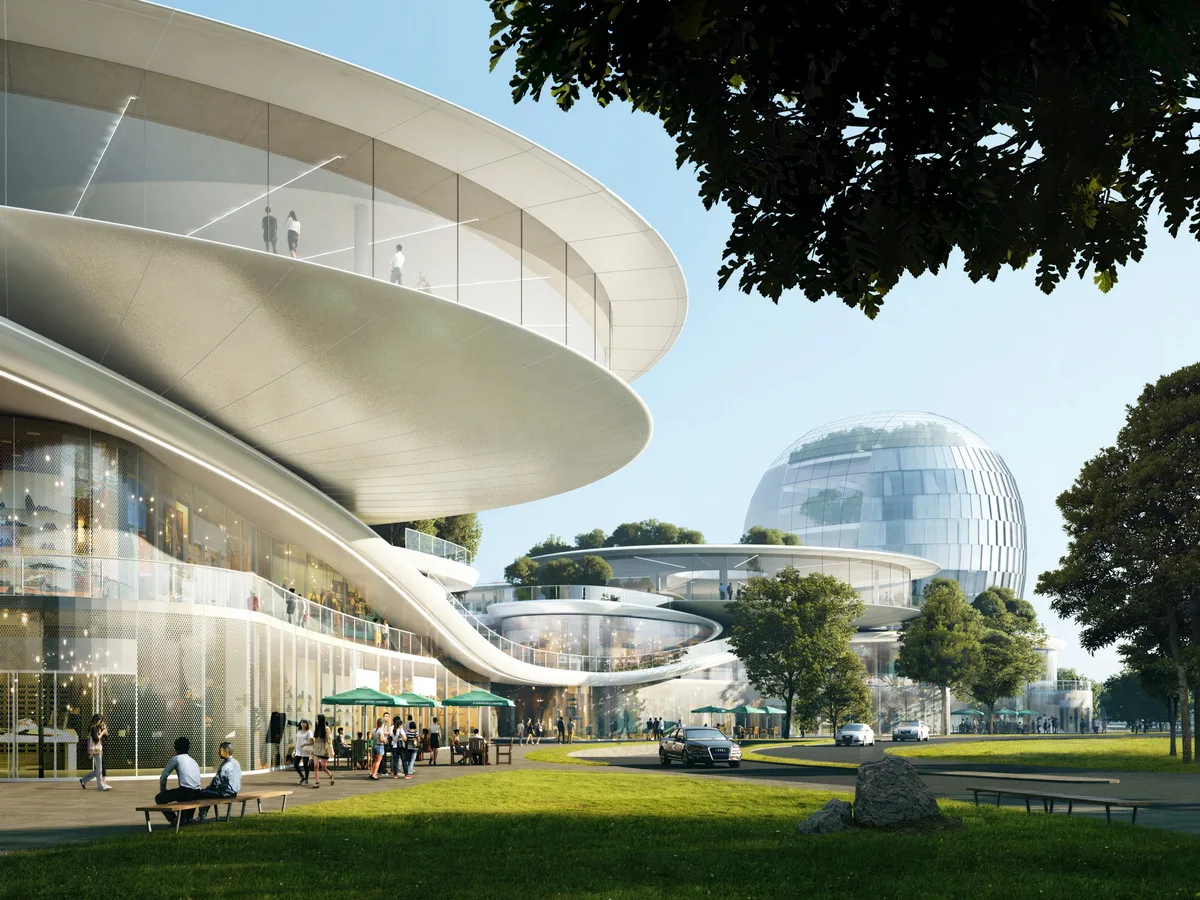
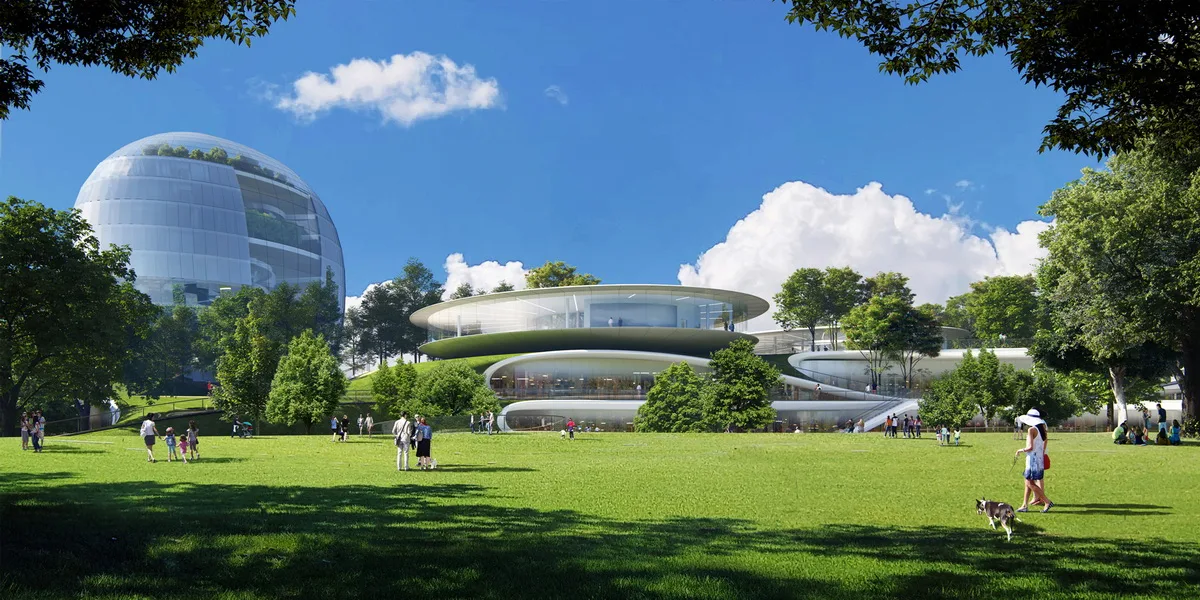
△ The commercial area and open lawn on the south side offer diverse cultural activities for residents.
Urban transportation hubs are strategically distributed underground in both the north and south, connecting directly to sunken municipal roads. Bus terminals, trams, subways, ample parking, and taxi stands ensure smooth, convenient access and support new commercial functions.
Through efficient traffic management and vertical space utilization, the station can accommodate current passenger volumes and future growth sustainably. The upgraded infrastructure will attract people, businesses, and new urban spaces, revitalizing the old city with higher-end commercial models and renewed vitality.
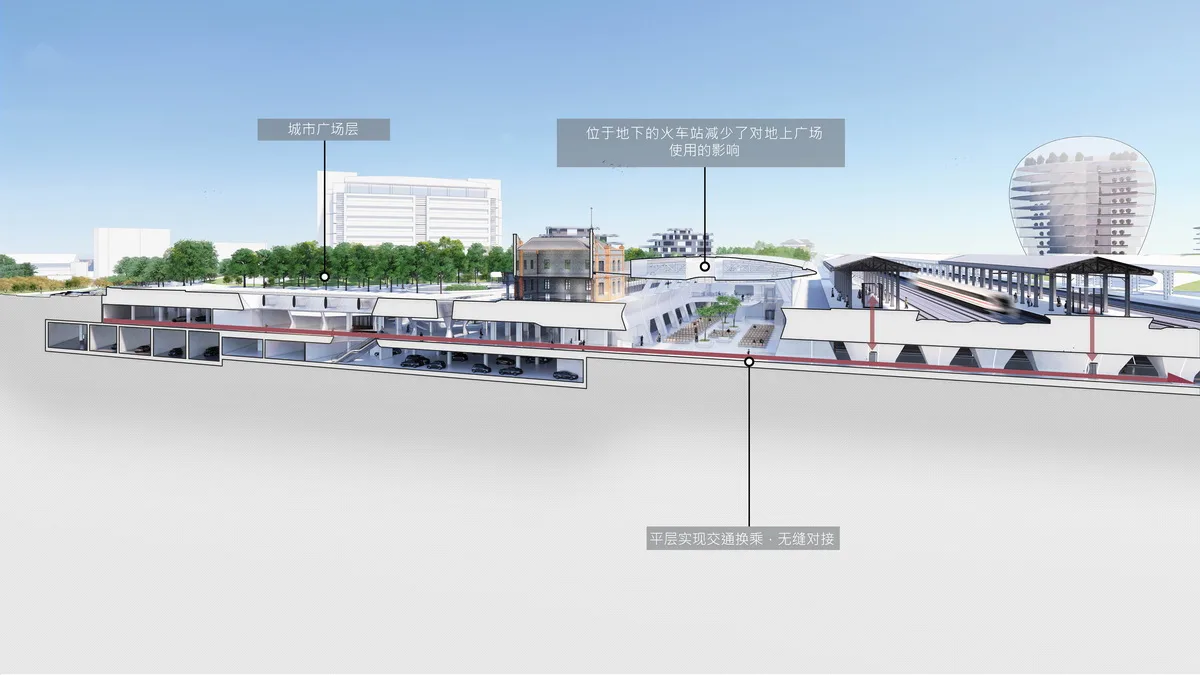
By relocating transportation and functions underground, the surface is freed up to become a park. Roads, urban transit hubs, train stations, and commercial buildings connect seamlessly, ensuring convenience and efficiency.
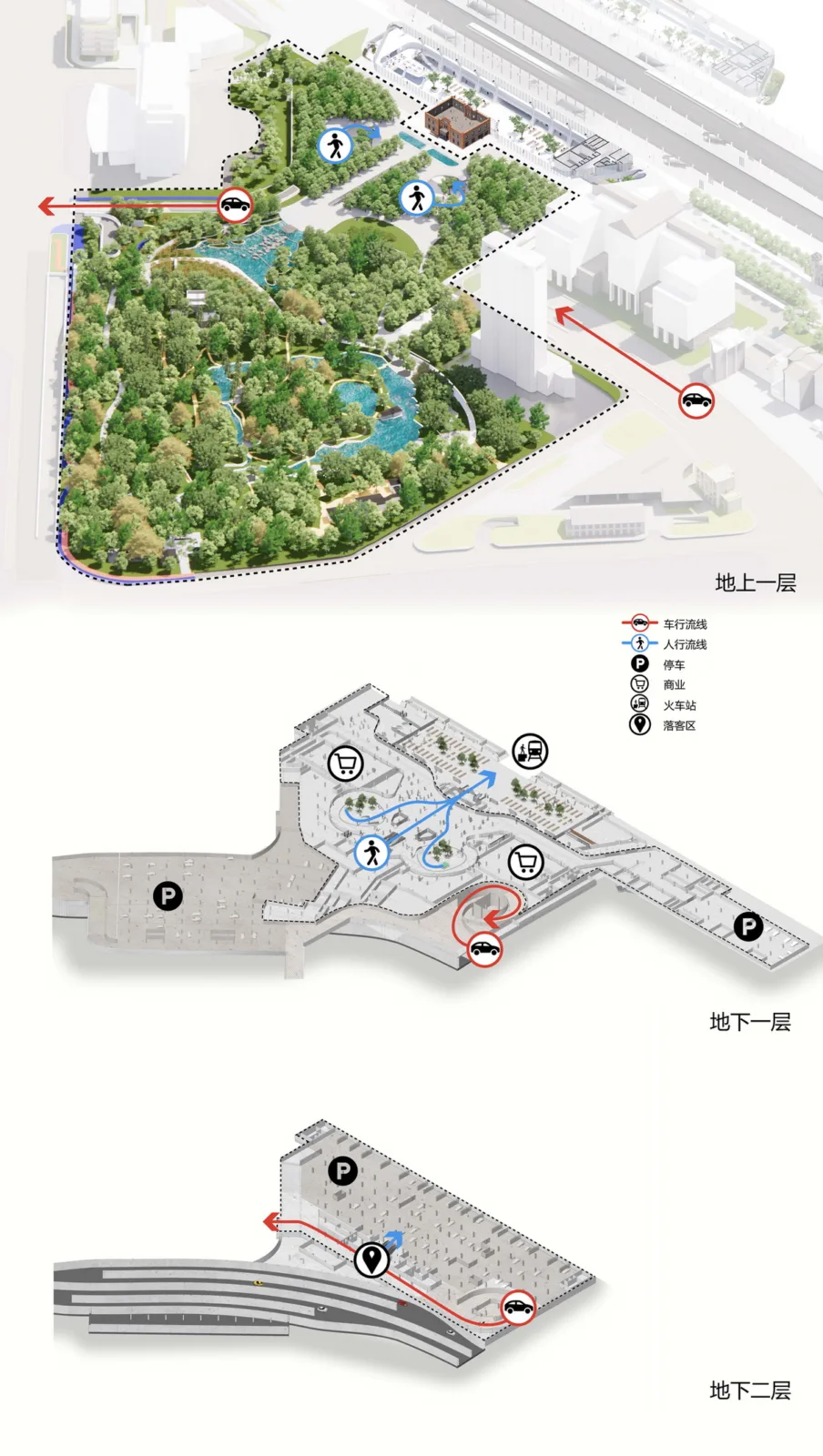
The future railway station yard’s scale will expand from the original 3 platforms and 5 tracks to 3 platforms and 6 tracks, with two arrival and departure tracks on each main line. By 2025, Jiaxing Railway Station is expected to handle 5.28 million passengers annually, with a peak capacity of approximately 2,300 passengers per hour.
MAD believes the most beautiful urban spaces belong to everyone. Blending sunlight, nature, architecture, and fresh air, the design prioritizes people’s comfort, convenience, and dignity in living, working, and traveling.
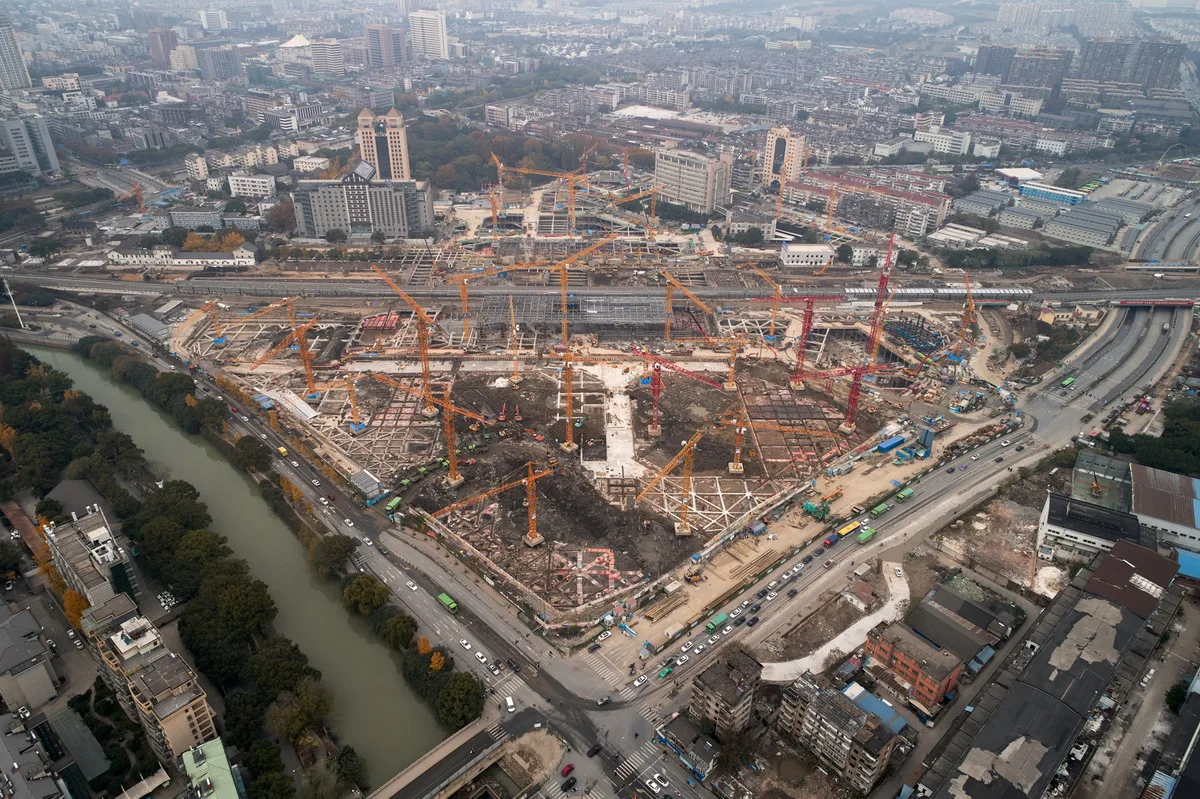
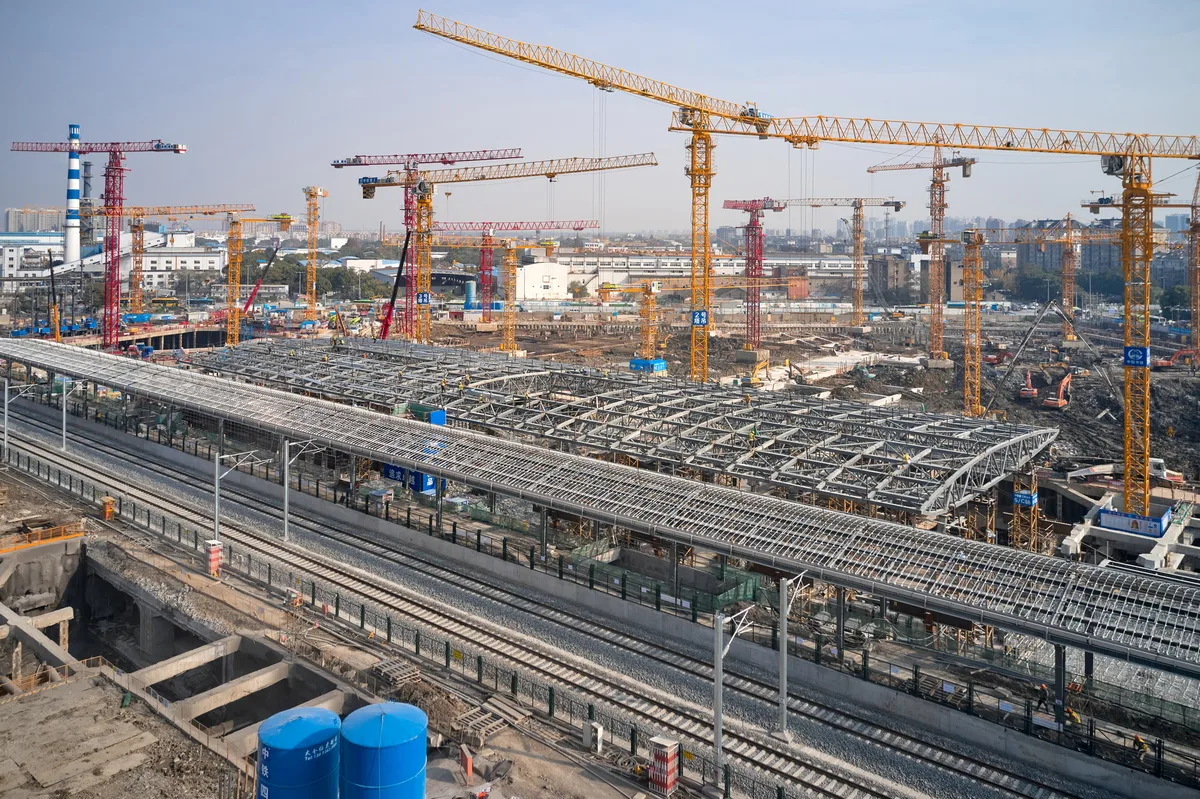
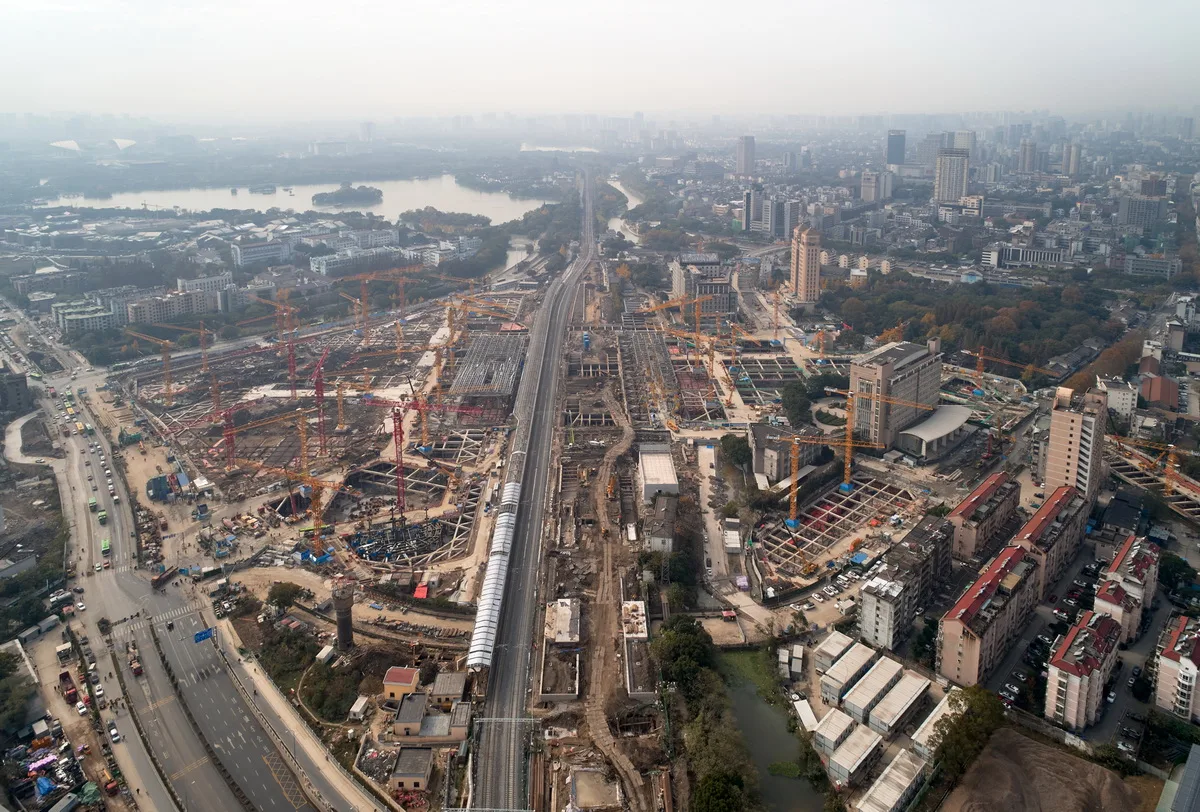
△ Construction site
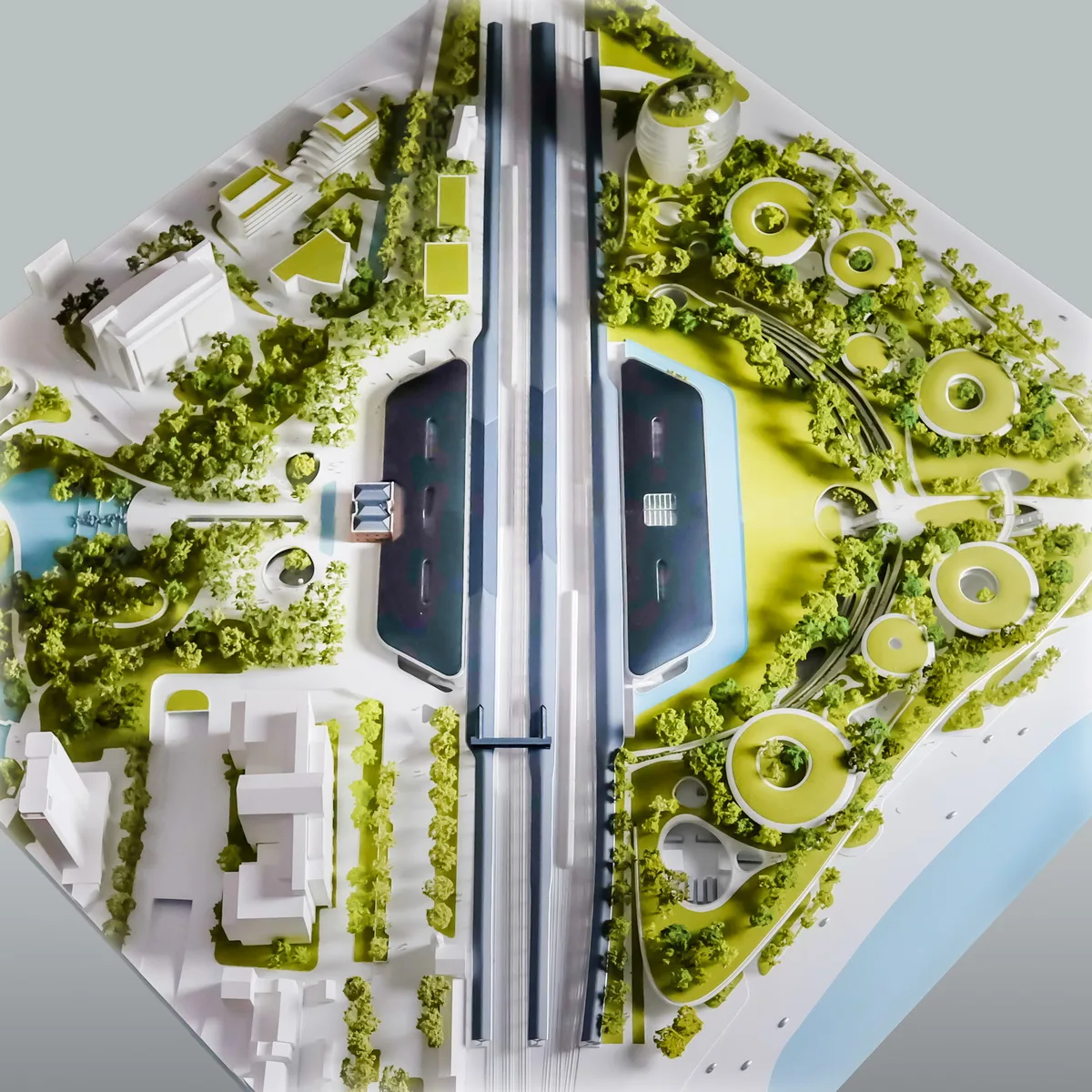
△ Model photography by Guo Xuan
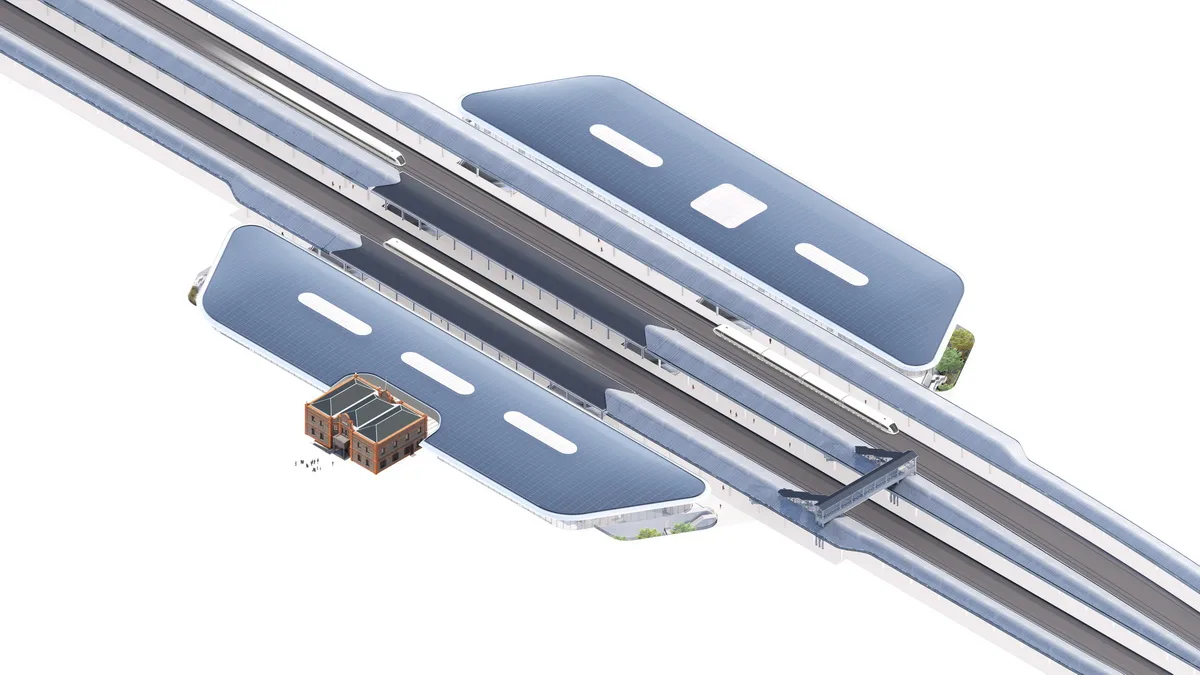
△ Roof
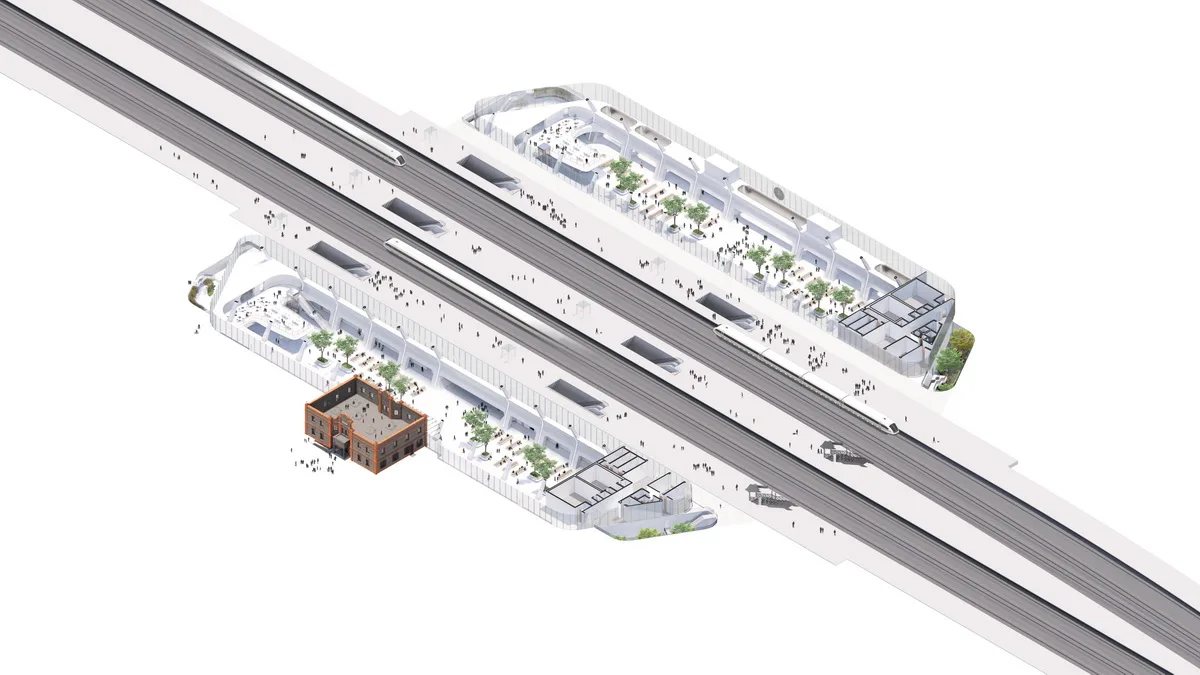
△ First floor
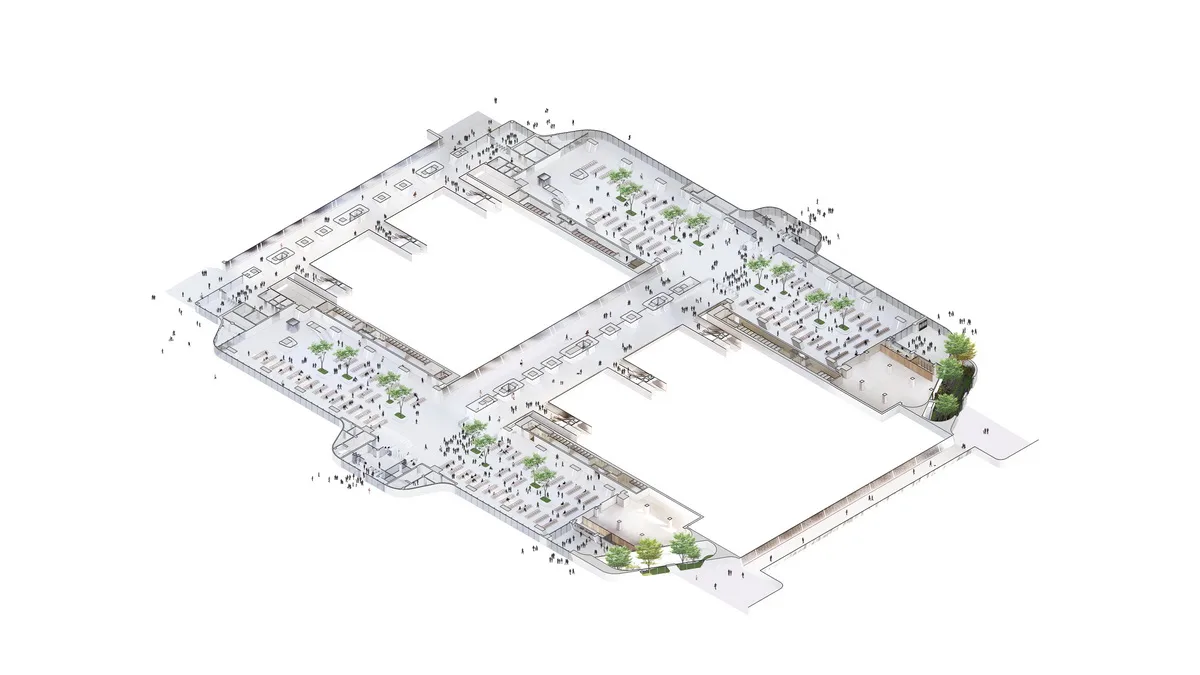
△ Underground first floor
Project Information
Project Name: Jiaxing Railway Station
Location: Jiaxing, China
Project Duration: 2019–2021
Project Type: Transportation Infrastructure
Site Area: 354,000 square meters
Building Area: Approximately 280,000 square meters
– Xuangong Lane Area: 14,161 square meters
– Station Yard and Station Building: 63,298 square meters
– North Square: 39,945 square meters
– South Square: 147,705 square meters
– People’s Park Renovation: 12,197 square meters
Lead Partners: Ma Yansong, Party Masses, Yokosuke Hayano
Lead Vice Partner: Liu Huiying
Design Team: Cao Chen, Reinier Simons, Yao Ran, Fu Xiaoyi, Yu Lin, Chen Wei, He Shunpeng, Cheng Xiangju, Kaushik Raghuraman, Chen Nianhai, Deng Wei, Cao Xi, Sun Mingze, Huang Zhiyu, Zhang Kai, Li Zhengdong, Dayie Wu, Huai Wei, Claudia Hertrich, Liu Zifan, Jie Qilin, Alan Rodríguez Carrillo, Qiang Siyang, Hou Jinghui, Li Xinyun, Yin Jianfeng, Mathias Juul Frost, Lei Lei, Lu Zihao
Owner: Jiaxing Modern Service Industry Development Investment Group Co., Ltd. (Jiaxing Economic Construction Investment Co., Ltd.)
Class A Design Institutes: Tongji University Architectural Design and Research Institute (Group) Co., Ltd., China Railway Fourth Survey and Design Institute Group Co., Ltd.
Structural Consultant: Liya Structural Engineering Consulting (Shanghai) Co., Ltd.
Curtain Wall Consultant: Alpha Architectural Design Consulting (Shanghai) Co., Ltd.
Landscape Consultant: Zhishe (Beijing) Landscape Planning and Design Co., Ltd.
Lighting Consultant: Beijing Ningzhijing Lighting Design Co., Ltd.
Identification Consultant: Yuan Yanya (Japan Design Center)
Ancient Architecture Consultant: Shanghai Shuishi Architectural Planning and Design Co., Ltd. – Traditional Architecture Research Institute
Interior Consultant: Shanghai Modern Architectural Decoration Environment Design and Research Institute Co., Ltd.












Must log in before commenting!
Sign Up