
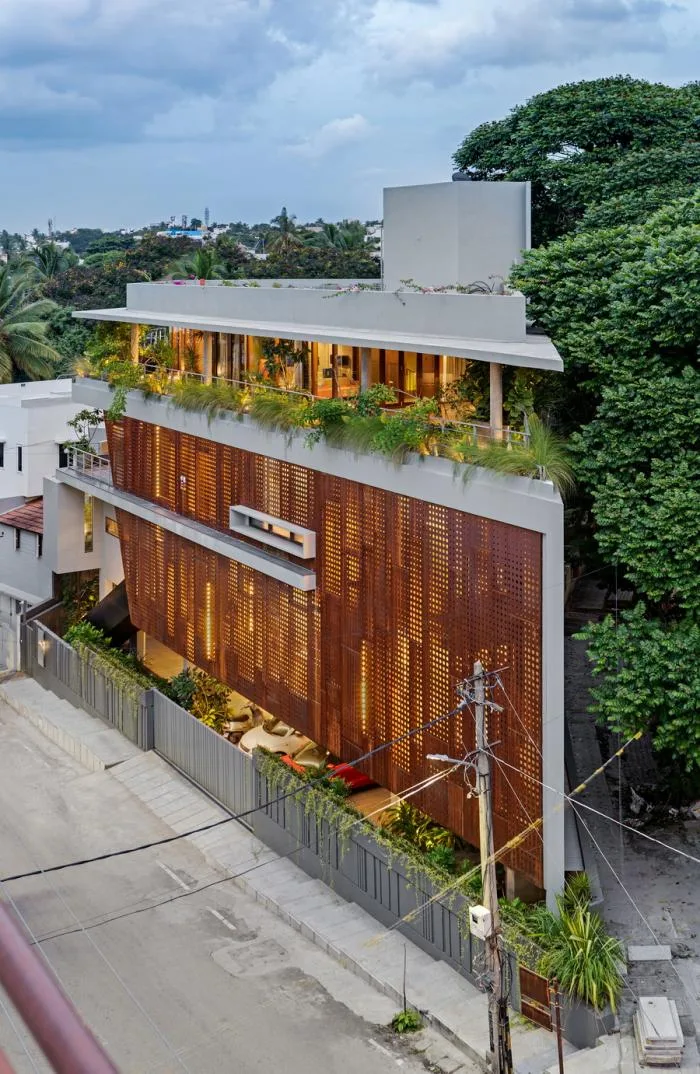
The ‘invisible’ residence exemplifies a residential design seamlessly integrated into its urban surroundings. Nestled within a dense urban fabric on all sides, it occupies a challenging triangular plot characterized by two acute corners. While two edges of the building face narrow lanes, the third side is enclosed by adjacent urban structures.
The highest point of the site is at the western corner, bordered by sidewalks and lanes, with the terrain gently sloping downward from west to east along the northern edge.
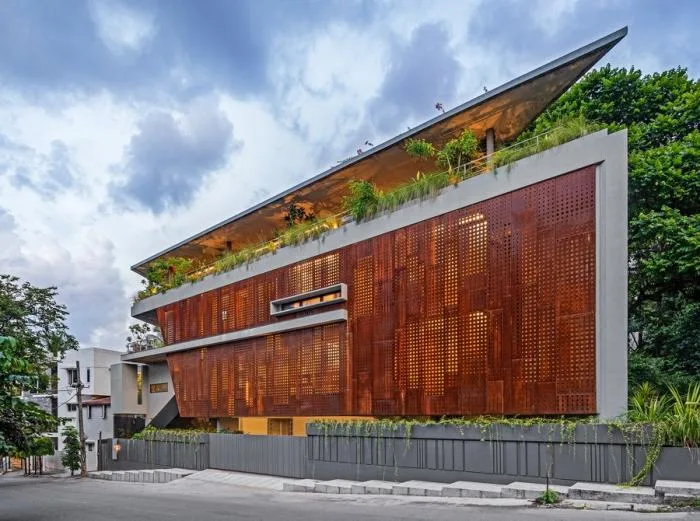
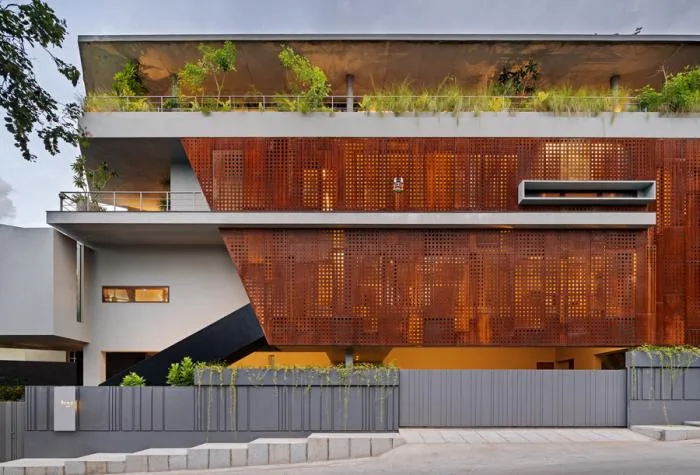
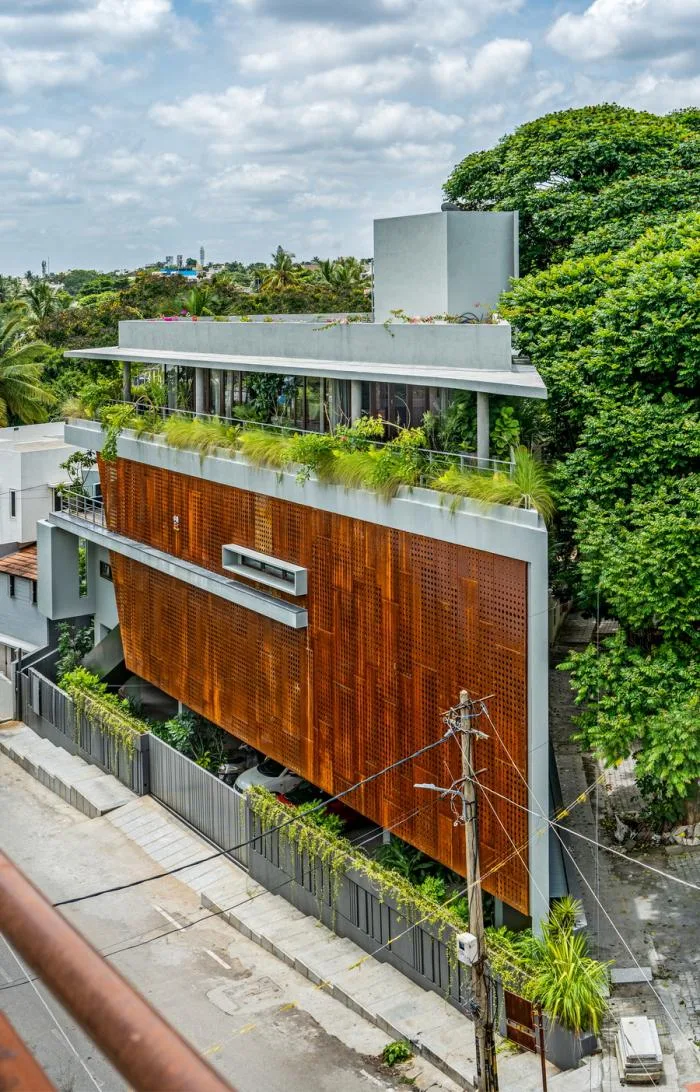
Taking advantage of the sharply sloped site, the building adopts a protective form that responds to the imposing urban architecture surrounding it. The façade resembles armor, featuring large weather-resistant steel plates on the north side. This three-sided defensive enclosure conceals the building’s interior activities while emphasizing its rooftop terrace.
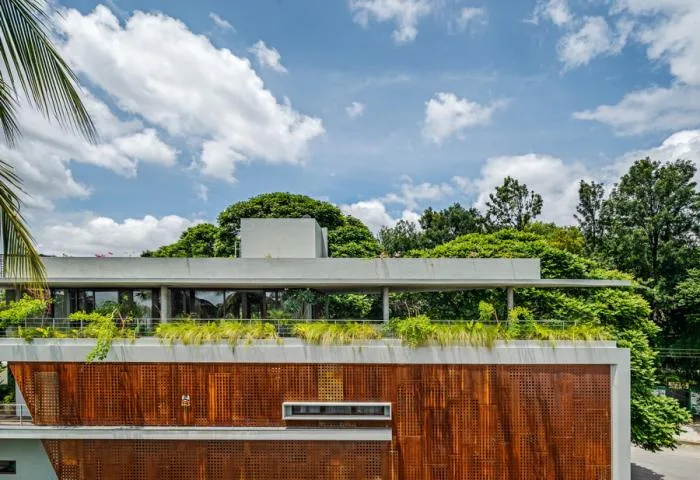
The structure appears to float across multiple horizontal planes, adding depth and dynamism to the façade. Elevated above street level, the building creates a ground-floor parking area beneath. The terrace’s horizontal canopy accentuates the sharp, sloping concrete slabs, lending a sense of refined delicacy.
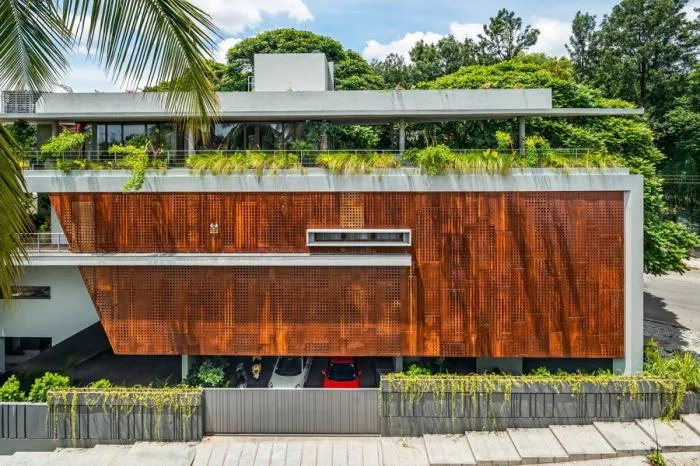
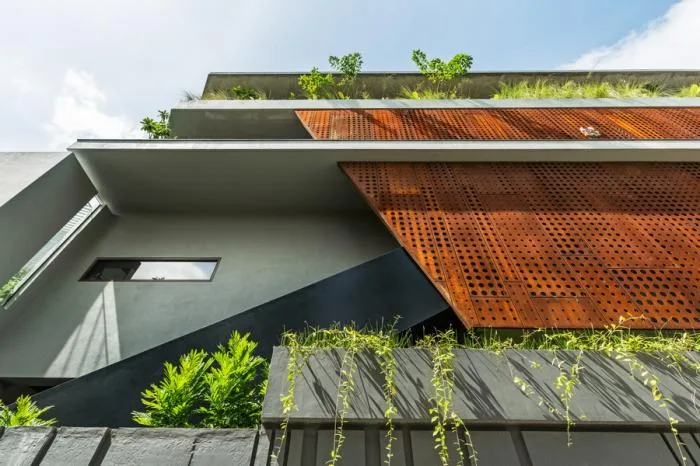
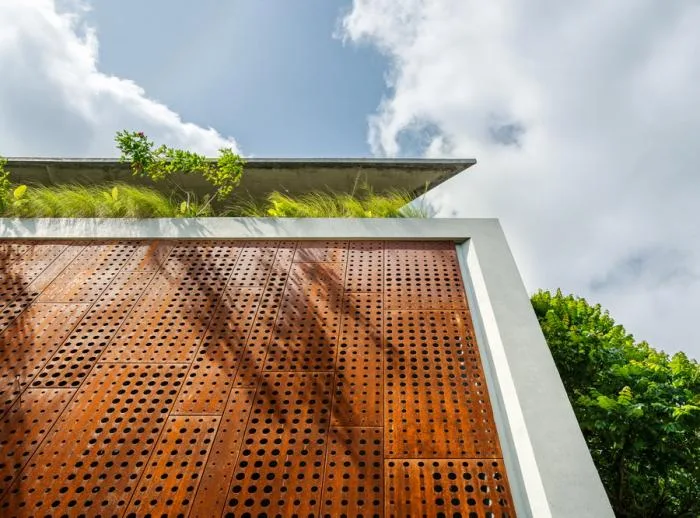
The building’s exterior features raw concrete strips along every corner and edge, paired strategically with flame-red rusted and perforated weather-resistant steel panels. The fine concrete framework acts as a protective veil, wrapping the north façade with a delicate, fabric-like skin.
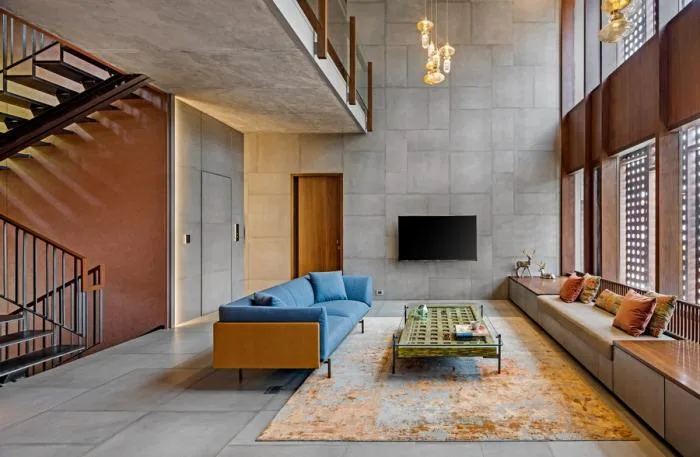
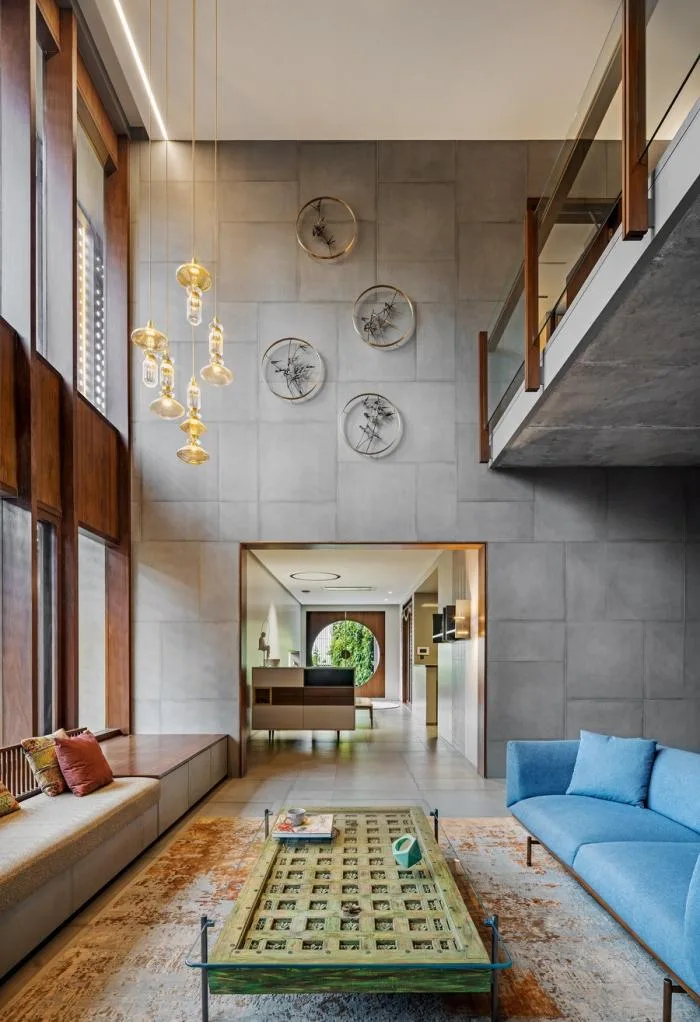
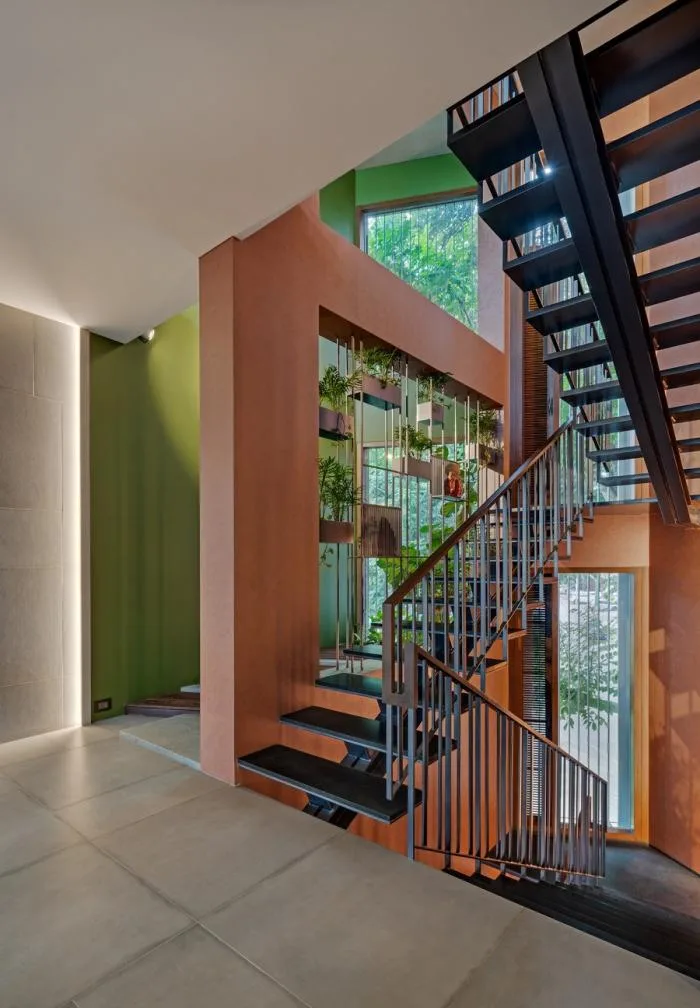
The core of the residence is unified yet divided into two distinct activity zones arranged vertically and horizontally within the building. This includes a double-height living area with a staircase at its center. From here, activity spaces extend toward the western and eastern wings of the triangular layout.
On the first floor, the east side contains a kitchen, dining room, and an outdoor terrace facing east, while the west wing hosts a bedroom complete with a bathtub.
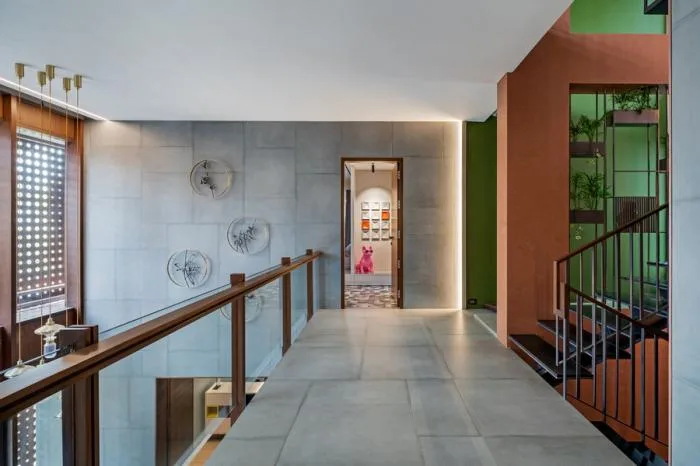
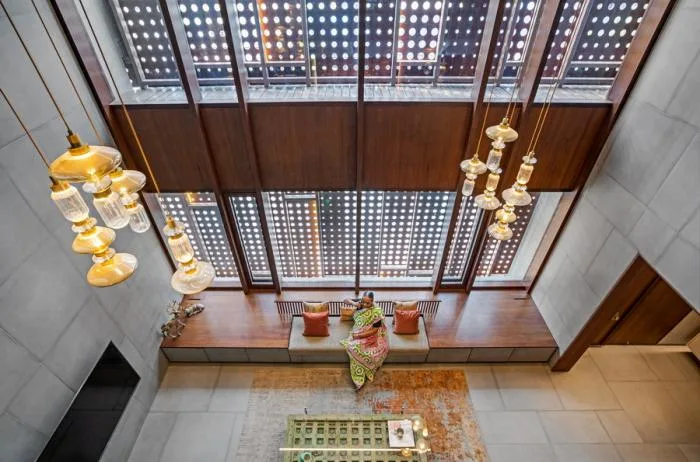
The second floor continues this spatial logic. Each wing contains separate bedrooms and bathrooms, both converging at the core pedestrian overpass. The third-floor terrace is open, offering a stunning vantage point overlooking the city’s lush vegetation.
At its center, a closed terrace lounge is surrounded by an open terrace area. The guest bedroom and bathroom are positioned on the east wing of this terrace level.
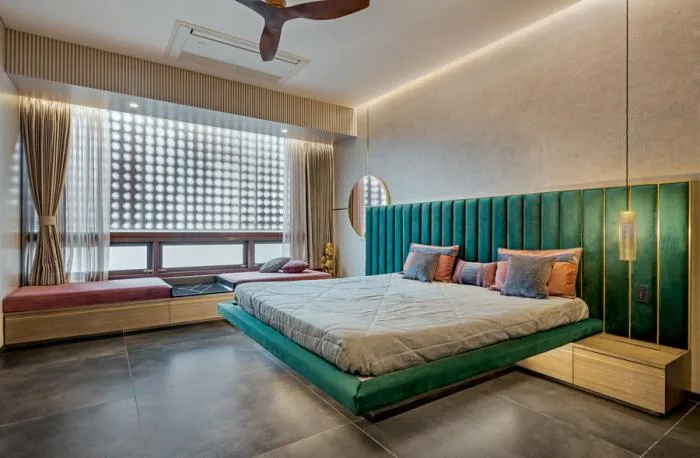
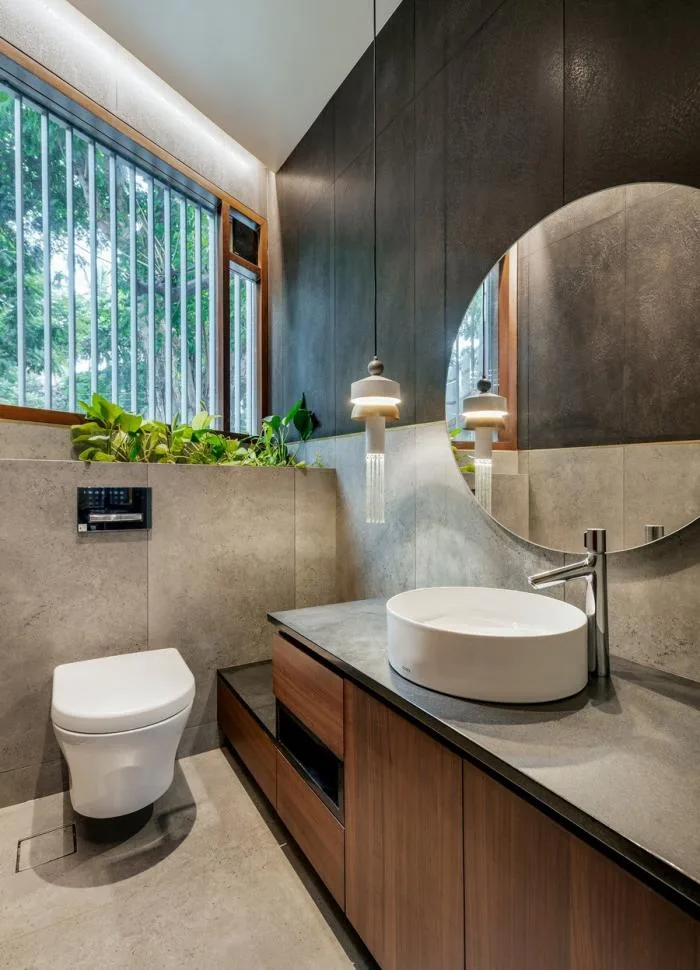
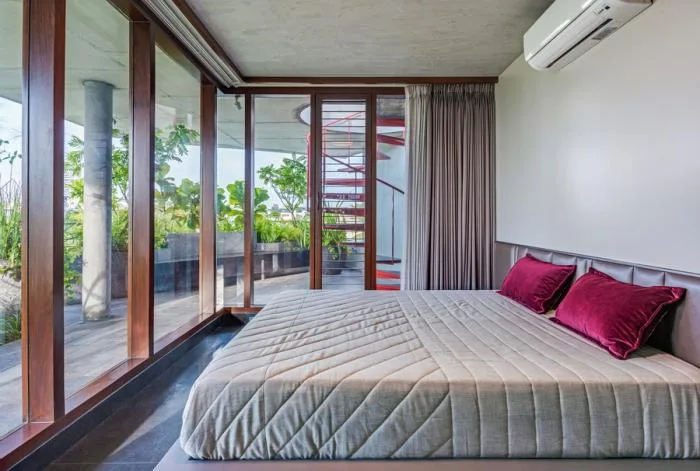
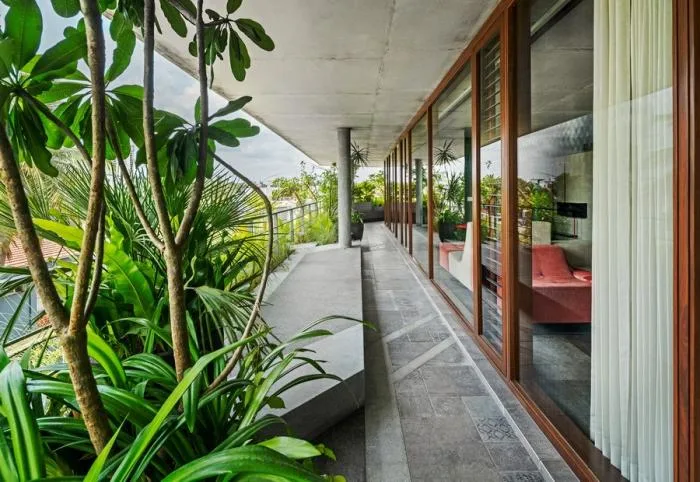
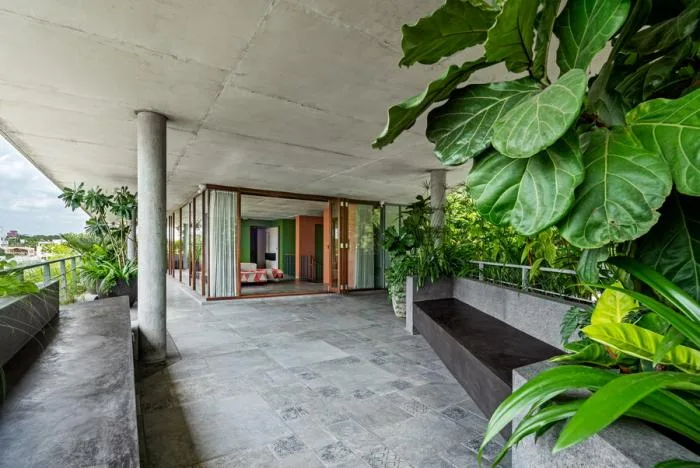
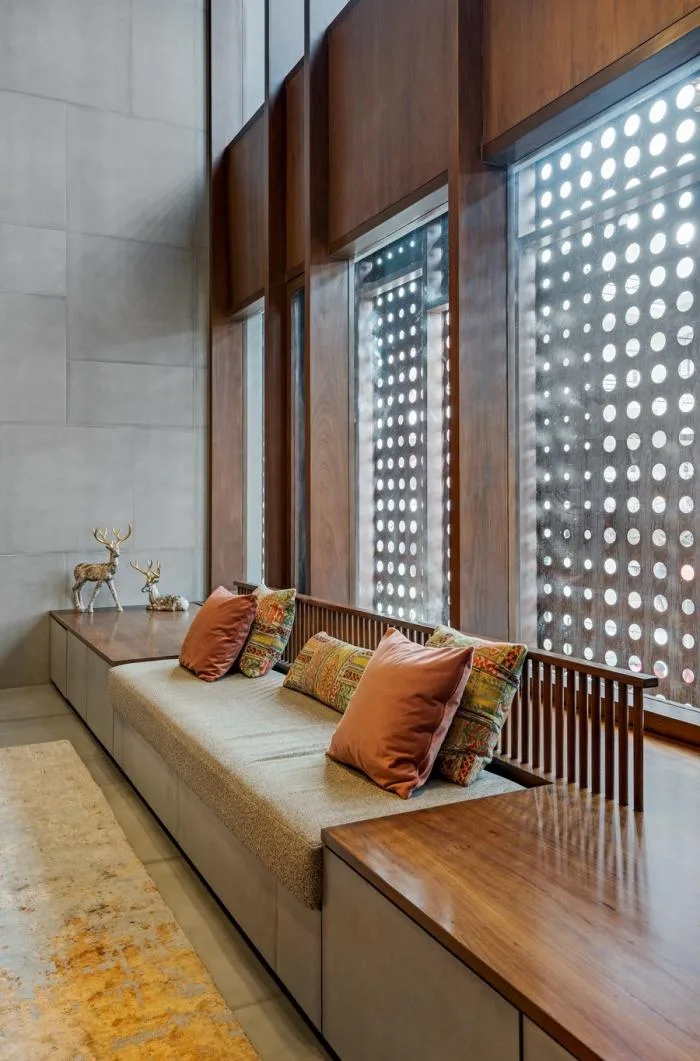
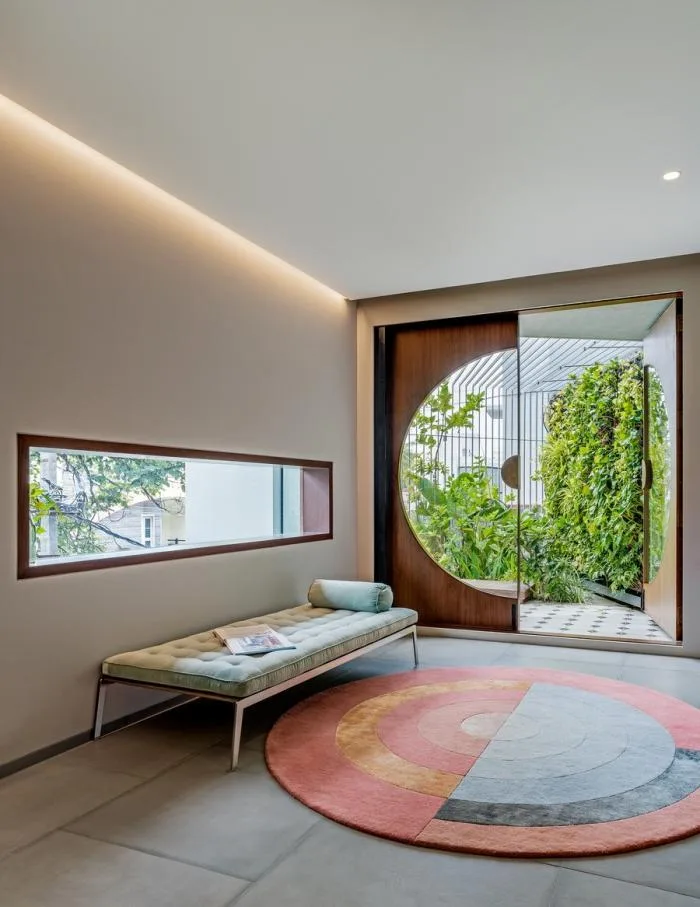
Despite its fortress-like exterior, the interior transforms into a warm and inviting sanctuary. The design employs a simple, earthy palette that complements the neutral tones of walls and floors, enhancing the architectural style.
Natural soil tones and indoor greenery enliven the space, while mottled light filters through the weather-resistant façade skin, casting dynamic shadows and enriching the atmosphere. The interior is illuminated by a “new light” technique, creating a unique and captivating lighting effect.
Design Drawings
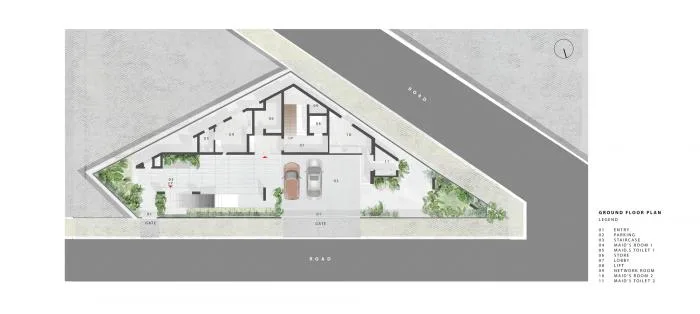
△ Ground Floor Plan
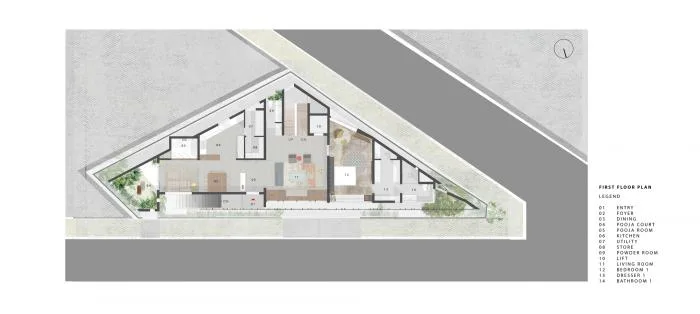
△ Second Floor Plan
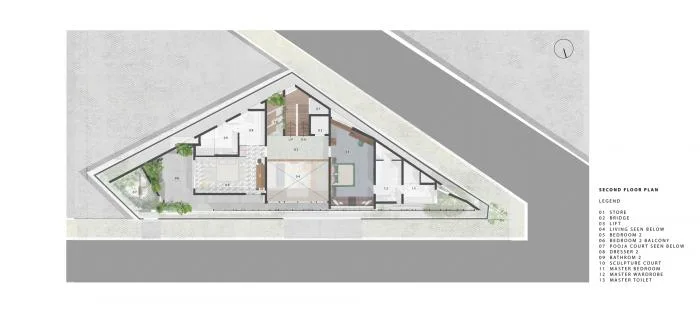
△ Third Floor Plan
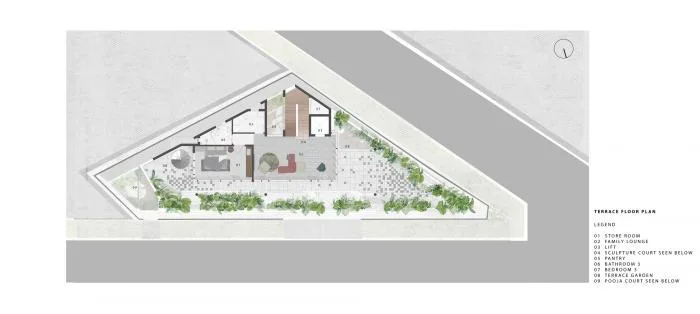
△ Terrace Plan
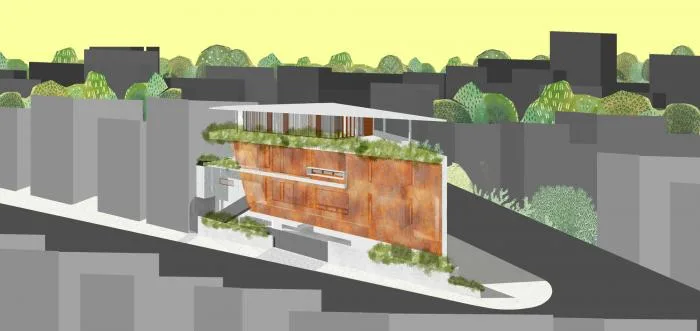
△ Elevation Drawing
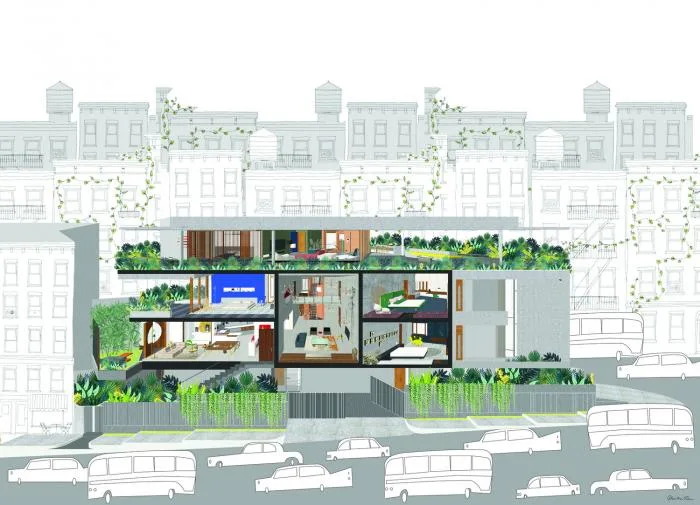
△ Section Diagram
Project Information
Project Type: Independent Residential, Residential Interior Design
Location: Bangalore, India
Architect: Cadence Architects
Area: 7,800 ft²
Year: 2019
Photographer: Shamanth Patil J
Manufacturers: Toto, Ananataya, Chairs & Company, Curio Casa, Fantini, Ginger House Antique, Grohe, Hansgrohe, Ivory Edge, Living Art Interiors, Phantom Hands, Simply Sofas, Enne
Lead Architects: Smaran Mallesh, Vikram Rajashekar, Narendra Pirgal, Divya S, Sonali Gupta
Visual Effects: Haritha John Surrao
Photo Credit: Shamanth Patil J
Structural Engineer: Specs Engineering Consultants
Pipeline Engineer: Creative Team Consultants
Interior Design: Cadence Architects
Electrical Engineer: Creative Team Consultants
HVAC: JB Associates (Mitsubishi)
Landscape Design: 3Fold Design Consultants
Copywriting: Rohini Gomez Braganza
Site Area: 3,174.08 square feet












Must log in before commenting!
Sign Up